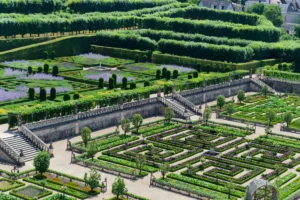
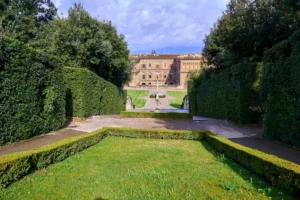
Formal Garden

A formal garden is built on geometry: a central axis, matched sides, clipped structure that holds its shape all winter, and planting that fills a pattern rather than escaping it. These guides read the great formal gardens — French, Italian and Mughal — and pull out what actually transfers to a small plot. The useful insight is that formality is cheap. Structure comes from evergreen edging, repetition and a straight line, not from flowers, which is why a formal layout looks deliberate in February when a mixed border looks like nothing at all. The trade is maintenance: clipped shapes are a calendar commitment, and a hedge that misses two seasons stops reading as design. Compare the three traditions at Versailles, Boboli and Amrit Udyan.