20 Most Famous Gardens in the World, Ranked by What You Learn
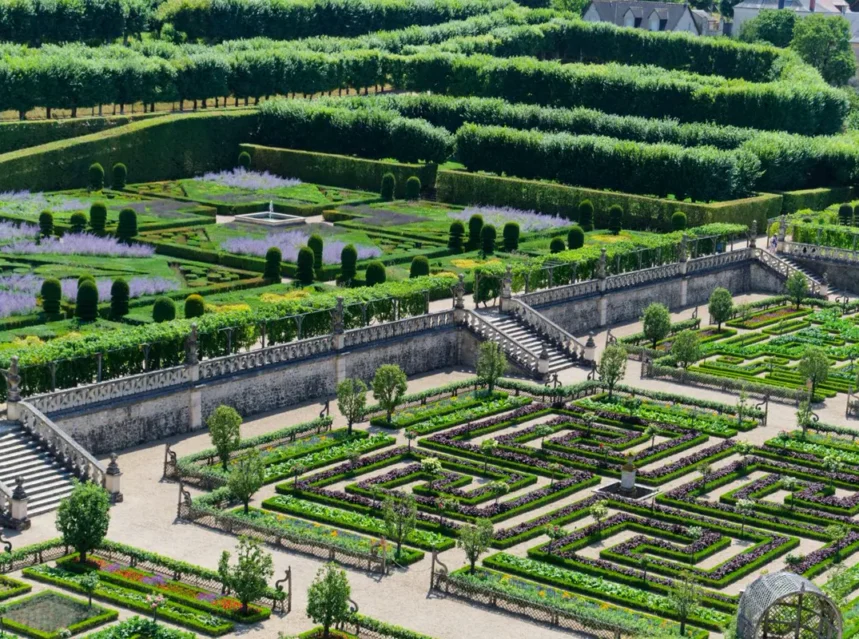
The most famous gardens in the world are the landscapes that changed how everyone else gardens — and almost every one of them is teaching something you can use on a plot a thousand times smaller. This guide covers twenty of them. Not as places to tick off, but as ideas to steal.
Quick answer: Kew, Versailles, Keukenhof, Butchart, Gardens by the Bay, Kenroku-en, Ryōan-ji, Dubai Miracle Garden, Kirstenbosch, Longwood, Villa d’Este, Nong Nooch, Amrit Udyan, Brindavan, Lalbagh, Giverny, Singapore Botanic Gardens, Bogor, the Eden Project and Boboli. Each has a full guide below.
🧰 In a hurry? Jump straight to our tested picks for this guide ↓
The 20 most famous gardens in the world at a glance
| Garden | Country | Style | Signature feature | Best season | Full guide |
|---|---|---|---|---|---|
| Kew | UK | Botanic, Victorian glasshouses | The Palm House (1848) | Late Mar–May, Sep–Oct | Kew Gardens plants |
| Keukenhof | Netherlands | English landscape park | A “blue river” of grape hyacinths | Spring only, ~8 weeks | Keukenhof tulip garden |
| Versailles | France | French formal, Baroque | The Grande Perspective | Late Apr–Jun, Sep | Versailles garden design |
| Giverny | France | Painter’s garden + water garden | The lily pond and green bridge | May; Jul–Sep | Monet garden Giverny plants |
| Villa d’Este | Italy | Renaissance terraced water garden | The Hundred Fountains | Apr–early Jun, Sep | Villa d’Este gardens Tivoli |
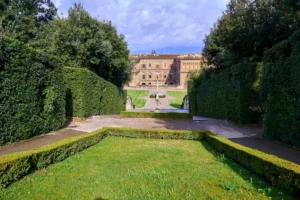
| Boboli | Italy | Renaissance, terraced hillside | The amphitheatre and obelisk | Apr–early Jun, late Sep–Oct | Boboli Gardens Florence |
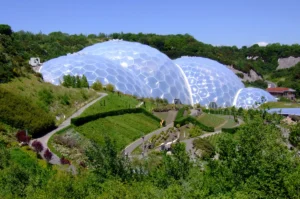
| Eden Project | UK | Climate-zone planting under domes | ETFE biomes on manufactured soil | Biomes work in any weather | Eden Project biomes plants |
| Gardens by the Bay | Singapore | Engineered vertical landscape | The Supertree Grove | No season; dawn or after dark | Gardens by the Bay plants |
| Singapore Botanic Gardens | Singapore | English landscape bones, tropical | The National Orchid Garden | No season; time of day matters | Singapore Botanic Gardens orchids |
| Kenroku-en | Japan | Kaiyū-shiki stroll garden | The two-legged Kotoji lantern | All four; blossom and maple peak | Kenroku-en Japanese garden |
| Ryōan-ji | Japan | Karesansui dry landscape | Fifteen stones in five groups | Any season; go early | Ryōan-ji rock garden |
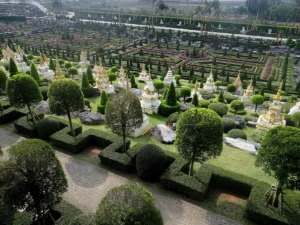
| Nong Nooch | Thailand | Themed gardens and topiary | Parterres and the cycad collection | Dry season, Dec–Feb | Nong Nooch tropical garden plants |
| Bogor | Indonesia | Layered tropical collection | Avenues of tall canopy trees | Mornings; drier Jun–Sep | Bogor Botanical Gardens plants |
| Amrit Udyan | India | Mughal charbagh + English borders | Two channels crossing at right angles | North Indian winter and early spring | Amrit Udyan Mughal Gardens Delhi |
| Brindavan | India | 20th-century terraced pleasure garden | The musical fountain | Oct–Mar, after the monsoon | Brindavan Gardens Mysore plants |
| Lalbagh | India | Mughal-influenced, later English park | The cast-iron Glass House | Early morning; flower shows | Lalbagh Botanical Garden Bangalore |
| Longwood | USA | Fountain gardens and conservatory | The Main Fountain Garden | May–Oct; late autumn mums | Longwood Gardens plants |
| Butchart | Canada | Edwardian estate, Victorian bedding | The Sunken Garden in a quarry | Mid-Apr–Jun; Jul–Aug | Butchart Gardens flowers |
| Kirstenbosch | South Africa | Indigenous-only botanic garden | The Boomslang canopy walkway | Southern winter–spring, Jun–Oct | Kirstenbosch botanical garden plants |
| Dubai Miracle Garden | UAE | Carpet and vertical bedding | Flowers grown on vertical frames | Cool season only | Dubai Miracle Garden flowers |
Want to know which of these plants suit your own conditions? Our plant finder filters by climate zone, light and space.
How we chose these twenty
“Famous” is a soft word, so here are the four tests each garden had to pass. Stating them matters, because a list without criteria is just a preference.
- It changed how other people garden. Villa d’Este was measured by the designers who then built Versailles. Kew moved crops between continents. Influence, not just beauty.
- It is a real destination in its own right, not a section inside a bigger park.
- It teaches something transferable. Every garden here has at least one idea that survives being scaled down to a back garden or a balcony.
- Between them they cover the world’s climates — Mediterranean, temperate, monsoon, equatorial, desert and Cape.
Famous gardens in Europe
Kew Gardens, London
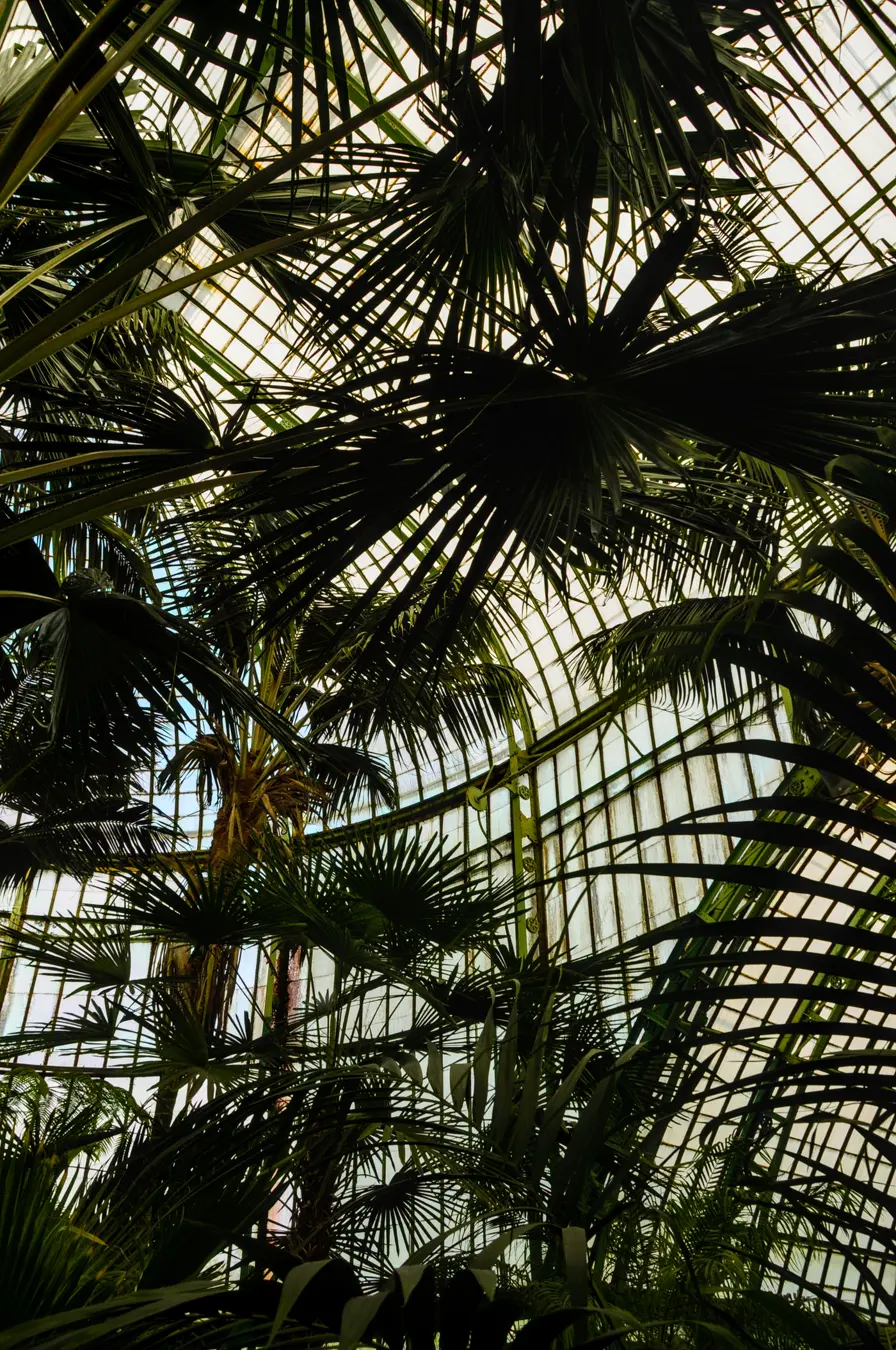
The largest and most diverse living plant collection anywhere, with roughly 50,000 plant taxa across 121 hectares. The Palm House of 1848 was the first building of its size made from wrought iron. Kew is also where the numbers get confusing: the living collection, the 7-million-sheet herbarium and the seed bank are three different things that get quoted interchangeably. Read the full Kew Gardens plants guide.
Keukenhof, Netherlands
Not a permanent garden at all. Keukenhof is a showcase for the Dutch bulb industry, replanted from scratch each autumn with around seven million donated bulbs, open for roughly eight weeks, then lifted. What you are seeing is a one-season set — which is why the useful takeaway is bulb layering, not border design. Read the full Keukenhof tulip garden guide.
The Gardens of Versailles, France
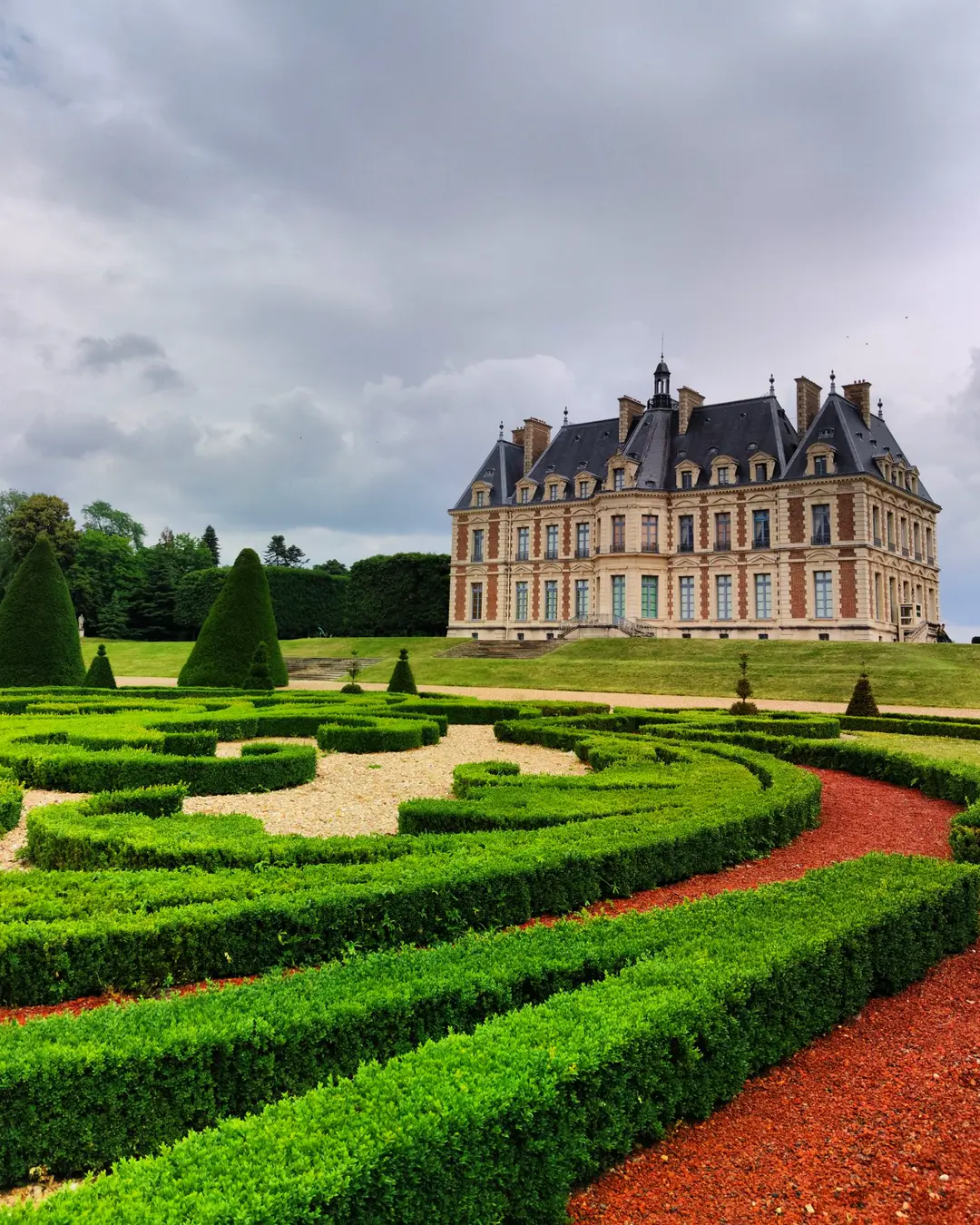
The high point of the French formal garden, and a piece of applied optics. Features were built wider at the far end so they read as regular from the château, and the Tapis Vert was graded so the main axis appears to have no end. The Orangerie’s thousand-plus tubbed citrus still move under cover every winter. Read the full Versailles garden design guide.
Monet’s garden at Giverny, France
A garden built to be painted. Monet bought the water meadow specifically to dig the pond, applied for permission to divert a stream, and won on appeal by writing that he wanted the plants for the pleasure of the eyes and as subjects to paint. It is designed for one viewpoint, which is the most copyable idea in it. Read the full Monet garden Giverny plants guide.
Villa d’Este, Tivoli, Italy
A hillside turned into a water machine. A tunnel under the town and a forty-metre fall run every jet and cascade by gravity alone — no pump has ever been needed. Built by a cardinal who kept expecting to be elected Pope and never was. Read the full Villa d’Este gardens Tivoli guide.
Boboli Gardens, Florence, Italy
The prototype the rest of Europe copied, begun for the Medici around 1550 and terraced up a hillside behind Palazzo Pitti. Its most transferable feature is the limonaia: a citrus collection kept permanently in terracotta pots and wheeled under cover each winter, which is precisely why those varieties survived at all. Read the full Boboli Gardens Florence guide.
The Eden Project, Cornwall, UK
Built in an exhausted china-clay pit that had no soil whatsoever. The growing medium was manufactured on site from mining spoil, composted bark and green waste — a process the project’s own published account describes in detail — tens of thousands of tonnes of it, mixed to different recipes for indoors and out. If you garden on rubble or subsoil, this is the most directly useful garden here. Read the full Eden Project biomes plants guide.
Famous gardens in Asia
Gardens by the Bay, Singapore
The Supertrees are not sculpture. Most of them do real work — carrying photovoltaic cells, venting the conservatories, collecting rainwater — while also being planted vertical gardens. The cooled domes chill only the low zone where people actually are, which is a lesson in itself. Read the full Gardens by the Bay plants guide.
Singapore Botanic Gardens
A different place entirely from Gardens by the Bay, and the two are constantly confused. This is where Henry Ridley worked out the herringbone tapping cut that let rubber be harvested without killing the tree — a piece of horticulture that rebuilt a regional economy. Its orchid work continues today. Read the full Singapore Botanic Gardens orchids guide.
Kenroku-en, Kanazawa, Japan
Named after a Chinese landscape theory that lists six qualities said to be impossible to combine — spaciousness and seclusion, artifice and antiquity, water and panorama. Each winter its pines are held up by rope cones against the snow, which is a garden treating winter as a design problem rather than a dead season. Read the full Kenroku-en Japanese garden guide.
Ryōan-ji, Kyoto, Japan
Fifteen stones in raked gravel, arranged so that from any seated position on the veranda one stone is always hidden. Nobody knows who made it or exactly when, and the earliest description records nine stones rather than fifteen. A garden whose power is entirely subtraction. Read the full Ryōan-ji rock garden guide.
Nong Nooch, Pattaya, Thailand
Behind the topiary parterres sits one of the world’s largest cycad collections and a serious conservation programme. Cycads cannot simply be seed-banked — they have to be held alive, in ground, indefinitely — which is why a land-rich garden is the right institution for them. Read the full Nong Nooch tropical garden plants guide.
Bogor Botanical Gardens, Indonesia
Founded in 1817 and effectively the parent institution of scientific botany across tropical Asia. It is also home to the plants everybody wants to see and nobody can grow: the parasitic Rafflesia, which has no leaves, stem or roots, and the titan arum, which flowers rarely and on its own schedule. Read the full Bogor Botanical Gardens plants guide.
Famous gardens in India
Amrit Udyan, New Delhi
Renamed from “Mughal Gardens” in 2023, and open to the public only in a season announced each year. Its charbagh geometry is not merely symbolic: water channels and sunken beds cool the air by evaporation and shelter plants from hot wind, which works in a Delhi April and stops working in a Delhi August. Read the full Amrit Udyan Mughal Gardens Delhi guide.
Brindavan Gardens, Mysuru
Not a Mughal garden and not Vrindavan in Uttar Pradesh — two things readers routinely get wrong. It is a 20th-century terraced garden on the apron below the KRS dam, and its famous musical fountain depends on reservoir levels, so a weak monsoon changes the whole visit. Read the full Brindavan Gardens Mysore plants guide.
Lalbagh, Bengaluru
Begun under Hyder Ali and extended by Tipu Sultan, with a cast-iron Glass House modelled on London’s Crystal Palace — the copy is still working while the original burned down in 1936. It also sits on a gneiss outcrop billions of years old, designated a national geological monument. Read the full Lalbagh Botanical Garden Bangalore guide.
Famous gardens in the Americas, Africa and the Middle East
Longwood Gardens, Pennsylvania, USA
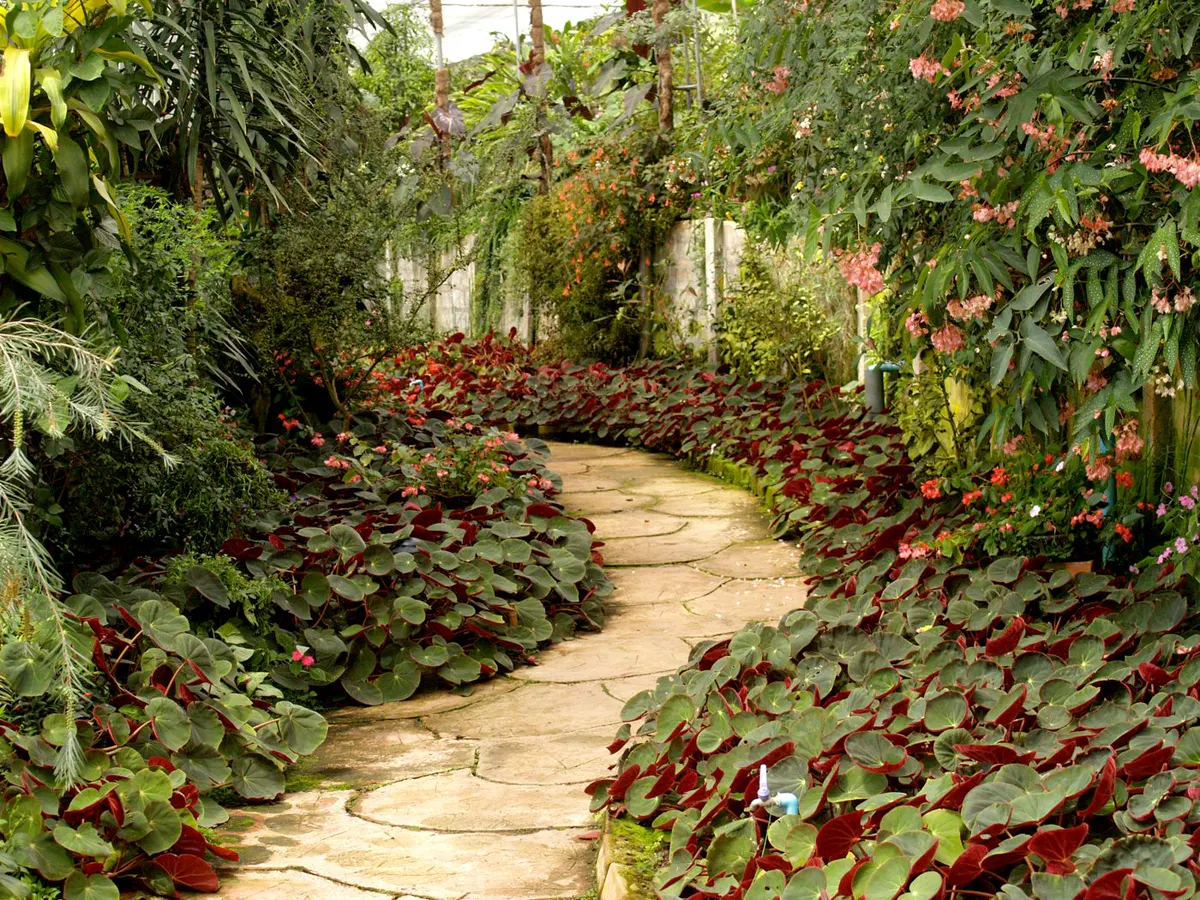
It exists because Pierre du Pont bought the land in 1906 to stop a lumber contractor felling an arboretum planted in 1798. Conservation first, spectacle second — though the spectacle, fountains choreographed by an obsessive owner and a vast pipe organ inside a glasshouse, arrived soon enough. Read the full Longwood Gardens plants guide.
The Butchart Gardens, Vancouver Island, Canada
The Sunken Garden is a worked-out limestone quarry. Jennie Butchart had topsoil hauled in by horse and cart to plant an industrial pit — which makes this the garden to read if your own soil is thin, compacted or full of builder’s rubble. Read the full Butchart Gardens flowers guide.
Kirstenbosch, Cape Town, South Africa
Founded in 1913 as the first botanic garden anywhere dedicated to a single country’s own native flora, and it still grows only southern African plants. Its fynbos, catalogued by SANBI, is fire-adapted and grows in phosphorus-poor soil, which is exactly why proteas die when they are fed like ordinary garden plants. Read the full Kirstenbosch botanical garden plants guide.
Dubai Miracle Garden, UAE
A flower garden in a desert, possible only because of treated wastewater delivered by sub-surface drip irrigation — and it closes through the hottest months rather than pretending it can run year-round. For anyone gardening in real heat, the irrigation logic is worth more than the display. Read the full Dubai Miracle Garden flowers guide.
Famous gardens by what you actually want from them
Twenty is too many to visit and too many to copy. Pick by what you are after.
- Pure flower spectacle: Keukenhof, Butchart, Dubai Miracle Garden.
- Design lessons for a small plot: Ryōan-ji, Boboli, Villa d’Este, Versailles.
- Tropical and indoor plant lovers: Gardens by the Bay, Bogor, Nong Nooch, Singapore Botanic Gardens.
- Difficult ground and poor soil: Butchart and the Eden Project — one imported soil, the other manufactured it.
- Hot, dry or monsoon climates: Dubai Miracle Garden, Amrit Udyan, Kirstenbosch.
- Visitors in India: Amrit Udyan, Brindavan and Lalbagh are all reachable domestically.
Ready to plan your own version? Sketch it with our garden planner, time your sowing with the planting calendar, and check your dates against your local frost dates.
Start with one idea, not twenty
Growing any of it from seed? Time it with our seed-starting calculator.
Frequently asked questions
Which is the most famous garden in the world?
Kew and Versailles are the two most commonly named, for different reasons — Kew for the size and scientific importance of its collection, Versailles for its influence on garden design. There is no ranking anyone agrees on, and any list claiming one is stating a preference.
How many of these famous gardens are UNESCO World Heritage Sites?
Several, including Kew, Versailles, Villa d’Este, the Singapore Botanic Gardens and Boboli, though the terms differ — some are listed in their own right, others as part of a larger site. Each guide states the position for that garden rather than generalising.
Which famous garden is the largest?
It depends what you count. Versailles’ estate runs to hundreds of hectares, but its formal gardens are a fraction of that, and several gardens quote park area and display area interchangeably. Where sources disagree, our individual guides say so instead of picking a number.
Which famous gardens can you visit in India?
Three on this list: Amrit Udyan in New Delhi, Brindavan Gardens near Mysuru, and Lalbagh in Bengaluru. Amrit Udyan opens only in an annually announced season; the other two are open year-round.
What is the best time of year to visit famous gardens?
Late spring for most temperate gardens, and autumn as the quieter alternative. Equatorial gardens like Singapore’s and Bogor’s have no real season, so time of day matters more. Desert gardens run in the cool months only.
Which famous garden is best for a first visit?
Kew, if you want the widest range of plants in one place. Keukenhof, if you want sheer flower spectacle and can go in spring. Both are easy to reach and well set up for visitors who are not specialists.
Are famous gardens worth visiting if I am not a gardener?
Most are, but for different reasons. Versailles, Boboli and Villa d’Este are architecture and history as much as horticulture. Gardens by the Bay is essentially engineering. Ryōan-ji is closer to sculpture than planting.
Which of these gardens is free to enter?
Entry arrangements vary and change, so we deliberately do not publish prices. The Singapore Botanic Gardens is a well-known example of a major garden that is free to enter, with a charge for one section. Always check the official site before travelling.
Can I actually grow plants from these gardens at home?
Many of them, yes. Tulips, water lilies, orchids, boxwood, canna, marigolds and bougainvillea are all widely sold. What you cannot grow is anything requiring a climate you do not have, and each guide is honest about which is which.
Which famous garden teaches the most useful lesson?
For most readers, the Eden Project or Butchart — because both started with ground that was unusable and made it work. Soil is the constraint most gardeners actually face, not design.
Why are there no gardens from Australia or South America on this list?
Because twenty places cannot cover everything, and we chose gardens that met all four criteria above. Their absence is a limit of the list, not a judgement — and worth saying plainly rather than implying the list is exhaustive.
How do I choose which one to copy?
Start from your conditions, not your favourite photograph. Match your climate, soil and light first, then borrow the design idea. Our plant finder and plant doctor will tell you what you are actually working with.
Related gardens and guides
Applying these ideas at ordinary scale: small garden design, backyard design ideas, low-maintenance landscaping and terrace gardening in India.
Still stuck? Ask the Plant Doctor
Describe the problem — yellow leaves, holes, no flowers — and get a clear answer in seconds. FreeAI can make mistakes. Answers are guidance, not a guarantee — check anything important against the guide it links to, and always read the label on any product before you use it.