Ryoan-ji Rock Garden
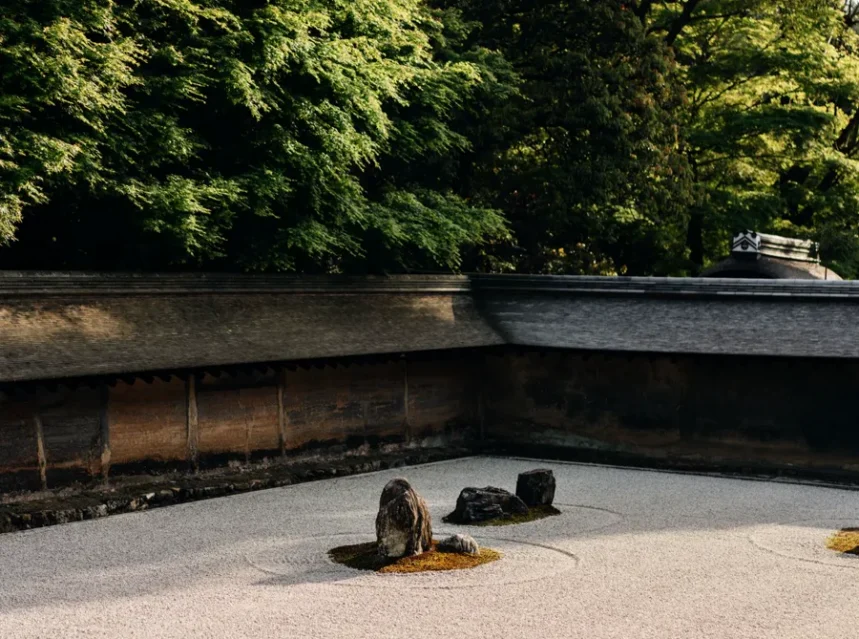
The Ryoan-ji rock garden is a walled rectangle of raked gravel holding fifteen stones and nothing else. There are no flowers in it, no shrubs, no pond and no stream. It sits at a Rinzai Zen temple in north-west Kyoto, and it is probably the most argued-about piece of ground in garden history. This guide covers what is actually known about it, what is not, and what you can borrow from it.
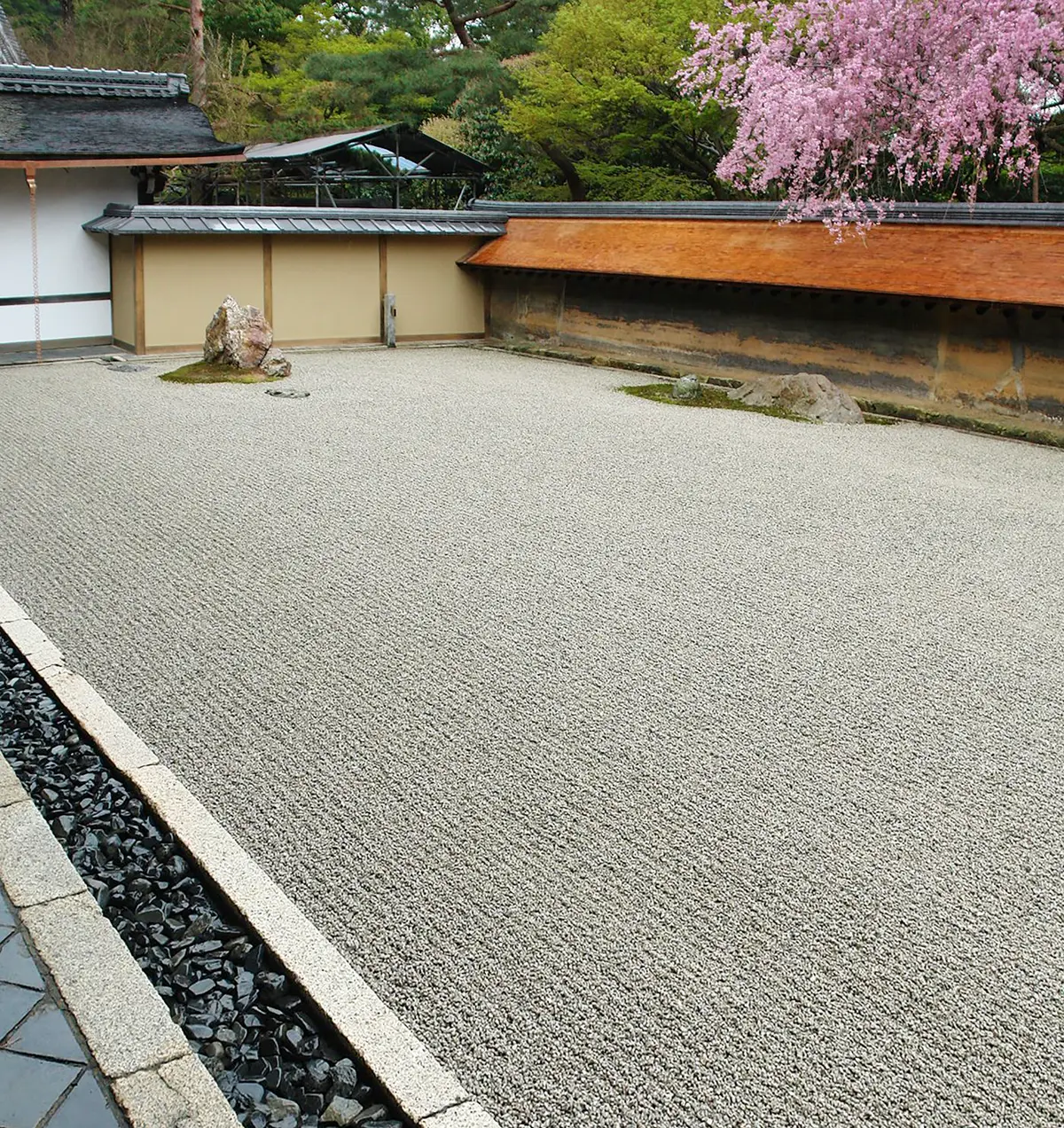
Quick answer: Ryoan-ji is a Zen temple in Kyoto whose dry rock garden measures roughly 25 by 10 metres. Fifteen stones sit in five groups on patches of moss in raked gravel, enclosed by a low clay wall and viewed from a wooden veranda. Its designer, date and meaning are all unrecorded.
🧰 In a hurry? Jump straight to our tested picks for this guide ↓
Ryoan-ji rock garden at a glance
Most famous gardens overwhelm you with material. This one does the opposite. It removes almost everything, then asks you to sit still and look at what is left. That makes it the exact opposite of Japan’s other most-celebrated garden: Kenroku-en in Kanazawa is built on abundance, six qualities held together at once, where Ryoan-ji is built on subtraction.
| Feature | Detail |
|---|---|
| Official name | Ryoan-ji (龍安寺), the Temple of the Dragon at Peace |
| Location | Ukyo ward, north-west Kyoto, Japan |
| Created | Temple founded 1450; the rock garden is usually placed in the late 15th century, though the layout you see today was reworked around 1799 |
| Created by | Unknown. No record names the designer, and the attributions you will read elsewhere are traditions, not evidence |
| Size | Approx. 25 m by 10 m, about 248 sq m (2,670 sq ft) |
| Garden style | Karesansui — a japanese dry landscape garden, using no water at all |
| Planting | Approx. zero plants inside the rectangle as of 2026, apart from the moss collars around the stones |
| Signature feature | Fifteen stones in five groups, arranged 5-2-3-2-3 from east to west |
| Best season | Every season reads differently; early morning is better than any particular month |
| Climate | Koppen Cfa, humid subtropical; broadly equivalent to USDA zone 8b-9a, though Japan uses its own zone system |
| UNESCO status | One of 17 components of the Historic Monuments of Ancient Kyoto, inscribed 1994 |
| Managed by | The Myoshin-ji branch of Rinzai Zen Buddhism |
If you want to work out which of the plants named further down would actually survive where you live, run your conditions through the plant finder first.
What makes Ryoan-ji famous
Three things, and only one of them is the stones.
- It is the purest surviving example of its type. A karesansui garden suggests water using dry material. Most such gardens still hedge their bets with a clipped shrub or a small tree. This one does not.
- Nobody can explain it. The designer, the date and the intention are all missing from the record, which has left five centuries of open space for interpretation.
- The viewing is fixed. You do not walk through it. You sit on the veranda of the abbot’s quarters and look, which makes it closer to a painting than to a landscape.
The English-language encyclopedia entry for Ryoan-ji is unusually candid about the gaps, and worth reading alongside the confident explanations you will find on travel sites.
Why can you never see all 15 stones at once?
This is the fact everyone repeats, and it is broadly true. The stones sit in five groups of five, two, three, two and three. From a seated position on the veranda, at least one stone is always screened by another. Move along the veranda and a different stone disappears. Only from directly overhead, which no visitor can reach, does the full set resolve.
Now the honest part. That the effect exists is well attested, including by the Japan National Tourism Organization. That it was designed to happen is a separate claim, and no surviving document supports it. A scale model inside the building lets you see all fifteen at once, which rather undercuts the mystique.
The interpretations are worth listing precisely because they contradict each other:
- Islands in a sea — the reading that fits the landscape-painting tradition best.
- Mountain peaks above cloud — the same idea inverted.
- A tigress carrying her cubs across water — from a Chinese fable, and preserved in one of the garden’s traditional nicknames rather than in any design brief.
- The character for “heart” or “mind” — a join-the-dots reading with no documentary basis.
- Nothing at all — the position taken by garden historian Gunter Nitschke, who described it as an abstract composition of natural objects whose purpose is to prompt reflection rather than to represent anything.
There is no official meaning. Any page that gives you one has decided for you.
History: what is known and what is not
The site was an aristocratic estate before it was a temple. Hosokawa Katsumoto founded the Zen temple here in 1450. His feud with a rival helped start the Onin War in 1467, and the temple burned in it. His son rebuilt it in 1488. Fire took the buildings again in 1797, and they were rebuilt shortly after.
The garden itself has no such timeline. It is commonly dated to around 1499. But the earliest description of the garden, from the 1680s, records nine stones, not fifteen. And a garden writer of the period reworked the layout at the end of the 18th century, after the fire. Records from 1799 describe the arrangement we see now.
So the garden may be late-medieval, or it may be substantially Georgian-era. Two names are carved on the back of one stone, but the second is worn and has been read as Hikojiro, Seijiro and Kojiro at different times. That is the whole documentary record. Sources also disagree on the size: 248 square metres is the best-supported figure, but 340 square metres and 31 by 15 metres both circulate, and one encyclopedia contradicts itself across three of its own pages.
What to see: the features beyond the gravel
The rectangle takes ten minutes. The grounds take an hour. Named features worth finding:
- The rock garden — viewed from the veranda, not entered.
- The aburadobei — the oil-earth wall on three sides, covered below.
- The hojo — the abbot’s quarters, with tatami floors and painted sliding doors, rebuilt after the 1797 fire.
- Kyoyochi pond — a 12th-century pond with islands, older than the rock garden by centuries and once known as the Mandarin Duck Pond. Water lilies appear here in early summer.
- The tsukubai — a low stone water basin whose four characters share the square water hole as a common element, so that read together they mean roughly “I know only satisfaction”. The one visitors see is a replica; the original sits at the teahouse, which is not open to the public.
- Zoroku-an teahouse — 17th century, viewable from outside only.
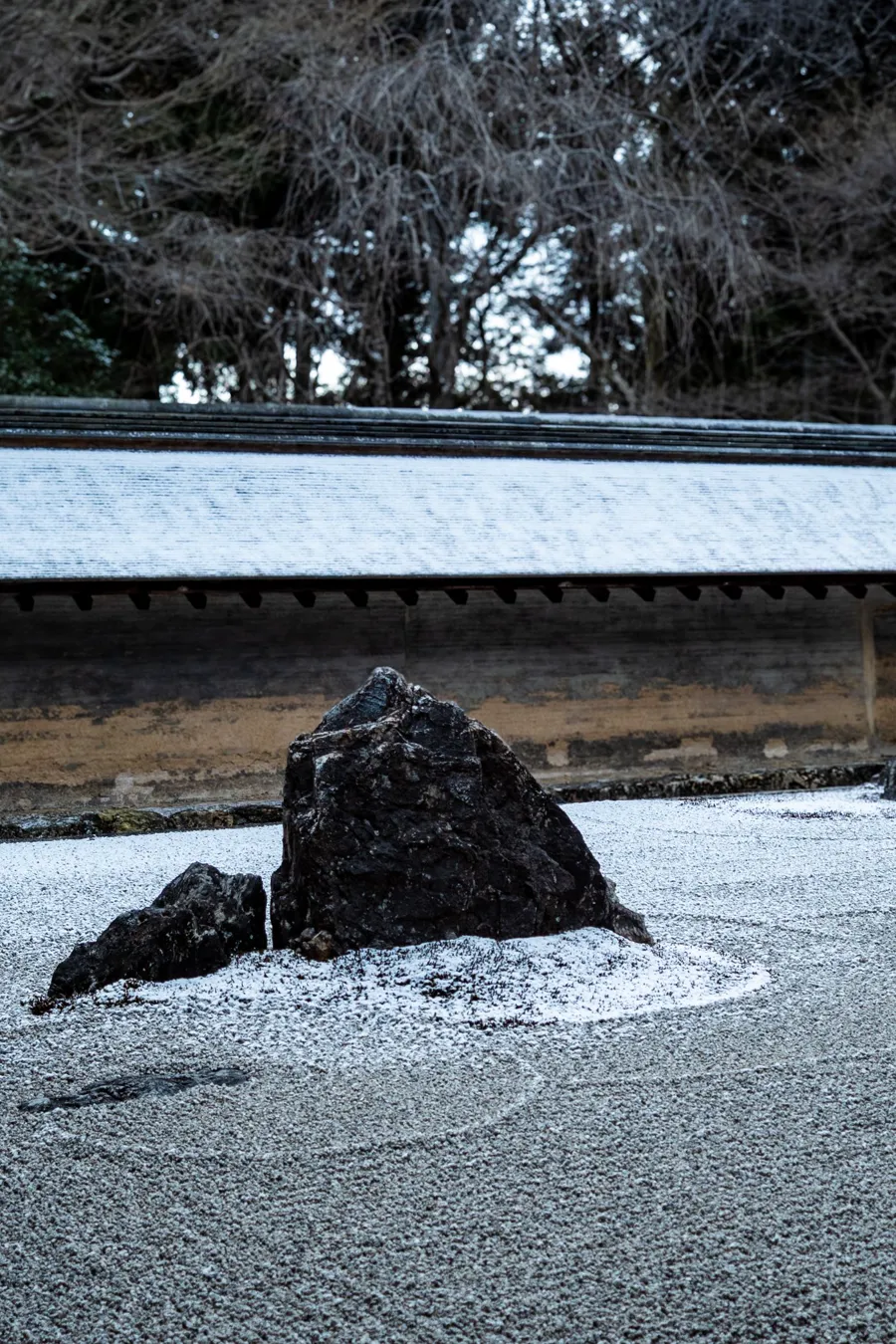
The wall deserves more attention than it gets. It is built from earth mixed with rapeseed oil, which waterproofed it and stopped it glaring in sunlight. Over centuries the oil has seeped back through, staining the surface in browns, ochres and dull golds. Nobody set out to create that patina, but it is now inseparable from how the garden reads: a warm, mottled, imperfect backdrop that keeps the pale gravel from looking clinical. It is conserved rather than cleaned. The wall was restored in 1977, and the roof treatment has changed over its life, so old photographs and current ones do not always match.
Best time to visit Ryoan-ji
Hour matters more than month. The tourism authorities are unanimous that arriving at opening is the single best decision you can make, because coaches arrive mid-morning and a garden built for quiet contemplation does not survive a crowd.
By season, the changes happen mostly beyond the wall, since the rectangle itself has nothing to change. Spring brings blossom above the wall line. Early summer puts water lilies on the pond. Autumn turns the trees around the pond red and orange, and this is the busiest period. Winter is the connoisseur’s choice: snow settles on the gravel and on the stones, and the composition reads at its starkest.
Note that autumn colour and blossom both shift by a week or two each year, so treat any fixed date you read as a rough guide. If you want to think about that timing in your own garden rather than in Kyoto, our frost dates tool and planting calendar do the same job locally.
Planning a visit: what to know
The temple is in north-west Kyoto and combines easily with other sites in the same district. Allow half an hour for the rock garden and the veranda, and a full hour if you want to walk the pond. Photography from the veranda is normal; walking on the gravel is not.
Opening times, ticket prices and booking rules change every season, so check the official site before you travel. The national tourism board’s official listing is the most reliable English starting point, and links onward to the temple’s own pages.
Signature plants of Ryoan-ji — and how to grow them at home
Inside the rectangle there is one plant and one only: moss, in tight collars at the base of each stone group. It has no dedicated guide on this site because it is not really a garden plant in the ordinary sense — you do not plant it so much as create conditions and wait. Moss wants shade, steady humidity, an acidic surface, and above all no foot traffic. Compacted, sunbaked or alkaline ground will not hold it, and no amount of watering fixes that. If you are unsure whether your site could support it, put your conditions into the plant finder and see what it suggests instead.
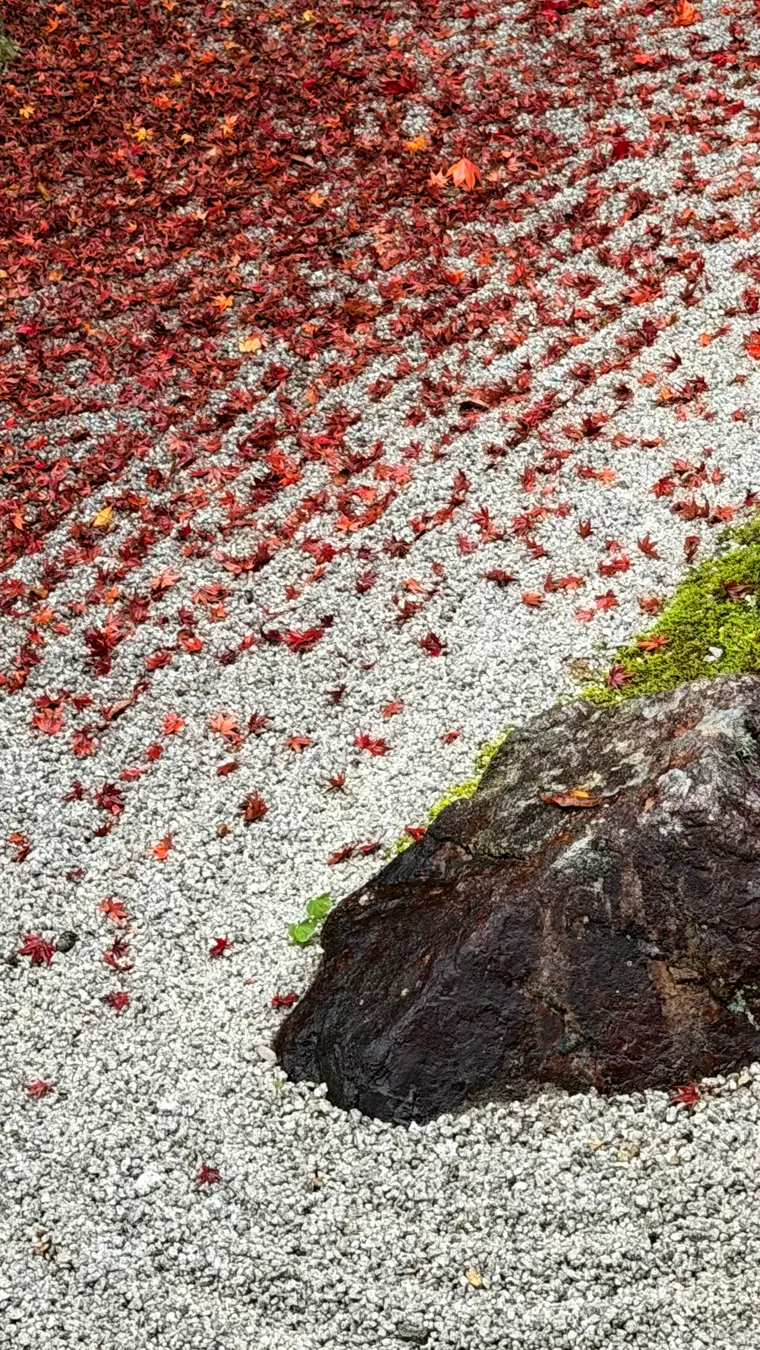
The planting that gives Ryoan-ji its frame sits outside the wall, and that is the part most gardeners can actually reproduce:
- Japanese maple — the canopy above the wall, and the single most useful tree for this look in a small garden.
- Camellias — evergreen structure with a short, restrained flowering period.
- Bamboo — for screening and movement, though it needs containment.
- Hostas — where you want leaf texture in the same shade that suits moss.
All four are shade-tolerant and moisture-hungry, which is the opposite of what the gravel needs. Work out your drainage and feeding separately for each zone using the soil calculator and the water calculator.
Growing the Ryoan-ji look in your climate: US, UK and India
Here is the useful irony. A garden created in a wet, humid city is one of the most transferable ideas available to gardeners in hot and water-scarce places, because its main material does not drink. A gravel rectangle needs no irrigation, no mowing and no fertiliser. In drought-restricted parts of the US Southwest, Australia and southern Europe, that is not an aesthetic choice but a practical one, and the same logic drives many drought-tolerant garden ideas.
What does not transfer is the moss. In Delhi, Chennai or Phoenix, moss will not persist through the dry season no matter what you do, and chasing it wastes money. Replace it with something that reads the same way from a distance: a low mat-forming succulent, a dwarf sedum, a fine-leaved dryland grass kept short, or simply a darker, coarser gravel laid as a contrasting collar around each stone group. The visual job of the moss is to make the stones look rooted rather than dropped, and a change of gravel grade does that job perfectly well.
Two more climate notes. In monsoon regions, gravel of 5-20 mm holds its position far better than sand, which scours and floods out; edge the bed properly and get the sub-base drainage right before you spend anything on stone. In UK conditions the opposite problem applies, since moss and algae will colonise pale gravel readily, so choose a grade you are willing to see greened over. For rooftop and balcony versions of all this, our terrace gardening in India guide covers the load and drainage constraints that decide what is possible.
5 design lessons from Ryoan-ji you can copy
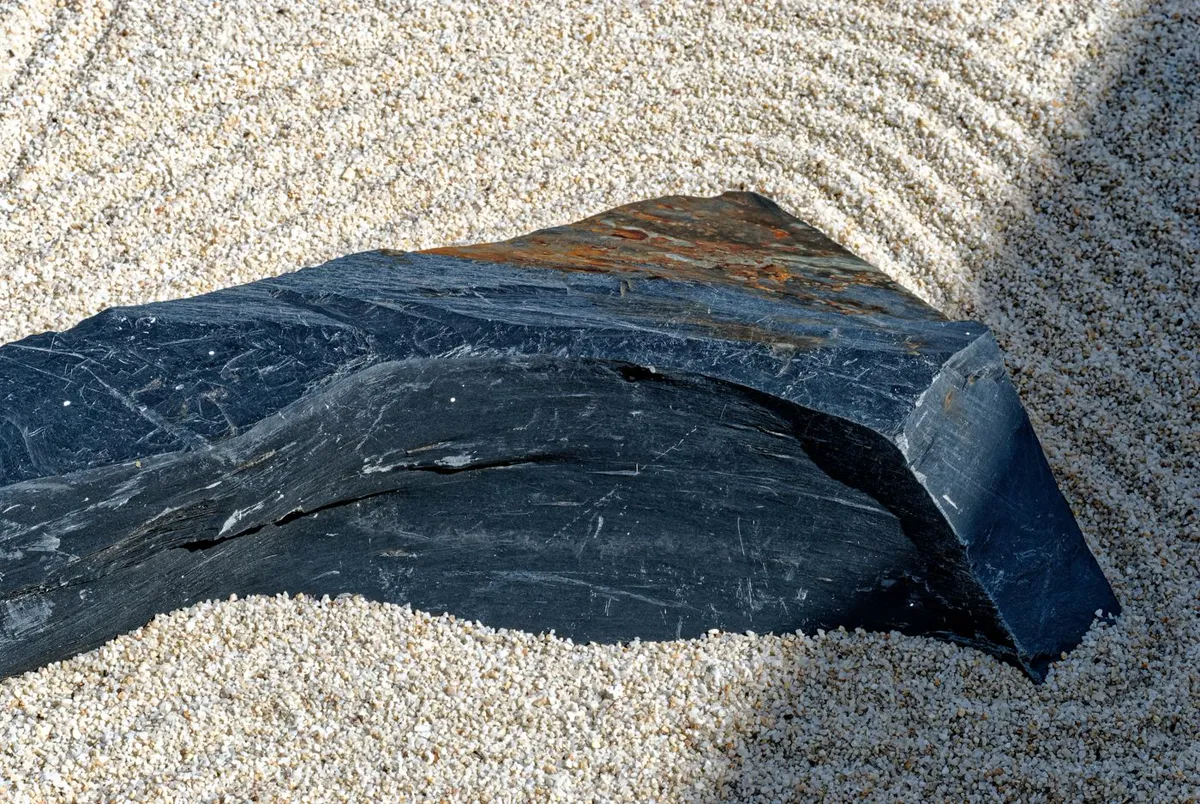
- Treat empty space as the subject, not the leftover. Roughly nine-tenths of this garden is gravel. The stones do not sit in the space; the space is shaped by them. Most amateur planting fails the other way round, filling every gap until nothing has room to be looked at. Try removing something instead of adding.
- Group in odd numbers. Five, two, three, two, three. Odd groupings read as natural because the eye cannot pair them off and resolve them into symmetry, so it keeps moving. Four objects split instantly into two and two and the composition dies. Use three, five or seven, and vary the sizes within each group.
- Break the symmetry on purpose. The groups are not evenly spaced, not equally sized and not centred in the rectangle. Deliberate asymmetry is what stops a formal frame becoming a diagram. Plot it before you dig — the garden planner and the plant spacing calculator will let you shift things on paper while it is still free.
- Use gravel and moss as materials, not filler. Gravel here is not what you put down because you ran out of plants. Its grade, colour and raked texture carry the whole surface, and the moss provides the only contrast in tone. Choose these with the same care you would give a specimen shrub.
- Practise restraint, and fix a viewing point. The hardest discipline is deciding what to leave out. The second hardest is accepting that a garden does not have to work from every angle. Ryoan-ji is composed for someone seated on a veranda. Pick your own seat — a window, a bench, a doorway — and design for that view first.
What researchers say about the layout
In 2002 the journal Nature published a short paper by Gert van Tonder, Michael Lyons and Yoshimichi Ejima, then at Kyoto University and Ritsumeikan University. Applying a shape-analysis technique to the stone layout, they argued that the apparently empty gravel is not structurally empty at all: the gaps between the stone groups form an implicit branching pattern whose main axis points towards the traditional viewing position on the veranda, and that this structure breaks down if the stones are shifted at random.
Their paper is available in full, and a correction was published the following year. It is evidence about the composition’s visual properties rather than proof of anyone’s intention, and the authors are careful about that distinction — which is more than can be said for most retellings of it.
Recreate the look at home: what you’ll need
If you are pairing the gravel area with a planted border of maples and shade plants, work out your sowing and potting-on timings first with the seed starting calculator.
Frequently asked questions
Why can you only see 14 of the 15 stones at Ryoan-ji?
Because the stones are positioned so that from any seated point on the veranda, at least one is hidden behind another. Fifteen was a number associated with completeness in East Asian thought, so fourteen has often been read as deliberate incompleteness. Whether the builders intended that is not documented.
What do the 15 stones at Ryoanji represent?
There is no agreed answer and no official one. Islands in a sea, mountains above cloud, a tiger carrying cubs across water and a written character have all been proposed, and at least one respected historian argues the composition represents nothing at all.
Who designed the Ryoan-ji rock garden and when?
Unknown on both counts. It is usually dated to the late 1400s, but the earliest surviving description dates from the 1680s and mentions nine stones, and the present layout was reworked around 1799. Several designers are traditionally credited; none is documented.
Is it true you can see all 15 stones if you are enlightened?
No. That line is modern visitor lore rather than Zen teaching. The arrangement is a matter of sightlines, and a scale model inside the building shows all fifteen to anybody who looks.
How do you get to Ryoan-ji, and how long should you allow?
It sits in north-west Kyoto, on the same side of the city as several other major temples, and is reachable by local train or city bus. Half an hour covers the rock garden; an hour lets you walk the pond as well.
What is the best time of day to visit?
As early as the gates allow. Tour groups arrive mid-morning, and the garden depends entirely on quiet. Late afternoon is the second-best option in most seasons.
Can I grow moss like the moss at Ryoan-ji?
Only if you can offer shade, consistent humidity, an acidic surface and zero foot traffic. Moss cannot be forced onto a dry, sunny or compacted site. In hot dry climates, use a low succulent mat or a contrasting gravel grade instead.
How deep should the gravel be, and how do I stop weeds?
Around 50-75 mm is enough to hold a raked line without being heavy to work. Weeds come from the sub-base, so prepare that layer properly rather than relying on a membrane, and pull anything that appears early. If something keeps returning and you cannot identify it, our plant doctor will help you work out what you are dealing with.
Is Ryoan-ji the oldest or most famous rock garden in Japan?
It is the most famous by a wide margin, and it is the one usually held up as the definitive example of the style. It is not the oldest — the dry landscape tradition predates it, and Ryoan-ji’s own pond is centuries older than its gravel.
Ryoan-ji or another Kyoto temple garden — which should I choose?
Ryoan-ji is the most austere and the most crowded. Other temple gardens in the city offer more variety, more planting and often more space to move around. If you want the pure version of the dry style, come here; if you want a garden to walk through, choose elsewhere.
Does a dry gravel garden work in India?
Very well, and arguably better than in Kyoto. It needs no irrigation, survives the hot months untouched and suits terraces and small urban plots. Use 5-20 mm gravel rather than sand so the monsoon does not wash it out, sort the drainage first, and substitute something drought-hardy for the moss.
What is a karesansui garden?
A dry landscape composition that suggests water and terrain using gravel, sand and stone, without any water present. Raked lines stand in for ripples and stones for islands or peaks. The background on the style covers how it developed.
Related gardens and guides
Ryōan-ji is one of twenty in our guide to the 20 most famous gardens in the world.
- Versailles garden design — the exact opposite argument: a garden built by addition, scale and optical engineering.
- Kew Gardens plants — a working scientific collection rather than a composition.
- Drought-tolerant garden ideas — the practical, low-water end of everything described above.
Ryoan-ji is a designated World Heritage component and an active religious site as well as a garden. Details of access and management were correct at the time of writing; verify current arrangements before travelling.
Still stuck? Ask the Plant Doctor
Describe the problem — yellow leaves, holes, no flowers — and get a clear answer in seconds. FreeAI can make mistakes. Answers are guidance, not a guarantee — check anything important against the guide it links to, and always read the label on any product before you use it.