Mason Bee House
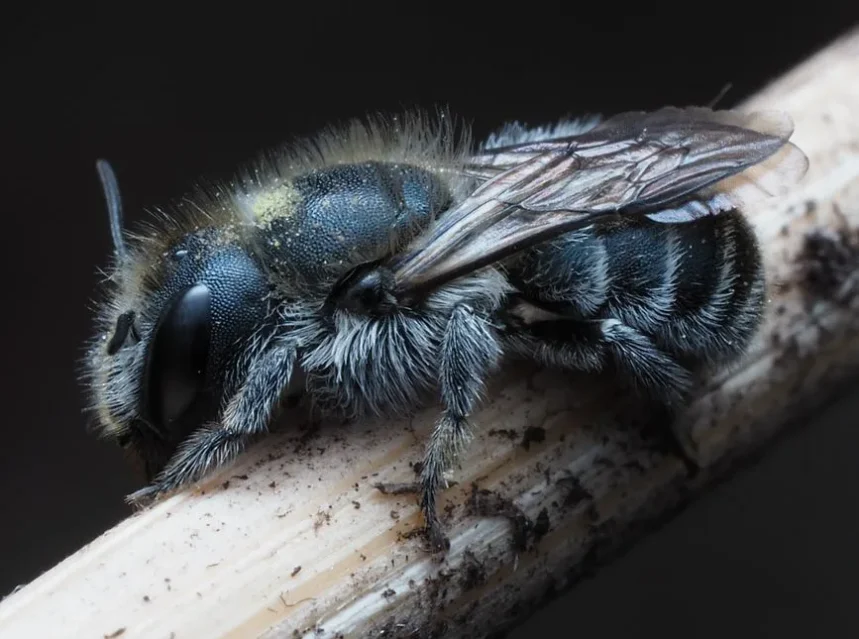
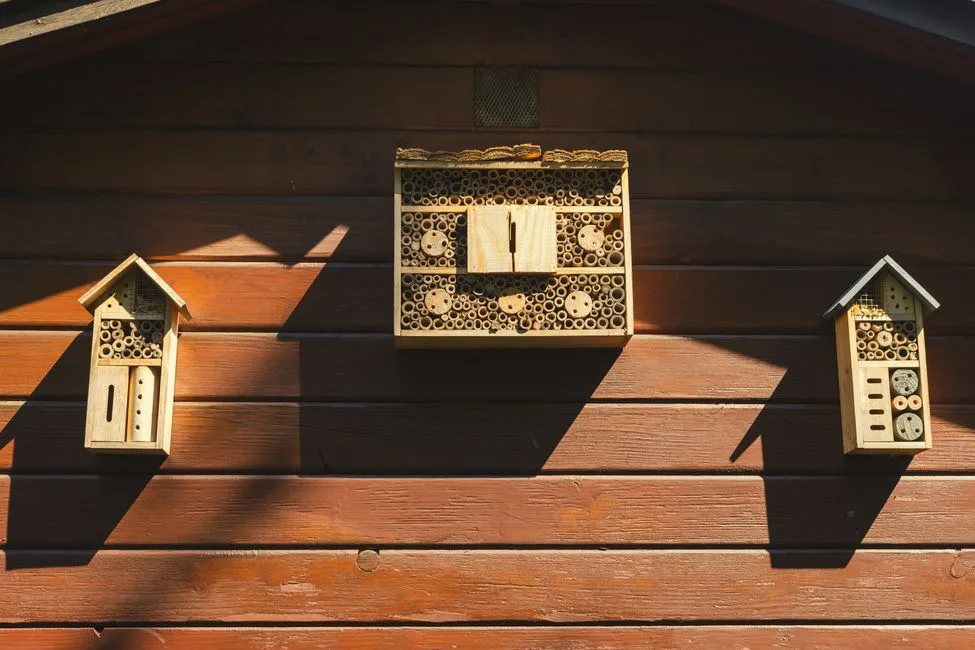
A mason bee house is a block or bundle of dead-end tunnels that gives cavity-nesting solitary bees somewhere to lay their eggs. It is a nest site, not a hive. Nobody lives in it, no honey is made in it, and the bees using it are gentle, short-lived females working alone.
Quick answer: Buy or build one with removable tubes you can open, 5/16 inch (8 mm) across and at least 6 inches deep, closed at the back. Fix it firmly at 4-6 feet, facing east or south-east, sheltered by a roof overhang, with damp clay within about 25 feet. Put it out two to four weeks before your first fruit blossom. Then do the part almost everyone skips: harvest and clean the cocoons in autumn, and replace the tubes. A house you never clean stops being a nest and becomes a parasite farm, and that single fact decides whether yours helps bees or quietly harms them.
🧰 In a hurry? Jump straight to our tested picks for this guide ↓
Mason bee house at a glance
| Decision | What works | Why it matters |
|---|---|---|
| Tube diameter | 5/16 in (8 mm) for blue orchard mason bees; a spread of 4-10 mm attracts more species | The wrong bore wastes the female’s mud and time, or is simply ignored |
| Tube depth | 6 in (15 cm), closed at the back | Short tubes produce mostly male offspring – see below |
| Material | Paper liners, split reeds, or grooved wood trays that come apart | If it cannot be opened, it cannot be cleaned |
| Tubes per house | Roughly 20-30, or several small houses of 3-5 holes | Density drives parasites and disease |
| Height and aspect | 4-6 ft, facing east or south-east | Morning sun warms the bees to flight temperature |
| Mud source | Bare damp clay within about 25 ft | No clay, no mason bees – the mud is the wall between cells |
| Season | Out 2-4 weeks before first blossom; bees fly above roughly 55F (13C) | A house hung in May in a cool climate sits empty all year |
| Autumn job | Harvest cocoons, wash, store at 34-40F (1-4C) | This is the step that decides success |
What the research actually found, and why we are saying it
Most pages selling bee houses tell you that hanging one saves the bees. The largest study on the question does not support that, and a reader deserves to know before spending money.
Scott MacIvor and Laurence Packer set out 600 bee hotels across Toronto over three years and reared out what came from them. Their results, published in PLOS ONE in 2015 and reviewed by NC State Extension, covered more than 27,000 individual bees and wasps. Native wasps were the single biggest group. Of the bees that emerged, close to half belonged to introduced species rather than native ones, and native bees were parasitised significantly more often than the introduced ones. The authors’ own conclusion is blunt: bee hotels “differentially augment populations of wasps rather than those of native bees”, and they warn retailers against what they call bee-washing.
That is not the end of the argument. NC State Extension reviews the same evidence and lands somewhere more careful: we do not yet have strong evidence for or against bee houses as a conservation tool, because nobody has tracked wild populations long enough. They still recommend them when thoughtfully designed and genuinely maintained.
So here is the honest position, and it shapes everything below. A mason bee house is a good garden project, a superb way to watch a pollinator up close, and a real nest site for a handful of species. It is not, by itself, a conservation act. What turns it from neutral into positive is maintenance – and what turns it into a net harm is leaving it up, full and filthy, year after year.
The bee that will actually move in
Only about a quarter to a third of bee species nest in cavities at all. The rest nest in bare ground, and no house will ever interest them.
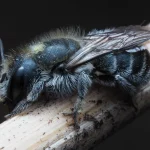
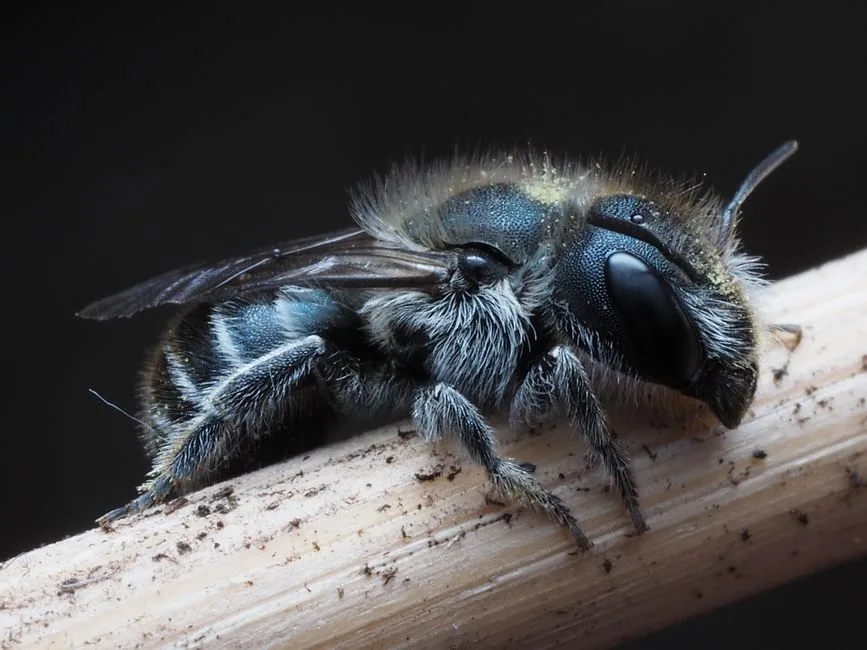
In cool temperate gardens the headline tenant is the blue orchard mason bee, Osmia lignaria in North America and the red mason bee, Osmia bicornis, across Britain and Europe. They fly early, roughly March to May, which is exactly when apple, pear, plum and cherry need pollinating. A female works alone: she gathers pollen, lays an egg on it, walls the cell off with mud, and repeats until the tunnel is full. She lives about four to six weeks and never sees her offspring.
Later in the season the same house is usually taken over by leafcutter bees, Megachile species, which seal their cells with neat semicircles cut from rose and lilac leaves rather than mud. Leafcutters like a narrower bore, roughly 1/8 to 1/4 inch, which is why Utah State University Extension suggests mixing diameters if you want more than one species.
Both are effectively stingless in practice. The females have a sting but almost never use it, there is no colony to defend, and the males cannot sting at all. A mason bee house is one of the few wildlife features that is genuinely safe next to a doorway.
Why most shop-bought bee houses fail
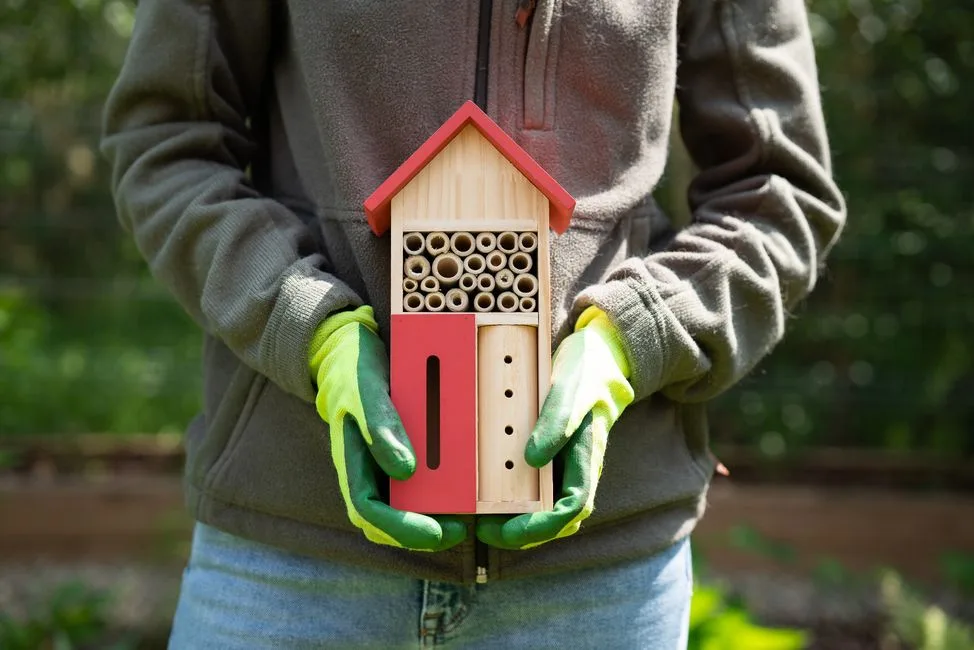
The decorative bee hotel sold in garden centres is designed to be shipped flat and look charming on a shelf. Biologist Colin Purrington has catalogued the faults in detail, and the same list turns up in extension guidance:
- Glued-in or sealed tubes. The single worst fault. If you cannot open the tunnels, you cannot clean them, and mites and fungus accumulate season after season.
- Tunnels open at both ends. Parasitic wasps simply walk in the back.
- Tubes two or three inches deep. A female lays fertilised, female-destined eggs at the back of a tunnel and male eggs near the front. A short tunnel therefore yields mostly males, which is a population that cannot sustain itself.
- Plastic, glass or metal tubes. They trap the moisture the developing bees give off, and mould follows.
- No roof overhang. Rain in the tunnels rots the pollen loaf and drowns the larvae.
- Hung on a string or a branch. A swinging house is hard to land on, and pollen falls off the returning female.
- Pine cones, bark and moss packed inside. No bee uses them. They are decoration, and they house spiders.
- Rough, splintered bores. Split bamboo shreds wings.
- Enormous “condominium” designs. Hundreds of tunnels in one block is a density no natural habitat produces, and parasites travel between them easily.
The last point is worth acting on even if you buy a good house. Purrington’s own preference, and the practical reading of the Xerces Society’s warning that unnaturally dense nesting raises parasitism, is to put out several small houses in different parts of the garden rather than one large one on the shed wall.
Where to hang a mason bee house
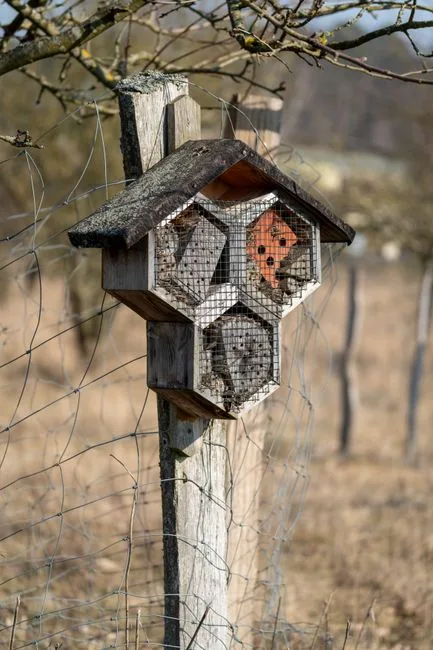
Face it east or south-east. Mason bees cannot fly until their flight muscles are warm, so morning sun is not a nicety – it is the difference between a bee that starts work at eight and one that starts at eleven. A north-facing house underperforms badly.
Fix it to something solid at 4 to 6 feet: a fence post, a wall, the side of a shed. Above mower height, below casual predator reach, and completely still.
Give it a roof. Two to three inches of overhang, or hang it under an existing eave.
Then think about the two things the bees need within a very short flight. Cavity nesters forage over roughly 300 feet, so blossom needs to be close. Mud matters even more: a mason bee builds every partition wall out of wet clay, and the commercial growers’ rule of thumb is a damp clay patch within about 25 feet. If your soil is sandy, dig a shallow bowl, fill it with clay soil and keep it wet through spring. Guides that skip this are the reason many houses stay empty.
Keep pesticides well away. A neonicotinoid drench on a nearby ornamental will reach the pollen the female is collecting, and our organic weed control and vinegar weed killer guides cover the alternatives.
When to put it out
Two to four weeks before the first major bloom in your area, so the house has weathered slightly and is in place before the first females are flying. Watch the fruit buds rather than the calendar: bud swell on apple, cherry or plum is the signal every mason bee grower uses.
If you are releasing bought cocoons, wait for daytime temperatures to sit reliably above about 55F (13C). Many growers release in two batches a fortnight apart, which spreads the pollination window and insures against one cold snap.
The year in a mason bee house
| Season | What is happening inside | What you do |
|---|---|---|
| Late winter | Adults are fully formed inside the cocoons, waiting | Clean tubes in place; put the house out at bud swell |
| Spring | Males emerge first, females a week or two later; tunnels fill and get mud-capped | Keep the clay damp. Do not move or open anything |
| Early summer | Nesting finishes once tunnels are capped; eggs hatch and larvae eat the pollen loaf | Leave alone. Move filled tubes to a sheltered, ventilated spot if wasps are a problem |
| Late summer | Larvae spin cocoons and pupate | Nothing |
| Autumn | Adults are dormant inside cocoons | Harvest, clean, sort and store the cocoons; bin or sterilise the old tubes |
Harvesting and cleaning the cocoons
This is the job that separates a bee house from a parasite trap, and it takes about an hour once a year.
Work in October or November, once temperatures have dropped and everything inside is dormant. Open the tubes: unwrap paper liners, split reeds, or take the wood trays apart. Tip the contents onto a tray.
Then sort by eye. Healthy cocoons are firm and dark. Discard anything that is C-shaped and chalky, which is chalkbrood, a fungus whose spores otherwise infect next year’s larvae. Discard cocoons with small exit holes, which mean a parasitic wasp got there first. If you find loose, moving specks that look like pollen, those are pollen mites, and every tube in that house must be replaced rather than reused.
Wash the survivors in cool water only – warm water can convince a bee that spring has arrived – rubbing gently to remove mud and mite debris. Never use soap or detergent. A very dilute bleach rinse, around one teaspoon per cup of water, is the usual disinfectant. Pat dry.
Store the clean cocoons somewhere cold, dark and slightly humid: about 34-40F (1-4C), which is a normal refrigerator. Use a breathable container with a barely damp sponge or a slightly damp paper towel, and keep them out of a fridge full of ripening fruit, because the ethylene given off by fruit is not good for dormant insects.
Why your bee house is empty
An empty house is the most common complaint, and it is usually one of six things:
- It went up too late. The flight season for spring mason bees is short. Miss it and you wait a year.
- The wood is new. Fresh pine and cedar carry strong resinous scents that solitary bees avoid. Many growers report that a house is ignored in year one and busy in year two, once it smells of the garden rather than the sawmill. Cedar in particular is best avoided.
- No mud. Worth checking twice, because it is invisible as a cause.
- The tubes are the wrong size or too shallow. Eight millimetres and six inches is the combination that works.
- Cold, wet spring weather. Below roughly 55F the bees simply do not fly, and a fortnight of rain can cost the whole season.
- Better options next door. Mason bees are opportunists. An old fence post riddled with beetle holes will beat your house every time, and that is a good outcome, not a failure.
One diagnostic is worth knowing. If tubes were capped last year but nothing emerged this spring, open one in autumn: empty cocoon shells mean your bees hatched and left, which is success, not absence.
Bee houses in India and other warm climates
Almost every mason bee guide online is written for a cool temperate spring, and copying it in Chennai or Nagpur will disappoint you. Osmia mason bees are temperate insects tied to a cold winter dormancy. In most of India they are not the local cavity nester at all.
What does turn up in a well-made tube house across the subcontinent are leafcutter bees (Megachile), small carpenter bees (Ceratina) that prefer pithy stems, and various solitary wasps. The large carpenter bee Xylocopa fenestrata, a familiar sight on Indian balconies, bores its own tunnels in dead wood rather than taking a ready-made one, so it needs an untreated log rather than a tube block.
Three practical adjustments follow. Offer narrower bores, from about 4 mm upward, because the tropical tenants are mostly smaller than Osmia. Expect the busy season to follow the rains rather than an early spring, since trap-nest studies in the tropics record more species nesting in the wet season. And clean more often, not less – warmth and humidity favour mould and mites, and University of Florida IFAS advises changing nesting material every two to three years in a subtropical climate, which is the minimum in a monsoon one. Under a monsoon, a deep roof overhang matters more than anything else on this page.
The thing that beats a bee house
The Xerces Society’s position is worth repeating because it is unfashionable: natural nesting habitat generally serves bees better than a manufactured hotel, because it matches natural nest densities and decays instead of accumulating disease.
That translates into four small garden decisions, all free:
- Leave a patch of bare, undisturbed, sunny soil. The majority of bee species nest in the ground, and mulch or turf over every inch removes their habitat.
- Leave dead stems standing. Cut raspberry, sunflower, elder or hydrangea stems to 8-24 inches in spring instead of clearing them, and pithy-stem nesters will move in.
- Leave a dead branch or an old post in place, ideally in sun.
- Plant early forage. A house is useless without pollen: our crocus, borage and bee balm guides between them cover the whole season, and how to attract pollinators puts it together.
Do those alongside a well-kept house and the house stops being decoration.
Frequently asked questions
Do mason bee houses actually work?
They reliably attract cavity-nesting bees and wasps, which is why they are used in orchards. Whether they increase wild bee populations is unproven – the largest study found wasps and non-native bees dominating them. A cleaned, well-designed house in a garden with early flowers and bare mud is a genuine nest site; an uncleaned decorative one is not.
Which direction should a bee house face?
East or south-east, so the morning sun warms it. Mason bees need to reach flight temperature before they can forage, and a shaded or north-facing house starts the working day hours late.
How high should a mason bee house be?
Four to six feet, on something rigid. Height keeps it clear of mowers and splashback; rigidity matters because a swinging house is hard to land on with a full pollen load.
Do mason bees sting?
Barely. Females can sting but rarely do, because there is no colony to defend, and males cannot sting at all. Any sting is described as far milder than a honey bee’s. They are safe around children and pets in ordinary use.
When should I put my mason bee house out?
Two to four weeks before your first fruit blossom, and release cocoons once daytime temperatures hold above about 55F (13C). Watching bud swell beats any fixed date, because spring arrives on a different week each year.
Do I need to buy mason bee cocoons?
Not if wild mason bees already visit your garden – a good house sited well will be found. Buying cocoons speeds up year one, but only source them from an inspected supplier, since moving cocoons moves their parasites too.
Why is my bee house empty?
Most often it was hung too late, the wood is still new and resinous, there is no damp clay within reach, or the tubes are too shallow. Cold wet weather and better natural cavities nearby explain most of the rest.
How do I clean a mason bee house?
Open the tubes in autumn, tip out the cocoons, discard chalky C-shaped larvae and holed cocoons, rinse the good ones in cool water with a very dilute bleach solution, dry them, and store cold. Then replace paper liners and reeds, and sterilise wood trays before reuse.
Can I just leave the house alone all year?
You can, and for a season or two little goes wrong. Over several years pollen mites and chalkbrood build up in tunnels that are never emptied, and the house becomes a source of infection rather than a shelter. If you will not clean it, the honest choice is fewer tubes and a dead-stem habitat instead.
What is the right hole size for a bee house?
Five sixteenths of an inch, or 8 mm, suits blue orchard and red mason bees, with six inches of depth. Adding some 4-6 mm tubes brings in leafcutters and small solitary wasps. Anything shallower than about four inches produces mostly males.
Should I take the bee house down in winter?
Take the filled tubes down in autumn for harvesting, and either store the cocoons cold or keep the sealed tubes in an unheated, ventilated shed safe from birds and mice. An empty, cleaned house can stay outside.
Are bee hotels bad for bees?
They can be. Concentrating nests at a density nature never produces raises parasitism and disease, and a house that is never cleaned amplifies both. The risk is real but manageable: fewer tubes, several small houses rather than one big one, and an annual clean.
Related guides
- How to attract pollinators
- How to make a pollinator garden
- How to grow bee balm
- How to grow borage
- How to grow crocus
- How to grow an apple tree
Still stuck? Ask the Plant Doctor
Describe the problem — yellow leaves, holes, no flowers — and get a clear answer in seconds. FreeAI can make mistakes. Answers are guidance, not a guarantee — check anything important against the guide it links to, and always read the label on any product before you use it.