How to Make a Pollinator Garden
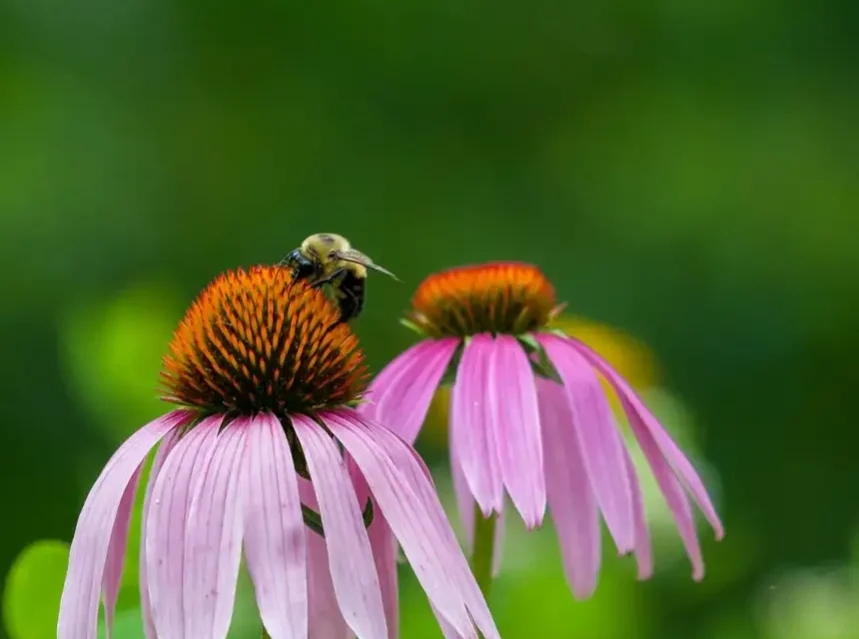
A pollinator garden is a planting designed to feed and house bees, butterflies and other pollinating insects across their whole season. To make a pollinator garden that works, you need four things. First, nectar and pollen from early spring to late autumn. Second, flowers planted in drifts insects can spot. Third, somewhere to nest. Fourth, no pesticides. Get those right and the bed fills with life in its first summer.
Quick answer: Pick a sunny spot. Plant mostly native, single-flowered species in clumps of three to five. Choose bloomers for each season — early (crocus, willows), summer (coneflower, bee balm, lavender) and late (asters, goldenrod, sedum). Leave a patch of bare soil and some untidy corners for nesting. Skip all sprays, and add a shallow water dish.
🧰 In a hurry? Jump straight to our tested picks for this guide ↓
Pollinator garden at a glance
| Element | What pollinators need |
|---|---|
| Minimum size | Works from a 1.5 × 1.5 m bed or a group of pots upwards |
| Sun | 6+ hours ideally; part shade still works with the right plants |
| Bloom cover | Overlapping flowers, early spring → late autumn |
| Planting style | Drifts of 3–5 per species; singles get overlooked |
| Flower types | Single, open blooms; natives first; skip frilly doubles |
| Host plants | At least 2–3, or caterpillars have nowhere to feed |
| Nesting | Bare sunny soil, hollow stems, a log or twig pile |
| Water | Shallow dish with pebble landing pads, refreshed twice a week |
| Sprays | None — including many organic ones |
| Soil | No fertiliser; lean soil suits most wildflowers |
Why grow a pollinator garden?
Beyond the good deed, the garden pays its keep.
Pollinators are in well-documented decline from habitat loss. So gardens are now genuine refuges. In fact, urban plots can hold more bee diversity than nearby farmland.
The numbers explain the urgency. The FAO reports that animal pollinators affect about 35% of world crop production and raise the output of 87 leading food crops. Losing them would not empty the plate. However, it would strip out the interesting half — the fruit, nuts, coffee, cocoa and most vegetables.
The selfish returns are just as real. Vegetable yields rise where pollinators visit. Squashes, beans, tomatoes and every fruit tree set more and better fruit. The same flowers recruit hoverflies and ladybirds, whose larvae eat aphids. That quietly cuts your pest problems.
A pollinator bed is also cheap and low-maintenance. It is mostly tough perennials that ask for less water and no chemicals. Best of all, it is the liveliest corner a garden can have. Bees and butterflies turn watching the garden into part of the harvest.
How to make a pollinator garden: the six steps
The whole build, condensed — each step gets its detail below.
1. Choose a spot with six or more hours of sun, sheltered from strong wind. 2. List plants by bloom season before buying, so early, mid and late are all covered. 3. Favour natives and single-flowered varieties. 4. Plant in clumps, not confetti. 5. Build in habitat: bare soil, standing stems and a water dish. 6. Retire the sprayer for good.
A bed as small as 2 × 3 metres runs the full program. So does a balcony of well-chosen pots. Scale changes the harvest, not the recipe.
Where should you put the bed?
Six hours of direct sun is the usual target. Insects are cold-blooded, so warm, sheltered flowers get worked hardest. A spot out of the prevailing wind also lets butterflies feed without being blown off.
Shade is not a dead end, though. Extension guidance from horticulture programmes consistently lists shade-tolerant nectar plants for exactly this case. In temperate gardens, use pulmonaria, foxglove, hardy geranium, astrantia, ivy and woodland asters. Early woodland flowers matter most here, because they feed queen bumblebees weeks before the sunny border wakes up.
No ground at all? Then group pots. A cluster of five or six containers reads as one flower patch to a passing bee, while single pots scattered along a railing do not. Use the biggest pots you can water reliably, and check the drainage — details in our guide to container gardening for beginners.
How to clear the ground first
Most failed pollinator beds fail at this stage, not at the plant list. Perennial grass returns through a thin new bed and swamps young seedlings in year one.
Iowa State University Extension compares the main options plainly. Smothering with cardboard or 6–8 sheets of newspaper plus mulch takes several months, so start in autumn for spring planting. A 30–45 cm layer of wood chips clears ground faster, in roughly two to four weeks. Lifting turf with a spade or sod cutter works in a weekend, but it removes topsoil you then have to replace.
Skip the fertiliser. Rich soil favours grass and floppy growth, while most wildflowers evolved on lean ground. Compost is worth adding only where the soil is badly compacted or pure builder’s sand — see our notes on improving garden soil before you dig anything in.
Three-season bloom: the non-negotiable
The commonest pollinator garden failure is a July spectacle that starves its guests in April and October.
Queen bumblebees emerge in early spring. Butterflies fuel autumn migration. Both depend on the shoulder seasons. The Xerces Society’s garden-building guide puts overlapping bloom at the top of its list. Aim for three waves: early (crocus, lungwort, flowering willows and fruit trees), midsummer (coneflowers, bee balm, lavender, salvias and zinnias) and late (asters, goldenrod, sedum and single-flowered dahlias).
Audit by month, not by plant count. Walk the plan and ask what is open in March, in June and in October. Gaps in the calendar are gaps in the food supply.
A simple planting formula solves this in one afternoon. Choose three species for each of the three bloom waves, then buy three plants of each. That is nine species and 27 plants, which fills roughly 2.5 × 1.2 m at one plant per square foot.
| Bloom wave | North America | UK & Europe | India |
|---|---|---|---|
| Early (first foragers) | Willow, serviceberry, golden alexanders, wild plum | Crocus, pulmonaria, sallow willow, fruit blossom | Winter-flowering tulsi, coriander left to bolt, drumstick tree |
| Mid (peak numbers) | Coneflower, bee balm, agastache, milkweed | Knapweed, scabious, marjoram, lavender | Ixora, single marigold, butterfly pea, salvia |
| Late (fuel for winter) | New England aster, goldenrod, sedum | Michaelmas daisy, single dahlia, ivy | Post-monsoon cosmos, zinnia, basil in flower |
Choose flowers insects can actually use
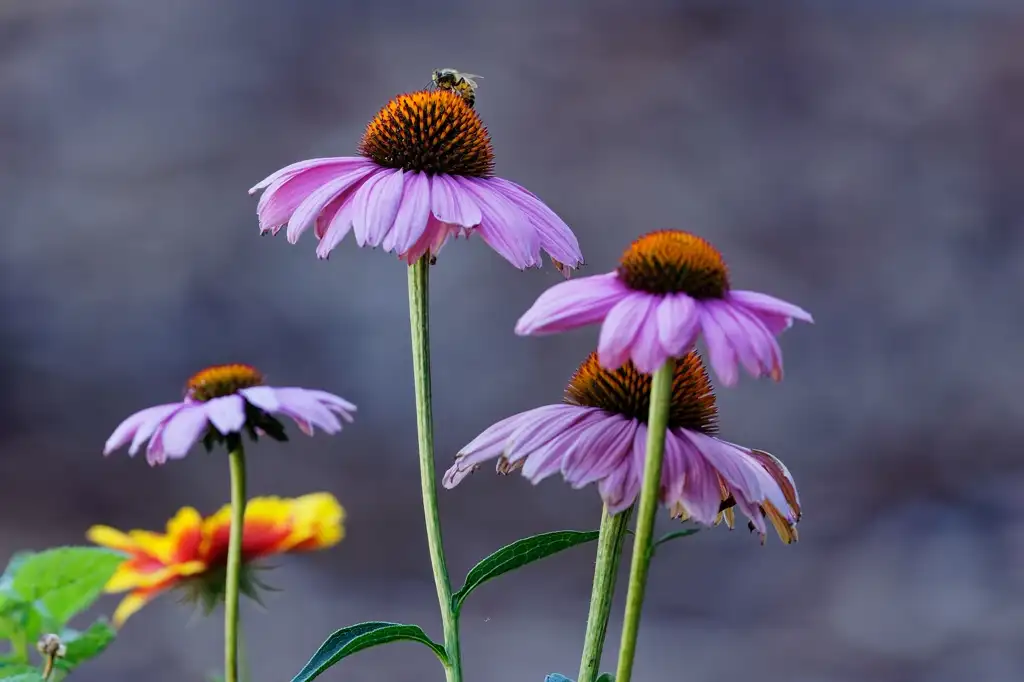
Not every pretty flower feeds anyone. Two filters sort the workers from the wallpaper.
Go native first. Local insects evolved alongside local plants. So native wildflowers support more species, and more specialists, than imports. Build a native backbone. In North America, that means coneflower, milkweed, asters and goldenrod. In Britain and Europe, try knapweed, scabious, foxglove and marjoram. Then add well-behaved exotics like lavender and zinnias as supplements.
Skip the doubles. Heavily bred “double” blooms include pompon dahlias, frilly petunias and double marigolds. They trade their nectar and pollen parts for extra petals, so there is nothing to eat. Their maze of petals blocks access anyway. Single, open-faced flowers with visible centres are the working standard.
But do not be a purist. The RHS ran a four-year trial called Plants for Bugs and found that a mix of natives and well-chosen exotics beat a native-only border, because sheer volume of open flower mattered most. So lead with natives, then let lavender, salvia and single dahlias stretch the season at both ends.
Lean on the colours insects actually see. Bees cannot see red, but they do see ultraviolet, and violet-blue flowers tend to hold the richest nectar. Butterflies see the widest range, including red and orange. Hummingbirds and sunbirds go for red tubular flowers, and night-flying moths find pale, strongly scented blooms. Cover that spread and you cover the whole cast.
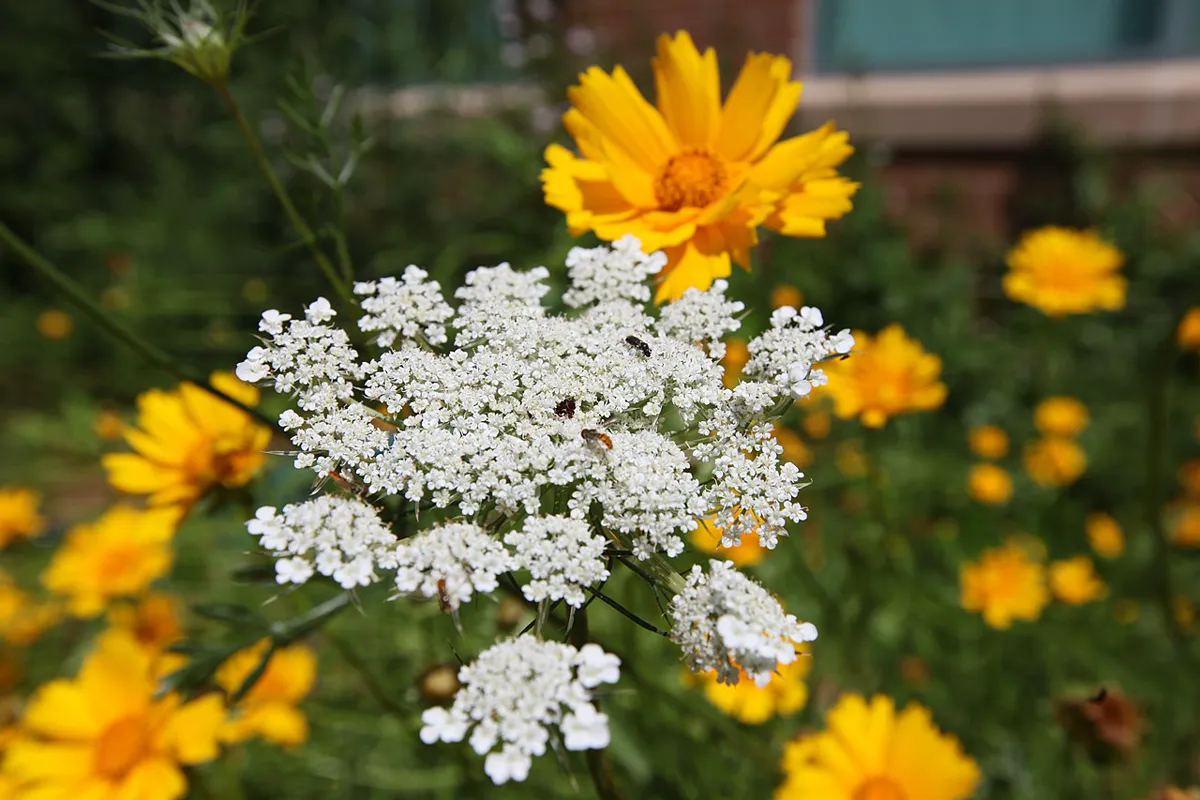
Nectar plants and host plants are not the same thing
This is the gap that separates a pretty border from real habitat. Nectar feeds adults. Host plants feed caterpillars, and without them your butterflies visit but never breed.
Many caterpillars are fussy specialists. Monarch caterpillars eat only milkweed. Fritillaries need violets. So a garden with twenty nectar species and no host plants is a fuel station with no housing.
| Region | Butterfly | Host plant to grow |
|---|---|---|
| North America | Monarch | Milkweed (Asclepias) only |
| North America | Black swallowtail | Parsley, dill, fennel, rue |
| North America | Great spangled fritillary | Violets |
| UK & Europe | Small tortoiseshell, peacock, red admiral | Common nettle (a sunny patch, not a shady one) |
| UK & Europe | Orange tip | Cuckooflower, garlic mustard |
| India | Lime butterfly, common Mormon | Citrus and curry leaf |
| India | Plain tiger, blue tiger | Calotropis and other milkweeds |
| India | Tailed jay, common rose | Custard apple; Aristolochia indica |
Two practical notes. Host plants get chewed, which is the point, so tuck them behind the showy nectar plants. And oaks and willows are the quiet heavyweights — a single native oak supports hundreds of moth and butterfly species, far more than any flower border.
One caution on a classic. Butterfly bush draws adults in clouds, but no native caterpillar eats its leaves, and one flower spike can shed tens of thousands of viable seeds. It is listed as invasive across much of the US and parts of Europe. Use sterile cultivars, or plant blazing star, buttonbush or summersweet instead.
Plant in drifts: think like a foraging bee
Bees forage efficiently, sticking to one flower species per trip. They find food by colour mass, not by inspecting single plants.
So plant clumps of three to five of each species. This is the same odd-number drift logic from our flower bed design guide. Repeat your favourites through the bed. A square metre of one aster beats ten scattered specimens. It is visible from the air, and it lets a bee work without commuting between singles.
Layer heights too. Put tall natives at the back, mid-height workers in the body and low bloomers at the edge. That way every flower face stays reachable, and the bed feeds at every level.
Seeds, plugs or potted plants?
All three work, and the right answer depends on how fast you want flowers.
- Potted perennials — instant structure and flowers in year one. Expensive per plant, so use them for the backbone.
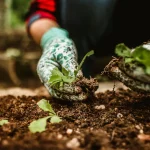
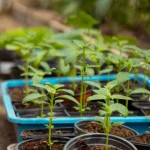
- Plugs — small starter plants, far cheaper by the tray. They establish quickly and outrun weeds better than seed.
- Seed — cheapest by a mile, slowest by a mile. Best for larger areas and for annuals such as cosmos, zinnias and borage.
Sowing seed has two rules worth respecting. First, many native perennial seeds need a cold, damp spell before they germinate, so autumn sowing does that job for free. Second, sow shallow: press seed into firmed soil and cover no more than 3–6 mm. Mixing seed with four parts sand makes it easy to see where you have been.
Check the label before you buy the plant
Here is the trap nobody warns beginners about. Nursery stock is often raised with systemic insecticides, and neonicotinoids move into the tissue of the whole plant — including the nectar and pollen. Labelling is not required in most markets, so a plant sold as bee-friendly can still be loaded.
Ask one question at the till: were these treated with neonicotinoids or any systemic insecticide? Growers who avoid them are usually happy to say so. If you already own treated stock, conservation groups suggest pinching off the first season’s flowers on nectar plants while residues fade. For caterpillar host plants, replace them — a treated milkweed is worse than no milkweed.
Habitat: the part most gardens forget
If you add a bee box here, the details decide whether it helps: our mason bee house guide has the tube sizes, siting and the annual clean, plus what the research says about hotels that never get cleaned.
Food without housing makes a restaurant, not a refuge. Luckily, the habitat features cost nothing. Most of them just look like benign neglect.
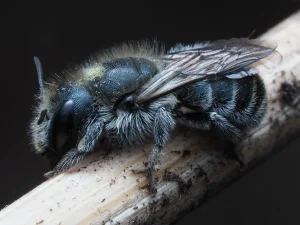
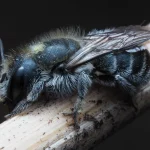
- Bare, sunny soil. Around 70% of bee species nest in the ground — leave a few unmulched, undisturbed sunny patches.
- Hollow and pithy stems. Cavity-nesting bees overwinter in dead stems — leave perennials standing, and cut them to leave stubble rather than to the ground (timing below).
- A log, rock pile or twig stack. Shelter for beetles, overwintering butterflies and more.
- A shallow water dish with pebbles breaking the surface as landing pads, refreshed often.
- An untidy corner. Long grass and leaf litter house far more life than any insect hotel.
Get the water dish right. Fill it so the water only just touches the tops of the pebbles, because bees drown in anything deeper. Change it two or three times a week in warm weather. That single habit keeps it clean and stops mosquitoes breeding in it.
Butterflies want something different again. They gather on damp ground to take up salts, a behaviour called puddling. So set a second shallow dish of damp builder’s sand with a pinch of sea salt stirred in, kept muddy rather than soaked, in a sunny sheltered corner.
Be realistic about bee hotels. They are useful but oversold. Only a minority of bee species nest above ground — most dig. Worse, badly made hotels concentrate parasites and chalkbrood disease, and surveys have found many boxes end up dominated by wasps rather than bees. If you put one up, use tubes between about 3 mm and 8 mm across and roughly 15 cm deep, mount it about 1 m up facing the morning sun, keep it dry, and replace the tubes or wooden block every couple of years. A patch of bare soil costs nothing and helps more bees.
The no-spray rule (yes, organic counts)
One afternoon of spraying can undo a season of planting. Insecticides kill pollinators outright. Many fungicide and herbicide products harm them indirectly.
The rule has no asterisk. A pollinator garden is a no-spray zone, and “organic” labels do not grant exceptions. Pyrethrin and spinosad are organic-approved and still lethal to bees. So manage the inevitable aphids the garden’s own way. Tolerate a little cosmetic damage. Hose off the worst clusters. Then let the ladybirds the garden now attracts do the contract work. Within a season, a sprayer-free garden usually balances itself, because the predators arrive with the prey.
Is a targeted treatment ever truly unavoidable elsewhere in the garden? If so, apply it at dusk when bees have gone home, and never on open flowers. Hand-picking still beats spraying for larger pests — our Japanese beetle guide covers that approach in detail.
When should you cut the garden back?
“Leave the stems” is good advice repeated badly. Here is the version with the timing attached.
Researchers at NC State Extension checked thousands of cut perennial stems and found none were occupied in their first winter. Bees only move into stems that are already weathered and open. So a brand-new bed can be tidied freely that first autumn.
From the second year onward, change the method rather than the date. Instead of cutting to the ground, cut perennials to leave 30–60 cm of standing stubble. New growth hides it within weeks, and the cut ends become the nest sites cavity bees were looking for.
For leaf litter and old growth, wait until temperatures sit reliably above about 10°C before clearing. Butterflies, moths and queen bumblebees overwinter down there, so an eager March tidy-up throws away the season’s insects.
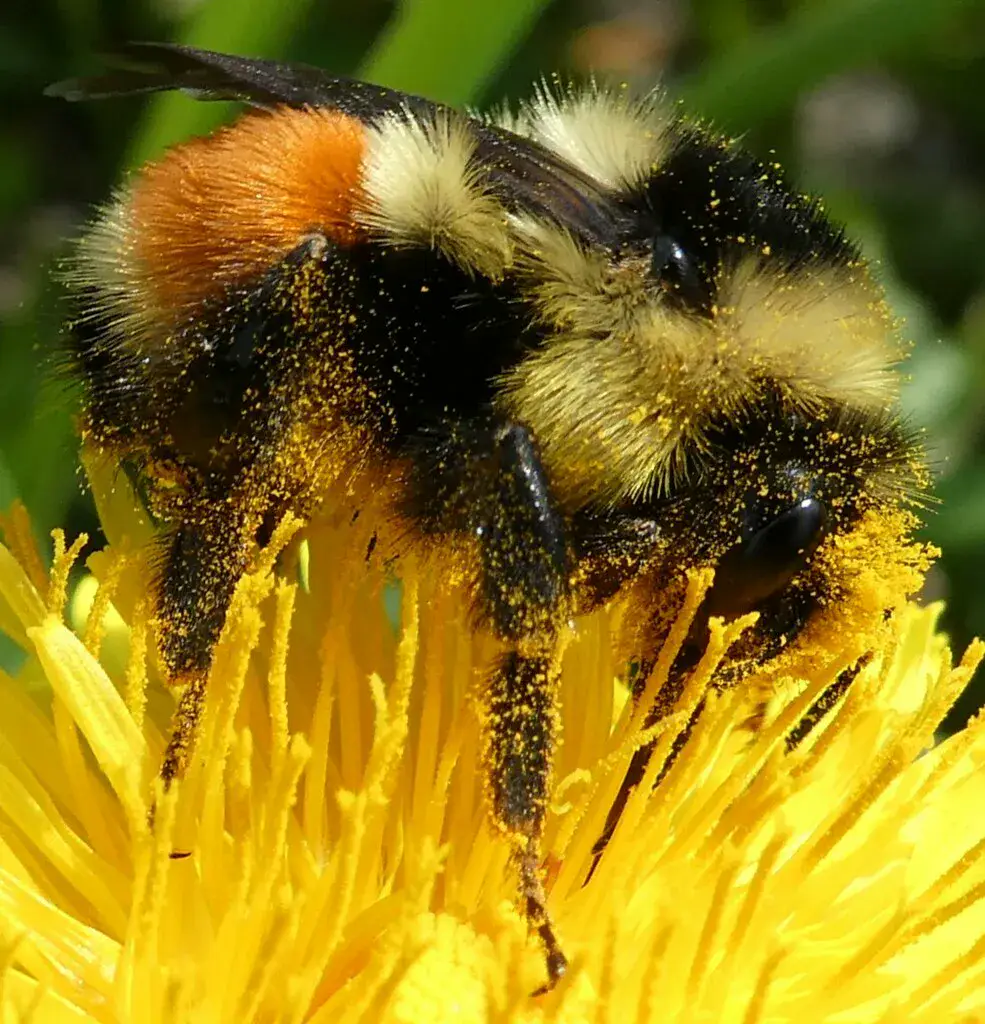
Does No Mow May actually help?
Partly — and the honest answer is more useful than the slogan. The best-known study behind the campaign was retracted, and later trials in Massachusetts found the highest bee diversity on lawns mowed every two or three weeks, not on lawns left completely alone. Dandelion pollen is also poor in some essential amino acids, so it is a snack rather than a diet.
The practical middle ground: mow less often instead of not at all, let clover and low flowers bloom between cuts, and put the real effort into the planted bed. A dedicated pollinator garden feeds far more insects, for far longer, than an unmown lawn ever will.
A pollinator garden in India
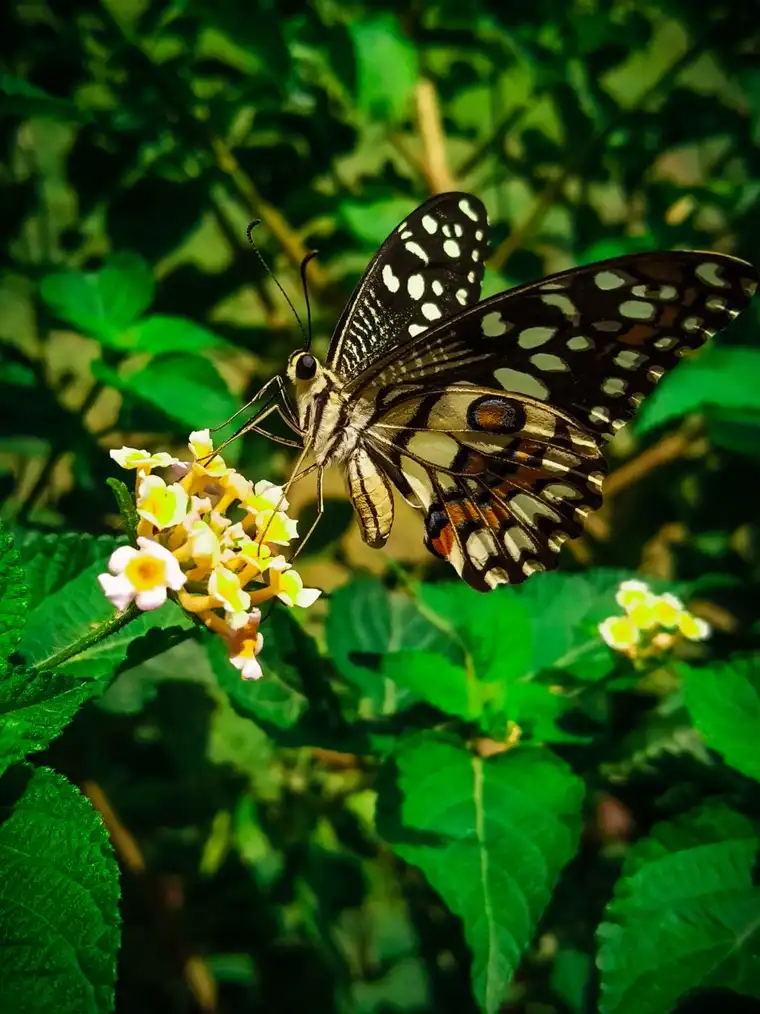
India’s pollinator cast is its own. It includes native honeybees, carpenter bees, blue-banded bees and a spectacular butterfly fauna. The planting translates well with local stars.
Reliable feeders work across most of the country. Try marigold (single varieties), butterfly pea, and tulsi and other basils allowed to flower. Add ixora, hibiscus, curry leaf in bloom, and milkweeds for plain tiger butterflies.
The calendar flips, too. The great bloom season is winter, and the monsoon brings its own flush. Carpenter bees nesting in dead bamboo and soft wood are tenants to welcome, not pests to evict.
Host plants are where an Indian garden pulls ahead. A single curry leaf plant in a pot will raise lime butterflies and common Mormons, and any citrus does the same job. Calotropis and other milkweeds carry plain tigers and blue tigers. Custard apple feeds tailed jays. So a balcony in Pune or Kolkata can breed butterflies, not merely attract them.
Timing follows the monsoon rather than the frost. Plant perennials just before or just after the rains, so roots settle in natural moisture without sitting waterlogged. Then keep a shallow water dish and some afternoon shade going through the hot, flowerless stretch of April and May — that is India’s real hungry gap, not winter.
Use lantana with care. It is a superb butterfly magnet and a listed invasive across large parts of the country, so stick to sterile ornamental cultivars and check local guidance first.
Year one, two and three: what to expect
Managing expectations prevents most of the disappointment.
Year one is about roots. Water new plants deeply once a week, roughly 25 mm at a time, rather than a daily sprinkle. Weed little and often, because young perennials lose to weeds before they lose to anything else.
Year two is when the bed starts to read as a garden, and when clumps knit together. Year three is when it looks like the photographs, since most native perennials need about three seasons to reach full size. From then on the work drops to an hour or two a month: pull the odd invader, split crowded clumps, top up gaps with self-sown seedlings.
Insects arrive much faster than plants mature. Foraging bees scout constantly, so expect visitors within days of the first flowers opening, even in a first-year bed.
Common problems and mistakes
- One big June bloom. Audit March and October — the hungry months decide the garden’s value.
- All doubles. Gorgeous, inedible. Singles only for the working beds.
- Confetti planting. Single plants everywhere; bees need drifts.
- Total tidiness. Mulching every inch and clearing every stem evicts the ground- and stem-nesters.
- “Just one spray”. There is no compatible insecticide; the rule is binary.
- Deep birdbath water. Bees drown easily — keep it shallow with pebble islands.
- Nectar only, no host plants. Butterflies visit and leave. Add milkweed, violets, nettle, citrus or curry leaf so they can breed.
- Skipping the ground clearance. Grass regrows through a thin new bed and beats every seedling you planted.
- Feeding the soil. Fertiliser produces soft, floppy growth and favours weeds. Most wildflowers prefer it lean.
- Untreated nursery stock assumed. Ask about systemic insecticides before you buy, not after.
What experienced pollinator gardeners report
Gardeners who have run pollinator beds for years describe a consistent arc. The community write-ups collected by University of Maryland Extension capture it well. The first surprise is speed. New beds report bees within days of the first blooms, because foragers scout constantly.
The second surprise is the supporting cast. People plant for butterflies and end up hosting much more. They report hoverflies, native bees they had never noticed, ladybirds, and songbirds eating the garden’s insects in winter. The most repeated lesson is the untidiness conversion. Gardeners who forced themselves to leave the stems standing one winter often found mason bees emerging in spring. After that, they report never autumn-clearing again.
Related plant guides
- How To Attract Pollinators
- Best Flowers To Attract Butterflies
- Flower Bed Design For Beginners
- Japanese beetles
- How To Start A Vegetable Garden For Beginners
- Best Flowers For Beginners
Frequently asked questions
How do I start a pollinator garden for beginners?
Start with one sunny bed. Plant drifts of three to five each of a spring bloomer, two or three summer stalwarts (coneflower, bee balm, lavender) and an autumn aster or goldenrod. Leave some bare soil, add a pebble water dish, and don’t spray anything.
What are the best plants for a pollinator garden?
Mostly natives with single, open flowers: coneflowers, milkweed, asters, goldenrod and bee balm in North America; knapweed, scabious and marjoram in Europe; single marigolds, butterfly pea and flowering tulsi in India. Lavender, zinnias and herbs in flower are excellent supplements anywhere.
How big does a pollinator garden need to be?
Any size helps. A 2 × 3 m bed runs the full three-season program, and even a container collection on a balcony feeds passing foragers. Research on urban pollinators consistently shows small patches add up across neighbourhoods.
Should I leave my pollinator garden messy in winter?
Yes — within reason. Standing stems house cavity-nesting bees, seed heads feed birds, and leaf litter shelters overwintering butterflies. Cut back in mid-spring once temperatures hold above ~10°C, and the tenants have emerged.
What exactly is a pollinator garden?
It is any planting chosen to feed and shelter bees, butterflies, moths, beetles and other pollinating insects. The defining feature is a succession of nectar- and pollen-rich flowers from early spring to late autumn, plus water and undisturbed nesting spots. Size does not matter — a window box counts as much as a meadow, so long as something is always in bloom.
Why are pollinator gardens important?
Roughly three-quarters of flowering plants and a large share of food crops rely on animal pollination, and many wild bee populations are in decline from habitat loss and pesticides. A garden of single-flowered natives offers safe fuel and breeding habitat across a season. Even scattered small patches link up into corridors that let insects move through built-up areas.
When is the best time to plant a pollinator garden?
Autumn and early spring are ideal for setting out perennials and shrubs, giving roots time to establish before summer heat. Many native seeds actually need winter cold to germinate, so sow them in late autumn. In warm climates and much of India, plant just before or after the monsoon so young plants get natural moisture without waterlogging.
How do you maintain a pollinator garden?
Far less work than a tidy border. Skip pesticides entirely, water new plants until established, and let self-seeders fill gaps. Deadhead only lightly, because seed heads feed birds and shelter insects over winter. The main rule is patience: leave stems and leaf litter standing until mid-spring rather than cutting everything back in autumn.
What should a pollinator garden layout look like?
Group the same plant in drifts of three to five rather than dotting singles about, since blocks of one colour are easier for foragers to find and work efficiently. Place taller plants at the back, mix bloom shapes so both long-tongued and short-tongued insects are served, and aim for at least three species flowering at any moment. A sunny, sheltered spot out of strong wind gets the most visitors.
Can you add pollinator plants to a vegetable garden?
Yes, and it is one of the best moves you can make. Edging beds with flowering herbs, single marigolds, borage, alyssum or phacelia draws in bees that boost fruit set on tomatoes, squash and beans. The same flowers attract hoverflies and lacewings whose larvae eat aphids, cutting your pest load for free.
How do I get a pollinator garden certified?
Several conservation groups run recognition programmes that award a sign once your garden meets simple criteria — usually native plants, a water source, no pesticides and some nesting habitat. In North America the Xerces Society and various native-plant societies offer these, while local wildlife trusts run similar schemes elsewhere. Certification is optional, but the sign can inspire neighbours to plant their own patches.
Sources and further reading
Related guides
- How to attract pollinators
- How to grow milkweed (asclepias)
- How to grow bee balm
- Flower bed design for beginners
- Butterfly bush guide
- Mason Bee House
See also: why your zucchini are not fruiting.
Still stuck? Ask the Plant Doctor
Describe the problem — yellow leaves, holes, no flowers — and get a clear answer in seconds. FreeAI can make mistakes. Answers are guidance, not a guarantee — check anything important against the guide it links to, and always read the label on any product before you use it.