How to Grow Borage
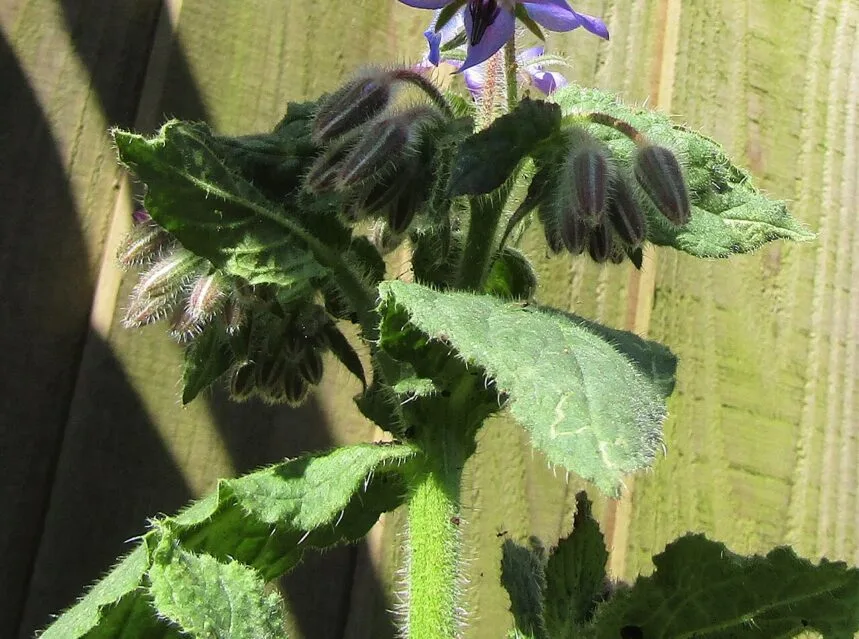 CC BY-SA 4.0 via Wikimedia Commons
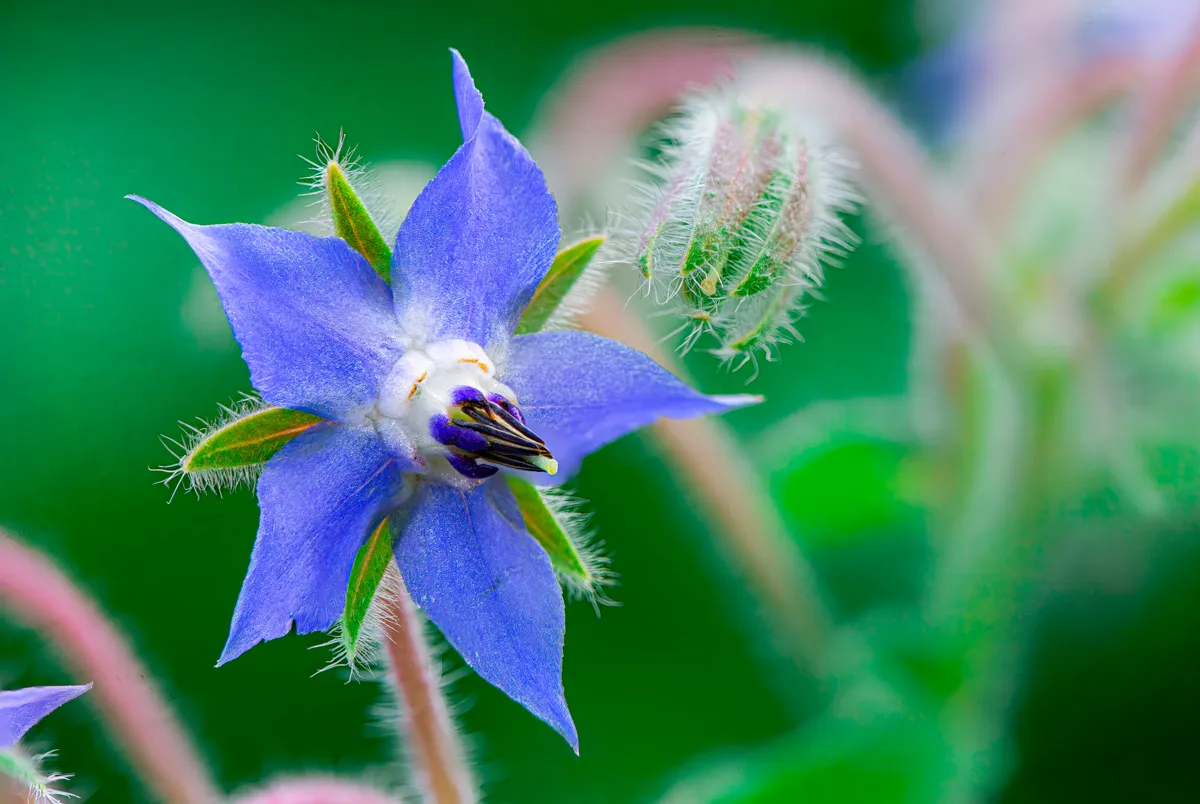
Borage (Borago officinalis) is a fast-growing annual herb grown for its edible, cucumber-flavoured leaves and brilliant blue, star-shaped flowers — the cheerful, hard-working plant every garden should have. The bees adore its flowers, and the plant grows like a weed from a single sowing, then happily reseeds itself for years. It is beautiful, edible and one of the best pollinator plants around. Here is how to grow borage.
Quick start: Sow borage seed directly in full sun and well-drained soil after frost. Water young plants, then let it largely fend for itself. Harvest the cucumber-flavoured leaves young and the edible flowers anytime. Let a few flowers set seed and it returns every year.
Borage is about as easy as a herb gets, a robust hardy annual whose vivid blue, cucumber-flavoured flowers are loved by both cooks and bees. Growers should know it self-seeds with great enthusiasm, so it tends to pop up everywhere once introduced, which is a delight or a nuisance depending on your patience. It is drought-tolerant and undemanding, asking only for sun. Many gardeners value it as a companion plant that draws pollinators to the whole patch.
🧰 In a hurry? Jump straight to our tested picks for this guide ↓
Borage at a glance
| Feature | Detail |
|---|---|
| Botanical name | Borago officinalis (family Boraginaceae) |
| Plant type | Fast annual (self-seeds reliably) |
| Sun | Full sun (some afternoon shade in heat) |
| Soil | Average, well-drained; not fussy |
| Water | Low once established; fairly drought-tolerant |
| Spacing | 12–18 inches apart |
| Sown | Spring, after the last frost |
| Harvest | Young leaves + flowers anytime |
| Best for | Pollinators, edible flowers, companion planting |
Why grow borage?
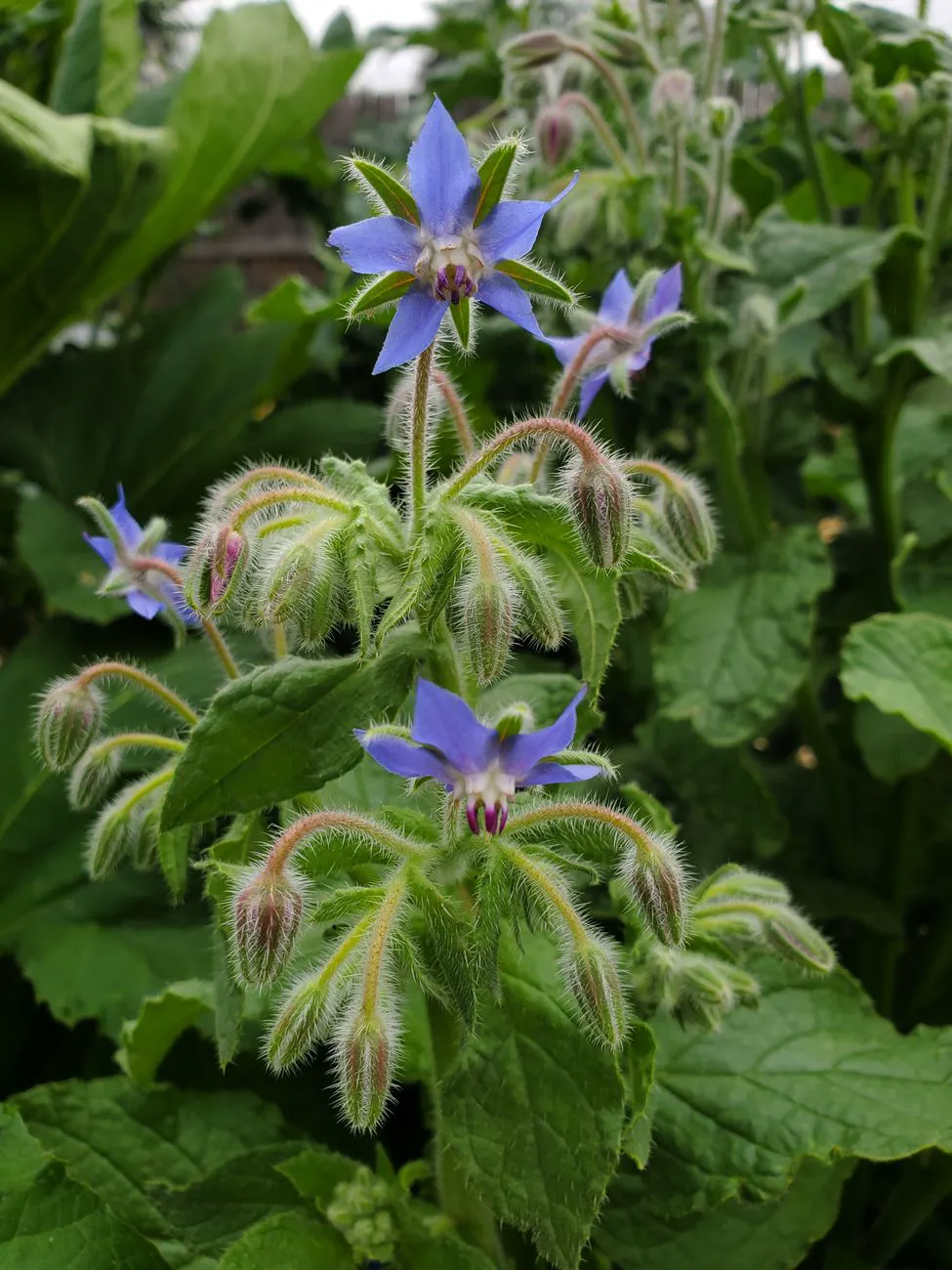
Borage is fast, easy and endlessly useful. A few reasons to find it a corner:
- A top bee plant. It is one of the very best plants for attracting bees, which visit its flowers nonstop because the nectar refills quickly.
- Classic companion. Gardeners grow it beside tomatoes and strawberries (see our companion planting guide).
- Edible flowers and leaves. Both have a fresh, cucumber-like taste.
- Self-sufficient. It self-seeds so reliably that one sowing keeps you in borage for years.
History, origin & how borage spread
Borage is native to the Mediterranean region, where it has grown wild and been cultivated since antiquity, and it has naturalised widely since (history and cautions). Its old reputation for courage is on the record: John Gerard’s herbal said it drove away sorrow, and Francis Bacon credited it with repressing “the fuliginous vapour of dusky melancholie”. One practical caution belongs beside that: the leaves carry small amounts of liver-toxic pyrrolizidine alkaloids — 2 to 10 ppm in the dried herb — so a few young leaves or flowers in a salad or a jug of Pimm’s is a different proposition from drinking borage tea every day. The alkaloids also pass into borage honey through the pollen. It carried a long-standing folk reputation as a herb of courage and good cheer, and old herbals recommended it to lift the spirits — a piece of plant lore that followed it across Europe. As gardens and monastery plots spread the plant, it naturalised widely and became a cottage-garden staple.
From the Mediterranean, borage spread across Europe and North America, where it is now grown both as a garden herb and as a field crop for the valuable oil pressed from its seeds. The area under it is anyone’s guess: the FAO’s world crop statistics list a dozen oilseeds but have no borage line, so starflower oil has no official production figure anywhere. It adapts easily to new gardens, including in India’s milder months, thriving in full sun with average, well-drained soil. Its toughness and willingness to self-seed are exactly why it has travelled so successfully.
Best season & when to plant
Sow borage in spring, after the last frost, and it will flower within weeks and continue all summer. It is a fast-growing annual, but it self-seeds so freely that it behaves like a permanent fixture. In hot regions like much of India, grow it in the milder months and give it some afternoon shade through the most intense heat.
How to plant borage
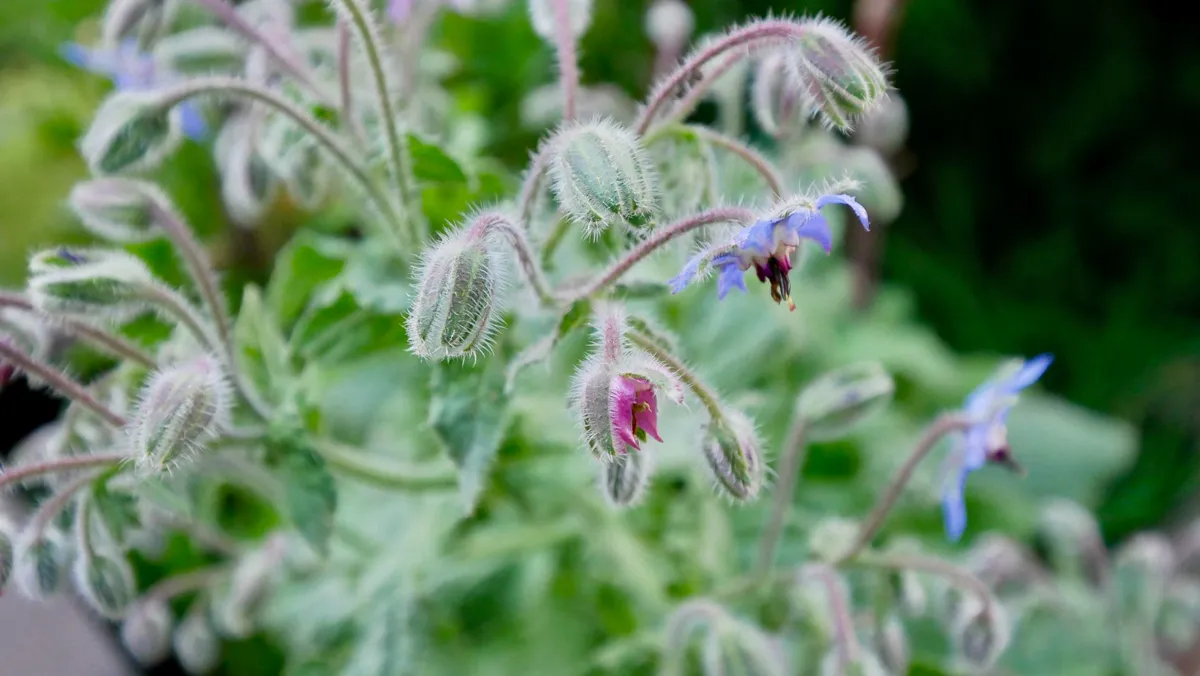
Borage is sown directly, as it grows quickly and its taproot dislikes being moved. Follow these steps:
- Sow in place. Set seed about half an inch deep in full sun (see seed-starting basics).
- Thin generously. Space seedlings about 12–18 inches apart, as plants get large and bushy.
- Or use a big pot. It grows well in a large container if space is limited.
Sun, soil, watering & feeding
Borage likes full sun and well-drained soil and is not fussy about fertility. Water young plants to establish them, then it is fairly drought-tolerant (see how often to water plants). It needs little or no feeding — rich soil just produces lush, floppy growth. This easygoing nature is a big part of why borage is such a beginner-friendly herb. Improve heavy ground for drainage first with our soil-improvement guide.
Managing its self-seeding
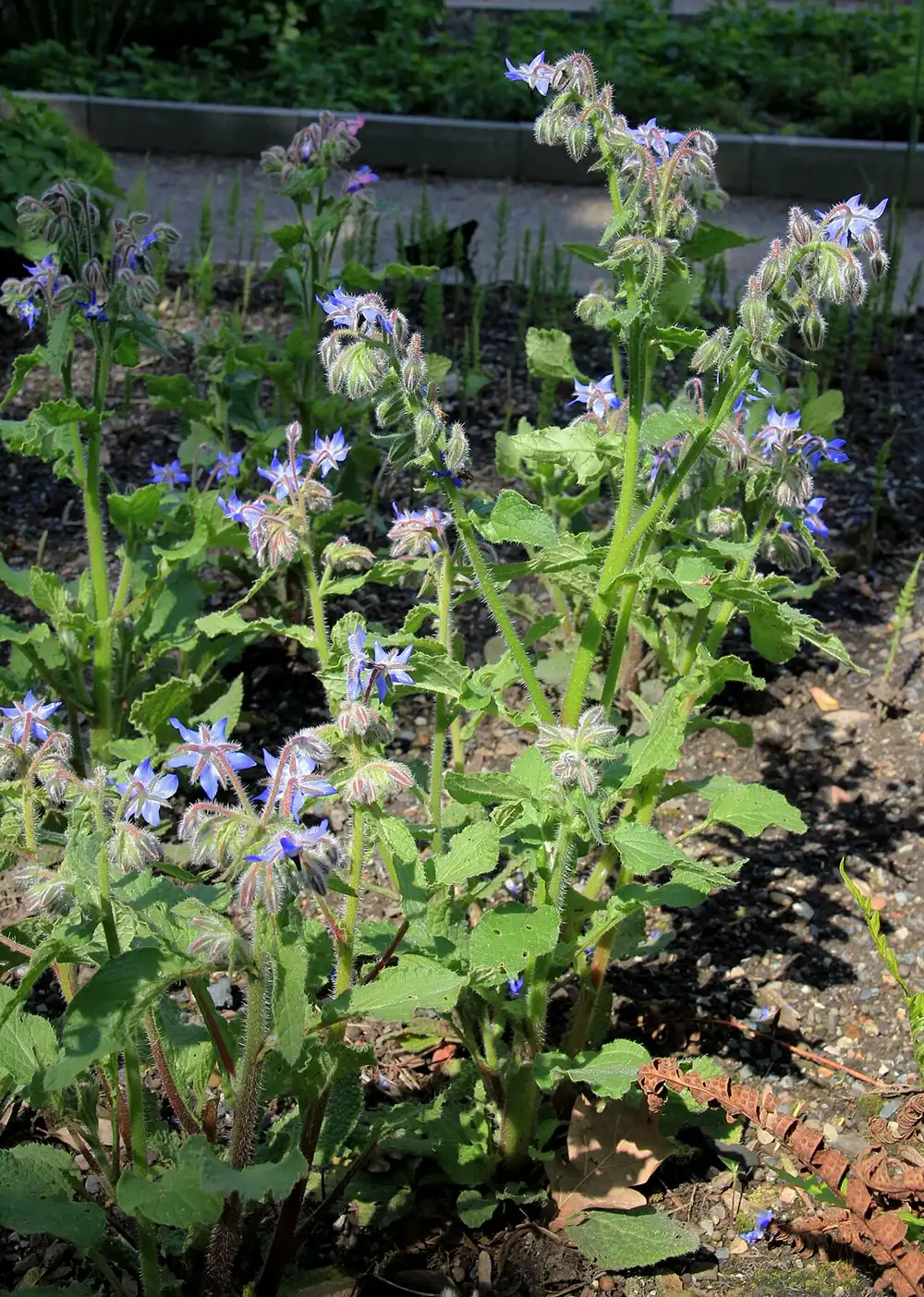
Borage’s one quirk is enthusiastic self-seeding. That is usually welcome, since it gives free plants every year, but it can spread further than you would like. To keep it in check, simply remove most of the spent flowers before they set seed, leaving just a few if you want it to return. Pulling up unwanted seedlings is easy, as they are shallow-rooted when young.
Common pests & diseases
Borage is tough and seldom troubled. You may occasionally see:
- Aphids on the soft growth — our aphid control guide has safe, organic solutions.
- Powdery mildew late in the season — good spacing and airflow prevent it.
For anything else, our organic pest control guide covers gentle remedies. The plant’s vigour usually shrugs off minor problems.
Harvesting borage
Harvest the young leaves for their cucumber flavour — older leaves get bristly and coarse, so pick them small. The flowers can be picked anytime and are lovely fresh in salads, drinks and desserts, or frozen into ice cubes. Use both fresh, as borage does not dry well. Handle the leaves with a little care, since the plant is covered in fine prickly hairs.
Health benefits & uses
Borage has a traditional reputation as a soothing, mood-lifting herb, and its seed oil is valued for beneficial fatty acids such as GLA. Worth knowing before you go looking: FoodData Central lists only the raw leaf, record 170481, at 35 mg of vitamin C, 3.3 mg of iron and 210 µg RAE of vitamin A per 100 g — it carries no analysis of the seed oil at all. The young leaves and flowers add a fresh, cucumber-like taste to summer drinks, salads, soups and garnishes, while the vivid blue flowers make a stunning edible decoration. Use the leaves in moderation, as is traditional with this herb. Cooks who enjoy edible flowers often pair it with chamomile for teas and garnishes.
This article is for general information only and is not medical advice. Talk to a qualified professional before using any plant medicinally.
Borage in the kitchen & companion planting
Borage earns its keep well beyond the flower border. In the kitchen the young leaves bring a clean, cucumber-like freshness to summer salads, chilled soups, raita-style yoghurt dips and cool drinks, while the star flowers make one of the prettiest edible garnishes you can grow — scatter them over a salad, freeze them into ice cubes, or set them in desserts. Because the flavour is mild and the flowers refill with nectar so quickly, you can keep picking both through the season without ever stripping the plant bare.
In the garden, borage is a classic companion plant. It is most often grown beside tomatoes and strawberries, where its nonstop flowers pull in bees and hoverflies that pollinate the crop and prey on pests. Its deep taproot also draws up nutrients and, when the plant is chopped and dropped onto the soil, returns them as a quick, free mulch. Tuck a plant or two near beans, squash or any fruiting crop that depends on good pollination and you give the whole bed a lift. Just give borage room — a mature plant is large and bushy — and keep it where its generous self-seeding is welcome.
Common borage problems
Plant flops over
Usually rich soil or too much shade. Grow it leaner in full sun, and give bushy plants a little room.
Leaves too bristly to eat
They are too old. Harvest young, tender leaves, and use the flowers, which are always pleasant.
Seedlings popping up everywhere
Borage self-seeds freely. Remove most spent flowers before they set seed, and pull stray seedlings while small.
Borage varieties & a note on safe use
The familiar blue borage is the one most gardeners grow, but there is also a lovely white-flowered form (Borago officinalis ‘Alba’) that looks beautiful threaded through a herb bed, and a less common perennial relative grown more for show than the kitchen. For edible use, stick with the classic annual blue or white borage, which are the traditional culinary types.
A sensible note on use: like many old herbs, borage contains small amounts of natural compounds that are best not eaten in large quantities or every day, so enjoy the leaves and flowers as an occasional fresh garnish or flavouring rather than a daily green. Used this way — a handful of young leaves, a scatter of flowers — borage is a delightful and time-honoured addition to summer cooking, and an even better one for the bees.
Related plant guides
- How to grow Feverfew
- How to grow Epazote
- How to grow Calendula
- How to grow Lemon Balm
- How to grow Chives
- How to grow Salad Burnet
Frequently asked questions
Are borage flowers edible?
Yes — the blue star-shaped flowers are edible with a mild cucumber flavour, lovely in salads, drinks and desserts.
Does borage come back every year?
It is an annual, but it self-seeds so reliably that it usually returns on its own year after year.
Is borage good for bees?
Outstanding — it is one of the best bee plants you can grow, with flowers that refill with nectar quickly.
Can I grow borage in a pot?
Yes — use a large container in full sun with well-drained soil. Just expect a big, bushy plant.
How tall does borage grow?
Most borage plants reach about 50-70 cm (20-28 inches) tall and spread almost as wide, so give each plant roughly 45-60 cm of room. Rich, moist soil and full sun push plants to the taller end of that range, while dry or poor soil keeps them shorter and stockier. Seedlings that pop up later in summer usually flower, but they stay noticeably smaller than spring-sown plants. Because the hollow stems get top-heavy once flowering starts, a windy site is worth a short stake or a neighbouring plant to lean on.
Does borage need full sun?
Borage flowers best in full sun, ideally six to eight hours a day, and sun-grown plants produce thicker stems and far more blooms. It will still grow in light or dappled shade, but expect a leggier plant with fewer flowers, which matters if you are growing it for bees. In very hot climates, including much of India through May and June, a little afternoon shade actually helps the leaves stay fresh instead of wilting by midday. Aim for morning sun and shelter from the harshest afternoon heat and you get the best of both.
When should I sow borage seeds?
Sow directly outdoors after the last frost, once the soil has warmed, because borage has a taproot and dislikes being moved. If you want an earlier start, sow indoors three to four weeks before the last frost in deep cells or root-trainers and plant out carefully without disturbing the root. Seeds are large and easy to handle — push them about 1 cm deep and keep the soil evenly moist, and they usually sprout in seven to ten days. In warm-winter areas and most of India, autumn sowing in October and November gives a long cool-season run of flowers.
Is borage invasive?
Borage is not invasive in the way mint is, because it spreads only by seed rather than by creeping underground runners. It does self-seed enthusiastically, so a single plant can produce a patch of volunteers the following season. The seedlings are simple to recognise by their bristly, oval leaves and pull out easily while small, so the plant rarely becomes a real nuisance. If you would rather control it completely, snip the spent flower heads before the seeds ripen and drop.
What should I plant borage next to?
Borage is a classic companion for tomatoes, squash, cucumbers and strawberries, mainly because its nectar-heavy flowers pull in bees and hoverflies that improve fruit set nearby. Gardeners have long paired it with brassicas too, on the idea that it distracts or discourages cabbage worms, though that effect is more traditional lore than proven science. The one real caution is size: a mature plant is bushy and can shade out small salad crops, so keep it at the edge of a bed or between wider-spaced plants. In a mixed vegetable patch, one or two plants are plenty.
How do I harvest borage leaves and flowers?
Pick the leaves young, when they are still soft, because older leaves turn tough and very bristly. Snip flowers as they open, ideally in the morning once the dew has dried, and pull off the small black star at the base if you want a cleaner taste. Both leaves and flowers are best used fresh — the leaves do not dry well, while flowers can be frozen into ice cubes or crystallised for decorating. Regular picking of flowers also nudges the plant to keep blooming for longer.
Is borage safe to eat?
The flowers and young leaves have been eaten as a garnish and salad herb for centuries and are generally treated as a food in small, occasional amounts. Borage does contain naturally occurring compounds called pyrrolizidine alkaloids, and some studies suggest large or long-term intakes of plants in this family are best avoided, so moderation is the sensible approach. The plant has also been traditionally used in folk remedies, but that is history rather than proof of any medical effect. This information is for general guidance only and is not medical advice — talk to a qualified professional before using any plant for health reasons, especially if you are pregnant, nursing or taking medication.
Still stuck? Ask the Plant Doctor
Describe the problem — yellow leaves, holes, no flowers — and get a clear answer in seconds. FreeAI can make mistakes. Answers are guidance, not a guarantee — check anything important against the guide it links to, and always read the label on any product before you use it.