Kew Gardens Plants
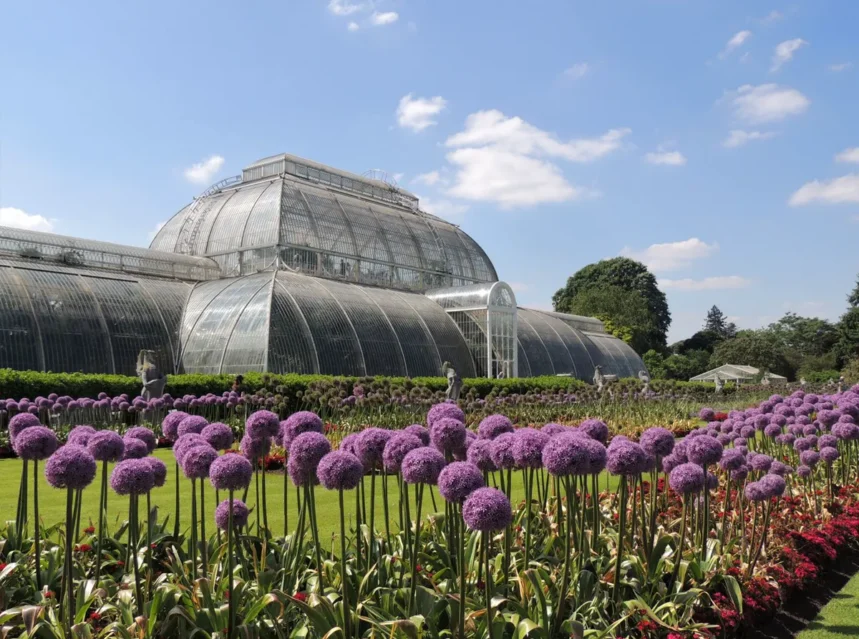
Kew Gardens plants are the largest and most diverse living plant collection anywhere in the world, spread across 121 hectares of west London. More than 50,000 kinds of plant grow here. This guide covers what actually grows in each glasshouse, when to come, and which of it you can grow at home.
Quick answer: Kew is the Royal Botanic Gardens at Kew, founded in 1759 and made a UNESCO World Heritage Site in 2003. The four things most people come for are the Palm House, the Temperate House, the Princess of Wales Conservatory and the Arboretum. Allow at least four hours, and see the glasshouses first — they close before the grounds do.
🧰 In a hurry? Jump straight to our tested picks for this guide ↓
Kew Gardens plants at a glance
Kew is not one garden. It is a research institution with a garden wrapped around it, which is why the planting feels different from a park.
| Feature | Detail |
|---|---|
| Official name | Royal Botanic Gardens, Kew |
| Location | Kew, Richmond upon Thames, south-west London |
| Founded | 1759, as a nine-acre botanic garden |
| Founded by | Princess Augusta, mother of George III |
| Size | 121 hectares (about 300 acres) |
| Garden style | Botanic and scientific, with Victorian glasshouses and an English landscape arboretum |
| Living collection | Approx. 50,000 plant taxa (as of 2025) |
| Signature feature | The Palm House, built 1844–1848 |
| Best season | Late March to May, and September to October |
| Climate | Temperate maritime; roughly USDA zone 9a |
| UNESCO status | Yes — inscribed 2003 |
| Managed by | Royal Botanic Gardens, Kew, a UK public body |
Want to know which of Kew’s plants would actually survive where you live? Our plant finder filters by zone, light and space.
What makes Kew famous
Three things, and only one of them is the buildings.
- The size of the living collection. No other botanic garden grows this many different plants at once.
- The science behind it. Kew’s herbarium, seed bank and laboratories make it a working research body, not a display garden.
- Its historical reach. Kew moved crops between continents on a scale that changed what entire countries farm — including India. More on that below.
How many plants does Kew really have?
You will see wildly different numbers quoted, from 16,900 to 8.5 million. They are not contradicting each other. They are counting four separate collections, and almost nobody explains which is which.
- The living collection: roughly 50,000 plant taxa growing in the ground or under glass. This is the number that matters when you visit.
- The herbarium: around 7 million pressed, dried specimens on paper. These are dead reference sheets, not plants you can see.
- The seed bank: nearly 2.5 billion seeds from over 40,000 species, held at Wakehurst in Sussex, not at Kew itself.
- Kew Science as a whole: around 8.5 million plant and fungal specimens, which is the herbarium plus the fungarium and other archives.
So “Kew has 50,000 plants” and “Kew has 8.5 million specimens” are both correct. Only the first one is something you can walk past. Published figures also differ on the site’s area, giving either 300 or 326 acres depending on whether the buffer land is included.
History: from a royal hobby to a global plant exchange
Princess Augusta started it in 1759 with nine acres. By 1769 it held over 3,400 species. Then Joseph Banks arrived, and the scale changed completely.
Banks had sailed with Captain Cook and returned with about 30,000 specimens. From 1773 he ran Kew unofficially and began dispatching professional plant hunters — Francis Masson to South Africa, others to Australia and China. William Hooker became the first full-time director in 1841 and opened the gardens to the public.
The gardens have had stranger days too. Two Kew gardeners were aboard HMS Bounty in 1788, collecting breadfruit, when the crew mutinied. In 1913 suffragettes burned down the tea pavilion, precisely because Kew was a national institution worth attacking.
What to see: the glasshouses and gardens
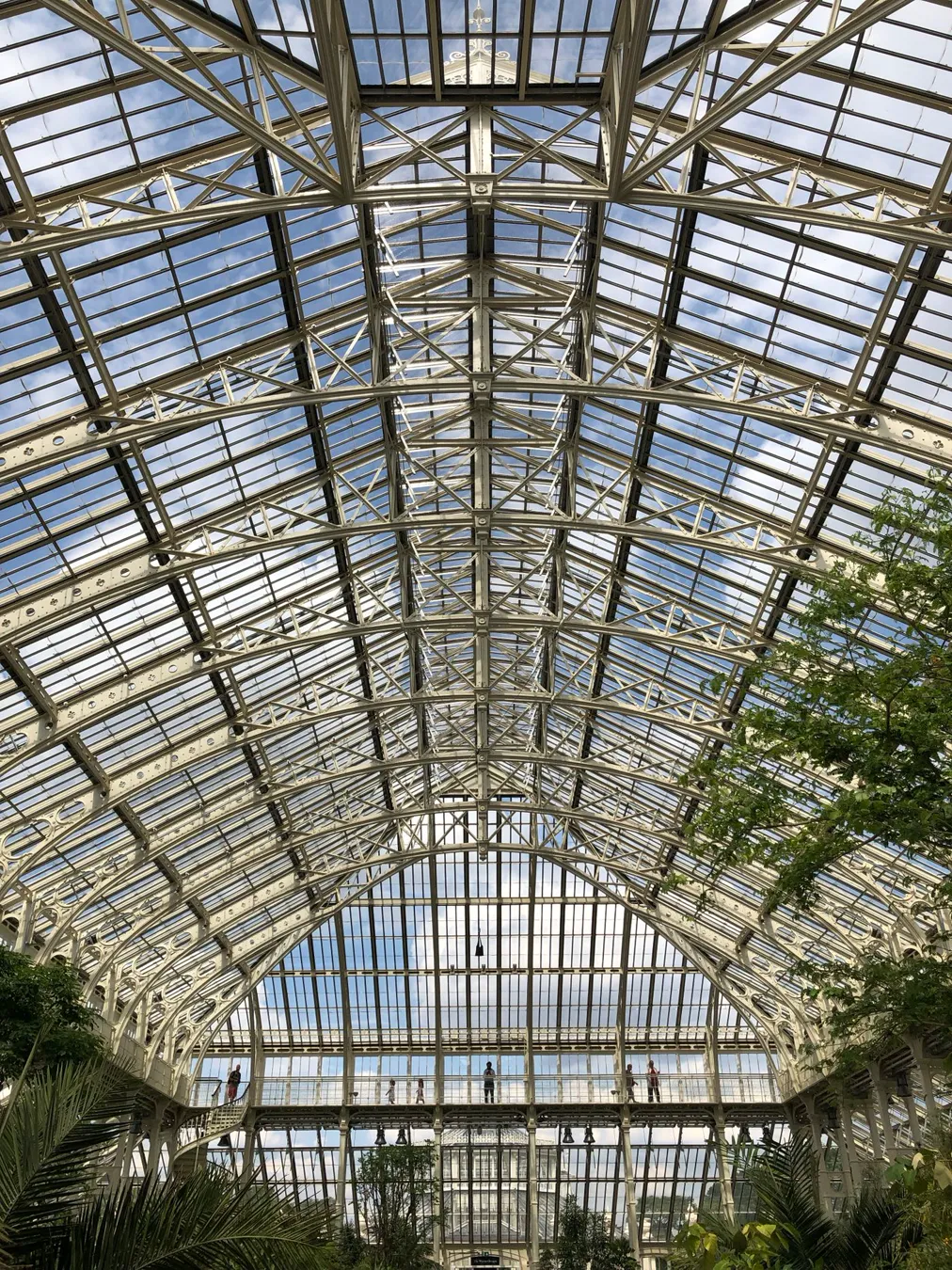
Do the glasshouses first. They shut around 5pm while the grounds stay open later, and this single piece of timing ruins more first visits than anything else.
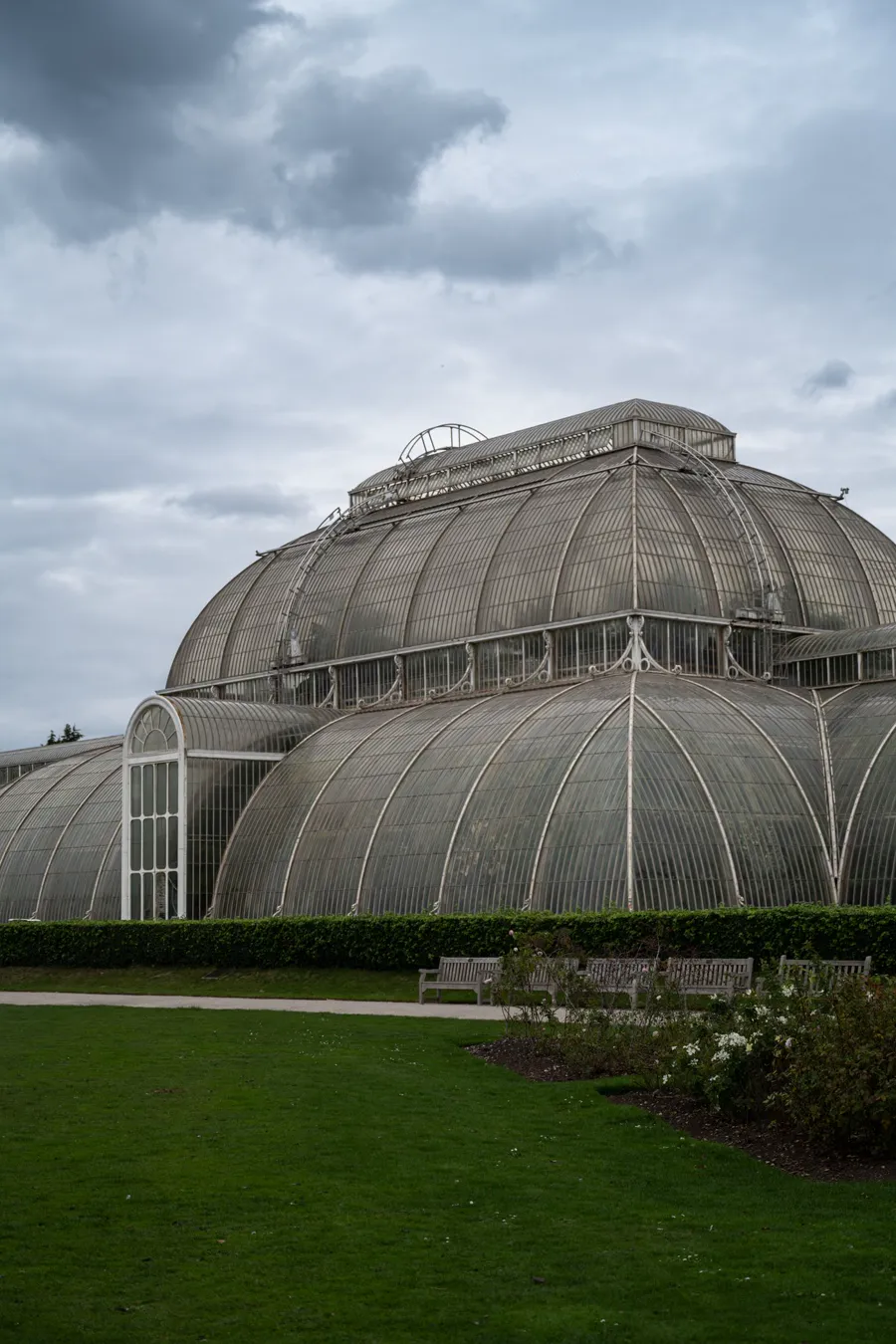
- Palm House (1848). A tropical rainforest under 16,000 panes of glass, built with shipbuilding techniques. It holds the world’s oldest pot plant, a cycad that arrived in 1775.
- Temperate House. Twice the size of the Palm House and the largest surviving Victorian glasshouse anywhere: about 10,000 plants of 1,500 species, reopened in 2018 after a five-year restoration.
- Princess of Wales Conservatory (1987). Ten computer-controlled climate zones under one roof, from cool desert to wet tropics. Orchids, cacti, carnivorous plants and giant waterlilies.
- Waterlily House (1852). Small, hot, and built for one plant: the giant Amazon waterlily.
- Great Broad Walk Borders. About 320 metres of double herbaceous border, thought to be the longest in Britain, arranged as eight themed circular beds.
- The Arboretum. Around 14,000 trees, some planted in the 18th century, across most of the site’s area.
- Great Pagoda (1762). Ten storeys, 50 metres, and 80 gilded dragons that vanished by 1784 and were recreated in 2018.
Best time to visit Kew Gardens
A weekday in late March or April is the sweet spot: magnolias, bluebells and cherry blossom, without the July crowds. May adds the alliums and the borders. September and October bring autumn colour and far fewer people.
Winter is the underrated option. The glasshouses are at their best exactly when outside is grim, and tickets are cheapest. Just remember the light goes early.
If you are planning your own planting around what you see here, do not copy Kew’s calendar directly — London’s seasons will not match yours. Check your own dates with our frost date finder and planting calendar.
Planning a visit: what to know
Four hours is a realistic minimum for two glasshouses and the walk between them. A full day is not excessive on a first visit, and it is the only way to reach the far end of the site properly.
Main paths are flat and suit wheelchairs and prams, though some glasshouses have stairs to their galleries. Book online rather than at the gate, and check whether anything is closed for restoration before you commit. Opening times, ticket prices and booking rules change every season, so check the official site before you travel.
Signature plants of Kew — and how to grow them at home
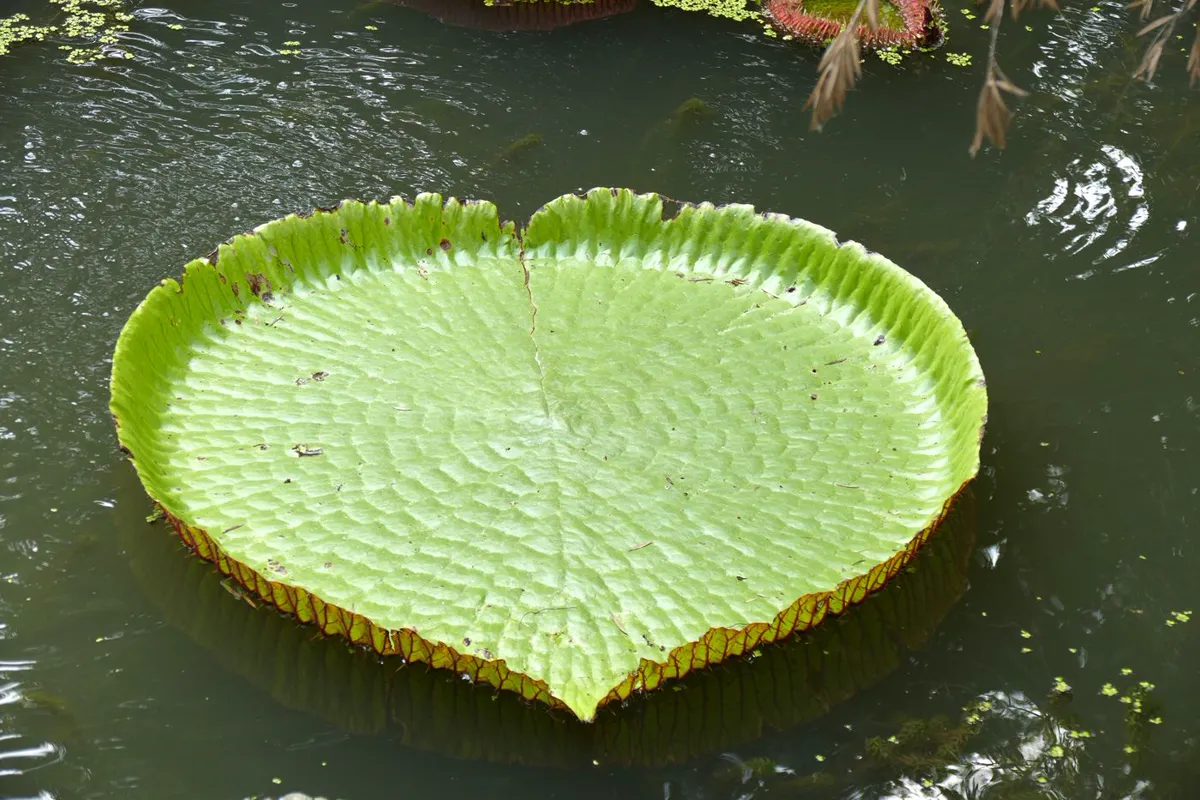
Kew grows plenty you cannot have. It also grows a surprising amount you can.
- Water lilies — the giant Amazon species needs water at 29–32°C, so that one is out. Hardy waterlilies are not: a half-barrel, 40 cm of still water and full sun is genuinely enough.
- Orchids — the Princess of Wales Conservatory holds thousands. A moth orchid on a bathroom windowsill runs on the same principle: bright indirect light, bark not soil, and roots that must dry between waterings.
- Wisteria — trained along a wall or pergola, exactly as Kew does it. It needs two prunings a year, which is the reason most garden wisterias never flower properly.
- Magnolia — the reason people come in March. Give it shelter from early-morning sun, because a late frost on thawing buds is what browns the flowers.
- Bamboo — Kew’s Bamboo Garden holds one of the largest UK collections. At home, plant clumping types or use a root barrier, or you will regret it.
Most of these care about soil and water more than anything else. Our soil calculator and watering calculator are the quickest way to find out what you actually have.
The India connection nobody mentions on the tour
This is the part of Kew’s story that matters most to Indian readers, and it is missing from almost every visitor guide.
In the 19th century Kew acted as a clearing house that moved crops between continents. Robert Fortune carried tea plants and tea-making knowledge from China to India in 1848. From 1860, cinchona — the source of quinine — was moved from South America to the Nilgiri hills near Ootacamund and to Bengal, after the British government had been spending around £53,000 a year importing quinine. In 1876 Henry Wickham’s rubber seeds reached Kew, and roughly 2,000 seedlings went on to Ceylon and Malaya.
Three of the crops that shaped modern Indian agriculture were routed through this one garden in west London. Historians of the cinchona transfer document the dates in detail. If you garden in India, this is not distant history — Darjeeling, Assam and the Nilgiris still grow the results. Our terrace gardening guide for India covers the practical side of growing in that climate today.
5 design lessons from Kew you can copy
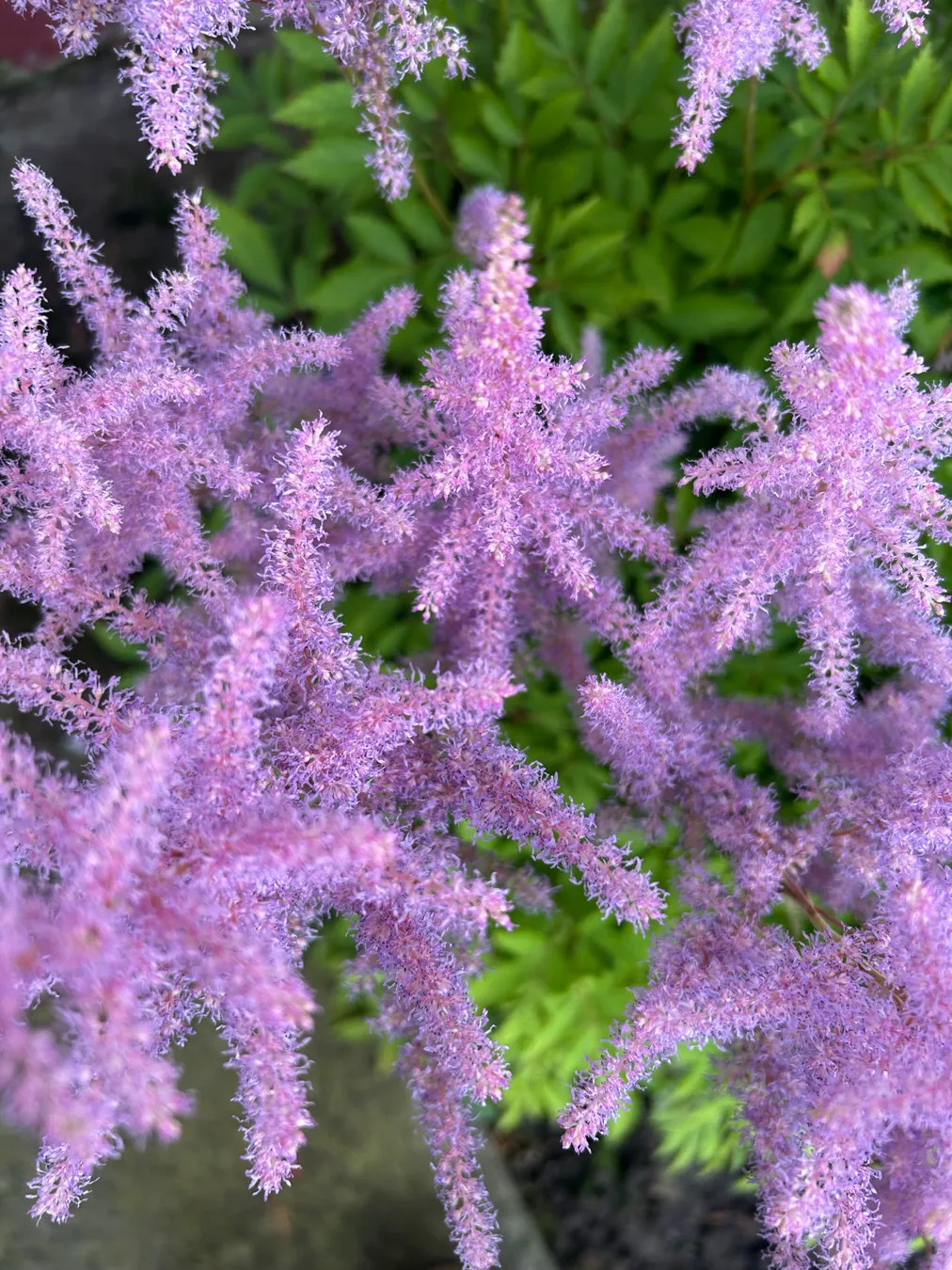
Kew is enormous, but four of its five best ideas cost nothing.
- Make microclimates with position, not heating. The Princess of Wales Conservatory puts its cool zones around the outside and its tropical zones in the middle, so the warm air is insulated by the cool. At home, that is why a tender plant survives against a south-facing wall and dies four metres away.
- A long border needs repetition, not variety. The 320-metre Broad Walk works because plants recur in rhythm along it. Ten of one plant beats one of ten. Get the spacing right and the rhythm does the rest.
- Plant a tree for whoever comes next. Some of Kew’s arboretum was planted in the 1700s. The equivalent at home is choosing one long-lived tree over three fast ones — sketch where it goes with our garden planner.
- Collect to a theme, not by impulse. Kew’s collections are grouped by family and region, which is why they teach you something. A home garden built around one genus or one habitat reads better than a trolley of whatever was flowering at the nursery.
- Save your own seed. Kew’s Millennium Seed Bank holds nearly 2.5 billion seeds from over 40,000 species. The domestic version is a paper envelope and a dry drawer — see how to save seeds.
The Victorian invention you can build on a windowsill
None of the plant transfers above would have worked without one small piece of equipment. In 1829 a London doctor, Nathaniel Bagshaw Ward, noticed a fern seedling growing happily in a sealed glass jar. The Wardian case he developed from that was a closed glazed box in which condensation watered the plants and salt spray could not reach them.
Before it, most plants died at sea. After it, they arrived alive — including Fortune’s 20,000 tea plants. It is also, exactly, a terrarium: the same sealed glass principle you can set up in an afternoon. Our guide to making a terrarium is the direct descendant of a piece of 1830s shipping equipment.
Recreate the look at home: what you’ll need
Growing any of it from seed? Time it with our seed-starting calculator.
Frequently asked questions
How many plants are there at Kew Gardens?
About 50,000 different plant taxa in the living collection. Larger figures you may see — 7 million or 8.5 million — refer to pressed herbarium specimens and archives, not growing plants.
Who founded Kew Gardens and when?
Princess Augusta, mother of George III, founded a nine-acre botanic garden at Kew in 1759. It became a national institution open to the public in 1840.
Is Kew Gardens a UNESCO World Heritage Site?
Yes, since 2003. The listing covers the landscape, the historic glasshouses and Kew’s role in the history of plant science.
How long do you need at Kew Gardens?
Four hours minimum for two glasshouses and the walk between them. Most people spend three to six hours, and a full day is easy to fill on a first visit.
What month is best for visiting Kew Gardens?
Late March to May for magnolias, bluebells, blossom and alliums. September and October for autumn colour with far fewer people. Winter suits anyone who mainly wants the glasshouses.
Is Kew Gardens wheelchair accessible?
The main paths are flat and wide, and most areas are reachable. Some glasshouses have stairs up to their internal galleries, so the upper walkways are not step-free.
What is the oldest plant at Kew?
A cycad, Encephalartos altensteinii, which arrived in 1775 and lives in the Palm House. It is generally described as the oldest pot plant in the world.
What is in the Palm House?
Tropical and subtropical plants grown as an indoor rainforest, many of them endangered or already extinct in the wild. There is also a marine aquarium in the basement.
Can I grow Kew's plants at home?
Many of them. Hardy water lilies, orchids, wisteria, magnolia and bamboo are all widely sold. The tropical glasshouse species need heat and humidity you cannot supply outdoors in a temperate climate.
Is there a garden like Kew in India?
Several, and they share Kew’s history directly. The Acharya Jagadish Chandra Bose Indian Botanic Garden in Kolkata and the botanic gardens at Ootacamund and Saharanpur were part of the same 19th-century network.
Why won't my wisteria flower?
Almost always pruning. Wisteria needs cutting twice a year — long shoots back in summer, then those spurs shortened in winter. Too much nitrogen feed also pushes leaves at the expense of flowers.
Why is my orchid dropping buds?
Usually a sudden change: a draught, a move, or a dry spell while buds were forming. Keep it in one spot with steady light and water. Our plant doctor can help diagnose from a photo.
Related gardens and guides
Kew is one of twenty on our list of the 20 most famous gardens in the world.
Two more collections built on the same instinct: Singapore Botanic Gardens orchids, whose rubber work reshaped a whole region, and Bogor Botanical Gardens plants, founded in 1817 and the parent of scientific botany across tropical Asia.
Ideas from this page at ordinary scale: small garden design, planting for pollinators, and terrariums, the direct descendant of Kew’s Wardian cases.
Still stuck? Ask the Plant Doctor
Describe the problem — yellow leaves, holes, no flowers — and get a clear answer in seconds. FreeAI can make mistakes. Answers are guidance, not a guarantee — check anything important against the guide it links to, and always read the label on any product before you use it.