Versailles Garden Design
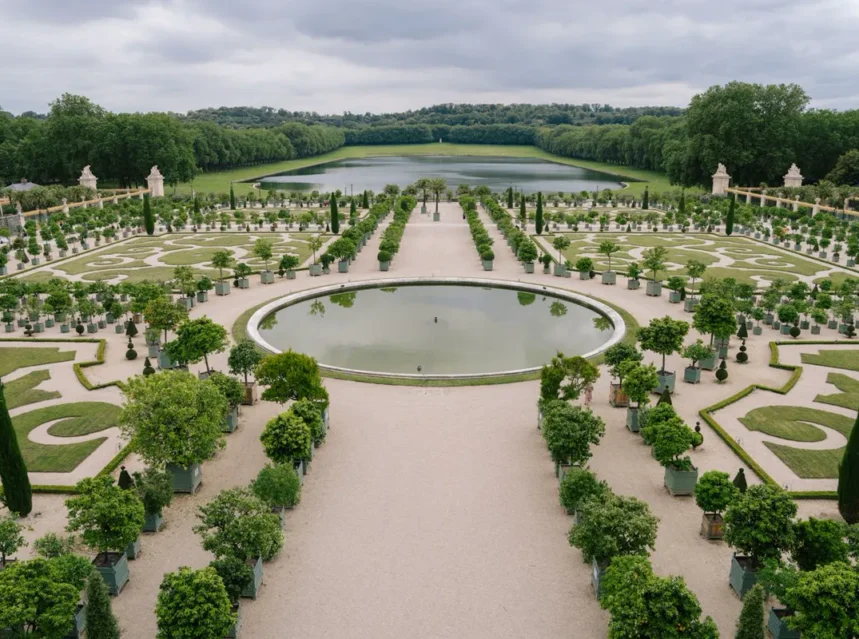
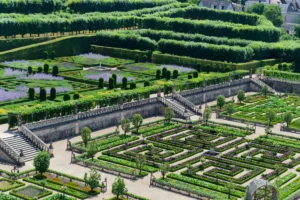
Versailles garden design is the flat, geometric, optically engineered style that André Le Nôtre built for Louis XIV from 1661 onwards. There is no hillside here and no dramatic drop. Instead the whole effect comes from scale, pattern and a set of deliberate visual tricks. This guide explains those tricks, then shows you how to use them in an ordinary garden.
Quick answer: The gardens of Versailles are the definitive French formal garden, laid out from 1661 by André Le Nôtre west of Paris. They are famous for two crossing axes, huge clipped parterres, fourteen hidden groves and a cross-shaped Grand Canal. Allow at least two hours on foot.
🧰 In a hurry? Jump straight to our tested picks for this guide ↓
Versailles garden design at a glance
The site Le Nôtre was given was awkward. It was marshy, wooded and almost level. So he did not fight the flatness. He used it, and built an illusion on top of it.
| Feature | Detail |
|---|---|
| Official name | The Gardens of the Château de Versailles |
| Location | Versailles, Yvelines, France — about 17 km west-south-west of central Paris |
| Created | Main works from 1661, continuing for roughly forty years |
| Created by | André Le Nôtre (1613–1700), for Louis XIV |
| Size | Estate approx. 800–815 hectares; the formal gardens themselves approx. 77–93 hectares, depending on where the count stops |
| Garden style | French formal garden (jardin à la française), the Baroque high point |
| Plant collection | Approx. 200,000 trees, approx. 210,000 flowers planted each year, and approx. 1,055 tubbed trees in the Orangery (as of 2026 published figures) |
| Signature feature | The Grande Perspective — the east-west axis running from the palace to the Grand Canal |
| Best season | Late April to June, and September |
| Climate | Oceanic, Köppen Cfb, roughly USDA zone 8; about 674 mm of rain a year |
| UNESCO status | Yes — the Palace and Park of Versailles was inscribed in 1979 |
| Managed by | The Public Establishment of the Palace, Museum and National Estate of Versailles, under the French Ministry of Culture |
Those size figures deserve a warning. The estate, the park and the formal gardens are three different numbers, and popular sources swap them freely. Statue counts wobble too: the château’s own pages describe around 400 statues, while Wikipedia’s 2,100 sculptures clearly includes vases and architectural carving.
Want to know which of these plants actually suit your conditions? Our plant finder filters by climate zone, light and space.
What makes the gardens of Versailles famous
Three things separate this garden from every other grand European layout.
- It is enormous, and it is deliberately empty. Great sweeps of mown grass and pale gravel are not gaps between the good bits. They are the good bits.
- It is engineered to be looked at. The design has a correct viewpoint, and everything is tuned to that one position.
- It set the European template. Peterhof in Russia, Het Loo in the Netherlands and the Belvedere in Vienna all borrow from it. You can read the formal principles in detail on Wikipedia’s survey of the French formal garden.
Le Nôtre had studied Italian Renaissance gardens, and he learned from them. But he did not copy them, because he had no hillside to work with.
How did Le Nôtre make a flat garden look infinite?
This is the part most visitors never notice, and it is the real genius of the place.
Le Nôtre trained in the studio of the painter Simon Vouet between 1629 and 1635. There he learned optical geometry, including anamorphosis — the art of distorting a shape so that it reads as correct from one particular spot. He then applied studio-scale tricks at landscape scale.
The principle is simple. Distance compresses things, so a long rectangle seen from one end looks as if it tapers away. If you want that feature to read as a clean, even rectangle from the palace, you must build it wider at the far end. Le Nôtre did exactly that, adjusting levels as well as widths.
The Tapis Vert, the great green carpet on the main axis, is roughly 335 metres long and 40 to 45 metres wide. Its original steep slope was softened around 1665 into a gentle inclined plane. That slope matters: it lines the far lip of the lawn up with the water of the Grand Canal, so the eye reads one continuous surface running to the treeline. There is no visible edge, so the axis feels endless. At Vaux-le-Vicomte, the same thinking produced pools that are narrower nearest the viewer than at their far end.
Use it at home like this. Stand at your main window. Make the path or lawn strip leading away from you slightly narrower at the far end and slightly wider at your feet — that exaggerates depth and lengthens a short plot. Then reverse the rule for anything you want to read as square: widen it at the back. Put big-leaved, bold plants near the house and fine-textured ones at the far end. Finish with a small pale focal point at the very end, because pale colours retreat.
The Orangerie: a thousand trees on wheels
The second lesson is about tender plants. Louis XIV wanted citrus, and citrus does not survive a Paris winter outdoors.
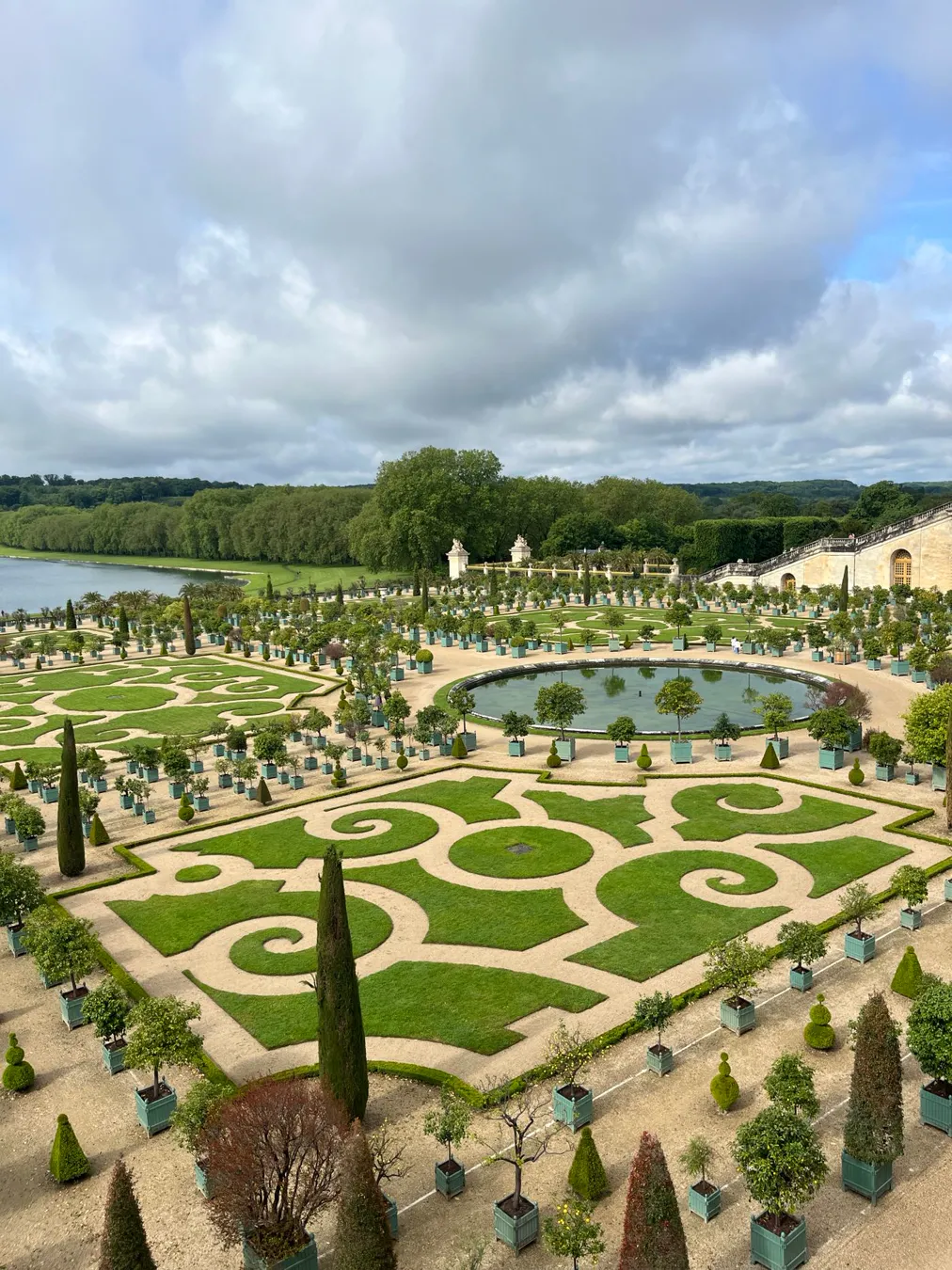
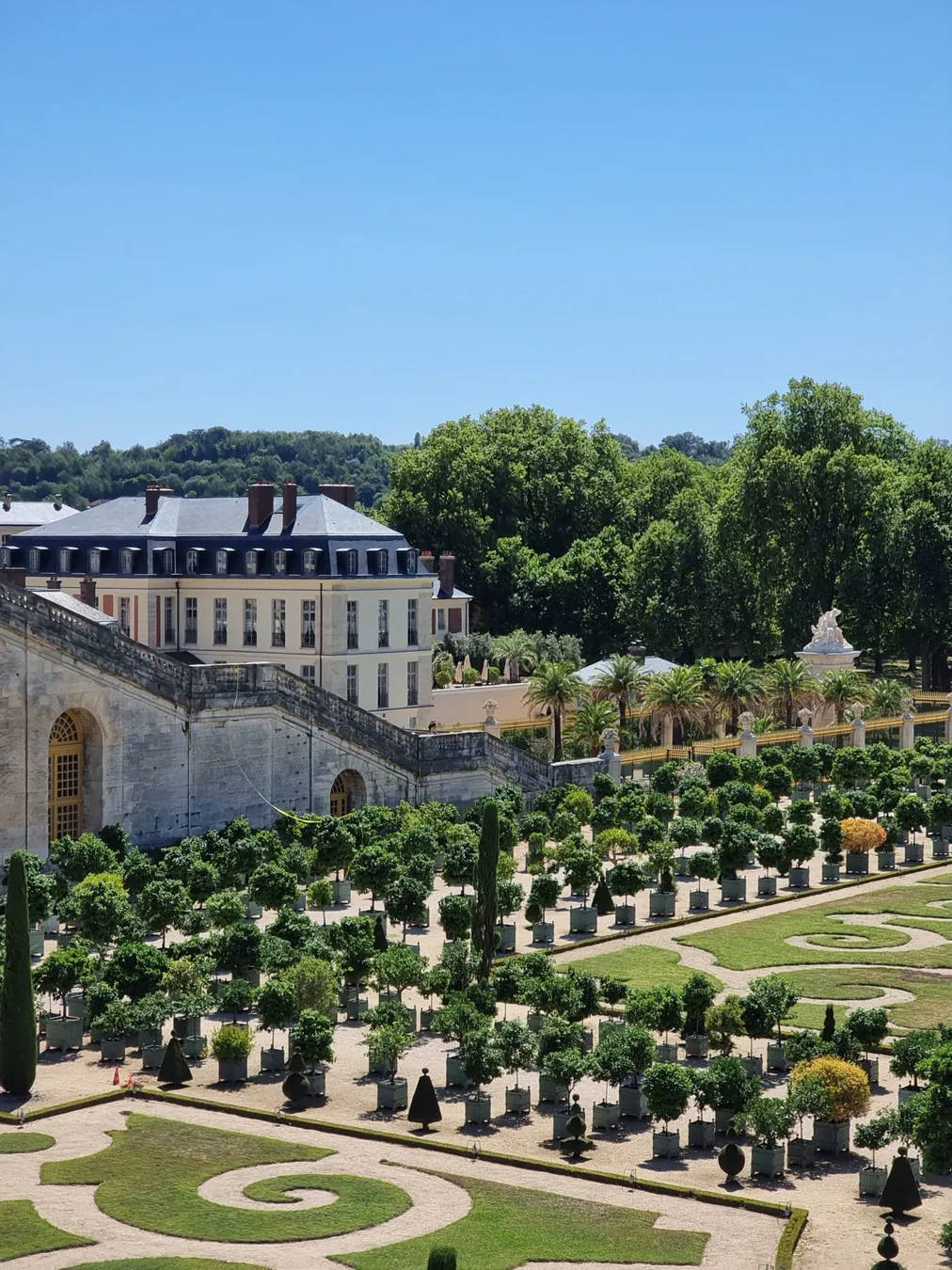
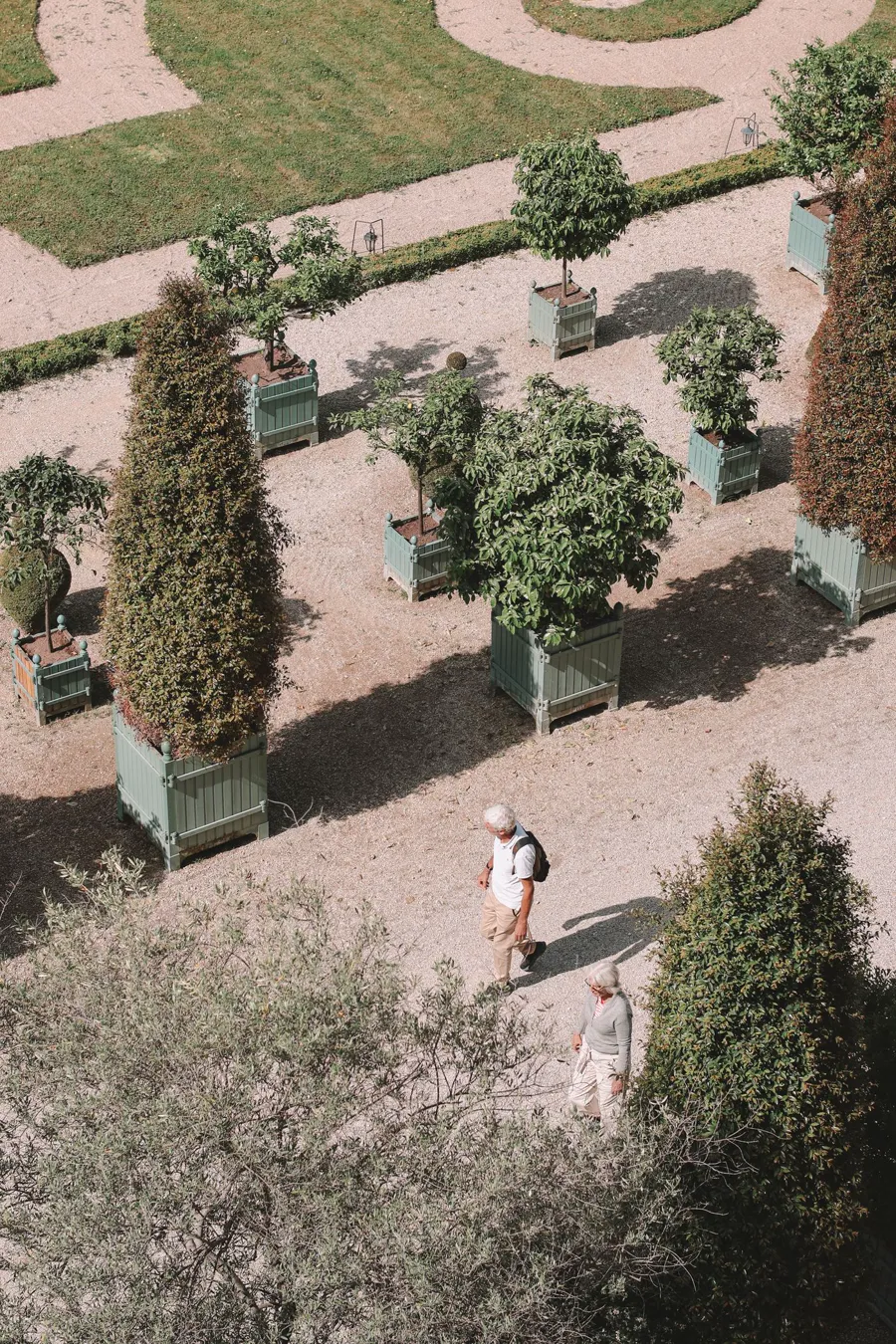
The answer was the Orangery, first built by Louis Le Vau in 1663 and roughly doubled by Jules Hardouin-Mansart in the 1680s. Its central gallery runs over 150 metres under a 13-metre vault, with walls four to five metres thick and a southern aspect. No heating is required to hold it above about 5°C. Today it shelters roughly 1,055 containers of orange, lemon, pomegranate, oleander and palm, some of them over two centuries old.
Historic accounts of Louis XIV’s collection often quote around 3,000 trees; that figure describes the royal collection at its peak, not the modern one, and the two are frequently confused. The trees spend winter inside and summer out on the parterre. You can read the estate’s own account of the building on the Château de Versailles Orangery page.
Use it at home like this. Anything too tender for your winter goes in a pot, not in the ground. Choose a container you can actually move — a wheeled plant caddy under a heavy pot is the domestic version of a royal caisse. Bring citrus and other tender subjects in before night temperatures drop below about 10°C, inspect the undersides of leaves for pests first, give them the brightest window you have, and water only when the top few centimetres dry out. Harden them back outdoors gradually in spring.
History: how the gardens were built
Louis XIII had a small garden here in the 1630s. Louis XIV wanted something else entirely.
Work began in 1661. Le Nôtre had just finished Vaux-le-Vicomte for the finance minister Nicolas Fouquet. Fouquet was arrested, and the king took his design team. Building Versailles then took about forty years across several campaigns.
The scale of the earthworks was extreme. Ground was levelled, marsh was drained, and trees were brought from across France. Whole regiments were put to work. The Grand Canal was dug between 1668 and 1679. The Latona basin went in around 1668 to 1670, and Hardouin-Mansart later turned its central group to face west, down the axis.
Water was always the weak point. The Marly Machine, built between 1681 and 1684, used fourteen huge wheels and hundreds of pumps to lift Seine water 162 metres uphill. It still could not supply everything, so fountains were rationed and switched on in sequence as the king walked past.
The gardens are also not a preserved relic. Trees age, so the whole layout is replanted roughly once a century, most recently after severe storm damage in December 1999. Le Nôtre’s biography and career are set out on Wikipedia’s page on André Le Nôtre.
What to see: the areas worth your time
- The Water Parterre. Two long basins on the terrace directly below the palace. This is the intended viewpoint, so start here.
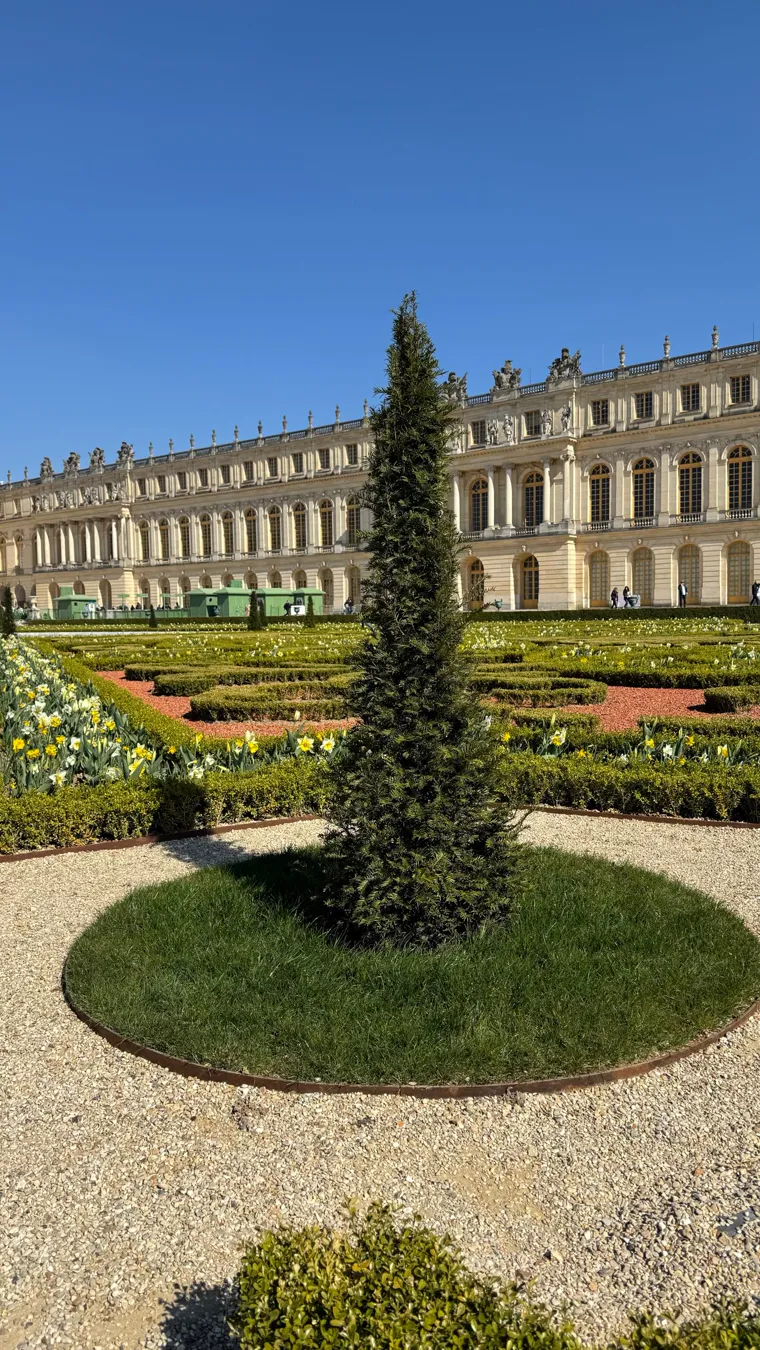
- The Latona parterre. The pivot of the main axis, restored between 2013 and 2015, with box-edged beds stepping down towards the lawn.
- The Tapis Vert and the Grand Canal. The long green carpet, then the cross-shaped canal that closes the view.
- The Orangery. Best seen from the balustrade above, looking down onto the scrollwork parterre and the tubbed trees.
- The bosquets. Fourteen enclosed groves hidden behind hedges, including the Colonnade with its thirty-two arches and the Salle de Bal.
- The Grand Trianon. Louis XIV’s pink marble retreat of 1687–88, with its own flower gardens.
- The Queen’s Hamlet. Marie-Antoinette’s mock village of 1783–86, set in a winding English-style landscape — the exact opposite of everything else here.
Best time to visit the gardens of Versailles
Season matters more than the day of the week.
Late spring is the peak. From late April into June the bedding is at its best, the box is freshly clipped and the citrus has been wheeled outside. Early summer is also when the tubbed trees are on display, which is the single most photogenic thing in the garden.
September is the quieter alternative. The structure is still crisp, the light is lower and the crowds have thinned. Autumn shows the layout differently, because as the avenues drop their leaves the geometry becomes clearer.
Winter is bare but honest. The tubs are indoors and the beds are cut back, so the bones of the design show clearly — which is what you want if you are here for ideas rather than colour.
Planning your own planting around a similar rhythm? Check your local frost dates and use our planting calendar to time sowings and the move outdoors.
Planning a visit: what to know
The gardens are large, flat and gravelled, so distances are deceptive. Walking to the far end of the Grand Canal and back is a real walk, not a stroll. Two hours covers the main axis, the Orangery and the nearest groves. Half a day is needed if you also want the Trianon estate and the Hamlet, which sit well to the north-west.
Opening times, ticket prices and booking rules change every season, so check the official site before you travel. The estate publishes current information on its official gardens pages.
Signature plants of Versailles — and how to grow them at home
The plant list here is short on purpose. Formal gardens work through repetition, not variety.
- Boxwood — the edging that draws the pattern. Slow, dense, and happy to be sheared. It is also the most troubled plant on this list, for reasons covered in the next section.
- Yew — the plant for cones, columns and taller clipped shapes. It tolerates hard pruning and deep shade, needs clipping only once a year in late summer, and is poisonous in every part except the fleshy aril, so site it carefully around children and livestock.
- Lemon — the Orangery plant you can genuinely copy. In a pot, in full sun, with sharp drainage and a winter move indoors.
- Iris — bearded iris gives the vertical spring flourish inside the beds. Full sun, free-draining soil, rhizomes planted shallow, divided in summer after flowering.
- Hornbeam — the backbone of the bosquets and pleached avenues at Versailles, clipped into flat green walls. We do not have a dedicated hornbeam guide yet, so if you cannot source it, substitute a locally reliable hedging plant with the same fine texture and use our plant finder to find one that suits your zone.
Before you plant any of it, test what you are working with. Our soil calculator sizes amendments for a new bed, and the water calculator tells you what a hedge or a tub of citrus actually needs each week.
Growing the Versailles look in your climate: US, UK and India
Copying the pattern is easy. Copying the plant list is not, and in 2026 the box hedge is the problem.
Box is now a risk in much of the US and UK. Two separate threats hit it. Boxwood blight, caused by the fungus Calonectria pseudonaviculata, strips leaves and blackens stems; it appeared in the UK in the mid-1990s and has since reached more than thirty US states. The box tree moth, Cydalima perspectalis, defoliates plants outright and has spread through the north-eastern and midwestern US since 2021. Neither has a tidy cure.
So choose a substitute rather than a replacement box hedge. Cornell’s IPM programme lists inkberry holly (Ilex glabra), Japanese holly (Ilex crenata), dwarf hinoki cypress, plum yew and bayberry as workable evergreen stand-ins; you can see the full list on Cornell’s boxwood alternatives fact sheet. Penn State Extension makes a similar case for holly and thuja. Japanese holly is the closest visual match, but it needs acidic soil, roughly pH 3.8 to 6.0, so check before you buy a hundred of them.
In the UK, yew is the better long-term structural choice, and hornbeam gives the pleached avenue effect quickly. The oceanic climate matches Versailles’ own, so the rest of the palette transfers directly.
In India and other hot climates, forget both box and citrus tubs. Citrus does not need protecting from cold here, so the Orangery idea inverts: the tubs come into shade in the hottest months instead of into shelter in winter. For the clipped pattern, use warm-climate shrubs that take shearing — Murraya paniculata (kamini or orange jasmine) and Duranta erecta both hold a crisp low hedge and grow fast. Replace the thirsty lawn with fine gravel or stone chip, which is closer to Versailles’ own surfaces anyway. For balcony and rooftop versions of all this, see our guide to terrace gardening in India.
One note on the lawn. The tapis vert is where the modern lawn came from, but a mown green carpet is a heavy water user in a hot climate. If you want that look without the bill, see our notes on growing a green lawn and decide honestly whether gravel would serve you better.
5 design lessons from Versailles you can copy
- Bend perspective to lengthen a short plot. Taper the path away from the house, grade plant texture from coarse to fine, and finish with a small pale object at the end. Nothing here costs money; it is all placement.
- Let clipped edging carry the pattern. A parterre works because the outline is evergreen. Flowers inside it are optional. That means the bed still looks designed in February, which is when most gardens collapse.
- Design from one viewpoint. Versailles is composed for the central window of the palace. Identify the window you actually look out of most, sit down at it, and set your axis and focal point from that seat — not from a plan drawn flat on a table.
- Treat grass and gravel as deliberate space. Empty ground is what makes the planted parts read. Resist the urge to fill it. Emptiness is the most under-used material in small gardens.
- Put tender plants on wheels. A movable collection lets you grow things your climate says no to, and it lets you re-stage the display seasonally, exactly as the Orangery does.
To lay this out properly, sketch it first with our garden planner, then set realistic gaps with the plant spacing calculator — formal hedges fail more often from planting too far apart than from anything else. For smaller sites, our guide to small garden design ideas applies the same principles at domestic scale.
What the estate’s own gardeners say
The gardens are not frozen. They are farmed, in a sense, on a hundred-year cycle.
Alain Baraton has been gardener-in-chief of the park at Versailles since 1982 and has written widely about the estate. His long tenure makes the point for home gardeners: a formal garden is a maintenance commitment, not an installation. The estate says as much on its own pages, noting that the layout is replanted roughly every century and was substantially renewed after the storms of December 1999. Le Nôtre’s design survives because people keep cutting it.
Recreate the look at home: what you’ll need
If you are raising your own edging plants or bedding from scratch, time it properly with the seed starting calculator.
Frequently asked questions
Who designed the gardens of Versailles?
André Le Nôtre, who worked on them from 1661 for about forty years. He came from a family of royal gardeners, trained in painting and optical geometry, and had already built Vaux-le-Vicomte. The buildings within the gardens are largely by Jules Hardouin-Mansart.
How big are the gardens of Versailles?
It depends entirely on what you count, which is why published figures disagree so much. The whole estate is usually given as roughly 800 to 815 hectares. The formal gardens — the part you actually walk through — are quoted between about 77 and 93 hectares. Sources that report 800 hectares as “the gardens” are describing the park.
How long does it take to walk around the gardens of Versailles?
Around one hour for the terrace, the Water Parterre and the Latona basin. About two hours if you add the Grand Canal, the Orangery and the northern groves. Half a day or more if you include the Trianon estate and the Queen’s Hamlet, which are a considerable walk further out.
Can you visit the gardens without going inside the palace?
Yes — the gardens are a distinct area with their own entrances, and many visitors treat them as a separate outing. Access arrangements vary by season and by event, so confirm current details on the estate’s official site before you go.
What is the best month to see the gardens of Versailles?
Late April to June for planting and the tubbed citrus outdoors, or September for good structure with fewer people. Avoid mid-winter if you want colour, though winter is genuinely the best time to study the layout itself.
What is a parterre?
A parterre is a flat, symmetrical arrangement of beds, low hedges, gravel and turf, laid out to be read from above. The elaborate scrolling versions are called parterres de broderie, after embroidery. The point is that the pattern is held by the clipped edging, so it survives the seasons when nothing is in flower.
Can I create a Versailles-style garden in a small backyard?
Yes, and small spaces often suit it better than large ones. Formality needs a centre line, symmetry and repetition, all easier in a compact rectangle. Keep one axis, one focal point and one repeated plant, and let gravel carry most of the ground. Our backyard garden design ideas cover the layout side.
Are the gardens of Versailles the biggest palace gardens in the world?
They are routinely described that way, but the claim depends on whether you measure the formal gardens, the park or the historic royal domain, which once ran to thousands of hectares. What is defensible is that Versailles is the most influential formal garden ever made. Treat size superlatives sceptically.
How does Versailles differ from an Italian Renaissance garden?
Italian gardens such as Villa d’Este at Tivoli are built on slopes and organised around falling water. Versailles is flat, and its drama comes from horizontal distance, pattern and optical correction instead. Le Nôtre studied the Italian tradition, then solved a completely different problem with it.
Can you grow a French formal garden in India?
Yes, with substitutions. India already has a strong formal garden tradition of its own in the Mughal charbagh, which shares the symmetry and the strong axes. Swap box for Murraya paniculata or Duranta erecta, swap lawn for gravel where water is scarce, and move tubbed plants into shade in the hot months rather than under cover in winter.
Why is my box hedge going brown and bare in patches?
The two usual culprits are boxwood blight, which produces dark leaf spots followed by leaf drop and black streaks on stems, and box tree moth caterpillars, which strip foliage and leave webbing. Check the stems closely, because the treatment differs completely. Our plant doctor tool can help you narrow down the symptoms before you spend money on a fungicide that may not apply.
What plants did Le Nôtre actually rely on?
Far fewer than people expect. Box for edging, hornbeam and lime for clipped walls and pleached avenues, yew for cones and columns, turf for the great lawns, and tender citrus in tubs for summer. Flowers were seasonal decoration dropped into a permanent green framework, not the framework itself.
Related gardens and guides
Versailles is one of twenty in our guide to the 20 most famous gardens in the world.
- Villa d’Este gardens, Tivoli — the Italian water garden Le Nôtre’s generation learned from.
- Kew Gardens plants — a very different, science-led approach to a great collection.
- How to protect plants from frost — the practical version of the Orangery problem.
Still stuck? Ask the Plant Doctor
Describe the problem — yellow leaves, holes, no flowers — and get a clear answer in seconds. FreeAI can make mistakes. Answers are guidance, not a guarantee — check anything important against the guide it links to, and always read the label on any product before you use it.