Small Garden Design Ideas
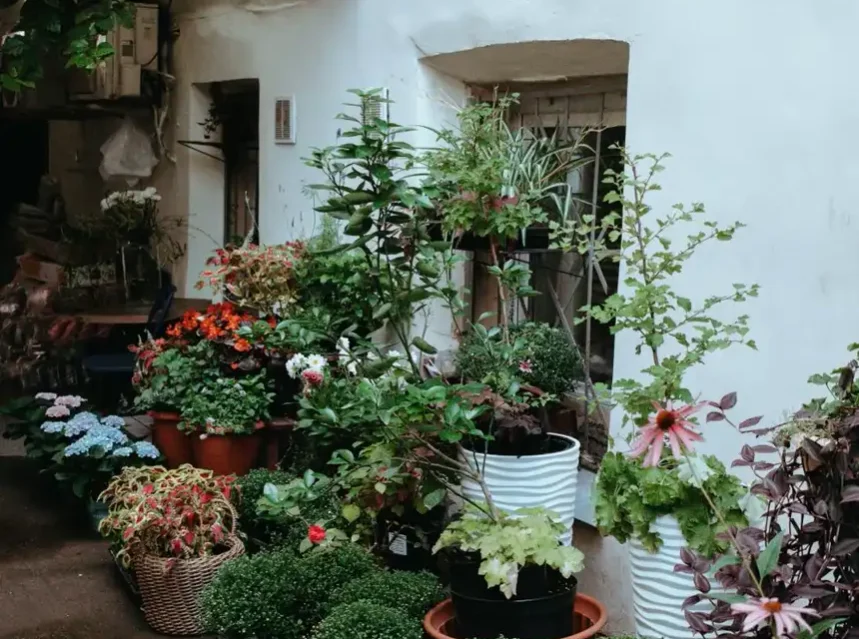
Small garden design ideas all serve one goal: making a limited plot feel bigger, calmer and more usable than its measurements suggest. The good news? Small-space design is mostly tricks, and the tricks are learnable. A few decisions do most of the work — fewer, bigger elements; a diagonal eye-line; planting in vertical layers. They beat any amount of money spent on features.
Quick answer: Think big in a small space. Use one large container instead of ten small pots. Run the main path or patio on a diagonal. Plant the boundaries with climbers so the fences disappear. Divide even a tiny plot into two zones — a place to sit and a place to grow. And keep roughly half the space planted, half paved or decked.
🧰 In a hurry? Jump straight to our tested picks for this guide ↓
Small garden design ideas at a glance
| Trick | Why it works |
|---|---|
| Fewer, bigger pots and plants | Clutter shrinks a space; scale calms it |
| Diagonal sight lines | The diagonal is the longest line in any plot |
| Vertical layers (climbers, trees) | Adds garden where there is no ground |
| Hide the boundaries | Green walls read as depth, fences as limits |
| Two zones, partly screened | A garden you can’t see all at once feels bigger |
| 50/50 planting-to-hard-surface | Balance of life and usable space |
Think big: the one-large-pot rule
The most common small garden mistake is thinking small — a scatter of little pots, narrow borders, miniature everything. The result is fussy, and fussy reads as cramped.
Designers consistently advise the opposite. One generous, half-barrel-sized container with a layered planting has more presence than a dozen tiny pots. It needs far less watering too. One bold border beats three thin ribbons. Even a single small tree — an amelanchier, a crape myrtle, a potted citrus — gives a tiny garden the thing it usually lacks: scale.
The working rule for a small plot: keep roughly half of it planted and half hard surface. Then make every element within it as large as the space will bear.
Use the diagonal: the longest line you own
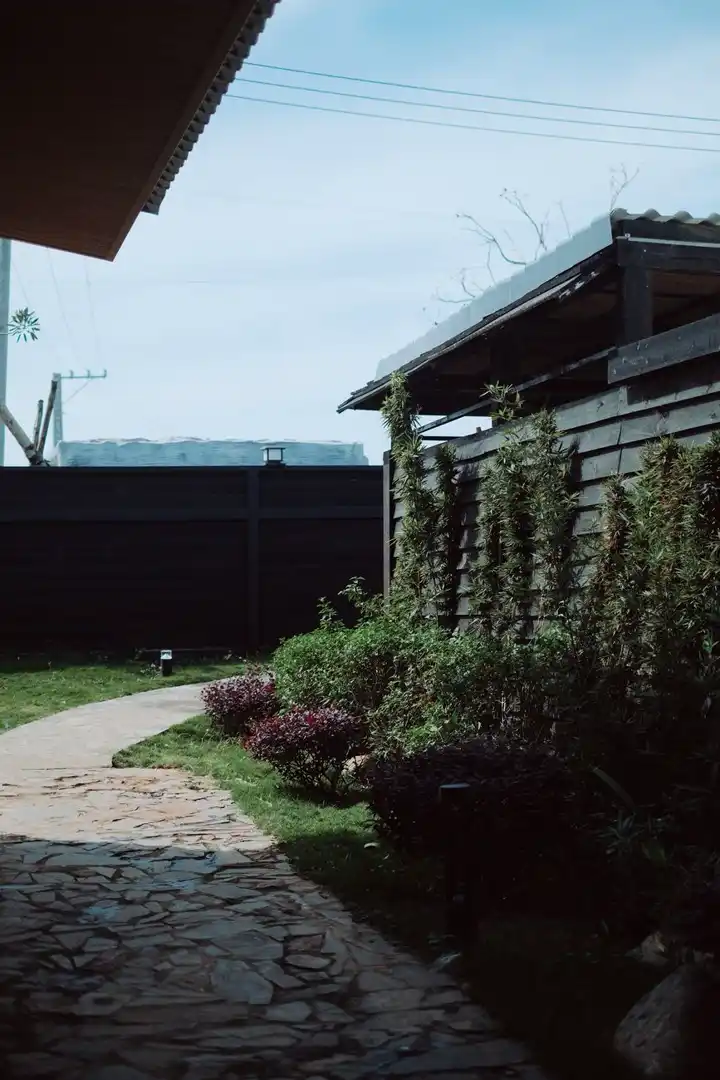
Stand at your back door. The longest distance in a rectangular plot is corner to corner — so make the eye travel it.
Set the patio, the main path or the lawn shape at 45 degrees to the house, and the whole garden reads longer. Place the focal point at the far end of that diagonal — a seat, a large pot, a small water bowl. The eye now has a journey instead of a wall. Paths that curve out of sight work the same way. A garden you cannot see all at once always feels bigger than one you can.
Go vertical: the free second garden
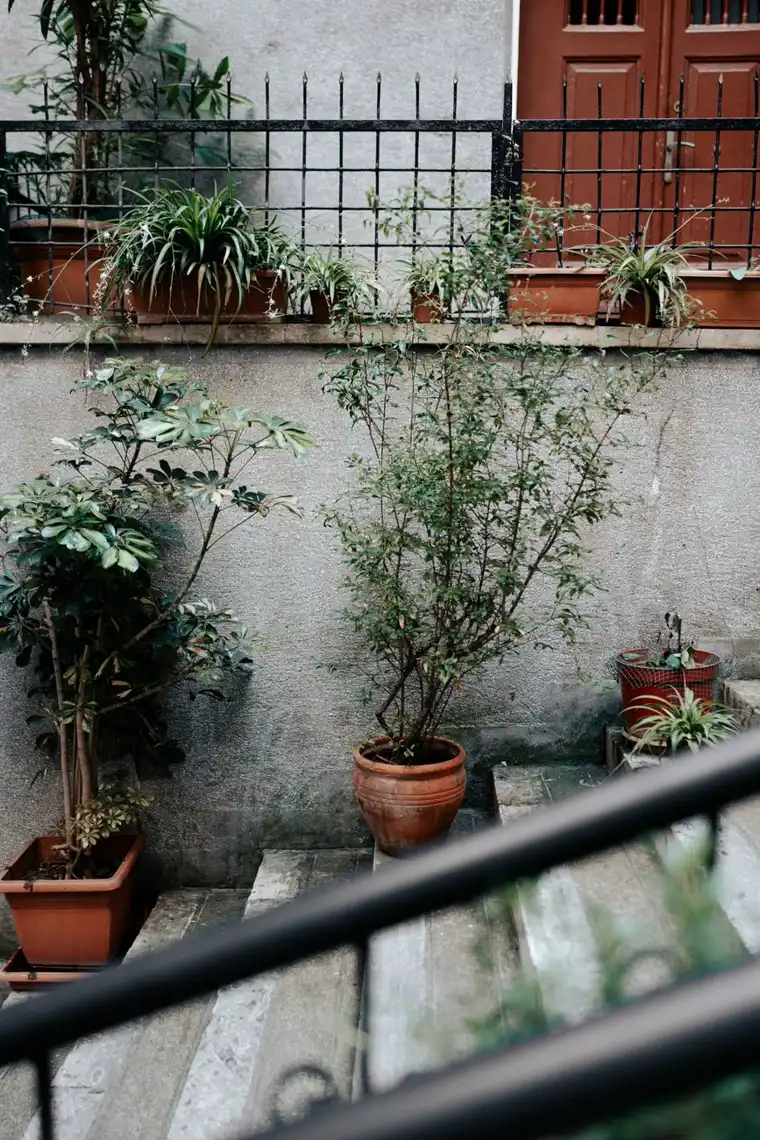
When the ground runs out, the walls and fences are unused growing space — often more square metres than the beds.
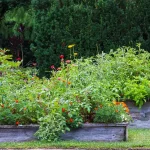
Clothe boundaries with climbers — star jasmine, clematis, a climbing rose. Fix trellis panels and wall pots, and hang baskets at varied heights. A green boundary does double duty. It grows plants where there is no ground, and it blurs the edges so the eye cannot find the fence line. Our vertical gardening ideas guide covers structures and plant choices in detail.
Add one layer of height in the beds too — a slim tree, tall grasses, an obelisk with a climber. Gardens read as rooms, and rooms need a ceiling line, not just a floor.
Zone it: two rooms beat one
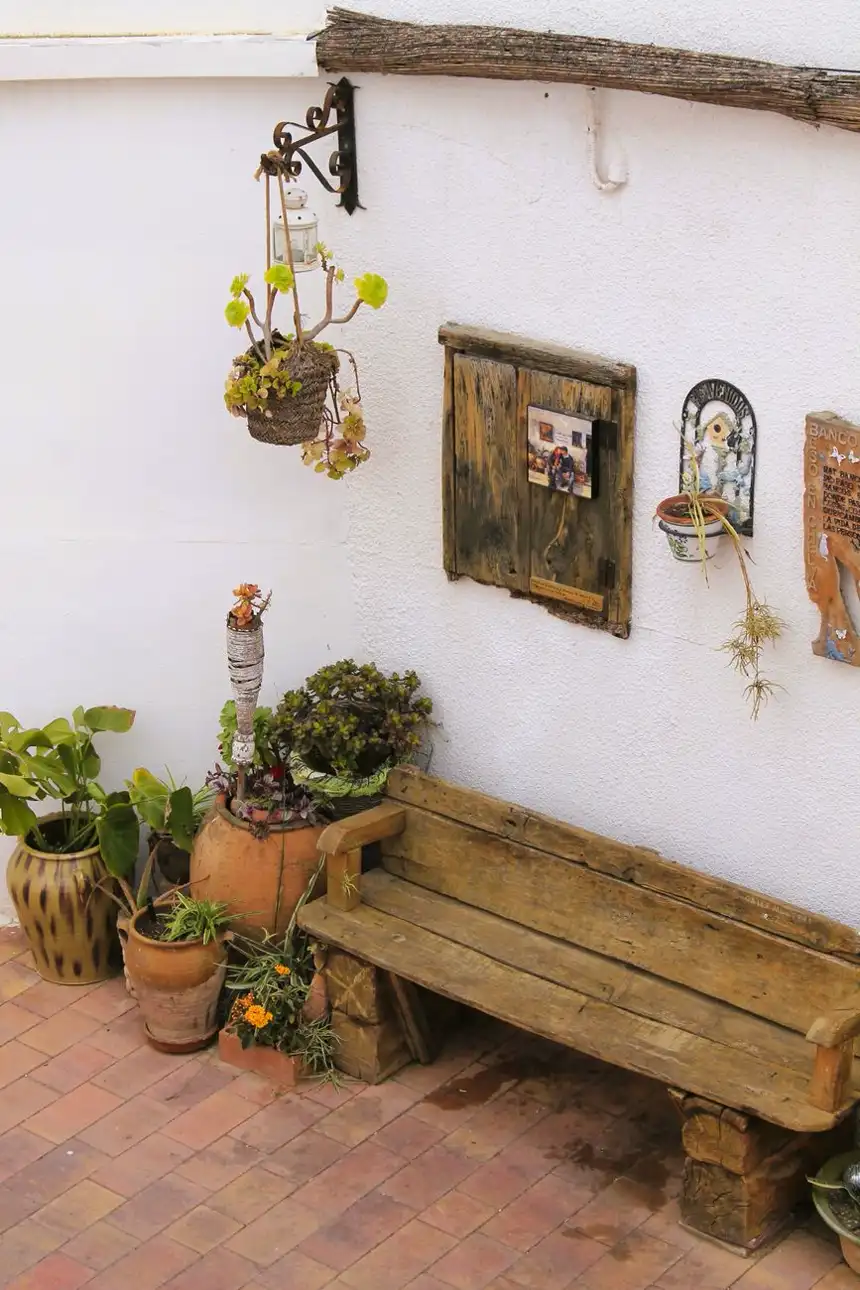
It sounds backwards, but dividing a small garden makes it feel larger. One glance that takes in everything says “small”; a partial screen that hints at more says “garden continues”.
Split the plot into a sitting zone and a growing zone — or dining and lawn, or sun spot and shade spot. The divider needs almost no width. A slatted screen works, as does a row of tall pots or a narrow bed with grasses and an archway. Leave a clear opening so the second zone shows through and invites the walk.
In long, narrow plots this is the whole game: two or three zones across the width break the “corridor” effect that makes narrow gardens feel mean.
Choose plants that earn their place twice
With room for fewer plants, each one must work harder. Audition them like staff.
- Long performers: plants that flower for months (salvias, geraniums, gaura) or hold form year-round (evergreen shrubs, grasses) beat two-week wonders.
- Layer workers: spring bulbs under summer perennials under a light-canopied tree — three seasons from one square metre.
- Scented earners: in a small space you are always near the plants, so fragrance (jasmine, herbs by the seat) pays daily.
- Edible doubles: a bay standard, chilli pots, herbs in the border — beauty plus harvest, covered fully in our container gardening guide.
Repeat a few plants rather than collecting many. Repetition is the designer’s trick that makes a planting look intentional instead of accumulated.
Light colours, simple floor, hidden bins
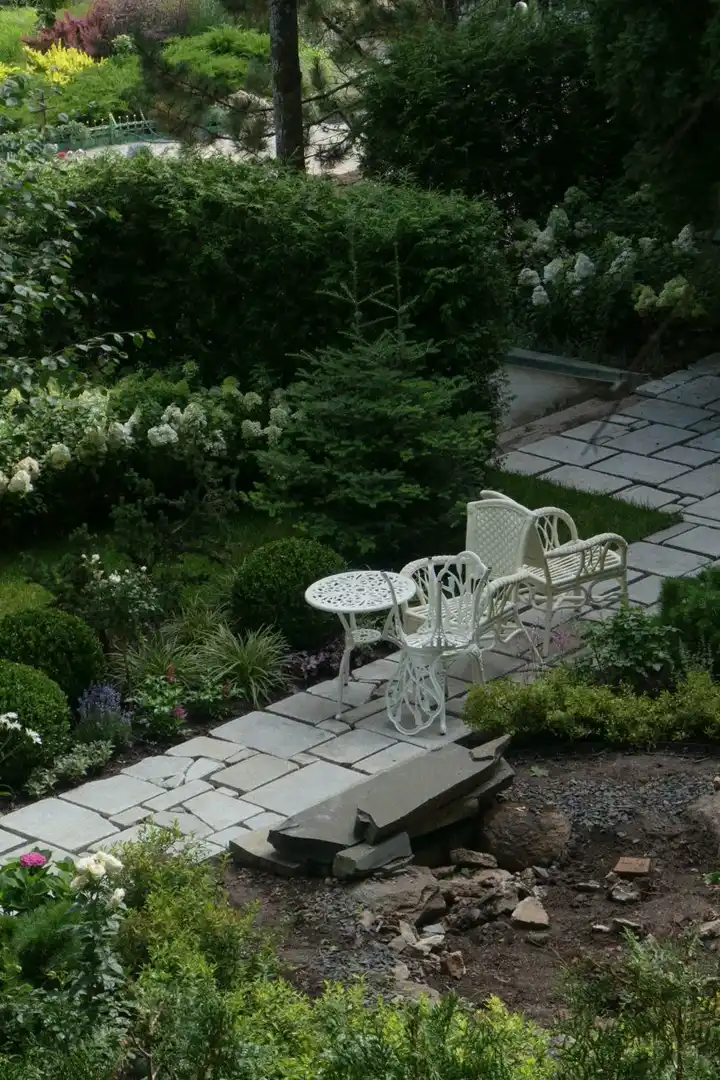
Three quiet decisions change how a small garden feels more than any feature.
Keep the floor simple: one paving material, laid large-format, reads as a single generous surface. Use light, receding colours on fences and walls — soft grey-green, warm off-white — so boundaries fall back. Save dark, dramatic paint for one accent wall behind a planting. Hide the ugly necessities: bins, washing line and storage go behind the zone-two screen. That move returns more calm than any ornament.
Mirrors are the much-advertised trick, and they do work outdoors. But site them to reflect planting, not the viewer, and frame them like a window or gate so the illusion holds.
Borrow the landscape beyond the fence
The oldest small-garden idea costs nothing. If a neighbour’s tree, a distant ridge or even a handsome streetlamp sits beyond your boundary, frame it instead of blocking it.
Keep your own planting lower where the view is good. Let the borrowed greenery read as part of your garden — the eye accepts the gift without checking the land registry. Where the view is bad, do the opposite: a small tree or a climber-covered screen on that exact sight line erases it. Walk the garden once with fresh eyes, noting what shows over each fence panel. Then plant to edit the skyline.
Small garden design in India: balconies and terraces
India’s small-space gardening mostly happens above ground level, and the same principles translate directly.
On a balcony, the one-large-pot rule matters double. A single big planter with a layered arrangement beats the classic clutter of twenty small pots. Use the vertical: railing planters, wall grids for money plant and jasmine, a slim trellis for a madhumalti. On a terrace, zone it like a ground plot — a green growing corner, a seating area under shade cloth. Keep heavy pots over load-bearing walls. Our balcony gardening and terrace gardening India guides carry the full plant lists and waterproofing cautions.
Common small garden design mistakes
- Many tiny pots. The fussiness tax — consolidate into a few large containers.
- A path straight down the middle. Halves the garden visually and shortens it; go diagonal or curve it.
- Furniture too big for the zone. A bistro set that fits beats a sofa set that blocks the door view.
- Leaving boundaries bare. Naked fences are a constant reminder of the garden’s edge.
- One-season planting. A small garden is always on stage; every bed needs a winter act.
- Skipping the sight-line check. Look from inside the house too — that window view is the garden you see most.
What experienced small-space designers report
Professional designers asked about small plots return to the same confession: the hardest client conversation is persuading people to remove things. The design-mistake roundups at GardenDesign.com echo it. The transformation owners describe as “magic” is usually subtraction — three thin borders merged into one deep one, ten pots into two big ones, a central path swung to the diagonal.
The second consistent observation: small gardens reward maintenance like nothing else. Everything is close, so everything is seen. Designers report that clients with the smallest gardens become the most attentive gardeners — and get the best results per square metre of anyone.
Related plant guides
- Backyard Garden Design Ideas
- Flower Bed Design For Beginners
- Small Space Gardening
- Vertical Gardening Ideas
- Best Flowers For Hanging Baskets
- Permaculture Gardening Basics
Frequently asked questions
How do I make a small garden look bigger?
Hide the boundaries with climbers and run the main line of the garden on the diagonal. Use a few large elements instead of many small ones. Screen part of the plot so it cannot all be seen at once. Light-coloured walls and a simple, single-material floor complete the illusion.
What is the 50/50 rule in small garden design?
Keep roughly half the space as planting and half as usable hard surface (paving, deck, gravel). More hardscape feels barren; more planting in a tiny plot can feel overgrown and leaves nowhere to sit.
What are the best plants for small gardens?
Long-flowering perennials (salvia, geranium, gaura), evergreen structure plants, climbers for the boundaries and one slim multi-season tree such as an amelanchier. Add scented plants near seating. Repeat a small palette rather than collecting one of everything.
How do I divide a small garden into zones?
Use a narrow divider that hints rather than walls: a slatted screen, an archway, tall grasses or a row of large pots, with a clear opening through. Two zones — typically sitting and growing — turn a small plot into a sequence of spaces instead of a single room.
Where do I start when designing a small garden?
Start with function, not plants. List what you actually want the space to do, such as sitting with morning tea, growing herbs, or giving children a play corner. Then watch where the sun falls through the day, because sun and shade decide what goes where. Sketch a simple plan, place the seating area first, and let paths and planting follow. Buying plants before you have a layout is the most common false start, in a Delhi courtyard or a London terrace alike.
How much does a small garden makeover cost?
Costs vary enormously with materials and labour. A full professional redesign of a small UK garden commonly runs into a few thousand pounds, while a simple patio or decking refresh costs far less. A budget DIY makeover with paint, gravel, containers, and young plants can transform a small space for a tiny fraction of that. In India, container-led balcony and courtyard makeovers are cheaper still, since pots, cocopeat, and nursery plants cost relatively little. Spend most on the hard surfaces you touch daily.
What colours make a small garden look bigger?
Cool, light colours push boundaries visually away. Paint fences and walls in pale tones or soft sage so they reflect light rather than closing the space in. With plants, blues, purples, and whites appear to recede, so placing them at the far end deepens the view, while hot reds and oranges jump forward and work best near the seating area. Keeping to one tight palette of two or three colours also makes a small plot feel calm and intentionally designed.
How do I make a small garden low maintenance?
Reduce the number of different surfaces and choose plants that look after themselves. Swap a fiddly patch of lawn for gravel, paving, or groundcover, and plant a backbone of evergreen shrubs and tough perennials rather than seasonal bedding that needs constant replanting. Group containers together and fit drip irrigation or self-watering pots to cut daily watering, a real help through hot Indian summers. Mulching beds once a year suppresses weeds and locks in moisture, shrinking the weekend workload dramatically.
Is a lawn worth it in a small garden?
Often it is not. A tiny lawn demands mowing, edging, feeding, and repair, yet rarely looks lush because of concentrated foot traffic and shade from boundaries. Many designers replace small lawns with paving, gravel, decking, or planting, then add greenery vertically instead. If you love real grass underfoot, keep the shape simple and slightly generous, since a thin ribbon of turf reads as leftover space. In hot climates, hardy groundcovers can give the green effect with far less water.
What are the biggest small garden design mistakes?
The classic errors are cramming in too many small features, choosing lots of tiny pots instead of a few large ones, and ignoring the vertical space on walls and fences. Undersized furniture and narrow paths also make a plot feel meaner, not bigger. Another frequent miss is planting without checking mature sizes, so shrubs quickly swallow the space. Finally, leaving the boundaries bare draws the eye straight to the fence line, which instantly reveals how small the garden really is.
How do I get privacy in a small garden without blocking light?
Use layered, partial screening rather than a solid barrier. Slatted timber panels, open trellis with climbers like star jasmine, and airy small trees such as amelanchier filter views while letting light through. A pergola or sail over the seating area screens overlooking windows above, which matters in dense urban plots from Mumbai apartments to terraced UK streets. Position screening only where you actually sit, instead of walling the whole boundary, and the garden stays bright and open.
Can I grow vegetables in a small designed garden?
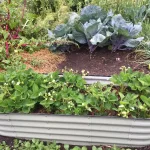
Yes, and they can look good doing it. A single raised bed, a few large containers, or a vertical planter by the kitchen door will produce herbs, salad leaves, chillies, and tomatoes without disrupting the design. Treat edibles as part of the planting scheme: rainbow chard, lettuces, and trailing tomatoes are genuinely ornamental. Give them the sunniest spot you have, ideally six hours of light. In small Indian gardens, pots of coriander, mint, and chillies earn their space all year.
Sources and further reading
Related guides
- Backyard garden design ideas
- Small space gardening
- Vertical gardening ideas
- Container gardening for beginners
- Balcony gardening in India
- No Mow May
Still stuck? Ask the Plant Doctor
Describe the problem — yellow leaves, holes, no flowers — and get a clear answer in seconds. FreeAI can make mistakes. Answers are guidance, not a guarantee — check anything important against the guide it links to, and always read the label on any product before you use it.