How to Grow Wisteria (Spectacular Spring Cascades)
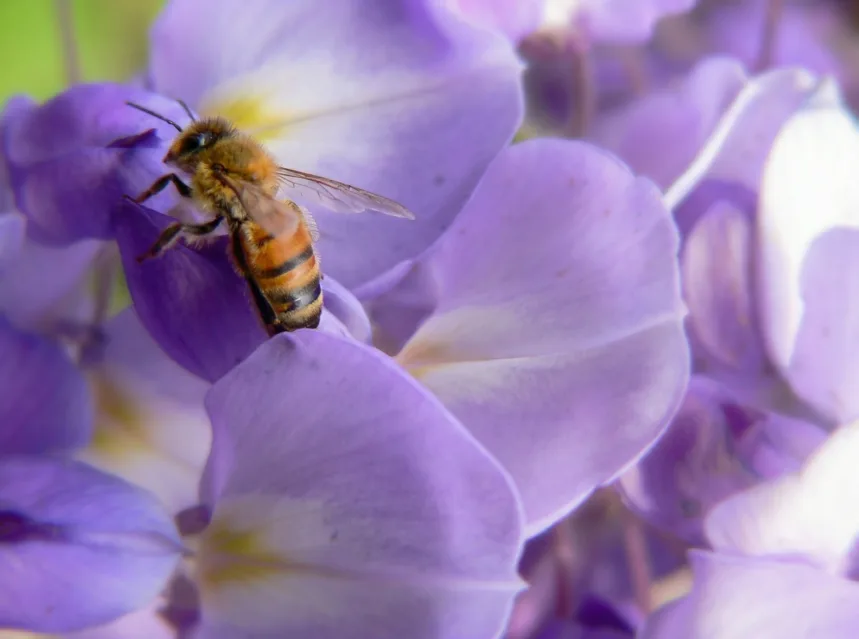
Wisteria is one of the most breathtaking climbers in the world. In spring, it drips with long, fragrant cascades of purple, blue, pink, or white flowers. Draped over a pergola or wall, it’s pure magic. It’s vigorous and long-lived, but it asks for two things: a strong support and regular pruning. Master those and the patience it needs, and the reward is spectacular. Here is the complete guide on how to grow wisteria.
Quick start: Plant wisteria in full sun on a very sturdy support. Prune it twice a year — that’s the secret to flowers. Don’t overwater or overfeed. Choose a grafted plant for blooms within a few years, and be patient.
Wisteria is a long-term commitment that rewards patience, and the lesson every grower learns is that pruning, not feeding, is what brings flowers. The usual routine is two cuts a year, a summer tidy and a harder winter prune back to a few buds, which builds the flowering spurs. Seed-grown plants can take many years to bloom, so growers choose named, grafted plants for reliable flowering.
🧰 In a hurry? Jump straight to our tested picks for this guide ↓
Wisteria at a glance
| Feature | Detail |
|---|---|
| Botanical name | Wisteria species (family Fabaceae) |
| Plant type | Vigorous deciduous climber |
| Sun | Full sun |
| Soil | Fertile, free-draining |
| Support | Very strong, permanent structure |
| Flowering | Spring; cascading scented racemes |
| Note | Needs twice-yearly pruning; seeds toxic |
Why grow wisteria?
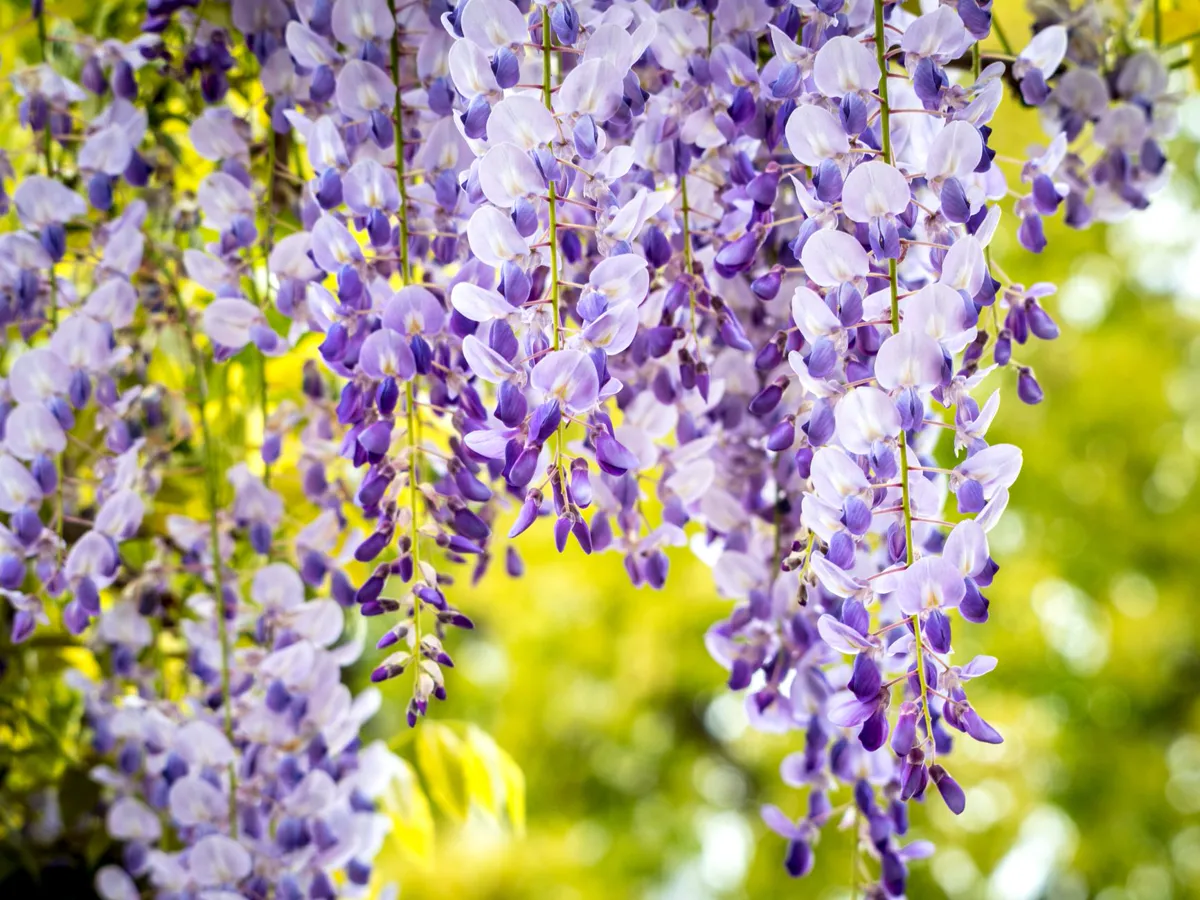
Wisteria delivers a once-a-year spectacle few plants can match. The fragrant flower curtains are unforgettable over an arch, pergola, or wall. It’s long-lived and vigorous, providing shade and beauty for decades. For a dramatic, romantic garden feature, it’s the ultimate climber — and a relative favourite alongside other vines like clematis.
History, origin & where it grows
Wisteria is native to China, Japan, and Korea, with a couple of species from the eastern United States. The Asian types are the most dramatic (and vigorous). It evolved climbing through forest trees, which is why it’s so strong — and why it needs serious support.
Wisteria is native to East Asia and North America (see Encyclopaedia Britannica). The Asian species are the most spectacular.
Its cascading, scented flowers made it a prized climber worldwide (see the RHS). It is hugely vigorous and long-lived. It needs a strong support and firm control.
Best season & when to plant
Plant wisteria in spring or fall. It blooms in spring, on the previous year’s growth. Importantly, be patient: a young wisteria can take several years to flower. Seed-grown plants may take up to 20 years, so buy a grafted plant, which usually flowers within about four years.
Support (build it strong first)
This matters more than for almost any other climber. A mature wisteria can weigh hundreds of pounds. So install a heavy-duty support before planting — strong wires on a wall, or a solid pergola, arch, or post. A flimsy trellis will be crushed. Keep it away from gutters, drainpipes, and house siding, which it can damage.
Sun, soil & watering
Give wisteria full sun — at least 6 hours — or it likely won’t flower. Use moist, well-drained soil (see improving garden soil). Here’s the key: don’t overwater or overfeed established plants. A little stress encourages flower buds, while too much water and high-nitrogen feed give lush leaves and no flowers (see how often to water).
Pruning (the real secret to flowers)
Wisteria blooms on short spurs, so pruning is essential. Prune twice a year:
- Summer (after flowering): cut the long, whippy new shoots back to about 6 inches from the main framework.
- Late winter: shorten those same shoots again to 2–3 buds.
This two-step pruning builds flowering spurs and keeps the vine in bounds. Skip it, and you get a leafy monster with few blooms.
Common pests & diseases
Wisteria is fairly tough. Watch for aphids on new growth (see aphid control) and occasional scale. The bigger “problem” is over-vigorous growth — manage it with pruning. See organic pest control if needed.
Benefits & uses
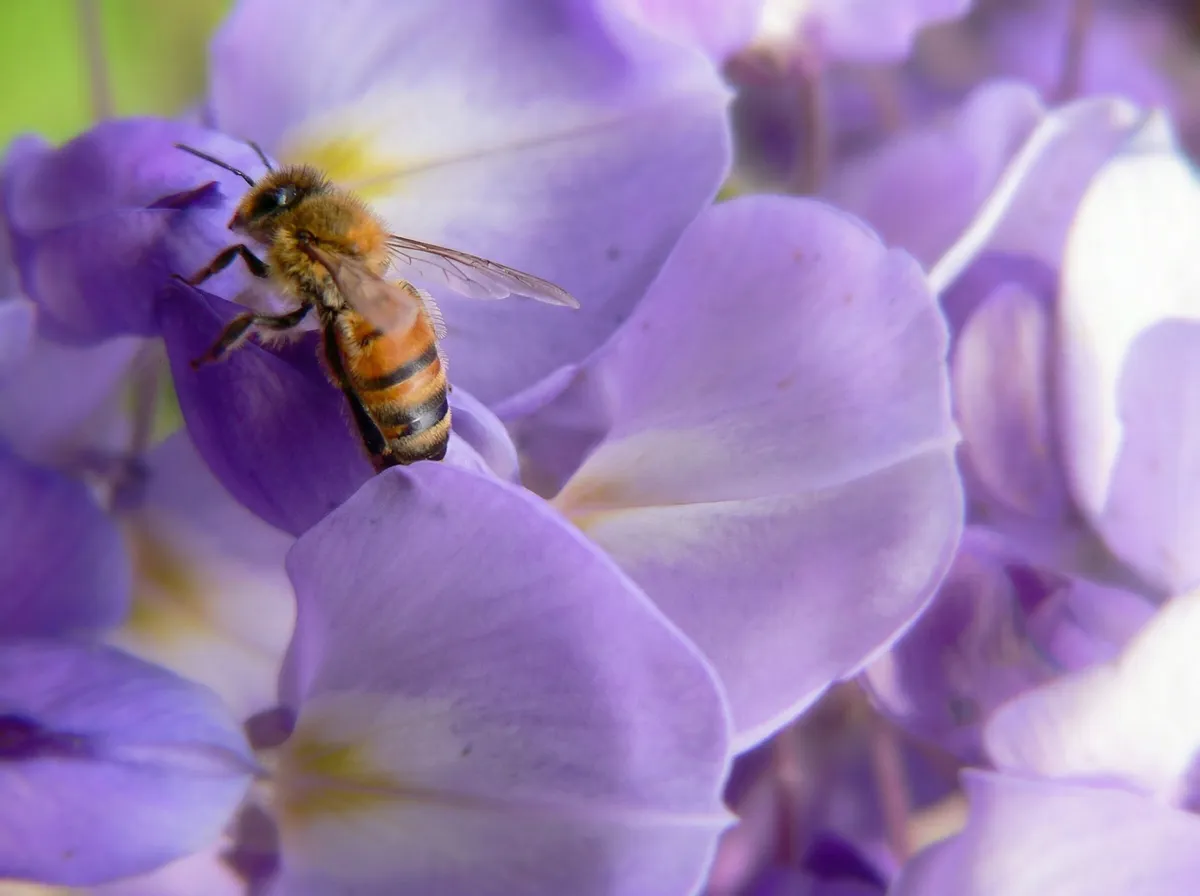
Wisteria creates a stunning, fragrant focal point that draws bees and admiration alike. It’s perfect for clothing pergolas, arches, and walls, and it provides cooling shade in summer. Note: the seeds and pods are toxic if eaten, so keep them away from children and pets.
This article is for general information only and is not medical advice. Talk to a qualified professional before using any plant medicinally.
Common wisteria problems
No flowers
The classic complaint. Usually a young/seed-grown plant, too much shade, too much water/nitrogen, or no proper pruning. Buy grafted, give full sun, ease off feeding, and prune twice a year.
Out-of-control growth
Wisteria is very vigorous. Prune regularly and keep it off the house.
Damaged structures
Its weight and grip can wreck weak supports. Use a heavy-duty frame.
Strong support & pruning
Wisteria is powerful and heavy, so it needs a very strong, permanent structure (see improving garden soil). A flimsy trellis will be torn apart.
The key to flowering is pruning twice a year. Cut back the long whippy shoots in summer. Then shorten them again in winter. This builds flowering spurs.
Patience and care
Wisteria can take several years to flower, especially seed-grown plants (see how often to water plants). So buy a named, grafted plant for quicker, reliable blooms.
Give it full sun and fertile soil. Avoid high-nitrogen feeds, which give leaves not flowers. The seeds are toxic, so site it thoughtfully.
Why grow wisteria
Wisteria in full bloom is one of the most breathtaking sights in any garden. Its long, scented racemes of lilac, blue or white cascade over a pergola or wall in spring. It is long-lived and magnificent, given a strong support and proper twice-yearly pruning. It needs patience and control, but few climbers reward the effort so spectacularly.
Choosing a wisteria variety
Two main wisterias are grown, and the choice matters. Chinese wisteria (Wisteria sinensis) is the most vigorous, opening all its richly scented flowers at once before the leaves, for a spectacular but brief display. Japanese wisteria (Wisteria floribunda) flowers a little later, with longer, trailing racemes that open gradually from top to bottom and often carry the better scent.
For a smaller garden or a pot, look for a named, grafted plant, since these flower years earlier and far more reliably than seed-raised ones. Where space is tight, the less rampant American wisteria (Wisteria frutescens) is easier to keep in bounds. Whichever you choose, buy it in flower if you can, so you know exactly what colour and scent you are getting.
Related plant guides
- How to grow Gulmohar
- How to grow Delphinium
- How to grow Honeysuckle
- How to grow Moonflower
- How to grow Grapes
- How to grow Lupine
How to propagate wisteria
Everything about propagating wisteria comes back to one fact: seedlings can take up to twenty years to flower, while a plant raised from a good flowering specimen keeps its parent’s habit. So take material from a wisteria you have seen in bloom.
Cuttings
Take softwood cuttings in early summer, or firmer semi-ripe cuttings later in the season, from a plant that flowers well. Strip the lower leaves, insert them into a gritty, free-draining mix and keep them humid and out of direct sun until they root. Grow the young plants on in pots for a season before planting them against their permanent support.
Layering
Layering is the slower but almost foolproof method: pin a low, flexible stem into the soil, leave it a full season to root, then sever it from the parent and lift it. It needs no equipment and no propagator.
Avoid raising wisteria from seed if you want flowers — seedlings are slow to bloom and unpredictable in quality, which is exactly why named plants are sold grafted. Note too that the seeds and pods are the most toxic part of the plant, so keep collected pods away from children and pets.
Frequently asked questions
Why won't my wisteria bloom?
Most often it’s too young (especially seed-grown), in too much shade, overfed, or unpruned. Choose grafted plants, give full sun, prune twice a year, and don’t over-fertilize.
How long until wisteria flowers?
Grafted plants usually flower within about 4 years; seed-grown ones can take up to 20.
When do I prune wisteria?
Twice a year — after flowering in summer, then again in late winter.
Does wisteria need full sun?
Yes — at least 6 hours. In shade it grows leaves but rarely flowers.
Is wisteria poisonous?
Yes. All parts of wisteria are toxic, and the seeds and seed pods are the most dangerous, containing compounds that can cause severe stomach upset if swallowed. It is poisonous to people as well as to dogs, cats, and horses, and the velvety pods can be tempting to curious children and pets. Keep fallen pods cleared up and site the plant with this in mind.
How fast does wisteria grow?
Once established, wisteria is vigorous and can put on 3 metres or more of growth in a single season, quickly covering a pergola or wall. This speed is exactly why it needs firm support and regular pruning to keep it in bounds. The strong, twining stems thicken with age and, left unchecked, can become as heavy as a small tree.
What is the difference between Chinese, Japanese, and American wisteria?
Chinese wisteria (Wisteria sinensis) opens most of its shorter flower trusses together before the leaves, twines anticlockwise, and is the most aggressive. Japanese wisteria (W. floribunda) has much longer racemes that open gradually from the top down, twines clockwise, and is often the most fragrant. American wisteria (W. frutescens) is smaller, blooms a little later on new wood, and is the best-behaved of the three.
Can wisteria damage your house?
It can, if grown carelessly against a building. The strong twining stems will work their way into gutters, downpipes, roof tiles, and under cladding, prising them apart as they thicken. Never let wisteria climb directly into the fabric of a house; instead train it on robust, well-anchored wires or a freestanding pergola set away from the walls.
Can you grow wisteria in a pot?
Yes, though it takes commitment. Wisteria can be kept in a large, heavy container if trained as a compact standard or “tree” and pruned firmly two or three times a year to control its vigour. It needs generous watering, regular feeding, and eventual top-dressing, since a pot restricts the roots. This method suits small gardens and patios where an open border is not available.
Which wisteria is not invasive?
American wisteria (Wisteria frutescens) is the least aggressive and is the usual recommendation where Chinese and Japanese wisteria have become invasive, as they have across parts of the southeastern United States. It is more restrained, flowers on the current season’s growth, and is easier to keep in scale. Choosing it, or a named cultivar of it, avoids the runaway spread of the Asian species.
How do you propagate wisteria?
Take softwood or semi-ripe cuttings in summer, or use layering, where a low stem is pinned into the soil until it roots. These methods reproduce a known, free-flowering plant faithfully. Avoid growing from seed if you want reliable blooms, because seedlings are slow to flower and their quality is unpredictable.
How do you train wisteria as a standard tree?
Select one strong stem as the trunk, tie it to a sturdy stake, and remove all side shoots until it reaches the height you want. Then pinch out the tip to encourage a branching head, and build up a framework of a few main branches. From then on, the twice-yearly pruning that shortens leafy growth keeps the head neat and encourages the flowering spurs.
Still stuck? Ask the Plant Doctor
Describe the problem — yellow leaves, holes, no flowers — and get a clear answer in seconds. FreeAI can make mistakes. Answers are guidance, not a guarantee — check anything important against the guide it links to, and always read the label on any product before you use it.