How to Grow Azaleas (Brilliant Spring Shrubs)
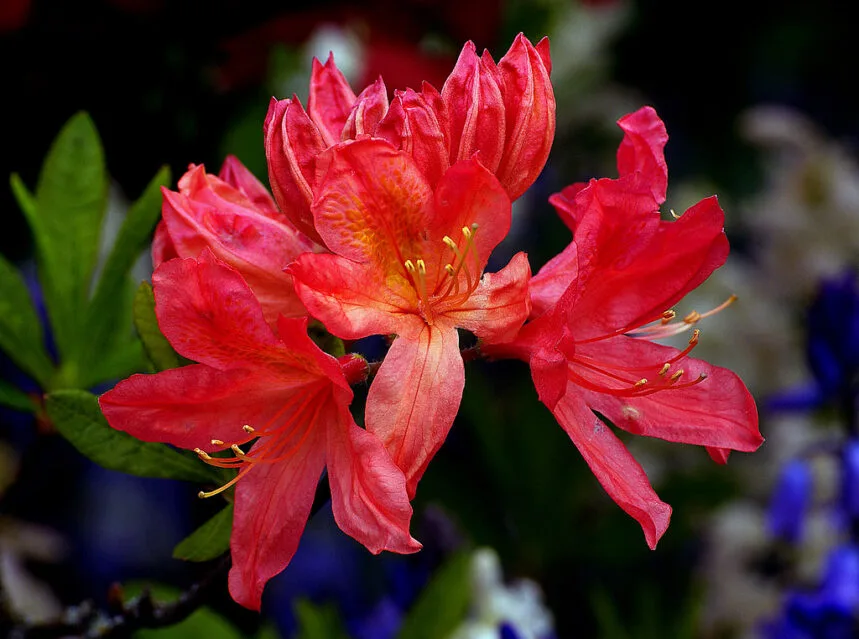
Azaleas are spring-flowering shrubs, a type of rhododendron, grown for their masses of pink, red, purple, white and orange blooms that light up shady spots — the glory of the spring garden. They are long-lived and relatively low-care, as long as you give them what they really want: acidic soil and dappled shade. Get those right, and few plants put on a more dazzling show. Here is the complete guide on how to grow azaleas (and rhododendrons).
Quick start: Grow azaleas in acidic, well-drained soil and partial shade. Keep the soil evenly moist (never waterlogged), and mulch well. Prune right after flowering. Get the acidic soil right, and they bloom spectacularly each spring.
Azaleas are stunning in full flower, but they are particular plants, and most failures come down to soil and water. They demand acidic soil and resent lime and hard tap water, so growers in chalky areas grow them in pots of ericaceous compost watered with rainwater. Their roots are shallow and dry out fast, making a moisture-retaining mulch and steady watering essential. In hot regions they do best in dappled shade or in the cooler air of hill stations.
🧰 In a hurry? Jump straight to our tested picks for this guide ↓
Azaleas at a glance
| Feature | Detail |
|---|---|
| Botanical name | Rhododendron (family Ericaceae) |
| Plant type | Spring-flowering shrub |
| Light | Partial / dappled shade |
| Soil | Acidic (pH 4.5–6.0), moist, well-drained |
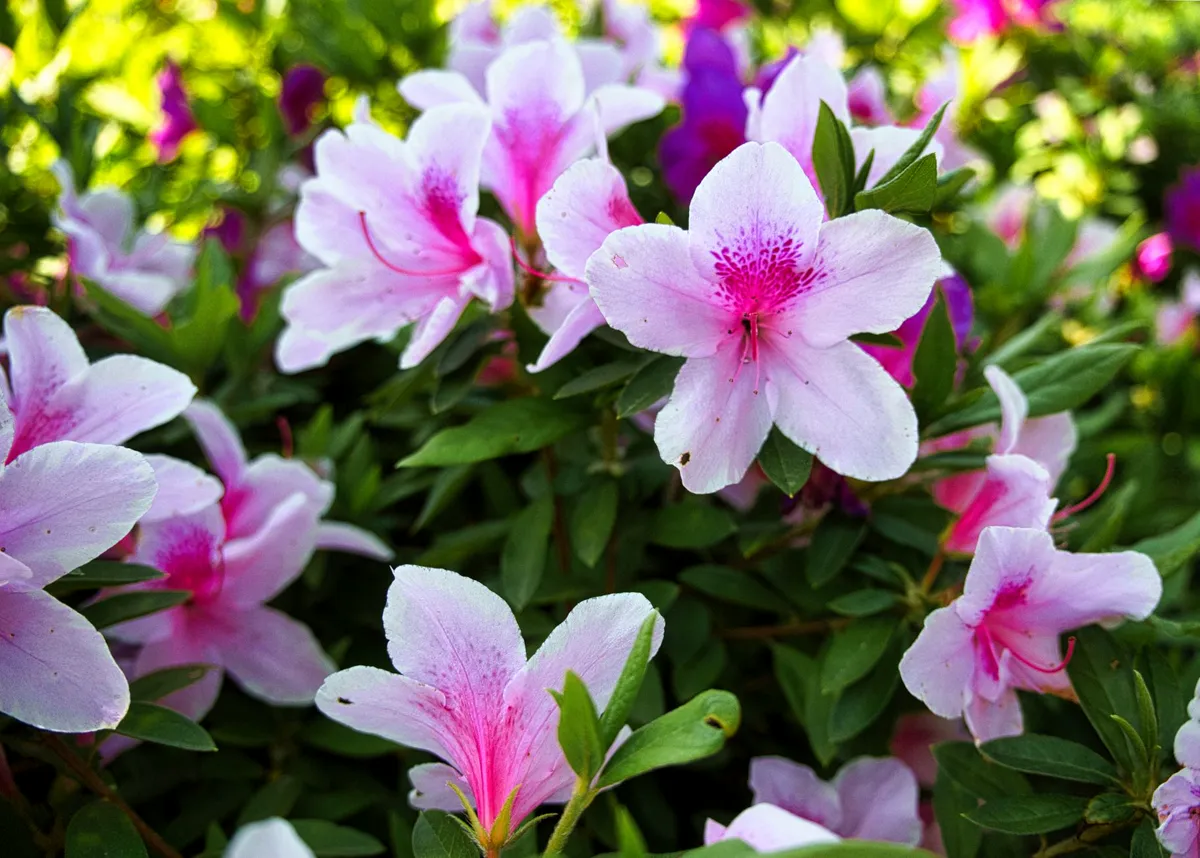
| Flowers | Pink, red, purple, white, orange; spring |
| Prune | Right after flowering only |
| Types | Evergreen and deciduous |
| Warning | All parts toxic if eaten |
Why grow azaleas?
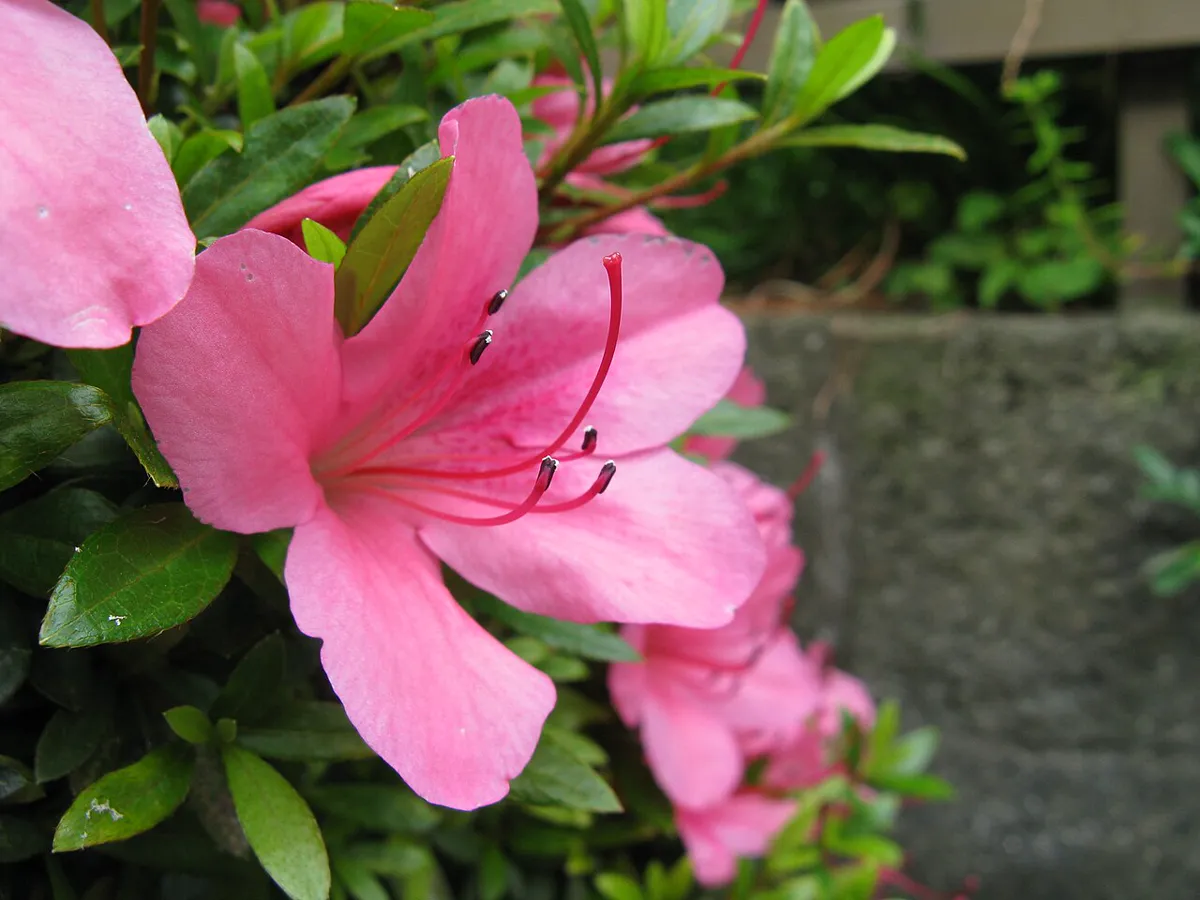
Azaleas put on one of the most dramatic flower shows of the year. A few reasons to grow them:
- Spectacular bloom. Masses of colour light up the spring garden.
- Brighten shade. They flower beautifully where many plants fail.
- Long-lived. They return bigger and better each spring for years.
- Great partners. They pair with acid-lovers like camellias and blueberries.
History, origin & where azaleas grow
Azaleas are not a separate genus at all: they are Rhododendron, the former subgenera Tsutsusi (evergreen) and Pentanthera (deciduous), which is why nurseries label the same plant both ways. They are native to Asia — the Himalayas, China and Japan — and parts of North America and Europe (taxonomy and toxicity). The toxin travels further than the leaves, too: it passes into the nectar and therefore into honey, and in parts of Turkey bees are deliberately worked on rhododendron nectar to produce the intoxicating — occasionally lethal — “mad honey”. Many grow naturally in cool, humid, woodland conditions with acidic, leafy soil. Plant hunters of past centuries brought countless species to Western gardens.
From those wild species, breeders created thousands of garden varieties. There are now evergreen and deciduous azaleas in an enormous range of colours and sizes. This rich heritage gives an azalea for almost any garden.
Because of their woodland origins, they crave dappled shade, moisture and acidic ground (see the Royal Horticultural Society). They struggle in hot, dry, exposed or limy sites. In warm climates, give them the coolest, shadiest spot and reliable moisture.
Best season & when to plant
Plant azaleas in spring or autumn, while the weather is cool and moist, so the roots establish before any heat or cold. They flower in spring, with the exact timing depending on the variety and climate. Autumn planting gives the roots a long, gentle spell to settle in before the first big spring bloom.
Spring is also the best time to see a plant in flower and choose your colour. Whichever season you plant, water the shrub in well and mulch it. Avoid planting in the heat of summer or the depths of a hard frost.
The key: acidic soil
This is the make-or-break factor. Azaleas need acidic soil, pH about 4.5–6.0. In neutral or alkaline soil they yellow and struggle. So before planting, enrich the soil with organic matter, and if needed, acidify it with sulphur or an acidic (ericaceous) fertiliser. Mulching with pine needles or bark also helps keep it acidic (see improving garden soil).
Light & planting
Azaleas do best in partial shade or dappled, filtered sun, ideally at least four hours of gentle light. Too much harsh sun scorches the leaves; too much shade reduces flowering. Plant them in well-drained, organic-rich soil. They have shallow roots, so plant slightly high and never bury the base deeply.
Watering & mulching
Keep the soil evenly moist but never waterlogged, as azaleas tolerate neither drought nor soggy roots (see how often to water plants). Their shallow roots dry out fast, so mulch generously with pine needles, leaves or bark to hold moisture and keep the roots cool. Use rainwater where you can, as hard tap water raises the soil pH.
Growing azaleas in containers
Pots are a brilliant solution if your garden soil is not acidic. A container lets you give azaleas the exact conditions they need. So almost anyone can grow them, whatever their ground.
Use a pot with good drainage and fill it with ericaceous (acidic) compost. Stand it in dappled shade, sheltered from harsh midday sun. Keep the compost evenly moist, ideally watering with rainwater.
Feed in spring with an ericaceous fertiliser to keep the colour rich. Mulch the surface and top up the compost each year. A potted azalea makes a glorious spring centrepiece on a shady patio.
Pruning
Azaleas need little pruning. When you do prune, to shape or control size, do it right after flowering. They set next year’s buds in summer, so pruning later removes the coming blooms. A light trim and removal of dead wood is usually all that is needed.
Evergreen vs deciduous azaleas

Azaleas fall into two broad groups, and the difference is worth knowing. It affects both their look and their hardiness. So choose to suit your garden and climate.
Evergreen azaleas keep their leaves all year, giving structure even in winter. They tend to be lower and spreading, ideal for foundations and edging. Most are slightly less hardy and love a sheltered, shady spot.
Deciduous azaleas drop their leaves in autumn, often with fiery colour first. They are usually taller and hardier, with larger, sometimes scented blooms. For cold gardens or autumn interest, the deciduous types are a fine choice.
Designing with azaleas
Azaleas are made for the cool, shaded parts of a garden. Their spring colour transforms a dim corner. So they are a designer’s answer to difficult shade.
Plant them under high-canopied trees, along a woodland edge, or against a shaded wall. They look wonderful in bold drifts of a single colour, or mixed with other acid-lovers. Camellias, rhododendrons, pieris and ferns make ideal companions.
Use lower, spreading evergreen types for foundations and front-of-border. Save the taller deciduous kinds for the back of a shady bed. A mulch of pine needles ties the whole planting together and keeps the soil acidic.
Common pests & diseases
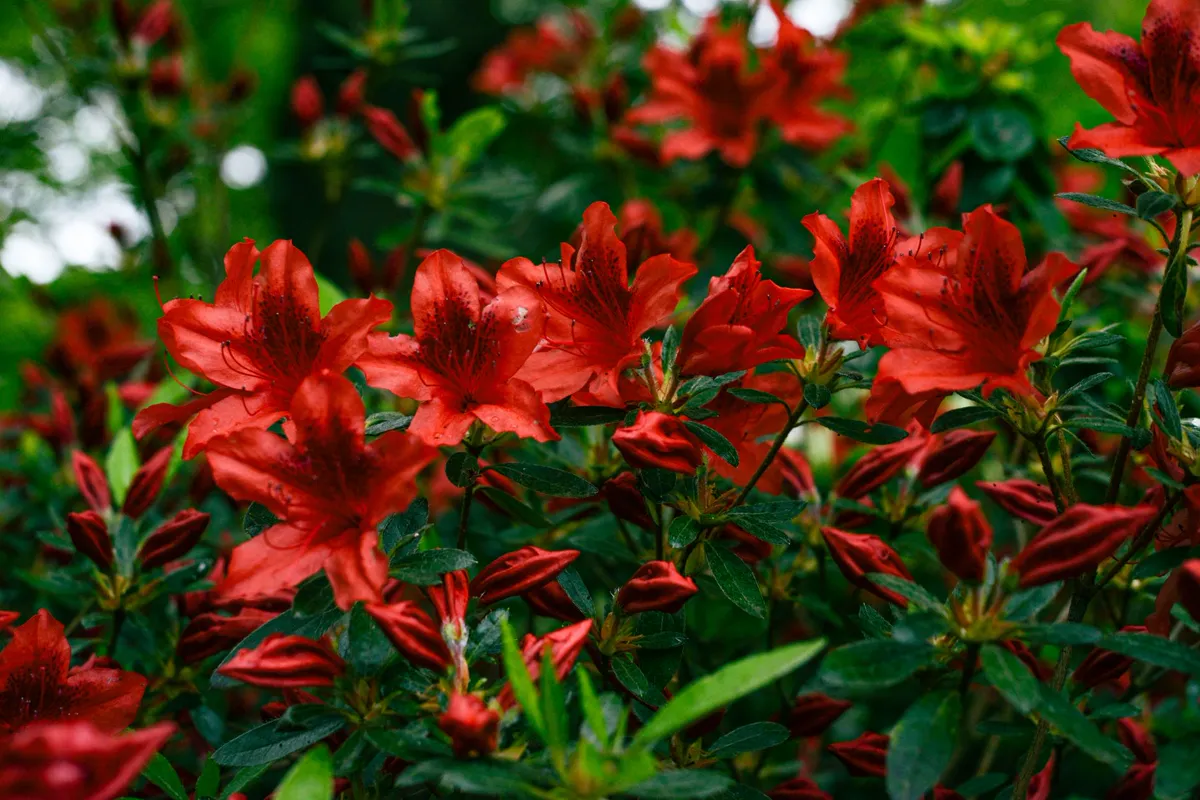
Watch for lace bugs, which speckle the leaves, plus spider mites and aphids, and root rot in poorly drained or alkaline soil (see aphid control). Keep the soil acidic and well-drained, and treat pests with the methods in our organic pest control guide. Yellowing leaves usually mean the soil is not acidic enough.
Benefits & uses
Azaleas deliver a spectacular spring display in shady spots, making them invaluable for woodland gardens, foundations and borders. They are long-lived, support early pollinators (see attracting pollinators), and many are evergreen for year-round structure. Note that all parts are toxic if eaten, so keep them away from pets and children.
This article is for general information only and is not medical advice. Talk to a qualified professional before using any plant medicinally.
Common azalea problems
Yellowing leaves
Soil not acidic enough. Acidify with sulphur or ericaceous feed and mulch with pine needles.
Few flowers
Too much shade, or pruned at the wrong time. Give dappled light and prune only right after flowering.
Leaf scorch or wilting
Too much sun, or dry or soggy roots. Move to dappled shade and keep the soil evenly moist and well-drained.
Related plant guides
- How to grow Camellias
- How to grow Rhododendron
- Pieris
- How to grow Hellebore
- How to grow Coral Bells
- How to grow Japanese Maple
How to propagate azaleas
Layering is the method to use, and it suits the way azaleas grow: their lower branches sit close to the ground already. Peg a low branch into the soil in late July and leave it attached to the parent plant. It is slow — 15 to 24 months before the layer has rooted enough to be cut away — but it needs no equipment and it very rarely fails (Plants For A Future).
Cuttings of half-ripe wood taken in August, put in a frame, are the faster route on paper. Plants For A Future rates them plainly as difficult, so if you only want one or two new plants, layer instead. Seed is a different proposition again: it is surface-sown in a greenhouse and must never dry out, and because almost every garden azalea is a named hybrid, seedlings will not come true to the parent. Layer or take cuttings if you want the same plant.
Frequently asked questions
What soil do azaleas need?
Acidic, well-drained soil (pH about 4.5–6.0) rich in organic matter. Acidify alkaline soil before planting.
Do azaleas need sun or shade?
Partial or dappled shade is ideal — enough light to flower, but protection from harsh direct sun.
When should I prune azaleas?
Right after they finish flowering, before they set next year’s buds in summer.
Why are my azalea leaves turning yellow?
Usually the soil is not acidic enough. Lower the pH with sulphur or an ericaceous fertiliser and acidic mulch.
Can I grow azaleas in pots?
Yes — use ericaceous compost in a well-drained pot in dappled shade, keep it evenly moist with rainwater, and feed with an acidic fertiliser in spring.
Are azaleas the same as rhododendrons?
Azaleas are a type of rhododendron, so they share the same family and care needs. In general azaleas are smaller, with smaller leaves and flowers, while rhododendrons are larger, broad-leaved shrubs.
When do azaleas bloom and how long do the flowers last?
Most azaleas flower in spring, anywhere from early March to late May depending on the variety and your climate. An individual shrub usually holds its display for about three to four weeks, and cool, overcast weather stretches that while a sudden heatwave cuts it short. Repeat-flowering groups such as the Encore types add a second show in late summer or autumn. Planting early, mid and late varieties together is the simplest way to keep colour going for two months or more.
How often should I water azaleas?
Azaleas are shallow-rooted, so they dry out faster than most shrubs and need roughly 2.5 cm of water a week from rain or the hose. Water deeply and less often rather than giving a daily splash, and always check the top few centimetres of soil before you reach for the watering can. They hate sitting in soggy ground just as much as they hate drying out, so drainage matters. A 5 to 7 cm mulch of pine bark or leaf mould over the root zone is the single most useful thing you can do, since it holds moisture and keeps the roots cool.
Are azaleas toxic to dogs and cats?
Yes. Every part of the plant, including leaves, flowers and nectar, contains grayanotoxins, and azaleas are listed as toxic to dogs, cats, horses and people. Even a small quantity of chewed leaves can cause drooling, vomiting, weakness and heart-rhythm problems in a pet. Plant them out of reach if you have grazing animals or a puppy that chews, and clear up prunings rather than leaving them on the lawn. If you suspect an animal has eaten any part of an azalea, treat it as an emergency and contact a vet straight away. This is general information, not veterinary advice.
Are azaleas deer resistant?
Unfortunately not. Deer find azalea leaves and buds very palatable and will strip a shrub back to bare stems, particularly in late winter when other food is scarce. Evergreen azaleas suffer worst because they hold their leaves through the hungry season. If deer visit your garden, you will need physical protection such as netting or fencing, or a repellent reapplied through winter. Where pressure is severe, it is often more practical to choose a genuinely unpalatable shrub instead.
How fast do azaleas grow and how long do they live?
Azaleas are slow to moderate growers, adding roughly 15 to 30 cm a year, with dwarf types slower still. That measured pace is part of their appeal, because they rarely outgrow a bed. Given the acidic, well-drained, humus-rich conditions they want, a healthy plant will live for decades, and specimens of fifty years and more are common in established gardens. Longevity comes down to getting the soil right at planting and never letting the shallow roots bake dry.
Why is my azalea not flowering?
The most frequent cause is pruning at the wrong time. Azaleas set next year’s flower buds within weeks of finishing their display, so cutting them back in late summer, autumn or winter removes the entire crop. Other common reasons are too much shade, too much nitrogen fertiliser pushing leaves instead of buds, drought stress the previous summer while buds were forming, or a late frost that killed the developing buds. Prune only in the few weeks after flowering, feed with an ericaceous fertiliser in spring, and keep the plant watered through summer.
Still stuck? Ask the Plant Doctor
Describe the problem — yellow leaves, holes, no flowers — and get a clear answer in seconds. FreeAI can make mistakes. Answers are guidance, not a guarantee — check anything important against the guide it links to, and always read the label on any product before you use it.