How to Grow Pieris
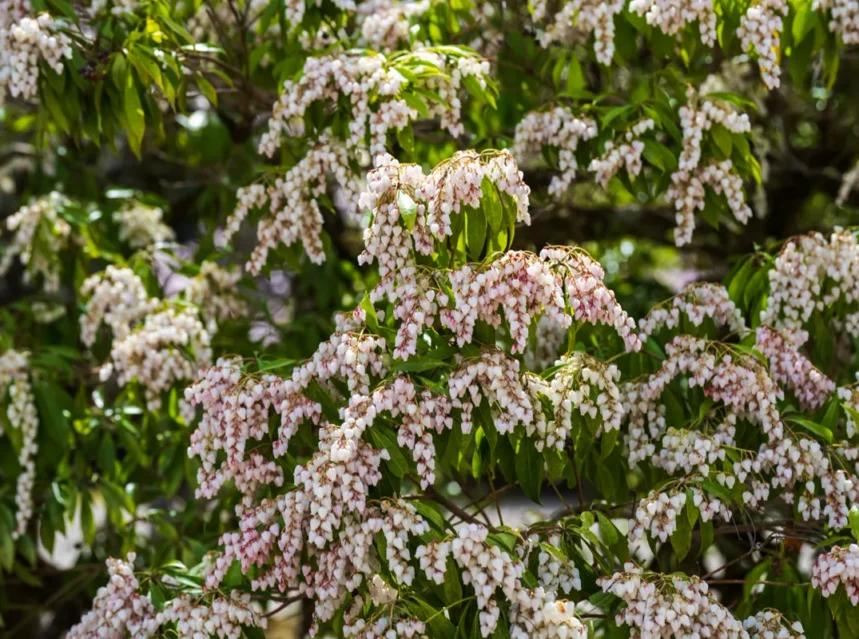
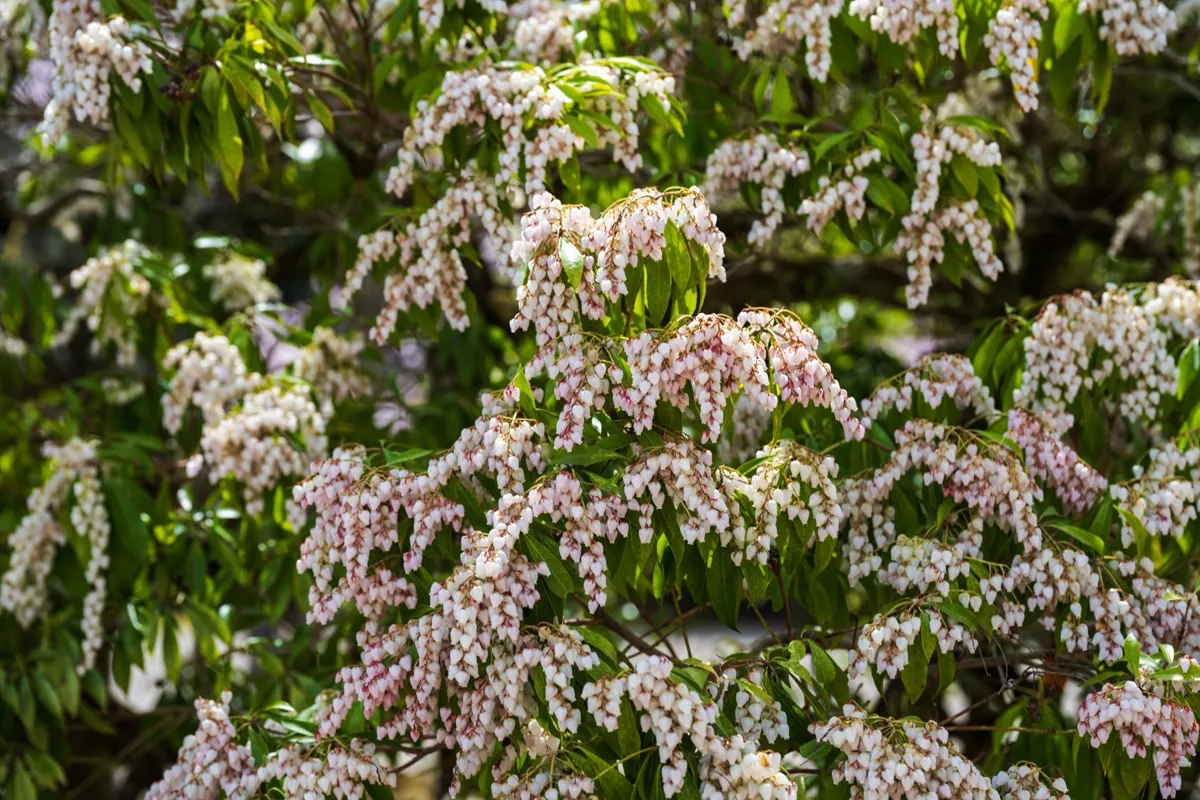
Pieris (Pieris japonica), also called Japanese andromeda or the lily-of-the-valley shrub, is a compact evergreen grown for its fiery red new leaves and drooping sprays of urn-shaped spring flowers — and it brings two seasons of colour in one easy plant. In early spring the fresh foliage emerges flame-red or coppery, then matures to glossy green. At the same time, cascading chains of white or pink bell flowers open, much like lily-of-the-valley. Here is the complete guide on how to grow pieris.
Quick start: Give pieris acid (ericaceous) soil, light or dappled shade, and shelter from cold winds. Keep the roots cool and moist with a mulch, and never let it dry out. Feed with an ericaceous fertiliser in spring. Avoid early-morning sun on frosted new growth.
Experienced growers and the Royal Horticultural Society treat pieris like a smaller cousin of the rhododendron, because it needs the same acid soil. Gardeners often report that the biggest mistakes are alkaline soil and a too-sunny, exposed spot. Both cause yellowing leaves or scorched young growth. Many also note that late frosts can blacken the bright new shoots, so a sheltered position and morning shade really pay off. In short, get the soil and shelter right and pieris is wonderfully low-maintenance.
🧰 In a hurry? Jump straight to our tested picks for this guide ↓
Pieris at a glance
| Feature | Detail |
|---|---|
| Botanical name | Pieris japonica (family Ericaceae) |
| Common names | Japanese andromeda, lily-of-the-valley shrub |
| Plant type | Evergreen shrub |
| Height/spread | About 1–4 m, slow-growing |
| Sun | Light or dappled shade |
| Soil | Acid (ericaceous), moist, free-draining |
| Flowers | Early spring, white or pink bells |
| Key feature | Red/coppery new foliage |
Why grow pieris?
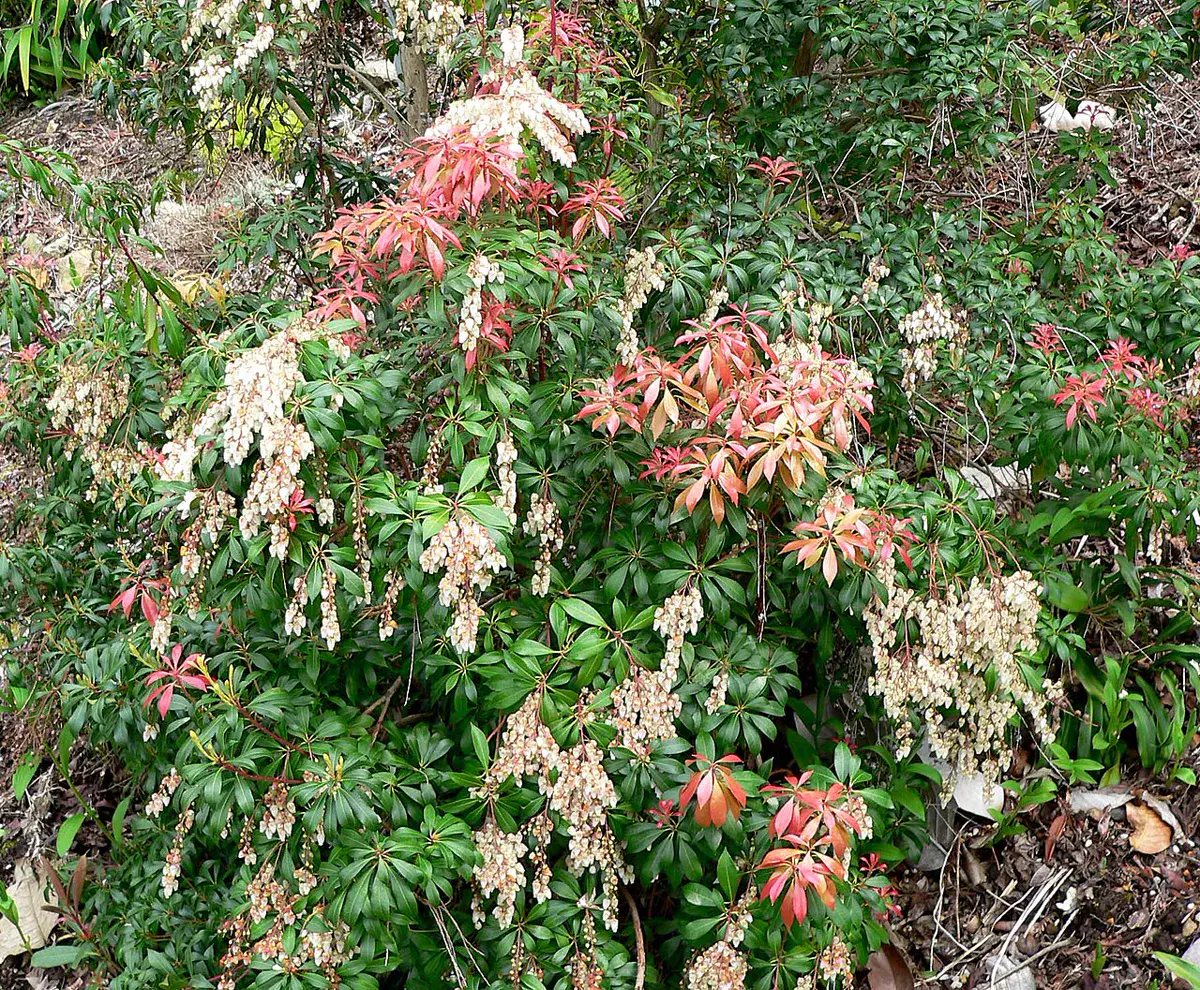
Pieris earns its place by doing two jobs at once. Its spring leaves burst out in vivid red or bronze, while its flower chains dangle like strings of tiny bells. Together they create a striking display when much of the garden is still waking up.
It is also evergreen, so it gives structure all year. The shrub stays neat and slow-growing, which makes it ideal for smaller gardens and containers. For shady, acid-soil spots where many plants sulk, pieris is a reliable star.
History, origin & where it grows
Pieris is native to the woodlands of Japan, eastern China and Taiwan, with a related species, Pieris floribunda, from the mountains of the eastern United States. Its forest-floor heritage explains its love of cool, moist, acid soil and shelter from harsh sun. The popular hybrid ‘Forest Flame’ arose from crossing Asian and American types.
The plant belongs to the Ericaceae, the heather family, alongside rhododendrons, azaleas and blueberries (see the Missouri Botanical Garden records). That family link is why all of them share the same acid-soil needs.
Today pieris is grown across cool temperate gardens worldwide, and it is a woodland-garden favourite in the US and UK. In India it suits the acidic soils and cool air of Himalayan hill stations, such as parts of Darjeeling, Sikkim and the Nilgiris, rather than the hot plains. Grow it there in shade with ericaceous compost and steady moisture.
Best season & when to plant
Plant pieris in spring or early autumn, into moist, acid soil. These seasons give the roots time to settle while temperatures are mild. Autumn planting works well in milder areas, while spring is safer where winters are harsh.
The main show comes in early to mid spring, when the new leaves and flowers appear together. In India’s hill regions, plant at the start of the cool growing season and protect young plants from any sudden heat.
How to plant pieris
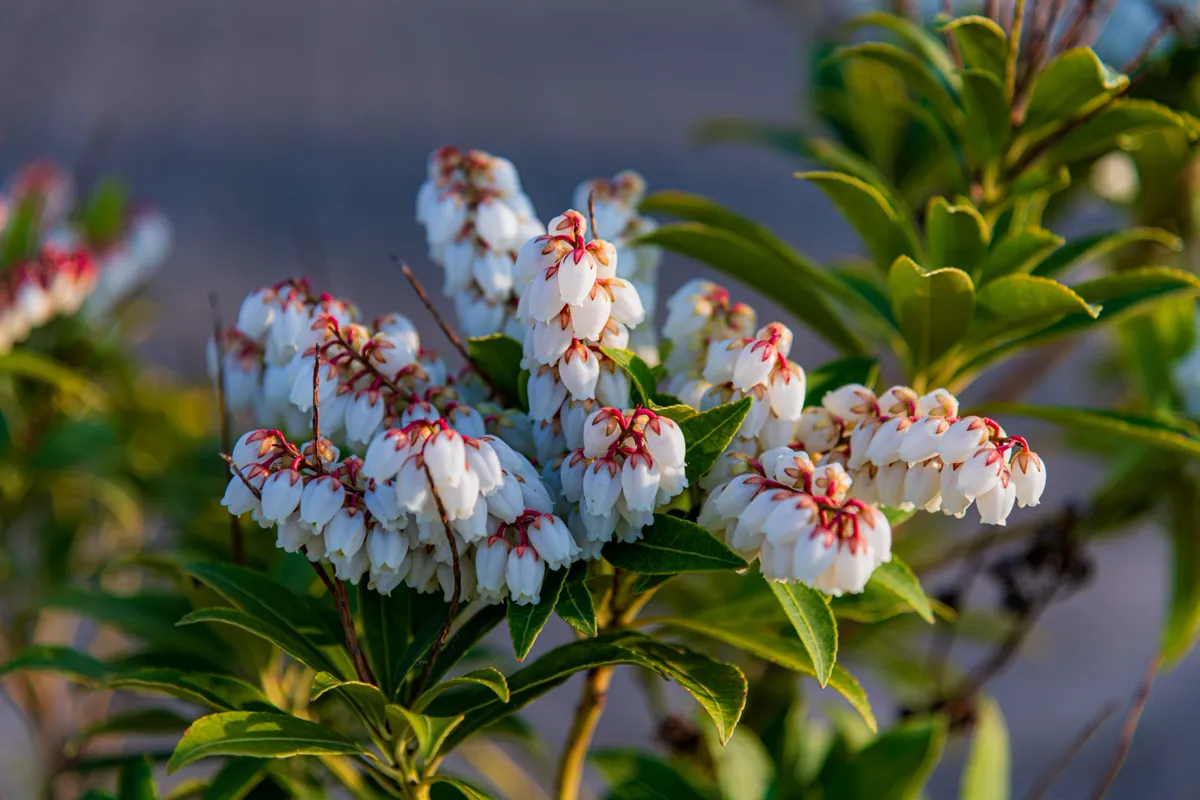
Pieris is usually sold as a potted shrub. Because it needs acid soil, planting it correctly matters more than with most shrubs:
- Choose a spot in light or dappled shade, sheltered from cold winds and harsh morning sun.
- Plant in acid (ericaceous) soil; on alkaline ground, grow it in a pot of ericaceous compost instead (see improving garden soil).
- Set it at the same depth as in its pot and avoid burying the stem.
Water in well and add a thick mulch of leaf mould or composted bark to keep the roots cool and moist. Keep the mulch clear of the main stem.
Sun, soil, watering & feeding
Pieris does best in dappled shade, where it gets gentle light but is protected from scorching sun. Deep shade reduces flowering, so aim for a bright but sheltered woodland feel. The single most important factor, though, is acid soil.
Keep the soil consistently moist but never waterlogged, as the shallow roots dislike both drought and standing water (see how often to water). Use rainwater where possible, because hard tap water can raise the pH over time. Feed in spring with an ericaceous fertiliser to keep the foliage rich and green.
Growing pieris in pots
Container growing is the perfect solution if your garden soil is alkaline. A pot lets you give pieris exactly the acid conditions it craves. So even chalky-soil gardeners can enjoy this shrub by growing it in a tub.
Use a large pot with drainage holes and fill it with ericaceous (lime-free) compost. Stand it in light shade, water with rainwater whenever the surface dries, and feed in spring. Top up or refresh the compost every couple of years to keep the acidity right.
When and how to prune pieris
Pieris needs very little pruning, which is part of its easy charm. The main task is simply to remove faded flower clusters after blooming, which tidies the plant and channels energy into new growth.
If you need to shape it or cut out dead wood, do so straight after flowering. Avoid heavy pruning, as the shrub is slow to regrow. A light, careful trim is all most plants ever require.
Common pests & diseases
Pieris is largely trouble-free in the right soil, but a few issues are worth knowing. The pieris lace bug can mottle leaves yellow in hot, dry, sunny spots, which is another reason to give it shade. Sudden leaf yellowing usually signals alkaline soil or hard water rather than a pest.
Late frosts can blacken the tender new shoots, so shelter is key. Phytophthora root rot may strike in waterlogged ground, so ensure good drainage. For the rare insect problem, the methods in our organic pest control guide help keep things in balance.
Pieris varieties to know
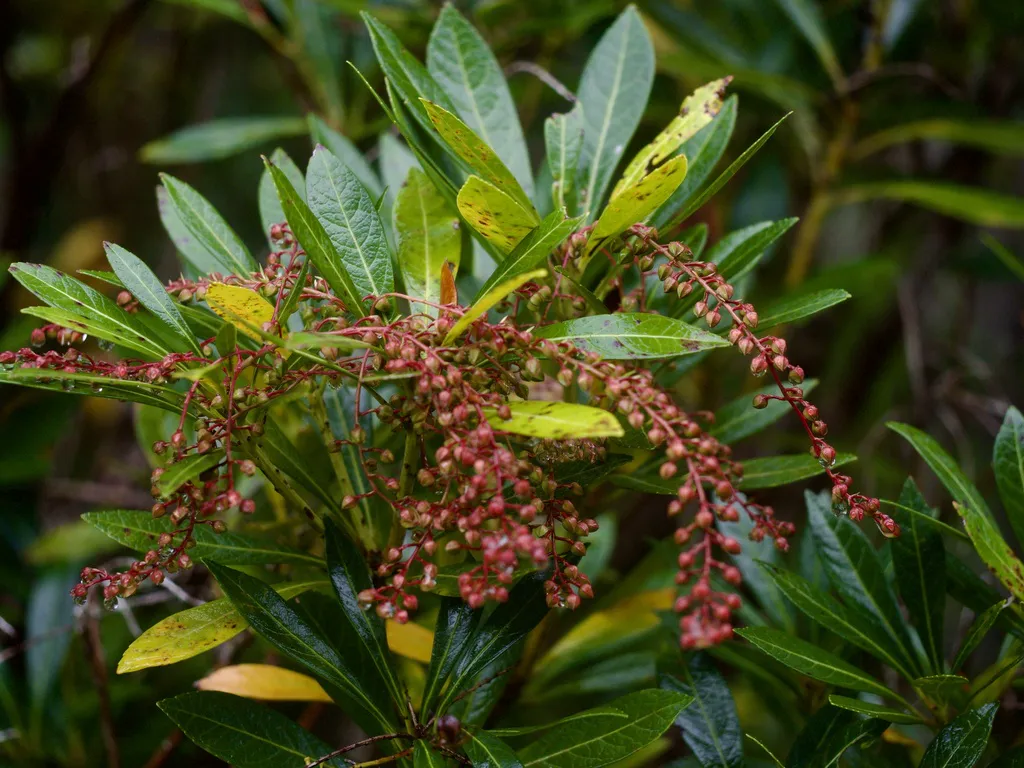
Choosing the right variety lets you match the shrub to your space and colour scheme. They share the same care but differ in size and the shade of their new leaves, so it is worth a quick look.
‘Forest Flame’ is the classic, with new growth that opens bright red, fades to pink, then cream, then green. ‘Mountain Fire’ has especially fiery red young leaves. ‘Little Heath’ is a compact, variegated form perfect for pots and small gardens, while ‘Katsura’ offers wine-red shoots and pink-tinged flowers. All deliver that signature two-tone spring display.
Uses & benefits
Pieris is grown purely as an ornamental woodland shrub, valued for its colourful spring foliage, its early bell flowers that feed bees, and its year-round evergreen structure. It pairs beautifully with rhododendrons, azaleas and camellias in an acid-soil border.
One important safety note: all parts of pieris are toxic if eaten, like many plants in the heather family. So keep it away from where children or pets might chew it, and wash your hands after pruning.
This article is for general information only and is not medical advice. Talk to a qualified professional before using any plant medicinally.
Common pieris problems
Yellowing leaves
Usually alkaline soil or hard tap water raising the pH. Grow in ericaceous soil or compost, water with rainwater, and feed with an ericaceous fertiliser.
Blackened new shoots
Late-frost damage on the tender young growth. Shelter the shrub and avoid spots that catch harsh early-morning sun after a frost.
Few flowers
Too much deep shade or the wrong soil. Move it to dappled light and check the soil is acid and steadily moist.
How to propagate pieris
Pieris is propagated from cuttings or by layering. Named forms, which is most of what is sold, only come true from a cutting — the flame-red spring growth of a variety like ‘Forest Flame’ is not something a seedling will reliably repeat.
From cuttings
Take short side branches in August or September, pulling each one off with a heel of older wood attached, and root them in a closed frame. Use an ericaceous, lime-free compost with plenty of grit; pieris hates lime as much when it is rooting as when it is grown. Keep the frame shaded and just moist through winter and pot the rooted cuttings on in spring.
By layering
Layering is the slow, reliable option for an established shrub with branches near the ground. Peg a low shoot into a pocket of ericaceous compost, leave it attached for a full season or more, and lift it once it has made its own roots. Well-established plants sometimes also produce offsets at the base that can be separated the same way.
From seed
The seed is dust-fine. Surface sow it in spring on damp moss peat or a fine ericaceous mix, do not cover it, and keep the pot shaded and moist under glass. Prick the seedlings out individually when they are big enough to handle, keep them shaded through their first winter, and plant them out after the spring frosts. It is a two-year exercise at least, and worth it only if you are raising a batch rather than replacing one shrub.
Related plant guides
- How to grow Fritillaria
- How to grow Osmanthus
- How to grow Tree Peony
- How to grow Choisya
- How to grow Rhododendron
- How to grow Hakone Grass
Frequently asked questions
What soil does pieris need?
Pieris needs acid (ericaceous) soil, like rhododendrons. On alkaline ground, grow it in a pot of ericaceous compost and water with rainwater.
Why are my pieris leaves turning yellow?
Usually the soil is too alkaline or the water too hard. Switch to ericaceous feed and rainwater, and check the soil pH is acidic.
Does pieris need sun or shade?
It prefers light or dappled shade. Too much sun scorches the leaves and invites lace bug, while deep shade reduces flowering.
Is pieris easy to grow?
Yes, once it has acid soil, shelter and steady moisture it is very low-maintenance, needing only light deadheading after flowering.
Why is my pieris going brown?
Brown, crisped shoot tips in spring are usually frost damage, because the bright new growth that pieris is grown for is soft and very frost-tender. A late frost or a cold, drying wind scorches those flushes overnight while the older leaves stay green. Browning that appears in summer instead points to dry roots or to poor drainage suffocating them. Site the shrub out of early morning sun and cold winds, keep the root zone mulched and evenly moist, and simply trim scorched tips back to healthy growth once the danger of frost has passed.
Why is my pieris not flowering?
Pieris sets next spring’s flower buds during the previous summer, so anything that removes or damages those buds costs you a season. Pruning in autumn or winter is the most common self-inflicted cause, since you cut the buds off. Deep shade, drought stress in late summer while the buds are forming, and a very young plant that has not settled in are the other usual reasons. Prune only just after flowering, feed with an ericaceous fertiliser in spring, and water through dry late-summer spells.
What causes pale mottled speckling on pieris leaves?
That coarse, bleached stippling on the upper leaf surface is the signature of andromeda lace bug (Stephanitis takeyai), the pest most associated with this shrub. Turn a leaf over and you will find the insects plus dark, varnish-like spots of excrement, and by late summer badly hit plants look silvery and exhausted. The damage is permanent — marked leaves never recolour, so recovery comes only from clean new growth. Plants in hot, dry, sunny positions suffer far worse, so moving toward dappled shade and keeping the plant well watered is the most useful long-term fix.
Is pieris poisonous?
Yes. Pieris sits in the heather family alongside rhododendron and azalea and shares their grayanotoxins. The ASPCA lists Pieris japonica as toxic to dogs and cats, naming grayanotoxins as the reason. Every part is a problem if eaten, including the nectar and any honey made from it. It is listed as harmful to dogs, cats, horses and grazing livestock, so keep prunings away from paddocks and out of reach of pets. Handling the plant is fine; the risk is from chewing or swallowing it. If an animal or child has eaten any part, contact a vet or doctor promptly — this is general information, not medical advice.
Why is my pieris drooping or wilting?
Wilting means the roots are not delivering water, and with pieris that happens for two opposite reasons. A pot or a shallow, sandy bed dries out and the fine surface roots shrivel, especially in windy spring weather when the new growth transpires hard. Alternatively the soil is waterlogged, the roots have rotted, and the plant cannot draw water even though the ground is wet. Push a finger into the soil before reaching for the watering can: bone dry means soak it thoroughly, soggy means improve drainage or repot into fresh ericaceous compost.
Can I grow pieris in a pot?
A container is often the best option, and it is the standard answer for anyone on chalky or alkaline ground. Use a large pot of ericaceous compost, add some grit for drainage, and choose a compact cultivar rather than one of the vigorous forms. The two things that catch people out are watering and feeding: tap water in hard-water areas gradually raises the pH and yellows the leaves, so collect rainwater where you can, and container plants exhaust their compost, so use an ericaceous feed each spring. Repot or top-dress every two or three years.
When and how should I prune pieris?
Prune immediately after the flowers fade, and keep it light. Snap or snip off the spent flower trusses, take out any dead or frost-damaged shoots, and shorten a few stems to shape the plant — that is normally all it needs. Cutting later in the year removes the buds already forming for next spring. An old, leggy specimen can be cut back harder into older wood after flowering; pieris usually re-sprouts, but expect to lose a season of bloom and give it a mulch and ericaceous feed to help it recover.
Sources and further reading
Still stuck? Ask the Plant Doctor
Describe the problem — yellow leaves, holes, no flowers — and get a clear answer in seconds. FreeAI can make mistakes. Answers are guidance, not a guarantee — check anything important against the guide it links to, and always read the label on any product before you use it.