

Elderflower
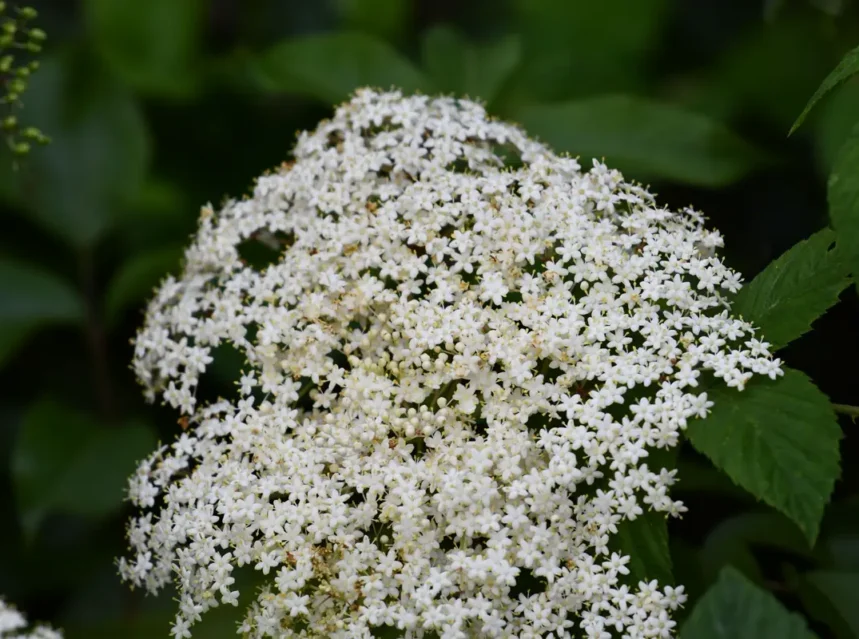
Elderflower is the fragrant, creamy-white blossom of the elder tree (Sambucus nigra), harvested in late May and June for cordial, wine, champagne, and fritters. Learning how to grow elderflower is easy, because elder is one of the toughest shrubs in any garden. The berries ripen in autumn and matter too. However, most people wait all year for the brief, honey-scented elderflower season. This guide covers when to plant elderflower, everyday elderflower plant care, propagation, and harvest for gardens in the US, UK, and India.
Quick start: Grow elder (Sambucus nigra) in full sun to partial shade in any moist, fertile soil. It is very fast-growing — often 2-3 m in the first season. Cut back hard each spring to manage size and promote the best flower clusters. Elderflowers appear in late May-June, followed by elderberries in August-September. Hardy, extremely adaptable, and essentially maintenance-free once established.
The elder is one of the most generous plants in the British countryside. Every part of it earns its place across the seasons. In late May and June, large flat-topped flower clusters appear. They fill the air with a sweet, muscat-like scent. For a few weeks, growers pick them for cordial, champagne, fritters, and desserts. Then in late summer, the same trees give elderberries for wine and rob (a concentrated syrup used in winter tonics). Growing your own elder puts all of this at your garden gate.
🧰 In a hurry? Jump straight to our tested picks for this guide ↓
Elderflower at a glance
| Feature | Detail |
|---|---|
| Botanical name | Sambucus nigra (family Adoxaceae) |
| Common names | Elder, elderflower, elderberry, common elder, black elder |
| Plant type | Fast-growing deciduous shrub or small tree (3-8 m) |
| Elderflower season | Late May to June (UK); harvest before pollen fully drops |
| Elderberry season | August to September |
| Sun | Full sun to partial shade (6+ hours for most flowers) |
| Soil | Any moist, fertile soil; ideal pH about 5.5-6.5 |
| Spacing | 1.8-2.5 m (6-8 ft) between plants; 3-5 m from trees |
| Hardiness | Very hardy (USDA zones 3-8; RHS H6); lives up to 60 years |
| Yield | Mature bush: dozens of flower heads, then 4-7 kg of berries |
Why grow elder for elderflower?
- Elderflower cordial from your own garden. Growing elderflower at home gives you a free supply of the finest heads for cordial, champagne, and desserts at peak freshness.
- Two harvests. Elderflowers in June AND elderberries in August-September — one plant, two distinct and valuable products.
- Very fast-growing and easy. Elder establishes rapidly and requires almost no care. It is the quickest route to a large, productive foraging plant in the garden.
- Safer than foraging. Wild elderflower has toxic lookalikes, and roadside heads pick up exhaust residue. A garden bush removes both risks.
- Outstanding wildlife plant. The flowers attract masses of insects; the berries feed birds through autumn and winter. Elder is also usefully deer-resistant.
How do you identify elderflower?
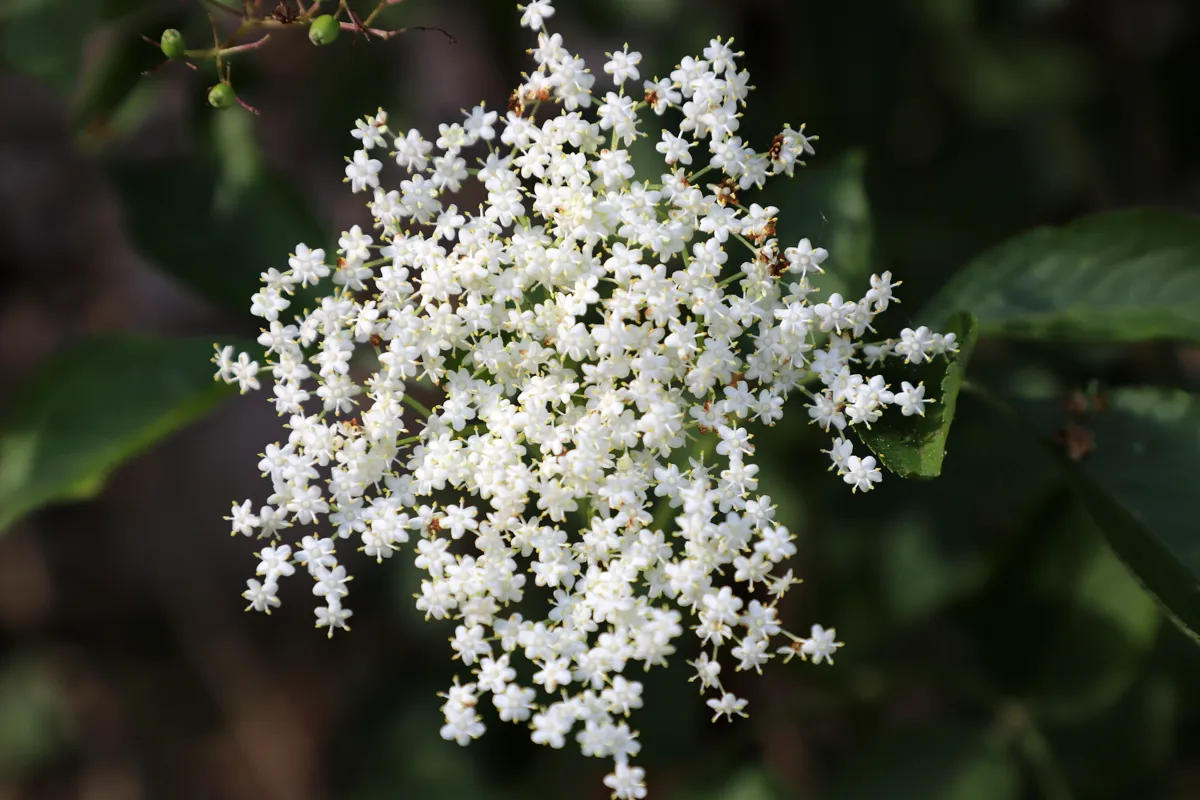
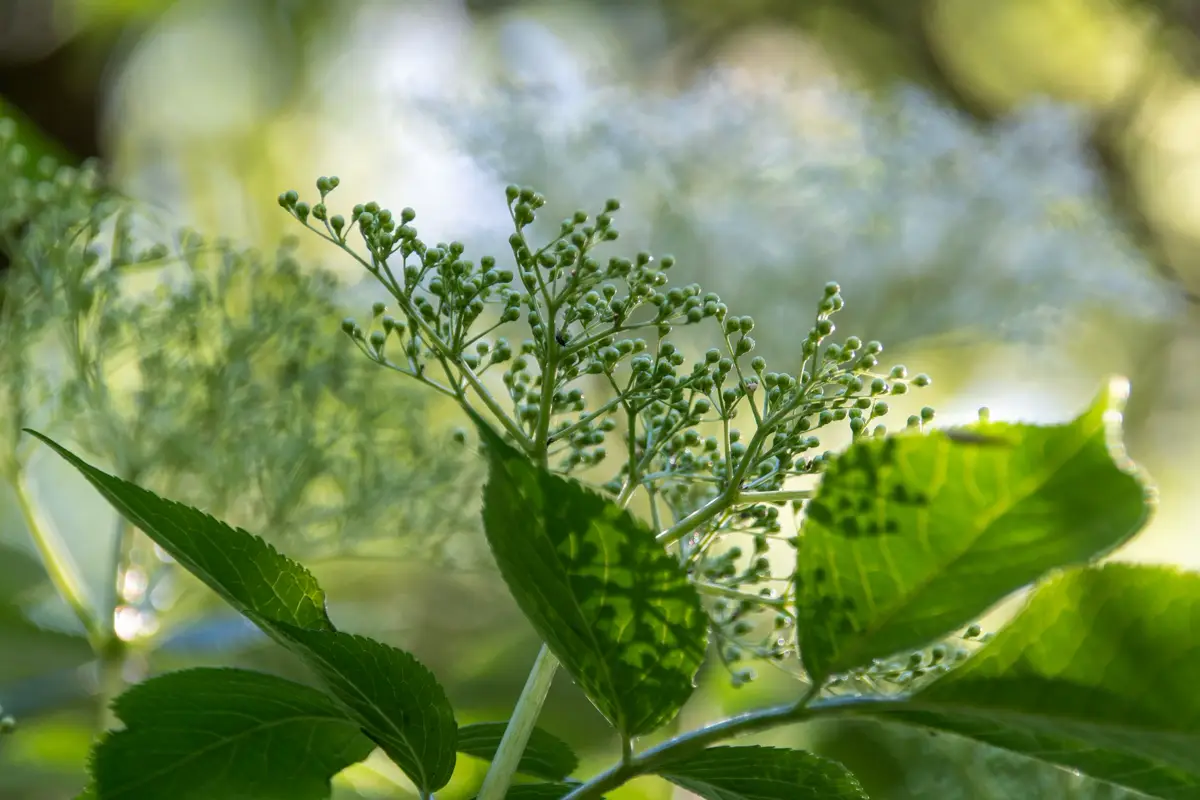
Correct identification matters, because a few poisonous plants mimic elderflower. True elder is a woody shrub, never a soft-stemmed ground plant. Its leaves sit in opposite pairs, each with 5-7 serrated leaflets that smell unpleasant when crushed. Mature stems have grey-brown, corky, furrowed bark. The flower heads are flat-topped, 10-25 cm across, packed with tiny five-petalled cream flowers dusted in pale yellow pollen.
Avoid the lookalikes. Poison hemlock and water hemlock carry similar white flower clusters. However, both are herbaceous plants with fern-like leaves and smooth, often purple-blotched stems. Giant hogweed is another hazard for foragers. So apply one simple rule: if the white flower head is not growing on a woody, barky shrub, do not pick it. In North America, also skip red-berried elder (Sambucus racemosa) for cordial — its cone-shaped clusters and red fruit need different handling.
History, origin and traditions
Sambucus nigra is native across Europe, North Africa, and western Asia, growing on woodland edges, in hedgerows, and on waste ground (see the Sambucus nigra entry on Wikipedia). People have used it for thousands of years. Elder products appear in ancient Egyptian, Greek, and Roman records. In British folklore, an elder by the door “kept the Devil away,” and country people asked the Elder Mother’s permission before cutting a branch. Berries once dyed wool blue and purple for Harris Tweed.
Commercial elderflower cordial took off in the UK in the late 19th century, and modern brands turned the flavour global from the 1980s onward. Britain has made elderberry wine for centuries. Elderberry syrup, or rob, was a standard winter preparation in farmhouse kitchens.
In India, the European elder is a cool-climate plant. Its Himalayan relative Sambucus wightiana grows wild in Kashmir, Himachal Pradesh, and Uttarakhand, where the flowers and berries feature in local traditions. The RHS lists dozens of Sambucus cultivars for gardens (see the RHS Sambucus growing guide), including the black-leaved “Black Lace” (AGM) and “Guincho Purple.”
Best season and when to plant
When to plant elderflower depends on the plant you buy. Set out bare-root elders from November to March, whenever the soil is neither frozen nor waterlogged. Plant container-grown elders in autumn (October-November) or spring (March-April). Autumn planting wins in dry regions, because winter rain establishes the roots for free. Bare-root whips are excellent value and can put on 2 m of growth in their first season. In India’s hills, plant at the start of the monsoon or in early spring after frost.
How to grow elderflower: planting step by step
- Pick the site. Full sun gives the most flowers; elder also tolerates quite deep shade. Allow 1.8-2.5 m (6-8 ft) between bushes and 3-5 m from large trees.
- Prepare the soil. Elder accepts wet, dry, clay, chalk, acid, or alkaline ground, but flowers best in moist, fertile soil around pH 5.5-6.5. Dig in a bucket of compost or rotted manure first. See improving garden soil for quick fixes.
- Plant. Dig a hole twice the width of the rootball, set the plant at its nursery depth, backfill, firm, and water heavily. Mulch 5-7 cm deep, keeping the collar clear.
- First-year care. Elder roots are shallow, so water weekly through the first summer. University-extension guides also suggest removing the first year’s flower heads so energy goes into roots — hard discipline, better bushes.
- Plant two for berries. One elder gives plenty of flowers. For heavier berry crops, plant two different varieties within 15 m so they cross-pollinate.
Sun, soil, watering and feeding
Sun: Full sun to partial shade. Aim for 6 hours of direct light for the biggest flower crop. Partial shade is well-tolerated.
Soil: Highly adaptable — elder grows in almost any soil, including wet, dry, chalk, clay, and acid. Rich, moisture-holding ground produces the largest heads.
Watering: Give 2-5 cm (1-2 in) a week in the first year, because the shallow roots dry out fast. Once established, elder is drought-tolerant and largely self-sufficient. See how often to water plants for a simple schedule.
Feeding: Minimal. An annual spring mulch of compost is enough. Avoid high-nitrogen feeds — they push leafy growth at the expense of flowers.
Growing elderflower from seed and cuttings
Elder is famously easy from cuttings, and that is the method to choose. Growing elderflower from seed works too, but it is slow and the seedlings vary.
- Hardwood cuttings (easiest): In late winter, cut pencil-thick dormant stems into 15-20 cm lengths with 2-4 buds. Cut the base at an angle and the top flat so you plant them the right way up. Push two-thirds deep into pots of gritty compost or straight into the ground. Most root within 8-10 weeks, usually without rooting hormone. A heated propagator speeds things up but is not essential.
- Softwood cuttings: In early summer, take 10-15 cm tips, remove the lower leaves, and keep them humid under a plastic bag. They root in 2-6 weeks.
- Seed: Elderberry seed needs long stratification — roughly 10-12 weeks warm, then 14-16 weeks cold — and may still take two seasons to sprout. Expect flowering plants in 2-3 years. Sow only if you enjoy the experiment.
Best elder varieties
The wild species gives the biggest, most fragrant flower crop. The ornamental cultivars trade a little yield for spectacular foliage.
| Variety | Type | Best for |
|---|---|---|
| Sambucus nigra (wild species) | European | Maximum elderflower yield, scent, and cordial flavour |
| ‘Black Lace’ (AGM) | European, purple-leaved | Pink-tinged flowers plus dramatic, lacy dark foliage |
| ‘Black Beauty’ / ‘Guincho Purple’ | European, purple-leaved | Lemon-scented pink flowers; good pollination partners |
| ‘Golden Tower’ | European, columnar | Pots and small gardens; narrow upright habit |
| ‘York’, ‘Adams’, ‘Bob Gordon’ | American (S. canadensis) | Heavy berry crops in US zones 3-9; flowers usable too |
American elder (Sambucus canadensis) suits hot-summer US states better than the European species. Its flowers make cordial the same way, though the scent is lighter.
Elder in containers and Indian gardens
Elder will crop in a large pot, which suits balconies and terraces. Use a container at least 45-50 cm wide, a loam-based compost, and a compact cultivar such as ‘Golden Tower’ or hard-pruned ‘Black Lace’. Water pots regularly from spring to summer — container elders cannot chase moisture the way ground-planted ones do — and refresh the top 5 cm of compost each spring.
For Indian gardeners, climate decides success. Elder needs winter chill, so it thrives in hill stations and the Himalayan belt — Kashmir, Himachal, Uttarakhand, Darjeeling — where the wild Sambucus wightiana already grows. On the hot plains it usually sulks or dies back. There, treat elderflower as a hill-garden or cool-season novelty, and grow it in light afternoon shade with steady moisture. Time planting to the start of the monsoon so young roots never bake dry.
Pruning for best elderflower
Elder flowers best on strong young wood. So a hard prune in late winter (February-March) drives fresh stems that carry the largest clusters. Cut all stems back to a framework of low stumps each spring. The plant then regrows 2-3 m and flowers freely the following May-June. Pruning also keeps every head within arm’s reach. The method feels brutal, but it works much like managing a buddleia.
Prefer a gentler approach? Extension horticulturists recommend renewal pruning instead: remove one stem in three each winter, starting with the oldest. The bush stays tall and natural while young productive wood keeps coming. Whichever method you use, wait until the plant is two years old before hard pruning.
Pests and diseases
- Blackfly (elder aphid): Elder is frequently smothered in black aphids on soft tips. They rarely cause lasting harm — the shrub simply outgrows them. If a colony bothers you, blast it off with water. See aphid control.
- Birds on berries: Blackbirds and starlings strip ripening clusters fast. Net a bush in early August if the berries matter to you.
- Spotted wing drosophila: A small fruit fly that attacks soft ripe berries in warm regions; pick promptly and process fast.
- Leaf spots and galls: Occasional and cosmetic. Rake up affected leaves. See organic pest control for low-spray tactics.
- Elder is otherwise very robust and regenerates rapidly from hard pruning, even after damage.
Harvesting elderflower
Harvest elderflowers when the cream-white blooms are fully open and the scent is strong. The pollen should be clearly visible — it holds most of the flavour. Pick whole heads with scissors on a dry morning after the dew lifts. Never wash the flowers; instead, shake each head gently so insects walk off. Wet or rain-picked heads sour quickly, so use every harvest within 24 hours or refrigerate at once.
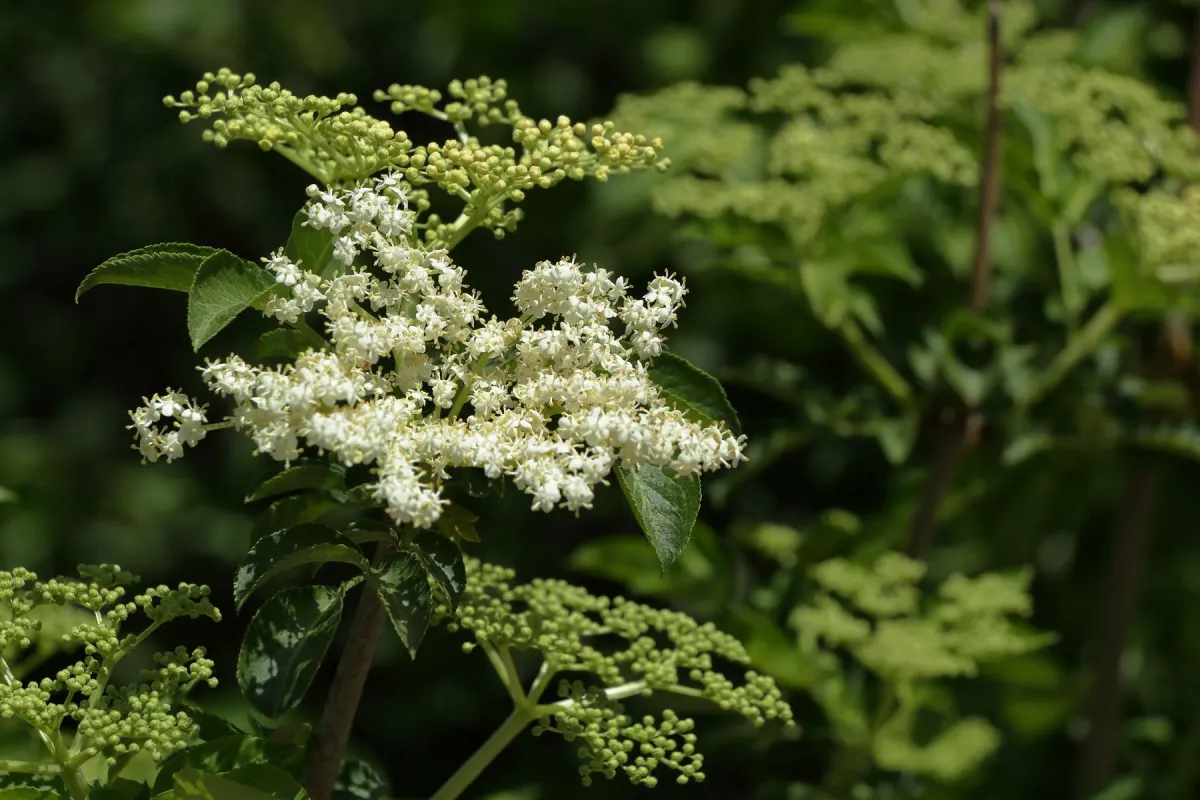
Take no more than a third of the heads from any one bush. The rest become your elderberry crop and feed the birds. For cordial, steep about 20-30 heads in sugar syrup with lemon and citric acid. To keep flowers for winter teas, dry them loosely on a tray in a warm, airy, shaded spot, then rub the florets from the stems and store in an airtight jar. The fresh season lasts only 1-3 weeks, from late May to mid-June.
Harvesting elderberries
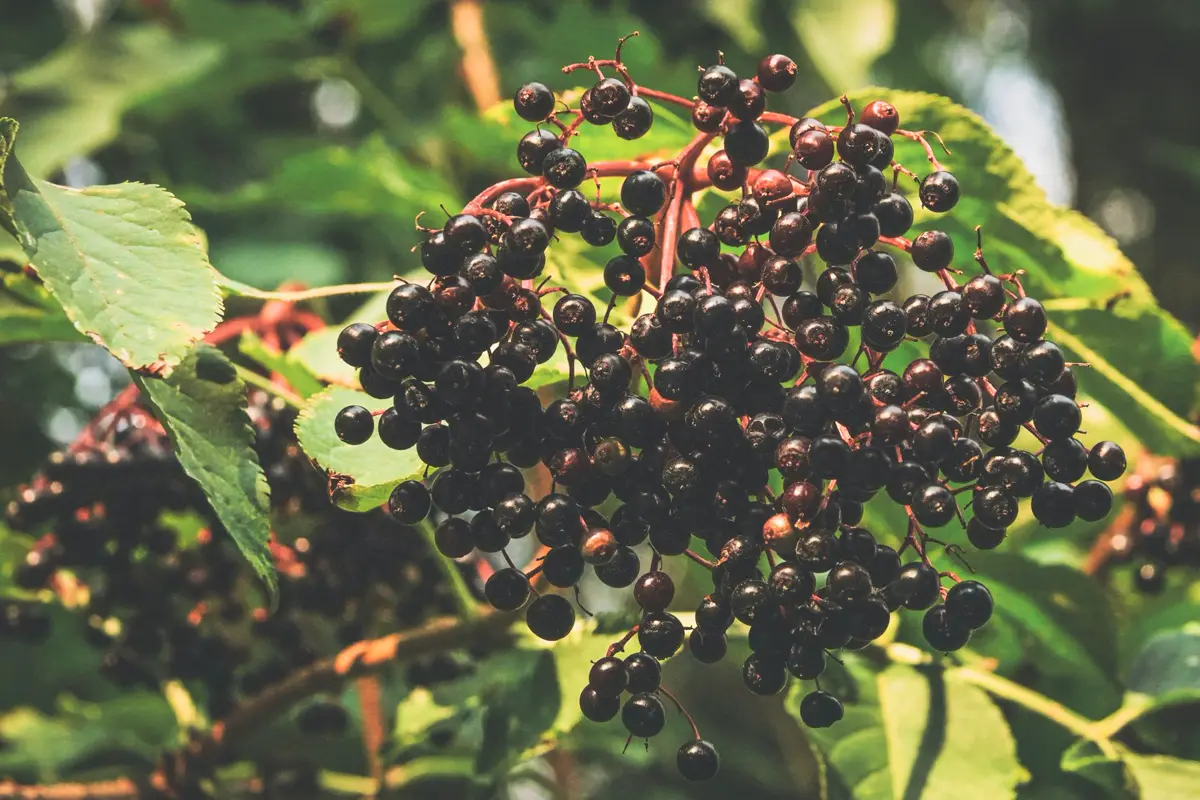
Elderberries ripen in August-September. They turn from green, through red, to a glossy purple-black, and the whole cluster droops when ready. Cut complete clusters with scissors. Berries ferment within a day of picking, so freeze, cook, or dry them fast — freezing whole clusters first makes the berries rattle off the stalks cleanly. Always cook elderberries before eating; raw ones cause nausea. Cooked, they shine in wine, cordial, rob, jelly, and apple pies.
Health benefits and uses
Two different parts of the plant here, and they should not be blurred. The flowers have no USDA entry at all — searching returns only branded cordials — so their flavonoid content, rutin and quercetin included, has no per-100 g figure to quote, and in any case a cordial is flowers steeped briefly in sugar syrup and then removed, which carries across aroma rather than nutrition. The berries are measured: USDA’s elderberry row shows 7 g of fibre per 100 g (25% DV), which is the genuine standout and higher than most soft fruit, plus 36 mg vitamin C (40% DV), 73 kcal, 1.6 mg iron and 280 mg potassium. Anthocyanins are not in the USDA record, so the “rich in antioxidants” line was never sourced. Elderflower tea was traditionally used for colds and seasonal sniffles; that is a statement about custom, not effect. Herbal references note possible interactions with some medications, so speak to a doctor before using elder preparations regularly. Cordial itself makes no medical claim — it is simply one of the world’s best summer drinks.
This article is for general information only and is not medical advice. Consult a healthcare professional before using elder products medicinally. Raw elderberries cause nausea — always cook before eating.
Common problems
Aphid infestations on growing tips
Black aphids are almost universal on elder in spring and early summer. They are rarely damaging, because vigorous growth outpaces them. If severe, hose them off or spot-treat with insecticidal soap.
Flowers sparse or very small
Usually a pruning issue. Elder flowers most abundantly on the current season’s growth from hard-pruned stumps. Prune hard each February-March, and be patient with plants under three years old — young elders flower lightly at first.
No berries after good flowering
Three common causes: you picked most of the heads for cordial, birds beat you to the crop, or a lone ornamental cultivar lacks a pollination partner. Leave more flowers, net early, or add a second variety nearby.
Berries not ripening evenly
Normal — berries within a cluster ripen at slightly different times. Pick when most of the cluster is glossy black and drooping, then process promptly.
Related fruit and foraging guides
- How to grow Elderberry
- How to grow Blackcurrant
- How to grow Sea Buckthorn
- How to grow Rosa Rugosa (Rose Hips)
- How to grow Cornelian Cherry
- How to grow Hawthorn
Related plant guides
- Elderberry
- How to grow Sloe
- How to grow Hawthorn
- How to grow Saskatoon
- How to grow Chokeberry
- How to grow Rosa Rugosa
Frequently asked questions
When do elderflowers bloom?
In the UK, elderflowers typically bloom from late May through June, with the peak usually in early to mid-June. The exact timing varies by year and location — in warm, sunny years, flowers can appear from late May; in cooler years, flowering may not peak until mid-June. The season is brief — typically 2-3 weeks at most before the petals begin to fall. Watch the plants daily during the season and harvest as soon as the flowers are fully open and fragrant.
How do I make elderflower cordial?
The classic recipe: dissolve 1 kg sugar in 1 litre of boiling water, add the zest and juice of 2 lemons, 25-50 g citric acid, and 20-30 freshly picked elderflower heads. Stir well, cover, and leave to steep in a cool place for 24-48 hours, stirring occasionally. Strain through a fine cloth, bottle in sterilised bottles, and refrigerate. Dilute 1:5-10 with still or sparkling water to serve. Keeps refrigerated for 4-6 weeks.
Are raw elderberries safe to eat?
No — raw elderberries (the dark berries of Sambucus nigra) cause nausea, vomiting, and stomach cramps if eaten uncooked in quantity. This is due to sambunigrin, a cyanogenic glycoside. Cooking destroys these compounds and makes the berries safe. Elderflowers can be consumed raw (in cordial, fritters, etc.) but raw elderberries should always be cooked first.
Which elder variety is best for elderflower?
The common wild Sambucus nigra is hard to beat for flower yield, scent, and flavour. The ornamental black-leaved cultivars (“Black Lace,” “Guincho Purple”) also produce excellent flowers but slightly fewer. For maximum flower production from a managed plant, the straight species S. nigra, hard-pruned annually, gives the largest, most abundant clusters. Plant from seed or a cutting taken from a particularly fragrant local wild elder for the best results.
How much space does an elder need?
A common elder will reach roughly 3 to 5 m (10 to 16 feet) tall and wide if left alone, so allow about 2.5 to 3 m (8 to 10 feet) between plants. Hard annual pruning keeps it far smaller if space is tight.
What soil and light does elder prefer?
It flowers best in full sun to light shade, with six or more hours of direct light. Elder tolerates poor and chalky ground but does best in moist, well-drained soil enriched with compost, roughly pH 5.5 to 6.5.
How do I propagate elder for free?
Take hardwood cuttings about 25 cm (10 inches) long from healthy one-year shoots in late autumn or winter and push them two-thirds deep into gritty soil. Elder roots very easily, so a good share of them will take by the following autumn.
How and when should I prune an elder?
Prune in late winter or early spring before growth starts. Leave young plants alone for the first two years, then cut out old, weak or crowded stems at the base each year to keep strong new wood coming.
Does pruning affect how many elderflowers I get?
Yes. Elder flowers on both older wood and vigorous new growth, so cutting everything to the ground each winter gives fine foliage but few flower heads. Removing only about a third of the oldest stems keeps flowering steady.
How long until a new elder plant flowers?
A rooted cutting or nursery plant usually produces its first flower heads in the second year, with a proper crop from year three onwards. Feeding and steady moisture in spring make a noticeable difference to head size.
How should I harvest elderflower heads?
Cut whole heads on a dry, sunny morning when most florets are open and creamy white but none have browned, snipping the stem rather than pulling. Leave a good share of heads on the plant if you also want berries later.
Still stuck? Ask the Plant Doctor
Describe the problem — yellow leaves, holes, no flowers — and get a clear answer in seconds. FreeAI can make mistakes. Answers are guidance, not a guarantee — check anything important against the guide it links to, and always read the label on any product before you use it.


.jpg)