How to Grow Cloudberry
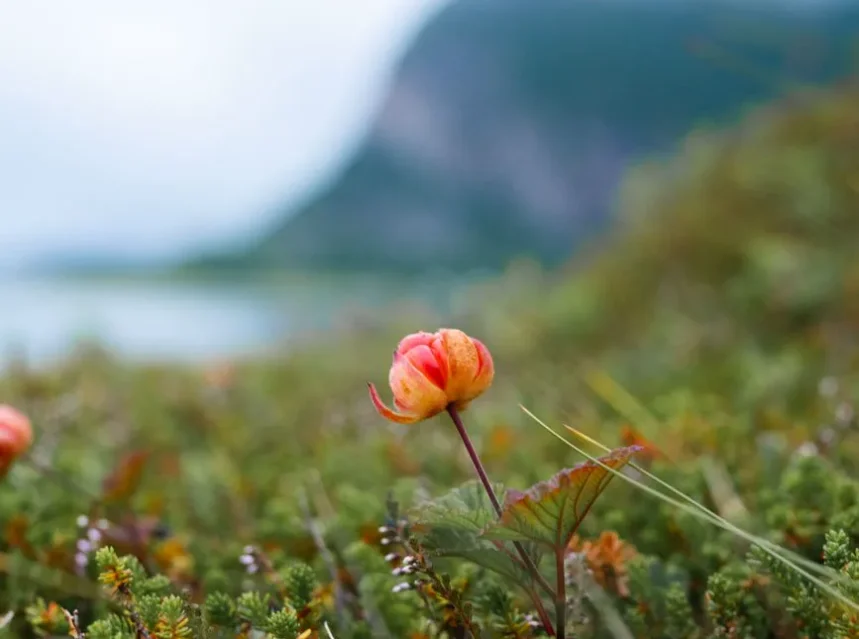
Cloudberry (Rubus chamaemorus) is the prized, golden-amber Arctic berry of Scandinavia, Finland, Russia, and northern North America. It is a low-growing, dioecious perennial that lives in peatland. The honey-amber fruits taste sweet-tart and complex, with a floral richness. So it is the most expensive and sought-after wild berry in the Nordic countries, often €20-40 per kilogram at food markets.
Cloudberry is famously hard to grow. It needs very specific conditions: cool, acidic, and perpetually moist boggy or moorland ground. However, for keen gardeners in cool, wet climates with acidic soil, it is a rewarding challenge. Here is the complete guide on how to grow cloudberry.
Quick start: Cool, wet, boggy or moist moorland conditions — genuine challenge to grow in cultivation. Acidic, peaty, perpetually moist soil (pH 3.5-5.0). ⚠️ DIOECIOUS — plant male + female together. USDA zone 2. Low-growing (10-25 cm). Fruits July-August. Best in Scotland, Scandinavia, northern Canada. In temperate UK: cool, damp, acidic garden or container bog garden. See related: lingonberry and cranberry for related acidic-habitat berry plants.
Cloudberry holds an almost mythical status in Nordic food culture. It grows only in peatbogs, arctic heaths, and wet moorlands. No commercial cultivation exists at scale, because the plant refuses to be tamed into easier conditions.
In Norway, Finland, and Sweden, foragers guard their cloudberry patches as a closely kept secret. The berries become jam and liqueur, and Finland’s Lakka is one of the world’s finest fruit liqueurs. So for gardeners in Scotland, northern England, or similar cool-damp acidic climates, growing cloudberry is a genuine challenge worth attempting.
🧰 In a hurry? Jump straight to our tested picks for this guide ↓
Cloudberry at a glance
| Feature | Detail |
|---|---|
| Botanical name | Rubus chamaemorus (family Rosaceae) |
| Common names | Cloudberry, bakeapple (Newfoundland), yellow berry, nordic berry |
| Plant type | Low-growing herbaceous perennial (10-25 cm) |
| ⚠️ Pollination | DIOECIOUS — plant male + female together for fruit |
| Fruits | Golden-amber, raspberry-like; exceptional flavour; July-August |
| Soil | Acidic, peaty, perpetually moist bog/moorland (pH 3.5-5.0) |
| Hardiness | USDA zone 2 (to -40°C) |
| Cultural note | Most expensive and prized wild berry in Scandinavia; €20-40+/kg |
Why grow cloudberry?
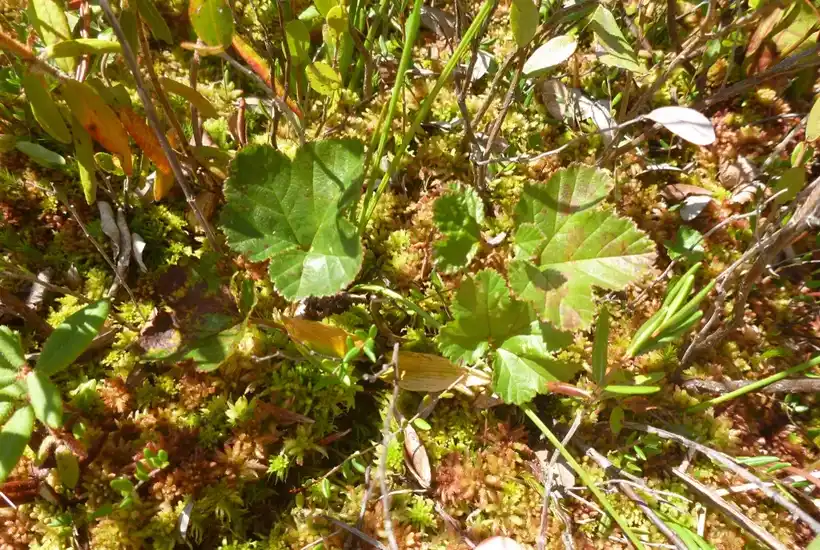
- Unique, exceptional flavour. Ripe cloudberry has a flavour unlike any other berry — golden-amber, honey-sweet, tart, complex, with a distinctive floral and apricot-like richness. The finest cloudberry jam and liqueur (Finnish Lakka) are recognised as among the world’s finest fruit preserves.
- Extreme scarcity and value. Fresh cloudberries are available only in Nordic countries during their brief July season and command extraordinary prices. Growing your own is the only way to access them outside their native range.
- The challenge and prestige of growing a famously difficult plant. For dedicated fruiting gardeners, cloudberry represents a genuine horticultural challenge — succeeding with it is a badge of honour in the specialist fruit gardening world.
- Very cold-hardy. For gardeners in northern Scotland, Norway, northern Canada, and Alaska where most other fruiting plants struggle, cloudberry thrives.
History, origin and cultural significance
Rubus chamaemorus is native across the circumpolar Arctic and sub-Arctic regions. Its range spans Scandinavia, Finland, northern Russia and Siberia, Iceland, Greenland, northern Canada, and Alaska (see Encyclopaedia Britannica). It grows in peatbogs, wet moorlands, and Arctic heathlands, always in cool, moist, acidic ground.
Nordic people have gathered cloudberry wild since prehistoric times. They call it “molte” in Norwegian, “hjortron” in Swedish, and “lakka” in Finnish. It remains one of their most prized and culturally significant foods.
In Norway, cloudberry patches are protected property. The right to pick berries on mountain farms belongs to the landowner, and trespassing to pick them is taken seriously. Finland’s Lakka liqueur, distilled from cloudberry, is one of the country’s most famous exports.
The fruit is woven into everyday Nordic life. It appears on Finland’s 2-euro coin and in Norwegian civic heraldry. Danish king Christian IV even imported Norwegian cloudberries in the 1600s to fight scurvy. Foragers still make it into multekrem (Norway), hjortronsylt jam (Sweden), and the famous lakka liqueur (Finland).
In Newfoundland and Labrador, people call the fruit “bakeapple”. The name likely comes from the French phrase baie qu’appelle (“what is this berry called?”), misheard by early English settlers. There it flavours a beloved two-ingredient jam. In India, however, cloudberry does not grow naturally, because the Himalayan alpine zone is too warm and dry for this arctic specialist.
Demand still outstrips supply. Norway alone imports roughly 200-300 tonnes of cloudberries from Finland each year (see Wikipedia). The RHS lists cloudberry as a specialist plant for very specific cool-damp acidic conditions. FAO’s world crop statistics have no cloudberry item at all, which tells its own story. So most production is still wild-gathered in the Nordic countries and Canada.
Cloudberry cultivars and varieties
Here is the single most useful fact for a home grower. Because most cloudberry plants are either male or female, a Nordic breeding effort called the “Northernberries” project set out to make cultivation practical. By 2002 it released named cultivars to farmers.
The game-changer is ‘Nyby’, a Finnish self-fertile selection. It carries both male and female flowers on the same plant, so a single ‘Nyby’ can set fruit alone. For a gardener trying cloudberry for the first time, that removes the biggest hurdle. The other cultivars are single-sex and must be paired.
| Cultivar | Sex | Origin / note |
|---|---|---|
| ‘Nyby’ | Self-fertile (both flowers) | Finland — fruits on its own; best pick for beginners |
| ‘Fjellgull’ | Female (fruiting) | Norway, 2002 — needs a male pollinator nearby |
| ‘Fjordgull’ | Female (fruiting) | Norway, 2002 — needs a male pollinator nearby |
| ‘Apolto’ | Male (pollinator) | Norway, 2002 — plant one per few females |
These plants come from a handful of specialist nurseries in Scandinavia, Scotland, and Canada. Availability is limited, so order early. If you cannot find a named cultivar, buy several unnamed plants and interplant both sexes to hedge your bets.
Best season and when to plant
Plant cloudberry in spring (April to May), once the ground has thawed and settled. You can buy specialist plants from a few nurseries in the UK, Scandinavia, and Canada. Unless you grow the self-fertile ‘Nyby’, plant both sexes together, with a male for every three or four females. Because the plant is dioecious, it will not fruit unless both male and female grow side by side.
Space the plants about 30 cm (12 inches) apart. They are low creepers, only 10-25 cm tall, and they knit together over time. The plants spread by underground rhizomes to form patches, just as they do in the wild. However, they establish and fruit slowly, so expect to wait 3-5 years for a first real crop. Site preparation matters most of all. The bed must genuinely replicate the acidic, wet, boggy conditions of natural cloudberry habitat.
How to plant and grow cloudberry
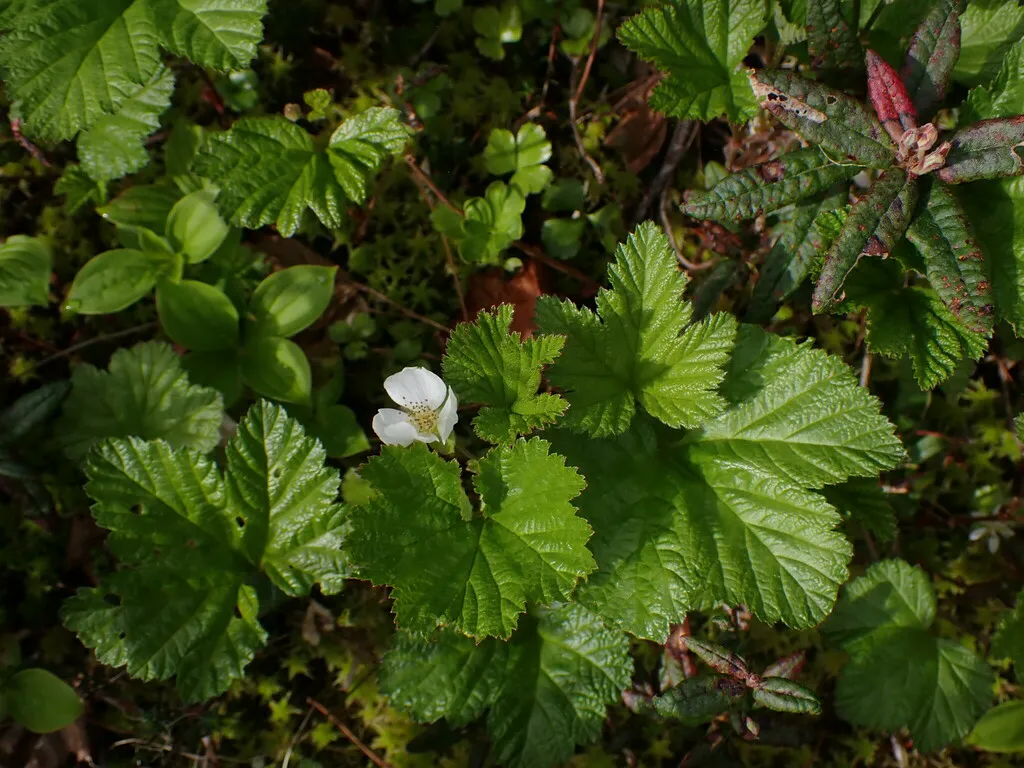
- Build a proper bog bed. Cloudberry needs very acidic (pH 3.5-5.0), permanently moist, peaty, nutrient-poor ground. So dig out 40-60 cm deep and line the hole with a pond liner. Puncture the liner in a few spots so it holds moisture without turning into a stagnant pool. A reliable fill is roughly 80% acidic peat or sphagnum moss to 20% coarse lime-free grit or sand. Keep it wet at all times. See improving garden soil.
- Or use a half barrel. A half whiskey or wine barrel makes an easy contained bog. Drill a few small drainage holes low on the sides (not the base) so water stays high but never sours, then fill with the same peaty acidic mix. A container also lets you move the plant into shade during a heatwave.
- Keep it cool. Cloudberry is an arctic plant, so it cannot tolerate warmth. In southern England, summer heat is often too high for it. It does best in Scotland, northern England, or the cool-damp West. In warmer areas, give it partial shade from afternoon sun.
- Pair male and female (or grow ‘Nyby’). Buy from nurseries that state the sex of each plant, then interplant in a 3:1 female-to-male ratio. The self-fertile ‘Nyby’ skips this step entirely. See our guide to growing cranberry for a related acidic bog approach.
- No pruning needed. Cloudberry dies back to the ground each autumn and re-emerges from its rhizomes in spring. In late spring, drape horticultural fleece over open flowers if a hard frost threatens, since frost can wipe out that season’s fruit.
How to propagate cloudberry
You can grow cloudberry three ways. Each suits a different level of patience.
- Division (easiest and most reliable). In early spring or autumn, lift a dormant clump and cut the creeping rhizome into sections. Make sure each piece has both roots and a shoot bud. Replant at once into wet, acidic mix and keep it moist. Division clones the parent, so you keep a known male, female, or self-fertile plant.
- Rhizome cuttings. Growers report success taking rhizome or semi-ripe cuttings in May or August. Root them in a cool, humid, peaty tray. Rooting usually takes about four to six weeks.
- Seed (slowest, least predictable). Cloudberry seed needs cold stratification: mix it into damp peat and chill at around 1-5°C (34-41°F) for roughly 6-12 weeks. Then sow just 6 mm (¼ inch) deep in acidic, ever-moist mix and germinate at 15-20°C. Germination is patchy, seedlings grow slowly, and you cannot tell a plant’s sex until it flowers years later. Expect 4-5 years to first fruit from seed.
For most gardeners, buying named nursery plants and dividing them later is far quicker than raising cloudberry from seed. For seed-starting general tips, see soil preparation.
Sun, soil, watering and feeding
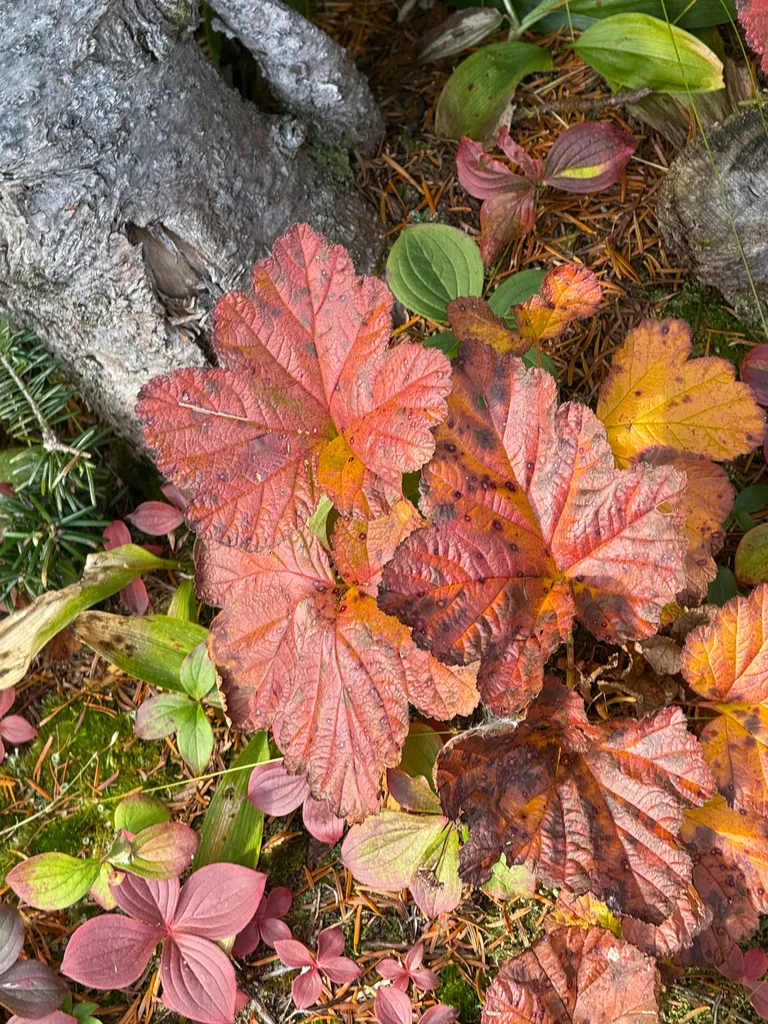
Sun: Full sun to partial shade in cool climates; partial shade advisable in warmer/southern gardens to keep soil cool. See soil improvement.
Soil: Highly acidic (pH 3.5-5.0), peaty, perpetually moist. Nutrient-poor conditions preferred — high fertility actually inhibits cloudberry. This is one of the few fruit plants that genuinely performs better in poor, acidic soil.
Watering: Perpetually moist — cloudberry grows in bog conditions. Never allow to dry out, even briefly. A bog-garden liner system is strongly recommended. See how often to water plants.
Feeding: Very little to none. Cloudberry grows naturally in nutrient-poor soils. Excessive fertiliser, especially nitrogen, suppresses flowering. A tiny amount of ericaceous feed in spring is plenty, if any.
Companion plants for a cloudberry bog
Cloudberry shares its habitat with other acid-and-bog lovers, so those plants make natural companions. In the wild it grows beside lingonberry, cranberry, bilberry, and Labrador tea. A living carpet of sphagnum moss is the best partner of all, because it locks in the acidity and moisture cloudberry demands. Grow lingonberry, cranberry, or bilberry in the same bed and you build one low-care acidic fruit corner.
Pests and diseases
In the wild, cloudberry has almost no pest problems. In a garden bog, a few issues can appear, mostly linked to wet conditions or ripe fruit.
- Birds: The greatest practical threat to the ripe berries. Net the bed during the brief harvest window. See organic pest control.
- Slugs and snails: These can shred young growth in spring. Use copper tape around the bog bed or nematodes rather than pellets.
- Aphids and spider mites: Occasional sap-suckers, worse in warm dry spells. A jet of water or insecticidal soap usually clears them. See how to get rid of aphids.
- Grey mould (Botrytis): The main disease risk in a damp bog. It rots flowers and fruit in humid, still air. Keep airflow open and remove any mushy berries at once.
- Rhizome and root rot: Caused by stagnant, airless water rather than moisture itself. The liner should stay wet but never sour, which is why a few drainage points matter.
Harvesting
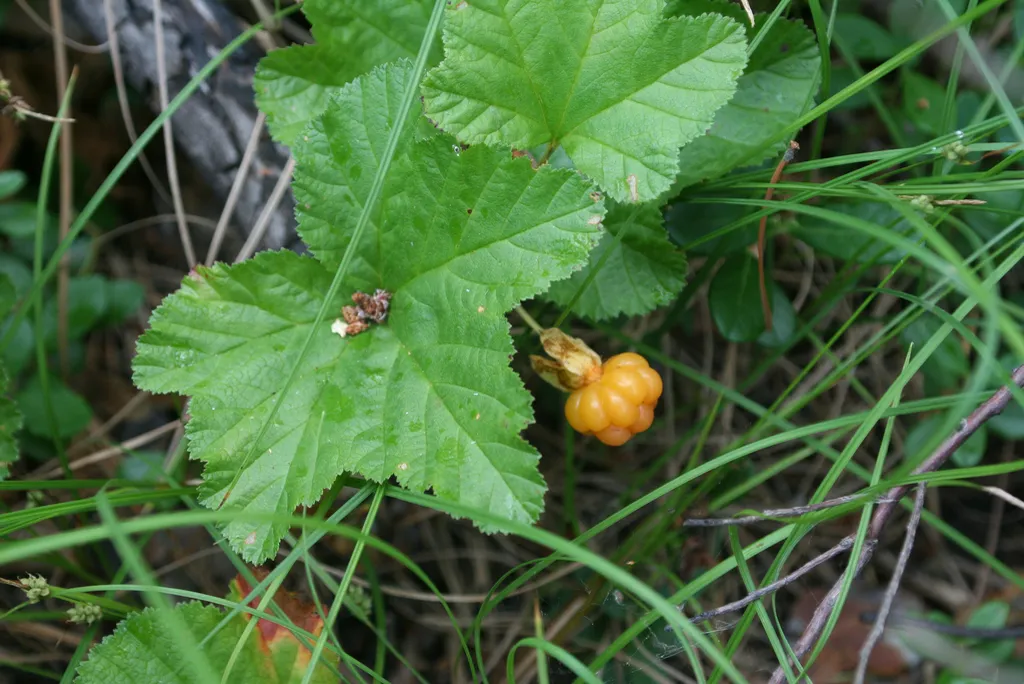
Cloudberry has an extremely brief season. It ripens in July in Scandinavia and northern Canada, over just 1-2 weeks. The fruit starts red, unripe, and very tart. Then it turns golden-amber at full ripeness, and only in that short window does the full, complex flavour appear.
Harvest gently and check the plants daily. Ripe berries bruise easily, and each plant yields only one fruit per stem, so pick with care. Fresh cloudberries deteriorate fast, so use them within 2-3 days or freeze them at once.
Here is a handy trait. Cloudberries are naturally high in benzoic acid, a built-in preservative. Because of it, Nordic foragers have long stored the berries in their own juice, cool, with very little or no sugar. The best uses are jam, liqueur, and sauce. A classic bakeapple jam uses roughly four parts berries to less than one part sugar. Cloudberry jam is a premium preserve, outstanding with soft cheese and game. The Finnish lakka liqueur is the finest form, and the berries are lovely with cream over pancakes or ice cream.
Health benefits and uses
Cloudberries are nutritionally rich, and unusually for a wild northern berry there is a reference row for them: USDA record 169802, recorded as part of the Alaska Native foods work. They rank among the richest sources of vitamin C of any temperate berry, with up to 158 mg per 100 g, roughly three times an orange. They also carry high vitamin E, plus carotenoids, anthocyanins, quercetin, and ellagic acid.
A 100 g serving holds about 51 calories and is roughly 87% water, so the berries are juicy and light. That high vitamin C mattered for Arctic communities. For example, people ate cloudberry to help ward off scurvy through long, dark winters. Its mix of vitamin C, vitamin E, and ellagic acid gives it a strong antioxidant profile. In traditional Nordic folk use, the leaves and berries were valued in winter diets and home remedies, and some studies suggest the polyphenols may support general wellbeing. These are traditional and preliminary uses, not proven treatments.
This article is for general information only and is not medical advice. Consult a healthcare professional for specific dietary or medicinal guidance.
Common cloudberry problems
Plant not flowering or fruiting
Three causes explain most failures. First, the plant may be male only, so buy from nurseries that sex their plants and interplant both. Second, the conditions may be too warm, dry, or rich, and cloudberry cannot adapt to fertile garden soil. Third, the plant may simply be too young, since 3-5 years is normal before reliable fruiting. Also check that the bog bed stays genuinely acidic and perpetually moist.
Plant dying after transplanting
Cloudberry is very hard to transplant from the wild. It rarely adapts to cultivation outside very specific conditions. So always buy container-grown plants from a specialist nursery. Never dig up wild plants, because they almost always die after moving. Even good nursery plants need precisely the right bog conditions to establish.
Conditions too warm
Many regions are simply too warm. Southern England, most of the US south of the Great Lakes, and continental Europe south of Scandinavia all struggle. The plant needs cool summers below about 25-27°C and cold winters. So if your climate runs warm, cloudberry is not realistic. Instead, try lingonberry, bilberry, or cranberry, which love acidic soil but tolerate more heat.
Related acidic-habitat berry guides
- How to grow Lingonberry
- How to grow Cranberry
- How to grow Bilberry
- How to grow Crowberry
- How to grow Buffaloberry
- How to grow Blackcurrant
Frequently asked questions
Why are cloudberries so expensive?
Cloudberries grow only in wild bog and moorland habitats and have never been successfully domesticated at commercial scale. They grow in remote, difficult-to-access locations, ripen over a very brief 1-2 week window in July, are very fragile (deteriorating within 2-3 days of harvest), and must be gathered entirely by hand. No mechanised harvesting is possible. The labour-intensive wild-gathering, extreme brevity of the season, and impossibility of commercial cultivation combine to make cloudberry one of the most expensive berries in the world. In Norway, Finland, and Sweden, fresh cloudberries at market in July command prices of €20-40+ per kilogram.
What does cloudberry taste like?
Fully ripe golden-amber cloudberry has one of the most distinctive and remarkable flavours of any berry. It is most often described as honey-sweet, with a complex tartness, and a distinctive floral, apricot-like, amber richness unlike any other fruit. Some describe a slight cream or vanilla note in very ripe specimens. The flavour is difficult to describe without tasting — it is genuinely unique. The best cloudberry jam and the Finnish Lakka cloudberry liqueur capture this flavour beautifully. Under-ripe red cloudberries are very tart and astringent; the full flavour only emerges at complete golden-amber ripeness.
Where does cloudberry grow in the UK?
Cloudberry is native to the UK — it grows wild on high peat moorlands and blanket bogs in northern Scotland, the northern Pennines, and parts of northern Wales. Classic UK locations include the Cairngorms, the Flow Country of Sutherland and Caithness (the most extensive blanket bog in Europe), and some North Yorkshire Moors sites. It is rare and protected in these habitats — never harvest wild cloudberries in the UK (they are protected under the Wildlife and Countryside Act 1981). For cultivation, Scotland’s cool, wet, acidic climate is the best in the UK for growing cloudberry in gardens.
Can I grow cloudberry in southern England?
Realistically, no — southern England’s summer temperatures (regularly above 25-28°C) are too high for cloudberry to thrive. The plant is an arctic-adapted specialist that requires cool summers and perpetually moist acidic conditions. Even with a perfect bog bed in a shaded position, southern gardens will struggle with the temperature requirement. For gardeners in southern England who want unusual acid-loving berries, lingonberry, honeyberry, or bilberry are far more achievable alternatives with similar acidic soil requirements but better heat tolerance. In Scotland, northern England, and similar cooler, wetter, acidic-soil regions, cloudberry cultivation is realistic.
Can you grow cloudberries in a normal garden?
Only if you can recreate a bog. Cloudberry needs permanently moist, strongly acidic peat, cool summers and a properly cold winter, which is why almost all cloudberries reaching the market are still hand-picked from the wild. A sunken bed lined with plastic and filled with peat, kept wet with rainwater, is the usual home attempt.
Do you need both male and female cloudberry plants?
Yes. Cloudberry is dioecious, meaning each plant is either male or female, and only the female plants carry fruit. A patch of one clone spreads happily by rhizomes and still never fruits, which is the single most common reason a home planting stays barren.
What soil pH do cloudberries need?
Very acidic — roughly pH 3.5 to 5, the range of a peat bog. They also want low fertility; ordinary garden compost and general fertiliser do more harm than good. Use ericaceous or pure peat-based media and irrigate with rainwater, because tap water is often alkaline enough to spoil the balance.
How long before a cloudberry plant fruits?
Expect several years. Plants establish slowly, spread by underground rhizomes first, and only flower once the colony is settled — typically from the third year onwards in good conditions, and later in marginal ones.
Where do cloudberries grow naturally?
In the peat bogs, mires and tundra of the far north: Scandinavia, Finland, the Baltic states, northern Russia, Canada, Alaska, and small pockets further south at high altitude, including a famous relict population in northern England. They are true cold-climate plants.
Can cloudberries grow in warm climates or in India?
No. They need cold winters to break dormancy and cool, damp summers to crop, so plains climates are simply too hot. Gardeners in warmer regions looking for a similar amber, tart berry are better served by growing raspberries or a cool-climate currant.
Do cloudberries spread once established?
Yes — they creep steadily outwards by rhizome, forming a low mat rather than a bush. That habit makes them easy to propagate by lifting a rooted piece of rhizome, and it is far more reliable than growing them from seed, which needs a long cold stratification.
Still stuck? Ask the Plant Doctor
Describe the problem — yellow leaves, holes, no flowers — and get a clear answer in seconds. FreeAI can make mistakes. Answers are guidance, not a guarantee — check anything important against the guide it links to, and always read the label on any product before you use it.