How to Grow Cherimoya
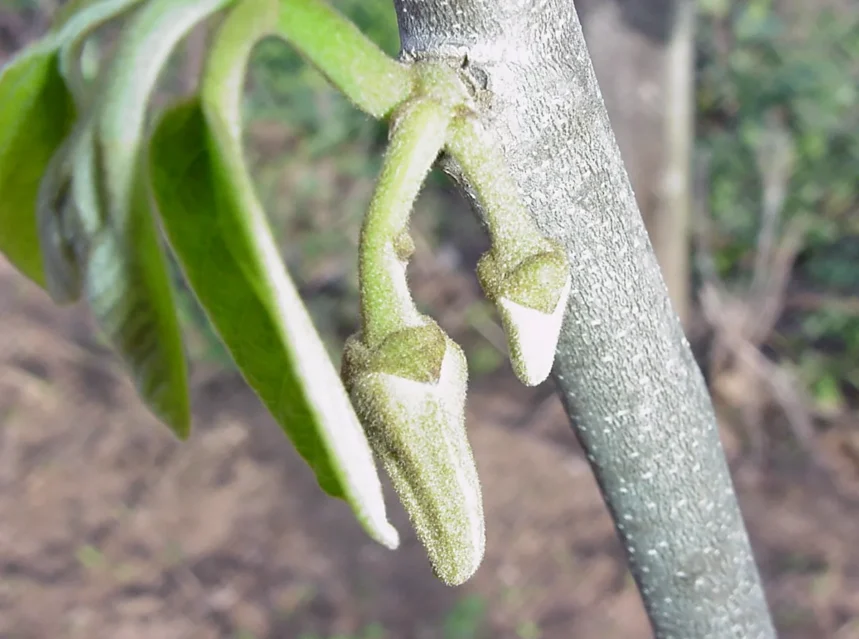
Cherimoya (Annona cherimola) is a subtropical fruit tree from the Andean valleys of South America. It grows large, green, scaly-skinned fruit with sweet, creamy-white flesh. The flavour tastes like a blend of pineapple, banana, strawberry, and vanilla.
Mark Twain called it “the most delicious fruit known to men” after tasting it in Hawaii in 1866. Cherimoya is related to the custard apple (A. squamosa) and soursop (A. muricata). Many growers rate it the finest fruit in the whole Annona family. This guide covers how to grow cherimoya from planting to harvest, in the US, UK, and India.
🧰 In a hurry? Jump straight to our tested picks for this guide ↓
Why Grow Cherimoya at Home?
Cherimoya ranks among the world’s finest tasting fruits. Perfectly ripe flesh is smooth, custardy, and intensely sweet. You taste vanilla custard, tropical fruit, and a hint of rose perfume.
Shops almost never sell it at proper ripeness, because the fruit bruises easily and ships poorly. So growing your own is the surest way to taste it at its best.
Cherimoya sounds exotic, yet it suits temperate gardeners better than most tropical trees. It actually prefers slightly cool winters and a dry season. You find these conditions in coastal California, the Mediterranean, and parts of Spain and Portugal.
Growers in California’s Santa Barbara and San Diego counties raise cherimoya commercially. These are among the only cherimoya orchards in the US, and their fruit sells at premium prices. For home gardeners in zones 9b-11, the tree is a realistic and rewarding project.
History, Origin and Cherimoya Around the World
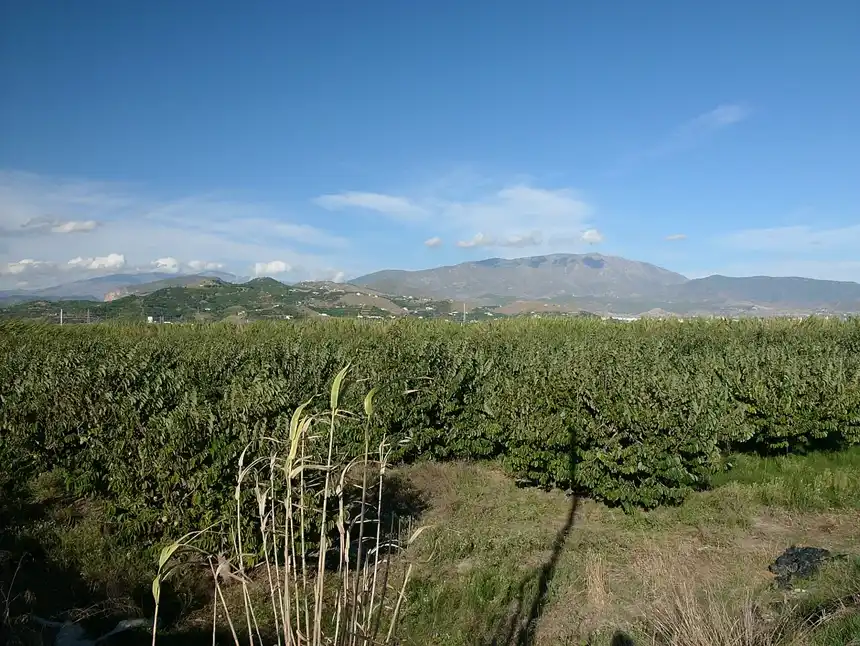
Cherimoya comes from the inter-Andean valleys of Peru, Ecuador, Colombia, Bolivia, and Chile. It grows there at 1,500-2,500 m above sea level, and the Inca cultivated it long before Europeans arrived. Andean cultures carved its shape into ceramics and burial art from at least 1200 BCE.
The species is native to the Andean valleys of Ecuador, Peru and Colombia, where it has been cultivated since pre-Inca times; see Cherimoya (Wikipedia) for the botanical background. Gardeners in warmer plains usually grow its close relatives instead — see our guides to custard apple and soursop.
The name comes from the Quechua word chirimuya, meaning “cold seeds.” That name points to the cool highland conditions the plant loves. Spanish explorers carried cherimoya to Europe in the 16th century, and it spread to the Canary Islands, Spain, and Portugal.
Today Spain’s Granada-Malaga coast is the world’s largest cherimoya-growing region. Its chirimoya de la Costa Tropical holds an EU Protected Designation of Origin, and more than 90% of that crop is the Fino de Jete variety. Chile and Peru also grow large commercial quantities.
Hawaii received the fruit in the early 19th century, and the tree that impressed Mark Twain grew in Hilo. California’s cultivation began around 1870, when nurseryman Joseph Sexton raised seeds near Santa Barbara. Most US orchards still sit along the coast between Santa Barbara and San Diego.
In India, the related custard apple (Annona squamosa), known as sharifa or seetaphal, is far more common than true cherimoya. True cherimoya suits cool highland regions such as the Nilgiris around Ooty and Coonoor, Coorg in Karnataka, and parts of Himachal Pradesh. There the cool, dry winters and warm summers mimic Andean conditions.
Cherimoya vs Custard Apple: Key Differences
Both fruits sit in the genus Annona, which is why they are so often sold under the same name.
| Feature | Cherimoya (A. cherimola) | Custard apple (A. squamosa) |
|---|---|---|
| Skin | Smooth-scaly “fingerprint” pattern | Knobbly, bumpy, segmented |
| Size | Larger — 250g-2kg | Smaller — 100-400g |
| Flesh texture | Custardy, smooth, very creamy | Grainy, coarser, slightly drier |
| Flavour | Complex — pineapple/banana/vanilla custard | Sweet, floral, simpler |
| Climate | Subtropical/cool (cool winter essential) | Tropical/warm (no cool winter needed) |
| India suitability | High-altitude cool areas only | Much of India; widely grown |
| Seeds | Large, brown, inedible (toxic) | Black, inedible (toxic) |
Indian gardeners in the plains should pick custard apple (sharifa/seetaphal). It is the more practical choice there. Gardeners in the Himachal, Coorg, or Nilgiris highlands can try true cherimoya. In California’s coastal zones and similar Mediterranean climates, cherimoya is clearly the better of the two. If your summers are hot and humid, look instead at atemoya, a cherimoya-sugar apple hybrid that tolerates that heat far better.
Best Cherimoya Varieties to Grow
Variety choice decides how well your tree fruits. Grafted trees come true to type, so you get the flavour and habit you picked. Seedlings, by contrast, give unpredictable and often poor fruit. Here are the cultivars home growers rate most highly.
| Variety | Best for | Notes |
|---|---|---|
| Fino de Jete | Cool coastal / containers | Spain’s dominant variety; rich flavour, reliable cropper |
| Booth | Coastal California | Among the hardiest; partly self-fruitful; papaya notes |
| Pierce | Warmer inland spots | Very smooth skin, high sugar, handles some heat |
| Honeyhart | Heavy yields | Smooth-skinned, intensely sweet, productive |
| Dr. White (White) | Big fruit | Large fruit to ~2 kg; juicy but milder flavour |
| El Bumpo | Flavour lovers | Bumpy, soft skin; rated among the finest tasting |
For a first tree in a mild coastal garden, ‘Fino de Jete’ or ‘Booth’ are safe picks. Inland gardeners who see summer heat spikes do better with ‘Pierce’. Buy from a nursery that grafts named varieties, not generic seedlings.
Best Season and When to Plant Cherimoya
Cherimoya has an unusual climate need. It wants cool but frost-free winters, with nights around 5-10°C, to trigger flowering. In fact it needs roughly 50-100 chill hours below about 7°C (45°F) each winter to leaf out and set fruit well. It also needs warm but not scorching summers to ripen the crop.
You find this mix in coastal California, the Mediterranean, and the Andes. However, you will not find it in Florida (too humid and hot) or the Indian plains (too warm year-round).
In the US (zones 9b-11): Southern California’s coast is ideal. Good spots include Santa Barbara, Ventura, Los Angeles, and San Diego. Plant in spring, once frost risk has passed. Cherimoya suffers below -2°C, and brief frost kills young trees. Mature trees take short dips to about -4°C. Inland valleys run hotter, so their fruit ripens earlier but tastes less complex than coastal fruit.
In the UK: Try it only in the warmest southern spots, or grow it in a large pot you can shelter. Train it against a south-facing wall, with winter protection like fleece or a cold frame. Fruit set stays hard, because summers are cool and you must hand-pollinate. Treat it as an ambitious project, not a reliable cropper.
In India: Highland zones above 1,000 m work best, including Coorg, the Nilgiris, Himachal Pradesh, and the lower Uttarakhand Himalayas. Their cool, dry winters and warm summers give the chill the tree needs. In the hot plains, grow custard apple instead.
How to Grow Cherimoya: Planting Step by Step
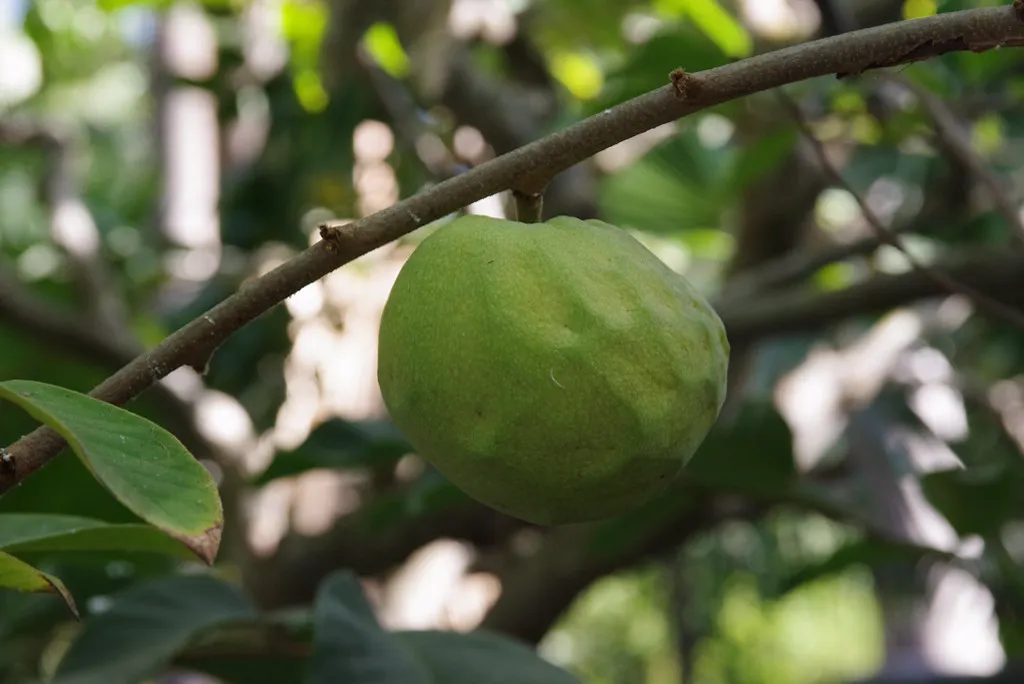
Always buy a grafted tree from a reputable nursery. Seed-grown cherimoya takes 5-8 years to fruit and gives unpredictable results, while grafted trees fruit in 3-5 years. Follow these steps to get a young tree established.
- Choose a warm, sheltered position: Plant against a south-facing wall for warmth and wind protection. The tree has a weak, shallow root system, so stake it for its first two to three years.
- Space trees properly: Mature cherimoyas reach 5-9 m tall and wide. Give a single tree room, and space multiple trees about 6-9 m (20-30 ft) apart for light and airflow.
- Prepare the soil: Use well-draining loam or sandy loam, pH 6.5-8.0. Cherimoya handles chalky and slightly alkaline soils, and unlike most fruit trees it does not need acidic ground. Good drainage matters most, because waterlogging rots the roots fast.
- Plant at the right depth: Set the tree at the same depth as its nursery pot, and keep the graft union above soil level. Water in well, then mulch with a 5-8 cm layer, kept clear of the trunk.
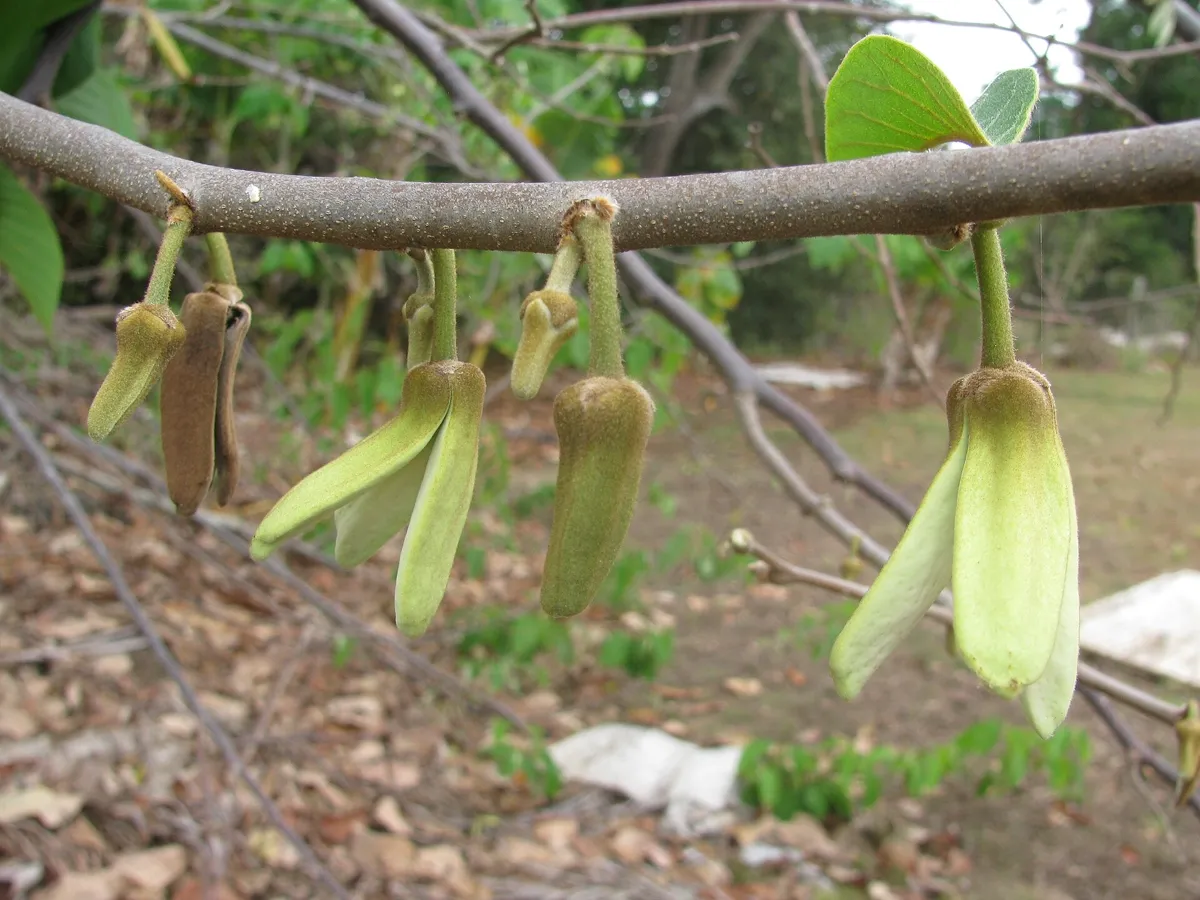
- Plan for hand-pollination: This step is non-negotiable for fruit. The flower is protogynous — the female stigma is ready before the male anthers shed pollen, so it rarely pollinates itself. Collect pollen from a male-phase flower (open bud, dusty pollen) in the late afternoon, keep it cool overnight, then dab it onto a sticky female-phase stigma the next morning with a soft brush. Pollinate several flowers per cluster, every day or two through the flowering season.
On the California coast, the summer “June Gloom” fog actually helps. It extends how long female flowers stay receptive, so natural fruit set improves and hand work eases a little.
Growing Cherimoya from Seed and by Grafting
Most gardeners buy a grafted tree, and that is the reliable route. Still, it helps to know how propagation works, especially if you want a rootstock or a fun experiment.
From seed: Soak seeds for 24 hours first. Discard floaters, because they are usually not viable. Sow the sinkers in a peat-and-sand mix, about 2 cm deep, and keep them at 21-29°C. Seeds sprout in three to five weeks. Remember that seedlings do not come true, so use them mainly as future rootstock.
By grafting: Nurseries graft named varieties onto seedling cherimoya rootstock, which suits California soils best. Cleft and whip grafts both work, done in spring as growth starts. In humid tropical areas, A. squamosa is sometimes used as a dwarfing stock. Grafting is the only way to guarantee a known variety and early fruit.
Sun, Soil, Watering and Feeding for Cherimoya Care
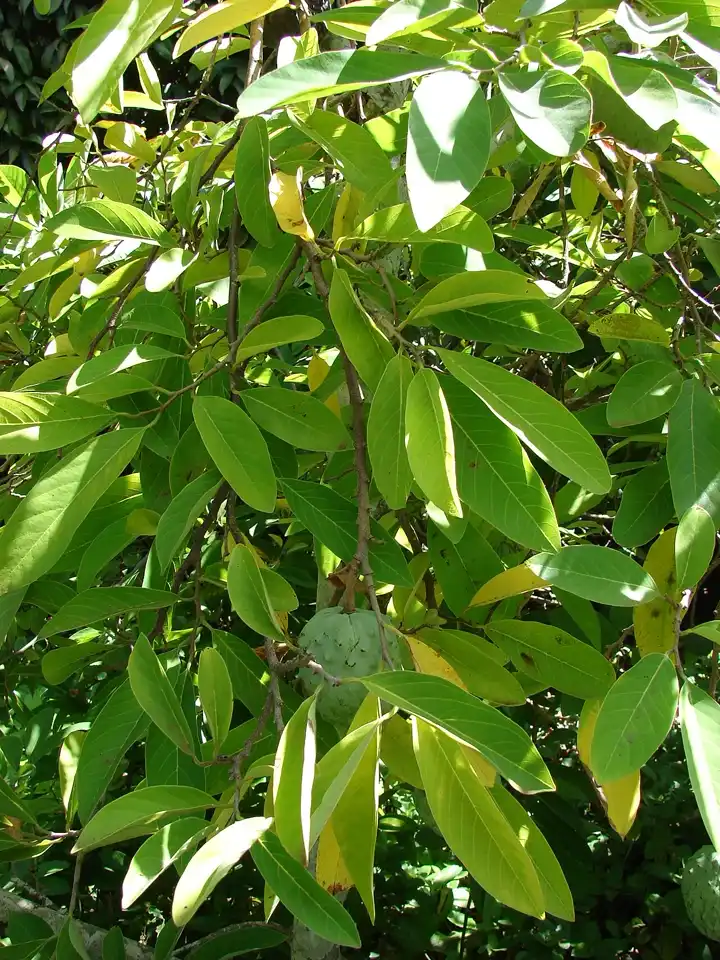
Sun: Give the tree full sun for at least 6-8 hours a day. In shade it makes fewer flowers, needs more hand-pollination, and yields smaller, less sweet fruit. In borderline climates, plant against a light-reflecting wall for extra warmth.
Soil: Use well-draining loam, sandy loam, or even chalk, pH 6.5-8.0. Its native Andean soils are well-drained, slightly alkaline, and fairly poor, so the tree is not fussy about fertility. Drainage, however, must be excellent — root rot in soggy soil is a common killer.
Water: Water regularly through spring and summer, while the tree grows and fruits. Then cut back sharply in late autumn and winter. Cherimoya drops its leaves and half-sleeps in winter, and extra water now invites root rot. On the California coast, trees often go months with no watering during the dry summer.
Feeding: Feed a balanced fertiliser such as 8-8-8 or 10-10-10 from late winter, before leaves appear, and again every three months through summer. A rough guide is a cupful for each year of the tree’s age, spread around the drip line, never piled at the trunk. Too much nitrogen pushes leafy growth instead of flowers, so ease off nitrogen and favour potassium and phosphorus as fruit develops. In alkaline soils, a chelated iron foliar spray prevents iron chlorosis.
Pruning and Training a Cherimoya Tree
Prune in late winter, while the tree is dormant and leafless. First, train a young tree to two or three strong scaffold branches for an open, easy-to-reach frame. Next, remove dead, crossing, or crowded wood to improve airflow.
Cherimoya fruits on new growth, so light annual pruning keeps it productive. Experienced growers often cut back up to a third of the previous year’s growth to spur fresh fruiting wood. If pollination succeeds and fruit sets heavily, thin the young fruit too. Fewer fruits grow larger and sweeter, and heavy loads can weaken next year’s crop.
Growing Cherimoya in Pots
Container growing suits cold-winter and small-space gardeners, because you can move the tree under cover. Start with a 60-95 litre (15-25 gallon) pot with drainage holes. Compact, early-fruiting varieties like ‘Fino de Jete’ or ‘Concha Lisa’ adapt best to pots.
Use a free-draining mix — for example two parts potting soil to one part compost and one part perlite or coarse sand. Give it 6-8 hours of sun, and water when the top few centimetres feel dry. Feed lightly every few weeks in the growing season.
When temperatures drop below about 10°C, move the pot into a bright, cool, frost-free spot. Reduce watering hard through winter dormancy to protect the roots. Repot every two to three years in early spring, stepping up one pot size at a time.
Common Pests and Diseases of Cherimoya
- Root rot (Phytophthora): The main cause of cherimoya tree death in cultivation. It strikes in waterlogged, poorly drained soil. Prevent it by planting on well-drained or raised ground; there is no reliable chemical cure, so prevention is everything.
- Anthracnose (Colletotrichum): Dark, sunken spots on fruit and leaves in humid weather, often causing fruit drop. Prune for airflow, clear fallen debris, and remove infected fruit promptly.
- Mealybugs and scale: Feed on stems, leaf joints, and under the fruit calyx. Treat with neem oil or insecticidal soap. Ants farm mealybugs, so band the trunk with a sticky barrier to break the cycle.
- Annona seed borer: Larvae tunnel into developing seeds and cause fruit drop. It is rarer in California than in the tropics. Slip fine mesh bags over young fruit at set to exclude it.
- Powdery mildew: A white coating on young leaves in humid conditions. Improve airflow and apply diluted neem oil or potassium bicarbonate at first sign.
Harvesting Cherimoya and Expected Yield
Cherimoya ripens slowly, usually 5-8 months from pollination to harvest. The fruit is ready when it gives to gentle pressure all over, and the skin fades from bright green to a paler yellow-green. Ripe fruit also smells sweet and fragrant.
Do not wait for it to soften fully on the tree. Instead, pick it firm as it just begins to give, then ripen it indoors for one to three days. To speed ripening, keep it in a paper bag with a banana.
A mature, well-pollinated tree can produce anywhere from 30 to 250 fruits a year, depending on age, climate, and variety. In Spain’s orchards, trees average 60-80 kg each. Individual fruits range from about 250 g to well over 2 kg.
Handle ripe cherimoya carefully, because it bruises at a touch. Refrigerate ripe fruit and eat it within one to two days. Do not chill unripe fruit for long, though — cold below about 8°C causes chilling injury, which browns the skin and spoils ripening. Cut ripe fruit in half, scoop the flesh with a spoon, and discard the large seeds. The seeds are toxic when crushed, so never grind or chew them.
Health Benefits and Uses of Cherimoya
Cherimoya offers vitamin C (about 12-18 mg per 100g), dietary fibre, vitamin B6, potassium, and antioxidants. The fruit also contains acetogenins, natural Annona compounds studied only in early lab settings, with no proven effect in humans. So enjoy cherimoya as a nutritious, tasty fruit, and do not treat it as medicine.
A safety note on seeds and skin: the seeds and skin contain annonacin, an acetogenin that is neurotoxic in concentrated form. Some studies have linked very heavy, long-term consumption of Annona seeds and skin to atypical parkinsonism in a few tropical regions. The flesh, eaten normally, is widely considered safe. To stay on the safe side, only eat the ripe flesh, and always discard the seeds and skin. This information is for general interest only and is not medical advice; consult a health professional for dietary concerns.
Culinary uses: Cherimoya tastes best fresh, scooped straight from the skin. Its custardy flesh also purées beautifully for ice cream, sorbet, smoothies, mousse, and cheesecake filling. In fact its texture is so creamy that it is nicknamed the “ice cream fruit.”
It pairs well with lime, mint, and coconut. In Peru, people love chilled cherimoya with a squeeze of lime. In Spain, it turns up in juices and granitas. In California, cherimoya gelato is a treat at coastal farmers’ markets.
Common Problems When Growing Cherimoya
- No fruit despite flowers: This almost always means pollination failed. So hand-pollinate more often. Collect pollen from male-phase flowers, then dab it onto sticky female-phase stigmas each day across several clusters.
- Fruit drops before ripening: Water stress, root problems, or poor pollination cause this. Undeveloped seeds trigger early drop. Water steadily as fruit develops, and cut open one dropped fruit to check — empty seeds mean pollination failed.
- Tree defoliates in winter: Normal — cherimoya is semi-deciduous. It drops its leaves in winter, even in mild climates, and re-leafs in spring. This is not a disease.
- Yellow leaves in the growing season: Usually iron or nitrogen shortage. Use a chelated iron foliar spray if new leaves are yellow between green veins. Apply balanced fertiliser if all the leaves are uniformly pale, or if leaf edges yellow (a potassium sign).
Related plant guides
- How to grow Custard Apple
- How to grow Atemoya
- How to grow Durian
- White Sapote
- How to grow Loquat
- Mandarin
Frequently Asked Questions About Cherimoya
Why did Mark Twain call cherimoya the most delicious fruit?
Mark Twain tasted cherimoya during his 1866 visit to Hawaii and wrote in his memoir “Roughing It” (1872) that it was “the most delicious fruit known to men.” His description captured what most first-time eaters report: an unexpected complexity and richness of flavour unlike any other fruit they’ve encountered. The smooth, creamy, custardy texture and the blend of tropical fruit notes are genuinely distinctive.
Is cherimoya the same as custard apple?
No — they are different species. Cherimoya (Annona cherimola) has a smooth, fingerprint-patterned skin and richer, smoother flesh. Custard apple (Annona squamosa) has a more knobbly, segmented skin and slightly grainier flesh. Cherimoya prefers cooler subtropical climates; custard apple grows in hot tropical conditions. In India, “custard apple” (sharifa/seetaphal) almost always refers to A. squamosa.
Are cherimoya seeds toxic?
Yes — the seeds of cherimoya contain cytotoxic acetogenins and should not be eaten. Never grind seeds into food. When eating cherimoya, spit out seeds or remove them before consuming the flesh. The seeds are not dangerous if accidentally swallowed whole, but should not be crushed or chewed.
Can I grow cherimoya in Florida?
Not reliably — Florida’s humidity, heat, and lack of a distinct cool-dry season make cherimoya difficult. The high humidity causes fungal problems, and the year-round warmth means the tree rarely receives the cool nights needed to trigger good flowering. Florida gardeners are better served by soursop (A. muricata) or custard apple (A. squamosa), which are more tolerant of tropical conditions.
How long does a cherimoya take to fruit?
A grafted tree usually gives its first real crop in about three years, sometimes in the second year if it is growing strongly. A seedling takes far longer, commonly four to six years, and the fruit quality is a lottery. That gap is the main reason nurseries and commercial growers stick to named grafted varieties.
Does cherimoya grow true from seed?
No. Seedlings are highly variable, so the fruit you get can be smaller, seedier or blander than the fruit the seed came from. Growing from seed is still worth doing for rootstock or for fun, but graft a known variety onto it once the stem is pencil-thick if you want reliable fruit.
Can you grow cherimoya in a pot?
Yes, in a large container of at least 40 to 50 litres, with free-draining mix and a sunny, sheltered spot. A potted tree stays smaller and is easier to move under cover in winter, which matters because cherimoya is damaged below about minus two degrees Celsius. Expect to hand pollinate and to feed and repot regularly, since containers exhaust quickly.
Why is my cherimoya flowering but not setting fruit?
Cherimoya flowers are protogynous: the female stage opens first and the pollen is released later, so a single flower rarely pollinates itself. In its native Andean range small beetles do the job, and those beetles are missing almost everywhere else. Collect pollen from freshly opened male-stage flowers in the late afternoon, store it overnight in a cool dry pot, and brush it into female-stage flowers the next morning.
When is a cherimoya ripe and how do you pick it?
Pick the fruit while it is still firm, once the skin loses its deep green and takes on a paler, creamy or yellowish cast. It ripens off the tree over three to five days at room temperature and is ready when it yields to gentle thumb pressure, like a ripe avocado. Left on the tree the fruit tends to split and drop.
Are cherimoya seeds poisonous?
The seeds are toxic and should never be eaten, crushed or blended — they contain annonaceous acetogenins, and crushed seed material is irritant. Simply spit the seeds out as you eat, as you would with a custard apple. The flesh itself is the edible part. This is general information, not medical advice.
Can cherimoya be grown in India?
Yes, but in the right zone. Cherimoya wants a subtropical highland climate — mild winters, no frost, and summers that are warm rather than scorching — so it does best in hill regions such as the Nilgiris, parts of Karnataka’s hills and the Himalayan foothills. In the hot plains, its relative the custard apple (sitaphal) is the reliable choice.
Does cherimoya need full sun?
It needs plenty of light, so give it full sun in cool and coastal climates. Where afternoons are very hot and dry, light shade from midday onwards protects both leaves and developing fruit, and a windbreak matters as much as shade because the brittle branches snap and the large leaves scorch in dry wind.
Still stuck? Ask the Plant Doctor
Describe the problem — yellow leaves, holes, no flowers — and get a clear answer in seconds. FreeAI can make mistakes. Answers are guidance, not a guarantee — check anything important against the guide it links to, and always read the label on any product before you use it.