How to Grow Buffalo Berry
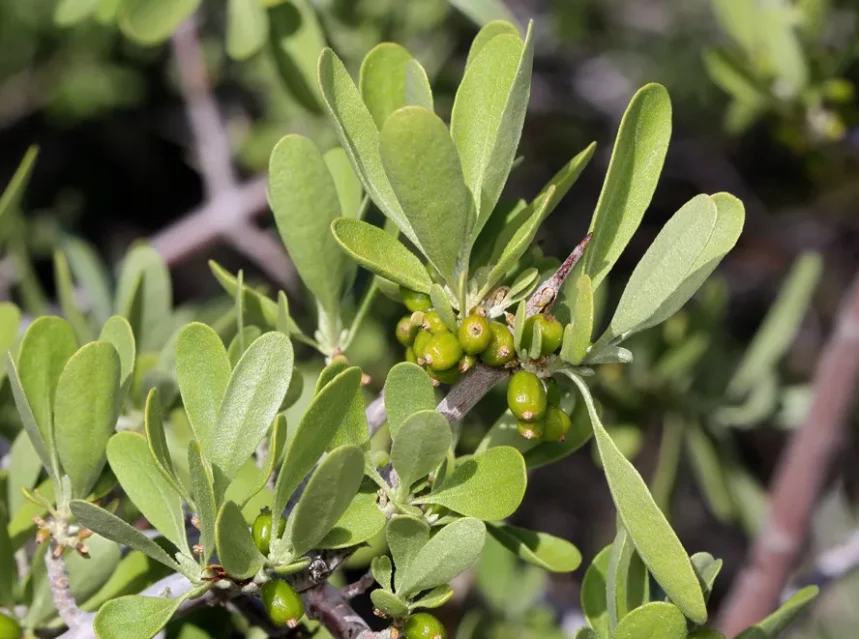
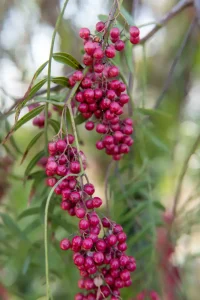
Buffalo berry (Shepherdia argentea), also spelled buffaloberry, is a tough, spiny, nitrogen-fixing native North American shrub with silver-grey foliage and small, tart red or golden berries. The fruit ripens from July to September. It fed the Indigenous peoples of the Great Plains for generations.
Growers prize the berries for their unusual sweet-tart, slightly bitter flavour. The pulp even foams when you whip it.
Buffalo berry is hardy and drought-tolerant. So it thrives on exposed, dry sites where most fruiting shrubs simply fail. This guide covers how to grow buffalo berry from planting and seed to harvest, with practical buffalo berry plant care for gardens in the US, UK and beyond.
Quick start: ⚠️ Buffalo berry is dioecious — separate male and female plants are required for fruit. Plant 1 male per 5-6 females. Full sun. Any well-drained to dry, poor, alkaline soil — it fixes its own nitrogen. Very hardy (USDA zone 2). Spiny, so wear heavy gloves. Space plants 1.5-3 m (5-10 ft) apart. Berries fruit July-September and sweeten after frost. Expect slow growth and little fruit until year three or four.
Buffalo berry is one of the most historic native North American fruiting plants. Yet it stays almost unknown outside specialist native-plant circles. The USDA Natural Resources Conservation Service and several university extension programmes rate it highly for prairie restoration, windbreaks, wildlife plantings and difficult dry, alkaline sites (see Wikipedia).
The berries foam because they contain saponins, natural surfactants that whip into a stable froth much like egg white. First Nations peoples in the Pacific Northwest used the related soapberry the same way. Meanwhile, the silver foliage stays striking all season.
Photo: Steve Matson (CC BY)
🧰 In a hurry? Jump straight to our tested picks for this guide ↓
Buffalo berry at a glance
| Feature | Detail |
|---|---|
| Botanical name | Shepherdia argentea (family Elaeagnaceae, the oleaster family) |
| Common names | Buffalo berry, silver buffaloberry, bull berry, thorny buffaloberry |
| Plant type | Spiny, suckering, deciduous shrub or small tree (1.5-5.5 m / 5-18 ft) |
| ⚠️ Dioecious | MALE AND FEMALE PLANTS REQUIRED — 1 male per 4-6 females |
| Spacing | 1.2-1.8 m (4-6 ft) for fruit; up to 3 m (10 ft) for a hedge |
| Flowers / fruit | Tiny yellow petal-less flowers (Mar-Apr); red or golden drupes July-Sept |
| Time to fruit | Slow — usually 3-5 years from a young plant |
| Sun | Full sun (essential for good crops) |
| Soil / pH | Well-drained to dry, poor, sandy or clay; alkaline and saline tolerant (pH ~6-8) |
| Hardiness | USDA zones 2-9 — extremely cold-hardy and drought-tolerant |
| Nitrogen-fixing | Yes, via Frankia root-nodule bacteria — feeds neighbouring plants |
Why grow buffalo berry?
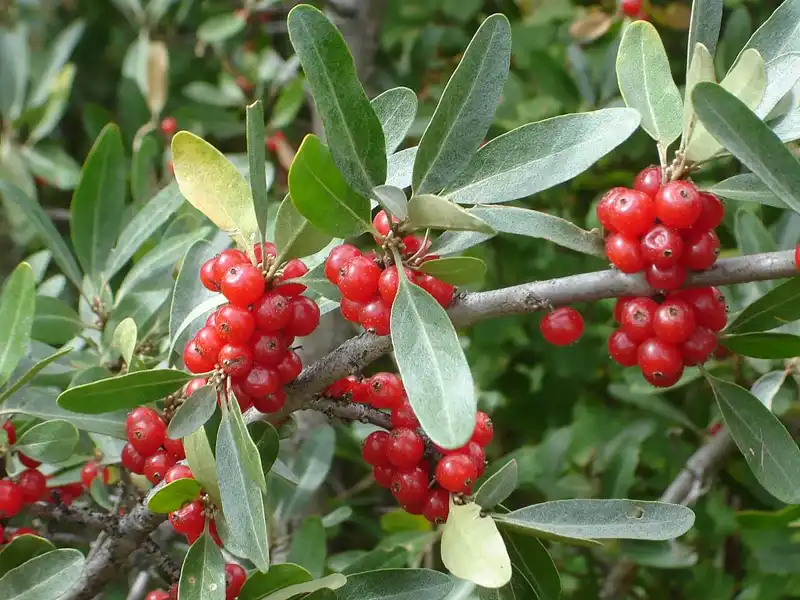
Few edible shrubs match this one for toughness. Here is why gardeners plant it.
- Made for difficult, dry, alkaline ground. It thrives in poor, dry, salty and alkaline soils where blueberries or currants would sulk. Because it fixes nitrogen, it also feeds the soil around it.
- Beautiful silver foliage. The silver-grey leaves shimmer all season and set off the red berries beautifully. It reads as ornamental first, edible second.
- Extreme drought and cold tolerance. It survives USDA zone 2 winters (roughly -40 °C) and long prairie droughts. Few fruiting shrubs are hardier.
- A living, thorny hedge. Dense, spiny, suckering growth makes an impenetrable windbreak or security hedge. Prairie farmers planted it to shelter crops.
- Big wildlife value. The tart berries hang into winter and feed cedar waxwings, robins and sharp-tailed grouse. In the northern plains, grizzly and black bears rely on the fruit before hibernation.
- Deep cultural roots. It was one of the most important wild foods of the Great Plains nations, so growing it keeps a food heritage alive.
History, origin and traditions
Shepherdia argentea is native to the Great Plains and western interior of North America. Its range runs from the Canadian prairie provinces south through the Dakotas, Nebraska and Colorado into the mountain west, reaching California, Arizona and New Mexico.
The shrub grows on dry prairie slopes, riverbanks and rocky outcrops. These are alkaline, low-rainfall places. So the habitat explains its tough drought and alkalinity tolerance today.
For the Plains Indigenous peoples, buffalo berry was a staple fruit. The Blackfoot, Crow, Lakota, Comanche and Assiniboine all used it. They dried the berries for winter and folded them into pemmican, the concentrated dried-meat-and-fat food that sustained long journeys. The berries added vitamin C, tartness and natural preservative compounds. Among the Lakota, the harvest was a community event.
A famous whipped dessert also comes from this genus. Beaten with water and a sweetener, saponin-rich berries froth into a light foam called “Indian ice cream” or sxusem. Importantly, that dish traditionally uses the related soapberry, Shepherdia canadensis, of the Pacific Northwest. Silver buffalo berry foams too, but Plains peoples mostly dried it and cooked it.
The Lewis and Clark journals record the plant and its value along the Missouri River corridor. In India, silver buffalo berry is neither grown nor known. However, its close relatives in the oleaster family do grow there: sea buckthorn (Hippophae) and other Elaeagnus species thrive across the Himalayas and are used much the same way.
When to plant buffalo berry
Plant buffalo berry in early spring (March to April) or in autumn (October to November), while the plant is dormant. Most gardeners start with container-grown or bare-root plants from specialist native-plant nurseries.
⚠️ Always confirm the sex of each plant at purchase. The shrub is dioecious, so female plants set no fruit without a male nearby. One male pollinates four to six females within about 15 m (50 ft), because pollination is by wind and insects.
Space plants 1.2-1.8 m (4-6 ft) apart for berry production, or up to 3 m (10 ft) if you want each shrub to form its own thicket for a hedge. The species is easiest to source in the US and Canada; prairie and Great Plains nurseries stock it widely. It is rarer in the UK, though specialist shrub nurseries carry it.
How to grow buffalo berry step by step
Growing buffalo berry is genuinely low-effort once you get the basics right. Follow these steps.
- Pick a full-sun spot. This is a prairie plant, so open, sunny sites give the best crops. In shade it grows leggy and fruits poorly. Improve heavy ground first with our guide to improving garden soil.
- Get the soil right. Well-drained, poor and dry is ideal. Alkaline soil (pH 7-8) suits it perfectly, and it shrugs off salt. Sandy, gravelly and clay soils all work, provided drainage is good. It does not want rich or waterlogged ground.
- Dig and plant. Make the hole a little wider than the root ball and the same depth. Firm the plant in, water well, then mulch lightly to keep weeds down while it establishes.
- Plant male and female together. Set one sexed male centrally among your females so wind carries pollen to all of them.
- Wear heavy gloves. The branches carry stiff thorns up to 5 cm (2 in) long. Long sleeves help at planting and harvest.
- Manage the suckers. Buffalo berry spreads by root suckers, especially on moist ground. Cut or dig unwanted suckers each spring, or let them run if you want a thicket. Our guide to growing sea buckthorn covers the same suckering, dioecious habit.
Then be patient. Growth is slow: the shrub adds only a foot or two a year and rarely fruits well before its third or fourth season.
Growing buffalo berry from seed and cuttings
You can raise your own plants, but each method has a catch worth knowing first.
Growing buffalo berry from seed works, yet you cannot tell a seedling’s sex until it flowers years later. Because you need both sexes, sow several. The seed has a hard, dormant coat, so it needs pre-treatment:
- Scarify. Soak seed in hot water for 24 hours, or nick the coat, to help water reach the embryo.
- Cold-stratify. Give the seed about 90 days of cold, moist storage at 4 °C (41 °F) in damp sand. Autumn-sown seed gets this naturally outdoors.
- Sow. Plant 1 cm (about ½ in) deep in autumn and mulch, or sow stratified seed in spring. Keep it evenly moist; seedlings usually appear within two to four weeks after stratification.
Cuttings are more reliable for known-sex plants. Take 20-30 cm (8-12 in) hardwood stem cuttings with at least two buds. Root them, then grow them on. You can also lift and replant rooted suckers, which is the quickest route of all. For general timing help, see our watering guide so young plants never dry out.
Best cultivars to grow
Named selections take the guesswork out of sex and improve fruiting. A few worth seeking out:
| Cultivar | Why grow it |
|---|---|
| ‘Sakakawea’ | USDA-NRCS conservation selection; uniform, hardy, heavy red-fruiting female (12-20% plants bear yellow fruit) |
| Silver Totem™ | Narrow, upright female to ~3 m; ideal where space is tight, needs a male pollinator |
| ‘Xanthocarpa’ / ‘Goldeneye’ | Golden-fruited forms — birds spot them less, so more berries for you |
| A named male | Every planting needs one; a cutting-grown male guarantees pollination |
Sun, soil, watering and feeding
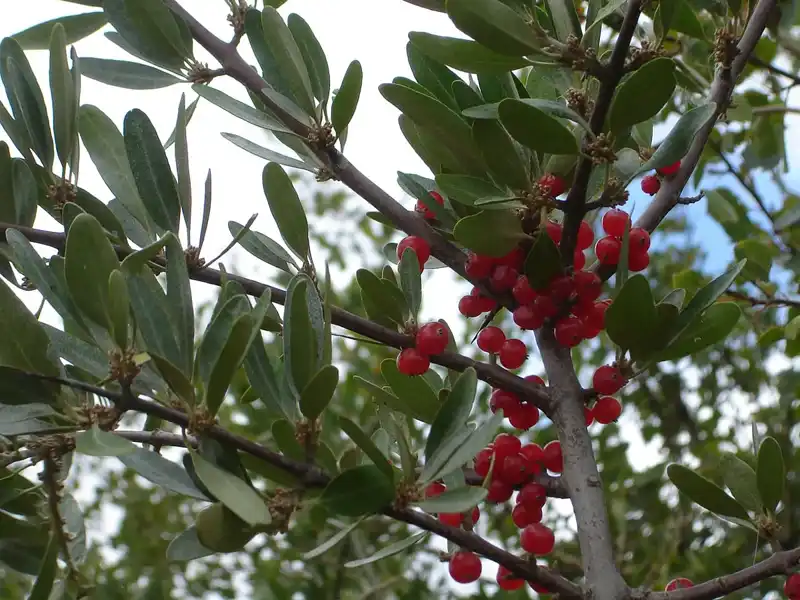
Sun: Full sun only. This is a prairie plant, not shade-tolerant, and shade cuts your crop.
Soil: Well-drained to dry, poor and alkaline. It does not need rich or acidic soil. See soil improvement if drainage is your weak point.
Watering: Water through the first year to establish the roots. After that it is extremely drought-tolerant. One useful grower tip: in very dry summers the berries stay small and sour, so an occasional deep soak while the fruit swells improves sweetness. See how often to water plants.
Feeding: None needed, because the plant fixes its own nitrogen through Frankia bacteria in its roots. In fact, excess nitrogen pushes leafy growth at the expense of fruit. Skip the fertiliser and mulch lightly instead.
Pruning: Little is required. Remove dead or crossing wood in late winter. To rejuvenate an old, tangled shrub, cut it hard back to about 30 cm (12 in) and it resprouts vigorously. Wear thick gloves.
Pests, diseases and wildlife
- Buffalo berry is tough and largely trouble-free, a prairie native with strong natural resilience. See organic pest control for a healthy garden baseline.
- Fungal leaf issues: In humid or crowded plantings it can pick up powdery mildew, rust or leaf spot. Space plants for airflow and avoid overhead watering. Our pest-management guide covers the usual sucking insects too.
- Deer browse the shoots and leaves, though the thorns limit serious damage.
- Birds and bears: Cedar waxwings, robins and sharp-tailed grouse strip the fruit, and in bear country the berries are prized autumn food. In a wildlife garden that is the goal; to keep berries for yourself, net a female or two.
Harvesting and using the berries
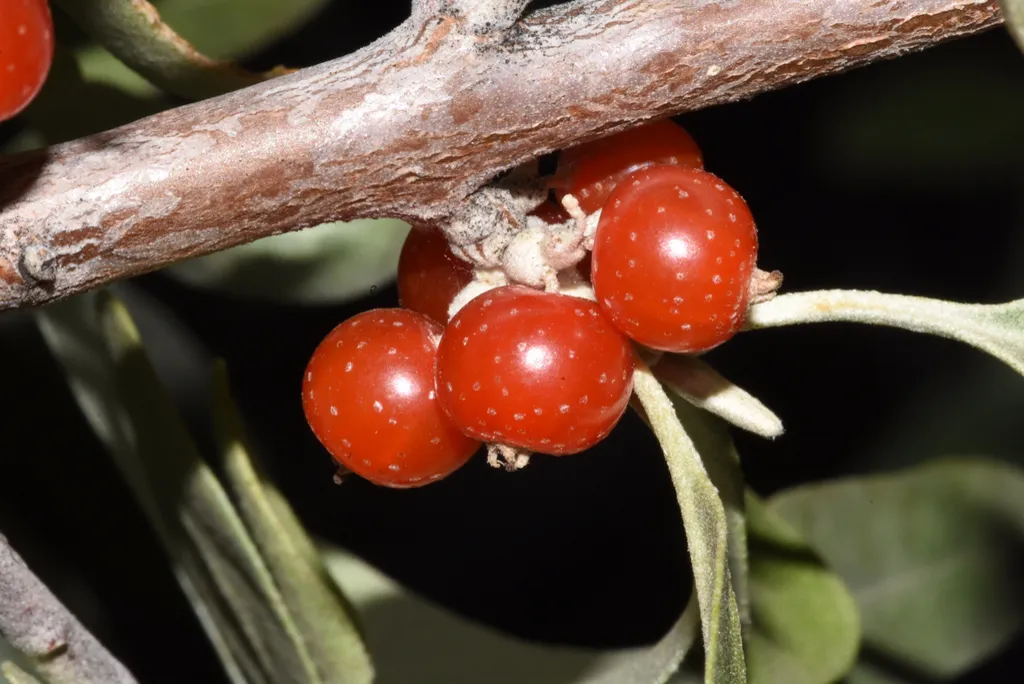
Buffalo berries ripen from July to September, depending on variety and region. They are ready when fully red, or golden on the yellow forms. Here is the grower’s secret: wait until after the first frost. Cold weather softens the raw tartness and the fruit turns noticeably sweeter.
To harvest the traditional way, spread a sheet under the shrub, then shake or beat the branches with a stick. Ripe fruits drop easily while unripe ones cling on. Wear gloves, because the thorns are sharp. A healthy, established bush of about 2 m (6-7 ft) can yield roughly 4-6 litres (1-1.5 gallons) of fruit in a good year.
Raw berries are tart and slightly bitter, so most people cook them. The fruit is high in natural pectin, which makes it excellent for jelly and syrup. A simple ratio is 1.5 cups of sugar per cup of strained juice, set with a little liquid pectin. Cooks also turn buffalo berries into sauce for game, fruit leather, muffins and even wine.
For a taste of tradition, beat fresh berries with a splash of water and a sweetener until they froth. The saponins whip up much like egg white, giving the light foam that Plains and Pacific Northwest nations have enjoyed for generations.
Health benefits and nutrition
Buffalo berry is rich in lycopene, vitamin C and phenolic antioxidants — USDA FoodData Central has no row for Shepherdia, so the figures here come from published research rather than from a reference table. It is one of the best plant sources of lycopene, the same red carotenoid found in tomatoes. A 2013 study in the Journal of Food Science measured about 0.27 g of lycopene per kilogram of fresh fruit, with an antioxidant capacity that rivals blueberries.
Its vitamin C is striking too. Researchers at the University of Saskatchewan reported ascorbic-acid levels several times higher than in oranges, which is why the berry was a valuable anti-scurvy food in pemmican.
Traditionally, the berries were dried for winter, added to pemmican and used as a gentle stomach and digestive aid. Today they mostly shine in the kitchen as a tart, cranberry-like preserve.
This article is for general information only and is not medical advice. Buffalo berries contain saponins, which some studies suggest are poorly absorbed but can cause digestive upset if eaten raw in large amounts. Cooking breaks them down. The berries are not listed by the ASPCA as toxic to dogs, but pets that gorge on them may get an upset stomach. Consult a healthcare or veterinary professional with any specific concern.
Common buffalo berry problems
No fruit — the male plant is missing
Buffalo berry is dioecious, so females set no fruit without a male nearby. This is the single most common reason for a berry-free shrub. Confirm both a sexed female and a sexed male at purchase.
To rescue an existing planting, simply add a male within 15 m of your females. That one pollinator fixes the problem.
Slow growth and sour, sparse berries
New plants grow slowly and may take three to five years to crop well, so do not panic in year one. If a mature shrub sets small, extremely sour fruit, the usual cause is drought during fruiting. A deep watering or two while the berries swell improves both size and sugar.
Poor growth in wet or clay soils
This is a prairie plant built for dry, well-drained ground. In heavy, wet clay it struggles and may not survive long-term. If you cannot fix the drainage, choose a shrub suited to damp soil instead. For example, nannyberry and highbush cranberry both tolerate moisture far better.
Confusing it with a lookalike
Silver buffalo berry is easily mistaken for Russian olive or silverberry, which share the silvery leaves. Look for the opposite leaves and the long, needle-like thorns to tell buffalo berry apart. Do not confuse it with Shepherdia canadensis either, a thornless, non-suckering relative that is even more bitter.
Related native prairie and fruiting shrub guides
- How to grow Sea Buckthorn
- How to grow Nannyberry
- How to grow Serviceberry
- How to grow Highbush Cranberry
- How to grow Saskatoon berries
- How to grow American Persimmon
- How to grow Hackberry
Frequently asked questions
Is buffaloberry edible?
Yes — the ripe berries are edible and have been an important food for Indigenous peoples of the Great Plains for thousands of years. The raw berries are tart and slightly bitter but become much more palatable when processed into jelly, syrup, or the traditional whipped dessert. They are an unusually good plant source of lycopene, at roughly 0.27 g per kilogram of fresh fruit, and they carry vitamin C as well. Do not confuse with Shepherdia canadensis (Canadian buffaloberry), which is also edible but even more tart and less commonly cultivated.
What does buffaloberry taste like?
Tart, slightly bitter, with a distinctive earthy-sweet quality quite different from other native fruits. The flavour is stronger and more complex than highbush cranberry, less gently sweet than serviceberry. The best comparison is a very tart cranberry with an unusual bitter edge. Processing into jelly or syrup with adequate sugar transforms this raw tartness into a complex, distinctive, excellent preserve. The whipped “Indian ice cream” preparation, beaten with sweetener, brings out more of the sweet flavour while showcasing the unique foaming characteristic.
Do I need both male and female buffaloberry plants?
Yes — absolutely. Shepherdia argentea is strictly dioecious. A garden with only female plants will produce no fruit at all. You need at minimum one male plant within 10-15 m of your females. One male plant is sufficient to pollinate 5-6 female plants through wind pollination. Confirm the sex of all plants at purchase — this is the single most important factor for fruit production.
Can buffaloberry grow in the UK?
Yes — buffaloberry is very cold-hardy (USDA zone 2) and the UK climate provides more than adequate winter conditions. The key requirement is a sunny, well-drained position — the UK’s mild, wet winters are fine for the plant but heavy clay or wet soils should be avoided. A south or south-west facing, open, well-drained bed in full sun is ideal. Available from specialist native plant and unusual shrub nurseries in the UK.
Is buffalo berry edible?
Yes. The bright red berries are sharply tart raw and are usually cooked into jelly, syrup or sauce, or whipped with sweetener into the traditional frothy dessert known as Indian ice cream. They are notably rich in lycopene, more so than tomatoes by most published analyses.
Does buffalo berry have thorns?
It depends on the species. Silver buffaloberry (Shepherdia argentea) carries stiff thorny spurs and makes a formidable hedge, while russet buffaloberry (Shepherdia canadensis) is thornless. Check the botanical name at the nursery, since both are sold simply as buffaloberry.
Do you need male and female buffalo berry plants?
Yes, the plants are dioecious. One male will pollinate several females, so a group planting of one male to four or five females is the practical arrangement. Plants cannot be reliably sexed until they flower, which is why nurseries often sell them in mixed groups.
Does buffalo berry improve the soil?
It does. Buffaloberry is an actinorhizal plant: its roots host Frankia bacteria that fix atmospheric nitrogen, so it thrives on thin, poor, alkaline ground and slowly enriches it. That is why it turns up in shelterbelts, mine reclamation and prairie restoration work.
When do you harvest buffalo berries?
From late summer, and many growers deliberately wait until after the first frost because cold softens the sharp astringency. The classic prairie method is to spread a sheet under the shrub and beat the branches with a stick, which is far quicker than picking thorny stems by hand.
How big does a buffalo berry shrub get?
Usually two to four metres tall and nearly as wide, with silvery foliage. It suckers from the roots and will form a thicket if left alone, so plant it where that habit is useful — as a windbreak or wildlife hedge — or remove suckers each year to keep a single clump.
Is buffalo berry drought tolerant?
Very. It is a prairie and foothill native adapted to low rainfall, cold winters and alkaline soils, and once established it needs almost no watering. Poor drainage, not drought, is what kills it.
Will buffalo berry grow in a hot climate like India?
It is not suited to hot, humid plains. The plant needs a genuine cold winter to set fruit properly and resents heavy monsoon wet around the roots, so it is realistic only in cold-desert and high-altitude regions such as Ladakh and the higher Himalaya, where its close relative sea buckthorn already thrives.
Still stuck? Ask the Plant Doctor
Describe the problem — yellow leaves, holes, no flowers — and get a clear answer in seconds. FreeAI can make mistakes. Answers are guidance, not a guarantee — check anything important against the guide it links to, and always read the label on any product before you use it.