Nannyberry
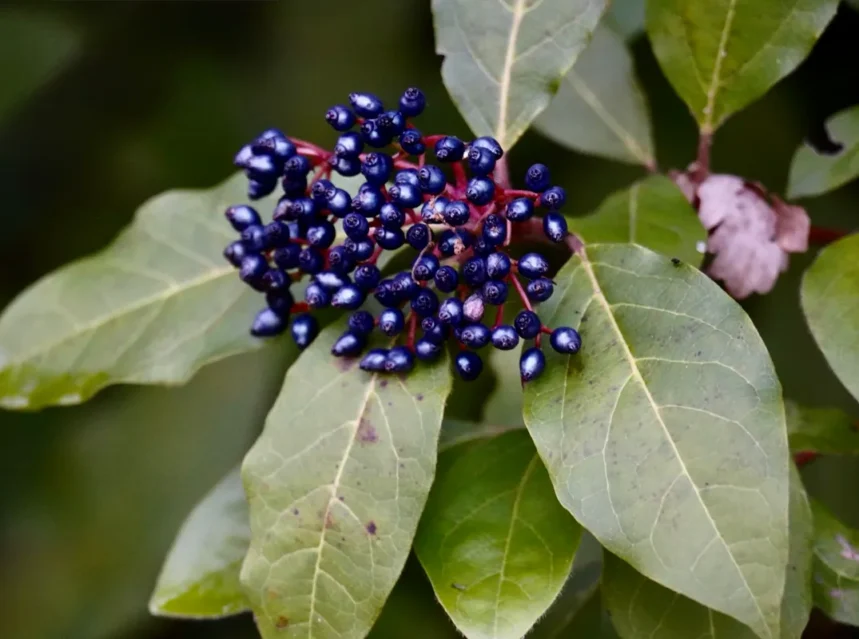
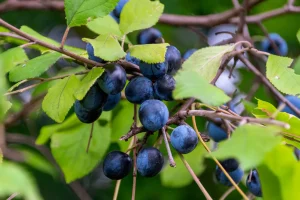
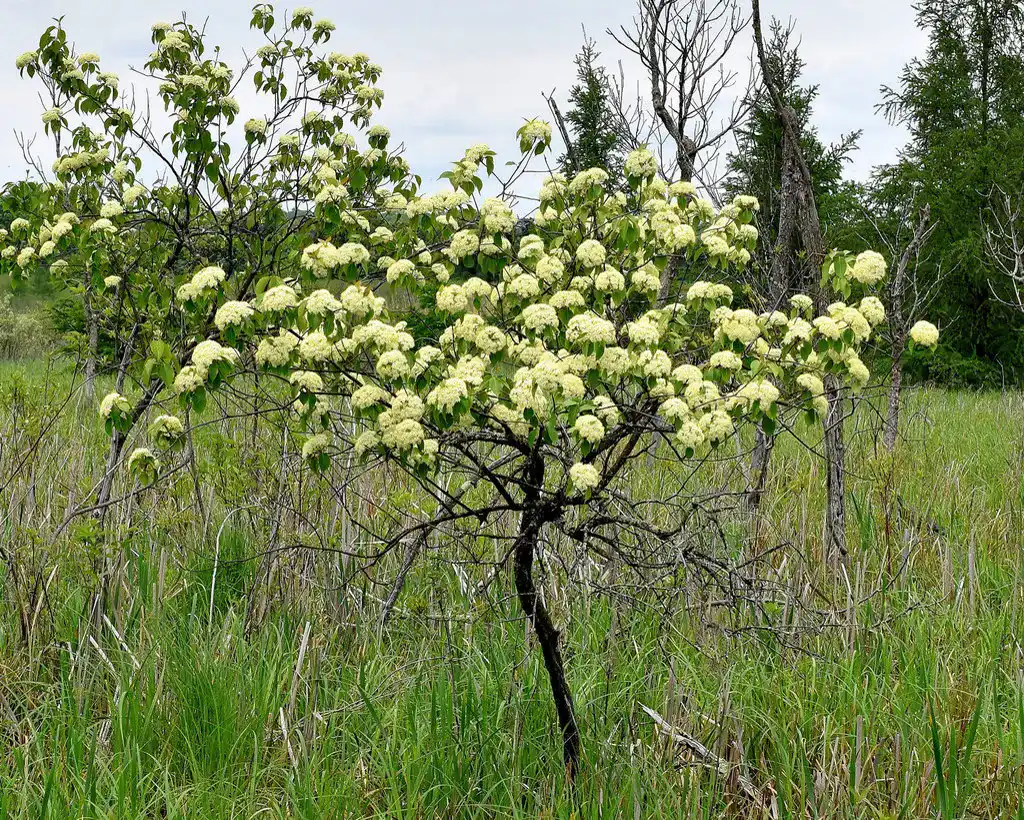
Nannyberry (Viburnum lentago), also called sheepberry, is a large, tough, deciduous native North American shrub or small tree. It carries creamy-white spring flowers, brilliant autumn colour, and clusters of small blue-black fruits in September and October. Those sweet, date-like fruits hang on the branch through winter and feed a long list of birds and mammals.
This is one of the most adaptable native shrubs of eastern North America. It grows in full sun or shade, in moist or ordinary soil, and through severe northern winters. So it succeeds where few other fruiting shrubs do. Here is the complete guide on how to grow nannyberry.
Quick start: Plant nannyberry in full sun to part shade in average to moist, well-drained soil. Very hardy (USDA zones 3-7, and to zone 2 in trials). Large shrub or small multi-stemmed tree, 4.5-5.5 m. ⚠️ NOT reliably self-fertile — plant two or more genetically different plants for fruit. Fruit ripens September-October and improves after frost. Prune straight after flowering, never in late winter, because next year’s flower buds form in summer. Best uses: informal hedge, wildlife planting, and an unusually good edible native fruit.
Nannyberry is one of the most underused native fruiting shrubs. It is less glamorous than cane fruits and less known than serviceberry or elderberry. Yet it is extraordinarily useful and reliable, and the ripe fruit is genuinely good to eat — foragers rate it among the most palatable of all the viburnums.
🧰 In a hurry? Jump straight to our tested picks for this guide ↓
Nannyberry at a glance
| Feature | Detail |
|---|---|
| Botanical name | Viburnum lentago L. |
| Family | Viburnaceae (older sources say Caprifoliaceae, many garden references say Adoxaceae — see below) |
| Common names | Nannyberry, sheepberry, sweetberry, wild raisin, nanny plum |
| Plant type | Large deciduous shrub or small tree, 4.5-5.5 m; occasionally 9 m as a trained tree |
| Spread | 2-4.5 m, wider where it suckers into a thicket |
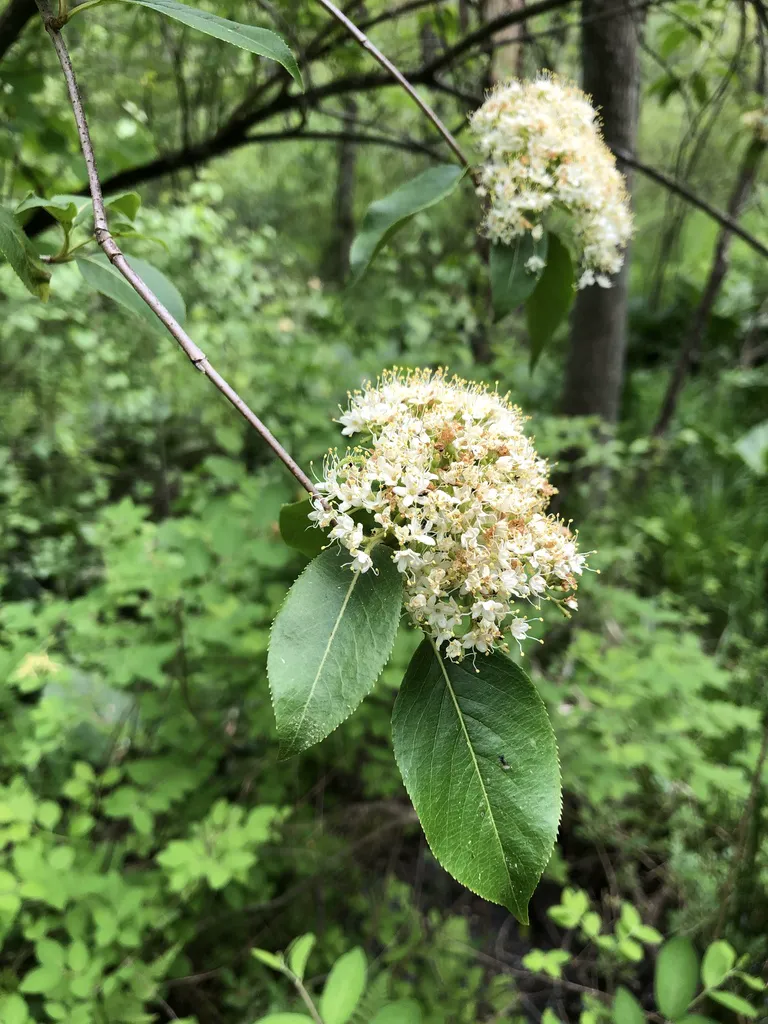
| Flowers | Creamy-white, 5-6 mm each, in flat-topped unstalked cymes 5-12 cm across; May-June |
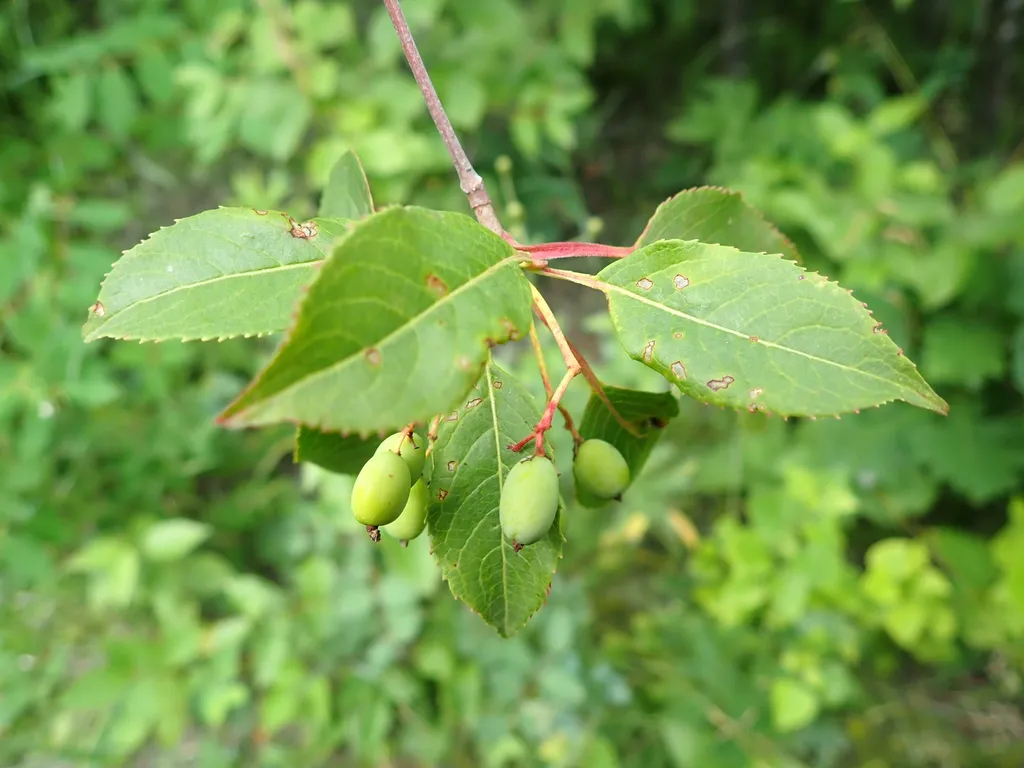
| Fruits | Blue-black drupes, 8-16 mm, one flat seed each, on red stalks; September-October |
| Sun | Full sun to part shade; full sun greatly reduces mildew |
| Soil | Average to moist, well-drained; clay, loam or sand; pH 6.0-8.0 |
| Hardiness | USDA zones 3-7 reliably; hardy to zone 2 in Maine and Minnesota trials |
| ⚠️ Pollination | Not reliably self-fertile — plant two or more genetically distinct plants |
| Main weakness | Powdery mildew in shade or still air; moderately susceptible to viburnum leaf beetle |
Why grow nannyberry?
- Fruit you can actually pick in winter. The berries hang on the branch from October well into December and often beyond. Very few temperate fruits do that. It is a genuine winter forage plant and a late-winter lifeline for birds.
- It tastes good. Not “edible in an emergency” — properly good. Foragers describe ripe nannyberry as somewhere between a prune and a banana, with hints of date. Wikipedia calls the fruit widely palatable, which is not said about most viburnums.
- Named wildlife value, not vague wildlife value. The fruit is recorded as food for ruffed grouse, northern bobwhite, ring-necked pheasant, northern flicker, gray catbird, American robin, hermit thrush, eastern bluebird, cedar waxwing, rose-breasted grosbeak and purple finch, along with deer, cottontails, beaver, chipmunks, squirrels, red fox and white-footed mice.
- It handles hard sites. Clay, compacted urban ground, part shade, wet edges and zone 3 winters. University of Maine Extension reports it hardy to zone 2 and useful in urban heat islands.
- Multi-season interest. Creamy flower heads in May, blue-black fruit on red stalks from September, and purple-red autumn colour.
History, origin and the name puzzle
Viburnum lentago is native to eastern and central North America. Its range runs from New Brunswick west to southern Ontario, Manitoba and southeastern Saskatchewan, and south to Georgia and the Appalachian uplands, with outlying populations in the Dakotas, Wyoming and Colorado (Wikipedia). It grows naturally in low woods, swamp edges, fens and stream banks.
At the southern edge of that range it becomes genuinely scarce. Missouri’s Department of Conservation lists nannyberry as a Species of Conservation Concern in that state, with a single native collection from Schuyler County. Range maps flatten that kind of detail; on the ground, the plant is common in Minnesota and rare in Missouri.
The family keeps moving. If you compare references you will find three different family names for the same plant, and nobody explains why. Nannyberry was long placed in Caprifoliaceae, the honeysuckle family. Molecular work moved it to Adoxaceae, which is what most garden databases still print. Under current nomenclature the conserved name for that family is Viburnaceae, which is what Wikipedia and NC State Extension now use. All three refer to the same group. None of them is a mistake — they are snapshots of an ongoing reclassification.
Where the common names come from. “Nannyberry” and “sheepberry” are usually linked to nanny goats and sheep, either because livestock ate the fruit or because of a faint musky smell in overripe berries. That explanation is folklore rather than documented etymology, and it is worth saying so instead of repeating it as fact.
Indigenous and settler use. Nannyberry fruit was gathered as food across its range, eaten fresh in autumn and dried for winter, and the bark and leaves appear in traditional herbal preparations. Settlers made jam, jelly and wine from the berries.
Does nannyberry grow in India? No, and it is better to say that plainly than to stretch. Nannyberry is a cold-temperate North American species that needs a real winter, and there is no record of it being cultivated or sold in India. Indian gardeners in the Himalayan foothills do have their own viburnums — V. cotinifolium, V. cylindricum and V. grandiflorum among them — and those are the sensible local equivalents. In the plains, nannyberry is not a realistic plant.
Identifying nannyberry and its look-alikes
Nannyberry sits in a confusing crowd. Several native shrubs carry similar flat white flower heads and dark fruit, and one common look-alike is genuinely unpleasant to eat. If you plan to forage, learn the separators before you pick anything.
The nannyberry signature: leaves strictly opposite, finely and evenly toothed, drawn out to a long slender tip, with a winged leaf stalk whose edges are wavy and slightly warty. The flower cluster is sessile — it sits directly on the twig with no stalk beneath it. Each fruit contains one large flat seed. Winter flower buds are long and stalked with a distinctive duck-bill tip.
| Plant | Leaf teeth | Leaf stalk | Flower cluster | Ripe fruit | Seeds |
|---|---|---|---|---|---|
| Nannyberry (V. lentago) | Fine, regular, sharp | Broadly winged, wavy and warty edges | Unstalked (sessile) | Blue-black on red stalks | 1 flat seed |
| Blackhaw (V. prunifolium) | Fine, regular | Narrow, straight edges if winged | Unstalked | Blue-black | 1 flat seed |
| Wild raisin / withe-rod (V. nudum) | Irregular, rounded or nearly absent | Not winged | Stalked (5-50 mm peduncle) | Pink then blue-black | 1 flat seed |
| Rusty blackhaw (V. rufidulum) | Fine | Rusty-hairy, as are buds and twigs | Unstalked | Blue-black | 1 flat seed |
| Arrowwood (V. dentatum) | Coarse, jagged | Not winged | Stalked | Blue-black, unpalatable | 1 seed |
| ⚠️ Common buckthorn (Rhamnus cathartica) | Fine, rounded | Not winged | Small clusters in leaf axils, not flat heads | Black | Several hard seeds |
⚠️ Buckthorn is the one that matters. It is the mistake foragers actually make, and buckthorn fruit is strongly purgative. Three checks settle it. Buckthorn leaves are sub-opposite to alternate rather than strictly opposite; the twigs often end in a small thorn; and the fruit contains several hard seeds rather than one flat one. Cut a berry open. If it is not a single flat stone, do not eat it.
Nannyberry versus blackhaw is the hardest call, and the leaf stalk decides it. Ohio State University describes nannyberry petioles as having warty, undulating margins; blackhaw’s are narrower with straight edges. Nannyberry’s leaf tip tapers to a long point, blackhaw’s ends more abruptly. The two also hybridise in cultivation as Viburnum × jackii, which is why some garden plants sit awkwardly between the two descriptions. Our general viburnum guide covers the wider genus.
Best season and when to plant
Plant nannyberry in autumn (October to November) or spring (March to April). Container-grown plants are the usual form, with bare-root stock available from native plant nurseries in late winter. It transplants well and establishes quickly.
Buy at least two, and buy seedlings rather than clones. This is the single most important purchasing decision, and the reason is explained in the next section. If a nursery sells a named cultivar propagated by cuttings, every plant of that name is genetically identical and they cannot pollinate each other.
Spacing. Allow 2.5-3.5 m between plants for individual specimens, or 2-3 m for an informal screen where you want them to knit together. Nannyberry suckers from the roots and forms a thicket over time, so either give it room or plan to remove suckers each year. Our plant spacing calculator helps you work out numbers for a run of hedging.
Where not to plant it. Avoid the edge of a road that gets winter de-icing salt. University of Maine Extension rates nannyberry as highly salt-sensitive, and that one factor will undo an otherwise perfect site.
How to plant and grow nannyberry
- Choose full sun if you can. Part shade is tolerated and the plant will still grow well, but sun and moving air are the main defence against powdery mildew, which is nannyberry’s one real flaw.
- Dig a hole twice the width of the root ball and no deeper. Nannyberry has a shallow, plate-like root system, so planting deep does it no favours.
- Backfill with the soil you dug out. It is not a fussy plant and does not need an enriched planting hole. See improving garden soil if your ground is genuinely poor.
- Water in well and mulch with 5-8 cm of leaf mould or bark, kept clear of the stems. See our mulching guide.
- Water through the first two summers. After that it is largely self-reliant in average garden soil.
- Expect flowers in three to four years and worthwhile fruit soon after.
Flowers but no berries? Read this first
This is the most common complaint about nannyberry, and most garden pages get the answer wrong by calling the plant self-fertile.
Nannyberry is reported as self-incompatible. Plant databases and native plant nurseries consistently advise planting two or more genetically distinct individuals, and growers report that a lone plant flowers heavily and sets almost nothing. A single specimen in a garden can bloom beautifully every May for a decade and never give you a berry.
There is a trap inside the trap. A hedge of identical cloned plants counts as one individual. If you bought six plants of the same named cultivar, propagated from cuttings off one mother plant, they are genetically the same plant six times over and cannot pollinate one another. Seedling-grown stock from a native plant nursery avoids this entirely, because every seedling is genetically different.
What to do if you already have a lone shrub: plant a second seedling-grown nannyberry within about 15 m. Bees do the rest — honeybees, mining bees, sweat bees, hoverflies and various beetles all work the flowers. Fruit set usually improves the following season.
Two other causes are worth ruling out. Pruning at the wrong time removes the flower buds outright, and deep shade reduces both flowering and fruiting even on a well-pollinated plant.
Sun, soil, watering and feeding
Sun. Full sun to part shade. The plant survives deeper shade but flowers less, fruits less, and mildews more. Treat light as a disease decision, not just a vigour decision.
Soil and pH. Average to moist, well-drained soil; clay, loam and sand all work, and it copes with compacted urban ground. On pH, note that NC State Extension gives a range of 6.0 to 8.0. That matters, because some care pages claim nannyberry wants acid soil at 5.5-6.5, which would put gardeners on limestone off a plant that grows there perfectly well. It is neutral to mildly alkaline tolerant. Check yours with the soil calculator and see soil pH for context.
Moisture. Naturally a plant of stream banks and swamp edges, and it is happy in a rain garden or a damp corner. Once established it is also notably drought-tolerant. Sources differ on how much standing water it will take — some report tolerance of occasional flooding, others say it dislikes seasonal inundation and compaction. The safe reading is that it enjoys moist ground and dislikes water sitting on it for weeks. See how often to water plants.
Feeding. Very little needed. An annual mulch of compost in spring is enough in most garden soils. Heavy feeding produces soft growth that mildews more readily.
Pruning nannyberry
Prune immediately after flowering finishes, in early summer. This is the correction that matters most, and several popular care pages get it backwards by recommending late winter or early spring.
The reason is simple. Nannyberry blooms on old wood, and Missouri Botanical Garden notes that the flower buds for next year form during summer. Prune in February and you cut off a whole season of flowers, and therefore a whole season of fruit. Prune within a few weeks of the petals dropping and you lose nothing.
What to actually do:
- Most years, nothing. The natural multi-stemmed form is both the most attractive and the most useful to wildlife.
- Remove dead, damaged or crossing stems whenever you see them — that is not flower-bud-sensitive.
- Renew an ageing shrub by taking out the oldest one or two stems at ground level every three or four years, straight after flowering.
- Manage suckers once a year if you want a tidy specimen. Cut or pull them at the base.
- Hard renewal works. An overgrown old plant can be cut back severely and will regrow. Expect to lose two seasons of fruit.
On training it as a single-stemmed tree: you can, and nurseries sell it that way, but be realistic. It suckers persistently, and keeping a clean single trunk means removing shoots every year for the life of the plant. Many trained specimens revert to a multi-stemmed shrub eventually.
Propagation: seed, cuttings and suckers
Suckers are the easy route. Lift a rooted sucker in late autumn or early spring with a spade, keeping as much root as you can, and replant it. Remember that a sucker is a clone of the parent and will not pollinate it.
Cuttings. Softwood cuttings in early summer root well. Half-ripe wood with a heel, 5-8 cm long, works in July and August. Layering a low branch takes around fifteen months. Again, cuttings are clones.
Seed is the method that produces genetically distinct plants — and the one that defeats most gardeners. Nannyberry seed has what botanists call deep simple epicotyl morphophysiological dormancy. In plain terms, the seed needs a warm period first and a cold period second, in that order, and most gardening advice has the order backwards.
- Clean the pulp off fresh seed in autumn.
- Warm, moist stratification for about two to six months at room temperature. The root emerges during this phase, but nothing appears above ground.
- Cold, moist stratification for about three months at fridge temperature. This releases the shoot.
- Sow and grow on. Total time from seed to a visible seedling is commonly 18 months, and sometimes longer.
Sown outdoors in autumn, seed produces a root the following summer, sits through a second winter, and sends up a shoot the second spring. So if your nannyberry seeds look dead after one season, they very probably are not. Leave the pot alone for another year. For general technique, see how to take plant cuttings.
Pests and diseases
Powdery mildew — the defining flaw
Nannyberry mildews. Ohio State reports it appearing in late August or early September where air circulation is poor, and University of Maine notes the plant is mildew-sensitive when grown in too much shade. On a badly affected plant the late-summer foliage looks grey and the autumn colour is disappointing.
The good news is that it is largely cosmetic. Penn State Extension states that for viburnum powdery mildew, damage is usually minimal and no control is recommended unless the infection is severe. So the answer is siting, not spraying: full sun, space around the plant, and air movement. Clear fallen leaves in autumn. See our guide to powdery mildew.
The honest trade-off. Ohio State’s comparison is worth repeating: nannyberry leaves become significantly infected and give average-to-poor autumn colour, while blackhaw is less susceptible and colours far better. If flawless late-summer foliage matters more to you than fruit, blackhaw is the better species. If you want the fruit, plant nannyberry in the sun and accept some mildew.
Viburnum leaf beetle
An introduced pest (Pyrrhalta viburni) that can defoliate viburnums, first recorded in North America in Ontario in 1947 and established in New York by 1996. Nannyberry is rated moderately susceptible — it takes damage but is usually not destroyed, unlike arrowwood and the cranberrybush viburnums, which are top of the beetle’s menu.
The susceptibility ladder, as published by the Morton Arboretum:
- Highly susceptible: arrowwood, European and American cranberrybush, wayfaringtree, Sargent viburnum.
- Moderately susceptible: nannyberry, blackhaw, Burkwood viburnum.
- Resistant: Koreanspice, Judd and doublefile viburnums.
Timing is everything with this pest, so treat it as a calendar rather than a warning:
| Month | Beetle stage | What to do |
|---|---|---|
| October-April | Eggs overwintering in twig tips | The best control. Prune out and bin infested twig tips — the egg pits are visible as a neat row of caps. |
| Mid-May | Larvae hatch and feed on leaf undersides | Second-best window. Squash or knock larvae off; they are the vulnerable stage. |
| Early-mid June | Larvae drop to pupate in the soil | Little to do. |
| Early July to frost | Adults feed and lay eggs | Adults are hard to control; note which twigs get egg-laid for winter pruning. |
Three seasons of heavy feeding can kill a viburnum, so do not ignore it entirely. Lady beetles, lacewings and the spined soldier bug all prey on the larvae, which is another reason not to blanket-spray. See viburnum beetle and organic pest control. If you are unsure what is damaging your shrub, our Plant Doctor tool works through the symptoms.
Other problems
- Bacterial leaf spot — prune 5-8 cm beyond visible symptoms and disinfect tools between cuts.
- Botryosphaeria canker — a drought-stress disease. Water in dry spells and remove affected branches.
- Downy mildew (Plasmopara viburni) — clear fallen leaves and avoid overhead watering.
- Viburnum crown borer, snowball aphid and treehoppers turn up occasionally and rarely need action.
- Deer. NC State rates nannyberry only mildly resistant to deer damage, and retail descriptions that call it deer-proof are overselling. Deer and beaver both browse the twigs and bark. Protect young plants where deer pressure is heavy.
Wildlife value: what actually eats it
Most pages write “birds love the berries” and stop. Here is the specific picture.
Birds that eat the fruit: ruffed grouse, northern bobwhite, ring-necked pheasant, northern flicker, gray catbird, American robin, hermit thrush, eastern bluebird, cedar waxwing, rose-breasted grosbeak and purple finch. Brown thrashers are also recorded. Because the fruit persists into winter, it feeds resident birds long after softer autumn berries are gone.
Birds that nest in it: white-eyed vireo, indigo bunting, prairie warbler and catbird all use the dense, twiggy structure.
Mammals: white-tailed deer, eastern cottontail, American beaver, eastern chipmunk, fox and gray squirrels, red fox and white-footed mice.
Pollinators: the flat flower heads are easy landing platforms, and they attract honeybees, mining bees, sweat bees, hoverflies, dance flies, muscid flies and a range of beetles. See how to attract pollinators.
Caterpillars. Nannyberry is a confirmed larval host for the spring azure butterfly, and for the brown scoopwing, unsated sallow and horrid zale moths. One caution about a figure that circulates widely: the frequently quoted “over 100 species of Lepidoptera” is a genus-level count for all viburnums, not a species-level count for V. lentago. It is not wrong, but it is not about this plant specifically.
Harvesting and using the fruit
Nannyberry fruit ripens through September and October, passing from green through yellow and pink-red to blue-black. A single cluster often shows several colours at once, which looks wonderful and makes picking slower.
Do not pick in early October. This is the most common foraging disappointment. Early fruit is dry, bland and thick-skinned. The flavour deepens through November, and it improves markedly after the first frosts. Wait for berries that are fully blue-black and slightly wrinkled, with flesh that gives easily.
What it tastes like: sweet and rich, closest to a prune or a date, with a banana-like note and mild tartness. The texture is dry rather than juicy, and the skin is noticeable.
Processing, because of the seed. Every berry contains one large, flat, hard seed, and the flesh-to-seed ratio is poor. Nobody eats nannyberries by the handful for long. The standard method is:
- Simmer the berries with a little water for 20-30 minutes until soft.
- Blend briefly, or mash thoroughly.
- Pass through a food mill to separate the seeds and skins from the pulp.
- Expect roughly 10 cups of berries to yield 3-5 cups of purée.
The purée is used as a spread, dried into fruit leather, cooked down with maple syrup into a rich “nannyberry butter”, or substituted for banana or apple sauce in quick breads. It also makes good jelly, thanks to reasonable natural pectin.
Winter picking. Because the fruit hangs on into December and beyond, nannyberry is one of very few temperate fruits you can genuinely gather in the snow — after the migrating birds have moved through and taken their share.
Health benefits and traditional uses
Nannyberry fruit is a dark-skinned berry and, in line with other fruits of that type, is generally described as supplying vitamin C, anthocyanins and dietary fibre. That is an honest generalisation rather than a measurement. There is no published nutritional analysis for Viburnum lentago, so nobody — including us — can give you a per-100 g figure for it, and any site that does is guessing.
The sugar content rises after frost, which is why late-picked fruit tastes so much better and why it was valued as a winter food.
Traditional medicinal use. Nannyberry bark and leaves appear in traditional herbal records, where bark preparations were traditionally used for muscle cramping and root and leaf preparations for various complaints. The related blackhaw (V. prunifolium) has a much better-documented history in the same role. None of this is evidence of effectiveness, and none of it is a reason to self-treat.
This article is for general information only and is not medical advice. Consult a healthcare professional for dietary or medicinal guidance.
Common nannyberry problems
The shrub flowers every year but never sets fruit
Almost always a pollination problem. Nannyberry is reported as self-incompatible, so a single plant — or a hedge of identical clones from one cultivar — will bloom without fruiting. Add a seedling-grown nannyberry from a different source within about 15 m. If you pruned in late winter, that is a second possible cause: the flower buds were removed before they could open.
Grey, dusty leaves in late summer
Powdery mildew, and it is nannyberry’s signature complaint. It appears in late August or early September, worst in shade and still air. It is cosmetic in most cases and Penn State advises no control unless severe. Improve airflow, clear fallen leaves, and avoid overhead watering late in the day. If the plant is in deep shade, moving it is a better long-term fix than any spray.
Leaves skeletonised in May, then chewed again in July
Viburnum leaf beetle. Two feeding periods a year is the giveaway — larvae in spring, adults in summer. The most effective response happens in winter: prune out the twig tips carrying rows of egg caps between October and April, before the larvae ever hatch.
Suckers coming up through the border
Nannyberry spreads by root suckers and will colonise adjoining beds. For a tidy specimen, cut or pull suckers once a year. For a wildlife thicket, let it spread inside a defined area — the multi-stemmed thicket form is the most valuable version of the plant for nesting birds.
Birds strip the fruit before you get any
In a wildlife garden that is the intended outcome. If you also want a harvest, net one or two branches as the berries darken, or simply rely on the fact that a good deal of fruit persists into winter after the migration passes through.
Seeds sown last autumn have not germinated
Expected. Nannyberry has double dormancy and needs warm conditions to release the root, then cold to release the shoot. Seedlings commonly appear in the second spring, around 18 months after sowing. Keep the pot moist, weeded and outdoors, and be patient.
Related native and wildlife fruit guides
- Growing Viburnum
- How to grow Serviceberry
- How to grow Highbush Cranberry
- How to grow Cornelian Cherry
- How to grow Buffaloberry
- How to grow Hackberry
Related plant guides
- How to grow Salmonberry
- How to grow Chokeberry
- How to Grow Damson
- How to Grow Cloudberry
- How to Grow Cherimoya
- Finger Lime
Frequently asked questions
Is nannyberry edible?
Yes — fully ripe nannyberry fruits are edible and were an important food for Indigenous peoples of eastern North America. The ripe blue-black fruits are sweet and pleasantly date-like in flavour, particularly after frost, and Wikipedia describes the fruit as widely palatable, which is unusual praise for a viburnum. They can be eaten fresh, dried, or processed into jam, jelly and fruit butter. Unripe fruits are astringent and disappointing. Each berry holds one large flat seed that is not eaten.
Why is it called nannyberry?
The origin of “nannyberry” is not definitively established. “Nanny” may refer to the female goat (nanny goat), either describing the somewhat musky scent of overripe fruit, or perhaps because goats ate the berries. “Sheepberry” — another common name — suggests a similar connection to livestock, possibly reflecting the plant’s common occurrence in pastured areas or its use as livestock browse. Both explanations are folklore rather than documented etymology, so treat them as stories rather than facts.
Does nannyberry grow in shade?
Yes — it is one of the more shade-tolerant fruiting shrubs for North American gardens, and grows naturally in forest understory conditions. But shade has a real cost. In deeper shade the plant flowers less, fruits less, and is markedly more prone to powdery mildew, because still air and low light favour the fungus. For a healthy plant with a good crop, full sun with air moving around it is the best position, and morning sun with light afternoon shade is a workable second choice.
Is nannyberry self-fertile, or do I need two plants?
Plant two or more. Nannyberry is reported as self-incompatible: plant databases and native plant nurseries consistently advise multiple genetically distinct individuals, and growers find that a lone shrub flowers heavily and fruits poorly or not at all. There is an important catch — a group of plants propagated from cuttings off one mother plant are genetically identical and count as a single individual for pollination. Buy seedling-grown stock from a native plant nursery, plant at least two, and keep them within about 15 m of each other.
When should I prune nannyberry?
Prune immediately after flowering finishes, in early summer. Nannyberry blooms on old wood and sets next year’s flower buds during summer, so pruning in late winter or early spring removes the flowers and the fruit crop with them. Several popular care pages give exactly that wrong advice. Take out dead, damaged or crossing stems at any time, thin the oldest stems at the base every three or four years just after bloom, and remove root suckers once a year if you want a tidy shape rather than a thicket.
What USDA zone is nannyberry hardy to?
Sources give different answers, so here is the range. Missouri Botanical Garden lists zones 2-8, NC State Extension gives 3a-7b, and University of Maine Extension reports it hardy to zone 2. The practical reading is that nannyberry is reliable in zones 3 to 7, has documented survival in zone 2 in Maine and Minnesota, and struggles with sustained heat above zone 8. Anyone gardening in zone 2 or 3 has few better native fruiting shrubs available.
What soil pH does nannyberry need — acid or alkaline?
Neither, in the strict sense. NC State Extension gives a soil pH range of 6.0 to 8.0, which means nannyberry grows happily in neutral and mildly alkaline soil as well as slightly acid ground. Some care pages claim it needs acid soil at 5.5-6.5, which would wrongly rule it out for gardeners on chalk or limestone. It is genuinely adaptable, and pH is one of the last things to worry about with this plant. Drainage and light matter far more.
Is nannyberry the same as blackhaw?
No — nannyberry (Viburnum lentago) and blackhaw (Viburnum prunifolium) are two different species, both native to eastern North America with edible blue-black berries. Blackhaw is more southern, tolerates drier soils, stays smaller, resists mildew better and gives much better autumn colour. Nannyberry is more northerly, tolerates wetter soil and severe cold, and grows larger. The clearest field difference is the leaf stalk: nannyberry’s is broadly winged with wavy, warty edges, while blackhaw’s is narrow with straight edges. Confusingly, “black haw” is also listed as a synonym for nannyberry in some databases, which is a common source of mix-ups.
How do I tell nannyberry apart from buckthorn?
This is the identification that matters, because common buckthorn (Rhamnus cathartica) fruit is strongly purgative and the two are genuinely confused. Three checks settle it. Nannyberry leaves are strictly opposite on the twig; buckthorn’s are sub-opposite to alternate. Nannyberry has a winged leaf stalk with wavy edges; buckthorn does not, and its twigs often end in a small thorn. Most decisively, cut a berry open — nannyberry contains a single large flat seed, while buckthorn contains several hard seeds. If it is not one flat stone, do not eat it.
Can you eat nannyberries raw, and are the seeds safe?
Yes — fully ripe nannyberries are eaten raw straight from the shrub, and their sweet, date-like flesh is the best part. Each berry contains a single large, flat seed that is not eaten; most people either spit it out or eat around the thin layer of flesh. The seed is best discarded rather than chewed. Because the ratio of seed to flesh is high, many people prefer to cook the berries and strain out the seeds to make jam, jelly, sauce or fruit leather rather than eating them one by one.
What do nannyberries taste like, and when should you pick them?
Ripe nannyberries taste sweet and rich, much like a date or a prune, with a hint of tartness and a banana-like note — quite different from the sharp berries most people expect. The flavour improves markedly after the first autumn frosts, which soften the fruit and deepen its sweetness, so the best picking window is November rather than early October. Under-ripe green or red fruit is astringent and disappointing, and even fully coloured fruit picked too early tastes thin. Wait for berries that are fully blue-black and slightly wrinkled, with flesh that gives easily.
How do you process nannyberries, and how much purée do you get?
Because each berry holds one large flat seed and the skin is thick, nannyberries are almost always processed rather than eaten by the handful. Simmer the fruit with a little water for 20 to 30 minutes until soft, mash or briefly blend it, then pass it through a food mill to separate seeds and skins from the pulp. As a rough guide, about 10 cups of berries yields 3 to 5 cups of purée. Use the purée as a spread, dry it into fruit leather, cook it down with maple syrup into a rich fruit butter, or substitute it for banana or apple sauce in quick breads.
How tall and wide does nannyberry grow?
Nannyberry (Viburnum lentago) is a large shrub or small tree, typically reaching about 15 to 18 feet (4.5 to 5.5 m) tall and spreading 6 to 12 feet (2 to 3.5 m) wide, and it can be trained to around 30 feet as a single-stemmed tree. It is the largest of the eastern native viburnums. It naturally forms a multi-stemmed, arching shape and suckers to make thickets if left unpruned. Because of its size, give it room — it suits the back of a border, a hedgerow, a woodland edge or a native wildlife planting rather than a small tight corner.
Can I grow nannyberry as a single-trunk tree?
You can, and nurseries sell trained specimens, but be realistic about the commitment. Nannyberry suckers persistently from the roots, so keeping a clean single trunk means cutting shoots away every year for the life of the plant. Growers in Minnesota report that trained tree forms usually do not hold long-term and drift back to a multi-stemmed shrub. If you want a tidy small tree with no maintenance, choose a different species. If you accept an annual sucker removal round, a trained nannyberry is handsome and long-lived.
How do you grow nannyberry from seed?
Nannyberry seed has double dormancy, and the order of treatments is what trips people up. The seed needs a warm, moist period first, which releases the root, and a cold, moist period second, which releases the shoot. In practice: clean fresh seed in autumn, give it around two to six months warm and moist, then about three months cold and moist, then sow. Total time to a visible seedling is commonly 18 months and sometimes longer. Seed sown outdoors in autumn typically roots in its first summer and only emerges in the second spring — so seeds that look dead after one year usually are not.
Is nannyberry deer resistant?
Only mildly. NC State Extension rates nannyberry as mildly resistant to deer damage, which is a long way from the “deer resistant” label some nursery listings apply to it. Deer browse the twigs, bark and foliage, and beaver take it too. In areas with heavy deer pressure, young plants need a guard or a fence for their first few years, after which the growing point moves out of easy reach. Established plants usually survive browsing without much lasting harm, but a newly planted whip can be destroyed in one winter.
Does nannyberry always get powdery mildew?
It is prone to it, but the outcome depends heavily on where you plant it. Powdery mildew typically appears on nannyberry in late August or early September, and it is worst in shade and still air. Penn State Extension advises that viburnum powdery mildew damage is usually minimal and no control is recommended unless the infection is severe, so this is a siting problem rather than a spraying problem. Full sun, generous spacing and air movement make a large difference. If pristine late-summer foliage matters more to you than fruit, blackhaw is the less mildew-prone alternative.
Do deer and birds eat nannyberry?
Yes — nannyberry is a valuable wildlife plant. Its fruit is eaten by many birds, including ruffed grouse, northern bobwhite, cedar waxwings, American robins, hermit thrushes, eastern bluebirds, gray catbirds and purple finches, and by mammals such as squirrels, chipmunks, foxes, beaver and mice. The fruit often persists into winter, feeding wildlife when other food is scarce. Deer browse the foliage and twigs, so young plants may need protection. The flowers also support honeybees, mining bees, sweat bees and hoverflies.
How do you tell nannyberry apart from serviceberry and wild raisin?
Serviceberry (Amelanchier) is a different genus entirely — it fruits in early summer with small, round, apple-like berries and has alternate leaves, whereas nannyberry has opposite leaves and fruits in autumn with oval blue-black drupes each holding one flat seed. Wild raisin (Viburnum nudum, including var. cassinoides) is a close cousin with similar fruit, but its leaf teeth are irregular and rounded or almost absent, and its flower cluster sits on a distinct stalk 5 to 50 mm long. Nannyberry has fine, regular, sharp teeth and an unstalked flower cluster sitting directly on the twig, plus that wavy winged leaf stalk.
Is nannyberry toxic to dogs or other pets?
No authoritative toxicity listing for Viburnum lentago and pets could be found either way, so the honest answer is that it is not established as toxic and is not established as safe. Its ripe fruit is edible for people and eaten readily by wildlife, which is reassuring but not proof. The large hard seeds could pose a choking or blockage risk if a pet ate a lot of fruit, and unripe fruit or foliage may cause mild stomach upset as with many shrubs. Discourage pets from grazing garden shrubs, and contact your vet if your dog or cat shows signs of illness after eating plant material. This is general guidance, not veterinary advice.
Sources and further reading
- NC State Extension — Viburnum lentago
- University of Maine Extension Bulletin 2583 — Nannyberry
- Ohio State University PlantFacts — Viburnum lentago
- Penn State Extension — Viburnum Diseases
- The Morton Arboretum — Viburnum Leaf Beetle
Still stuck? Ask the Plant Doctor
Describe the problem — yellow leaves, holes, no flowers — and get a clear answer in seconds. FreeAI can make mistakes. Answers are guidance, not a guarantee — check anything important against the guide it links to, and always read the label on any product before you use it.