How to Grow Aronia
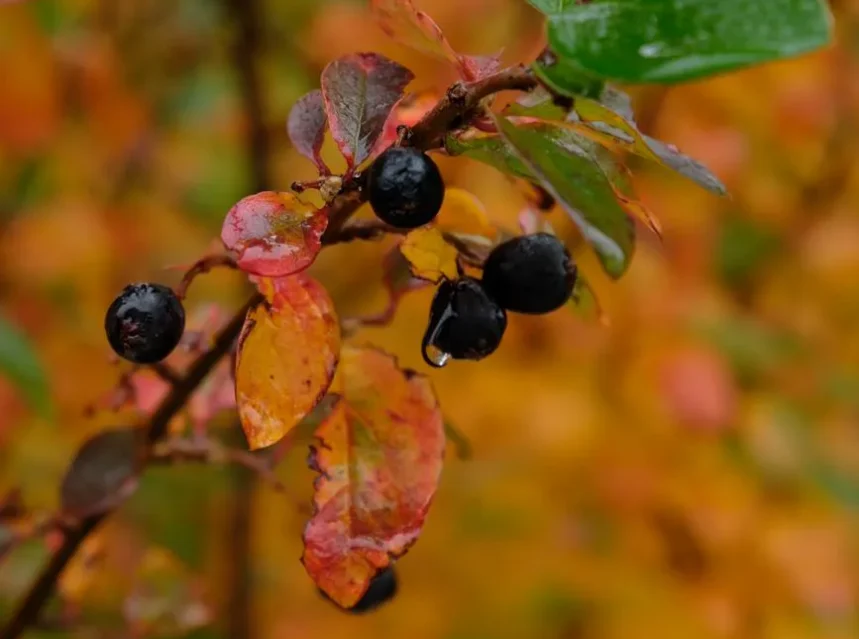
Aronia, or chokeberry (Aronia melanocarpa), is a tough, hardy North American shrub grown for its white spring flowers, glossy dark berries, and brilliant red autumn foliage — a triple-season plant whose antioxidant-rich black berries have made it one of the most talked-about “superfruits”. Easy, adaptable, and self-fertile, it crops in almost any soil, wet or dry. Here is the complete guide on how to grow aronia.
Quick start: Grow aronia in full sun to part shade in almost any soil (USDA zones 3–8). Plant in autumn or spring and water until established. It is self-fertile, so one shrub fruits well. The very astringent berries ripen in late summer and are best cooked, juiced, or made into wine. Aronia is fully hardy, almost pest-free, and superb for autumn colour and wildlife. The name “chokeberry” describes that astringency, not toxicity — the fruit is entirely safe to eat.
Experienced growers and fruit specialists rate aronia as nearly indestructible. The main caution is flavour: the raw berries are intensely astringent and mouth-drying, which is why it is called chokeberry, so growers cook, juice, or sweeten them rather than eating them fresh. The other surprise is its toughness, coping with wet, dry, poor, acid, or alkaline soil while shrugging off pests. Its rise from overlooked native shrub to a major European crop, led by Polish growers, is one of the more remarkable recent stories in horticulture, driven by an anthocyanin content higher than blueberry, elderberry, or blackcurrant by weight.
🧰 In a hurry? Jump straight to our tested picks for this guide ↓
Aronia at a glance
| Feature | Detail |
|---|---|
| Botanical name | Aronia melanocarpa (black), A. arbutifolia (red) (family Rosaceae) |
| Common names | Aronia, black chokeberry, red chokeberry |
| Plant type | Hardy deciduous shrub, about 1–3 m |
| Sun | Full sun to partial shade (very adaptable) |
| Soil | Almost anything — wet, dry, poor, alkaline (pH 3.5–8.5) |
| Hardiness | USDA zones 3–8 (to about −40°C); extremely cold-hardy |
| Fruit type | A pome (apple family) — soft pips, no stone |
| Harvest | Late summer to early autumn (August–September) |
| Pollination | Self-fertile — one plant crops well |
| Yield | 3–8 kg per mature bush |
| Best for | Superfruit, autumn colour, wildlife, difficult wet spots |
| Watch out | Berries very astringent raw; best cooked or juiced |
Chokeberry or aronia? Sorting out the names
Aronia and chokeberry are the same plant. “Chokeberry” is the old common name; “aronia” is the botanical genus, and it is now the name most growers and juice brands print on the label because it sells better. Black chokeberry is Aronia melanocarpa. Red chokeberry is A. arbutifolia, which carries scarlet fruit with somewhat less anthocyanin.
The “choke” refers to astringency, not danger. Tannins in the raw berry dry the mouth in the same way an unripe grape does. Nothing about the fruit is toxic.
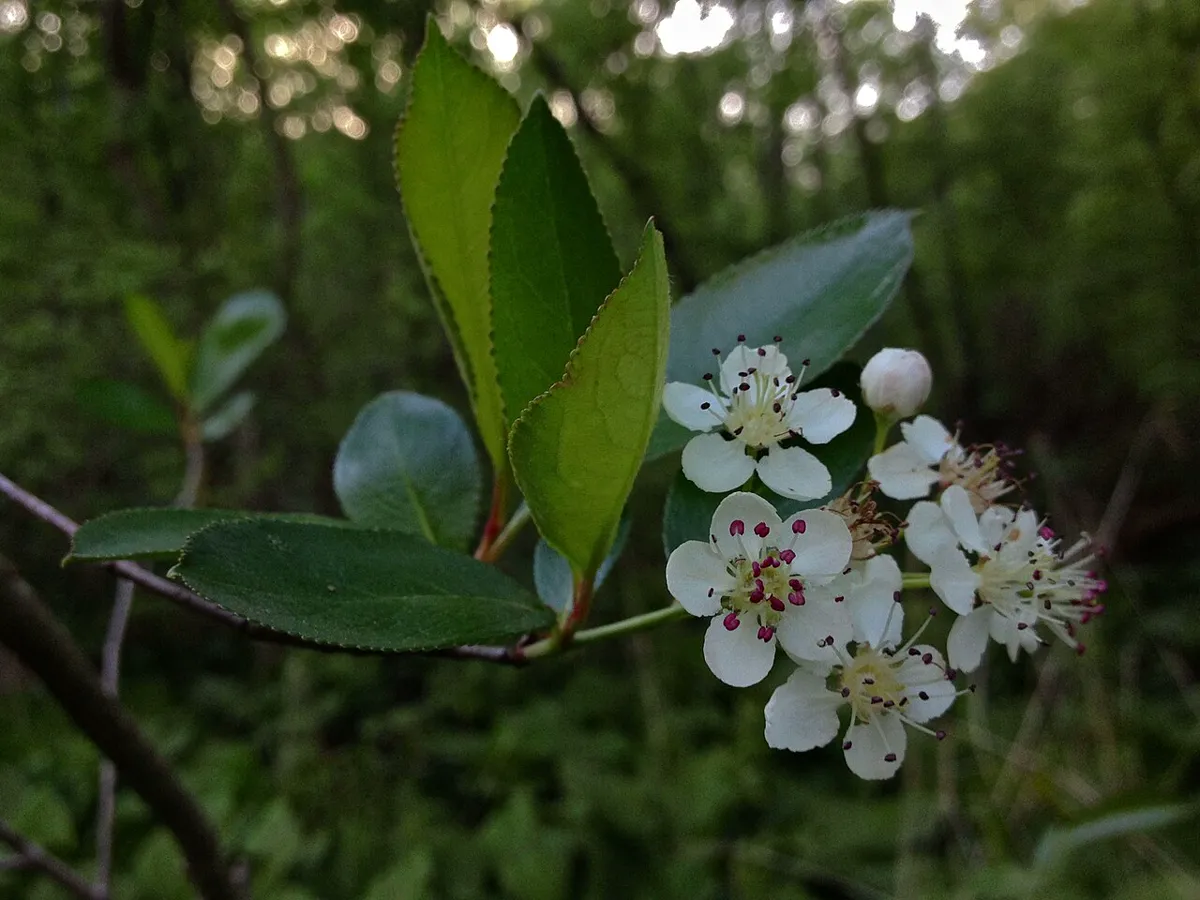
One more name trap catches new growers. Chokeberry is not chokecherry. Chokecherry is Prunus virginiana, a cherry relative with stone fruit; chokeberry sits in the rose family alongside apples and produces a pome. If you slice a berry and find soft pips rather than a hard stone, you have aronia. The flower confirms it too — five white petals with pink-red anthers, an apple blossom in miniature.
Why grow aronia?
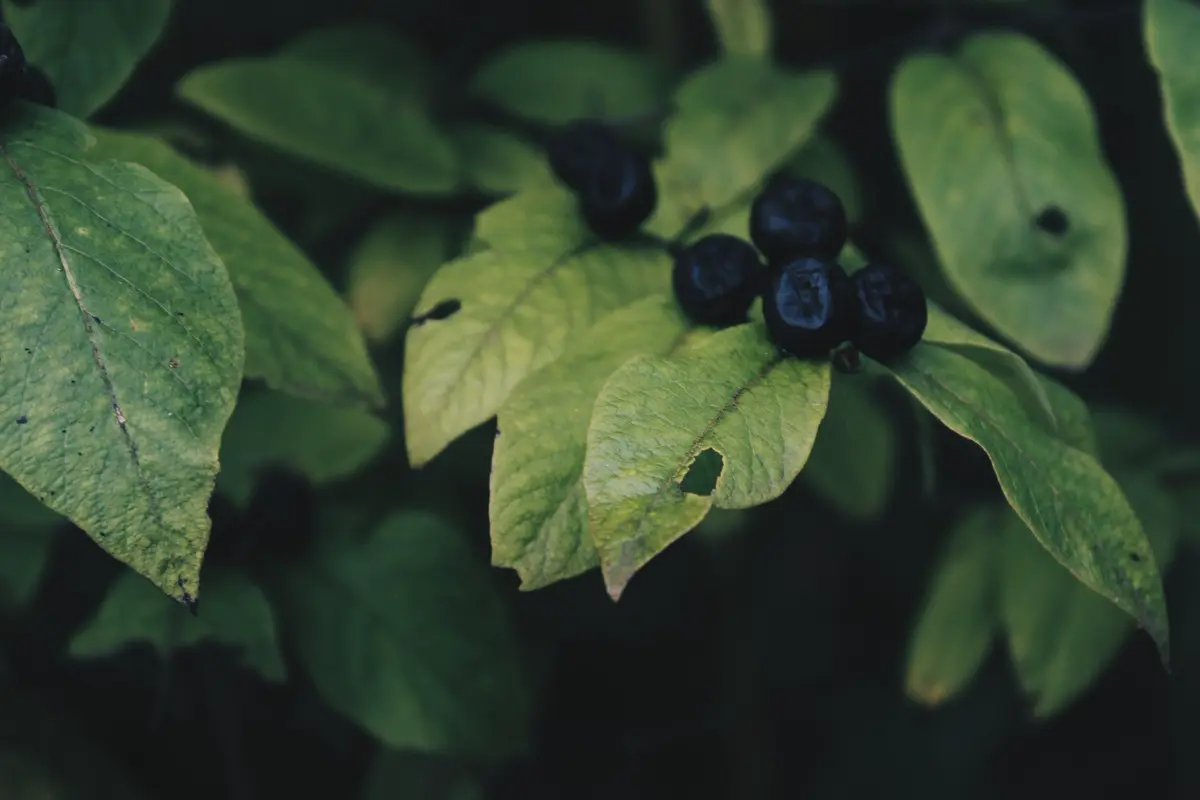
Aronia is a brilliant, fuss-free shrub that works hard all year. Spring brings clusters of white flowers, summer the glossy dark berries, and autumn a blaze of crimson and scarlet leaves, so it always earns its space. Even in winter, the bare branching has a quiet structure. For another underrated North American native that pulls its weight, see our pawpaw guide.
Beyond the year-round looks, a few things make it stand out:
- Extraordinary antioxidant nutrition. Aronia is routinely ranked above blueberry, elderberry, blackcurrant and goji for anthocyanins and ORAC, and the near-black skin makes that plausible — but the comparison is repeated far more often than it is sourced, and USDA has no reference row for the species to settle it.
- Tolerates virtually any condition. Wet, waterlogged, dry, alkaline, acidic, poor, clay, and sandy soils all suit it — genuinely one of the most adaptable fruiting shrubs you can grow.
- Essentially pest and disease free and fully self-fertile, so one plant produces a full crop with almost no intervention.
- A genuinely heavy cropper. Growers are usually surprised by the sheer weight of fruit, with long pendulous bunches hanging from almost every stem in a good year.
- Early bee forage. The white spring flowers are worked hard by bees and hoverflies, so the shrub earns its space even in a season when you never pick a berry.
History, origin & traditions
Aronia is native to eastern North America, growing naturally from Nova Scotia and Ontario south to Georgia and west to the Great Plains, in moist, peaty soils, forest edges, and swampy ground (see Encyclopaedia Britannica). Indigenous peoples used it extensively — the Potawatomi used the berries as food and a cold remedy, and dried berries were an important component of pemmican, the long-lasting mix of dried meat, fat, and berries relied on by many First Nations peoples and later by European explorers.
Soviet botanists introduced aronia to Russia in the late 19th century, from where it spread across Eastern Europe. Poland became the world’s dominant producer from the late 20th century, and Polish aronia — mostly pressed for juice, wine, and natural food colouring — is generally reckoned to account for most of the global crop, with significant plantings in Bulgaria, Germany, and Scandinavia. Exact numbers are impossible to pin down, though: the FAO’s world crop statistics give raspberries, currants and gooseberries their own lines but have no aronia line at all, so no official tonnage exists for the berry anywhere.
Popular aronia varieties
- Aronia melanocarpa “Nero” (AGM): The most widely grown commercial and garden variety. Large berries, very productive, compact shrub to about 1.5 m — the standard choice for fruit.
- Aronia melanocarpa “Viking”: Large, uniform berries and heavy yields; used extensively in commercial Polish production. Slightly larger and more upright than “Nero”.
- Aronia × prunifolia “Autumn Magic” (AGM): A hybrid with outstanding brilliant-red autumn foliage and good berry production. Particularly ornamental.
- Aronia melanocarpa “Hugin”: A compact Scandinavian selection bred for garden-scale growing — neat habit, heavy fruiting, fierce autumn colour. A good pick where space is tight.
- Aronia arbutifolia “Brilliant” (AGM): Red chokeberry with scarlet berries that persist into winter and exceptional autumn foliage. Lower in anthocyanin than the black species and grown mainly for looks.
Breeders have chased larger, milder fruit for decades, and “Viking”, “Nero”, and “Hugin” are the results most often sold. None of them is sweet — expect a bigger, slightly less punishing berry, not a dessert fruit.
Best season & when to plant
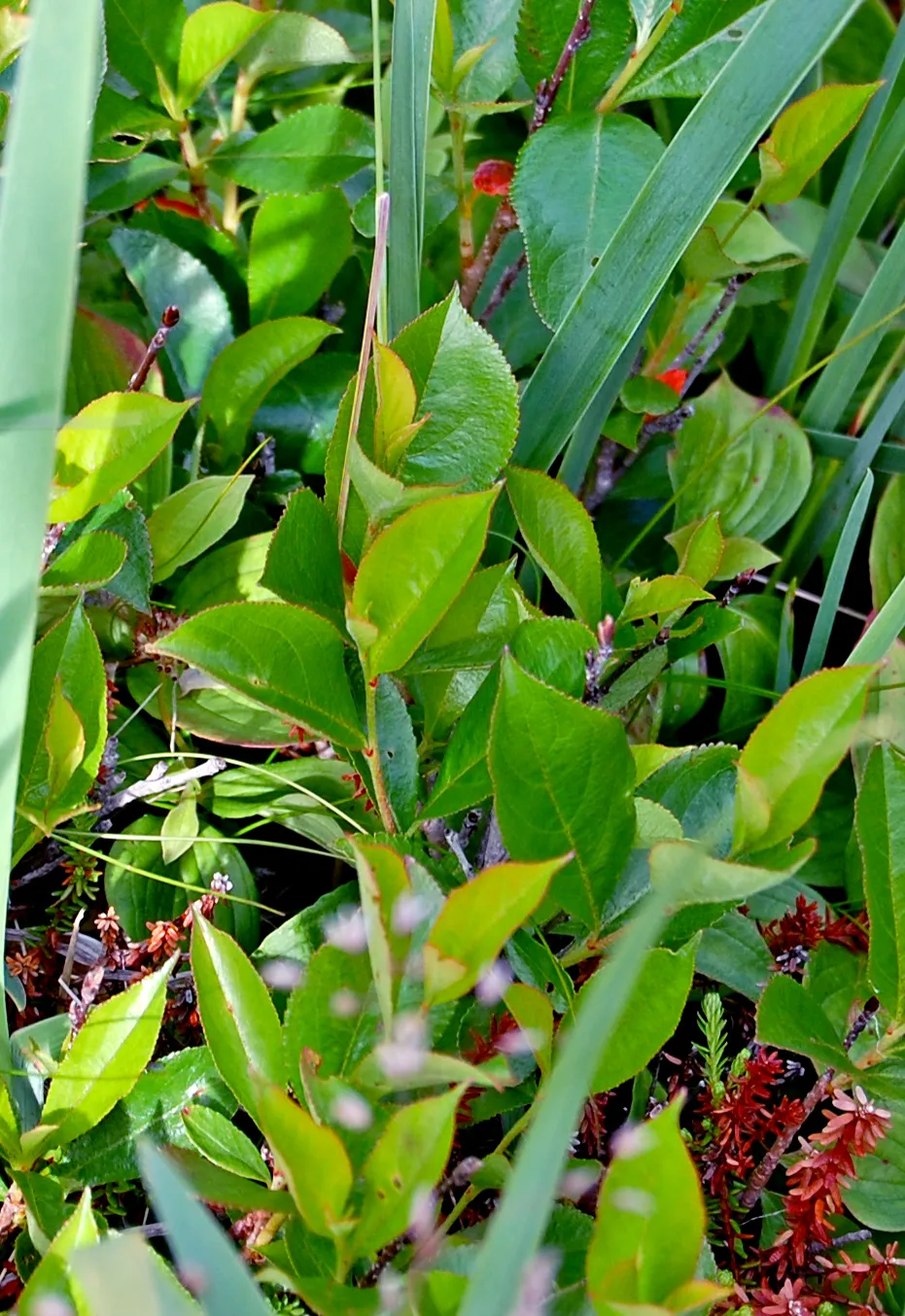
Plant aronia in autumn (October–November) or spring (March–April), while it is dormant or just starting into growth, so it establishes easily. Both seasons work well because the shrub is so forgiving. In India’s hills, plant in the dormant season. The berries ripen in late summer to early autumn, around the time the foliage begins to colour, and a single self-fertile shrub crops well on its own.
Bare-root is the value buy. Dormant bare-root black chokeberry costs a fraction of a potted plant and establishes just as well. Order it for a winter delivery and heel it in if the ground is frozen.
Spacing depends on what you want. Plant 1–1.5 m apart for a fruiting hedge or wildlife thicket and let the suckers close the gaps; give separate specimen bushes 1.5–2 m. It is also an excellent choice for difficult positions — wet areas, exposed sites, and heavy clay where other fruiting shrubs refuse to grow.
How to Grow Aronia: Planting Step by Step
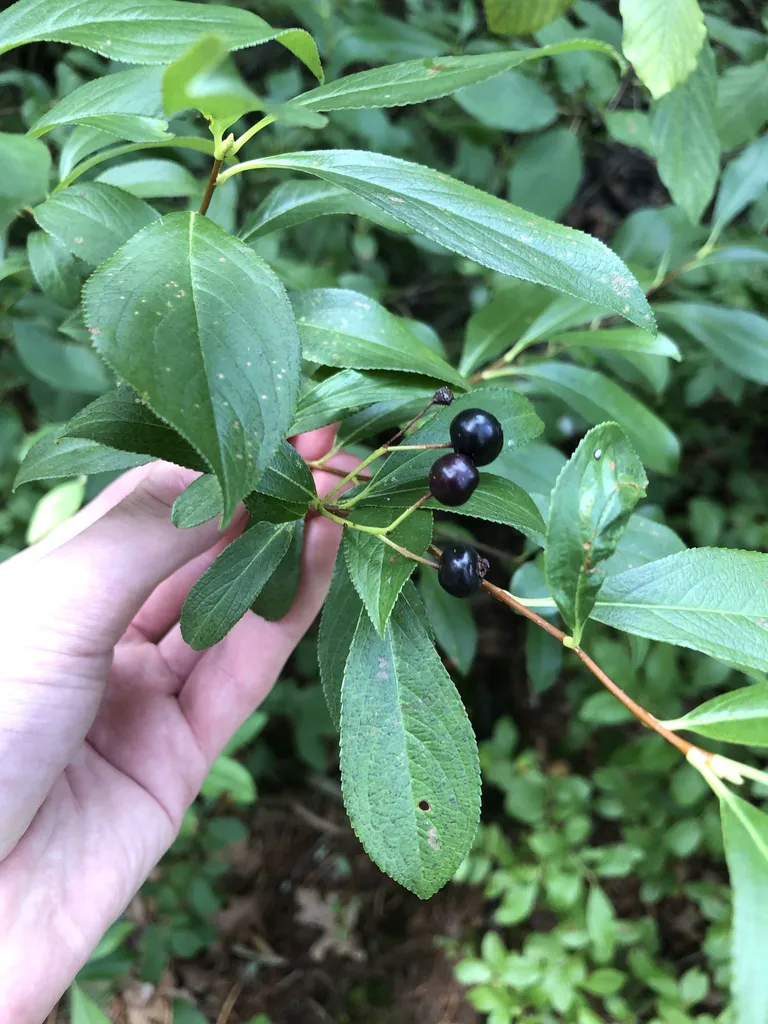
Aronia is sold as young potted or bare-root shrubs and is very easy to establish. For a healthy plant:
- Choose a spot in sun or part shade — more sun gives more fruit and better autumn colour, though partial shade still crops reasonably.
- It tolerates most soils, including wet ground, but a little compost helps it settle (see improving garden soil).
- Plant at the same depth as the pot, firm in, and water well.
- Add a mulch to hold moisture while it roots.
One shrub is enough for fruit, as it needs no pollination partner. Aronia spreads slowly by root suckers; remove them from the base to keep a tidy plant, or let them run in a wildlife garden to build a spreading, bird-friendly thicket.
Sun, soil, watering & feeding
Sun: Full sun to partial shade. It is one of the most light-flexible fruiting shrubs available, though sun gives the heaviest crop and brightest foliage.
Soil: Extraordinarily adaptable, thriving in wet or dry, poor or fertile, acid or alkaline ground (pH 3.5–8.5) — a tolerance rare among fruit and its most useful practical trait (see soil improvement).
Watering: Water young plants through the first year. After that aronia handles both drought and waterlogging surprisingly well, so little watering is needed (see how often to water plants).
Feeding: Very little required — it is not a heavy feeder. An annual mulch of compost around the base in spring is enough for most gardens.
Pruning black chokeberry
Leave a young plant alone. For the first three or four years, chokeberry needs nothing beyond the removal of dead, damaged, or crossing stems. It fruits freely without help.
After that, prune in late winter while the shrub is dormant. Cut roughly a third of the oldest, woodiest stems right down to the base. New shoots spring from the crown, and those young stems carry the best fruit. Repeat each winter and the bush stays permanently renewed.
An old, congested plant can be renovated hard — take a third of the framework out each year for three years and the shrub rebuilds itself completely. Aronia regenerates vigorously from the base, so heavy renovation rarely kills it. Manage the suckers at the same visit, and pot up a few while dormant to make free plants.
Growing aronia as a hedge or in pots
Aronia is as versatile as it is tough, working well beyond the fruit garden. Planted in a row about a metre apart, it makes an excellent informal hedge that gives spring flowers, summer berries, fiery autumn colour, and winter structure, all while feeding bees and birds.
It also grows happily in a large pot of loam-based compost on a patio, useful for terrace and balcony gardeners with no open ground. Because it tolerates wet ground, it is ideal for damp corners and rain gardens where many shrubs sulk, yet it copes with dry banks once established. Whether grown for fruit, wildlife, or its blazing autumn leaves, it is one of the most rewarding low-care shrubs available.
Common pests & diseases
Aronia is one of the most pest- and disease-resistant fruits you can grow, which is a large part of its appeal. Healthy plants almost never need treatment, and very occasionally aphids or leaf spot appear but rarely enough to matter (see organic pest control).
Birds are the main competitor for the ripe berries — starlings and blackbirds strip a bush fast in late summer. Net the shrub as the fruit darkens if you want the full crop, or simply share generously and harvest what remains.
Harvesting and using aronia
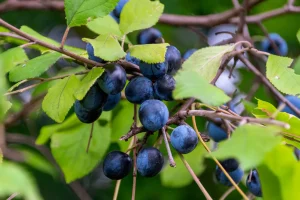
Aronia berries ripen to glossy black in August and September, but ripeness alone does not make them sweet. The raw fruit stays very astringent, drying the mouth, which is the origin of the name chokeberry. Pick when the berries are uniformly dark and just soft, and cut whole clusters with scissors rather than stripping them one by one — it is far quicker and the fruit keeps better on the stalk.
Rather than eating them fresh, cook them into jam, syrup, and pie, blend them into juices and smoothies, or ferment them into a deeply coloured wine made much like elderberry. Aronia juice blended roughly 30% aronia to 70% apple is far more palatable than straight juice. Three tricks tame the astringency before you even cook: leave the fruit on the bush until after the first frost, freeze it for a few days, or dry it into a chewy, raisin-like snack.
Health benefits & uses
Aronia is the superfruit whose numbers you cannot actually look up. USDA FoodData Central has no reference entry for Aronia melanocarpa — searches return branded juices and powders only — so the vitamin C, vitamin K, folate and manganese figures repeated across the web have no USDA row behind them, and none appear here. The part that is well established sits in the research literature rather than the food database: aronia is consistently measured among the highest-anthocyanin and highest-total-polyphenol fruits of the temperate zone, several times a blueberry by weight, and that pigment load is also why the raw fruit is so mouth-drying. Those same anthocyanins have been studied for cardiovascular, anti-inflammatory and blood-glucose effects; that work is ongoing and has not established a treatment, so eat aronia as a strongly flavoured fruit rather than as a remedy.
In the kitchen and in industry the fruit is used the same way — juice, wine, jam, syrup, dried snacks, and extracts. Because the pigment is so strong, aronia also serves as a natural food colouring: a small splash turns pale apple juice deep purple-red and lifts the colour and depth of any weaker fruit you blend it with.
This article is for general information only and is not medical advice. Consult a healthcare professional for dietary or medicinal guidance.
Common aronia problems
Berries too astringent to enjoy
This is natural for chokeberry, caused by the same tannins that carry much of its nutrition. Cook with sugar, juice, ferment, freeze, or dry the fruit rather than eating it raw. “Nero” may be slightly less astringent than other varieties, but all aronia is far sharper than common soft fruit.
Few berries or poor colour
Usually too much shade — the shrub still looks healthy and green but sets far less fruit. Grow aronia in full sun for the heaviest crop and brightest autumn foliage, and check for late-frost damage to the spring flowers.
Bush spreading too widely
Aronia spreads by root suckers, sometimes vigorously in rich, moist ground. Remove suckers from the base to keep it in bounds, or dig and transplant them while dormant to make new plants for free.
Birds taking the crop
Net the bush as the berries darken if you want to harvest them yourself.
Related plant guides
- How to grow Elderberry
- How to grow Feijoa
- How to grow Goji Berry
- How to grow Honeyberry
- How to grow Sea Buckthorn
- How to grow Jostaberry
Frequently asked questions
Is aronia easy to grow?
Yes, exceptionally. It is fully hardy, self-fertile, pest-resistant, and tolerates almost any soil, wet or dry, needing very little care to crop and colour well.
What does aronia taste like?
Raw berries are very astringent, intensely tart, and dry on the palate — the tannins pucker the mouth like an unripe grape. Processed into juice, jam, or wine the astringency moderates and a deep, complex, wine-like berry richness emerges. Mixed roughly 30% aronia to 70% apple juice, it is much more palatable.
Can you eat aronia berries raw?
You can, and they are entirely safe, but they are very astringent and mouth-drying, hence the name chokeberry. They are far nicer cooked, juiced, frosted, or dried.
Do I need two aronia plants?
No. Aronia is self-fertile, so a single shrub will produce a good crop of berries on its own; a second nearby may nudge the yield up a little but is not required.
Is chokeberry the same as aronia?
Yes. Chokeberry is the common name for the genus Aronia, and both names describe the same shrub. Black chokeberry (A. melanocarpa) is grown for fruit; red chokeberry (A. arbutifolia) is grown mainly for its looks.
Is chokeberry the same as chokecherry?
No. Chokecherry is Prunus virginiana, a cherry with a hard stone inside each fruit. Chokeberry is Aronia, a rose-family shrub whose berry is a pome with soft pips, like a tiny apple. Both are native North American plants with edible fruit.
Is aronia invasive?
No. In North America it is a beneficial native, and it does not appear on UK or European invasive lists. It spreads by suckering, but the suckers are easily removed and it does not run out of control in most gardens.
Why is aronia called a superfruit?
Because of the anthocyanins. Aronia is consistently measured among the richest temperate fruits for polyphenols and anthocyanins — that part is well established in the research literature. Its vitamin C content, by contrast, is ordinary, so the “superfruit” label rests on the pigments rather than on a broad nutritional edge. Enjoy the berries as part of a balanced diet.
When does black chokeberry ripen?
Black chokeberry ripens in August and September, passing from green through red to a dull, waxy purple-black. Pick when uniformly dark and just soft, or leave it until after the first frost to soften the astringency, then pick and freeze.
How tall does an aronia bush grow?
Most fruiting black chokeberry shrubs settle at 3 to 6 feet tall and about as wide, though an unpruned plant in rich soil can push closer to 8 feet. Compact garden selections stay much lower, and a few dwarf forms barely top knee height. Red chokeberry is the taller of the two species and can look leggy at the base, so it is often underplanted. Pick the variety to suit the space rather than fighting the shrub with hard pruning later.
When and how should I prune aronia?
Prune in late winter or very early spring while the shrub is still dormant. Take out dead, damaged or crossing wood first, then remove a few of the oldest, thickest stems right down to the base to let light into the middle. Avoid shearing the whole bush over, because next season’s flower buds form on wood that grew the previous summer, so an all-over trim removes the coming crop. On a mature plant, renewing about a quarter of the old stems each year keeps it fruiting steadily.
Does aronia need fertilizer?
Very little. It evolved on poor, often wet ground and crops perfectly well without feeding, and heavy nitrogen simply pushes soft leafy growth at the expense of berries. A yearly mulch of compost or well-rotted manure spread around the base in spring or autumn is usually all it wants. If growth is genuinely weak, a single dose of a balanced slow-release organic fertilizer in spring is enough for the whole season.
How many years before an aronia bush fruits?
A bought two-year plant will often set a light crop in its first or second season in the ground. Yields then climb steadily, and the shrub reaches something close to full production around year four or five. Plants raised from seed take longer and vary in quality, which is why named cultivars such as Viking and Nero are the usual choice. Once established, a healthy bush keeps cropping for decades with almost no attention.
Still stuck? Ask the Plant Doctor
Describe the problem — yellow leaves, holes, no flowers — and get a clear answer in seconds. FreeAI can make mistakes. Answers are guidance, not a guarantee — check anything important against the guide it links to, and always read the label on any product before you use it.