How to Grow Jostaberry
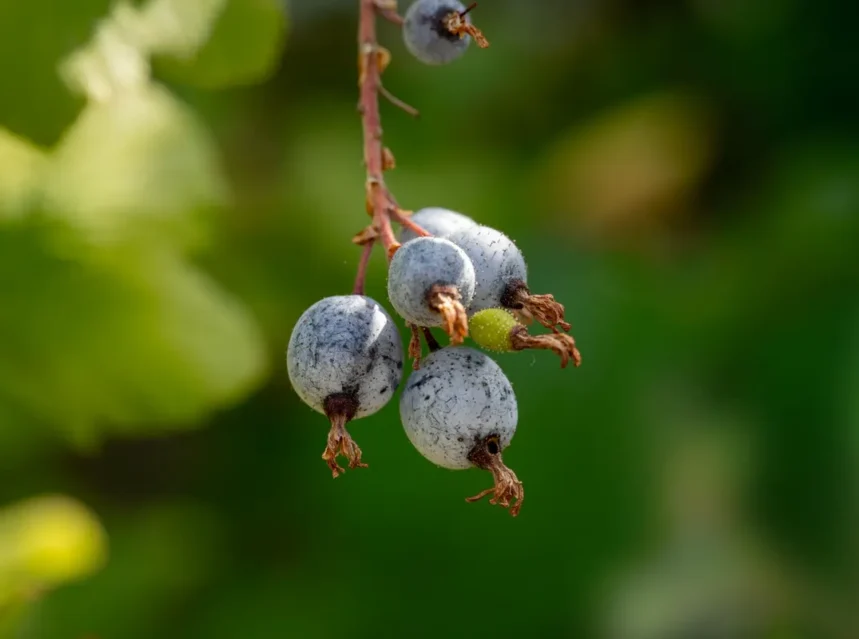
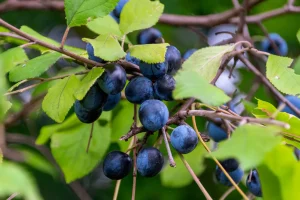
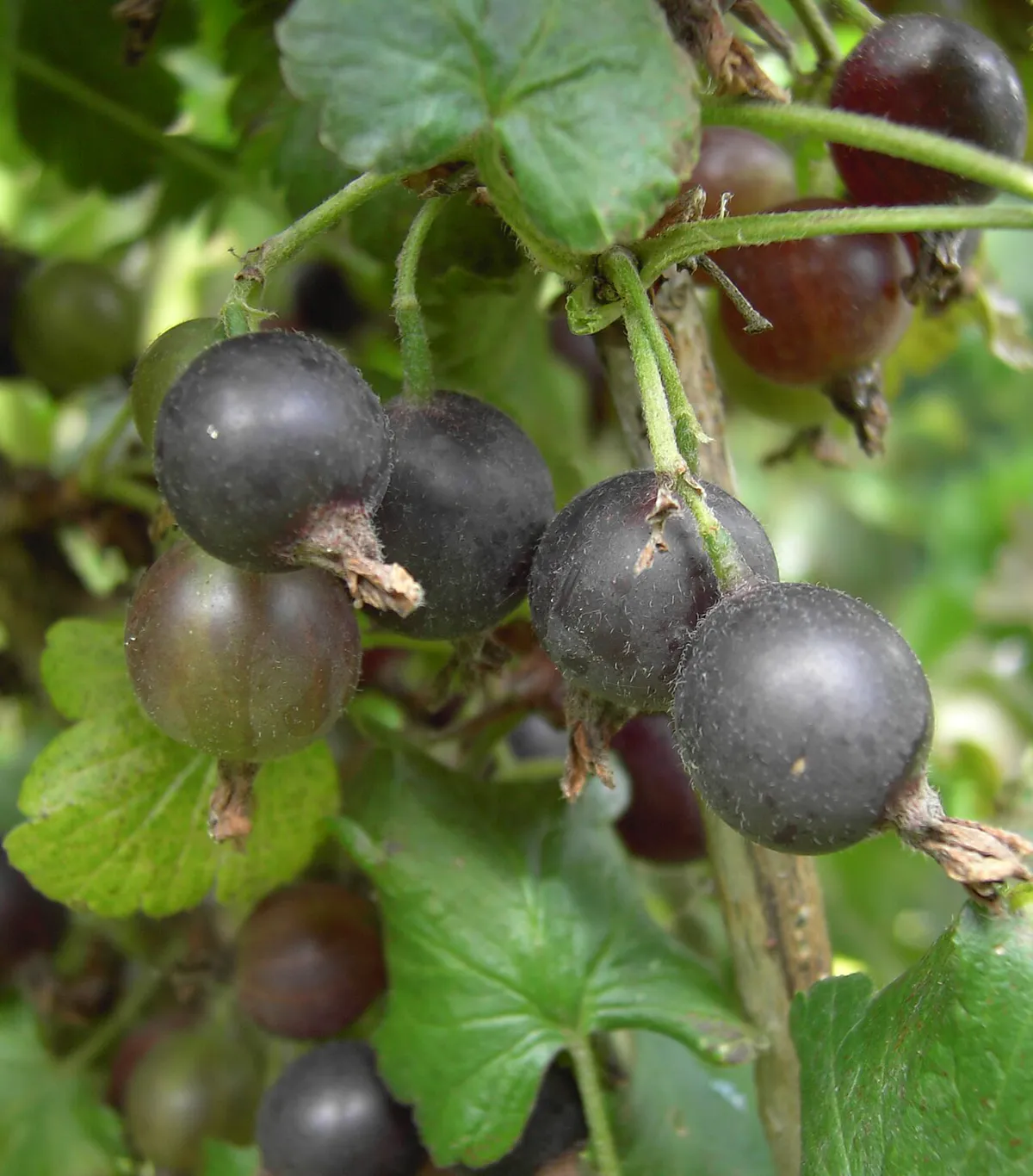
The jostaberry (Ribes × nidigrolaria) is a vigorous, completely thornless fruit bush bred from a cross between the blackcurrant and the gooseberry — combining the size and ease of one with the rich flavour of the other, to give clusters of large, dark purple-black berries. Bred in Germany by Rudolf Bauer at the Max Planck Institute, it takes its name from a German portmanteau: “Jo” from Johannisbeere (blackcurrant) plus “Sta” from Stachelbeere (gooseberry). Hardy, productive, and disease-resistant, it is one of the easiest soft fruits to grow. Here is the complete guide on how to grow jostaberry.
Quick start: Grow jostaberry in full sun to part shade in moist, fertile, free-draining soil. Plant in autumn or early spring and water until established. It is self-fertile, thornless, and extremely cold-hardy (USDA zone 3). The berries ripen in midsummer, and the bush crops on a mix of old and young wood, so it needs only light pruning. Net the bushes from birds. One healthy plant gives heavy crops for many years.
Experienced growers and the Royal Horticultural Society rate the jostaberry as an easy, heavy-cropping soft fruit, with a couple of useful notes. The first is its toughness: gardeners love that it is thornless, self-fertile, and resistant to the mildew, leaf spot, and big bud mite that trouble its parents. The second is its vigour, since one bush grows large and crops heavily, so they give it space. Growers who have cultivated all three fruits invariably point out that the jostaberry’s advantages are real — no thorns, bigger berries than blackcurrant, and a rich, complex flavour that stands up beautifully in jams and wines.
🧰 In a hurry? Jump straight to our tested picks for this guide ↓
Jostaberry at a glance
| Feature | Detail |
|---|---|
| Botanical name | Ribes × nidigrolaria (family Grossulariaceae) |
| Plant type | Very vigorous, thornless deciduous fruit bush |
| Height/spread | About 1.5–2 m |
| Sun | Full sun to part shade |
| Soil | Moist, fertile, free-draining (pH 6.0–7.0) |
| Hardiness | USDA zone 3 (very cold-hardy) |
| Harvest | Midsummer (July–August) |
| Key advantage | Thornless, self-fertile, resistant to big bud mite & mildew |
Why grow jostaberry?
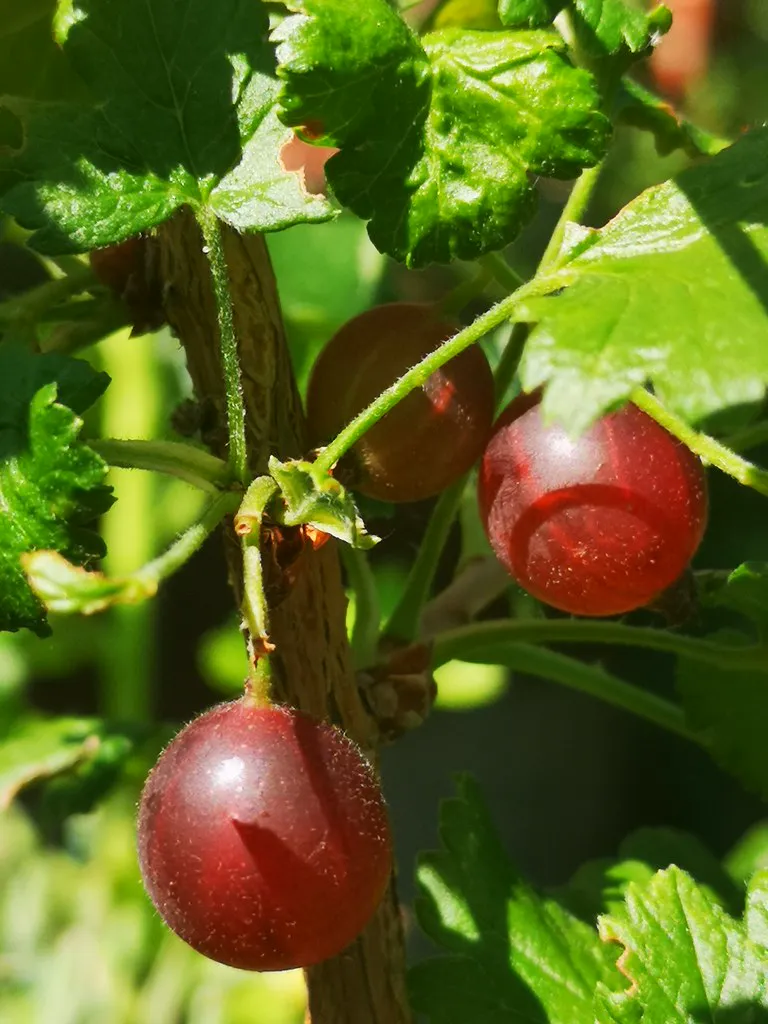
The jostaberry gives you the best of both its parents in one easy bush. It crops heavily with large, flavoursome berries, yet it is thornless and far more disease-resistant than gooseberries or blackcurrants. Here is why it earns its place in the fruit garden:
- Completely thornless — far easier than gooseberry. Gooseberry thorns make pruning and picking an unpleasant chore. The jostaberry is entirely smooth-stemmed, so you can pick and prune bare-handed.
- Resistant to the main currant and gooseberry diseases. It shows strong resistance to big bud mite (Cecidophyopsis ribis, the most serious blackcurrant pest), American gooseberry mildew, leaf spot, and white pine blister rust, meaning much lower pest-management effort than either parent.
- Larger berries than blackcurrant. The fruits are noticeably bigger, so picking is faster and more satisfying.
- Rich, complex flavour. The blackcurrant-gooseberry combination gives a depth that makes outstanding jam, wine, and cordial — slightly more aromatic and balanced than blackcurrant alone.
- Very cold-hardy and self-fertile. Hardy to USDA zone 3 (around -40°C), a single bush fruits well on its own and needs little fuss, making it a productive, low-care choice for any soft-fruit garden.
History, origin & where it grows
The jostaberry was developed between 1970 and 1977 by Rudolf Bauer at the Max Planck Institute for Plant Breeding Research in Cologne, Germany. The programme involved multiple crosses between blackcurrant (Ribes nigrum), European gooseberry (Ribes uva-crispa), and North American gooseberry (Ribes divaricatum) — the North American species contributing the thornlessness and disease resistance that set the hybrid apart.
Released commercially in Germany in the late 1970s and in the UK from the 1980s, it has since spread across Northern Europe, Scandinavia, Canada, and parts of the northern United States (see the background on the jostaberry). The Ribes family of currants and gooseberries is native right across the cool-temperate northern hemisphere, so the plant is at home in cold winters.
The jostaberry thrives in cool-temperate regions such as the UK, northern Europe, and Canada, needing winter cold to crop well. In India, it suits the cold Himalayan hill stations rather than the hot plains — the same region where wild Ribes relatives such as Ribes orientale and R. alpestre grow naturally. There is no official production figure for the jostaberry anywhere: FAO counts currants and gooseberries separately but has no item for this hybrid, so any tonnage you see quoted for it is really describing one of its parents. It is grown almost entirely as a home-garden fruit rather than a field crop.
Best season & when to plant
Plant a jostaberry in autumn (October to November) or early spring (February to March), while it is dormant, so the roots settle before growth begins. Bare-root plants from specialist soft-fruit nurseries are the most economical form and are best planted in the dormant season, while container-grown plants can be found year-round.
The berries ripen in midsummer. Because the bush grows so vigorously, allow at least 2–2.5 m between plants. In India’s hills, plant in the dormant season and choose a spot with the cool, moist conditions the bush prefers, ideally with shelter from harsh afternoon sun.
How to grow jostaberry: planting steps
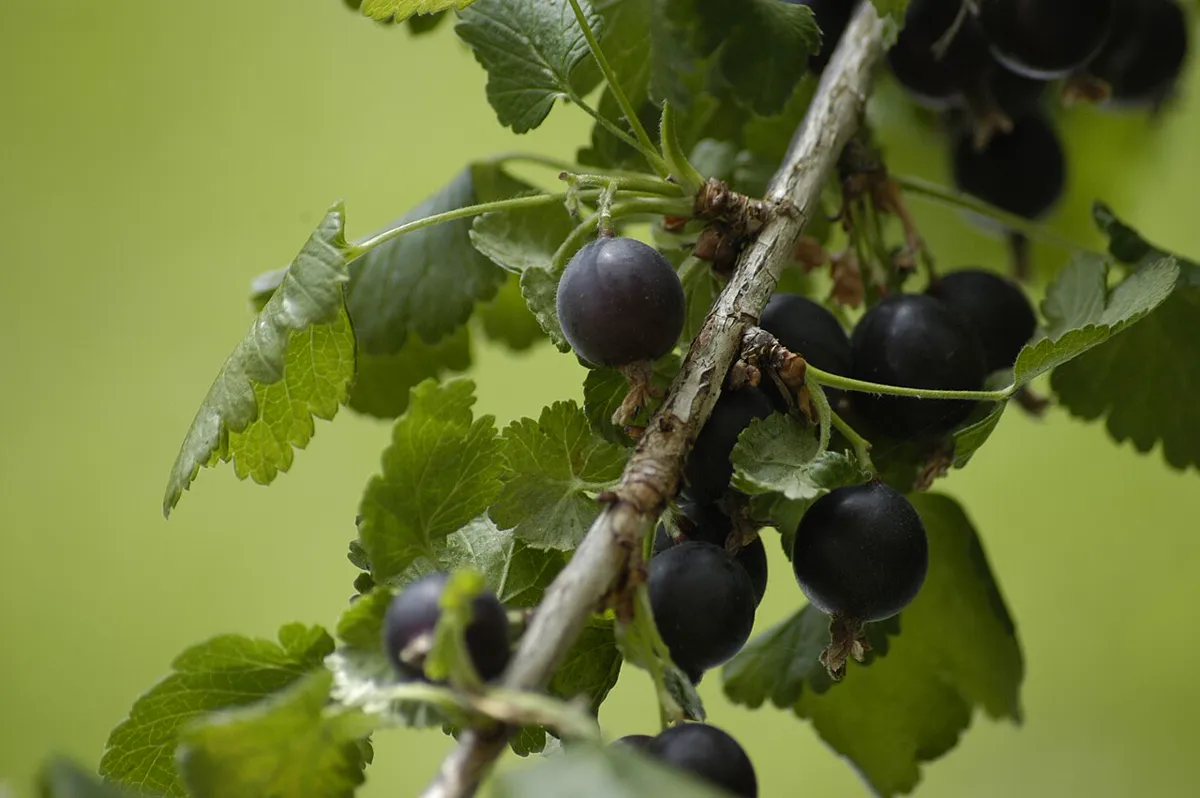
The jostaberry is grown from a young bare-root or potted bush, or from hardwood cuttings. For a strong, productive plant:
- Choose a spot in full sun to part shade with moist, fertile, free-draining soil. It is more shade-tolerant than gooseberry, so it suits partly shaded positions, though full sun gives the heaviest crops (see improving garden soil).
- It is very adaptable to soil type, growing in clay, loam, and sandy soils. Slightly acid to neutral is ideal (pH 6.0–7.0). Dig in compost or rotted manure before planting and avoid waterlogged sites.
- Plant slightly deeper than it grew before to encourage strong new shoots from the base, and firm in.
Water in well and add a mulch to keep the roots cool and moist. Give it room, about 1.5–2 m, as the bush grows large and vigorous. The jostaberry spreads by suckering, sending up fresh stems from the base that keep it productive for years — remove excess suckers if it strays beyond its space.
Sun, soil, watering & feeding
The jostaberry grows in full sun to part shade, cropping most heavily in sun but tolerating a cooler, partly shaded spot better than most fruiting shrubs. It likes moist, fertile, free-draining soil and dislikes both drought and waterlogging. Enriching with organic matter before planting gives the best start.
Water well in dry spells, especially as the fruit swells in June and July, since drought at this stage reduces berry size and set (see how often to water plants). Feed each spring with a balanced fertiliser or sulphate of potash and a compost mulch. Like its currant parent, it appreciates potassium, so avoid heavy nitrogen, which gives leaves at the expense of fruit.
Pruning jostaberry
Pruning a jostaberry is easy, as it fruits on a mix of young and older wood, so you do not need precise technique. The aim is simply an open, productive bush with a framework of vigorous one- to three-year-old stems.
In autumn or late winter, remove dead, weak, crossing, and crowded stems to keep the centre open and airy, and cut out the very oldest stems (four years and older) to the base to encourage fresh growth. Keep around 8–10 well-spaced stems per plant. Because it is so vigorous, do not be afraid to prune fairly hard to keep it within bounds — and being completely thornless makes the whole job genuinely pleasant compared with gooseberry. The same renewal principles apply as for blackcurrant, and this light annual pruning keeps it cropping heavily for many years.
Harvesting jostaberry
The jostaberry is easy and pleasant to pick, thanks to its thornless stems. The berries ripen progressively along each stem from July to August, and timing depends on how you want to use the fruit.
For cooking, pick the berries when they are firm and still slightly tart, much like gooseberries. For fresh eating, leave them to ripen fully to a sweet, dark, blackcurrant-like flavour. Pick every 5–7 days through the harvest window, as over-ripe fruits become very soft and drop, and net the bush beforehand, as birds enjoy the berries too. A productive established bush can yield 4–8 kg of fruit a season. Jostaberries make outstanding jam, wine, cordial, and jelly, and the large berries also freeze well and combine nicely with other soft fruit.
Propagating jostaberry from cuttings
Like its currant and gooseberry parents, the jostaberry is very easy to propagate from hardwood cuttings. It is a cheap, simple way to raise new bushes or replace an old one.
In late autumn or early winter, cut pencil-thick lengths of the current year’s growth, about 25–30 cm long, from healthy stems. Push them two-thirds deep into a slit trench of gritty soil or a pot of free-draining compost, leaving the top few buds exposed. Keep them watered, and most will root over winter and spring, ready to move the following autumn. Because the jostaberry is so vigorous and disease-resistant, these home-grown plants establish quickly and crop within a couple of years. It is a great way to build a productive soft-fruit row or share plants with friends at no cost.
Common pests & diseases
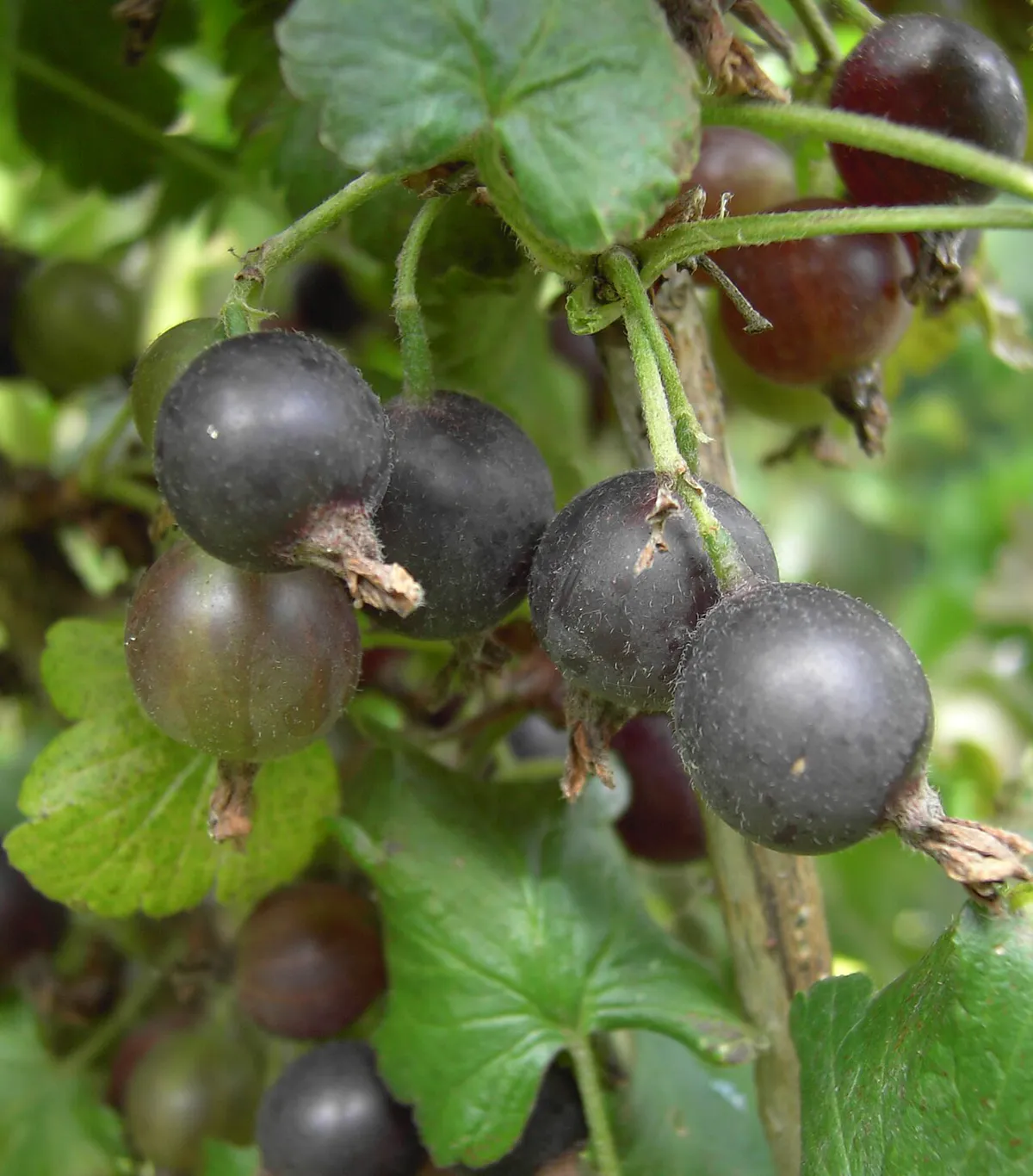
The jostaberry is notably tough, bred to resist the diseases that trouble its parents, and it is one of the most trouble-free soft fruits. It largely shrugs off the problems below:
- Big bud mite: The jostaberry has significant resistance to this blackcurrant pest (Cecidophyopsis ribis causes swollen, round buds and can carry reversion virus) — one of its principal advantages over blackcurrant. See organic pest control.
- American gooseberry mildew: Also strongly resisted. If it appears, prune out affected shoot tips and improve airflow.
- Aphids and sawfly: These may occasionally appear — pick off pests early and treat as needed (see how to get rid of aphids).
- Birds: The main real threat to the crop. Net ripening berries to protect them.
Keeping the bush open with winter pruning is the best all-round defence, and overall the jostaberry is significantly more disease-resistant than either parent.
Health benefits & uses
Jostaberries are used cooked or fresh, made into jams, jellies, pies, cordials, wines, and sauces when tart, or eaten straight from the bush when fully ripe and sweet. Jam is the finest use — dark, richly flavoured, and a superior blackcurrant substitute — while the large berries are satisfyingly substantial eaten fresh with cream. They freeze well and combine nicely with other soft fruit.
Jostaberry is a hybrid, and that is precisely why no honest nutrition table exists for it. USDA FoodData Central returns nothing at all for jostaberry, so the familiar line that it “inherits the blackcurrant profile” is an assumption rather than a measurement — and the two parents make it a shaky one. Blackcurrant carries 181 mg of vitamin C per 100 g. Gooseberry, the other parent, carries 27.7 mg. That is a six-fold gap, and a cross between them could sit anywhere in between; fibre runs the other way, with gooseberry ahead at 4.3 g per 100 g. So the useful thing to give you is the range rather than a number. What is safe to say without measuring anything: the dark skin means genuine anthocyanin content, as in both parents, and any ranking of jostaberry against other berries is unmeasured rather than modest or impressive. As with any food, enjoy them as part of a balanced diet. For information only, not medical advice — consult a professional for dietary guidance.
Common jostaberry problems
Lots of growth, little fruit
Usually too much nitrogen, too much shade, or an old, unproductive framework. Feed with potassium rather than nitrogen, grow in good light, and hard-prune the oldest stems to refresh the bush. Late frost during early-spring flowering can also reduce fruit set in northern gardens.
Birds eating the crop
A common issue with soft fruit. Net the bush as the berries begin to ripen.
Very large, congested bush taking over
The jostaberry is genuinely vigorous — more so than blackcurrant or gooseberry — and can reach 2–2.5 m if left alone. Prune fairly hard each autumn or late winter, removing old and crowded stems, to keep it open, manageable, and productive, as old stems produce less fruit.
Berries smaller than expected
Older, unpruned bushes crop smaller fruit on congested wood. Renovate with a hard prune, removing all stems more than three years old, and water during the June–July fruit swell, as drought stress noticeably shrinks the berries.
Related plant guides
- How to grow Blackcurrant
- How to grow Gooseberry
- How to grow Aronia
- How to grow Elderberry
- How to grow Honeyberry
- How to grow Medlar
Frequently asked questions
What is jostaberry a cross of?
Jostaberry is a triple-species hybrid developed by Rudolf Bauer at the Max Planck Institute in Germany between 1970 and 1977. It combines blackcurrant (Ribes nigrum), European gooseberry (Ribes uva-crispa), and North American gooseberry (Ribes divaricatum) — the North American gooseberry contributing the complete thornlessness and enhanced disease resistance. The name “Josta” is a German portmanteau of Johannisbeere (blackcurrant) and Stachelbeere (gooseberry).
Is jostaberry easy to grow?
Yes, exceptionally. It is thornless, self-fertile, hardy, and resistant to the diseases of its parents, cropping heavily with only light annual pruning.
What does a jostaberry taste like?
Like a richer, more complex blackcurrant: tart and gooseberry-like when slightly under-ripe, turning sweet and blackcurrant-like when fully ripe and dark. The larger berries and balanced flavour make it more approachable for fresh eating than a sharp blackcurrant, while its depth is excellent for jam and wine.
Is jostaberry thornless?
Yes, completely. This is one of its principal advantages over its gooseberry parent, whose formidable thorns make pruning and harvesting difficult. The jostaberry’s stems are entirely smooth, making both jobs far easier and more pleasant.
Do I need two jostaberry bushes?
No. The jostaberry is self-fertile, so a single bush will crop well on its own without a pollination partner.
How big does a jostaberry get?
It is vigorous, reaching about 1.5 to 2 metres tall and wide (up to 2.5 m if unpruned), so give it room and prune it fairly hard in winter to keep it productive and open.
When do you pick jostaberries?
Jostaberries ripen in midsummer, usually from late June into July in a temperate garden, roughly overlapping with gooseberries and just ahead of most blackcurrants. Colour alone is a poor guide, because the fruit turns dark well before it is sweet. Wait until the berries are fully black, slightly soft to a gentle squeeze, and part from the stalk with barely any pull. Picking in two or three passes over a fortnight gives far better flavour than stripping the bush in one go, and slightly under-ripe fruit is worth keeping separately for jam, where its extra acidity is an advantage.
How do you prune a jostaberry?
Prune in late winter while the bush is dormant. Jostaberry carries fruit on both older wood and the previous season’s growth, so it responds well to a moderate renewal approach rather than the hard cut-to-the-ground treatment given to blackcurrants. Take out about a quarter to a third of the oldest, darkest, least productive stems at the base each year, along with anything damaged, crossing or lying on the soil. Then shorten a few of the longest whippy shoots to keep the bush from sprawling. The aim is an open, goblet-shaped framework of mixed-age stems that light and air can reach.
How do you propagate a jostaberry?
Hardwood cuttings, taken in late autumn after leaf fall, are almost foolproof. Cut 20-25 cm lengths of well-ripened, pencil-thick current-season wood, trim just below a bud at the base and above a bud at the top, and push them into a slit trench of gritty soil in a sheltered corner so that only the top two or three buds show. Leave them undisturbed for a full year, watering in dry spells, and lift the rooted plants the following autumn. Layering a low branch into the ground works just as well if you only need one or two extra plants.
How long before a jostaberry fruits, and how much does it produce?
A one- or two-year-old nursery bush usually gives a token pick in its second summer, a worthwhile crop in its third, and hits full production by around the fourth or fifth year. A well-fed mature bush commonly yields several kilograms of fruit in a season, comfortably more than a blackcurrant of the same age because the berries are larger. Consistent yields depend far more on annual pruning and a spring mulch than on anything else. Bushes stay productive for fifteen years or more if that renewal pruning is kept up.
Can you grow a jostaberry in a pot?
Yes, though you need to respect its vigour. Start with a container of at least 45-50 cm across, use a loam-based compost rather than a light peat-free mix so the pot stays stable and holds nutrients, and expect to water daily in hot weather. Feed in spring with a balanced fertiliser and top-dress or repot every second year. A container bush will always be smaller and crop less than one in open ground, but it fruits perfectly well and the thornless stems make it an easy plant to have on a patio.
Why is my jostaberry not fruiting?
Since the bush is self-fertile, a pollination partner is rarely the issue. Look first at light — a jostaberry in heavy shade puts on leaf and very little fruit. Second, check your pruning: no pruning at all leaves a congested thicket of unproductive old wood, while over-enthusiastic cutting removes the very stems that were about to fruit. Excess nitrogen produces the same lush, barren growth. Finally, do not overlook the obvious: birds strip ripening Ribes fruit quickly and quietly, so if the flowers were plentiful but the berries vanished, net the bush before colour begins to change.
Is it legal to plant jostaberry everywhere?
In most of the world, yes, but it is worth one check if you garden in the United States. Because the genus Ribes can host white pine blister rust, a disease of five-needle pines, several states have historically restricted or banned the planting of currants and gooseberries, and a few restrictions remain in place today. Jostaberry is generally regarded as highly resistant to the rust, and many states have relaxed their rules, but the regulations vary by state and sometimes by county. A quick call to your state agriculture department or local extension office settles it before you buy.
Still stuck? Ask the Plant Doctor
Describe the problem — yellow leaves, holes, no flowers — and get a clear answer in seconds. FreeAI can make mistakes. Answers are guidance, not a guarantee — check anything important against the guide it links to, and always read the label on any product before you use it.