Is Dracaena Toxic to Cats? You Own More of It Than You Think
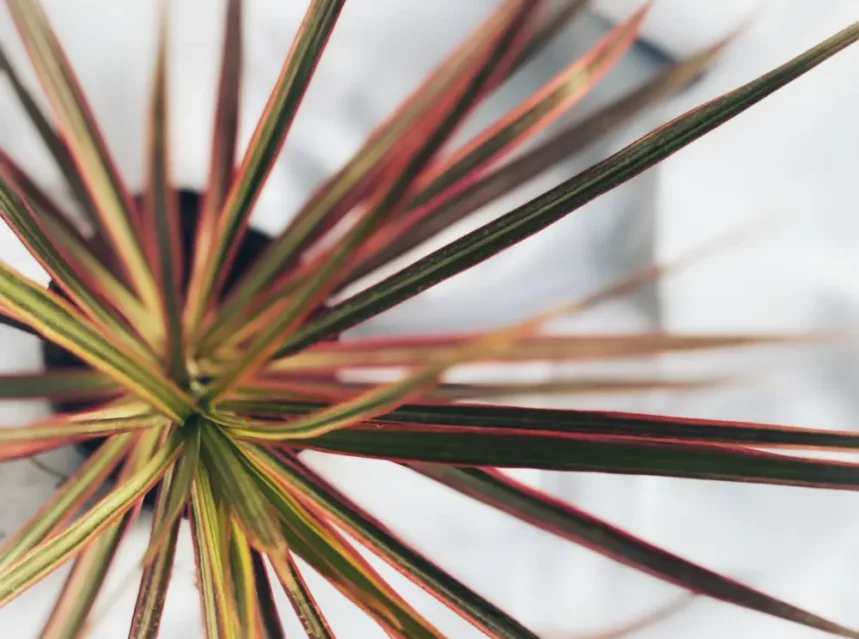
Dracaena is a genus of strap-leaved evergreen houseplants — dragon tree, corn plant, lucky bamboo and snake plant among them — and it is toxic to cats. The ASPCA lists dracaena as toxic to cats, dogs and horses because of saponins in the leaves and stems, and it flags one sign as specific to cats: dilated pupils. In practice most cases are a bout of vomiting and drooling that settles within a day. The bigger problem is that dracaena is not one plant. It is a genus, and you almost certainly own more of it than you realise.
Quick start: Is dracaena toxic to cats? Yes, but mildly. A cat that chewed a leaf tip usually vomits once, maybe drools, and is normal within 24 hours. Call your vet if the vomiting repeats, your cat stops drinking, or you see dilated pupils or an unsteady walk. Do not try to make your cat vomit at home — there is no safe way to do it. This article is general information, not veterinary advice.
🧰 In a hurry? Jump straight to our tested picks for this guide ↓
Is dracaena toxic to cats? Severity at a glance
| What happened | What it means |
|---|---|
| Cat brushed past or slept beside the plant | No risk — this is not a contact poison |
| Cat chewed a leaf tip (the usual case) | Mild: drooling, likely one vomit, sometimes loose stools |
| Cat ate several leaves | More vomiting and drooling; watch for dehydration |
| Vomit contains streaks of blood | On the ASPCA sign list, but call your vet the same day |
| Dilated pupils or a wobbly, drunk-looking walk | Beyond the ordinary stomach picture — phone the vet now |
| Cat drank from a lucky bamboo vase | Call for advice; the water holds plant exudate and fertiliser |
| Vomiting past a day, refusing food and water | Dehydration is the real danger here, not the toxin |
Worth saying plainly, because no competing page does: there is no documented case of a cat dying from eating an ornamental dracaena. The one fatality recorded in the veterinary literature involved a rabbit. That is not a reason to be casual, but it is a reason not to panic.
The plants you did not know were dracaena
This is the part that changes the answer for most readers, and it is missing from nearly every article on the subject.
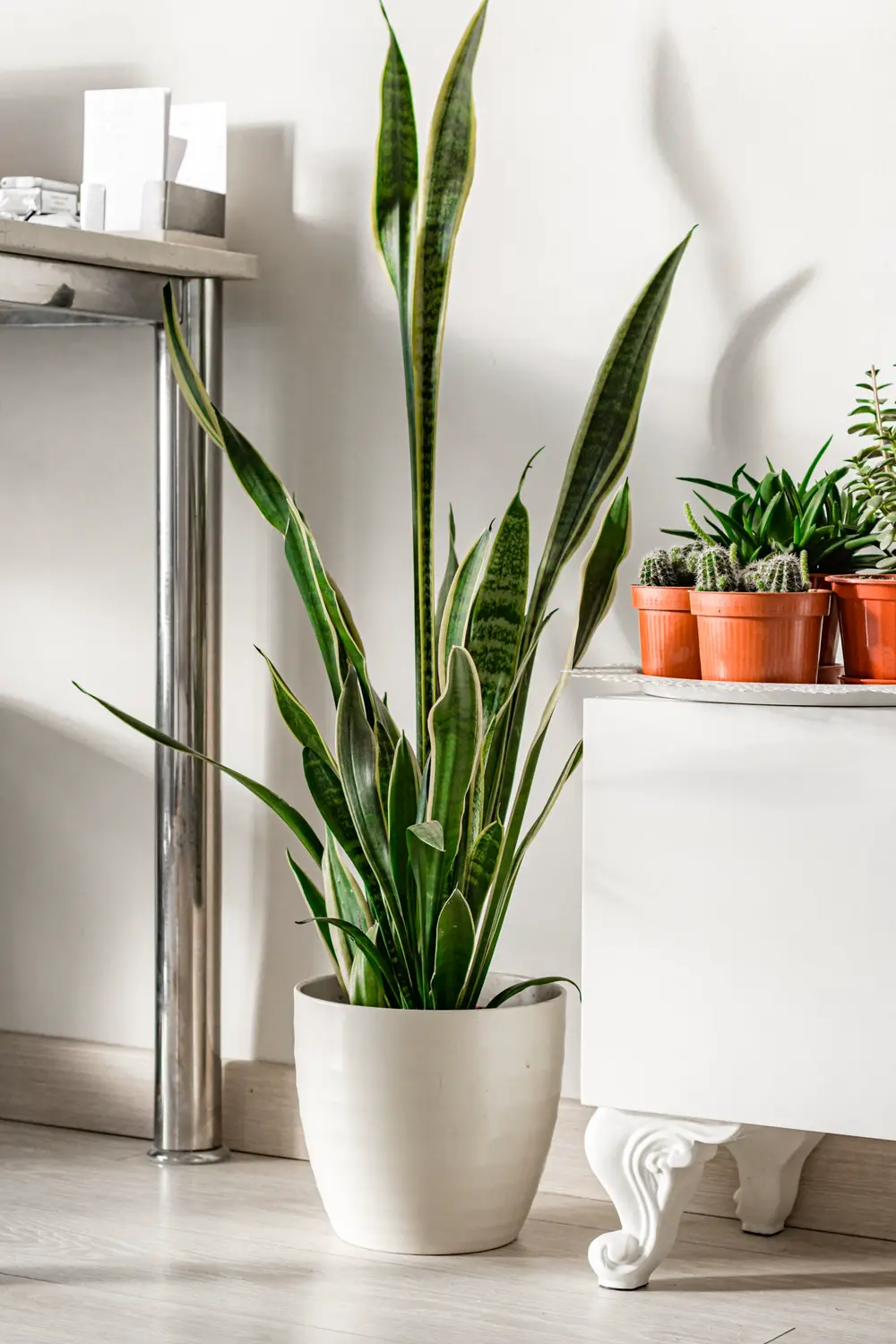
A 2018 study in the journal Phytotaxa showed that keeping Sansevieria as a separate genus left Dracaena incomplete in evolutionary terms, so the two were merged. The snake plant on your floor is now Dracaena trifasciata. Penn State Extension puts it plainly: with advances in genetic research, snake plant was reclassified into the genus Dracaena.
And lucky bamboo is not bamboo at all. It is Dracaena sanderiana, an African plant with a Chinese marketing name.
So a cat owner who reads “avoid dracaena”, removes the dragon tree, and keeps the snake plant and the lucky bamboo has changed almost nothing.
| What the shop calls it | Botanical name | How to recognise it | Toxic to cats? |
|---|---|---|---|
| Dragon tree, Madagascar dragon tree | D. marginata | Thin bare canes, sword-narrow leaves with a red edge stripe | Yes |
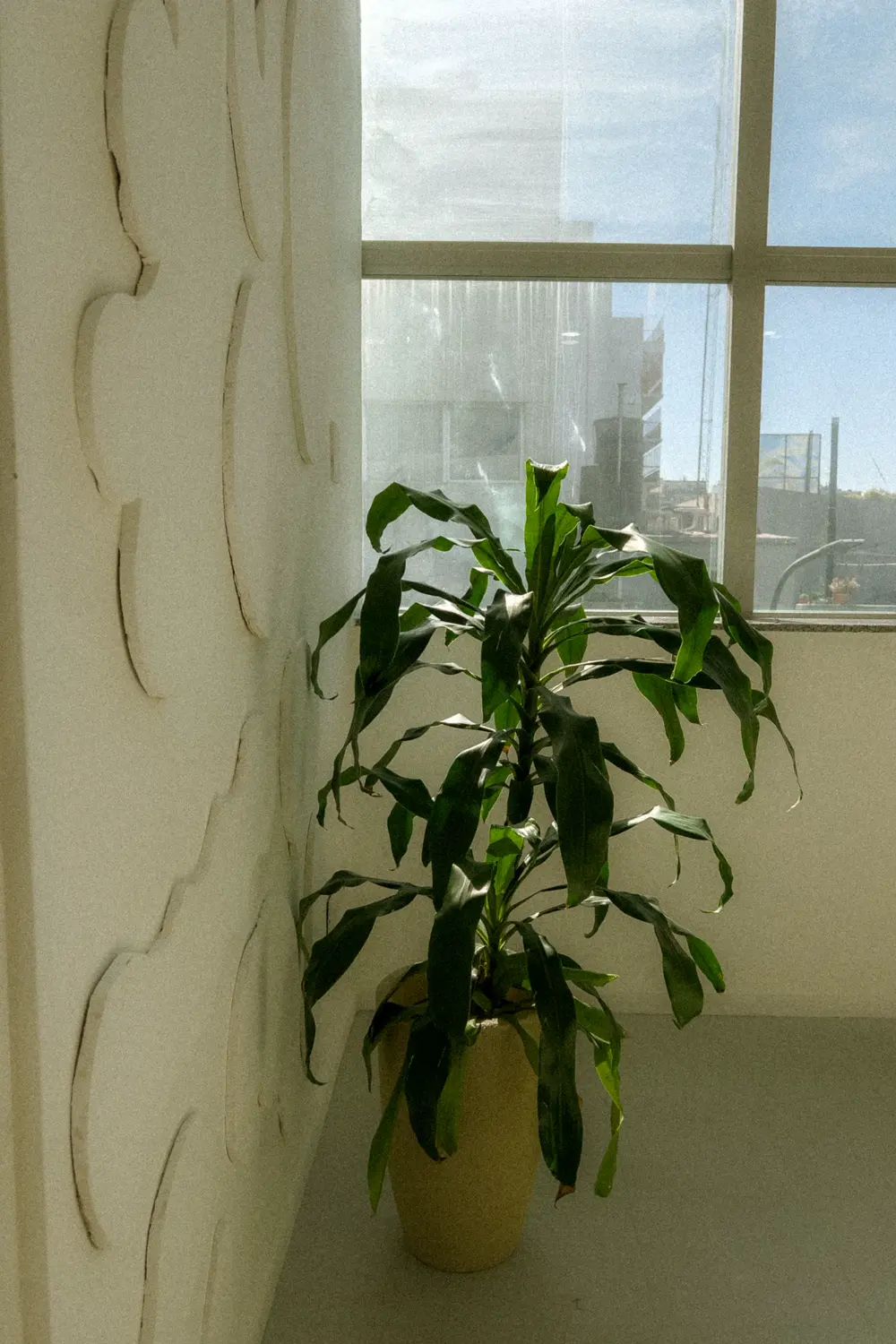
| Corn plant, mass cane, Massangeana | D. fragrans | Broad drooping straps with a yellow centre band, on a sawn-off cane | Yes |
| Janet Craig, Warneckii, striped dracaena | D. fragrans / D. deremensis | Same strap leaf, plain dark green or white-striped | Yes |
| Song of India, Malaysian dracaena | D. reflexa | Short leaves in tight spiral whorls, cream margins | Yes |
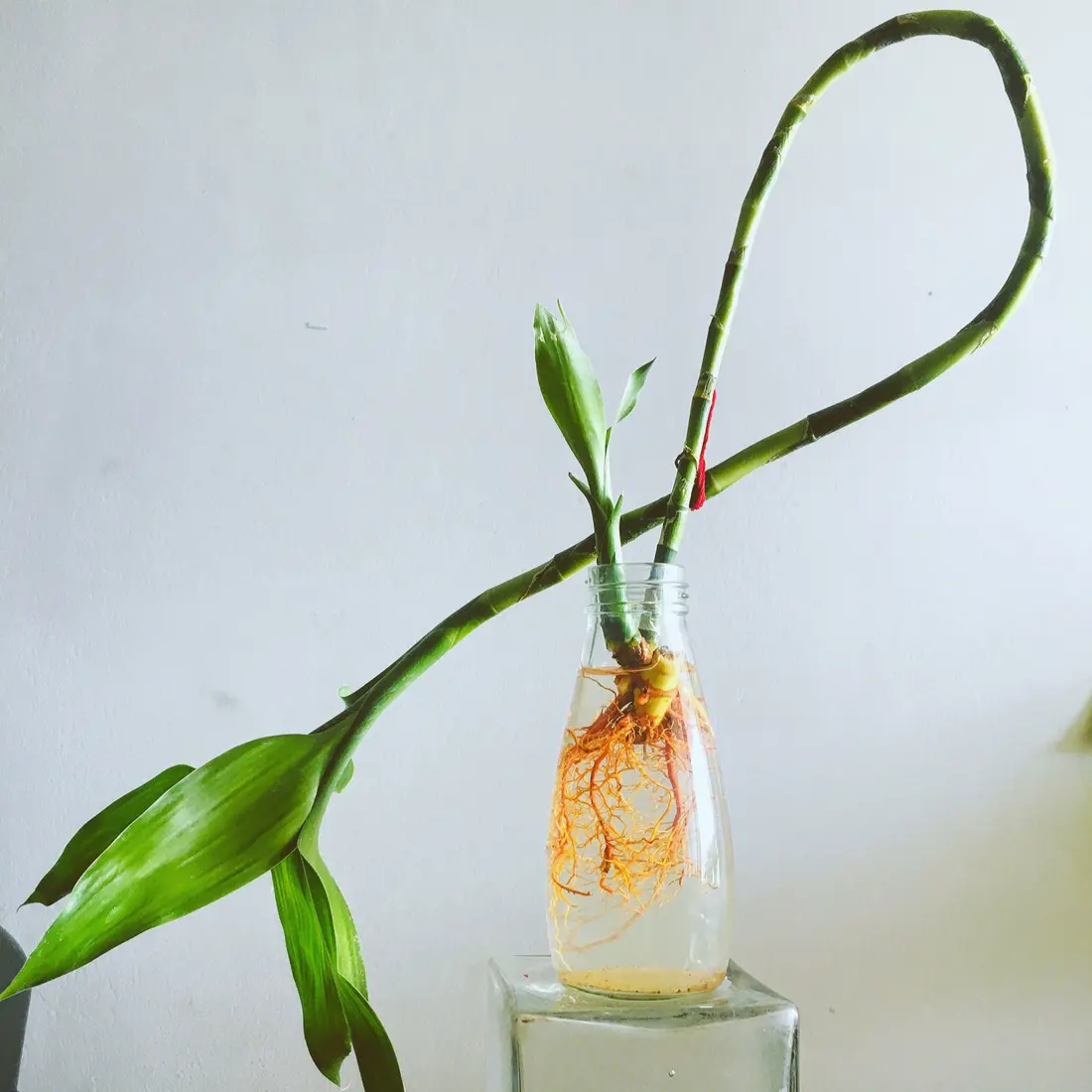
| Lucky bamboo, ribbon plant | D. sanderiana | Fleshy segmented green stalks, usually sold in water | Yes |
| Snake plant, mother-in-law’s tongue | D. trifasciata (was Sansevieria) | Stiff flat sword leaves straight out of the soil, cross-banded | Yes |
| Golden or fishpole bamboo (real bamboo) | Phyllostachys aurea | Woody hollow culms with rings; a grass, not a dracaena | No — listed non-toxic |
A rough field rule: if the leaves come out of a cut-off wooden cane, or straight up out of the soil like blades, and the veins run parallel with no branching, treat it as a dracaena and check the label. You can also filter for pet safety before you buy using our plant finder tool.
Why lucky bamboo is the sneakiest one
Every force around this plant pushes it into exactly the places a cat can reach.
It is sold in a shallow bowl of water rather than a heavy pot, so it lives on desks, side tables, TV units and entrance consoles. It is usually a gift, which means it enters the house without anyone reading a label or looking it up. In India it is a standard Diwali, housewarming and office-gifting plant, and it carries the same role in Feng Shui and Vastu across East Asia.
The name is the real trap. Search whether bamboo is safe for cats and you will find that true bamboo, Phyllostachys aurea, is on the non-toxic list — a correct answer to a different question. Worse, “lucky bamboo” has no entry of its own in the ASPCA plant database; it is covered indirectly under ribbon plant and the general dracaena listing. A worried owner searching that exact name can come away thinking nothing was found.
The vase water deserves its own thought. It stands at drinking height, it has held cut plant tissue for weeks, and it usually contains added fertiliser. No authority documents it as a poisoning route, so treat this as sensible caution rather than established fact: keep the vessel covered or out of reach, and change the water regularly.
One more common-name collision worth knowing. “Ribbon plant” is used for both Dracaena sanderiana, which is toxic, and the spider plant, which is not. Searching by common name can land you on the wrong verdict in either direction — our guide on whether spider plants are toxic to cats covers the safe half of that pair.
What saponins actually do
Saponins are soap-like molecules — the name comes from the Latin for soap, and they genuinely foam in water. They work by disrupting cell membranes, which is why the effect shows up as irritation of the mouth and the gut lining rather than damage to an organ.
That mechanism explains the whole clinical picture. Drooling, because the mouth is irritated on contact. Vomiting and diarrhoea, because the stomach and intestinal lining are irritated. Loss of appetite, because the cat feels queasy. Nothing here attacks the kidneys or the heart, which is what separates dracaena from the flowers that genuinely kill cats.
Saponins also taste bitter, and that matters more than it sounds. It is the main reason cats self-limit, and the main reason severe cases are rare. Most owners describe chewed, frayed leaf tips rather than missing leaves.
The dilated-pupils sign, and what nobody can explain
The ASPCA’s clinical-sign list for dracaena reads: vomiting, occasionally with blood, plus depression, loss of appetite, hypersalivation, and dilated pupils in cats. That parenthetical applies only to the pupils — the other signs are not species-qualified.
Pet Poison Helpline reports the same thing and adds a wobbly gait, again noted specifically in cats. A 2020 review of companion-animal plant poisoning in Europe likewise records that this pupil dilation has been described only in cats.
Here is the honest part. No source explains why. The peer-reviewed literature states outright that the toxicity mechanism is not fully understood. Any article confidently telling you the reason is guessing.
What matters practically is the line it draws for you. Vomiting and drooling after a leaf-tip chew is the ordinary picture. Dilated pupils or an unsteady, drunk-looking walk is not — that is the point to stop watching and start phoning.
What to do right now
- Take the plant away and wipe any plant material from your cat’s mouth and paws so grooming does not carry more in.
- Do not induce vomiting. The ASPCA is explicit that there is nothing you can safely give at home to make a cat vomit. Hydrogen peroxide is a dog protocol; in cats it can cause severe stomach inflammation, and a published case report documents exactly that outcome. Several popular pages get this wrong.
- Identify the plant by both common and botanical name if you can, and keep the label or a photo.
- Note the amount and the time, and in a multi-cat home, watch all of them if you are not sure who did it.
- Call for advice. In the US, ASPCA Animal Poison Control is (888) 426-4435 and Pet Poison Helpline is (855) 764-7661, both fee-charging. In the UK, Animal PoisonLine. In India and elsewhere there is no equivalent national line, so call your own vet or the nearest 24-hour animal hospital — this is worth finding the number for before you need it.
- Watch for a full day. Signs usually appear within a couple of hours and mild cases settle inside 24.
Medical disclaimer: this article is for information only and is not veterinary advice. If you are worried about your cat, contact a qualified veterinarian or an animal poison control service.
Why cats target this plant in particular
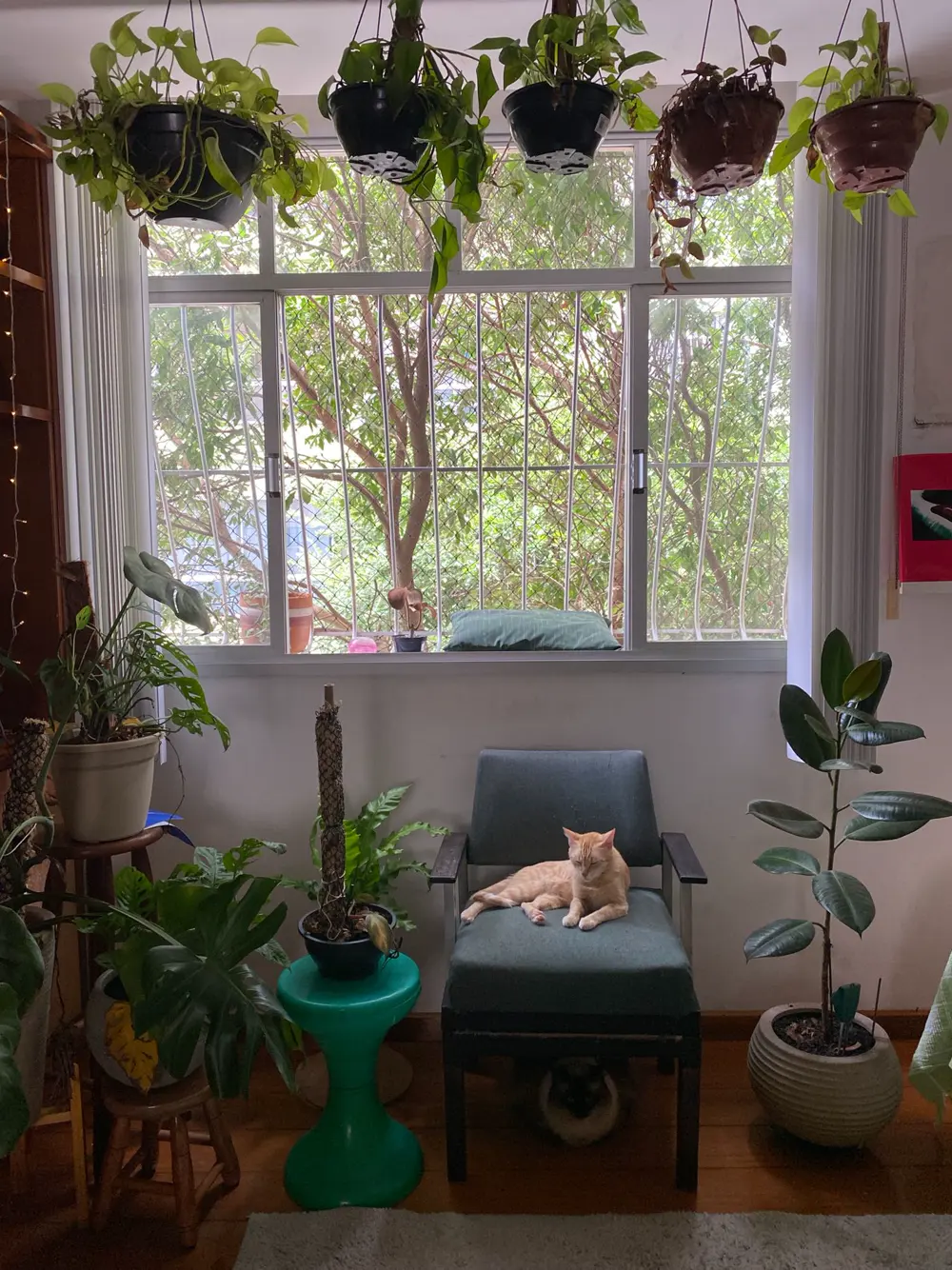
Dracaena gets chewed more than its mild toxicity would predict, and there are two structural reasons.
The first is shape. Long, thin, strap-like leaves read to a cat much like grass, and chewing grass is normal feline behaviour — for fibre, for hairballs, sometimes to trigger vomiting deliberately. A dragon tree is essentially a grass-shaped plant standing indoors at nose height.
The second is placement. Dracaenas are sold as tall floor specimens precisely because they tolerate dim rooms, which is also why they became the default plant of offices and hotel lobbies worldwide. But a two-metre corn plant cannot be put on a high shelf without defeating the point of buying it, and its lowest leaves sit at cat face height permanently. A hanging plant can be moved out of reach. A floor plant essentially cannot.
Owners also consistently report that the risk window peaks in the first few days after a new plant arrives, when the cat investigates it hardest.
Worth knowing before you decide to keep it
Most people keep dracaena for two reasons: it survives low light, and it is sold as an air-purifying plant. The first is true. The second no longer stands up.
The air-purifying reputation traces to a 1989 NASA study on sealed spacecraft habitats, which found that foliage plants absorbed some volatile compounds in a closed chamber. In 2019, researchers at Drexel University re-analysed 196 experiments across 12 published studies and converted them all to the standard metric used for air purifiers. Their conclusion was that plants clear indoor pollutants far more slowly than ordinary air exchange already does — you would need on the order of 100 to 1,000 plants per square metre of floor to match simply opening a window.
That does not make dracaena a bad plant. It looks good, it forgives neglect, and plants are genuinely good for how a room feels. But if you are weighing a documented toxicity risk against an air-quality benefit, the benefit side of that trade is thinner than the label suggests.
Growing dracaena around the world, and around cats
Dracaena is mostly an African genus, spread across tropical Africa, Madagascar and the Indian Ocean islands, with outliers in southern Asia and Australia. The corn plant comes from upland forest in tropical Africa, which is exactly why it copes with a dim corner. The name means “female dragon”, after the red resin that some species bleed when the trunk is cut — dragon’s blood, traded along the incense routes for over two thousand years and once used to varnish Italian violins.
One thing Western articles miss entirely: in warm climates dracaena is not only a houseplant. In India, southern China, Southeast Asia, the Gulf and much of the tropics it grows outdoors year-round as a hedge, a boundary planting or a courtyard accent, reaching several metres. So an indoor-outdoor cat can meet a dracaena hedge, not just a pot. Song of India and dracaena varieties are widely sold across Indian nurseries, and lucky bamboo is grown commercially in humid southern states.
The practical consequence for Indian and other tropical readers is that “put it on a high shelf” is not the whole answer. If dracaena is in your boundary planting, the realistic approach is the one below: make the plant less interesting rather than trying to make it unreachable.
Living with dracaena and a cat
- Decide before you buy. For a tall floor plant, choose a non-toxic species at purchase — you cannot put a two-metre plant out of reach afterwards.
- Give the chewing somewhere legal to go. A pot of cat grass is the single most effective step owners report, because it satisfies the instinct instead of fighting it. Keep it trimmed.
- Cover the soil surface with pebbles or coarse gravel so the pot stops being a digging toy and a litter tray.
- Move the vase, not just the plant. Lucky bamboo on a desk is more reachable than a floor plant is.
- Sweep fallen leaf fragments — chewed tips and dropped pieces end up at floor level.
- Use citrus, not essential oils. Cats dislike citrus, and diluted juice or a commercial bitter spray is reapplied harmlessly. Many essential oils are themselves toxic to cats.
- Watch the new-plant week. Supervise for the first few days after a dracaena arrives, when curiosity peaks.
If your cat is chewing plants persistently rather than occasionally, that is worth investigating — boredom, stress and dietary factors all show up as plant chewing. Our plant doctor tool can help you work out whether the plant itself has a problem too, since a stressed, dropping dracaena is often what draws attention in the first place.
As an Amazon Associate we earn from qualifying purchases.
Cat-safe plants that give the same look
Every plant below is listed as non-toxic to cats on the ASPCA database. The point is to match the shape you actually wanted, not just to find something harmless.
| Safe plant | Replaces | Why it works |
|---|---|---|
| Areca palm (Dypsis lutescens) | Corn plant, dragon tree | Same height class and clumping cane silhouette — the closest like-for-like swap |
| Ponytail palm (Beaucarnea recurvata) | Dragon tree | Bare trunk topped with a burst of thin strappy leaves, and drought-tolerant too |
| Cast iron plant (Aspidistra elatior) | Janet Craig, Warneckii | Broad upright blades that tolerate the same gloom that made dracaena the office default |
| Spider plant (Chlorophytum comosum) | Strappy variegated dracaenas | Arching striped straps; cats love it, so hang it and expect nibbling |
| Parlour palm (Chamaedorea elegans) | Lucky bamboo on a desk | Fills the same small footprint without the toxic stalks |
| Calathea and prayer plant | Patterned dracaena foliage | Better markings; fussier about humidity, so read the care notes |
| True bamboo (Phyllostachys aurea) | Lucky bamboo | Actual bamboo, actually non-toxic — keep it trimmed so it does not set grain |
Two honest caveats. Nothing on the safe list reproduces the exact “stalks in a water vase” look of lucky bamboo, so for a Vastu or Feng Shui placement the practical answer is a non-toxic plant in the same position rather than a lookalike. And non-toxic does not mean edible — any plant material in quantity can make a cat vomit. For a wider list see our guide to the best pet-safe houseplants.
Frequently asked questions
Is dracaena toxic to cats?
Yes. The ASPCA lists dracaena as toxic to cats, dogs and horses, with saponins as the toxic principle. The realistic outcome for a cat that chews a leaf is stomach upset — vomiting, drooling, sometimes diarrhoea — rather than organ damage, and mild cases usually settle within a day.
Are all dracaena varieties toxic to cats?
Yes, and no authority ranks one species as more dangerous than another. Dragon tree, corn plant, Janet Craig, Warneckii, Song of India, lucky bamboo and snake plant all carry the same saponins. Do not assume a variety is safer because it looks different or is sold under a friendlier name.
Is lucky bamboo toxic to cats?
Yes. Lucky bamboo is Dracaena sanderiana and is not bamboo at all. This is the most misleading name in the group, because true bamboo genuinely is listed as non-toxic — so an owner who looks up “bamboo” gets a correct answer to the wrong question. Lucky bamboo also has no entry of its own on the ASPCA database, which makes it easy to conclude nothing was found.
Is snake plant a dracaena, and is it toxic to cats?
It is both. Genetic work published in 2018 folded the whole of Sansevieria into Dracaena, so the snake plant is now Dracaena trifasciata, and the ASPCA lists it as toxic to cats. Interestingly its listed signs are milder — nausea, vomiting and diarrhoea, without the dilated pupils noted for other dracaenas — because the poison-control database has not merged the two entries the way botany has.
How much dracaena is dangerous for a cat?
No minimum toxic dose has been established, so no honest source can give you a safe amount. What is reasonably consistent is that the bitter saponins limit how much a cat swallows, that most reported cases involve chewed leaf tips rather than eaten leaves, and that severity tracks quantity and the size of the cat. A kitten eating the same amount as an adult cat is taking a proportionally larger dose.
What happens if my cat eats dracaena?
The typical sequence is drooling or lip-smacking, then one or two vomits within a couple of hours, sometimes loose stools and a skipped meal, then normal behaviour by the next day. Occasional blood streaking in vomit is on the official sign list but still warrants a call.
How long after eating dracaena do symptoms appear?
Usually within about half an hour to a few hours. If your cat is eating, drinking and behaving normally a full day later, a delayed reaction is unlikely.
Can dracaena poisoning kill a cat?
No feline death from eating an ornamental dracaena appears in the published record. The single fatality documented in a peer-reviewed poison-centre review involved a rabbit, not a cat. The realistic danger is dehydration if vomiting and diarrhoea run on, which is treatable but needs a vet.
Should I make my cat vomit after it eats dracaena?
No. The ASPCA states there is nothing that can safely be given at home to make a cat vomit. Hydrogen peroxide, which is used for dogs, can cause serious stomach and oesophageal damage in cats — there is a published case report of exactly that. Vets induce vomiting with injectable drugs when it is appropriate; it is never an owner action in a cat.
Is the sap or the vase water toxic?
The saponins are described as present through the leaves and stems, so the sap carries them. For the water a lucky bamboo stands in, no authority documents it as a poisoning route, but it holds plant exudate, fertiliser and weeks of standing-water bacteria. Treat covering it or moving it as sensible precaution rather than a documented hazard.
Which part of the dracaena is toxic?
Sources differ slightly. Pet Poison Helpline places the toxins in the leaves and stems; NC State Extension lists flowers, fruits, leaves, roots, sap and stems for lucky bamboo. The practical answer is to treat the whole plant as toxic rather than trying to identify a safe part.
My cat has chewed the dracaena for months and seems fine. Should I worry?
This is a common report, and it fits what the plant does: a mild GI irritant produces mild, self-limiting episodes rather than cumulative damage. It is still worth stopping, both because repeated stomach upset is unpleasant and because a cat with a persistent plant-chewing habit sometimes has an underlying reason worth a vet check.
Can a cat get skin irritation just from touching dracaena?
Contact alone is not a documented route for dracaena, unlike some other houseplants. The signs on record follow ingestion. That said, a cat that gets sap on its coat will groom it off, which turns a contact into a swallowed dose.
Is dracaena toxic to dogs too?
Yes — the ASPCA lists dogs and horses alongside cats, with the same saponins and a similar stomach-upset picture. Cats are the species singled out for the dilated-pupil sign. See our companion guide on whether dracaena is toxic to dogs.
How do I stop my cat eating my dracaena?
Redirection works better than deterrence. Give your cat its own pot of cat grass, cover the plant’s soil with pebbles, and use a citrus or bitter spray rather than essential oils, which are themselves toxic to cats. For a tall floor plant, the honest answer is usually to swap the species rather than to keep fighting for it.
Related guides
- Is snake plant toxic to cats?
- Are spider plants toxic to cats?
- Are lilies toxic to cats?
- Is chrysanthemum toxic to cats?
- Best pet-safe houseplants
- Dracaena care guide
Still stuck? Ask the Plant Doctor
Describe the problem — yellow leaves, holes, no flowers — and get a clear answer in seconds. FreeAI can make mistakes. Answers are guidance, not a guarantee — check anything important against the guide it links to, and always read the label on any product before you use it.