How to Grow a Loquat Tree
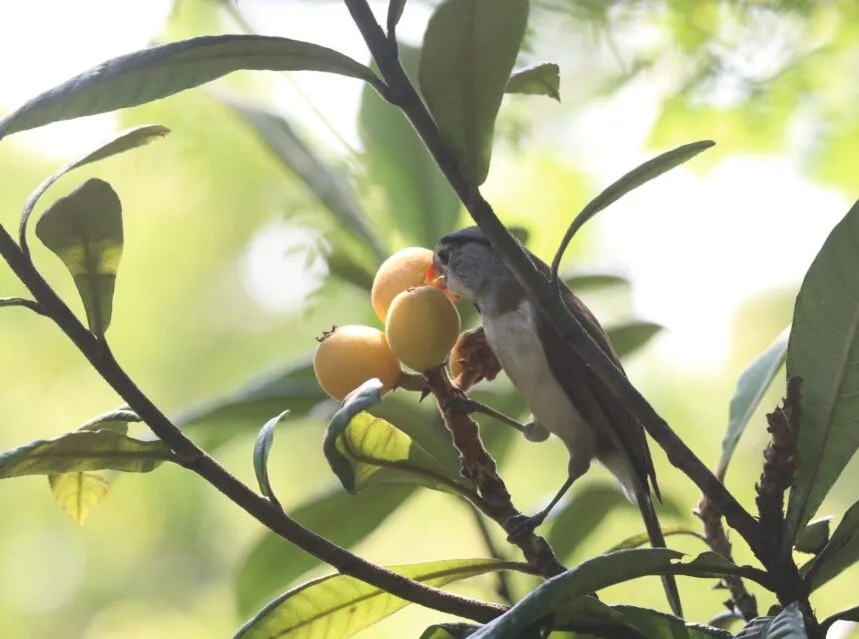
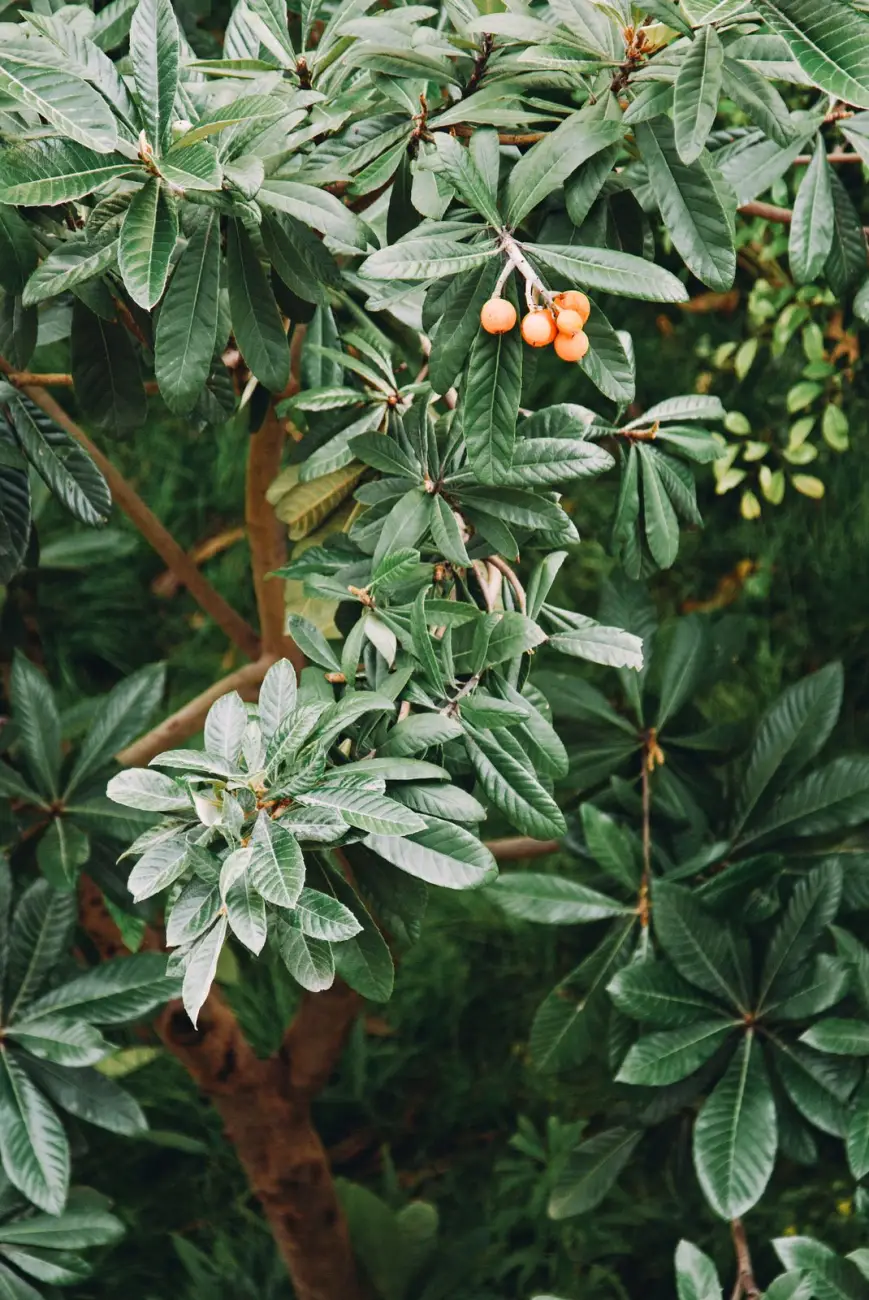
The loquat (Eriobotrya japonica) is a handsome evergreen fruit tree grown for its sweet-tart, golden-orange fruit and bold, glossy foliage — and it breaks all the usual fruit-tree rules. It flowers in autumn and winter and ripens its fruit in early spring, filling the “hungry gap” when little else is cropping. The small fruits taste like a cross between apricot and citrus, and the foliage is ornamental year-round. Here is the complete guide on how to grow a loquat tree.
Quick start: Grow loquat in full sun (6–8 hours) in fertile, well-drained, slightly acidic soil. It is self-fertile (one tree fruits, though a partner improves cropping). Keep it moist while young, feed in spring, prune lightly to shape, and protect flowers and fruit from hard frost (the blossom is killed at about −3 °C / 27 °F). Grafted trees fruit in 2–3 years; the fruit ripens late winter to early spring.
The loquat is a handsome evergreen fruit tree with an unusual rhythm, flowering in autumn and ripening its sweet, tangy fruit in late winter or spring. Growers in cooler areas find this is its weak point, as a hard frost can spoil the flowers or developing fruit, so a sheltered, sunny spot matters. Once established it is drought-tolerant and easygoing, and many types are self-fertile, so a single tree will crop. Even where it fruits little, its bold, glossy foliage makes it a fine ornamental.
🧰 In a hurry? Jump straight to our tested picks for this guide ↓
Loquat at a glance
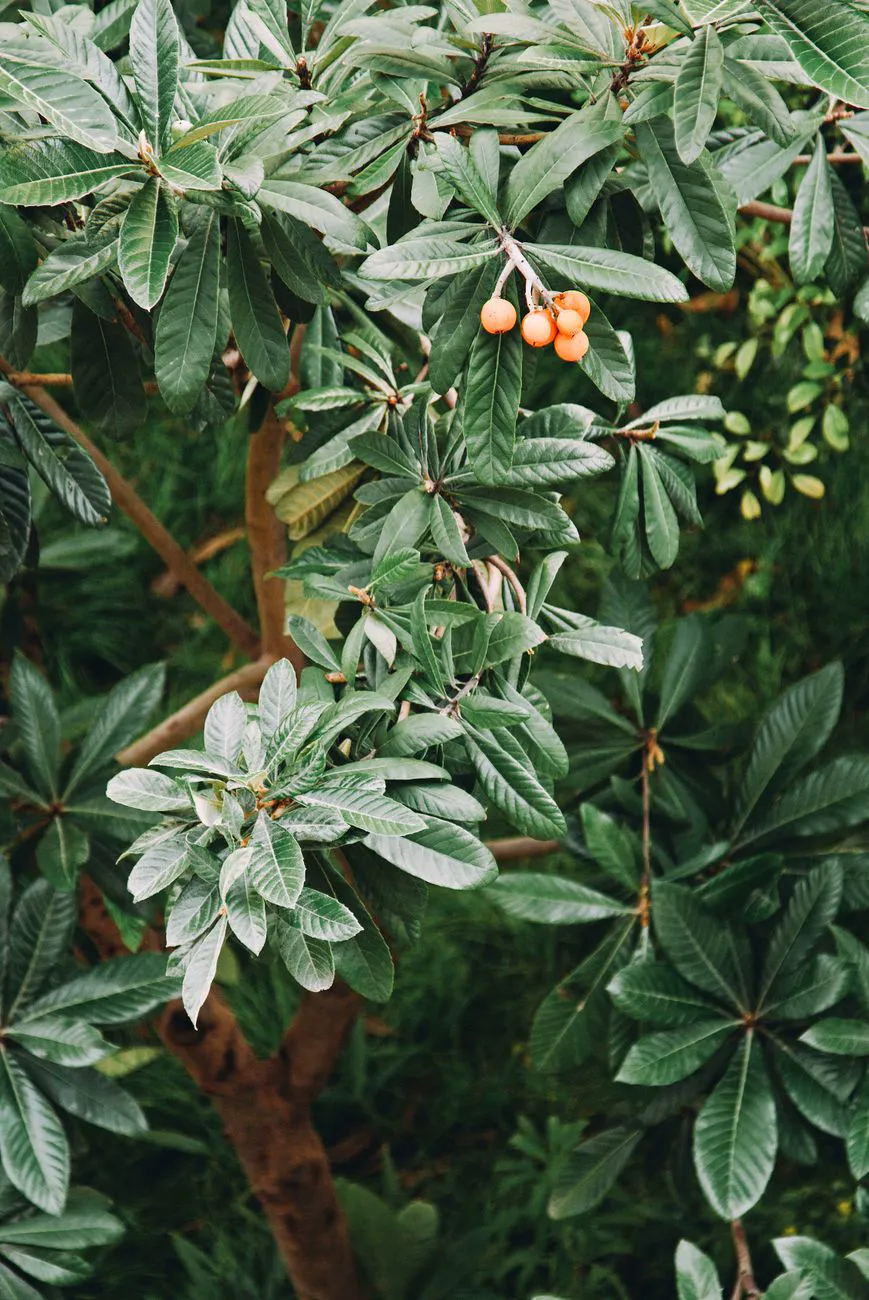
| Feature | Detail |
|---|---|
| Botanical name | Eriobotrya japonica (family Rosaceae) |
| Plant type | Evergreen subtropical fruit tree |
| Sun | Full sun (6–8 hours) |
| Soil | Fertile, well-drained, slightly acidic |
| Pollination | Self-fertile (partner helps) |
| Unusual timing | Flowers autumn/winter, fruits late winter to early spring |
| Key risk | Hard frost on blossom and young fruit |
| First fruit | 2–3 years (grafted) |
Why grow a loquat tree?
Loquat gives you fruit in early spring, when almost nothing else is ripe. A few reasons to grow it:
- Off-season fruit. It crops in a gap when other trees are bare.
- Handsome evergreen. Bold, glossy foliage and fragrant winter blossom look good all year.
- Low-maintenance. It is fairly hardy and largely pest-free.
- A real treat. The perishable fruit is rarely sold, so homegrown is special.
History, origin & how loquat spread
The loquat is native to the cooler hill regions of south-central China, where it grows naturally at 900–2,000 m and has been cultivated for over a thousand years (see Eriobotrya japonica). It spread early to Japan, which gave it its botanical name. Both countries have long traditions of growing and eating it.
From East Asia, the loquat travelled to the Mediterranean, India and the warm Americas. It naturalised in many mild-winter regions. Its handsome evergreen form also made it a popular ornamental.
Today it is grown across China (by far the top producer), Spain, Turkey and Pakistan, plus Japan, India and warm parts of the US. China grows around 400,000 tonnes a year, more than five times the output of Spain in second place on about 41,000 tonnes (Wikipedia on loquat cultivation); FAO publishes no world total, as the loquat has no item of its own in the crop statistics. It is subtropical to warm-temperate. The tree itself is fairly hardy, but its autumn and winter flowers and young fruit are damaged by hard frost. So it crops best in mild-winter areas and sheltered spots.
Best season & when to plant
Plant loquat in spring, once all frost risk has passed and the soil has warmed. In areas with mild winters, autumn planting works just as well and lets the roots settle before the first summer of heat. Either way, choose a sheltered, sunny position. Unusually, it flowers in autumn to early winter and ripens fruit in late winter to early spring. Grafted or cutting-grown trees fruit in 2–3 years; seed-grown trees take 6–8 years and vary in quality, so grafted stock is best for fruit.
When to plant a loquat tree — and will it actually fruit where you live?
Most guides answer this with a single number, and a single number cannot describe loquat. Remember where it comes from: the cool hill country of south-central China, not the lowland tropics. That origin explains everything awkward about the tree.
It is squeezed from both ends. The tree itself is tough, though the two extension services do not fully agree on how tough. UF/IFAS Extension puts an established tree at 8 to 10 °F (−13 to −12 °C), while Clemson Extension gives 12 °F (−11 °C) and lists loquat for USDA hardiness zones 8b to 10.
But loquat flowers in autumn and early winter, and those flowers are killed at only about −3 °C (26–27 °F). Developing fruit goes a shade earlier still, at roughly −4 °C (25 °F), when the seed is killed and the fruit simply drops.
So in a cold-winter climate you can keep a handsome, healthy loquat for years and never get fruit. The tree survives; the crop does not. As a rough rule, growers report fruit ripening where winters stay above about −7 °C (20 °F).
The other end matters just as much and is almost never mentioned. Loquat also dislikes fierce heat while it is carrying fruit. Indian growing guidance asks for summer temperatures below about 35 °C (95 °F), especially from April to June when the fruit is filling. That is why loquat does well in Himachal Pradesh, Uttarakhand, the Nilgiris and the cooler parts of Maharashtra, yet struggles on the hot plains. On the plains you can still grow it with afternoon shade and reliable irrigation, but expect a smaller, softer crop.
How to plant and grow loquats
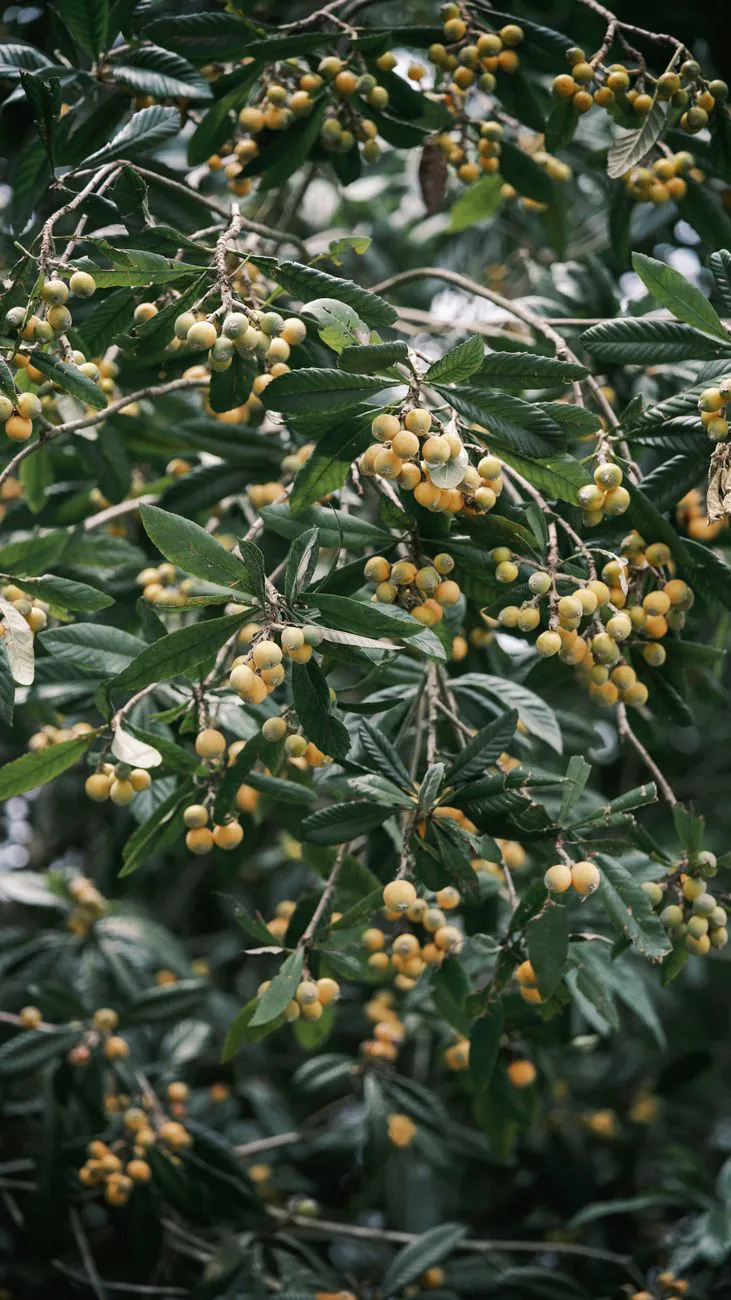
- Choose a full-sun spot (6–8 hours; part shade is tolerated but means lighter crops), sheltered from hard frost, in fertile, evenly moist, well-drained loam (pH 5.5–6.5) rich in organic matter (see improving garden soil).
- It is self-fertile, so one tree fruits, but a second cultivar nearby improves fruit set and size.
- Mulch around the base, keeping it off the trunk, to hold moisture; grow in a large pot in marginal climates.
| Planting | Guidance |
|---|---|
| Spacing | 6–8 m between trees (Punjab practice is 6–7 m). They spread about as wide as they grow tall. |
| Pit | About 75 × 75 × 75 cm, planted into roughly a metre of loosened soil. |
| Planting season | June to September, so the young tree settles in with the monsoon. |
| First fruit | From the third year on a grafted tree; full stride at about 15 years. |
| Harvest | Late March to April in the plains and lower hills; February to May across India as a whole. |
| Yield | Reported figures vary widely, roughly 15 to 100 kg per tree depending on age, variety and care. Treat any single number you read with caution, because a young tree sits at the bottom of that range for years. |
| Varieties | Early: Golden Yellow, Pale Yellow, Thames Pride. Mid: Large Agra, Safeda, Fire Ball. Late: Tanaka, California Advance. |
Loquat is thirsty at two moments in particular: while it is flowering, and again as the fruit swells before harvest. Three or four good waterings around harvest time are the norm in Indian orchards. Keep nitrogen moderate, because too much of it gives you a leafy tree and a poor crop, and it also makes the tree more vulnerable to disease.
Watering, feeding & care
Keep the soil consistently moist (not waterlogged) in the first growing season to establish; mature loquats tolerate some drought but fruit better with steady moisture (see how often to water plants). Feed with a balanced fertiliser in early spring, with an optional late-summer feed.
Two things are worth planning for once the basics of loquat care are in hand. The tree is often biennial-bearing, so a heavy year is frequently followed by a light one, and a poor crop is not always your fault. A loquat is also not a lifelong tree. It typically lives 20 to 30 years, so treat it as a productive tree with a working life rather than a permanent feature of the garden.
If you want bigger fruit, thin the clusters while the fruit is still small, leaving roughly four to six fruits per cluster. Fewer fruits mean larger, sweeter ones.
Pruning & frost protection
Prune young loquats in the first 1–2 years by tipping shoots over 2–3 feet to encourage branching, then prune lightly to keep an open, manageable shape, as it is a vigorous grower. Because the flowers and young fruit are frost-sensitive, protect them in cold snaps with fleece, or grow against a warm wall, in marginal areas. This is the main barrier to a good crop.
Using loquat fruit & leaves
Loquat is best enjoyed fresh, straight off the tree. The sweet-tart fruit is delicate and perishable. So a homegrown crop is a real seasonal treat.
A glut also processes well. The fruit makes lovely jams, jellies, pies and chutneys. Some growers even turn it into wine.
The leaves have their own traditional use. They are dried and brewed into loquat-leaf tea. So the tree gives both fruit and a herbal drink, much like other useful fruit trees.
Common pests & diseases
Loquat is generally robust. In the United States the main disease is fire blight, since loquat is in the rose family — remove affected wood well below the damage. Watch also for scale, fruit flies, and birds at the ripe fruit (see sap-sucker control). Good airflow and the methods in our organic pest control guide keep it healthy.
The main disease depends on where you garden
Most English-language advice about loquat disease is really advice about fire blight, which is the big one in the United States. That is useful there, but it is not the problem most growers elsewhere actually meet.
| Where you are | What usually goes wrong |
|---|---|
| United States | Fire blight (Erwinia amylovora) — shoots blacken from the tip downwards. Prune well back into healthy wood, disinfect between cuts, and do not overfeed with nitrogen. |
| India | Bacterial canker (Pseudomonas syringae pv. eriobotryae) and black spot. Among insects, fruit fly and leaf-roller caterpillar do the real damage. |
| Mediterranean & Spain | Loquat scab (Fusicladium eriobotryae) — dark, sunken spots that disfigure the fruit skin. |
One disorder is worth knowing everywhere, because it looks like a disease and is not. Purple spot, a violet blotching of the fruit skin, is a calcium and zinc problem rather than an infection. Feeding for it works; spraying for it does not.
Whatever you use, choose a product that is registered for loquat in your own country. Approvals differ from place to place and change over the years, and older articles often still recommend products that have since been withdrawn.
Harvesting
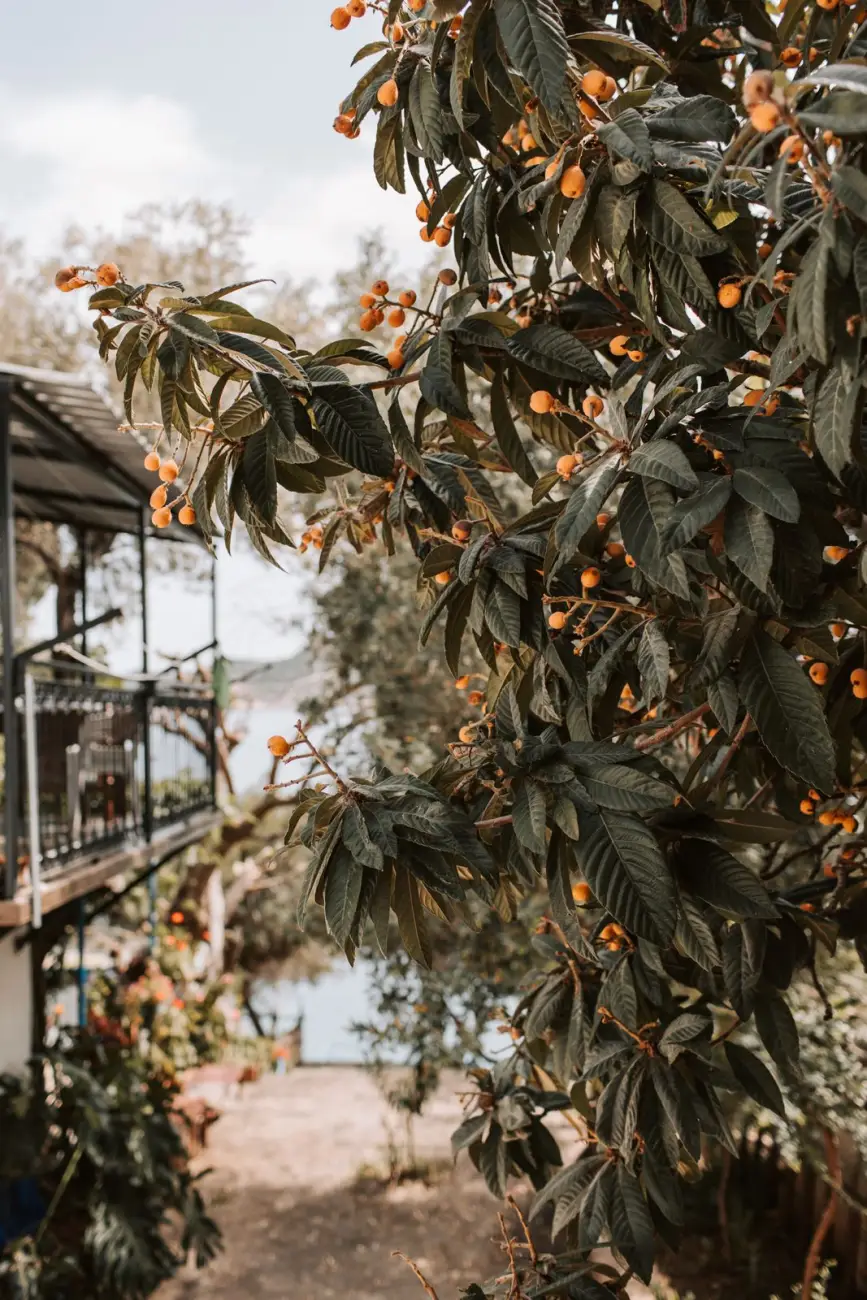
Loquats are ready in late winter to early spring, though the exact date follows your climate: in mild-winter areas the crop can start in February, while in cooler areas it slips to April, May or even June.
Do not go by one colour, because the ripe colour depends on the variety and runs from deep yellow through pale orange to deep orange. Pick when the fruit has reached full colour for its own variety and gives slightly to a gentle squeeze, and taste one or two first to learn what your tree looks like when it is ready.
Loquat is non-climacteric, which is the technical way of saying it does not ripen after picking, so an early-picked fruit stays sour for good. Pick whole clusters by hand or snip them off; the fruit is delicate and perishable, and how you store it matters more than most guides admit.
Do not put loquats in the fridge
Here is the part almost no growing guide tells you. Loquats suffer chilling injury below about 5 °C (41 °F), which is exactly where a domestic fridge sits. The fruit does not rot. It goes quietly wrong instead: the flesh browns inside, turns dry and hard, and the skin sticks to the pulp. You only find out when you cut one open.
At room temperature ripe loquats keep only about 10 days, so this is a fruit to eat, share or cook quickly. If you must hold a large picking, a cool larder or the warmest part of a cellar is far kinder to it than the salad drawer.
Health benefits & uses
Loquats are a good source of vitamin A and potassium, and they carry useful fibre; the leaves also have a long history in traditional medicine as loquat-leaf tea. One point most guides get wrong is worth stating plainly: loquat is not a vitamin-C fruit. USDA figures for raw loquat give about 1 mg of vitamin C per 100 g, against 266 mg of potassium and 1,530 IU of vitamin A (see USDA FoodData Central).
The fruit is eaten fresh, and made into jams, jellies, pies, chutneys and even wine. The fragrant winter flowers are valuable for the few active bees at that time of year (see attracting pollinators). It is a healthy, ornamental and unusual fruit tree.
This article is for general information only and is not medical advice. Talk to a qualified professional before using any plant medicinally.
Common loquat problems
Flowers or young fruit killed
Frost — the autumn and winter blossom is frost-sensitive. Site it sheltered and protect it in cold snaps.
Yellowing leaves
Usually overwatering or poor drainage. Keep soil moist but well-drained, never waterlogged.
Light crops or leggy growth
Too much shade. Give full sun for good flowering and fruit.
One thing to check before you plant
Loquat sets a lot of seed, and birds and mammals move it around, so in mild climates it can escape gardens and seed itself into nearby woodland. You will find guides that say it is not invasive and can be planted anywhere. That is not quite right. Loquat is listed in the Global Invasive Species Database, and in the United States the South Carolina Invasive Pest Council lists it as a species of concern.
This is not a reason to avoid the tree, because in most places it is a well-behaved garden fruit. It is a reason to spend two minutes checking your own state or country’s list before planting, and to pick up windfall fruit if you garden next to woodland or scrub.
Popular loquat varieties
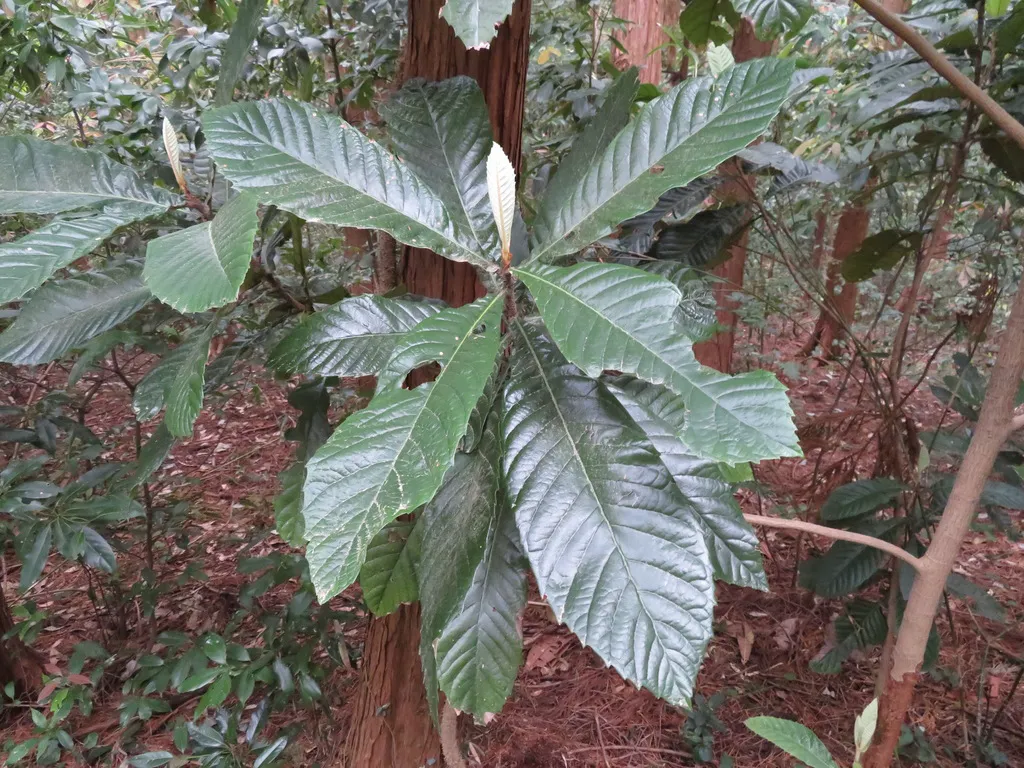
- “Advance”: Early-ripening; white flesh; sweet. Reliable in UK conditions.
- “Tanaka”: Large fruits; orange-yellow flesh; outstanding flavour. One of the most widely grown commercial varieties in Mediterranean countries.
- “Champagne”: White flesh; mild, very sweet; popular in California and the Mediterranean.
- “Big Jim”: Very large fruits (one of the largest loquat varieties); orange flesh; vigorous tree.
- “Gold Nugget”: Reliable heavy cropper; good cold tolerance; popular in California home gardens.
Related plant guides
- How to grow Persimmon
- How to grow Guava
- How to grow Peach
- How to grow Grapefruit
- How to grow Nectarine
- How to grow Jamun
Frequently asked questions
When does loquat fruit?
Unusually, it flowers in autumn and winter and ripens fruit in late winter to early spring, filling a welcome gap when little else crops.
Do I need two loquat trees?
No — loquat is self-fertile, so a single tree fruits, though a second cultivar nearby improves fruit set and size.
Why doesn't my loquat set fruit?
Usually frost damaging the early flowers or young fruit. Shelter it and protect the blossom in cold weather. Too much shade can also reduce flowering.
How many years until a loquat tree bears fruit?
Grafted or cutting-grown trees fruit in 2–3 years; seed-grown trees take a slow 6–8 years.
Can I grow loquat in a pot?
Yes, a grafted tree in a large container. A pot also lets you move it to shelter the blossom from hard frost.
Do loquats ripen off the tree?
Not well. Unlike some fruit, they need to ripen fully on the tree. So leave them until they have reached full colour for their variety, which may be deep yellow or orange, and give slightly to a squeeze.
Should I thin loquat fruit?
Yes, it helps. Thinning the young clusters gives larger, sweeter fruit. It also eases the load on the branches and improves the overall quality.
Is the loquat tree hardy?
The tree itself is fairly hardy. Its autumn and winter flowers and young fruit, though, are frost-tender. A sheltered spot protects the crop.
Can I grow loquat from seed?
You can, but it is slow and variable. Seed-grown trees take 6–8 years and may not come true to the parent. A grafted tree fruits far sooner.
What does loquat fruit taste like?
Sweet-tart and refreshing, like a cross between apricot and citrus. The flavour is best when the fruit is fully ripe and soft on the tree, not picked early.
Are loquat seeds poisonous?
The ripe flesh is perfectly safe, but the large brown pips are not for eating. Loquat seeds and young leaves contain small amounts of cyanogenic glycosides, including amygdalin, which release cyanide when broken down in the gut. In practice the amounts are low and the bitterness stops anyone swallowing many, so an accidentally swallowed whole pip is not a crisis. Still, never crush, grind or blend the seeds into drinks or purees, and sweep up fallen fruit so dogs do not chew the stones.
Why is my loquat tree losing leaves or going brown at the tips?
Sudden blackening of shoot tips with leaves that hang on like scorched paper usually means fire blight, a bacterial disease loquats are prone to. Cut well below the damage into clean wood and disinfect the blades between cuts. Broad yellowing with leaf drop instead points to waterlogged roots, so check that the soil actually drains and ease off watering. Brown crispy leaf edges after a cold snap or a windy spell are simply desiccation, and the tree normally pushes fresh growth once warmth returns.
Still stuck? Ask the Plant Doctor
Describe the problem — yellow leaves, holes, no flowers — and get a clear answer in seconds. FreeAI can make mistakes. Answers are guidance, not a guarantee — check anything important against the guide it links to, and always read the label on any product before you use it.