How to Grow a Jamun Tree (Java Plum)
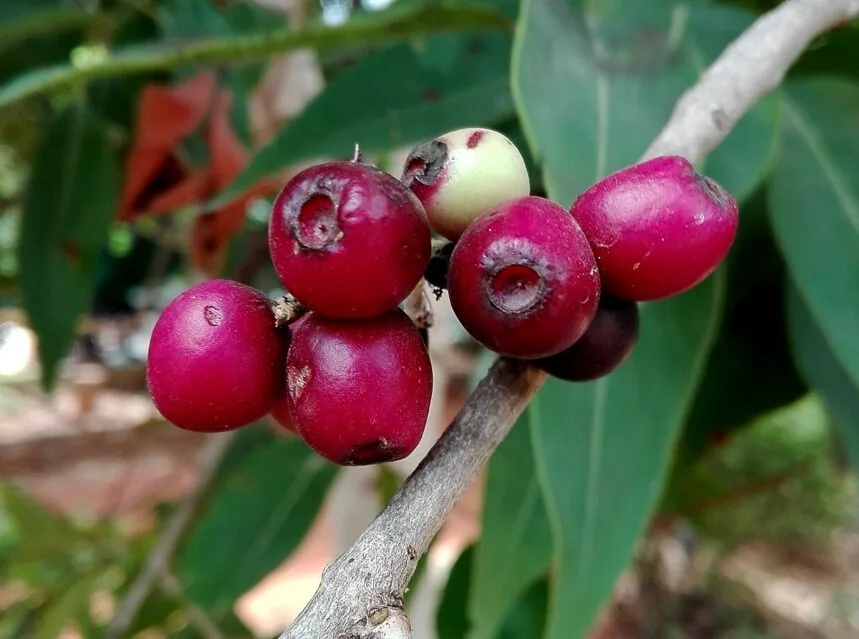 Image: Adityamadhav83 — CC BY-SA 4.0, via Wikimedia Commons
Jamun (Syzygium cumini), also called Java plum or black plum, is a much-loved tropical fruit tree. Each summer it drops clusters of glossy, deep-purple-to-black fruits with a sweet-tart, astringent flavour that famously stains your tongue purple. Beyond the fruit, it’s a large, handsome, fast-growing shade tree, valued in India for both food and traditional medicine. Here is the complete guide on how to grow a jamun tree (Java plum).
Quick start: Grow jamun in full sun in deep, well-drained loamy soil. It’s a warm-climate tree (USDA zones 9–11) — protect it from frost, or grow it in a large pot you can move. Water young trees regularly, feed once a year, and be patient: it fruits in about 4–8 years from seed. The black fruits ripen in summer.
Jamun, the java plum, is a large, handsome, fast-growing tree valued for both its deep shade and its astringent purple fruit. Growers find it remarkably tough and low-maintenance once established, and it crops heavily in the monsoon season. A word of warning: the ripe fruit stains hands, clothes and paving, so it is best sited away from patios. It is long valued in traditional medicine, especially for blood-sugar support; for any medicinal use, consult a professional.
🧰 In a hurry? Jump straight to our tested picks for this guide ↓
Jamun at a glance
| Feature | Detail |
|---|---|
| Botanical name | Syzygium cumini (family Myrtaceae) |
| Common names | Jamun, java plum, black plum |
| Plant type | Large, fast-growing evergreen tree |
| Sun | Full sun |
| Soil | Adaptable; well-drained, deep |
| Climate | Tropical to subtropical, frost-tender when young |
| Fruiting | Purple fruit in the monsoon months |
Why grow a jamun tree?
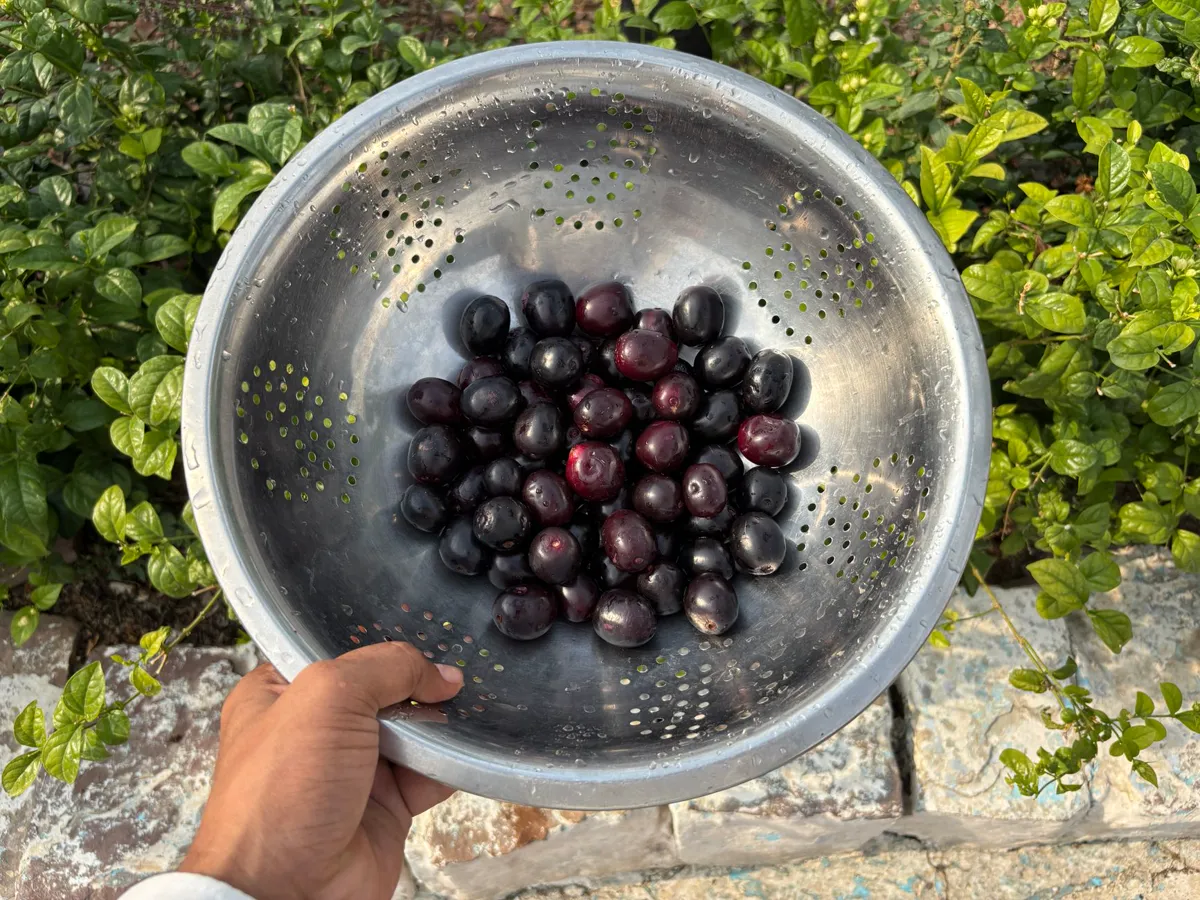
Jamun gives you a delicious, nutritious summer fruit that’s hard to buy fresh outside the tropics, plus a fast-growing shade and ornamental tree. The fruit is prized in traditional medicine (especially for blood-sugar support), the tree supports birds and pollinators, and it’s tough and low-maintenance once established. For warm-climate gardeners and the diaspora craving a taste of home, it’s a wonderful tree.
Where jamun grows best
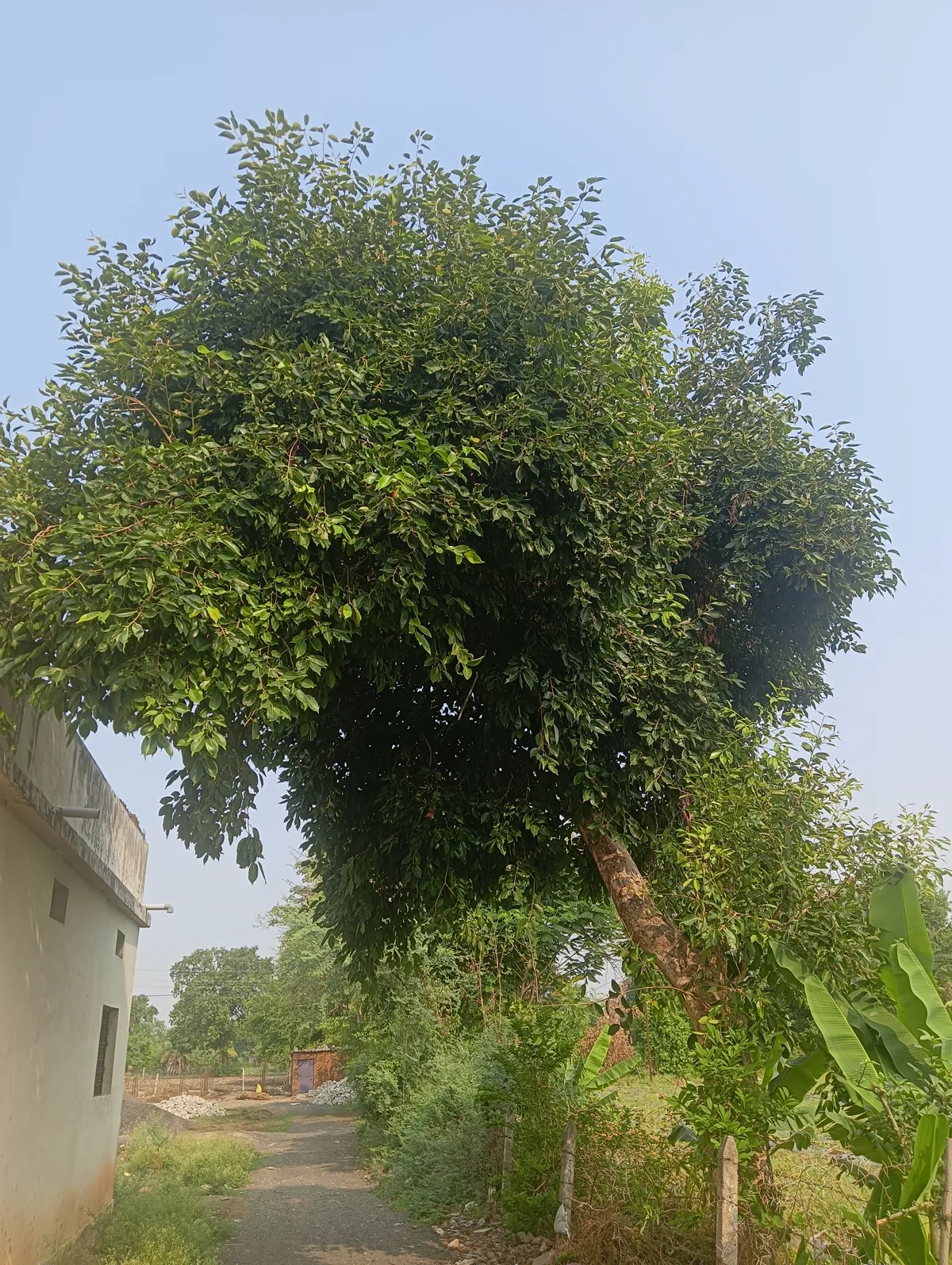
Jamun (Syzygium cumini) is native to the Indian subcontinent and Southeast Asia, and its natural range also reaches southern China, Indonesia and Queensland in Australia. India is the largest grower, and in summer the fruit is everywhere in Indian markets. It is a tropical-to-subtropical tree, comfortable in USDA zones 9–11. In cooler parts of the US and in the UK it needs a greenhouse or a container you can move.
It is a big tree. In good conditions it reaches 25–30 m (80–100 ft) and lives well over a century. Plan for that before you plant one in a small garden.
⚠️ Before you plant it in the United States: check your state
This is the part most growing guides leave out, and it matters. Jamun was introduced to Florida in 1911 by the USDA for its fruit and its looks. It escaped. It is now listed as a Category I invasive in central and south Florida, where its fast growth and dense canopy shade out native trees in hammocks, pine flatwoods and uplands, and birds and wild boar spread the seed widely.
UF/IFAS is direct about the conclusion: it does not recommend planting or propagating java plum in Florida, and suggests native alternatives instead. It is also recorded as invasive in Hawaii, and in parts of South Africa, the Caribbean and several Pacific islands.
None of that applies in India, Bangladesh, Sri Lanka or Southeast Asia, where jamun is native and belongs. The honest summary is simple: where jamun is native, plant it freely; where it is not, check your local invasive-species list first. A tree that lives a hundred years and seeds itself around is not a decision to take casually.
Best season & when to plant
Plant jamun in late spring or early summer, once night temperatures stay reliably above 50°F (10°C). The tree flowers in spring, and the fruit ripens through summer (around June–August), turning from green to deep purple-black. In frost-prone regions, time planting so young trees have a full warm season to establish.
How to plant and grow jamun
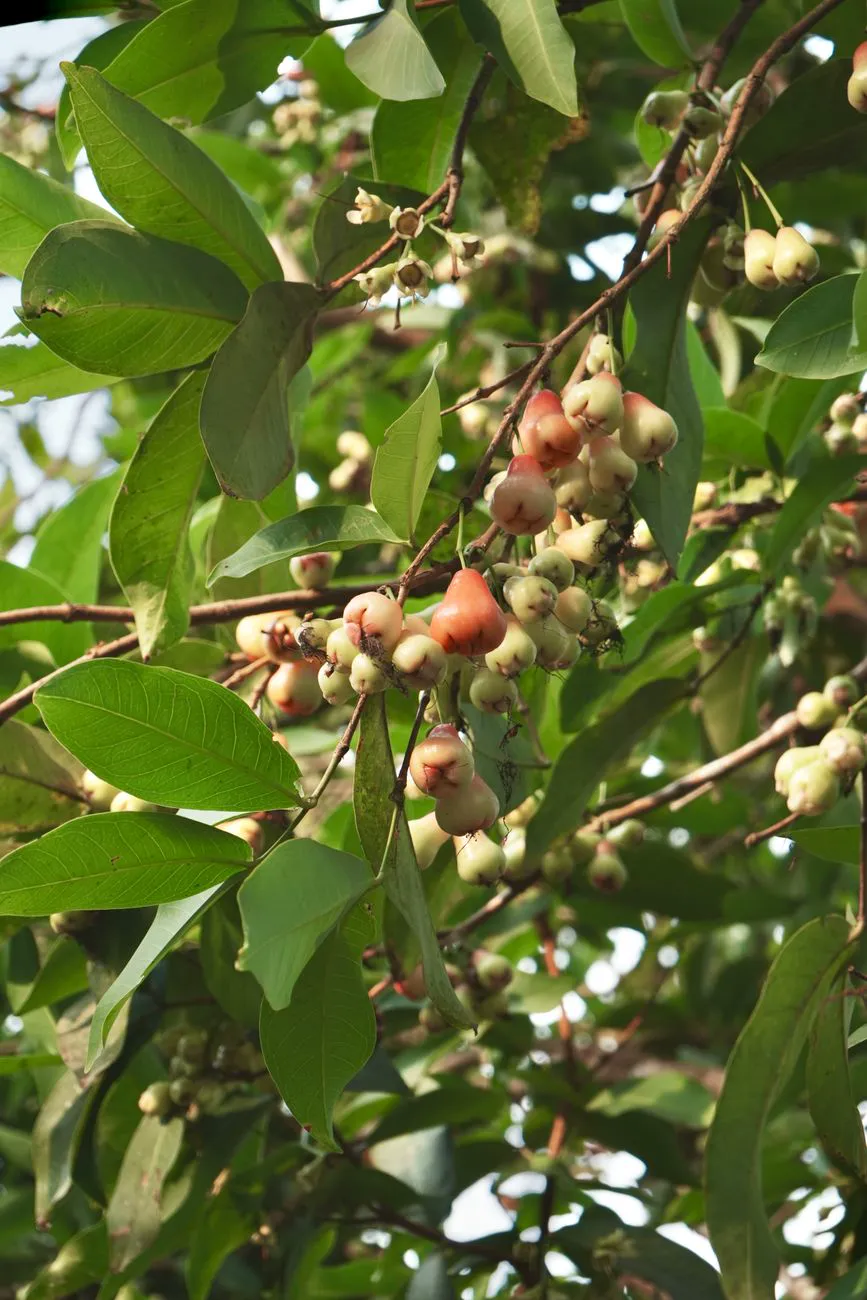
- Grow from fresh seed (clean off all pulp, soak overnight, then sow) or, better, a grafted sapling for earlier, more reliable fruit.
- Choose a full-sun spot (6–8 hours) with deep, well-drained loamy soil, pH about 5.5–7.5, enriched with compost (see improving garden soil).
- Dig a generous hole, plant at the same depth as the rootball, firm in, and water well. In cold climates, plant in a large pot to bring indoors over winter.
Sun, soil, watering & feeding
Jamun needs full sun and good drainage. Water young trees regularly (about twice a week in dry spells), letting the soil dry slightly between waterings; established trees are moderately drought-tolerant but crop better with steady moisture during flowering and fruiting (see how often to water). Feed once a year with a balanced fertilizer plus organic matter — avoid overfeeding, which favours leaves over fruit.
Pruning
Jamun needs little pruning. Once a year — in the dormant season or after fruiting — remove dead, damaged, or crossing branches to open up the canopy for light and airflow. Prune to keep a manageable shape, especially for container or smaller-garden trees, as it can otherwise become very large.
Common pests & diseases
Jamun is genuinely tough. Most gardeners never spray it. The problems that do appear are concentrated on the fruit rather than the tree.
| Problem | What you see | What to do |
|---|---|---|
| Fruit flies | Soft, weeping patches on ripening fruit; maggots inside | The main pest of the crop. Pick promptly and clear fallen fruit daily — rotting fruit on the ground is what keeps the cycle going |
| Leaf-eating caterpillars | Chewed leaves, sometimes whole shoots stripped | Cosmetic on a large tree. Hand-pick on young trees, or use the methods in our organic pest control guide |
| Scale and mealybugs | Sticky leaves, black sooty mould, ants on the trunk | Horticultural oil on reachable growth. See sap-sucker control |
| Leaf spot and anthracnose | Dark blotches on leaves in humid weather | Rarely serious. Thin the canopy for airflow rather than reaching for a spray |
| Termites | Mud tracks up the trunk, usually on stressed or newly planted trees | Keep mulch off the trunk itself and keep young trees watered; healthy trees are rarely troubled |
| Birds and bats | Fruit disappearing as it ripens | Not a pest problem so much as a fact of the tree. Net a branch or two if you want a share; most growers simply accept it |
Flower and fruit drop
The most common real complaint is that flowers or tiny fruit fall before they size up. The usual causes are uneven watering, cold or windy weather during flowering, and poor nutrition. The practical fix is unglamorous: keep the water supply steady from flowering right through fruit development, and water again in September–October, which is when next season’s buds are being set. Indian research stations also use a growth-regulator spray at full bloom for commercial crops, but that is an orchard practice, not something a home gardener needs.
Harvesting and storing jamun
Jamun tells you clearly when it is ready, and then gives you almost no time to act.
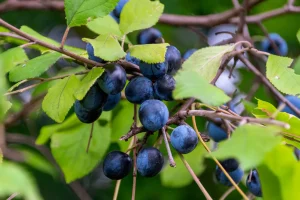
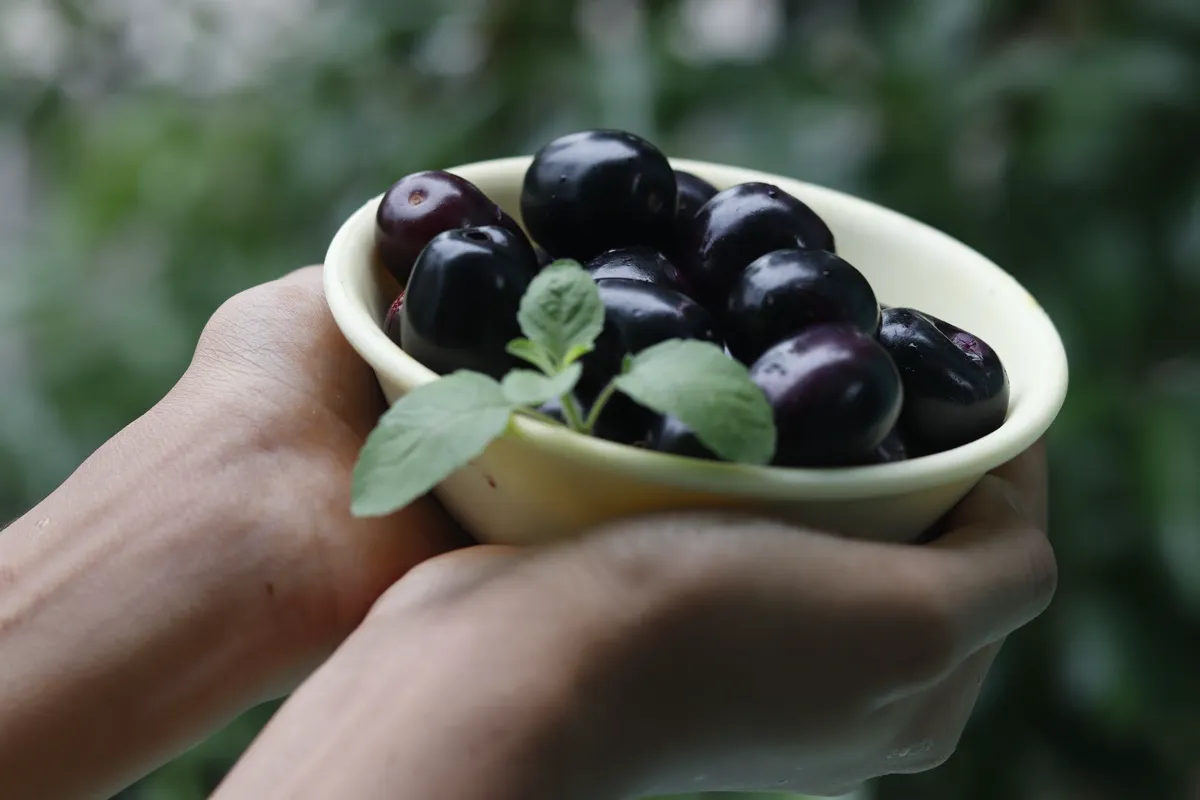
Ripe fruit is deep purple to glossy black, has reached full size (about 1.5–2.5 cm), feels slightly soft under gentle pressure, and detaches easily. Green, pink or red fruit is unripe and fiercely astringent — it will pucker your mouth. The fruit runs through green, then pinkish-purple, then crimson, then black, so colour alone is a reliable guide once you have seen the sequence.
Fruit is normally ready 70 to 90 days after flowering, which in most of India means picking from June through August. The tree does not ripen its crop all at once, so expect to pick several times over a few weeks rather than harvest in one go.
Two practical warnings. First, ripe jamun will not wait on the tree — pick it as it colours, or it drops. Second, jamun stains everything: hands, mouths, clothes and paving. Plan where you stand.
| How you store it | How long it lasts |
|---|---|
| Room temperature, as picked | 3–4 days at best |
| Refrigerated, about 5–10 °C at high humidity | 5–7 days |
| De-seeded pulp, frozen | Up to about 6 months |
| Juice, squash, vinegar, jam | The traditional answer, and the reason those products exist |
That short shelf life is exactly why jamun is a great garden tree and a difficult market fruit. A tree at home gives you something you can rarely buy in good condition.
How much fruit will it give — and the seedling paradox
Here is a comparison almost no guide puts in one place, because taken alone each half of it is misleading.
| Grafted tree | Seedling tree | |
|---|---|---|
| First real crop | about 6–7 years (some report 4–5) | about 8–10 years |
| Yield at maturity | 60–70 kg a year | 80–100 kg a year |
| Fruit quality | Known variety: large, sweeter, small-seeded | A lottery — often small, very astringent, big-seeded |
Read the middle row on its own and the seedling looks better. It is not. You wait three or four extra years for a bigger pile of fruit you may not enjoy eating. The grafted tree wins on the two things a home gardener actually cares about: how soon, and how good. Seedlings earn their place as rootstock, not as the tree you plant for fruit.
Well-grown mature trees in favourable climates are sometimes reported at 200 kg. Treat that as an upper bound rather than a target.
Health benefits & uses
Jamun is the fruit most often described online as a diabetes cure. It deserves a more careful answer than that, because the research is genuinely interesting and genuinely limited, and the gap between those two things is where people get hurt.
What the fruit is. Jamun is low in calories and supplies fibre, vitamin C, iron and a large amount of anthocyanins — the same purple pigments that stain your fingers. Reported composition varies widely between varieties, so treat single-number nutrition tables with caution.
What has actually been tested in people. A 2019 review of jamun and metabolic syndrome could find only three human studies in the entire literature, and one of those was a single patient. In the largest, 99 people with poorly controlled type 2 diabetes took jamun seed powder alongside their usual medication for 90 days. A separate double-blind trial of seed powder at 10 g a day for 90 days reported falls of about 15.8% in total cholesterol, 14.5% in LDL and 13.7% in triglycerides, with HDL rising — and its own authors flagged the small sample size and asked for larger multicentre studies.
What that means. Those are real, measured, modest changes in people who were also on standard treatment. They are not evidence that jamun replaces medication, and the review itself concludes that human evidence remains preliminary and insufficient for clinical recommendation. Most of what you will read online — that jamun cures diabetes, repairs the liver, treats arthritis — comes from rat and test-tube studies, and is usually presented with no citation at all.
Real cautions, which the benefit lists usually skip
- If you take diabetes medication, large amounts of jamun or seed powder alongside it can push blood sugar too low. Talk to your doctor before adding it deliberately.
- Before surgery, stop it, for the same blood-sugar reason.
- If you are prone to kidney stones or on a low-oxalate diet, be moderate.
- Eaten in quantity it can cause bloating or constipation, and it will stain your tongue purple for hours.
In the kitchen none of this is complicated. Jamun is eaten fresh with a pinch of salt, which takes the edge off the astringency, and made into juice, squash, vinegar, jam and the dark purple kala khatta syrup. The wood is hard and water-resistant, and has long been used for well linings and railway sleepers.
This article is for general information only and is not medical advice. Talk to a qualified professional before using any plant medicinally, especially if you take medication for diabetes.
Common jamun problems
No fruit yet
Usually just age. Grafted trees crop from roughly six years, seedlings from eight to ten. Full sun matters more than feeding — a shaded jamun grows happily and fruits poorly.
Flowers form, then everything drops
Uneven watering is the usual culprit, along with cold or wind during flowering. Keep moisture steady through flowering and fruit set, and water again in September–October when next year’s buds are forming.
Frost damage
It is frost-tender, especially when young. Protect young trees, or grow one in a pot you can move.
Fruit is small and mouth-puckeringly astringent
Almost always a seedling tree rather than a named variety. There is no cultural fix for this — it is genetics. Graft a good variety onto it, or plant a grafted tree.
The tree is getting too big
It can reach 25–30 m. Head it back early and keep it low from the start; a jamun left for a decade cannot be reduced to a garden-sized tree without damaging it.
History, origin & how jamun spread
Jamun has been grown in South Asia for thousands of years, and it is woven into the region’s food, folklore and traditional medicine far more deeply than most fruit trees. It appears in Buddhist texts, and in the Srimad Bhagavatam Krishna is described bearing the mark of the jambu fruit on his foot. In Maharashtra its leaves are used in wedding decorations, and in Tamil folklore the fruit appears in the well-known story of the poet-saint Avvaiyar.
The name travelled with the tree. It is jamun or jambul across much of India, naval in Tamil, java plum or jambolan in English, and black plum in markets abroad. From its homeland it spread through tropical Asia with traders and settlers, and then far beyond — sometimes deliberately, as in the USDA’s 1911 introduction to Florida, and often with consequences nobody planned for (see the invasive note above).
Botanically it belongs to Syzygium, the same genus as the clove tree, in the myrtle family. Its toughness, speed of growth and tolerance of poor soil are exactly why it became a roadside and shade tree across India long before anyone measured what was in the fruit. Full botanical detail is documented in the species account for Syzygium cumini.
Best varieties & how to propagate jamun
Choosing the right variety and propagation method is what separates a tree that fruits in 4–5 years from a chance seedling that may take 8–10. A jamun cultivar is a named selection bred or chosen for large, sweet, small-seeded fruit and reliable cropping, while propagation is simply how you turn one of these into a new plant. For a quality crop, gardeners almost always want a grafted plant of a named variety rather than a random seedling, because seedlings vary hugely and revert to small, very astringent fruit.
Best jamun varieties to grow
Several improved cultivars have been released by Indian research stations and are worth seeking out from a reputable nursery:
| Variety | Notable for |
|---|---|
| Konkan Bahadoli | A Vengurla (Maharashtra) selection with large fruit (about 25–28 g, roughly 40–50 fruits per kg) and high pulp content (~83%). Also the easiest to graft successfully. |
| Goma Priyanka | Released by the Central Horticultural Experiment Station, Godhra (Gujarat); valued for good-sized, sweet fruit and steady cropping. |
| Narendra Jamun 6 | A Uttar Pradesh selection (Narendra Dev University) suited to North Indian plains. |
| Rajendra Jamun 1 | A Bihar selection for the eastern, humid-monsoon belt. |
| CISH J-42 (seedless) | A near-seedless type from CISH, Lucknow — prized for an almost stone-free, high-flesh fruit. |
For US and UK growers, named clones are scarce, so most container gardeners start with the best grafted “Java plum” or “jambolan” stock a tropical-fruit nursery can supply. A rare white-fruited variant also exists, grown more as a curiosity than for market.
Growing jamun from seed
Jamun seed is recalcitrant — it cannot be dried and stored like a packet seed, and it loses viability within roughly two weeks at room temperature. So sow it fresh. Scoop the seed from a ripe fruit, wash off all pulp, and sow within a day or two for the best strike; trials show germination near 100% when seed is sown almost immediately after extraction. Helpfully, jamun seed is often polyembryonic (it can carry several embryos, sometimes up to four), so a single seed may throw two or three seedlings — a bonus for raising rootstock.
Sown in warm, moist, well-drained mix, fresh seed usually germinates in about 10–15 days. Remember that seedlings are unpredictable and slow to fruit, so use them mainly as rootstock for grafting.
Grafting and air layering
Softwood grafting is the standard way to multiply a chosen variety, and timing is everything. Research from Indian fruit stations records very high success — around 90% or more — when softwood grafts are done in the warm, humid pre-monsoon to monsoon window (broadly May to September), with the variety Konkan Bahadoli among the most reliable. Graft a scion of your chosen cultivar onto a healthy 1–2-year-old jamun seedling rootstock, keep it humid and shaded, and watch for sprouting in roughly three to four weeks.
Air layering is an alternative for home growers: layers made in the early monsoon (June–July) root best, and a dab of rooting hormone (IBA) on the wounded stem markedly improves rooting. Whichever method you choose, propagating from a known variety is the surest route to early, dependable, good-quality fruit.
Jamun, birds & garden wildlife
A fruiting jamun is one of the busiest trees you can plant. Bulbuls, mynas, barbets and koels work the canopy through the season, and in many places fruit bats take the night shift. Whatever you do not pick will be eaten.
Most gardeners simply accept this, and it is worth understanding why that is the sensible position. The tree is a heavy cropper — a mature one carries far more than a household can use in the few days each picking stays good. Netting a whole 25 m tree is neither possible nor necessary. If you want a reliable share, net one or two reachable branches as the fruit colours and leave the rest.
There is a flip side worth knowing, and it is the same fact that makes the tree invasive outside its native range: those birds and bats carry the seed a long way. Inside India and Southeast Asia this is just how the tree has always worked. In Florida or Hawaii it is precisely the mechanism that spreads it into native woodland.
As a large evergreen it also earns its place for shade. The canopy is dense enough to cool the ground beneath it noticeably, which is why jamun lines so many Indian roads and school grounds. Given space, sun and a little care while it establishes, it becomes a long-lived, genuinely low-maintenance tree that feeds a household — and a good deal of local wildlife — for decades.
Related plant guides
- How to grow Chikoo
- How to grow Gulmohar
- How to grow Karonda
- How to grow Moringa
- How to grow Mulberry
- How to grow Noni
Frequently asked questions
How long does a jamun tree take to fruit?
About 4–8 years from seed; grafted trees fruit considerably sooner.
Can I grow jamun in the US or UK?
Outdoors only in frost-free, warm areas (like Florida); elsewhere grow it in a large container that can overwinter in a greenhouse or indoors.
Why does jamun stain purple?
The deep colour comes from anthocyanin pigments — the same antioxidants that make the fruit so healthy.
Are jamun seeds useful?
Yes — the seeds are dried and powdered in traditional medicine, particularly for blood-sugar support, though you should consult a professional before medicinal use.
How big does a jamun tree get and how far apart should it be planted?
A mature jamun is a genuinely large evergreen tree, commonly 15-20 metres tall with a broad dense canopy, and old specimens go higher. Orchards space trees around 8-10 metres apart each way, and in a garden it needs the same clearance from buildings, walls, and other trees. Seedlings grow slowly in their first year and then accelerate sharply, often reaching 3-4 metres within two years.
Should I buy a grafted jamun or a seedling?
Grafted, if you want fruit in a reasonable time. A seed-grown tree typically takes seven to ten years to begin bearing and its fruit quality is a lottery, whereas a grafted plant of a named selection such as Ra Jamun starts cropping in about three to four years and gives predictable large, low-seed fruit. Seedlings are still useful as rootstock or where you simply want a big shade tree.
Can a jamun tree be grown in a pot?
Only as a long-term container project, and you should be realistic about the yield. Choose a grafted dwarf-habit plant, the largest container you can manage with generous drainage, and expect to prune both top and roots every few years to keep it manageable. It will fruit modestly at best — this is a large forest tree by nature, and a pot fights that at every stage.
How do you prune a jamun tree?
Keep it light and structural. In the first two or three years, train a clear trunk to around a metre and select three or four well-spaced main branches to build an open framework. After that, restrict yourself to removing dead, diseased, crossing, and low-hanging branches plus any rootstock suckers, ideally right after harvest. Heavy pruning is unnecessary and simply removes the wood that would have carried next season’s flowers.
What soil and water does a jamun tree need?
It is famously undemanding, growing on clay, loam, sandy soil, and even mildly saline or waterlogged-prone ground that defeats most fruit trees — one reason it is planted along canals and roadsides across India. Deep, well-drained loam still gives the best growth and cropping. Water young trees regularly for their first two or three dry seasons, after which an established tree is markedly drought-hardy and needs little irrigation.
What pests and diseases affect jamun trees?
Fruit fly is the main problem, laying eggs into ripening fruit and leaving maggots inside — collect and destroy fallen fruit rather than leaving it under the tree, and use bait traps through the season. Leaf-eating caterpillars and bark-eating caterpillars occasionally need attention, and leaf spot can appear in prolonged wet weather. Overall the tree is one of the tougher, lower-maintenance fruit trees you can plant.
When is the best time to plant a jamun tree?
The monsoon, or the start of the rainy season in your region, is ideal because reliable moisture lets the roots establish quickly without constant irrigation. Where irrigation is available, spring planting works too. Dig a generous pit, mix the backfill with well-rotted manure and compost, and stake the young tree if the site is windy, since the top growth outpaces the root system early on.
When is jamun season in India?
The main harvest falls in the hot months of roughly June to August, arriving with or just before the monsoon, which is why jamun is so strongly associated with the rainy season. Flowering happens around March to April, and the fruit takes a few months to mature after that. Exact timing shifts by a few weeks between the northern plains and the peninsular south.
How do you know when jamun is ripe, and how do you pick it?
Ripe fruit turns deep purple-black all over, softens slightly, and detaches with the gentlest pull — anything still reddish is sour and astringent. Because the fruit bruises very easily and falls readily, most growers spread a sheet or net under the tree and shake the branches rather than picking one by one. Handle the harvest gently and use it quickly, since jamun keeps only a couple of days at room temperature.
Why does jamun turn your tongue purple?
The colour comes from anthocyanins, the same class of water-soluble pigments that colour blueberries and black grapes. They bind readily to the proteins in your mouth, which is why the stain is so immediate and so stubborn. It is harmless and fades within a few hours — and the purple tongue is very much part of the fun of jamun season for most Indian children.
How do you store jamun or preserve it?
Fresh jamun is highly perishable and lasts only two to three days at room temperature, or about a week refrigerated in a single layer rather than piled up. The traditional answers are preservation rather than storage: jamun juice, squash, vinegar, and jam all keep for months, and the fruit also freezes well once destoned. Wash the fruit only just before use, since wet fruit spoils faster.
Does jamun need another tree for pollination?
No — jamun flowers are largely self-fertile and a single tree crops perfectly well on its own. Bees do most of the pollination work, so avoid spraying insecticide during flowering if you want a good set. Planting more than one tree does not improve pollination noticeably, though it does spread the harvest if the trees are different selections.
Is the jamun tree invasive?
In India it is a long-established native and no cause for concern, but outside its home range it is a different story. Syzygium cumini is listed as an invasive species in Hawaii, parts of Florida, and several Pacific and Caribbean islands, where birds spread the seed into native forest and dense stands crowd out local vegetation. Check your local invasive-plant list before planting it anywhere outside South and Southeast Asia.
What is jamun seed powder used for?
Dried and ground jamun seed has a long history in Ayurvedic and folk practice, most commonly associated with blood-sugar support, and some preliminary studies have looked at compounds in the seed. The evidence in people remains limited and far from settled, so it should not be treated as a substitute for prescribed treatment. Anyone managing diabetes or taking medication should speak to a doctor before using it. This is general information only, not medical advice.
Is it legal or wise to plant a jamun tree in Florida?
Think twice. Java plum was brought to Florida by the USDA in 1911 and has since escaped into natural areas, where it is listed as a Category I invasive in the central and southern parts of the state. UF/IFAS does not recommend planting or propagating it and points growers to native alternatives instead. It is also recorded as invasive in Hawaii and parts of the Caribbean and the Pacific. Where jamun is native, none of this applies.
How many years does a jamun tree take to fruit?
A grafted tree of a named variety usually gives its first real crop from about six or seven years, and some growers report fruit at four to five. A seedling normally takes eight to ten. Full sun makes more difference than feeding does, so a tree that is growing well but shaded may simply never crop properly no matter how long you wait.
Do seedling jamun trees really yield more than grafted ones?
Yes, and that figure is misleading on its own. Mature seedlings are often quoted at 80 to 100 kg a year against 60 to 70 kg for grafted trees. But the seedling takes several extra years to get there, and its fruit is a genetic lottery that frequently turns out small, big-seeded and very astringent. For a home garden the grafted tree wins on the two things that matter: how soon it fruits, and whether you enjoy eating it.
How do I know when jamun is ripe?
Ripe fruit is deep purple to glossy black, has reached full size at roughly 1.5 to 2.5 cm, gives slightly under gentle pressure and detaches easily. Green, pink or red fruit is unripe and extremely astringent. Fruit is usually ready 70 to 90 days after flowering, and the tree ripens in waves, so expect to pick several times over a few weeks rather than all at once.
How long does jamun keep after picking?
Not long, and this is the fruit’s real limitation. At room temperature it holds three to four days at best. Refrigerated at around 5 to 10 °C in humid conditions it stretches to five to seven days. De-seeded pulp freezes well for about six months. This short life is exactly why jamun is turned into juice, squash, vinegar and jam, and why a tree at home gives you something you can rarely buy in good condition.
Can jamun replace my diabetes medication?
No. That claim is everywhere online and it is not supported. A review of jamun and metabolic syndrome found only three human studies in the whole literature, one of them a single patient. A double-blind trial of 10 g of seed powder a day for 90 days did report modest falls in cholesterol, LDL and triglycerides, but its own authors flagged the small sample size and called for larger studies, and the participants stayed on their usual medication throughout. Jamun is good food, not a treatment. If you take diabetes medication, large amounts can push blood sugar too low, so speak to your doctor first.
Why is my jamun fruit small and mouth-puckering?
Almost certainly because the tree is a seedling rather than a named variety. Jamun seedlings vary enormously and many revert to small, very astringent fruit. No amount of feeding, watering or pruning changes this, because it is genetics rather than culture. The options are to graft a good variety onto the existing tree or to plant a grafted one.
Still stuck? Ask the Plant Doctor
Describe the problem — yellow leaves, holes, no flowers — and get a clear answer in seconds. FreeAI can make mistakes. Answers are guidance, not a guarantee — check anything important against the guide it links to, and always read the label on any product before you use it.