How to Grow Karonda (Carissa carandas)
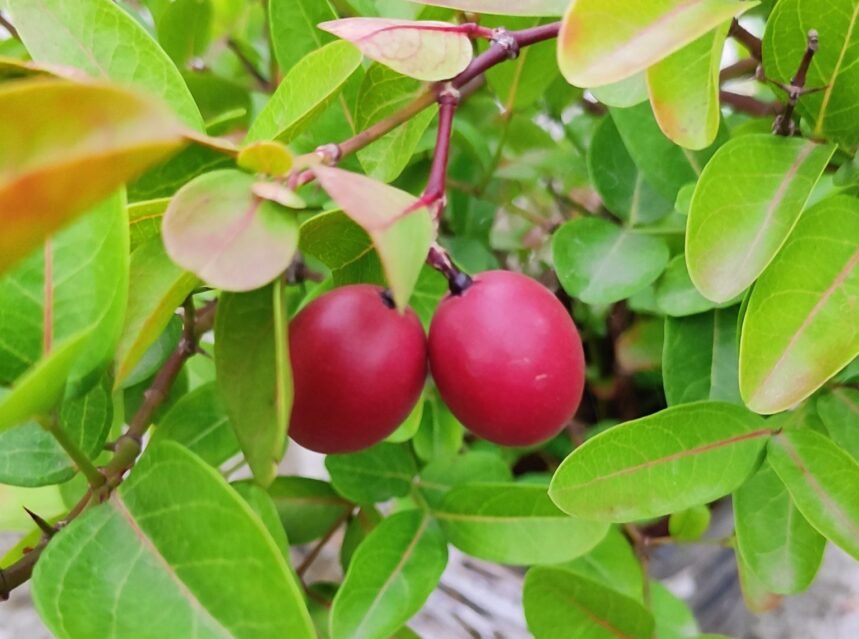
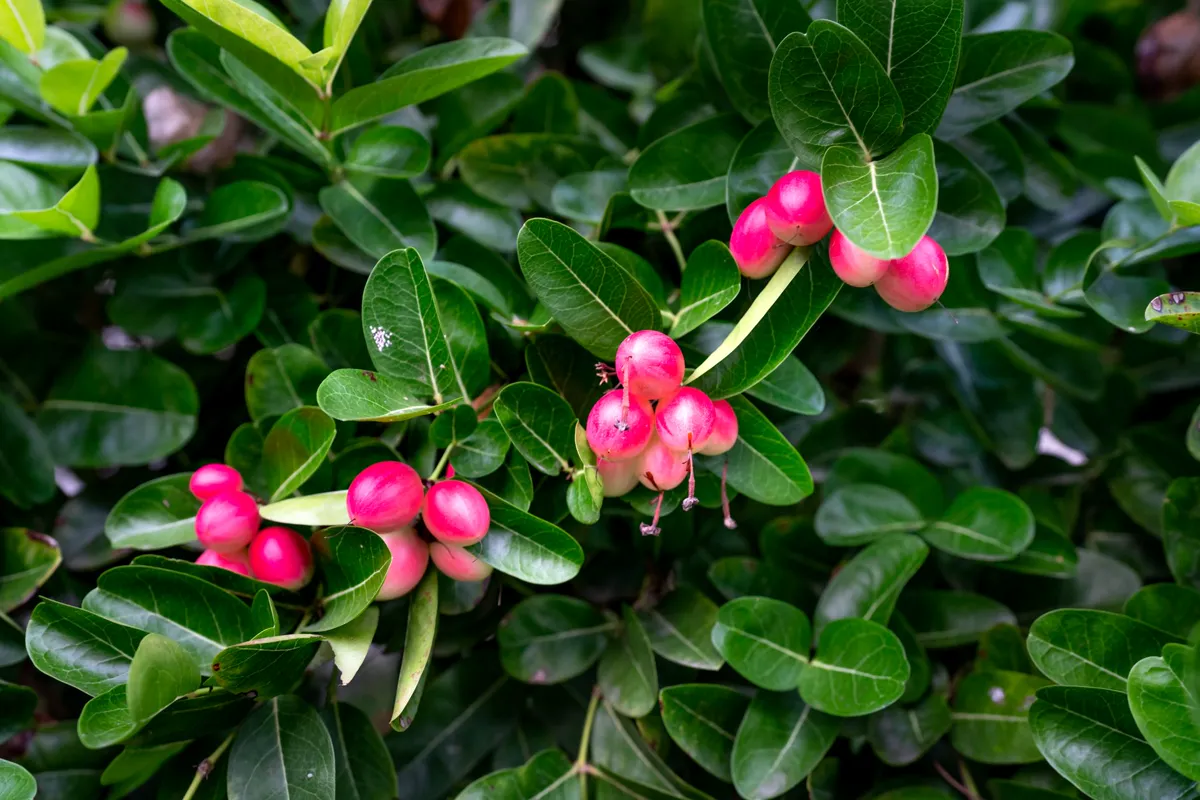
Karonda (Carissa carandas), the Bengal currant, is a hardy, thorny evergreen shrub grown for its clusters of small, glossy, tangy berries — pink-white ripening to deep red-purple. In India it is prized for pickles, chutneys and preserves, and the dense, spiny bushes also make an excellent protective hedge. Tough and undemanding, it is a brilliant dual-purpose plant. Here is the complete guide on how to grow karonda.
Quick start: Grow karonda in full sun in well-drained sandy-loam soil. It loves heat and dry conditions, tolerates drought and poor soil, but dislikes waterlogging and frost. Water regularly when young, then sparingly. Feed every 4–6 weeks in the growing season. It fruits in 2–3 years; the tart berries ripen red-purple. Mind the thorns.
Karonda is a tough, thorny shrub grown for its tart little berries, which are prized for pickles, preserves and adding sourness to dishes. Growers value it as one of the most drought- and heat-tolerant fruiting plants available, thriving on poor soil where little else will fruit. Its dense, spiny growth also makes it an excellent protective hedge. It carries vitamin C and iron and features in traditional medicine; FoodData Central has no row for Carissa carandas, so figures quoted for it come from Indian food-composition work rather than from a reference table. For any medicinal use, seek professional advice.
🧰 In a hurry? Jump straight to our tested picks for this guide ↓
Karonda at a glance
| Feature | Detail |
|---|---|
| Botanical name | Carissa carandas (family Apocynaceae) |
| Common names | Karonda, Bengal currant, Christ’s thorn |
| Plant type | Hardy thorny evergreen shrub |
| Sun | Full sun |
| Soil | Well-drained sandy-loam; tolerates poor |
| Water | Low once established; drought-tolerant |
| First fruit | 2–3 years |
| Dual use | Tangy berries + protective hedge |
Why grow karonda?
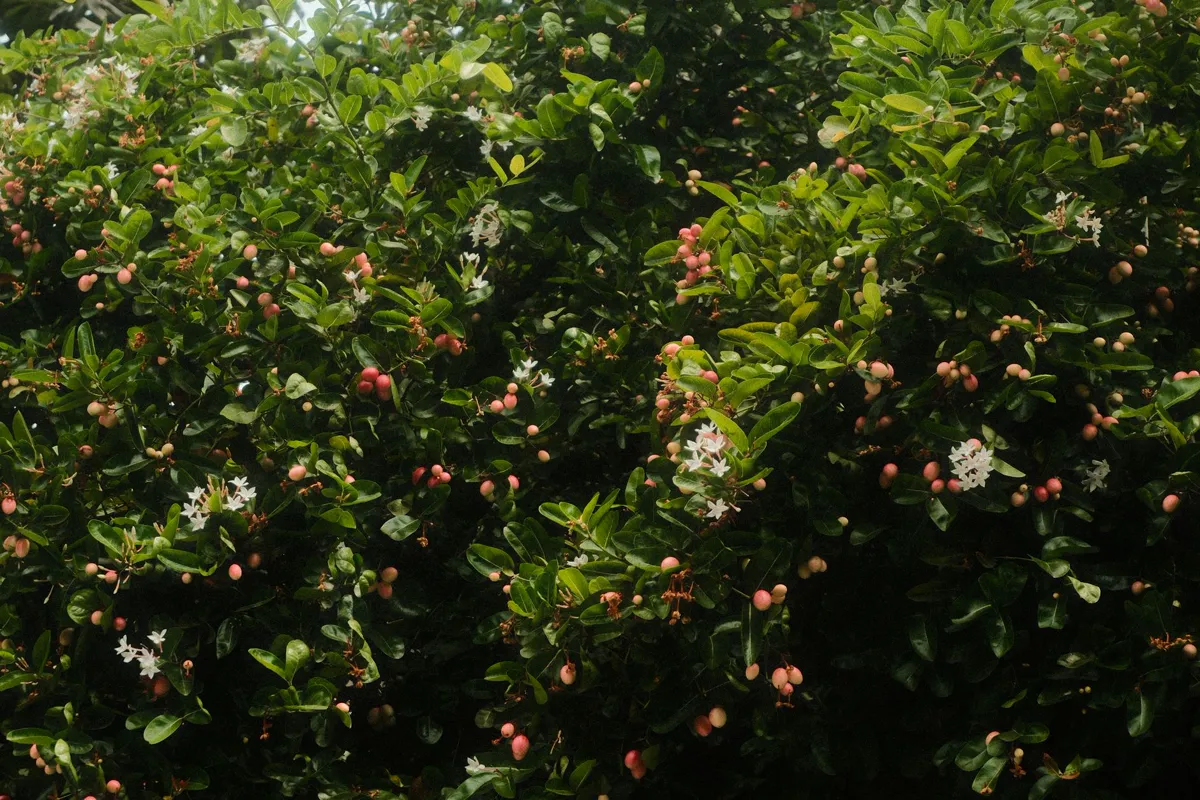
Karonda is a wonderfully dual-purpose plant. A few reasons to grow it:
- Berries for the kitchen. A generous crop for pickles, chutneys, jams and preserves.
- A living fence. Its dense, thorny habit makes a superb protective hedge.
- Extremely tough. It is heat-, drought- and poor-soil-tolerant.
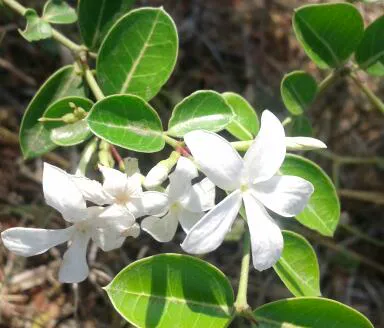
- Quick and pretty. It is fast to fruit, evergreen, and ornamental with fragrant white flowers.
History, origin & karonda in India
Karonda is native to India and South Asia, where it has long grown wild and in gardens (see Encyclopaedia Britannica). It is deeply familiar in Indian home cooking, especially for pickles. The thorny bushes have also fenced fields and gardens for generations.
The plant features in traditional medicine across the region. It was valued as a hardy source of fruit in hot, dry areas. Its toughness made it a reliable plant where others failed.
It thrives in tropical and subtropical, hot and arid climates (see the Royal Horticultural Society). It tolerates drought and poor soil but dislikes high rainfall, waterlogging and frost. So it does best in warm, well-drained conditions, perfect for hot, dry gardens, and grown in containers with protection in cooler regions.
Best season & when to plant
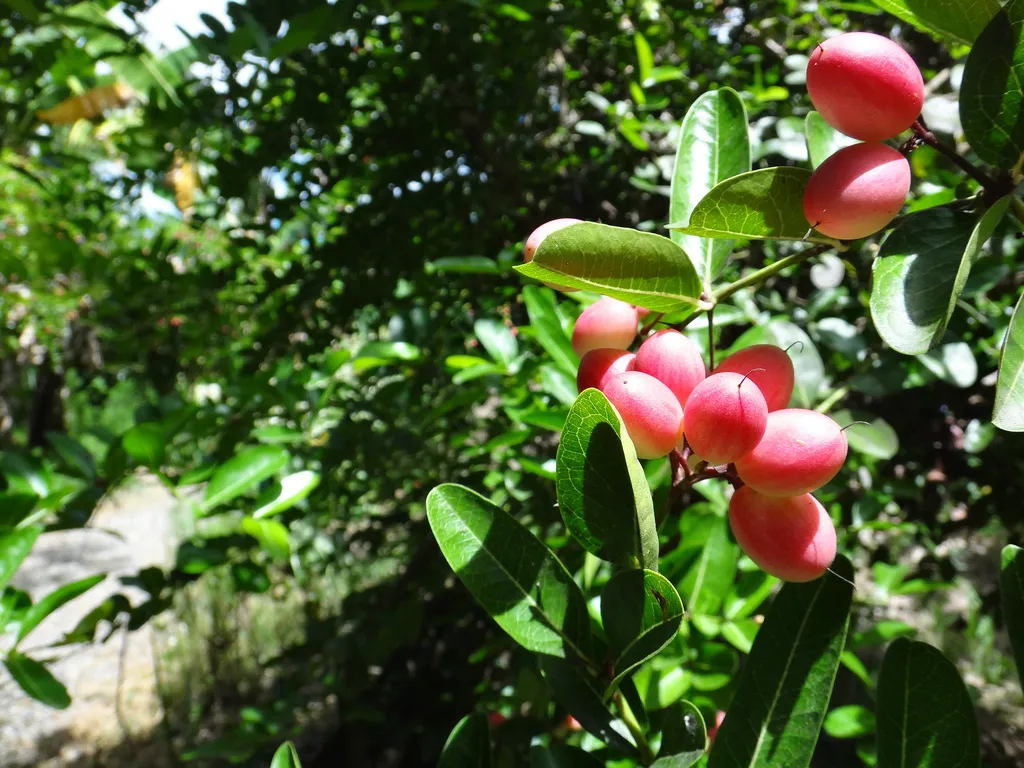
Plant karonda in spring or early summer, the best time for cuttings to root. It flowers with fragrant white blossom in the warm season, and the berries ripen through summer into the monsoon, turning from pink-white to deep red-purple. It begins fruiting within 2–3 years, quick and rewarding.
How to plant and grow karonda
- Grow from cuttings (best, for uniform plants) or seed, in spring or early summer.
- Plant in full, bright sun in well-drained sandy-loam soil, slightly acidic (pH 5.5–6.5); it adapts to many soils but needs good drainage (see improving garden soil).
- For a hedge, space plants closely; for fruit, give each bush room. It also grows well in large containers.
Sun, soil, watering & feeding
Karonda needs full sun and good drainage. Water young plants regularly to keep the soil slightly moist while establishing; once settled it tolerates drought and needs only occasional watering (see how often to water plants). Feed with a balanced fertiliser every 4–6 weeks in the growing season for good growth and fruiting.
Pruning & growing it as a hedge
Prune karonda after the fruiting season to maintain shape, remove dead or damaged branches, and improve airflow and light. For hedging, trim regularly to keep it dense and well-shaped. Always wear thick gloves, as the bushes are armed with sharp, branched thorns.
As a living fence it is hard to beat. Plant the bushes close together in a line. The interlocking thorny growth soon forms a barrier that keeps animals and intruders out, while still giving fruit.
Karonda in a dry-garden orchard
Karonda is a star of the tough, low-water garden. It thrives in heat and poor, dry soil. So it fits naturally with other hardy fruit.
Grow it alongside ber and guava in a hot, dry corner. All three shrug off conditions that defeat fussier fruit. Together they make a productive, drought-tough orchard.
Its thorny growth doubles as a boundary around the plot. A light mulch helps young plants settle in. Once established, karonda asks for almost nothing.
Using karonda in the kitchen
Karonda is loved most for pickle. The sharp, unripe berries are perfect for it. They are combined with salt, oil and spices into a tangy achaar.
The fully ripe, red-purple berries are sweeter. These make lovely jams, jellies and syrups. A few can even be eaten fresh, though they stay quite tart.
Common pests & diseases
Karonda is very robust and largely pest-free. Occasional issues include scale, mealybugs, fruit flies, or fungal leaf spot in humid conditions (see sap-sucker control). Its toughness and the methods in our organic pest control guide handle most problems. It is one of the most trouble-free fruiting shrubs you can grow.
Harvesting
Harvest depends on use. Pick the berries green-to-pink and firm for pickles and cooking, when they are sharp and astringent. Or leave them to ripen fully to deep red-purple and softer for eating fresh, jams and preserves, when they are sweeter. Pick by hand wearing gloves to avoid the thorns. The berries come in generous clusters over the season.
Health benefits & uses
Karonda is commonly reported to carry vitamin C, iron and antioxidants; there is no USDA FoodData Central entry for it, so treat the numbers you see quoted online as regional estimates rather than measured reference data. It has a long place in traditional medicine, which is a record of use and not a health claim. Unripe berries are made into pickles (achaar), chutneys and curries; ripe ones into jams, jellies, syrups and preserves. The plant also serves as a living fence and is grown as an ornamental and rootstock.
This article is for general information only and is not medical advice. Talk to a qualified professional before using any plant medicinally.
Common karonda problems
Poor growth or rot in wet areas
It dislikes high rainfall and waterlogging. Grow it in well-drained soil in a hot, dry spot.
Frost damage
It is frost-sensitive. Protect it or grow it in a container in cool climates.
Thorn injuries at harvest
The bushes are very spiny. Always wear thick gloves when pruning or picking.
How to propagate karonda
Cuttings are the method to use if you want fruit you can count on. Karonda seedlings are famously variable, and the seed is difficult besides — so growers who want a reliable crop use cuttings, layering or grafting instead.
From cuttings
Take a healthy cutting in spring or early summer, which is also the best planting season for karonda. Plant it into well-drained soil and keep it lightly moist rather than wet. Cuttings give uniform plants that fruit reliably — the same fruit size, the same flavour, and the same cropping habit as the bush you took them from. For a hedge, where every plant should match, that is the only sensible route.
From seed
Use seed taken straight from fully ripe, dark purple fruit, because karonda seed loses viability quickly once it dries out. Wash the pulp off, sow about a centimetre deep in a gritty, free-draining mix, and keep it warm and just moist. Even done properly, germination is famously patchy — research on Carissa carandas propagation consistently reports low and uneven germination — and seedlings can take three to six weeks to appear. Sow several times more seed than you need plants.
Seedlings still have a use
Variable seedlings make good rootstock and a tough, thorny living fence, which is one of karonda’s traditional jobs. Raise them for that, and take cuttings for fruit.
Related plant guides
- How to grow Noni
- How to grow Ber
- How to grow Phalsa
- How to grow Jamun
- How to grow Chikoo
- How to grow Guava
Frequently asked questions
Is karonda eaten fresh or cooked?
Both — unripe green-pink berries are used for pickles and chutneys, while fully ripe red-purple berries are eaten fresh or made into jams and jellies.
How soon does karonda fruit?
Quickly — usually within 2–3 years of planting, which is fast for a fruiting shrub.
Can karonda be used as a hedge?
Yes — its dense, thorny growth makes an excellent protective hedge or living fence, as well as providing a useful crop of fruit.
Does karonda tolerate drought?
Yes — once established it is drought- and heat-tolerant and thrives in hot, dry, well-drained conditions.
How do I grow karonda from cuttings?
Take a healthy cutting in spring or early summer. Plant it in well-drained soil and keep it lightly moist. Cuttings give uniform plants that fruit reliably, unlike variable seedlings.
Is karonda evergreen?
Yes, it is an evergreen shrub. It keeps its glossy leaves year-round. This is part of what makes it such a good, dense hedge plant.
Can I grow karonda in a pot?
Yes, in a large container with sharp drainage and full sun. A pot also lets you protect it from frost in cool climates.
Why is my karonda not fruiting?
Often too much shade, wet soil, or a very young plant. Give it full sun and sharp drainage. It usually starts cropping within two to three years.
How big does a karonda bush get?
It forms a dense, thorny shrub a few feet tall and wide. Regular trimming keeps it neat as a hedge. Left alone, it grows into a sturdy bush.
Are karonda berries safe to eat raw?
Yes, when fully ripe and red-purple they can be eaten fresh, though they stay tart. The unripe green-pink berries are better cooked into pickle.
How do I grow karonda from seed?
Use seed taken straight from fully ripe, dark purple fruit, because karonda seed loses viability quickly once it dries out. Wash the pulp off, sow about a centimetre deep in a gritty, free-draining mix, and keep it warm and just moist. Even then, germination is famously patchy — research on Carissa carandas propagation consistently reports low and uneven germination rates, and seedlings can take three to six weeks to appear. Seedlings are also variable in fruit quality, which is why growers who want a reliable crop use cuttings, layering or grafting instead.
Why does my karonda fruit ooze white sticky sap?
That milky latex is normal. Karonda belongs to the same family as oleander and frangipani, and unripe green-pink fruit and cut stems release a sticky white sap that gums up knives and fingers. It is one reason karonda is picked green for pickle with gloves on and processed quickly. Rubbing a little cooking oil on your hands and blade before you start makes the job far easier, and the latex largely disappears as the fruit ripens to red-purple.
Is karonda a good source of iron and vitamin C?
Karonda is widely described in Indian horticultural literature as a nutrient-dense minor fruit, and reviews of the crop note that it is a useful source of iron, vitamin C and anthocyanin pigments. Those figures come from research on the fruit rather than from the sort of clinical trials that would justify any health claim, so treat it as a good, colourful addition to the diet rather than a remedy. Much of the crop is eaten as pickle or jam, where sugar and salt change the nutritional picture considerably. This is general information only and not medical advice.
Which parts of a karonda should not be eaten?
The fully ripe fruit is the food, and the rest of the plant is best left alone. The parts to leave alone are the unripe fruit and the stems, which ooze a white latex when they are picked or cut. That latex is sticky, bitter and an irritant on skin, and unripe fruit is astringent enough that nobody eats much of it by accident. So pick karonda only when it has coloured fully, and wear gloves when pruning the thorny stems. We have not found an entry for karonda in the main pet-toxicity databases, so we will not claim a specific danger to animals beyond that. This article is for general information only.
Still stuck? Ask the Plant Doctor
Describe the problem — yellow leaves, holes, no flowers — and get a clear answer in seconds. FreeAI can make mistakes. Answers are guidance, not a guarantee — check anything important against the guide it links to, and always read the label on any product before you use it.