How to Grow a Pineapple from a Top (Easy & Free)
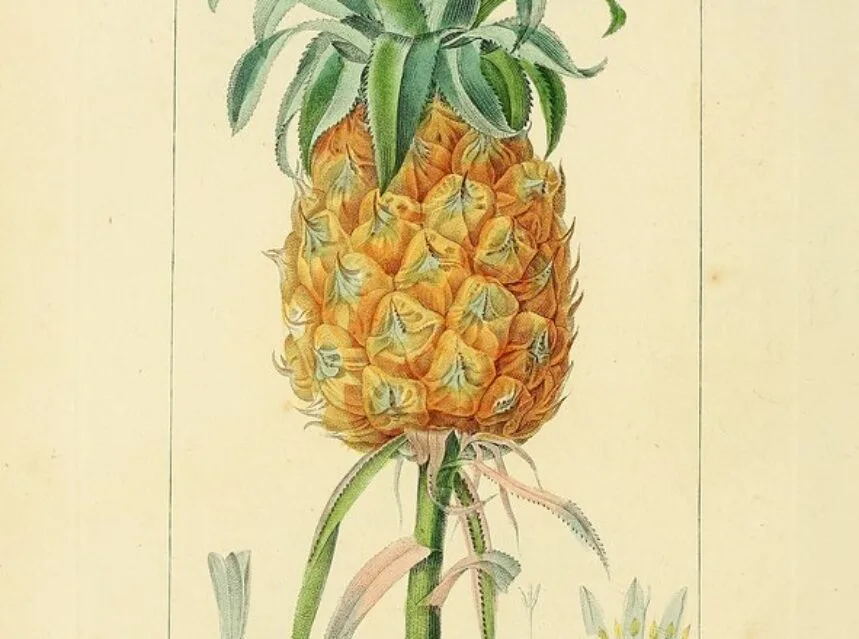
The pineapple (Ananas comosus) is a tropical bromeliad grown for its sweet, tangy golden fruit — and growing one is among the most fun, low-cost gardening projects there is. You simply twist the leafy top off a store-bought fruit and root it. Months later, you have a striking tropical plant — and, with patience, your very own pineapple. It is slow, but it is almost free and genuinely rewarding. Here is the complete guide on how to grow pineapple.
Quick start: Twist the top off a fresh pineapple, strip the lower leaves, and root it in a pot of well-drained mix. Give it warmth and bright light. Water lightly — it stores water in its leaves. Then be patient: fruit takes 2–3 years.
Growing a pineapple is a fun, patient project that often starts in the kitchen, by rooting the leafy crown twisted from a shop-bought fruit. Growers give it warmth, bright light and free-draining soil, and then wait, as it can take a couple of years to flower and fruit. Being a bromeliad, it is drought-tolerant and stores water in its leaves, so it is easily overwatered. Each plant fruits just once, then produces offsets, or pups, around its base to carry on the cycle.
🧰 In a hurry? Jump straight to our tested picks for this guide ↓
Pineapple at a glance
| Feature | Detail |
|---|---|
| Botanical name | Ananas comosus (family Bromeliaceae) |
| Plant type | Tropical bromeliad |
| Light | Full sun or brightest light available |
| Soil | Coarse, very well-drained (cactus-type) |
| Water | Light; stores water in its leaves |
| Grown from | The leafy top of a shop-bought fruit |
| First fruit | 2–3 years |
| Note | Fruits once; then grows “pups” |
Why grow a pineapple?
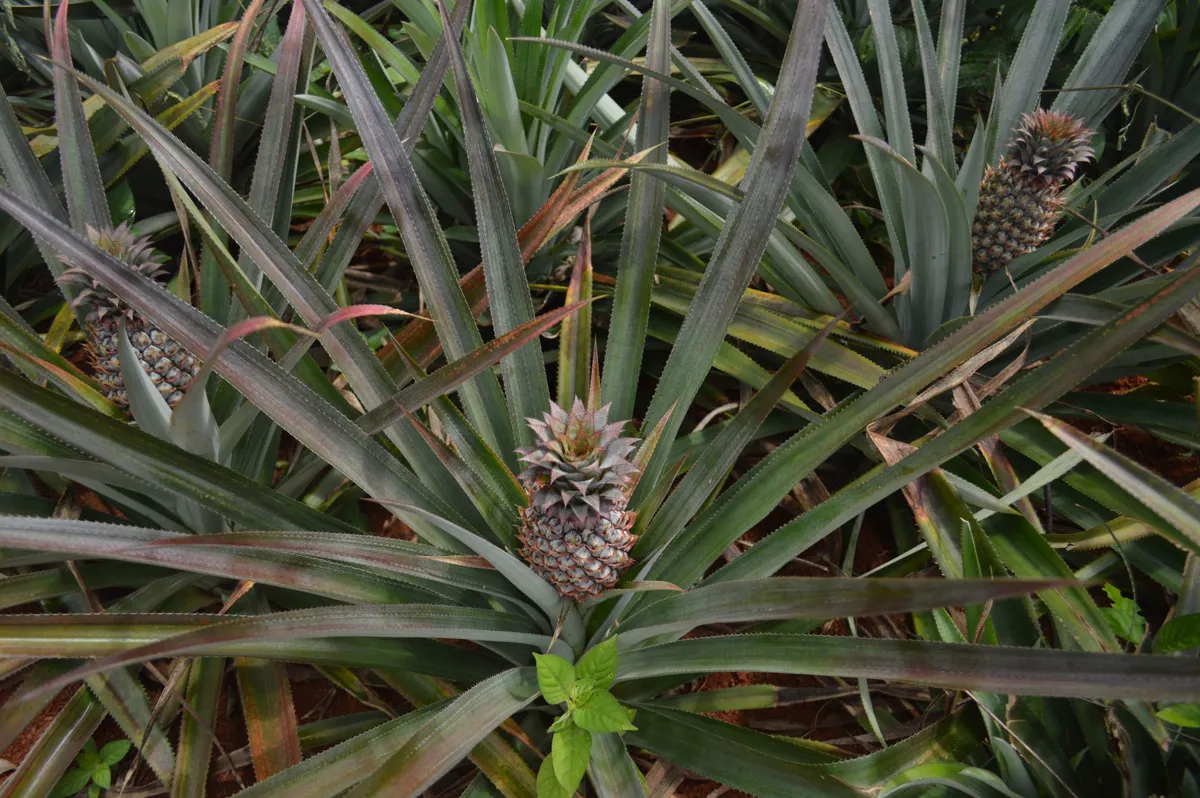
Pineapple is a brilliant beginner and kids’ project. A few reasons to grow one:
- Almost free. You grow it from a fruit you already bought.
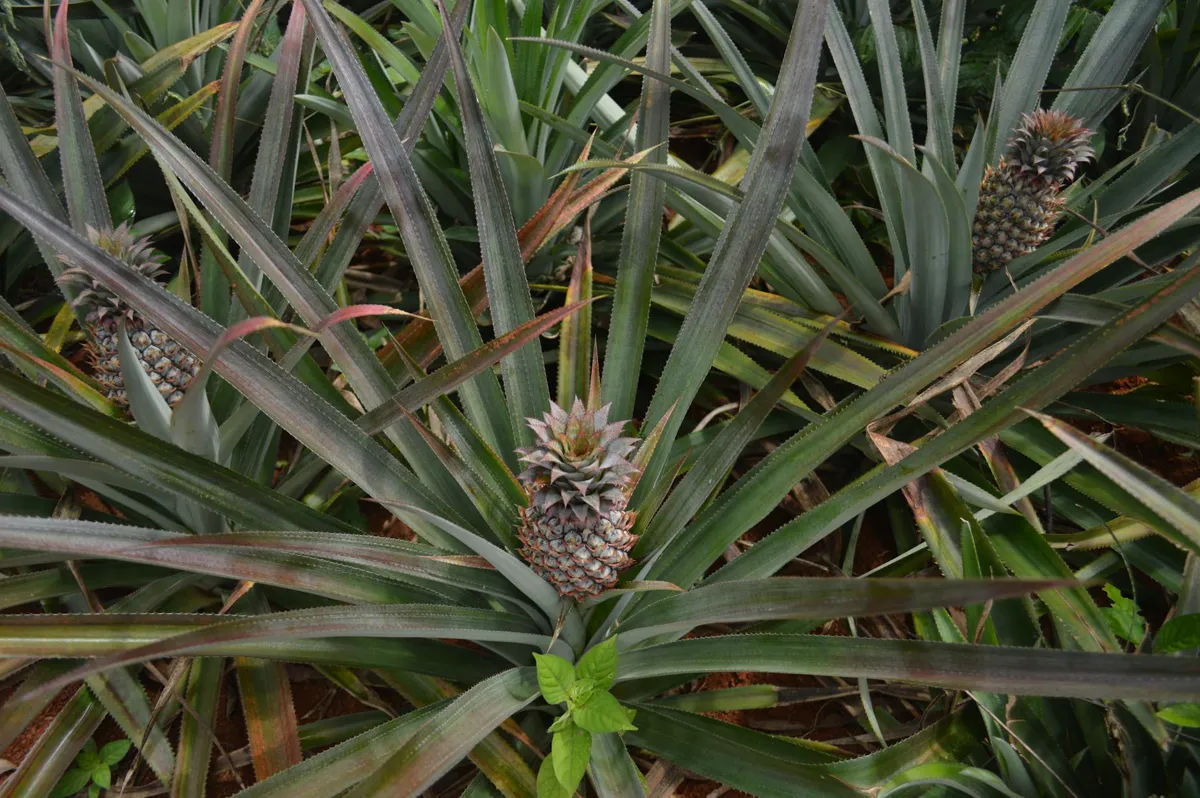
- Beautiful plant. It forms a bold rosette of spiky leaves.
- Grows indoors. It is happy in pots on a sunny windowsill.
- Rewarding. Even cold-climate gardeners can grow their own tropical fruit.
History, origin & how the pineapple spread
The wild pineapple comes from a startlingly small home: the Paraná-Paraguay river drainages between southern Brazil and Paraguay (pineapple). Indigenous peoples carried it out of there and across the tropical Americas, and by the late 1400s cropped pineapple was widely distributed and a staple food of Native Central and South Americans. The first European to meet one was Christopher Columbus, in Guadeloupe on 4 November 1493; once the plant reached 17th-century Europe it became an icon of luxury, which is how carved pineapples ended up on gateposts as a symbol of hospitality.
Columbus encountered it in the Caribbean, and Spanish and Portuguese traders carried it around the world. It spread rapidly through the tropics of Asia and Africa. For centuries in cooler Europe, a homegrown pineapple was a rare symbol of wealth.
Today Costa Rica, the Philippines and Indonesia are the largest producers, each growing roughly 3 million of the 29 million tonnes harvested in 2024, with Brazil, China, India and Thailand also major growers (FAO-sourced production table). The plant needs warmth and bright light year-round. In cool climates, therefore, it is grown as a potted indoor plant.
Best season & when to plant
Start a pineapple top in warm weather, when warmth speeds rooting. The plant needs steady warmth, around 75–80°F, to grow well, and it cannot survive frost. In tropical regions, grow it outdoors all year. In cooler climates, keep it indoors and move it to a bright, warm spot.
How to propagate a pineapple from the top (crown)
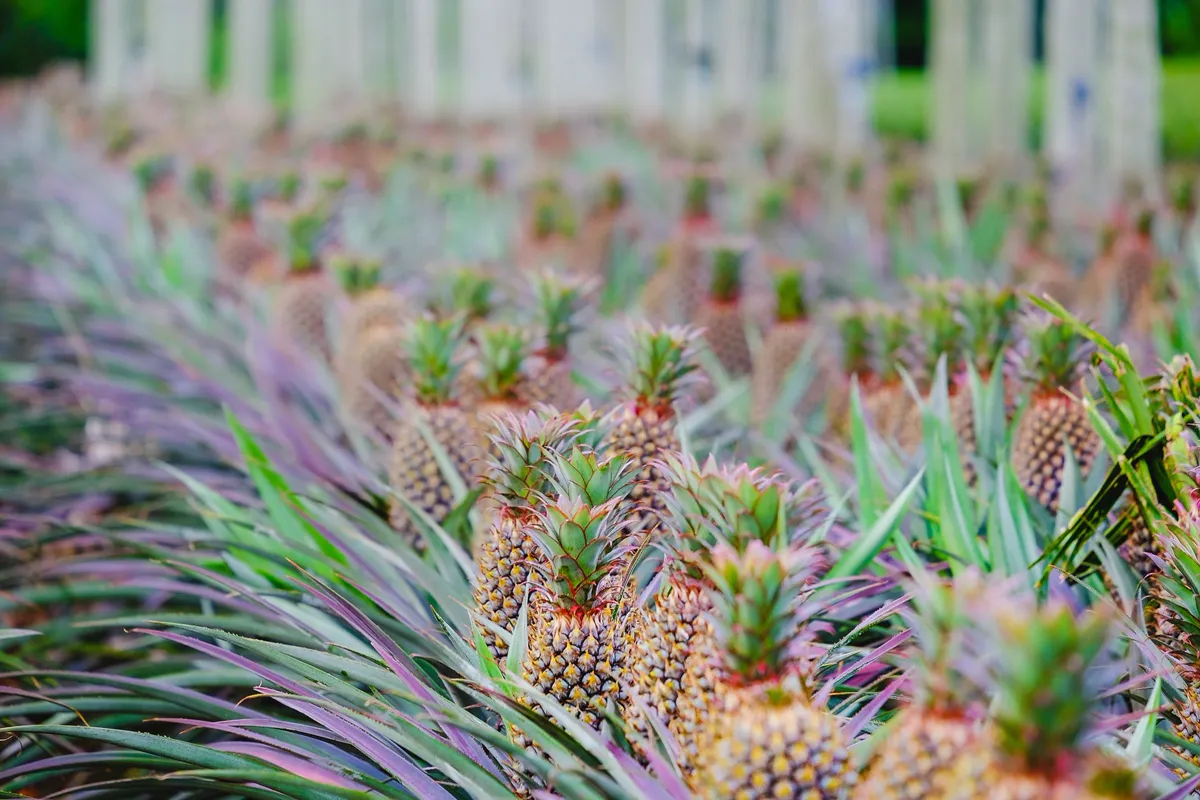
- Choose a fresh, healthy pineapple. Twist off the leafy top, as twisting works better than cutting.
- Strip the lower leaves to expose about an inch of stem, and remove any fruit flesh, which rots.
- Let the top dry for a day or two, then plant it in a 6–8 inch pot of coarse, well-drained mix (a succulent or cactus mix with perlite works well). See soil basics.
- Bury the bare stem so the lowest leaves rest on the surface.
Rooting & light
Pineapples need plenty of light to root. So place the pot near a bright window in a warm spot. A clear bag over the pot creates helpful humidity while it roots. Rooting usually takes 5–8 weeks. After that, move it into direct sun and remove the bag.
Sun, soil & watering
First, light. Give an established pineapple full sun or the brightest light you have. More light means a stronger plant and a better chance of fruit.
Next, water. Water thoroughly, then let the top inch or two dry out before watering again (see how often to water plants). The plant is a bromeliad and stores water in its leaf rosette. So be careful — overwatering rots it. Keep the soil moist but never soggy.
Patience & encouraging fruit
Pineapples are slow. Expect to wait 2–3 years for a flower and fruit. To nudge a mature plant into flowering, you can use ethylene gas. Simply place the plant in a large bag with a ripe apple for a few days. The apple releases ethylene, which can trigger flowering within 2–3 months. After flowering, the fruit takes several more months to ripen.
How to propagate pineapple from pups (offsets)
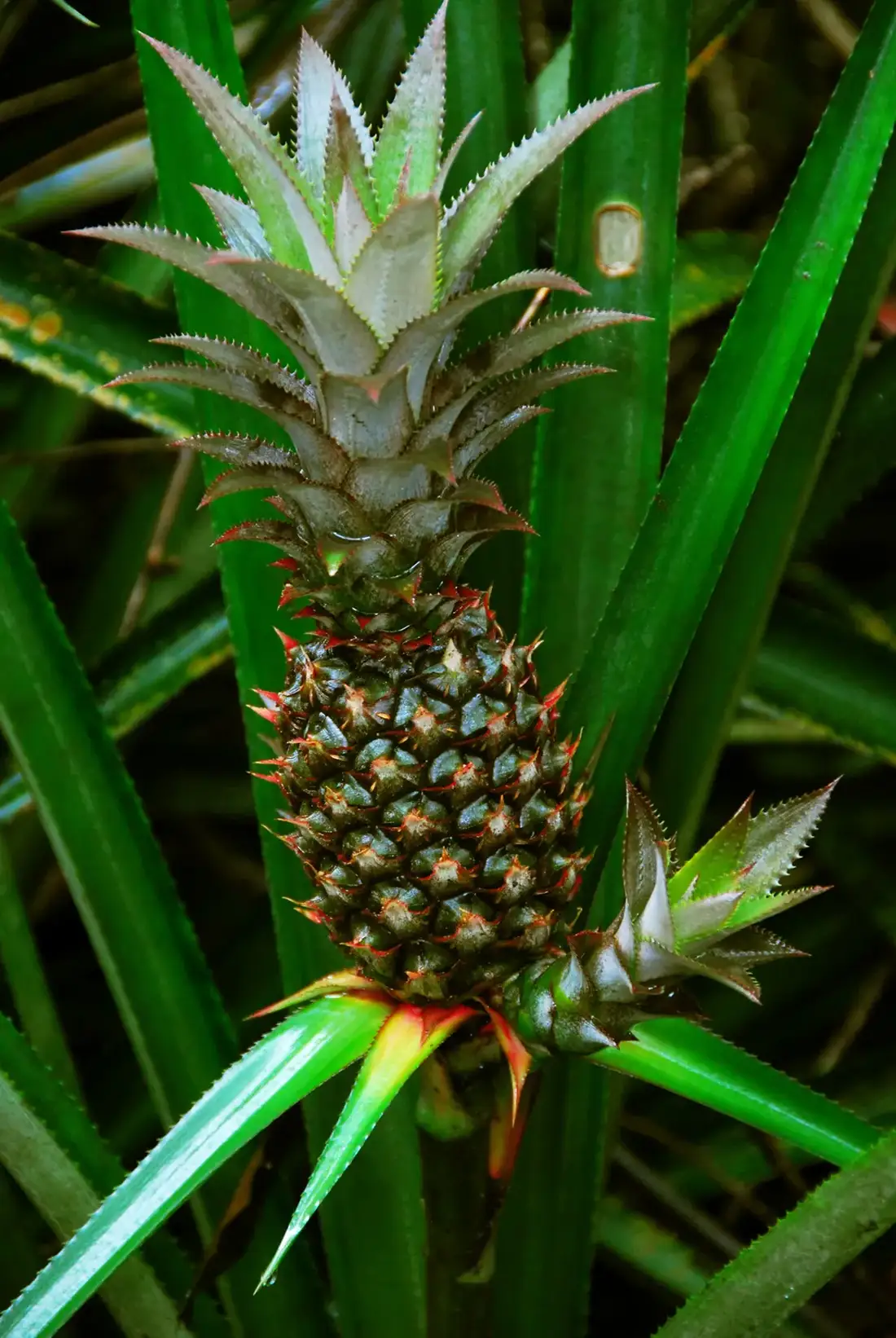
A pineapple plant fruits only once, but it is not finished. Around the base it produces offshoots called pups. These are the key to a never-ending supply.
After the main fruit is harvested, the plant slowly declines. The pups, though, keep growing into new plants. Let them reach a good size before separating them.
Gently twist or cut a pup from the base and pot it up. Treat it just like a rooted top. In this way, a single shop-bought pineapple can give plants for years, much like other easy propagation projects.
Common pests & diseases
Pineapples are fairly tough. Indoors, watch for mealybugs, scale and spider mites — wipe or rinse them off and use neem if needed (see organic pest control). The biggest risk is rot from overwatering or cold. So keep it warm, bright and on the dry side, and protect it from frost (see frost protection).
Harvesting pineapple
Your patience finally pays off. The single fruit is ripe when it turns golden-yellow from the base up and gives off a sweet, classic pineapple smell. Cut it off with a knife. Note that the main plant fruits only once. However, it produces “pups”, or offshoots, at the base, which you can pot up to grow the next generation.
Health benefits & uses
Pineapple’s real strength is a mineral rather than the vitamin it is famous for. USDA’s pineapple record gives 0.93 mg of manganese per 100 g — 40% DV, among the highest of any common fruit, alongside 47.8 mg of vitamin C (53% DV), 50 kcal and 1.4 g of fibre. Two corrections to figures that circulate widely, including in an earlier version of this page: the vitamin C is not 58–59 mg — no USDA row reaches that, the all-varieties row being 47.8 mg and even the extra-sweet variety only 56.4 mg — and the fibre is not “under 1 g”. Pineapple also contains bromelain, the enzyme behind its use as a natural meat tenderiser and the subject of a good deal of research whose conclusions are not settled. Enjoy it fresh, grilled, juiced, or in fruit salads, smoothies and salsas.
This article is for general information only and is not medical advice. Talk to a qualified professional before using any plant medicinally.
Common pineapple problems
Top rots instead of rooting
Too much moisture or leftover fruit flesh. Dry the top first, remove all flesh, and use a well-drained mix.
No fruit after years
Not enough light or maturity. Give maximum light, and try the apple-in-a-bag ethylene trick on a mature plant.
Soft, mushy base
Overwatering or cold. Water less, keep it warm, and ensure sharp drainage.
Related plant guides
- How to grow Papaya
- How to grow Mango
- How to grow Guava
- How to grow Ginger
- How to grow Plumeria
- How to grow Lemon
Frequently asked questions
Can I grow a pineapple from a store-bought one?
Yes — twist off the leafy top, strip and dry it, then root it in well-drained soil. It is the classic, almost-free method.
How long does a pineapple take to fruit?
Usually 2–3 years from a rooted top. You can encourage a mature plant to flower with ethylene gas (the apple-in-a-bag trick).
Does a pineapple plant fruit more than once?
The main plant fruits only once, but it grows “pups” at the base that you can replant for future fruit.
Can I grow pineapple indoors?
Yes — it makes a great indoor plant in the brightest, warmest spot you have, which is ideal for cold climates.
Why won't my pineapple flower?
Usually too little light or an immature plant. Give it the brightest spot you have, and try the apple-in-a-bag ethylene trick once it has reached a good size.
How do I root a pineapple top?
Twist off the top, strip the lower leaves, and let it dry for a day or two. Then pot it in a well-drained mix and keep it warm and bright. Roots form in about 5–8 weeks.
Why is my pineapple top rotting?
Usually too much moisture or leftover fruit flesh. Remove all the flesh and let the top dry before potting. Use a coarse, free-draining mix.
Does the pineapple plant die after fruiting?
The main plant slowly declines after its single fruit. But it leaves behind pups at the base. Pot these up to grow the next generation of plants.
Can I root a pineapple top in water instead of soil?
Yes, and many people prefer it because you can actually see progress. Strip the lower leaves to expose about an inch of stem, suspend the crown so only that bare stem sits in water, and change the water every few days to stop it souring. Roots typically appear over roughly three to eight weeks depending on warmth and light. Pot it into a free-draining mix once the roots are a couple of inches long, because water roots are brittle and the plant needs to build proper soil roots before it can grow away.
Why is my pineapple plant turning yellow?
Start with light and water, since those explain most cases. Too little light gives soft, pale, floppy leaves, while soggy compost rots the base and the yellowing creeps up from the bottom. Pineapples are bromeliads with shallow roots and they want a coarse, sharply drained mix that dries out between waterings. If the plant is well lit and the drainage is good, look at nutrition — a weak feed through the growing season helps — and check the leaf bases for mealybugs, which university extension guides list as the most common pineapple pest.
How do I know when a home-grown pineapple is ripe?
Go by colour and smell rather than size, because a garden pineapple is often smaller than a shop one and still perfectly good. The shell turns from green toward gold, starting at the base and moving up, and the fruit develops a sweet fragrance at the bottom end. The fruit does not get sweeter once cut, so leaving it on the plant until at least half the shell has coloured makes a real difference to flavour. Cut it off with a short piece of stalk using a sharp knife rather than twisting it away.
What pests attack pineapple plants?
Mealybugs are the main one — small white cottony insects that hide deep in the leaf axils and around the base, often farmed by ants that protect them. Scale insects and, on indoor plants in dry air, spider mites turn up too, all of them sap suckers that leave the leaves dull, sticky or speckled. Because pineapple leaves cup tightly at the base, a spray alone rarely reaches them, so wipe or flush the leaf axils and deal with any ant trails. Check new plants and rooted tops carefully before they join the rest of your collection.
Still stuck? Ask the Plant Doctor
Describe the problem — yellow leaves, holes, no flowers — and get a clear answer in seconds. FreeAI can make mistakes. Answers are guidance, not a guarantee — check anything important against the guide it links to, and always read the label on any product before you use it.