Container Pond Guide
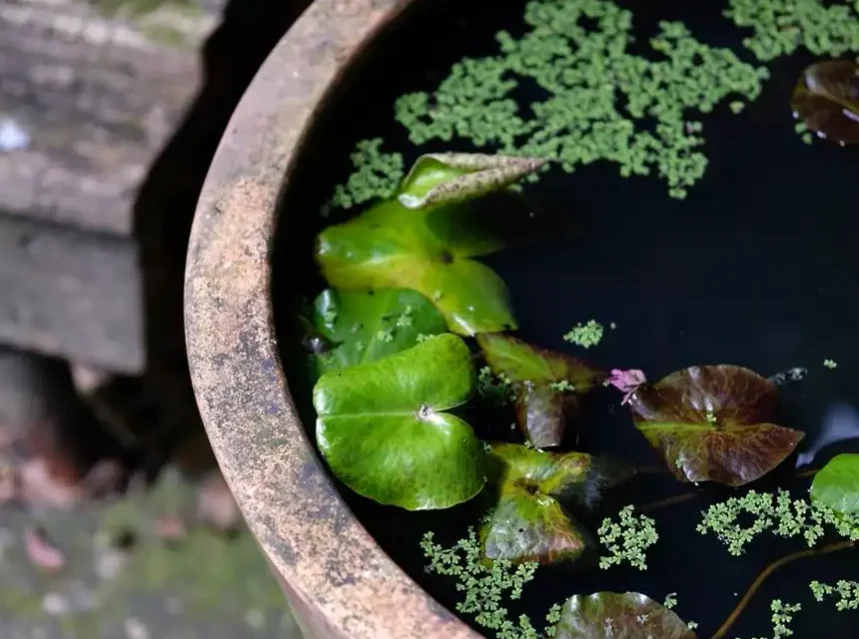
A container pond is a watertight pot — half-barrel, glazed ceramic, trough or tub — planted as a miniature water garden, and it delivers most of a full pond’s magic on a single square metre of patio. Dragonflies find it, birds drink from it, a dwarf water lily blooms in it, and the whole thing assembles in one afternoon without a pump, liner or spade. This container pond guide covers the pot, the plants, the water and the one pest everyone asks about.
Quick answer: Take a watertight container of 40+ litres, set it where it gets about six hours of sun, and plant three layers: one oxygenator under water, one or two marginals on a brick shelf, and a dwarf water lily on the bottom. Fill with rainwater if you can, wait a week before adding anything living, and stop mosquitoes with a monthly Bti dunk.
🧰 In a hurry? Jump straight to our tested picks for this guide ↓
Container pond at a glance
| Question | Answer |
|---|---|
| Minimum size | ~40 litres; bigger = more stable |
| Sun | ~6 hours; some afternoon shade in hot climates |
| Pump/filter needed? | No — plants do the work in a balanced pot |
| The three plant layers | Oxygenator + marginal + dwarf water lily |
| Mosquito fix | Bti dunks monthly (or a tiny solar bubbler) |
| Maintenance | Top up with rainwater, trim dead leaves — minutes a month |
Why grow a container pond?
Water changes a garden faster than any other single feature, and the container version removes every excuse.
There is no digging, no liner, no electricity and no real cost beyond the pot and three plants. Renters can take it along when they move. It fits balconies and the smallest courtyards. And the wildlife return is out of all proportion to its size — within weeks, expect hoverflies and bees drinking at the rim, dragonflies inspecting the surface, and birds treating it as the local bar. A mini pond is also the gentlest introduction to water gardening: every skill it teaches scales up to a full pond later.
Choosing the container
Anything watertight and roughly 40 litres or larger works; below that, water temperature swings too fast for plants and visiting wildlife.
The classics: a half whisky barrel (line it with pond liner or a rigid insert — fresh barrels leach tannins), a glazed ceramic pot with the drainage hole plugged (silicone over a rubber bung or a coin siliconed flat), an old galvanised trough or tin bathtub, or simply a large plastic tub hidden inside a prettier shell. Ceramic, stone and fibreglass age best outdoors.
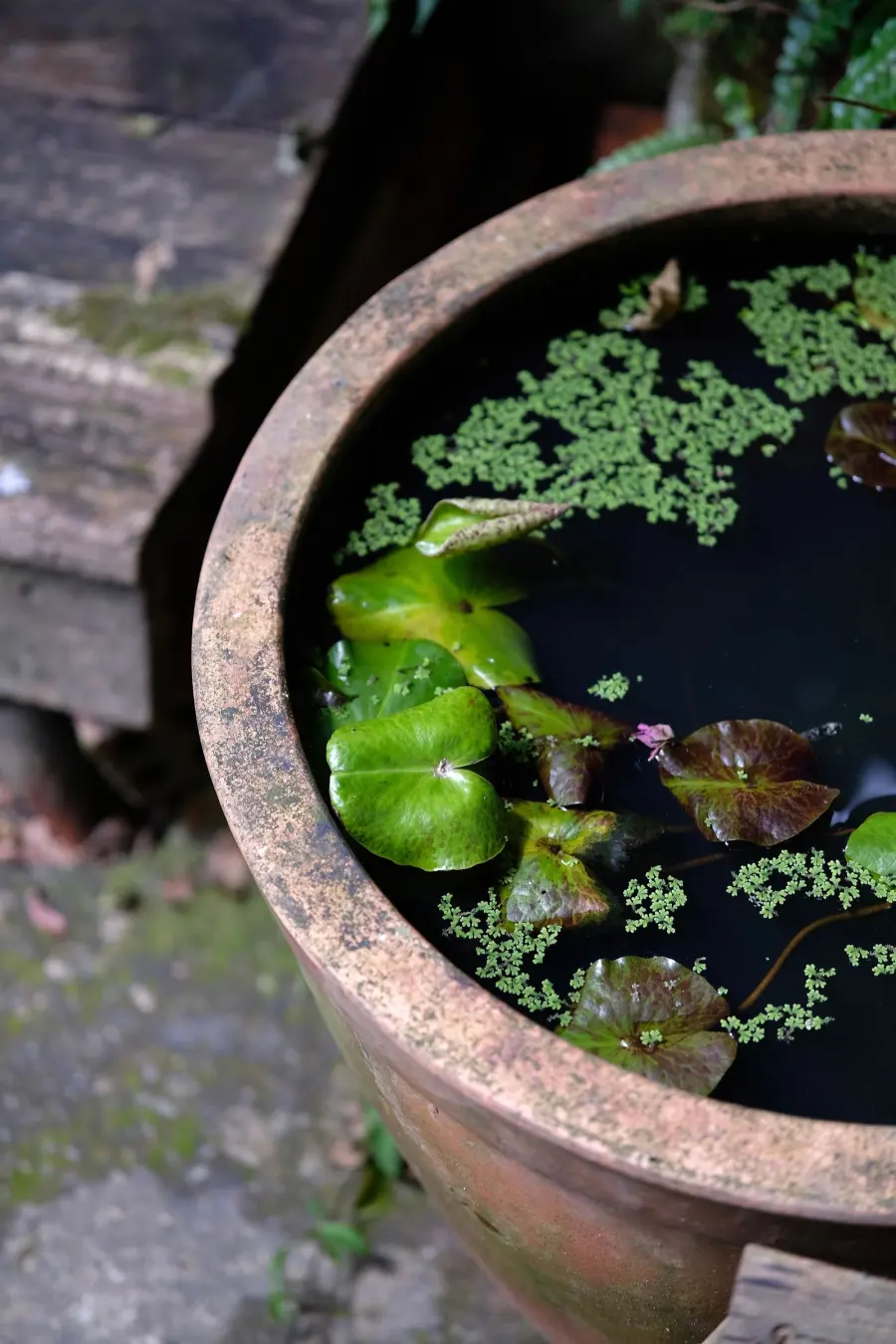
Site it before filling — 40 litres of water weighs 40 kg. About six hours of sun suits the plants; in hot regions give it afternoon shade so the small volume doesn’t cook.
The three plant layers that balance the water
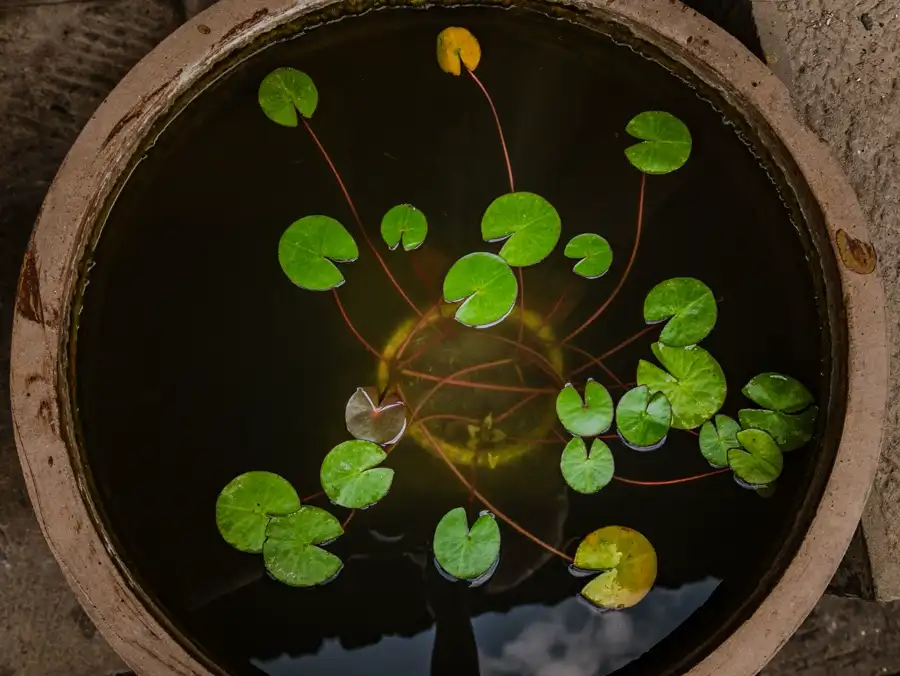
A pump keeps big ponds clear; in a pot, plants do that job. One of each layer is the working minimum.
- Underwater (the oxygenator): hornwort is the easy one — unfussy, unrooted, just drop a bunch in. It oxygenates and starves algae of nutrients.
- The marginal (feet wet, head dry): stand one or two on bricks so their pots sit 5–10 cm under the surface. Dwarf cattail, sweet flag, water mint or a small iris give the pond its height and its insect perches.
- The star (surface cover): a dwarf water lily — ‘Helvola’ (yellow) and ‘Pygmaea Rubra’ (red) are the proven barrel varieties — planted in a basket of heavy loam topped with gravel, set on the bottom. Its pads shade the water, which is the main algae control. Full lily care is in our water lily guide.
Aim for pads and floaters covering roughly half the surface. In a generous tub, a bowl lotus can stand in for the lily where summers run hot.
Setting it up: the one-afternoon sequence
1. Plug and position the container, then fill — rainwater is ideal; tap water should stand 24–48 hours so chlorine gases off. 2. Build height with clean bricks for the marginal shelf. 3. Pot the plants in aquatic baskets with heavy garden loam (never multipurpose compost — it floats and feeds algae), topped with a centimetre of gravel. 4. Lower everything slowly to its depth. 5. Add a stick or stone ramp at the rim so any creature that falls in can climb out.
Then leave it. The water may turn green in week two or three — normal first-fill algae that clears as the plants establish. Resist the urge to empty and refill; patience is the filter. Independent setup walkthroughs follow the same sequence, pot by pot.
Mosquitoes: the question everyone asks first
Standing water can breed mosquitoes; a container pond doesn’t have to.
The clean solution is Bti dunks or bits — a naturally occurring bacterium (Bacillus thuringiensis israelensis) that kills mosquito larvae and harms nothing else: safe for plants, birds, bees, pets and the dragonfly larvae you want. One dunk a month through the warm season, as Fine Gardening’s water-garden Q&A recommends, and the question is closed.
A tiny solar bubbler achieves the same by rippling the surface (females won’t lay on moving water), and in tubs over ~60 litres a couple of goldfish patrol larvae — though fish add feeding and winter care, so the dunk-only pond stays the lazy option. Skip oils and home remedies; they suffocate the beneficial insects too.
Seasons: the light-touch maintenance year
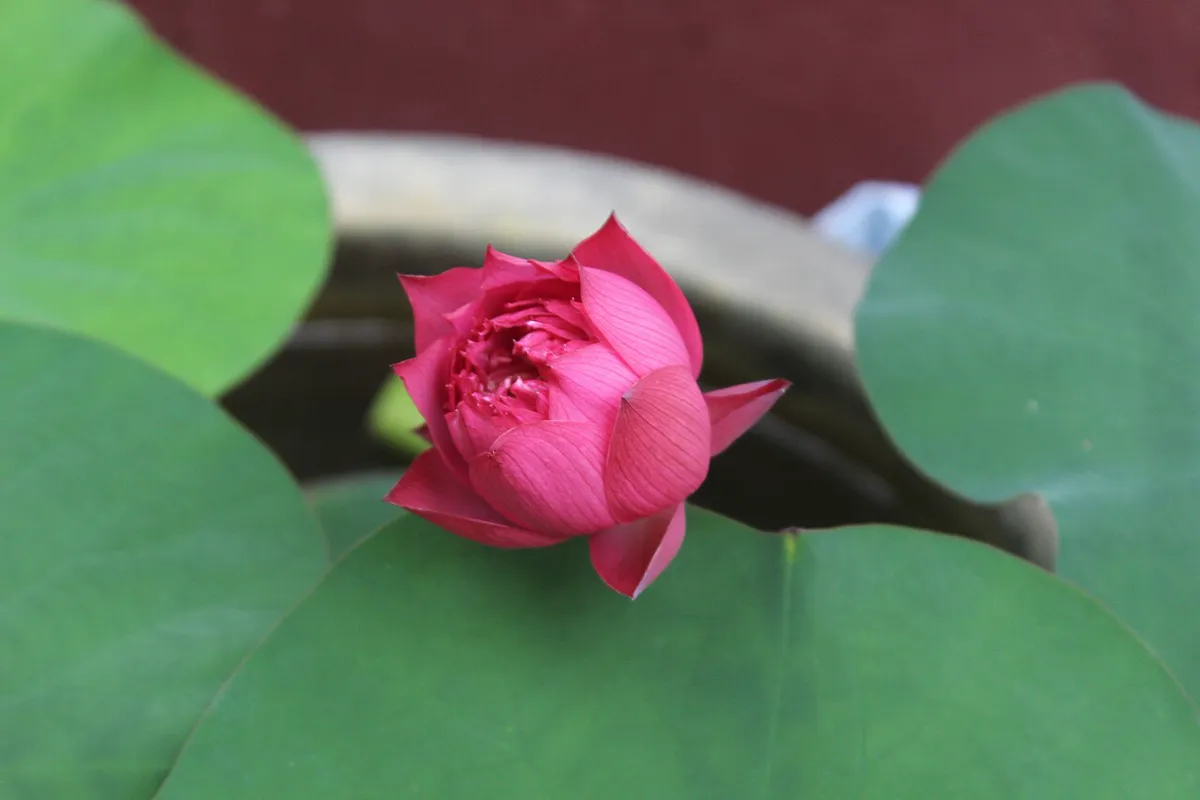
Minutes per month, honestly. Spring: repot crowded plants, feed the lily an aquatic tablet, restart the dunk routine. Summer: top up evaporation with rainwater, snip spent pads, scoop floating algae with a stick-twirl if it appears. Autumn: keep falling leaves out (a mesh over the pot for the worst weeks), cut back dying marginals. Winter: in mild regions, nothing. Where it freezes hard, float a ball to keep a gas hole open, or move the whole pot against the house wall; drop hardy lilies deeper or overwinter the basket, frost-free and damp.
Container ponds in India
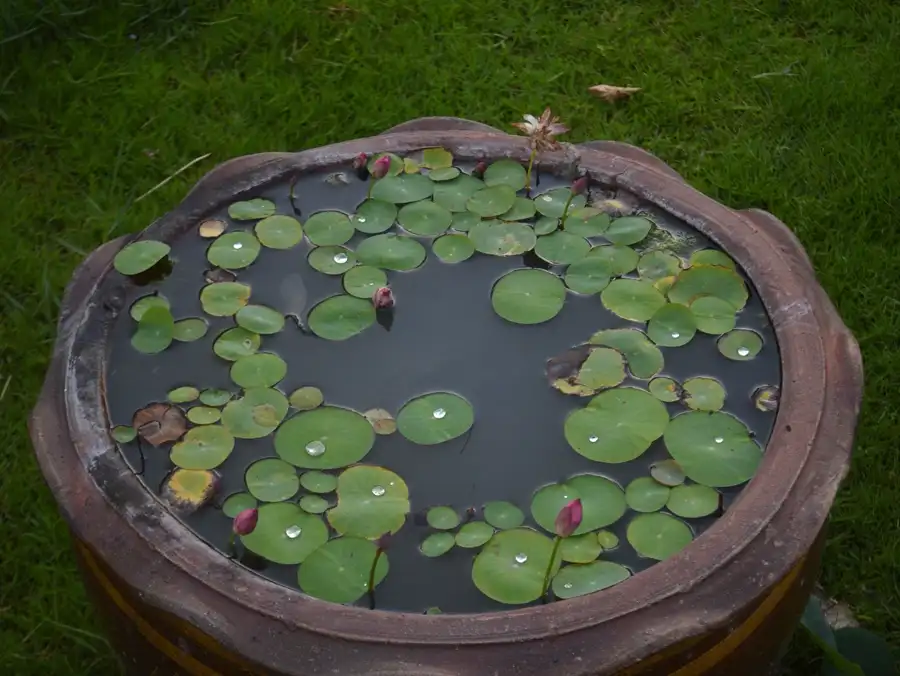
India has a head start here — the bowl-lotus and water-bowl tradition is centuries old, and the climate suits container water gardens most of the year.
Glazed pots and cement nands work beautifully; site them with morning sun and afternoon shade on the plains, since a small pot in May sun overheats. Bowl lotus, dwarf water lilies, water lettuce and azolla are all easily found through aquatic-plant nurseries online. The monsoon tops the pot up for free — just let it overflow from the rim, not the root baskets. Mosquito discipline matters more than anywhere: Bti-based larvicides are sold by Indian garden suppliers, and guppies are the classic larvae patrol in bigger tubs. In most of the country the pond runs all twelve months, with lilies resting briefly in the coolest weeks.
Common container pond problems
- Green water in week two. Normal new-pond algae — wait, don’t refill. More surface cover speeds the cure.
- Lily leaves but no flowers. Not enough sun, or hungry — six hours and a spring feed tablet fix most cases.
- Water level drops fast. Evaporation is normal in heat; sudden loss means the plug or liner leaks.
- Wildlife drowning risk. Always keep the exit ramp — a rough stick or stacked stones to the rim.
- Soil clouding the water. Wrong compost; repot into heavy loam capped with gravel.
- Frozen solid in winter. Too small a volume left exposed — move it to shelter before deep cold, not after.
What experienced water gardeners report
Container pond keepers tell the same origin story: the tub was meant to be temporary, “just to try it”, and became the favourite thing in the garden by August. In community write-ups and container water-gardening features, the recurring surprise is how fast wildlife arrives — first-summer dragonflies are reported almost universally, and birds find the water within days.
The second consistent lesson is restraint with the green-water phase: those who waited out the fortnight describe the water clearing on its own as the plants took hold, while those who kept emptying and refilling reset the cycle each time. And nearly everyone eventually adds a second pot — the habit, keepers admit, is mildly contagious.
Related plant guides
- Terrarium care
- Water Lily
- Lotus
- How to grow Elephant Bush
- Crown of Thorns care
- Kratky Method Lettuce
Frequently asked questions
What do I need for a container pond?
A watertight pot of 40 litres or more, bricks for shelving, aquatic baskets with heavy loam, and three plants: an oxygenator (hornwort), a marginal (dwarf cattail, sweet flag) and a dwarf water lily. No pump or filter is needed at this scale.
How do I keep mosquitoes out of my container pond?
Use Bti mosquito dunks monthly in warm weather — the bacterium kills larvae and is harmless to plants, pets, bees and dragonflies. A small solar bubbler rippling the surface works too, and goldfish or guppies patrol larvae in larger tubs.
Do container ponds need a pump?
No. A balanced pot — oxygenating plant, surface cover from lily pads, no overfeeding of nutrients — keeps itself clear. Add a small solar fountain only if you want the sound or extra mosquito insurance.
Can a water lily grow in a container pond?
Yes — choose a true dwarf variety such as ‘Helvola’ or ‘Pygmaea Rubra’, planted in a loam-filled basket on the container floor with 15–30 cm of water above the crown. Standard lilies outgrow pots within a season.
How big should a container pond be?
Anything from about 40 litres (10 gallons) upwards works, and bigger is easier. A container at least 40 cm (16 in) wide and 30-45 cm (12-18 in) deep holds a steadier temperature and supports more plants.
Where is the best place to put a container pond?
Somewhere that gets roughly four to six hours of sun for flowering plants, with shade through the hottest part of the day. Keep it away from overhanging trees, since falling leaves foul the water fast.
Can I keep fish in a container pond?
Small containers are not suitable for fish, as the water heats and cools too quickly and oxygen runs low. In a large tub, a few small fish can work, but a planted pond with no fish is simpler and better for wildlife.
How do I stop the water turning green?
Cover roughly half to two-thirds of the surface with floating or leafy plants to shade the water, and add submerged oxygenating plants. Keep it out of all-day sun and do not add fertiliser or fish food.
Do I need to change the water in a container pond?
No full changes are needed. Just top up evaporation with rainwater where you can, and scoop out fallen leaves and debris so the water does not go stagnant.
Can I use a container that has drainage holes?
Yes, if you plug them properly. Seal the holes with silicone or a rubber bung, or drop a flexible pond liner inside the container and trim it at the rim.
How do I make a container pond safe for wildlife and children?
Add a sloped ramp, a stack of stones or a sturdy branch so frogs, bees and hedgehogs can climb out. Where small children have access, choose a shallow container or fit a rigid mesh cover over the top.
Sources and further reading
Related guides
- How to grow water lilies
- How to grow lotus
- How to make a pollinator garden
- Container gardening for beginners
- Monsoon Terrace Garden Checklist
- Best Window Boxes
Still stuck? Ask the Plant Doctor
Describe the problem — yellow leaves, holes, no flowers — and get a clear answer in seconds. FreeAI can make mistakes. Answers are guidance, not a guarantee — check anything important against the guide it links to, and always read the label on any product before you use it.