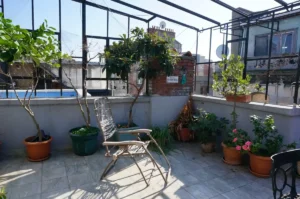
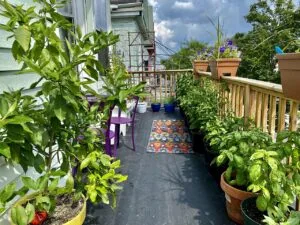
Best Window Boxes
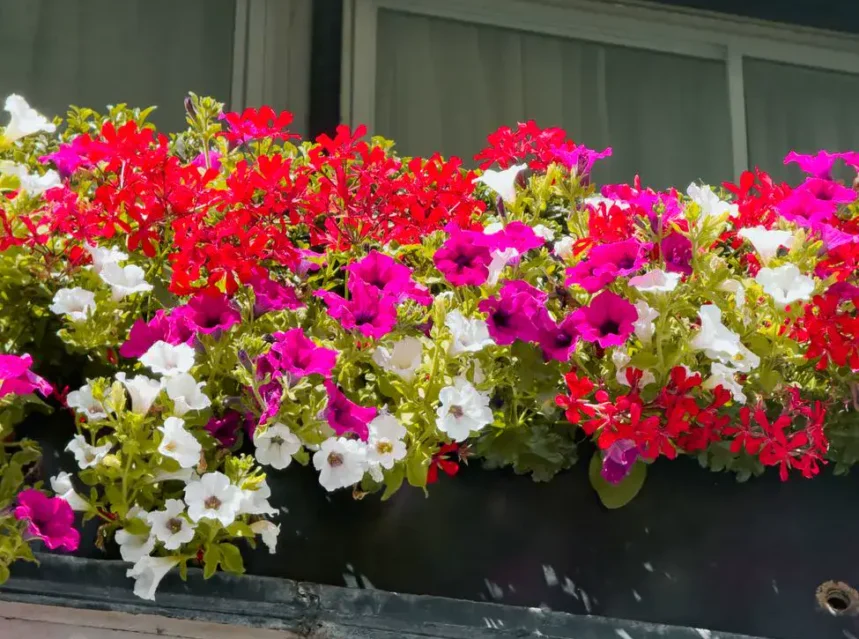
A window box is a long, shallow planter that mounts on or below a windowsill, a balcony railing, or a fence top. It gives flowers, herbs, and trailing plants a compact home where ground space is scarce. Window boxes are most common on UK terraced houses and city apartments. However, US and European city gardeners love them for the same reason. The best window box depends on your sill width, the wall or railing it fixes to, how much weight that mounting can hold, and how often you can water.
Our window box reviews weigh durability, drainage, and weight (vital for upper-floor sills). We also check frost resistance for year-round UK use, self-watering performance, and how well each box fits standard bracket systems. In short, we compare the leading planters across every material and mounting style on sale.
🧰 In a hurry? Jump straight to our tested picks for this guide ↓
Best window boxes at a glance
| Pick | Best for | Material | Length |
|---|---|---|---|
| Elho Green Basics Window Box | UK/US lightweight plastic windowsill planter | 100% recycled plastic | 40–80 cm |
| Keter Window Box Planter | US/UK resin railing box, self-watering | UV-resistant resin | 24 inches (60 cm) |
| Corsair Fibreclay Window Box (Agriframes) | UK fibreclay frost-proof traditional planter | Fibreclay | 60–90 cm |
| Stewart Window Box | UK budget plastic window box with drip tray | Polypropylene | 40–80 cm |
| Lechuza Balconera Self-Watering | UK/US premium self-watering window box | UV-stabilised plastic | 50–100 cm |
| H Potter Wrought Iron Window Box (US) | US cottage-style window box | Wrought iron + coco liner | 12–24 inches (30–60 cm) |
Types of window box
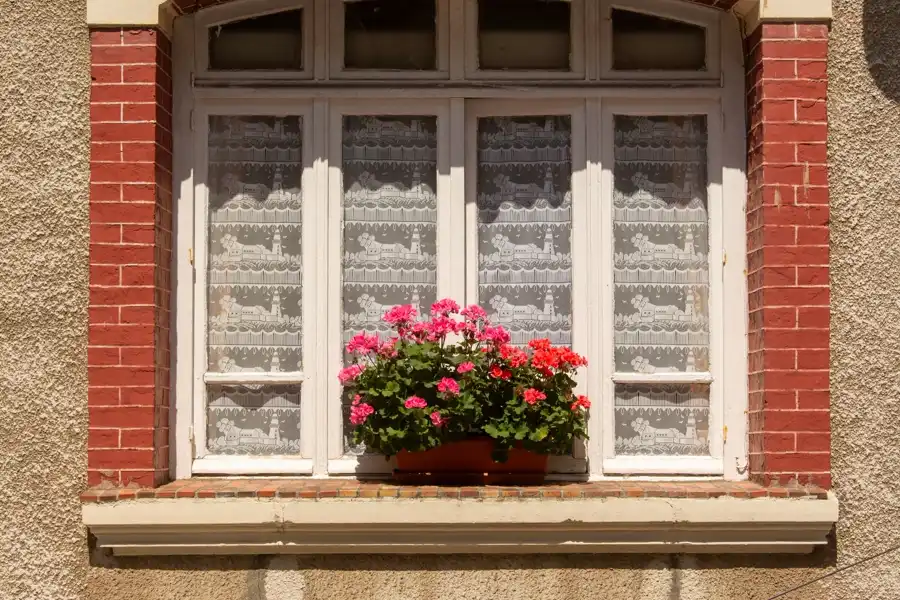
Plastic window box: This is the most common and practical material for UK and US home gardeners. A plastic (polypropylene) window box is light, which matters on upper-floor sills and railings where load is limited. It also resists frost, holds moisture well, and wipes clean easily. So for most windows, especially high ones, plastic is the safest choice.
However, a plain plastic box can look utilitarian next to fibreclay, timber, or metal. Elho tackles this with 100% recycled plastic in natural greys, terracottas, and blacks that blend with masonry. Lechuza uses thick UV-stabilised plastic that is hard to tell from ceramic at a distance. Because of this, plastic is the right pick for upper-floor sills whatever your budget.
Fibreclay window box: This is a composite of clay, sand, and binders cast into classic terracotta shapes. A fibreclay window box looks like real terracotta. However, it is roughly 40–60% lighter at the same size. It is frost-resistant too, so it survives UK winters that crack genuine terracotta after repeated freeze-thaw cycles.
For that reason, fibreclay suits gardeners who want the terracotta look without the frost risk. The Corsair Traditional Window Box from Agriframes is the fibreclay box we return to most often. First, though, check the weight per metre against the load rating of your sill brackets before fitting one above ground level.
Timber window box: These traditional wooden boxes use treated pine, cedar, or hardwood. A timber window box brings a natural, cottage-garden look. It lasts well if the wood is treated properly. For example, untreated softwood rots within 2–3 seasons outdoors. Cedar, by contrast, is naturally rot-resistant, while treated pine needs annual oil or stain.
Timber is the classic choice for older homes, and it still suits cottage gardens and period properties. The main downside is upkeep. The outside needs treating each year, and the inside should be lined with plastic so the compost does not rot it. A homemade box from pressure-treated timber is cheap and practical if you have basic tools.
Self-watering window box: This design holds a water reservoir in its base. The compost draws water up through a wick or capillary mat. As a result, you water far less often. That is a real advantage, because window boxes dry out fast thanks to their shallow depth, sun, and wind. A full reservoir can keep the compost moist for 1–2 weeks.
A self-watering box suits gardeners who travel or cannot water every day in summer. It is the most practical option for hot, dry regions such as California, Texas, and the Southwest. So if easy watering is your priority, choose a self-watering box.
Which window box to choose?
Pick your window box material based on where it mounts, the load it can hold, and how often you can water.
Choose a plastic window box for: upper-floor sills, railing mounts, and anywhere weight is a concern. Elho (recycled plastic) or Stewart Plastics (standard polypropylene) are the right UK picks. Keter resin is the right US pick for railings, thanks to its built-in bracket system.
Choose a fibreclay window box for: ground-floor sills and garden walls. It gives the terracotta look where real terracotta is impractical due to frost or weight. In short, fibreclay offers the classic appearance with far better durability outdoors year-round.
Choose a self-watering window box for: any spot where daily watering is hard. For example, balconies above street level, south-facing sills in full sun, or frequent travellers. The Lechuza Balconera is the right UK and European choice. The Keter self-watering railing planter is the right US choice for balcony railings.
Choose a timber window box for: period homes, cottage gardens, and anyone who wants a natural material they can paint or stain. Use cedar or pressure-treated pine. First, line the inside with polythene before filling it, so moisture does not rot the wood early.
What to look for when buying
- Drainage holes: every window box needs drainage holes in the base. Without them, water pools and roots rot. Most purpose-made boxes have pre-drilled or push-out holes, so check before you buy. A drip tray underneath catches the runoff. That stops water staining a wall or dripping on people below. See our full guide to overwatering vs underwatering for why drainage matters.
- Weight when planted: a 60 cm plastic box full of damp compost and plants weighs about 5–8 kg. The same size in fibreclay weighs 8–12 kg. In terracotta it weighs 12–18 kg. So the sill, bracket, or railing must hold the full planted weight plus a safety margin. For first-floor sills and above, always work this out first and check it against the bracket rating. Use light growing media (compost with 30% perlite) to cut weight without harming plants.
- Length to match the windowsill: the box length should match the sill width, with 5–10 cm clearance each side for airflow. A box much shorter than the sill looks sparse. A box that overhangs is a safety risk. So measure the sill precisely before you buy. Most UK and US boxes come in standard 40, 60, 80, and 100 cm lengths.
- Bracket and mounting system: wall-mounted boxes need brackets fixed with the right fixings for the wall. Use masonry screws into brick and proper anchors into render or UPVC. Never rest a box on a ledge without brackets, because a planted box can pull free without warning. Railing boxes clip over the rail with adjustable clips. Always follow the maker’s weight limit for the clip system.
The 6 best window boxes in 2026
1. Elho Green Basics Window Box — best UK/US lightweight plastic window box
The Elho Green Basics Window Box is our pick for the best budget plastic window box. Elho (Netherlands) makes the Green Basics range from 100% recycled post-consumer plastic. The natural colours — leaf green, cotton white, anthracite grey, and living black — blend with masonry rather than clash. The box has built-in drainage holes and a matching under-tray sold separately.
It is also the best-looking plastic box on the UK market. A 60 cm box weighs just 0.5–1 kg empty, the lightest option here. It costs £10–20 across 40–80 cm lengths. The recycled build appeals to eco-minded gardeners, and Elho is a B-Corp certified company. So for upper-floor sills where weight rules, this is the correct choice. Fill it with a light compost and perlite mix to trim the planted weight further. Keep a garden trowel handy for planting and yearly compost changes.
2. Keter Window Box Planter — best US/UK self-watering railing planter
The Keter Window Box Planter is the best railing-mounted box for a balcony. Keter (Israel, sold US/UK/EU) makes it from UV-resistant resin. It has a built-in sub-irrigation reservoir and adjustable clips that fit railings 1 to 3.5 inches across. The reservoir holds about 2 litres. That keeps the compost moist for 5–14 days between refills, depending on the weather.
The clips grip firmly across many railing sizes and do not wobble under weight. The reservoir cuts watering by roughly 70% versus a standard railing planter. It costs $30–50 / £25–45 and runs 24 inches (60 cm) long. The resin does not crack with frost, so it suits year-round UK use. For balcony gardeners who cannot water daily, the Keter is the most practical railing box available. Fill it with trailing petunias, calibrachoa, or fuchsias. See our guide to balcony gardening for more railing planter ideas.
3. Corsair Fibreclay Window Box (Agriframes) — best UK fibreclay window box
The Corsair Traditional Window Box from Agriframes is our top fibreclay pick for UK gardens. Agriframes (UK) makes it in a weathered terracotta finish. At normal viewing distance, it looks just like real terracotta. The fibreclay is frost-resistant to -20°C, so it survives UK winters outdoors without cracking. A 60 cm box weighs about 3.5 kg empty, far less than the 6–8 kg of real terracotta.
Over several UK winters the Corsair shows no cracking or frost damage. The terracotta finish weathers nicely over time. It costs £40–70 for 60–90 cm lengths. Drainage holes are pre-formed, and a matching drip tray is sold separately. For ground-floor sills on period homes and cottage gardens, this is the premium choice. It gives the right look without the frost risk of real terracotta. However, never exceed the bracket load rating on upper floors.
4. Stewart Window Box — best UK budget plastic window box
The Stewart Window Box is the budget plastic box for a no-frills option. Stewart Plastics (UK) makes it in polypropylene from 40 to 80 cm, in terracotta, black, and green. A matching drip tray is available. The build is simple and effective, and it does exactly what a window box should.
It is also the most widely stocked budget box in the UK, sold in most garden centres and online. It is less refined than the Elho Green Basics. However, it is functional and frost-resistant. It costs just £5–12 per box. That low price makes it easy to buy several for a large terrace or balcony. Empty weight is 0.5–1 kg, so it suits upper-floor sills. Group a few in one colour for a tidy display, and keep a garden kneeler handy when planting at low sill height.
5. Lechuza Balconera — best UK/US premium self-watering window box
The Lechuza Balconera is our top premium self-watering box for UK and US gardeners. Lechuza (Germany, sold UK/US/EU) makes it from thick UV-stabilised plastic with a matte finish. At a distance it looks like ceramic or stone. Its built-in reservoir holds 3–5 litres, refilled through a discreet fill tube. A water-level indicator shows when to top up. The reservoir keeps compost moist for 7–14 days in summer.
It is the most sophisticated window box a home gardener can buy. It pairs practical self-watering with genuinely premium looks. In fact, the Lechuza sub-irrigation system is the same tech used in commercial interior displays. It costs £60–120 depending on length (50–100 cm), the priciest box here. However, for the lowest-maintenance box and a long life, the premium is justified. Fill it with trailing calibrachoa, fuchsias, and bacopa. Pair it with the best grow lights for an indoor window box in winter.
6. H Potter Wrought Iron Window Box — best US cottage-style window box
The H Potter Wrought Iron Window Box is the best cottage and period-style box for US homes. H Potter (US) makes it from powder-coated wrought iron with a coco fibre liner. The coco liner holds compost while draining well. The iron frame has a traditional, hand-forged look that suits older homes, cottage gardens, and farmhouse styles. It comes from 12 to 24 inches (30–60 cm) in antique black, verdigris, and bronze.
Nothing else in the US market looks so distinctly cottage. The wrought iron is extremely durable and does not crack, fade, or weaken outdoors. The coco liner, however, needs replacing every 1–3 seasons as it breaks down. It costs $40–80 depending on length. The slim iron frame lets the flowers themselves be the focus, not the box. It is ideal for a front porch, deck railing, or period sill. Wear good gardening gloves when handling the iron edges.
Window boxes in India
Window box gardening is popular in Indian cities. It thrives in apartments in Mumbai, Bengaluru, Delhi, Chennai, and Pune, where growing space is just a small balcony or sill. Indian high-rises often have metal balcony railings that standard clip-on boxes fit directly.Plastic window boxes are sold through Amazon India, Ugaoo, Nurserylive, and local nurseries. Fibreclay boxes turn up at premium gardening retailers in the big cities.
In India’s heat, though, watering frequency is the biggest challenge. In summer (April–June), a plastic box in direct afternoon sun in Mumbai or Delhi can dry out within 24 hours. So daily watering is essential for standard boxes. A self-watering box stretches that interval to 3–5 days, even in the summer heat. That is a real advantage for anyone who cannot water every day. Line a standard plastic box with a thin layer of coconut coir to slow surface evaporation.
For plants, trailing flowers do best in full sun. Try portulaca, vinca, dwarf bougainvillea, petunias, and calibrachoa. Herbs such as basil, mint, coriander, and fenugreek prefer partial shade on north- or east-facing balconies. In contrast, avoid tender basil in west-facing full sun in summer. Above 38–40°C it wilts and scorches even with daily watering. Use a deep box (at least 20 cm internal depth) for herbs, because more soil holds moisture longer. Fill it with a cocopeat, garden soil, and vermicompost blend (40/40/20) for the best moisture retention. Our terrace gardening guide covers the full technique.
Window box tips
- Use lightweight compost to cut the load: fill boxes with peat-free multipurpose compost and 30% perlite. Perlite is much lighter than soil. It also improves drainage and lowers the risk of waterlogging in a shallow box. Never use garden soil, because it compacts, drains poorly, and is too heavy for upper floors. For example, a 60 cm perlite-compost box weighs about 30–40% less than one filled with compost alone.
- Water daily in summer: window boxes have lots of surface area for their volume. They sit in exposed sun and wind, so they lose moisture fast. In UK summer (June–August), a south-facing box usually needs daily water. In hot, dry spells, water twice a day. Water early in the morning to limit evaporation and keep drops off leaves in midday sun. A self-watering box reduces this need, but it does not remove it. Consider a watering timer with a drip irrigation kit for automatic watering.
- Plant uprights at the back, trailers at the front: two layers look best. Put compact uprights (dwarf petunias, marigolds, small herbs, small grasses) at the rear. Put trailers (lobelia, bacopa, ivy-leaf pelargonium, calibrachoa, helichrysum) along the front edge. The trailers spill over the front and soften the box. This layering lifts the display without overcrowding. A plant stake or small cane keeps uprights steady in windy spots.
- Feed every 1–2 weeks in the growing season: window box compost runs out of nutrients fast under active growth and frequent watering. After 4–6 weeks, the original nutrients are gone. So feed with a balanced liquid fertiliser every 7–14 days from early May to September. A high-potassium tomato feed suits flowering plants. Slow-release granules mixed in at planting give a base level. However, liquid feeding still matters for peak flowering. Under-fed boxes give fewer flowers and duller leaves.
Frequently asked questions
What plants are best for window boxes?
The best window box plants depend on the position. For full sun (south or west facing), choose trailing petunias, calibrachoa, osteospermum, portulaca, sweet alyssum, ivy-leaf pelargonium, and marigolds. These handle heat and flower freely all summer. For partial shade (north or east facing), pick fuchsias, impatiens, begonias, lobelia, bacopa, and creeping Jenny. These prefer shade and will scorch in direct summer sun.
For herbs, basil, parsley, chives, mint, and thyme all do well in a sunny spot. Keep mint in its own pot so it cannot spread. Avoid rosemary and lavender in a window box, because they need sharper drainage and more root depth than a standard box gives. A mixed herb box by the kitchen window puts a daily harvest within arm’s reach. See our full guide to growing herbs indoors for more.
How deep should a window box be for plants?
Most window boxes are 15–25 cm deep inside. That suits annual flowers, trailing plants, herbs, and shallow-rooted veg like lettuce and spring onions. For example, lettuce roots reach 20–25 cm at most, so a 20 cm box is enough. For dwarf tomatoes and compact peppers, use at least 20–25 cm depth and the widest box you can, to hold more soil and moisture.
The key measurement is the internal depth, not the external height. Some boxes have thick base walls that cut the real planting depth. So always check the inside depth before buying if you plan to grow vegetables or deep-rooted herbs. Shallow boxes under 15 cm dry out very fast. They only suit drought-tolerant plants such as succulents, portulaca, and ice plant.
Do window boxes need holes in the bottom?
Yes, every window box needs drainage holes in the base. Without them, water pools and roots rot within days to weeks. Most purpose-made boxes already have pre-formed holes. If yours does not, drill 6–10 holes (8–10 mm wide) in the base before planting. Cover each hole with mesh or a broken terracotta crock, so compost cannot wash through while water still drains.
A drip tray under the box catches the runoff and stops it staining walls or sills. However, empty the tray often. Standing water wicks back up into the compost and causes waterlogging. A self-watering box is different. Its base reservoir acts as both the water source and the overflow, so these systems do not need a separate drip tray.
How do you stop a window box from falling?
Use purpose-made brackets fixed with the correct fixings for the wall. For brick or masonry, use masonry bolts into the mortar or brick. For render, use anchors rated for the weight. For UPVC fascia, use dedicated UPVC brackets, not generic masonry screws. The fixing should be rated to at least twice the planted weight of the box.
Always fit two brackets per box, one at each end. Space brackets no more than 60 cm apart on boxes over 80 cm. For example, a 100 cm box needs three brackets: one at each end and one in the middle. Use a spirit level so the box sits flat, because a tilted box sheds water to one end. Check the brackets each year and replace any that show rust or looseness before spring.
What is the best time to plant a window box?
Plant your main summer display in late spring, after the last frost. In the UK that is usually mid to late May. In the US it depends on your zone, but it lands soon after your local last-frost date. This gives tender annuals like petunias and calibrachoa warm soil to root into. For a spring show, plant frost-hardy violas, primroses, and bulbs in autumn instead.
How much soil does a window box need?
Fill a window box with potting mix to about 2–3 cm below the rim. That gap stops soil washing out when you water. Do not pack the mix down hard, because roots need air pockets. A 60 cm box holds roughly 15–20 litres of compost, so buy a bag that covers your total box length. Top up the level each spring, as compost settles over a season.
Should you line a window box?
A liner helps in some cases but is not always needed. Line a timber box with polythene so the wet compost cannot rot the wood. A coco-fibre liner suits open metal frames like wrought iron, because it holds the compost in. Solid plastic and fibreclay boxes do not need a liner. If you do use plastic sheeting, cut a few slits in the base so water can still drain.
What soil is best for a window box?
Use a good multipurpose potting compost, not garden soil. Garden soil is heavy, compacts fast, and may carry pests or weed seeds. Mix in 20–30% perlite to keep the compost light and free-draining. For extra moisture holding in hot regions, add some coco coir. In India, a cocopeat, garden soil, and vermicompost blend works well for balcony boxes.
How often should you water a window box?
In summer, water most window boxes once a day. In hot, dry, or windy weather, a south-facing box may need water twice a day. Check the top 2–3 cm of compost with a finger; if it is dry, water until it runs from the drainage holes. In spring and autumn, every 2–3 days is often enough. A self-watering box with a full reservoir can go 7–14 days between top-ups.
Can you grow vegetables in a window box?
Yes, many compact vegetables grow well in a window box. Salad leaves, lettuce, spring onions, radishes, and herbs all suit a sunny box. Dwarf tomatoes, chillies, and compact peppers work in a deeper box of at least 20–25 cm. Feed veg boxes weekly, because crops are hungry and the compost runs out fast. Keep the compost evenly moist for steady, tender growth.
Do window boxes damage windowsills or walls?
They can if you fit them badly or ignore drainage. Trapped water and constant damp can stain render, rot timber sills, or loosen fixings over time. To avoid this, use a drip tray, empty it often, and keep a small air gap between the box and the wall. Fit brackets into sound masonry with the right fixings, and check them each year for rust or movement.
Sources and further reading
Still stuck? Ask the Plant Doctor
Describe the problem — yellow leaves, holes, no flowers — and get a clear answer in seconds. FreeAI can make mistakes. Answers are guidance, not a guarantee — check anything important against the guide it links to, and always read the label on any product before you use it.