Best Strawberry Planter
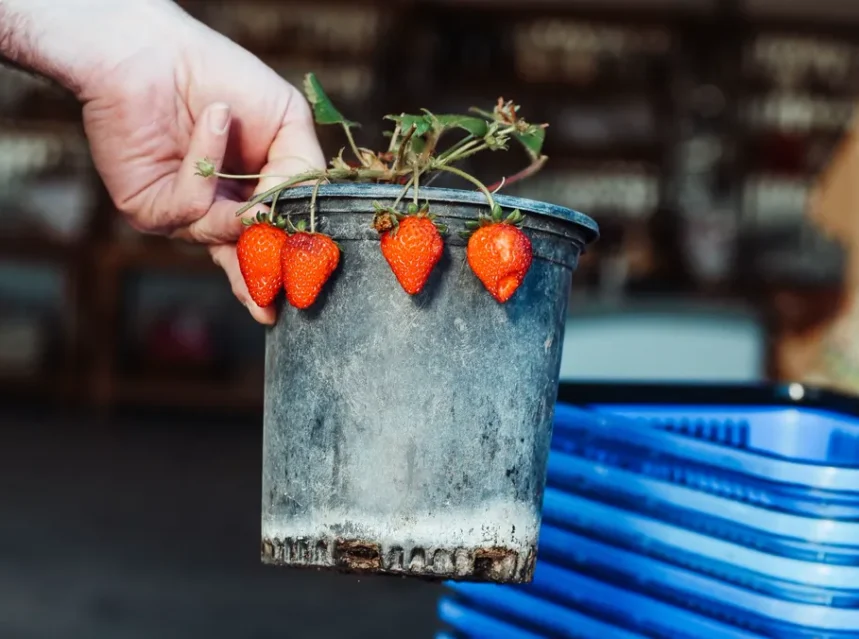
A strawberry planter is a purpose-designed container — usually a tiered tower, a pot with side pockets, or a wide shallow trough — that allows multiple strawberry plants to be grown vertically or in a compact footprint, producing fruit at accessible height with good drainage and air circulation around the runners. The right planter significantly increases yield per square foot compared to a standard pot, keeps fruit clean and off wet soil, and makes picking easy without bending.
This guide covers the seven best strawberry planters of 2026, with a clear guide to how many plants each type holds, drainage requirements, and a dedicated section for Indian balcony growers who want to grow strawberries in the cool season (October to February).
Quick start: For most UK and US patios, choose a 5-pocket terracotta-style planter or a 3-tier tower that holds 10–15 plants. Use a compost mix of 50 percent multipurpose compost and 50 percent coarse grit for drainage. Water daily in summer — strawberry roots are shallow and the pockets dry out fast. Feed weekly with tomato fertiliser (high potash) from flowering. Cut runners off during the fruiting season to keep energy in the fruit, not in propagation.
🧰 In a hurry? Jump straight to our tested picks for this guide ↓
Why a dedicated strawberry planter outperforms a standard pot
A standard 25 cm plant pot holds one strawberry plant. A 5-pocket tower planter holds 5 plants in the same footprint. A 3-tier tower holds 12–15 plants. The yield per square foot from a purpose-built strawberry planter is 4–8 times higher than a standard pot arrangement.
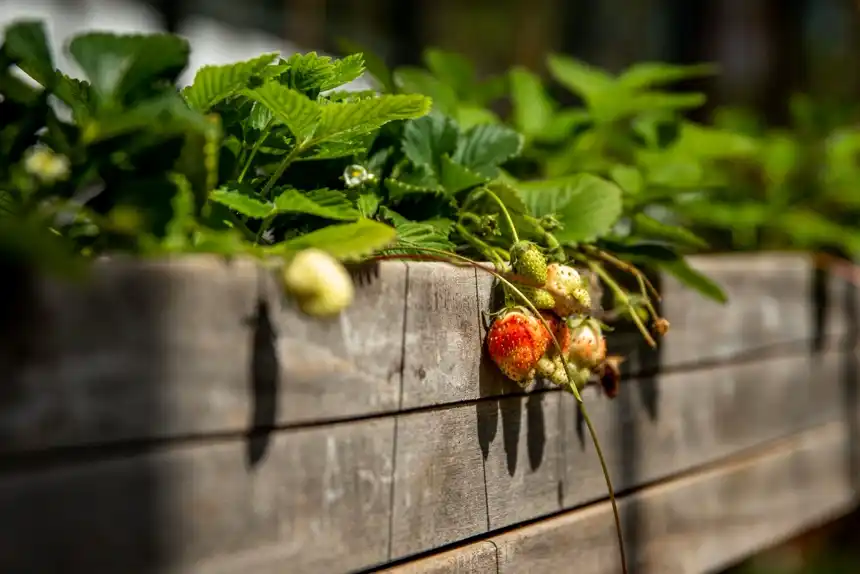
Beyond yield density, strawberry planters keep fruit off the soil. Ground-level strawberries suffer slug damage, botrytis (grey mould) from soil splash, and rain-wetted fruit that rots before ripening. Fruit hanging from a tower or pocket planter is exposed to air on all sides, dries quickly after rain, and is visible for picking the moment it turns red.
Strawberry planters also make the growing season longer. A planter on a south-facing wall absorbs heat faster than open ground. Fruit in a wall-mounted tower often ripens 2–3 weeks before ground-level strawberries in the same garden.
Types of strawberry planter: which to choose
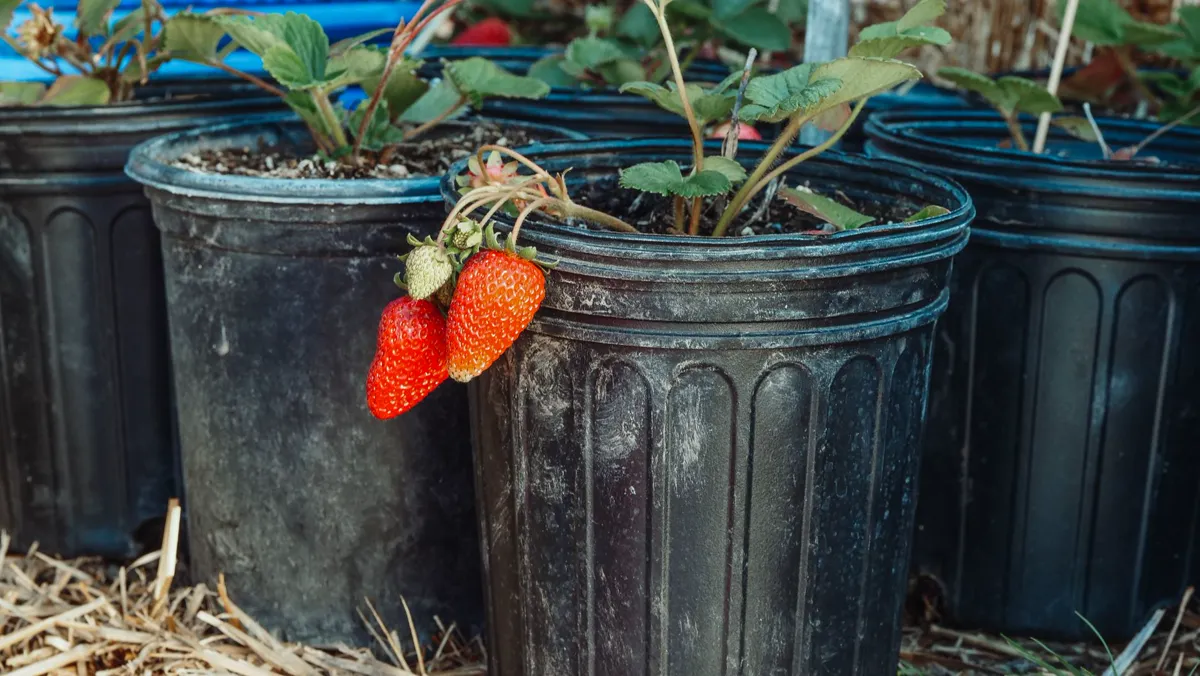
There are five main types. Each suits a different space and growing approach.
Tiered tower planters stack 3–4 planting platforms, each holding 4–6 plants in individual pockets. They occupy the smallest footprint (typically 40×40 cm base) for the number of plants they hold. However, water distribution is uneven — the top tier gets soaked while the bottom tier stays dry unless water flows through all tiers. Look for a centre pipe or wicking column that distributes water from the top to all levels.
Pocket planters are single-column bags or pots with side pockets punched or moulded around the perimeter. They hold 5–8 plants in a small footprint and work particularly well hung on a fence or wall. Felt pocket planters (like the GrowUp Felt Planter) are breathable and self-draining. Plastic pocket pots retain moisture longer but can waterlog in heavy rain.
Wide shallow troughs — typically 60–90 cm long and 20–25 cm wide — hold 4–6 plants in a row and are the easiest type to water evenly. They suit window-ledge display, raised deck railings, and low-level growing in a raised bed kit. Drainage is simple to achieve with holes along the base.
Hanging baskets can be planted with trailing alpine strawberries. However, they require twice-daily watering in summer — strawberries have high water demand and a hanging basket dries out very fast. Best for small quantities of alpine strawberries for decoration and occasional eating, not for a meaningful fruit harvest.
Terracotta strawberry pots are the classic decorative choice — a tall pot with 5–8 thumb-sized side pockets arranged in a spiral. They look attractive on a patio or doorstep. The terracotta clay breathes and dries out faster than plastic, which suits the well-drained conditions strawberries prefer. However, they are heavy when planted up and crack in frost unless brought indoors or wrapped in winter.
The 7 best strawberry planters of 2026
1. Stewart Garden 3-Tier Strawberry Planter (Best overall UK)
A 3-tier plastic tower in terracotta colour, 65 cm tall with a 34 cm base. Each tier holds 4 planting pockets — 12 plants total. The central draining column distributes water from the top reservoir to all three tiers. This water distribution system is the key differentiator — most 3-tier towers waterlog the base while the top dries out.
This is the best-value strawberry tower for UK patios. It is lightweight enough to be moved indoors or into a greenhouse for overwintering. The terracotta colour suits most garden aesthetics without the weight or frost risk of real terracotta.
2. GrowUp Fabric Pocket Planter (Best for fence and wall growing)
A breathable felt planter with 8 side pockets and 1 top pocket — 9 plants total. The felt fabric is fully permeable, so excess water drains from every surface. This prevents waterlogging and allows the compost to breathe. Felt planters also insulate roots against temperature extremes better than plastic.
The planter is lightweight and can be hung flat against a fence with two hooks. For gardeners with only a vertical fence and no horizontal surface, this is the best option. At the end of the season, it can be folded flat for storage. After 2–3 seasons, the felt degrades and the planter should be composted.
3. Harrod Horticultural Terracotta Strawberry Pot (Best traditional)
A classic hand-thrown terracotta pot, 38 cm tall with 5 side pockets arranged in a spiral. The terracotta clay is porous, allowing the compost to breathe and preventing the waterlogging that kills strawberry roots. The traditional appearance suits cottage garden and kitchen garden settings.
This pot requires frost protection in winter — wrap in hessian or move to a shed. Alternatively, remove the plants in autumn, store the pot dry, and replant in spring. For UK gardeners who want a planter that looks attractive from the moment it is set out, this is the best decorative choice.
4. Verve 60 cm Strawberry Trough (Best for railings and ledges)
A lightweight plastic trough, 60 cm long and 20 cm deep, with 6 drainage holes along the base. It holds 4–5 strawberry plants in a row. The trough shape suits balcony railings, deck edges, and window-ledge display.
This is the most practical format for apartment balconies where vertical tower space is limited but horizontal railing space is available. The long narrow shape means plants receive even watering and even light distribution — a common problem with tiered towers where the bottom tier is shaded by the top.
5. Primeur Eco Strawberry Planter (Best sustainable)
A tower planter made from 100 percent recycled car tyres, in a terracotta brown colour. It holds 8 plants across two tiers. The recycled rubber is frost-proof and UV-stable — it will not crack or fade for at least 10 years. It is also lightweight enough to be moved by one person when planted up.
For gardeners concerned about the environmental impact of single-use plastic planters, this is the best choice. The rubber material also insulates roots well — it warms quickly in spring sunshine and holds heat overnight, which accelerates early fruit set in April and May.
6. Botanico Grow Tower 4-Tier (Best high-capacity)
A 4-tier planting tower holding 16 plants in individual pockets. At 90 cm tall, it is the highest-capacity single-unit strawberry planter available in UK garden centres. The central water column distributes irrigation evenly to all four tiers when watered from the top.
The yield from a fully planted Botanico tower — 16 plants of a June-bearing variety like Cambridge Favourite — is comparable to a 2 m row of ground-level strawberries. For gardeners with no outdoor ground space at all (a paved courtyard, a flat roof terrace), this tower is the closest to a meaningful harvest from a single container unit. The height means the tower needs a sheltered position or staking in exposed gardens. Place the tower on a rolling plant caddy so it can be moved to follow the sun or brought under cover during late frost.
7. Gardman Metal Strawberry Planter (Best for raised beds)
A galvanised steel trough, 90 cm long and 30 cm deep, with drainage holes along the base. It is designed for placing directly on the ground as a low raised bed rather than being elevated. At 30 cm depth, it provides enough root space for full-size strawberry varieties rather than just alpine types.
The metal construction is frost-proof and lasts indefinitely. It looks better than plastic and does not discolour in UV. For gardeners who want a permanent strawberry bed on a hard surface — a patio, a flat roof, a concrete-floored allotment shed area — this is the most durable option.
How many plants do you need?
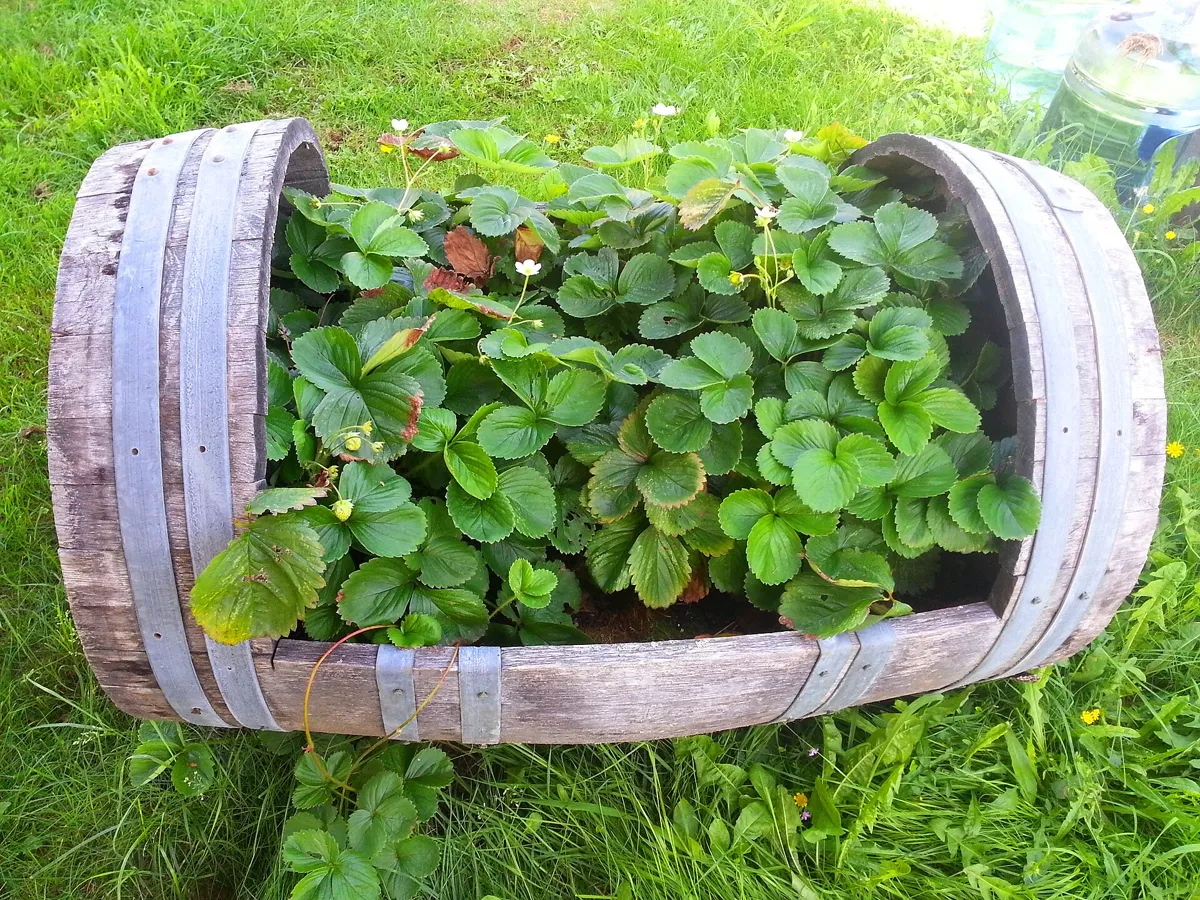
| Planter type | Plants held | Expected yield per season | Fruiting period |
|---|---|---|---|
| 5-pocket single tower | 5 | 500–800 g | June-bearer: 3 weeks; Everbearing: May–October |
| 3-tier tower (12 plants) | 12 | 1.2–2 kg | June-bearer: 3 weeks; Everbearing: May–October |
| 60 cm trough (4 plants) | 4 | 400–600 g | June-bearer: 3 weeks |
| 4-tier tower (16 plants) | 16 | 1.6–2.5 kg | Mixed variety: extended season possible |
| Hanging basket alpines | 3–4 | 100–200 g | Everbearing: June–September |
For a household that wants strawberries for daily eating rather than bulk jam making, a 3-tier tower (12 plants of an everbearing variety) provides enough fruit from May to October. June-bearing varieties give a single heavy crop over 2–3 weeks — ideal for jam but not for daily eating. Mix one June-bearer (heavy crop) with everbearing varieties to get both. Label each variety with a weather-proof garden label to keep track of which plants need replacing in autumn.
Watering strawberry planters
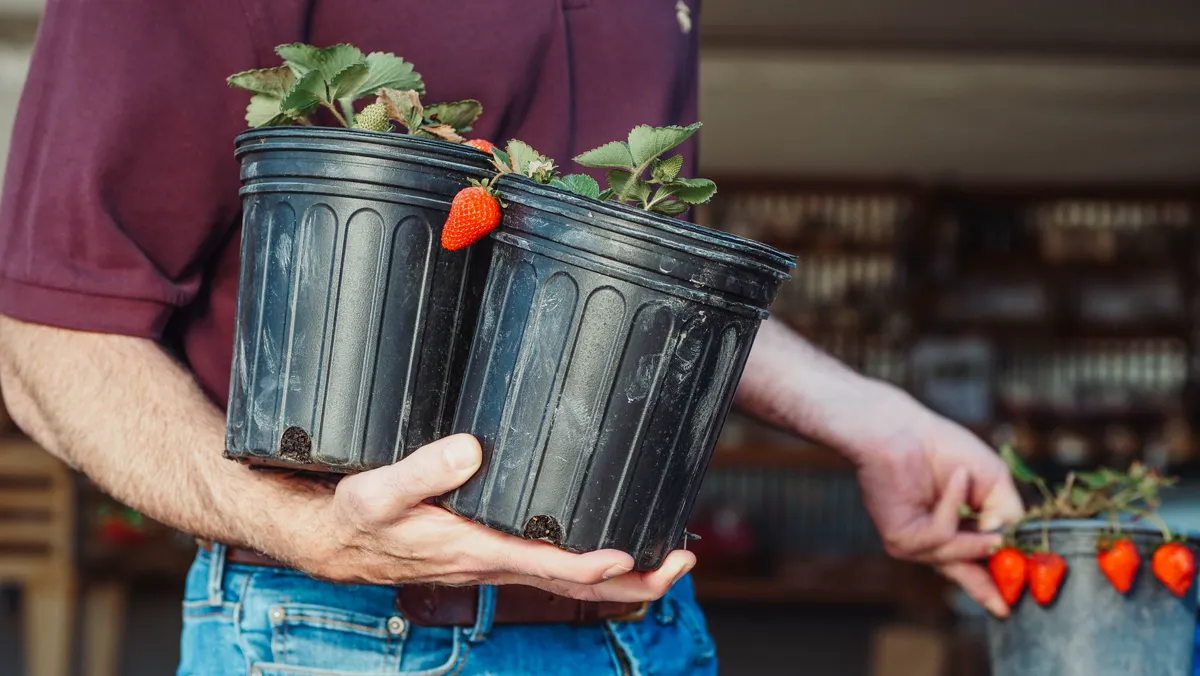
Strawberry roots are shallow — typically 15–20 cm deep. In a pocket planter or tiered tower, the compost volume per plant is small. This means the planter dries out very fast. Daily watering is essential from flowering to harvest. In a heatwave, twice-daily watering may be needed.
The most reliable method for tower planters is to water slowly and deeply — pour water into the top and wait for it to appear at the drainage holes before stopping. This ensures the full column of compost is wet, not just the top 5 cm. A watering can with a long spout reaches the top of a 90 cm tower without needing to lift or reposition the planter. A drip irrigation kit set on a timer is the best solution for gardeners away from home during summer — each pocket gets a dedicated drip emitter.
Strawberry planters for Indian balcony growers
Growing strawberries on an Indian balcony is entirely possible during the cool season — October to February in the plains, and year-round in hill stations above 1,500 m. The variety most suited to Indian growing conditions is the Chandler strawberry, widely sold by Ugaoo, Nurserylive, and Mahabaleshwar nurseries. California-origin Chandler plants produce large, sweet fruit under short-day triggering in the Indian October-November period.
The key challenge for Indian balcony growers is heat in March and April. Strawberries stop fruiting above 30°C and plants deteriorate rapidly above 35°C. For this reason, the Indian strawberry season is primarily November to February. A tiered pocket planter on an east-facing balcony — receiving morning sun and protected from the harsh afternoon heat — gives the longest productive season.
Watering discipline is critical. Indian winter days are dry and the sun is warm enough to dry a small pocket planter within 4–6 hours of watering. Check daily and water whenever the top 2 cm of compost is dry. Feed weekly from first flower with a dilute tomato fertiliser (NPK ratio approximately 5-10-10). Strawberries grown in containers in India benefit from a mulch of coir on the compost surface to retain moisture — a simple and widely available material. Local garden centres in Pune, Delhi, Bengaluru, and Mumbai reliably stock strawberry runners in October ahead of the planting window. Look for Chandler and Sweet Charlie varieties.
Frequently asked questions
How many strawberry plants can I fit in a tower planter?
A 3-tier tower planter typically holds 12 plants (4 per tier). A 4-tier tower holds 16 plants. A single 5-pocket pot holds 5 plants — one per side pocket and one on top. Always follow the planter’s stated capacity. Overcrowding reduces airflow and increases the risk of grey mould (botrytis) on the fruit.
For best results, plant one variety per tier in a tower planter so that all plants on a given tier have the same watering and feeding needs. Mixing June-bearing and everbearing varieties in the same tower creates an uneven feeding schedule, as June-bearers need rest after fruiting while everbearers continue to produce. For our full growing guide, see how to grow strawberries.
What compost is best for strawberry planters?
Use a 50/50 mix of multipurpose compost and coarse horticultural grit. This provides the free-draining conditions strawberries need — they are highly sensitive to waterlogging, which causes crown rot and kills plants quickly. Avoid heavy peat-based composts or garden soil in planters.
Add slow-release granules at planting time to provide background nutrition for the first 6 weeks. From the first flower, switch to weekly liquid tomato feed (high potash — the same feed as for hanging baskets). According to the RHS strawberry growing guide, a potassium-rich feed applied weekly from flowering significantly increases fruit size and sugar content in container-grown strawberries.
Do strawberry plants need full sun?
Yes — strawberries need at least 6 hours of direct sun per day to flower and fruit well. A south-facing wall or patio position is ideal. In partial shade (3–4 hours of sun), plants survive but produce far fewer flowers and smaller fruit. A tower planter on a south-facing wall absorbs heat from the wall, which further accelerates early fruit set.
In India, an east-facing balcony (morning sun, afternoon shade) is the best compromise. Full south-facing exposure on an Indian balcony in March and April means afternoon temperatures above 35°C, which ends the fruiting season early. The morning-sun east exposure extends productive fruiting into February and early March before the heat sets in.
When should I cut the runners from strawberry plants in a planter?
Cut runners off throughout the flowering and fruiting season. Runners are long horizontal shoots that produce new plants at their tips. If left on, they divert energy from fruit production to vegetative propagation. Removing runners during the fruiting season can lift yield by roughly 20–30 percent.
After fruiting ends in late summer, allow a few runners to root in small pots placed alongside the planter. These become next year’s replacement plants — strawberry plants lose productivity after 3–4 years. Replacing one third of the planter with new rooted runners each autumn maintains a young, productive planting at all times.
How deep does a strawberry planter need to be?
At least 15-20 cm (6-8 inches) of soil depth per plant, though deeper is better. University of Wisconsin extension advice puts the minimum round container at 30 cm (12 inches) across, or 60 cm (24 inches) for a rectangular trough, because roots spread sideways even though they stay shallow. A pocket or tower planter with pockets shallower than 15 cm dries out within hours in hot weather and stunts the plants.
Do stackable tower planters actually work long term, or do they fail after a season?
They work, but growers report two recurring problems: uneven watering between tiers and instability in wind once the top is heavily planted. Gardeners on vegetable-growing forums note that towers “either don’t drain well, or drain onto the tier below,” and need frequent watering in hot weather. A tower with a central wicking column or drainage pipe running through all tiers avoids most of this and lasts several seasons if brought under cover for winter.
How do I stop the top tier of my strawberry tower getting soaked while the bottom stays dry?
Water through a central perforated pipe or wicking column rather than pouring onto the top tier alone. Growers who tried plain top-watering on multi-tier towers found the top pockets flooded while the lowest tier stayed bone dry within a day. Running drip or soaker tubing down through the tower, with an emitter at each tier, solves the same problem without a special pipe.
Can I leave a strawberry planter outside over winter, or does it need to come indoors?
In most temperate climates it can stay outside if you insulate the roots — extension advice recommends mulching the crowns with 8-10 cm of clean straw or dry leaves once the plant goes dormant, and removing it gradually in spring. A container left fully exposed loses more roots to freeze-thaw than the same variety in open ground, because there is no surrounding soil mass to buffer temperature swings, so move small pots against a sheltered wall or into an unheated shed in a hard freeze.
How many strawberry plants do I actually need for a decent harvest?
Garden writers commonly suggest around four plants per person for a household that wants strawberries to eat fresh through the season, not just a token handful. That works out to roughly 8-12 plants for a couple, which fits comfortably in one 3-tier tower or two pocket planters. Serious jam-makers plant considerably more, since a single June-bearing flush needs volume to be worth preserving.
Can I grow strawberries in a hanging basket instead of a dedicated planter?
Yes, particularly trailing alpine varieties, but a hanging basket dries out faster than almost any other container because it is exposed to air and wind on every side. Expect to water at least once, often twice, a day in summer, and treat the yield as a bonus rather than a main crop — a basket suits a handful of plants for decoration and snacking, not a serious harvest.
How do I keep birds and slugs off strawberries growing in a planter?
Raise the planter off the ground on legs or a caddy, since slugs travel along the soil surface and struggle to reach fruit hanging clear of it. For birds, drape fine-mesh netting over the whole planter once fruit starts colouring, tucking it under the rim so there is no gap at soil level. Copper tape around the rim of terracotta and plastic pots also deters slugs that do climb, without any chemical slug bait near the fruit.
Sources and further reading
Still stuck? Ask the Plant Doctor
Describe the problem — yellow leaves, holes, no flowers — and get a clear answer in seconds. FreeAI can make mistakes. Answers are guidance, not a guarantee — check anything important against the guide it links to, and always read the label on any product before you use it.