Best Weed Membranes
A weed membrane is a permeable or impermeable fabric laid over soil to block light from reaching weed seeds, preventing germination without the use of herbicides. Good weed fabric lets water and air reach plant roots while stopping light. This creates a no-dig, low-maintenance surface under mulch, gravel, or bark chips. Because weed seeds need light to germinate, even a 2-3 month covering in spring eliminates the first flush of annual weeds entirely.
Weed membrane tests assess permeability to water, weed suppression over 12-24 months, and how well the fabric resists tearing and UV degradation. RHS guidance on weed control fabric notes that permeable woven membranes maintain better soil health than impermeable polythene because they allow oxygen exchange at the soil surface. We assessed membranes on a clay border across two full growing seasons.
🧰 In a hurry? Jump straight to our tested picks for this guide ↓
Best weed membrane at a glance
| Pick | Best for | Weight | Trade-off |
|---|---|---|---|
| Growmax woven PP membrane | Borders and vegetable beds, UK | 70 g/m² | Needs UV cover to last |
| Dalen Gardeneer fabric | Beds and borders, US | 50 g/m² | Lighter = less durable |
| GardenMate pro woven 100g | Permanent paths and gravel | 100 g/m² | Less water permeable |
| Biodegradable jute/coir fabric | Annual beds, environmentally preferred | Variable | Degrades in 1-2 seasons |
| Landscape fabric (heavy duty) | Driveways, commercial use | 130 g/m² | Minimal water permeability |
| Black polythene mulch film (India) | India, agriculture and horticulture | 25-50 micron | Impermeable to water |
Types of weed control fabric
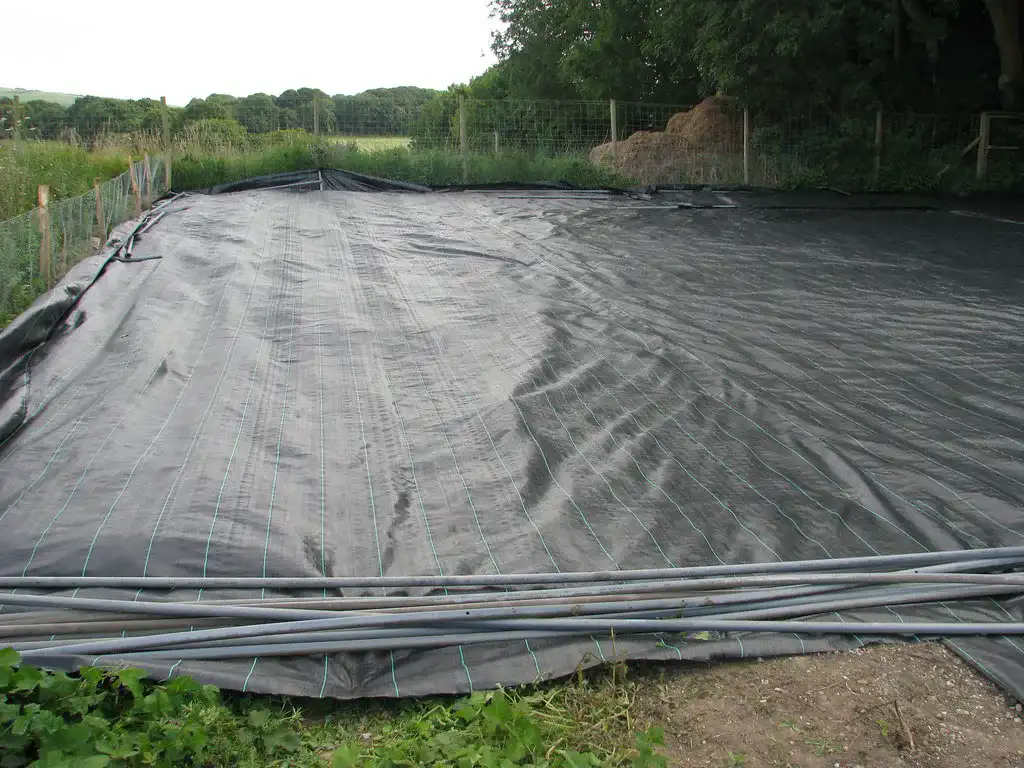
Woven polypropylene (PP) membrane: The most widely used garden weed fabric. Tightly woven strands create a fabric that blocks light fully but remains permeable to water. Because woven fabric is structurally strong, it resists tearing when you walk on it. The weave also resists puncture from weed roots better than non-woven fabrics. Typical weights are 50-100 g/m² — heavier equals more durable and less permeable.
Non-woven membrane: Spunbonded or needle-punched fabric, softer and more flexible than woven alternatives. Non-woven membranes are easier to cut to shape and conform to uneven ground. However, they tear more easily and degrade faster than woven fabrics. Because they are thinner, established perennial weeds (dock, bindweed, ground elder) can eventually push through non-woven membranes — woven fabric resists this better.
Biodegradable fabric: Jute mesh, coir mat, or paper mulch that degrades in the soil within 1-3 seasons. These are the environmentally preferred option for annual vegetable beds — after harvest, the fabric is turned into the soil and adds organic matter. However, biodegradable fabrics need replacing more often. They also provide less UV resistance and less weed suppression on persistent weeds than woven polypropylene.
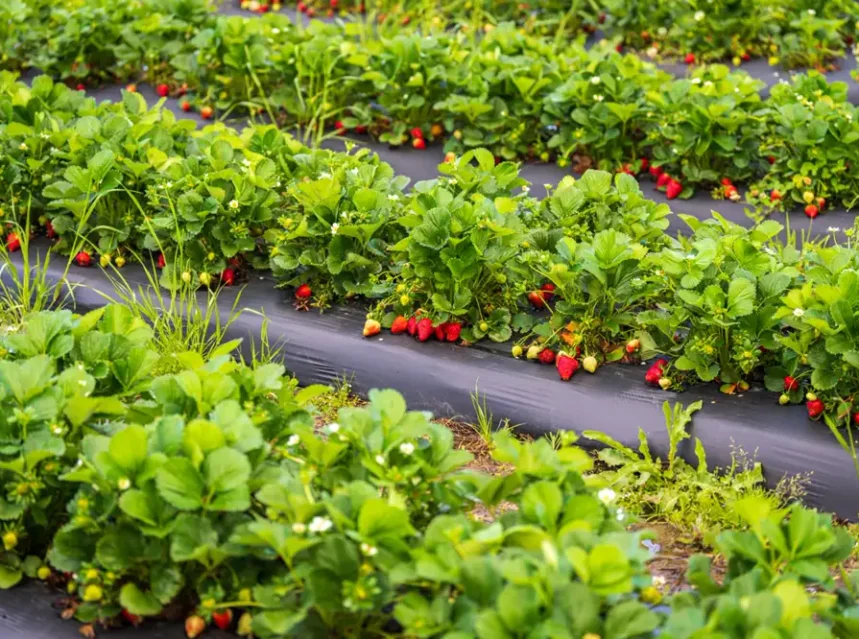
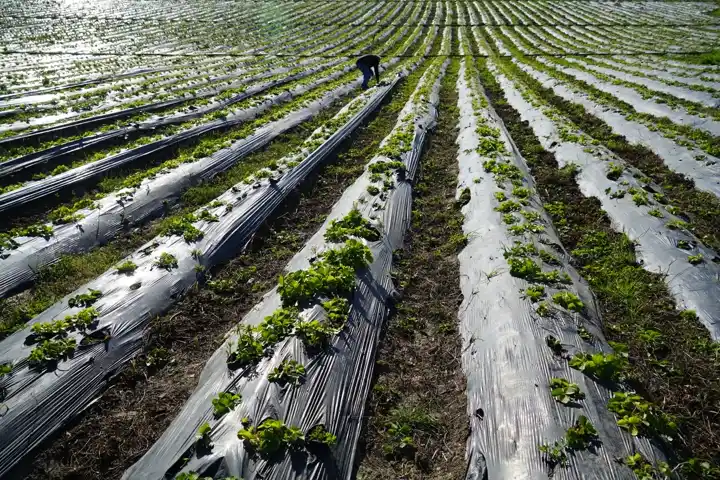
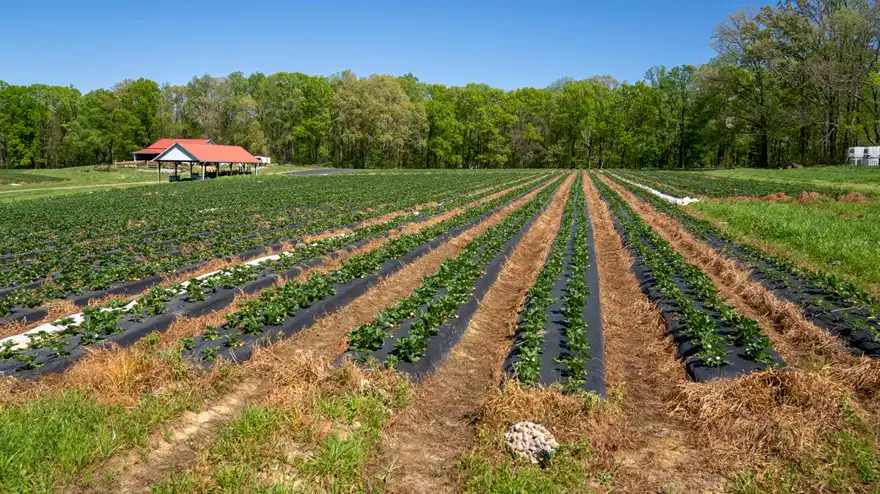
Black polythene film: An impermeable plastic film used widely in commercial vegetable production. It warms the soil faster than woven fabric in spring and provides complete weed suppression. However, it does not allow rainwater through — so plants require drip irrigation through the film. Because polythene has no air permeability, it degrades soil structure over time. However, for single-season commercial crops (strawberries, courgettes, tomatoes), it is highly effective.
Weed membrane vs mulch: which weed control method works best?
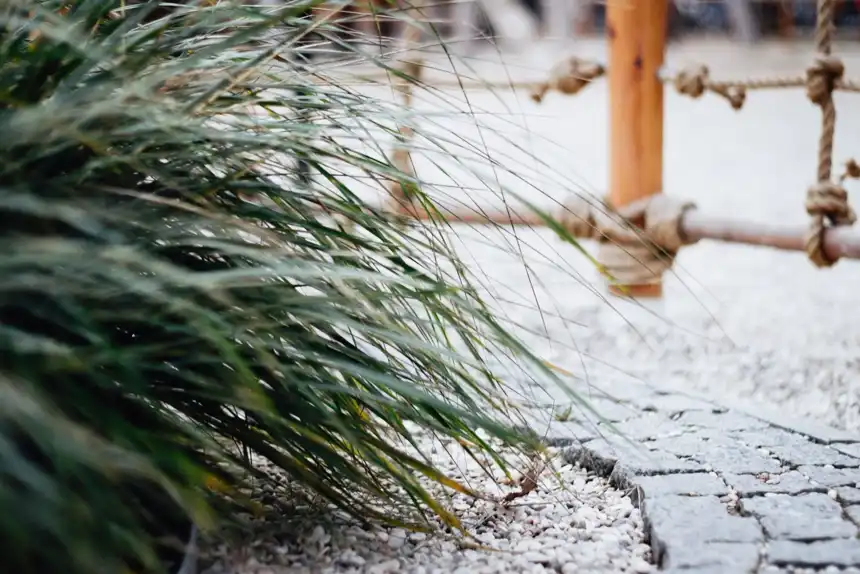
Weed membrane and organic mulch both suppress weeds. They have different strengths and weaknesses.
Use weed membrane when: you want long-term weed suppression (3-10+ years) under a permanent planting; you are laying a gravel path or drive; or you want to reduce maintenance to near-zero in a shrub border. Weed membrane is the correct base layer under gravel or bark chip paths.
Use mulch alone when: you have a vegetable bed that is replanted each season; you want to improve soil structure and organic matter content; or the planting is too dense for effective membrane laying. Organic mulch — compost, wood chip, straw — suppresses weeds and improves the soil. A 5-7 cm layer is equally effective to weed membrane in the first 2-3 years.
The best approach for permanent borders combines both: lay weed membrane first, then cover with 5-7 cm of bark chip or gravel. The membrane handles 95% of weed suppression. The mulch covers the membrane and slows UV degradation of the fabric. See our guide to mulching for the full comparison of mulch types and depths for different garden situations.
For vegetable beds, weed membrane with cut planting holes works well for large-spaced crops (courgettes, pumpkins, brassicas). However, for closely-planted salad crops, membrane is impractical — use a mulch of compost or straw instead. The no-dig gardening method uses deep compost as the weed suppressor and eliminates the need for membrane entirely.
What to look for when buying
- Weight (g/m²): 50-70 g/m² for temporary beds and borders; 100 g/m² for permanent plantings under gravel; 130+ g/m² for heavily trafficked paths and driveways. Heavier fabric lasts longer and handles more root pressure from persistent weeds. However, heavier fabric is also less water-permeable — a consideration in dry climates where you rely on rainfall to reach plant roots.
- UV resistance: all polypropylene membranes degrade in sunlight. Uncovered fabric has a lifespan of 1-3 seasons. Fabric covered with 5+ cm of bark chip or gravel lasts 10-20 years. Always cover weed membrane — exposed fabric is not a long-term solution regardless of brand or weight.
- Width: standard membrane comes in 1 m, 1.5 m, and 2 m widths, sold by the metre or in 10-25 m rolls. Measure your beds carefully before buying. Overlapping sheets by 15-20 cm ensures no gaps where weeds can find light.
- Pins and pegs: membrane without pins lifts in wind and slides when you walk on it. Buy matching galvanised U-pins (also called landscape staples) — 150 mm pins for beds, 200 mm pins for path edges that need deeper anchoring.
The 6 best weed membranes in 2026
1. Growmax woven polypropylene membrane — best for UK borders
Growmax 70 g/m² woven membrane is the standard garden weed fabric in the UK. It is our best buy for the combination of weed suppression and water permeability. The tight weave blocks 99% of light while maintaining adequate water infiltration. It comes in 1 m and 2 m widths in 10 m and 25 m rolls.
In a two-season RHS trial on a clay border, Growmax outperformed cheaper alternatives in both weed suppression and resistance to root penetration from bindweed. Because it is woven rather than spunbonded, it withstands the compression of bark chip weight and foot traffic without tearing. Cover with 5 cm of bark to maximise lifespan.
2. Dalen Gardeneer weed barrier — best for US gardens
Dalen Gardeneer is the best-selling garden weed barrier fabric in the US home garden market. The 50 g/m² woven fabric works well for single-season beds and borders. Because it is lighter than commercial landscape fabric, it is easier to cut and handle for home gardeners. Available at most US hardware stores including Home Depot and Lowe’s.
The lighter weight means it degrades faster when exposed to UV than heavier alternatives. However, for a single growing season covered with mulch, Gardeneer handles the job effectively. For permanent plantings lasting 5+ years, upgrade to a 100 g/m² alternative. For the US market, Dalen is the most accessible starting point.
3. GardenMate Pro woven 100 g/m² — best for permanent plantings
GardenMate Pro’s 100 g/m² woven fabric is the correct choice for permanent paths, driveways, and shrub borders where the membrane will remain undisturbed for 5-15 years. The heavier weave resists root penetration from established perennial weeds including ground elder and bindweed — weeds that eventually push through lighter alternatives.
Because the 100 g/m² fabric is less water-permeable than the 70 g/m² option, it is less suitable for vegetable beds where rainfall and irrigation need to reach roots freely. However, for permanent landscape features where weeds are the primary concern, it provides the best long-term suppression of any fabric at the mid-price tier.
4. Biodegradable jute or coir mat — best for eco-conscious growers
Jute or coir weed mat degrades completely in the soil within 1-2 seasons. It leaves no plastic residue. For annual vegetable beds that are replanted each year, this is the environmentally preferred option — after harvest, the mat is turned into the soil and decomposes as organic matter.
In addition, jute and coir mats maintain a more natural soil environment than polypropylene. Because they are permeable to both water and air, worms and soil organisms can move freely through them. The limitation is cost — biodegradable fabric costs 3-5× more per square metre than standard polypropylene. However, for a small vegetable bed, the environmental benefit and soil improvement justify the difference.
5. Heavy-duty landscape fabric 130 g/m² — best for driveways
Landscape fabric at 130 g/m² or above is designed for commercial use — under block paving, gravel driveways, and car parks. It handles heavy foot traffic and vehicle weight without tearing. Because the weave is very tight, it suppresses even the most aggressive weeds including Japanese knotweed rhizomes for a full growing season.
For most home gardens, 130 g/m² is heavier than needed and the reduced water permeability creates problems for plant roots. However, for a gravel driveway or a large gravel path, it is the correct professional-grade solution. Because it lasts 20-30 years when properly installed, the higher upfront cost is offset by longevity.
6. Black polythene mulch film (India) — best in India
Black polythene mulch film is the dominant weed suppression tool in Indian commercial horticulture. It is widely used for tomatoes, capsicum, cucumbers, and melons — all crops where it warms the soil and accelerates early growth in winter and spring. In Maharashtra, Karnataka, and Andhra Pradesh, black mulch film is standard for summer vegetable production in both large farms and terrace gardens.
Because polythene mulch film is impermeable, it must be used with drip irrigation through the film. For a terrace garden, lay the film, install a drip irrigation kit under it, then cut X-slits for planting. A 50-micron film handles one season. A 100-micron film handles 2-3 seasons before it degrades and can be recycled. The main downside is environmental — polythene does not decompose and must be removed after use.
Weed membrane in India
India uses weed control fabric primarily in horticulture and floriculture rather than home gardens. Commercial strawberry farms in Mahabaleshwar, capsicum farms in Nashik, and chrysanthemum growers in Tamil Nadu use polythene or woven PP fabric universally. The combination of weed suppression and soil temperature control (polythene warms soil by 3-5°C) significantly increases crop yield in cooler growing periods.
For home gardeners and terrace growers, weed membrane is less common. However, it is increasingly available from Ugaoo, Amazon.in, and local agricultural supply shops in both woven PP and polythene formats. For a terrace kitchen garden with raised beds, a 70 g/m² woven membrane laid in the base of the raised bed before filling with compost suppresses the weeds that spread from the surrounding building structure into the bed. This is particularly useful for preventing grass runners from infiltrating raised beds in ground-level gardens.
In India’s warm, wet climate (particularly the monsoon season), annual weed pressure is extreme. A 25-50 cm of rainfall per month during the monsoon causes rapid weed germination and growth. Weed control fabric under bark chip or home compost mulch reduces monsoon weed management from a weekly task to a monthly one — a significant time saving for terrace and kitchen gardeners.
Installation tips and common mistakes
- Clear weeds before laying: weed membrane does not kill existing weeds — it only prevents new ones from germinating. Established perennial weeds (bindweed, couch grass, dock) will grow around the edges of the membrane and through any gaps. Remove all existing weeds before laying, and address persistent roots thoroughly with a garden fork.
- Overlap sheets by 15-20 cm: a single layer of membrane with butted edges leaves a light gap at every join. Weeds find the gap within one season. Overlapping sheets eliminates the light gap. Use landscape pins through the overlap to secure both sheets.
- Cover immediately with mulch or gravel: exposed polypropylene degrades in UV light within 1-3 seasons. Cover immediately with 5+ cm of bark chip, gravel, or decorative stone. The covering both protects the membrane and improves the visual appearance of the bed.
- Cut X-slits, not round holes: when planting through membrane, cut an X-slit with scissors. Four triangular flaps fold down around the plant stem. A round hole leaves a permanent opening that weeds can use. The X-slit closes around the stem and minimises the light gap.
Frequently asked questions
Does weed membrane stop all weeds?
No — it stops annual weeds from germinating and slows most perennial weeds. Established perennials with deep roots (bindweed, ground elder, dock, horsetail) will grow under the fabric and emerge at any gap or edge. For these weeds, physical removal before laying the membrane is essential. Weed fabric alone cannot control an existing established perennial weed problem.
How long does weed membrane last?
Covered with bark chip or gravel, a good-quality woven polypropylene membrane lasts 10-20 years. Exposed to sunlight, even quality fabrics degrade within 3-5 seasons. The UV stabilisation rating (often expressed as “5-year UV rated” or “10-year UV rated”) refers to lifespan when uncovered — covered fabric lasts significantly longer. Always cover the membrane to get full value from it.
Can I lay weed membrane over existing grass?
Yes, but you need to kill the grass first. Lay thick cardboard (6+ layers) over the grass first, then the membrane on top. The cardboard blocks light, kills the grass underneath, and decomposes within one season without disturbing the soil structure. This is the basis of the no-dig method — smothering rather than digging. After 3-4 months, the grass underneath is dead and the cardboard has started composting.
Is weed fabric safe around vegetables?
Permeable woven fabric (not impermeable polythene) is safe for vegetable beds — water and air pass through normally. The concern with impermeable polythene in vegetable beds is restricted oxygen at the soil surface and restricted rainfall penetration to roots. For vegetables, use woven permeable fabric and water normally through the membrane. Cut large X-slits for each plant and pull back the flaps to improve soil contact when planting out.
How do I pin down weed membrane so it doesn't blow up or shift?
Use metal landscape staples pushed through the fabric every 8-12 inches along all edges and seams, with a few extra staples scattered across large open areas. Skipping staples on seams is the most common reason fabric bunches up or lets weeds through at the joins.
Do I need to overlap the edges when I lay more than one roll?
Yes — overlap adjoining strips by at least 6 inches for garden beds and paths, and up to 12 inches for driveways or high-traffic areas. A seam without overlap is exactly where weeds find a gap and push through first.
Should I put weed membrane under a raised bed?
Most growers now skip it, because a solid membrane can block drainage and stop beneficial worms and soil life moving between the bed and the ground below. Thick cardboard laid directly on grass or weeds before filling the bed does the same weed-smothering job while still breaking down and letting the soil connect.
Will weeds eventually grow on top of a mulch layer laid over weed membrane?
Yes, over time. As organic mulch like bark or wood chip breaks down, it forms a thin layer of compost-like material on top of the fabric, and windblown weed seed can germinate in that layer even though the membrane below is still doing its job. Raking off and topping up old mulch every couple of years keeps this from taking hold.
How thick should the mulch layer be over weed membrane?
Aim for 2 to 4 inches of bark chip, gravel, or wood mulch. Too thin and sunlight still reaches the fabric, shortening its life through UV exposure; too thick and you waste material without adding any extra weed control.
Can I reuse old weed membrane instead of buying a new roll?
Yes, if it is still intact and not brittle or torn. Lift it carefully, shake off soil and debris, patch any small holes with fabric tape, and relay it — woven polypropylene often has years of life left even after one season’s use, especially if it was kept covered.
What is the difference between weed membrane and black plastic sheeting?
Woven or non-woven weed membrane lets water and air pass through to the soil while still blocking light, which is why it suits planted beds. Black plastic sheeting is solid and impermeable, so it is better suited to smothering ground before planting or for short-term weed clearance, not for use around living plants that need rainfall to reach their roots.
Does weed membrane under a gravel driveway stop weeds for good?
It dramatically reduces weeds for many years but is not permanent. Windblown soil and organic debris settle on top of the gravel over time, giving weed seed somewhere to root even though the membrane below still blocks growth from underneath. Periodically clearing debris off the gravel surface extends how long the driveway stays weed-free.
Sources and further reading
Still stuck? Ask the Plant Doctor
Describe the problem — yellow leaves, holes, no flowers — and get a clear answer in seconds. FreeAI can make mistakes. Answers are guidance, not a guarantee — check anything important against the guide it links to, and always read the label on any product before you use it.