How to Grow Salvia (Months of Pollinator-Friendly Blooms)
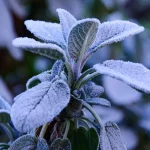
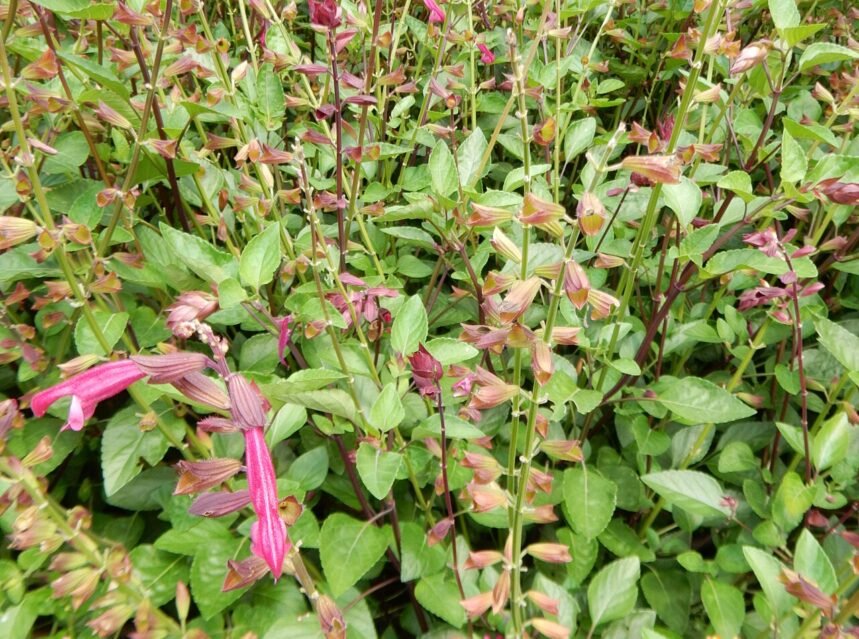 Image: Shuvaev — CC BY 4.0, via Wikimedia Commons
Salvias are sun-loving plants grown for their long spikes of nectar-rich flowers, adored by bees.
If you want a flower that blooms for months, laughs at heat and drought, gets ignored by deer, and brings in bees, butterflies and hummingbirds all day long — plant salvia. This big, easygoing family (it’s the ornamental cousin of culinary sage) gives you tall spikes of blue, purple, red, pink and white from early summer to fall. Some types come back every year, some are summer annuals, and a quick haircut keeps them flowering. Here’s how to grow salvia for a low-maintenance, pollinator-packed display.
Quick start: Give salvia full sun (6–8 hours) and free-draining soil — it hates wet feet. Water to establish, then it’s drought-tolerant. Deadhead or cut back after the first flush and you’ll get a second, third, even fourth wave of blooms.
🧰 In a hurry? Jump straight to our tested picks for this guide ↓
Salvia at a glance
| Feature | Detail |
|---|---|
| Botanical name | Salvia species (family Lamiaceae) |
| Plant type | Annual, perennial or shrub |
| Sun | Full sun |
| Soil | Free-draining; tolerates poor soil |
| Flowering | Summer to autumn |
| Best for | Pollinators, hot dry borders |
Perennial vs annual salvia
“Salvia” covers two useful groups, and it helps to know which you have:
- Perennial salvias (like Salvia nemorosa and S. x sylvestris) are hardy and return year after year — great long-term performers among other perennials that come back every year.
- Annual salvias (like S. splendens and S. farinacea) are grown as vivid summer bedding and replaced each year.
Sun and soil
All salvias want the same thing: full sun — at least 6 to 8 hours — and free-draining soil. Native to hot, dry regions, they’re heat- and drought-tolerant and actually resent rich, soggy ground. If your soil holds water, improve drainage first (see improving garden soil) or grow them in pots. They’re a top pick for a drought-tolerant garden.
Planting and watering
Plant after the last frost, spacing for airflow. Water regularly through the first season to establish the roots; after that, salvia needs little water beyond dry spells. Skip heavy feeding — too much fertilizer gives floppy growth and fewer flowers.
Deadheading — the secret to repeat blooms
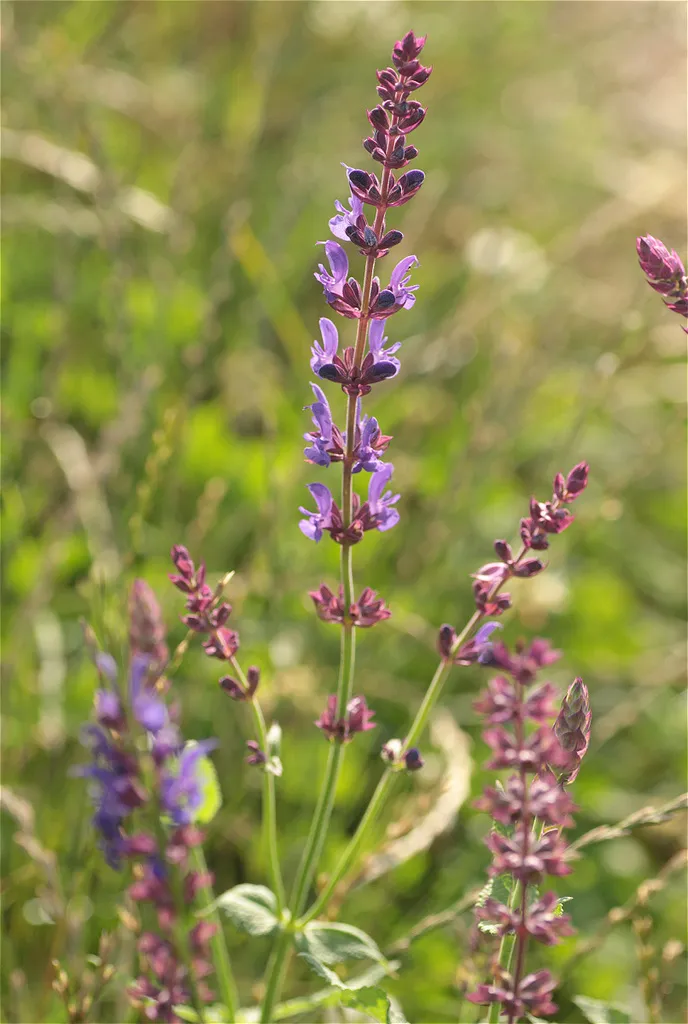
This is where salvia shines. Deadheading dramatically extends the display — cut back the spent flower spikes and the plant pushes out fresh ones, often giving you three or four waves of bloom in a single season. After the first big flush fades (often around midsummer), cut the whole plant back by about a third for a strong second show. The technique is in our deadheading guide.
A pollinator magnet
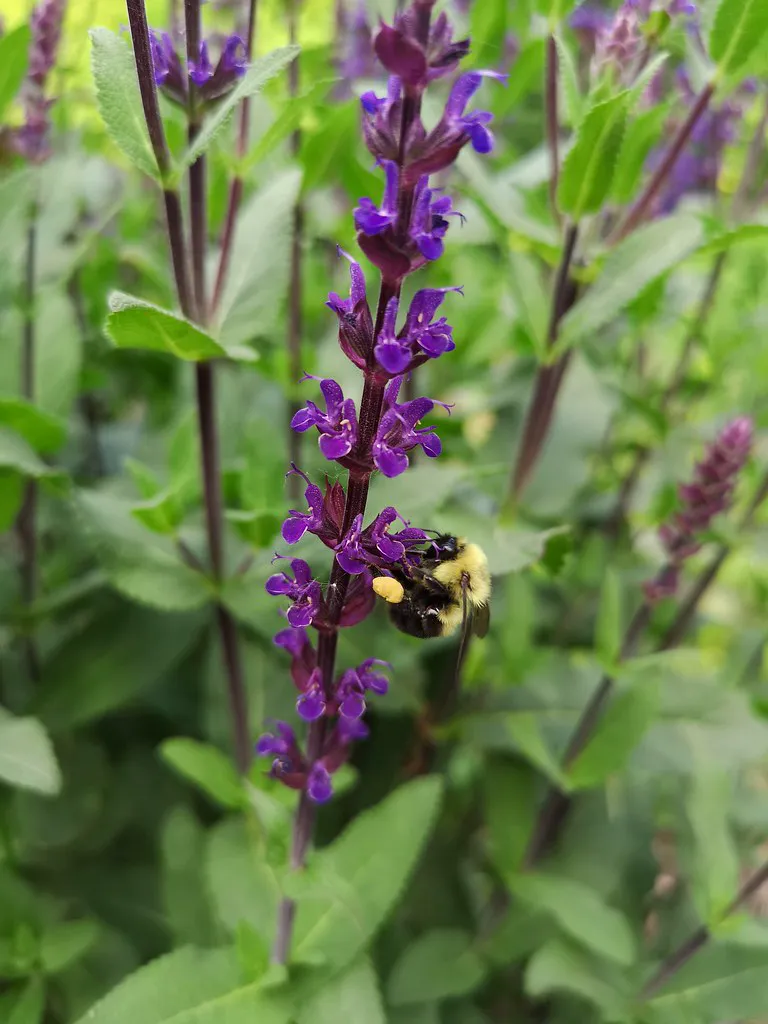
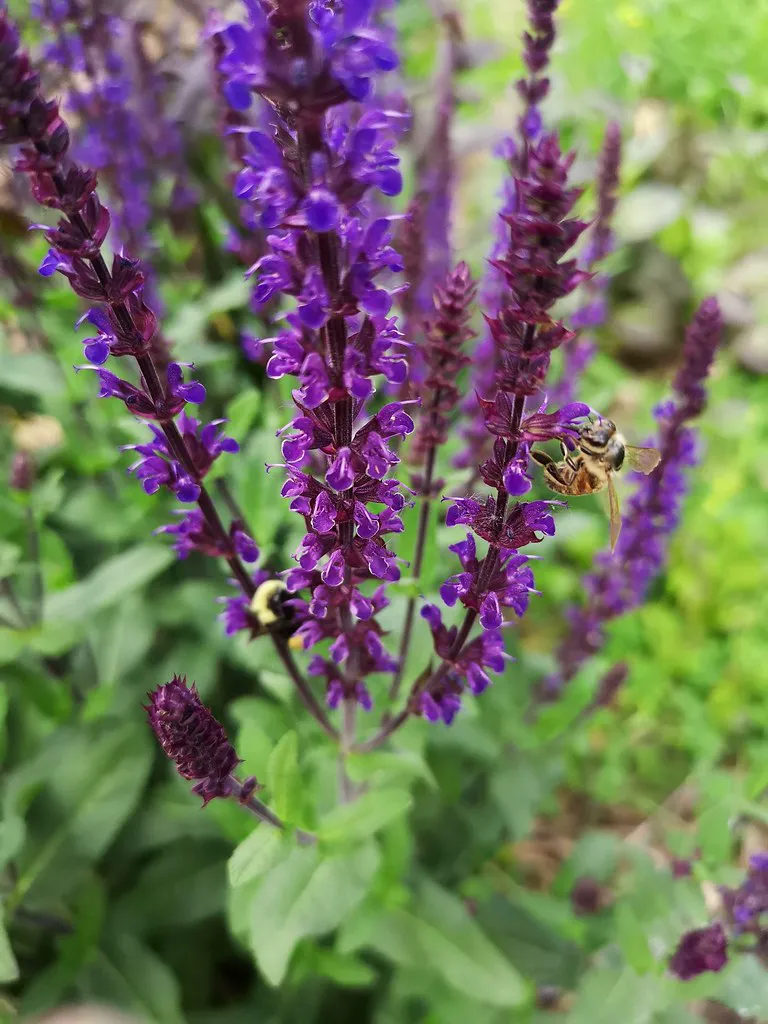
Salvia’s tubular, nectar-rich flowers are irresistible to bees, butterflies and hummingbirds, and they bloom for a long time, making them one of the best plants for a wildlife garden. Combine them with coneflowers and black-eyed Susans, and see our guides on attracting pollinators and the best flowers to attract butterflies.
Common salvia problems
Floppy, leggy growth
Too much shade, rich soil, or overfeeding. Give full sun, lean soil, and cut back after the first bloom.
Few flowers
Not enough sun or no deadheading. Move to full sun and deadhead regularly.
Rotting at the base
Wet, poorly drained soil. Improve drainage or grow in containers.
History, origin & where they grow
Salvias are a huge group found across the world, with many from the Americas and the Mediterranean (see Encyclopaedia Britannica). The family includes the herb sage.
Their long-flowering, nectar-rich spikes made them top garden and pollinator plants (see the RHS). There are annual, perennial and shrubby types. Most love sun and free-draining soil.
Sun, soil & care
Give salvias full sun and free-draining soil (see how often to water plants). Most are drought-tolerant once established. They dislike heavy, wet winter ground.
Cut back the flowered stems to keep more coming. Many flower from summer right into autumn. Tender types may need winter protection or cuttings.
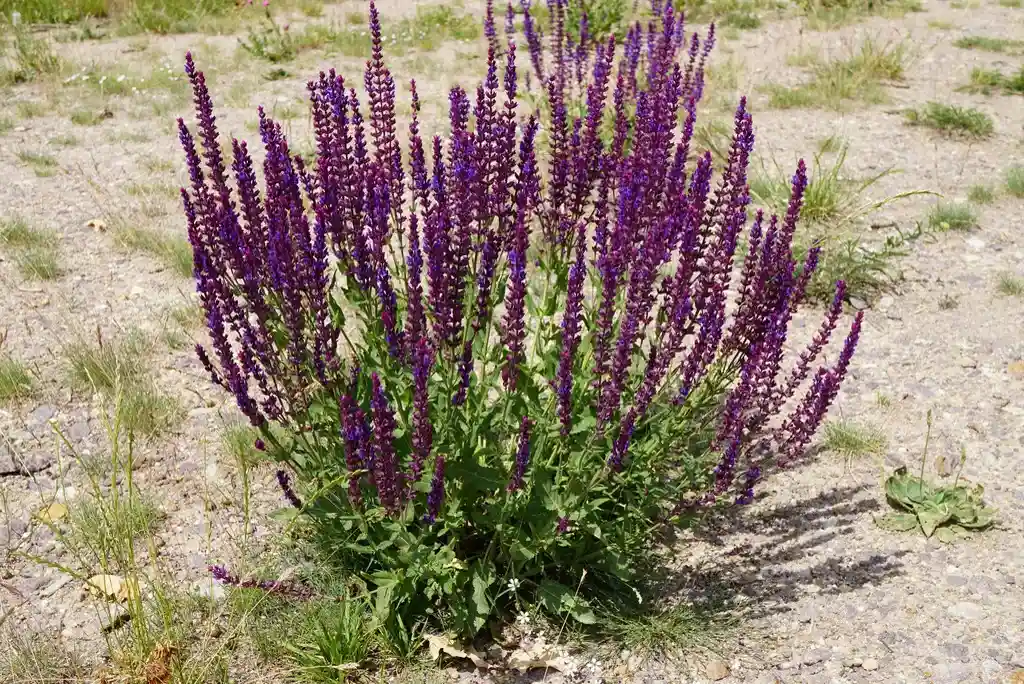
A magnet for pollinators
Salvias are among the very best plants for bees (see attracting pollinators). The tubular flowers are full of nectar. In the Americas, many also draw hummingbirds.
In Indian and other gardens, bees and butterflies work them all day. So a clump of salvia hums with life. This makes them a star of the wildlife border.
Care & common problems
Few flowers or floppy growth usually mean too little sun or too rich a soil. Root rot comes from wet, heavy ground, so improve drainage. Take cuttings of tender types as insurance.
They are otherwise tough and largely pest-free. Their aromatic leaves put off many pests. Divide perennial types every few years.
Why grow salvia
Salvias are some of the best plants for a sunny, wildlife-friendly border. Their long spikes of flowers, in blues, purples, reds and pinks, bloom for months. Bees and butterflies cannot resist them. They are drought-tolerant, easy and largely pest-free, thriving on sun and sharp drainage. With types for every garden, salvia brings long-lasting colour and a constant buzz of life.
Complete grower notes
Salvias are among the easiest and most rewarding plants for a sunny spot. They ask for very little once you understand their few simple needs. The first is sun, as they flower poorly in shade. The second is sharp drainage, as they hate sitting wet over winter.
Plant them in free-draining soil and a position in full sun. Most are drought-tolerant once their roots are down. So water young plants to settle them, then only in long dry spells. Rich, heavy, damp soil is the main thing to avoid.
Feeding should be light, as too much makes soft, floppy growth. A little compost in spring is usually plenty. Cut back the flowered stems through the season to keep more coming. Many salvias bloom from early summer right into autumn this way.
The flowers are a magnet for bees, and in the Americas for hummingbirds. Elsewhere, bees, butterflies and sunbirds work them all day. So a clump of salvia hums with life. This makes it one of the best plants for a wildlife border.
Tender types may not survive a cold winter outdoors. So it is wise to take cuttings in late summer as insurance. They root very easily and give fresh young plants for spring. Hardy perennial types can simply be divided every few years.
Most problems come from the wrong conditions rather than pests. Floppy, leafy, flowerless plants mean too little sun or too rich a soil. Rotting roots mean wet, heavy ground. Get the sun and drainage right, and salvia is tough, long-flowering and almost trouble-free.
With its huge range of colours and types, there is a salvia for every sunny garden. From low bedding types to tall border kinds, all share that long season and wildlife value. For dependable, pollinator-friendly colour, salvia is hard to beat.
A few extra tips
There are annual, biennial and perennial salvias, so check which type you have. This tells you whether it will return each year. Tender perennial types are best protected over winter or grown again from cuttings. Hardy types simply come back on their own.
Cutting the whole plant back by about a third in midsummer can refresh it. This often brings a strong second flush of flowers. So do not be afraid to trim a tired, leggy plant. It will reward you with fresh growth and bloom.
Salvias grow well in pots as well as borders. A container of salvia on a sunny terrace hums with bees. Just make sure the pot drains freely and never stays waterlogged. Water it when the top of the compost dries out.
In short, salvia asks only for sun, sharp drainage and a light hand with feeding. Give it those three things and it flowers generously for months on end. Few plants offer so much colour and wildlife value for so little effort.
Related plant guides
- Gerbera Daisy care
- How to grow Coreopsis
- How to grow Penstemon
- How to grow Shasta Daisy
- How to grow Coneflowers
- How to grow Pentas
Frequently asked questions
Does salvia come back every year?
Perennial salvias do; annual salvias are grown for one season. Check the variety when you buy.
Does salvia need full sun?
Yes — 6 to 8 hours for the best blooms. It’s also heat- and drought-tolerant.
How do I get salvia to rebloom?
Deadhead spent spikes and cut the plant back by a third after the first flush for repeat waves of flowers.
Is ornamental salvia the same as cooking sage?
They’re closely related (both Salvia), but ornamental salvias are grown for flowers, while culinary sage is grown for its leaves.
Why are my salvia leaves turning yellow?
Yellowing lower leaves on a salvia almost always point to roots that are too wet for too long, whether from heavy clay, a pot with blocked drainage or simple overwatering. These are Mediterranean and dry-grassland plants at heart, and soggy soil starves the roots of air, which shows up first as pale, yellow foliage and then as collapse. Less often it is a nutrient shortage in an exhausted container, where the whole plant fades to a uniform pale green. Check drainage first, cut back on watering, and only reach for feed once you are sure the soil is not the problem.
Why is my salvia not blooming?
Too little sun and too much nitrogen are the usual culprits. Salvias want six to eight hours of direct sun and lean soil, and a plant sitting in shade or in ground that has been generously fed will produce lush leaves and few flower spikes. Failing to deadhead is the other big reason — once the first flush sets seed the plant slows right down, whereas cutting spent spikes back triggers a second wave. Some tender salvias are also short-day plants that naturally flower late in the season, so check what you are actually growing before assuming something is wrong.
Why do my salvias flop over?
Flopping is nearly always a sign that the plant is growing too soft and too fast, which comes from rich soil, generous feeding or not enough light. A salvia grown lean and sunny makes short, stiff stems that hold themselves up. The best fix is preventative — shorten the stems by about a third in late spring, before the flower buds form, and the plant rebuilds as a shorter, sturdier clump that flowers slightly later. For an established clump that has already opened out in the middle, division in spring usually solves the problem for good.
When should I cut back salvia?
Do the main hard cut in spring, not autumn. Leaving the old stems standing over winter protects the crown from cold and wet and gives insects somewhere to shelter, and for woody types such as Salvia greggii and Salvia microphylla the old growth is genuine frost protection. Once new shoots appear at the base in spring, cut the previous year’s stems back to just above that new growth. During the season, a lighter cut of about a third straight after the first flush of flowers is what brings on the repeat display.
When and how do I divide salvia?
Divide herbaceous perennial salvias such as Salvia nemorosa in early spring as growth restarts, or in early autumn in mild areas so the divisions root before winter. Lift the whole clump, shake the soil off, and split it into pieces that each have a decent share of roots and several strong shoots, discarding the tired woody centre. Replant at the same depth, water in, and keep the new pieces just moist until they take hold. Woody shrubby salvias do not divide well — propagate those from softwood cuttings taken in late spring or early summer instead.
Do salvias need feeding?
Very little, and overfeeding does more harm than good. In reasonable garden soil an annual mulch of compost in spring is all a border salvia needs, and a high-nitrogen fertiliser simply produces the soft, floppy, leafy growth that then refuses to flower. Container-grown plants are the exception, because watering leaches nutrients out of the compost, so those benefit from a fortnightly high-potash liquid feed once flowering begins. Think of it as feeding for flowers rather than feeding for size.
When do salvias bloom, and for how long?
It depends entirely on the type. Hardy perennial salvias such as Salvia nemorosa and Salvia x sylvestris put on their main show in early summer and, if cut back after it, deliver a second and sometimes third flush into autumn. Tender and shrubby salvias like Salvia guaranitica and Salvia greggii tend to build slowly and then flower right through late summer until frost. Bedding salvias grown as annuals flower more or less continuously from planting until the weather ends them. Across the group, a well-managed salvia is one of the longest-flowering things you can put in a sunny border.
Are salvias deer resistant, and do they attract pollinators?
Salvias are among the more reliably deer- and rabbit-resistant border perennials, because the aromatic oils in the leaves make them unpleasant to browse — though no plant is truly deer proof in a hard winter. For pollinators they are outstanding. The tubular flowers are built for long-tongued visitors, so bumblebees work them constantly, and in the Americas red and blue species such as Salvia guaranitica are classic hummingbird plants. Note the regional detail there — hummingbirds are native to the Americas only, so in Europe, Asia and Africa the visitors will be bees, butterflies and hawkmoths instead.
Still stuck? Ask the Plant Doctor
Describe the problem — yellow leaves, holes, no flowers — and get a clear answer in seconds. FreeAI can make mistakes. Answers are guidance, not a guarantee — check anything important against the guide it links to, and always read the label on any product before you use it.