How to Grow Crocuses (The First Flowers of Spring)
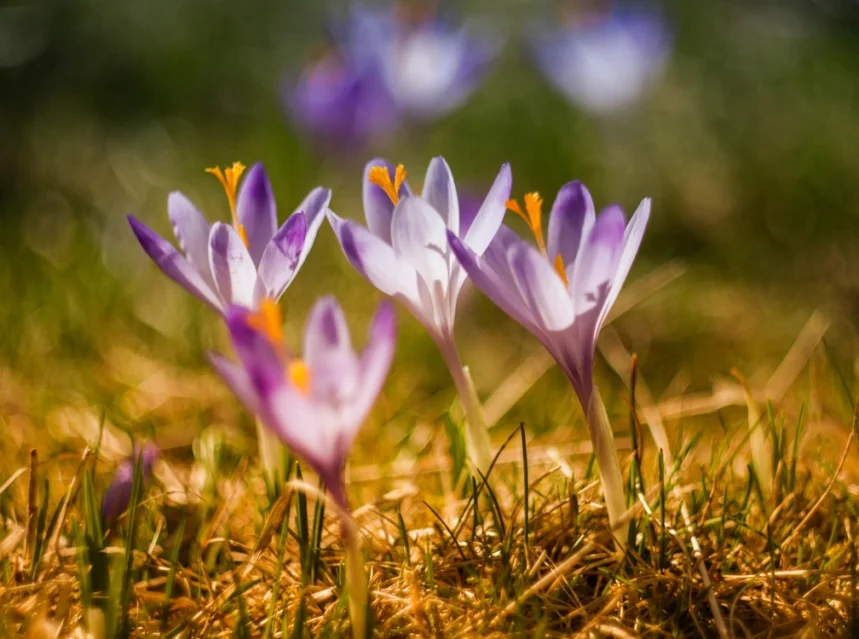
Crocuses are the brave little flowers that signal the end of winter. They push up through cold soil — sometimes even snow — to open cheerful cups of purple, yellow, white, and striped blooms. They’re tiny, tough, and almost foolproof. Plant them once and they spread into a carpet of early colour year after year. Here is the complete guide on how to grow crocuses.
Quick start: Plant crocus corms in fall, 3–4 inches deep, pointy end up, in full sun and well-drained soil. Water once after planting. Leave the foliage after blooming. Then enjoy spreading drifts of early-spring colour with almost no care.
Crocuses are among the first flowers of the year, and the trick growers rely on is planting the corms in generous drifts at a proper depth, since shallow planting invites squirrels and mice to dig them up. They naturalise beautifully in grass if the leaves are left to die back fully before mowing. Planted in autumn, they reward almost no effort with a carpet of early colour.
🧰 In a hurry? Jump straight to our tested picks for this guide ↓
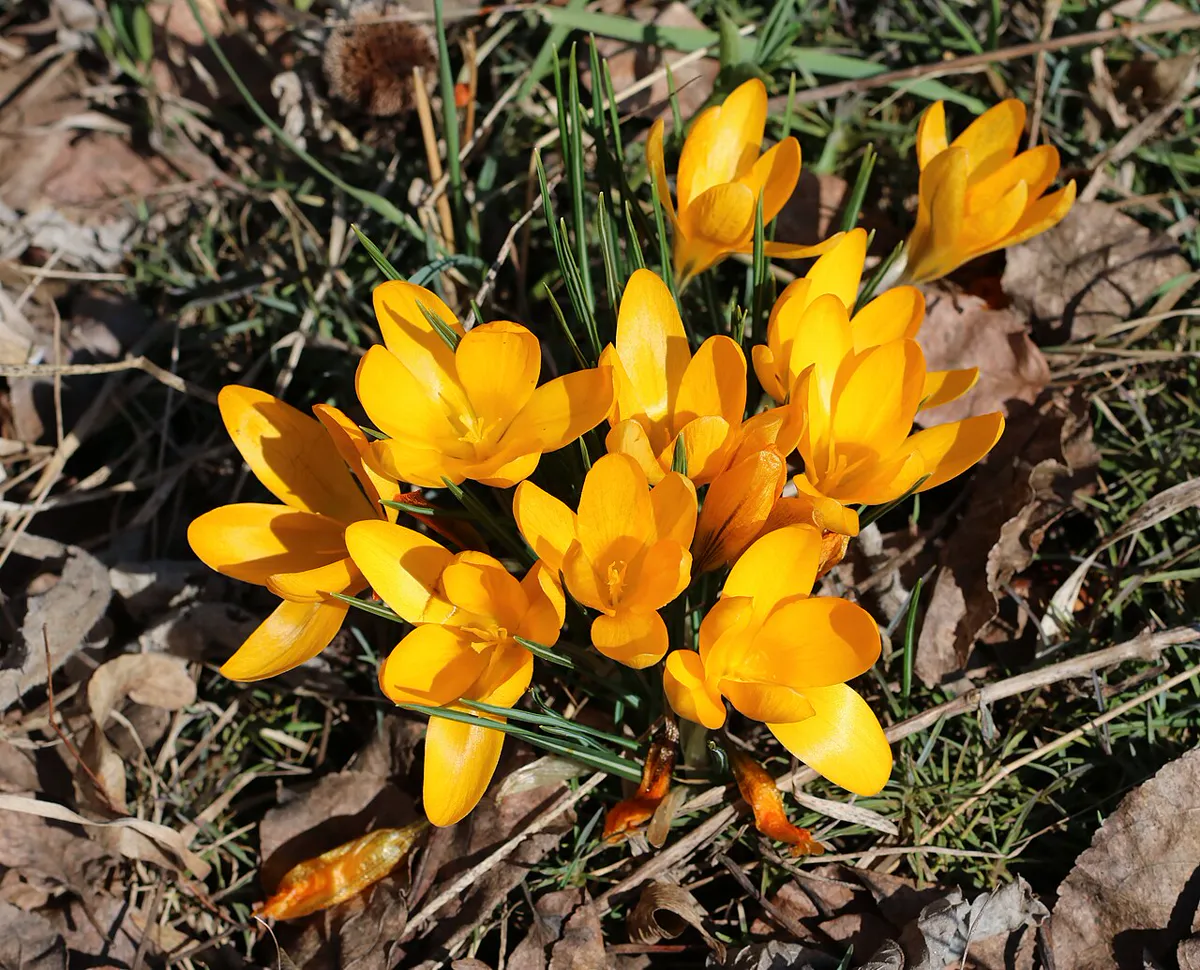
Crocus at a glance
| Feature | Detail |
|---|---|
| Botanical name | Crocus species (family Iridaceae) |
| Plant type | Hardy corm |
| Sun | Full sun to light shade |
| Soil | Free-draining |
| Planting | Corms in autumn |
| Flowering | Late winter to early spring |
| Best for | Lawns, pots, edges, naturalising |
Why grow crocuses?
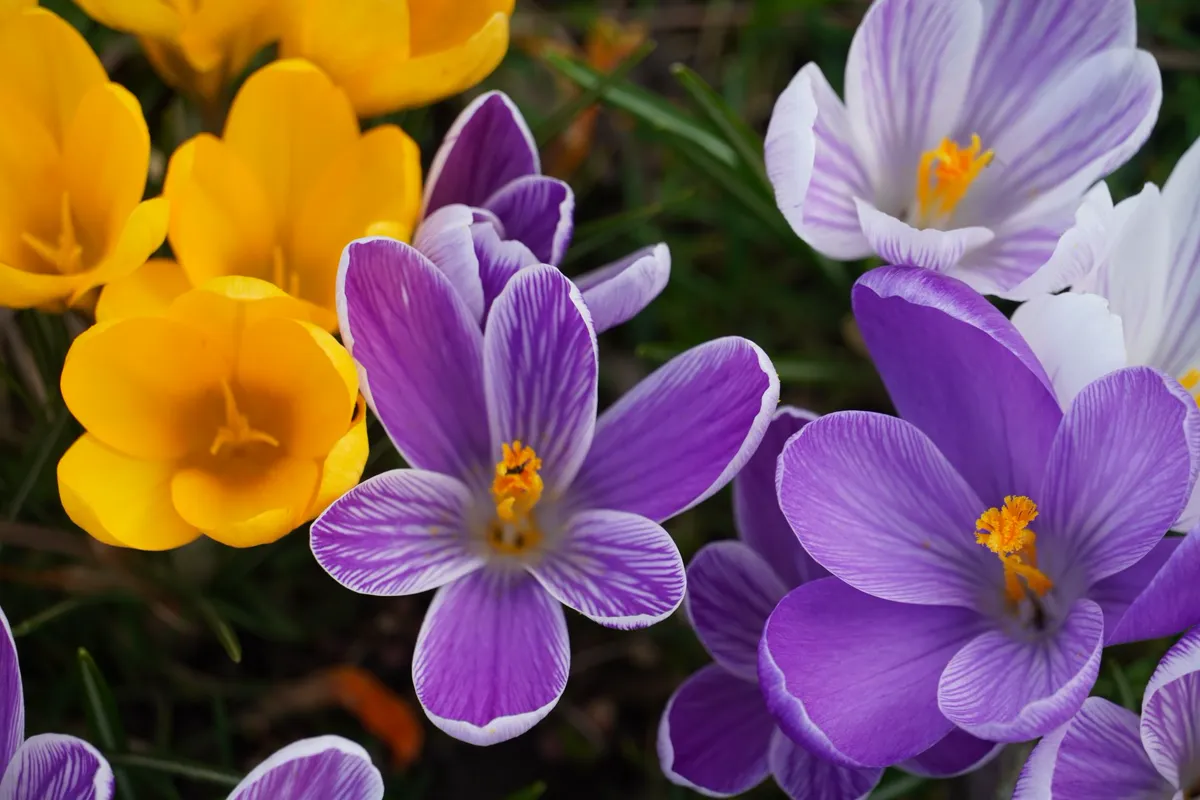
Crocuses are the ultimate easy win. They’re among the very first flowers of the year, lifting the garden when little else blooms. They naturalize beautifully — spreading and multiplying on their own — and critters like deer and rodents tend to leave them alone. They’re perfect in lawns, borders, rockeries, and pots. One special autumn-flowering species, Crocus sativus, even gives you home-grown saffron.
Where crocuses come from
Crocuses are native to Europe, the Mediterranean, North Africa, and parts of Asia. They grow from corms (not true bulbs) and are adapted to cold winters and bright springs. So they need a cold period to bloom — which makes them ideal for temperate climates. (The autumn-flowering saffron crocus is the source of the saffron spice.)
Best season & when to plant
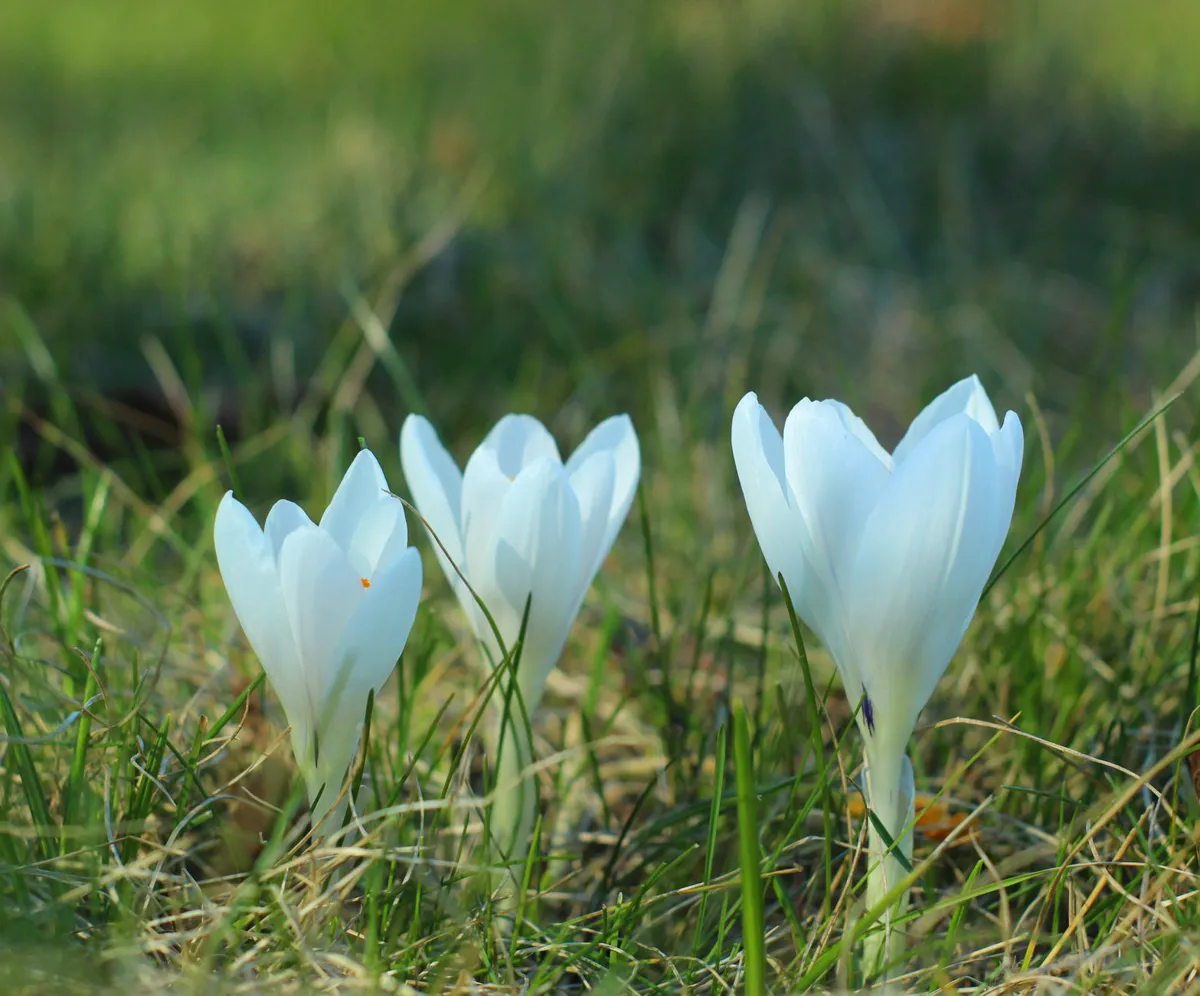
Plant spring crocuses in fall, about 6–8 weeks before a hard frost, when soil temperatures drop below 60°F. They need this winter chill to bloom. Most flower in very early spring, often the first colour of the year. (Saffron and other fall crocuses are planted in late summer for autumn blooms.)
How to plant crocus corms
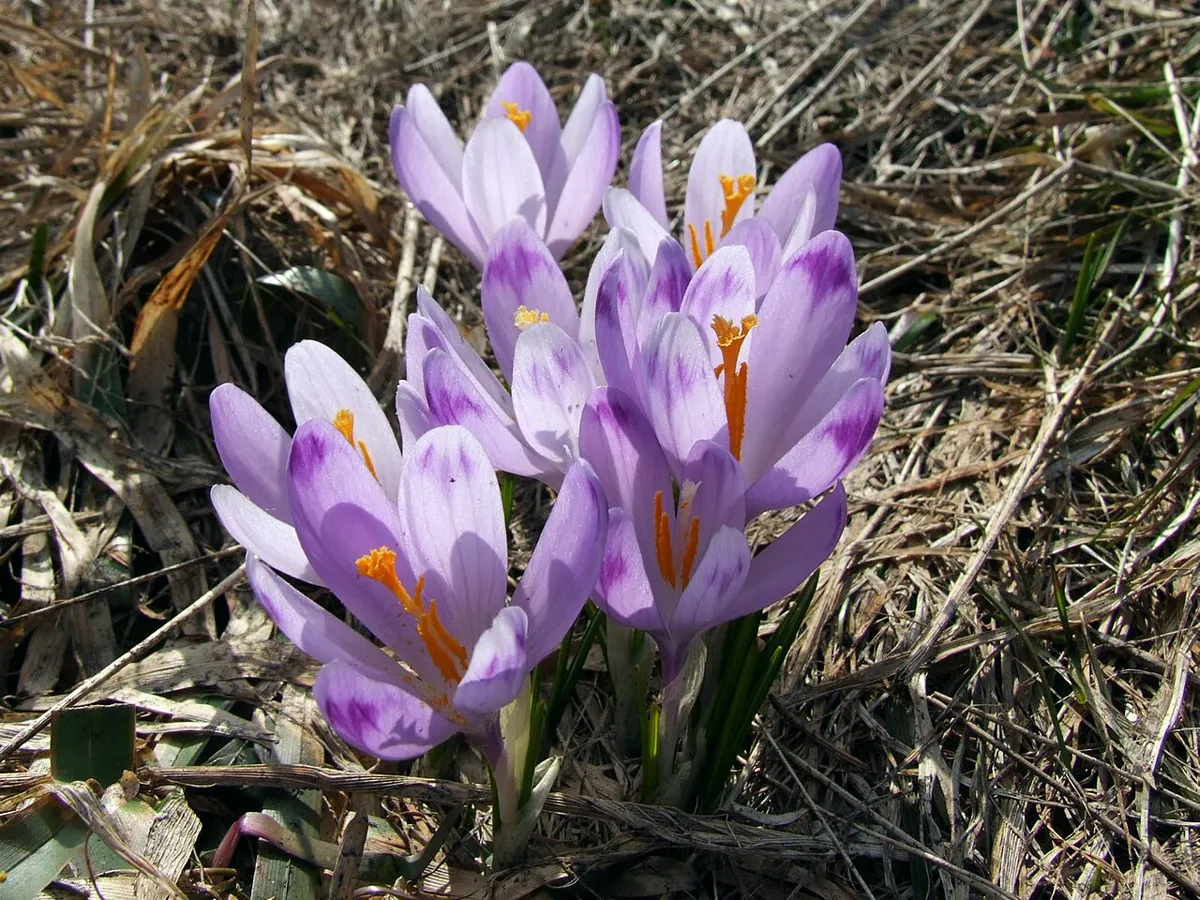
- Plant corms 3–4 inches deep, pointy end up, and about 3 inches apart.
- Choose full sun to partial sun and well-drained soil — corms rot in soggy ground (see improving garden soil).
- Plant in generous groups or scatter naturally for the best display.
Watering & care after blooming
Water well once after planting to settle the corms and start roots. After that, you barely need to water them. Once they bloom and fade, follow the golden bulb rule: leave the foliage until it’s completely yellow and withered, then remove it. The leaves feed next year’s flowers (the same as daffodils and tulips).
Naturalizing in lawns
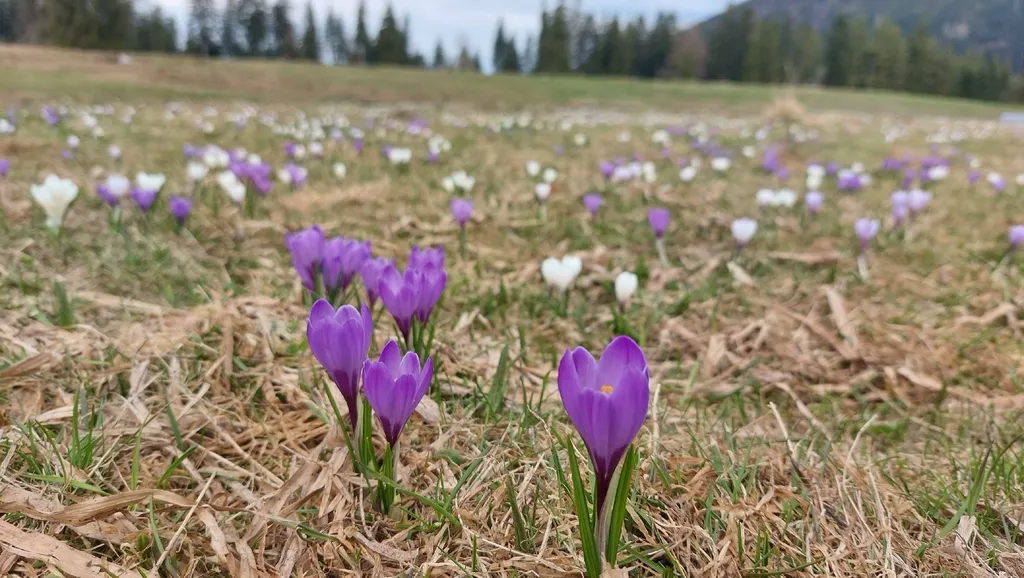
Crocuses are perfect for naturalizing — left alone, they spread into ever-larger drifts. To naturalize them in a lawn, scatter and plant the corms randomly for a natural look. The one rule: don’t mow until the crocus leaves have faded (about six weeks after flowering), so the corms can recharge. They’re some of the best bulbs that return every year.
Common pests & diseases
Crocuses are largely trouble-free, and pleasingly, deer and rabbits usually ignore them. Squirrels can sometimes dig up newly planted corms — a layer of mesh or mulch helps. The main risk is rot in soggy soil, so good drainage is key. See organic pest control if needed.
Benefits & uses
Crocuses bring the earliest, most welcome colour of the year, and they provide vital early nectar for the first bees of spring — see attracting pollinators. They naturalize for an ever-bigger show with almost no effort. And the autumn saffron crocus famously yields the world’s most precious spice.
This article is for general information only and is not medical advice. Talk to a qualified professional before using any plant medicinally.
Common crocus problems
No flowers
Not enough winter chill, too much shade, or corms planted upside down. Give a cold period, full sun, and plant pointy end up.
Corms rotting
Soggy soil. Plant in well-drained ground or raised spots.
Dug up by squirrels
Cover newly planted areas with mesh or mulch until established.
History, origin & where crocuses grow
Crocuses are native to Europe, the Mediterranean and western Asia (see Encyclopaedia Britannica). They grow wild on sunny hills and meadows. One species gives us saffron.
They have been grown in gardens for centuries (see the RHS). They naturalise easily into bright drifts. Their love of sun and sharp drainage comes from those open, rocky homelands.
Planting and naturalising
Plant crocus corms in autumn. Set them a few centimetres deep in free-draining soil (see improving garden soil). Choose a sunny spot for the best flowers.
They multiply year on year. So they are perfect for naturalising in grass or under trees. Leave the leaves to die down after flowering. This feeds the corm for next year.
Why grow crocuses
Crocuses are among the first flowers of the year. They push through cold soil in late winter. Their cups of purple, gold and white lift the spirits after winter. They are cheap, easy and hardy.
They feed early bees when little else is in bloom. They suit pots, lawns, borders and rockeries. Once planted they multiply on their own for years. For carefree, early colour, few bulbs give more.
Common problems and how to fix them
Crocuses are easy, but a few things can disappoint. Missing flowers in spring are often the work of hungry mice, squirrels or birds that dig up or eat the corms. A layer of wire mesh over newly planted corms helps protect them.
Corms that rot away usually sat in cold, wet, heavy soil. So plant them in free-draining ground or add grit. Raised spots and pots also drain better.
Leaves but no flowers can mean the corms are too small or were planted too shallow. Plant good-sized corms a few centimetres deep. Over time, crowded clumps also flower less, so lift and divide them.
Tips for naturalising and care
For the best effect, plant crocuses in generous drifts rather than straight lines. Scatter a handful and plant them where they fall for a natural look. They look wonderful in grass, under trees and along path edges.
The single most important rule is to leave the leaves alone after flowering. Let them die down fully and turn yellow first. This feeds the corm for next year, so never mow or cut them early.
Fed this way, crocuses multiply on their own year after year. A small planting slowly becomes a sheet of colour. As one of the first flowers of the year, they also feed early bees, making them as useful as they are cheerful.
Quick grower tips
Crocuses are among the easiest of all bulbs to grow. Plant the corms in autumn, a few centimetres deep. Choose a sunny or lightly shaded, free-draining spot.
They look best in generous, natural drifts. Scatter a handful and plant them where they fall. They are lovely in grass, in pots and under trees.
Protect newly planted corms from mice and squirrels. A layer of wire mesh over them helps. Once up, they need almost no care at all.
Let the leaves die down fully after flowering. Never mow or cut them off early. The leaves feed the corm for next year.
Fed this way, crocuses multiply on their own. A small planting slowly spreads into a sheet of colour. They are among the first flowers of the year.
So they feed early bees waking from winter. Lift and divide crowded clumps every few years. For early, reliable colour, few bulbs give more.
Best uses in the garden
Crocuses are best enjoyed in generous, natural drifts. Scatter them through grass for a meadow effect. They also shine under deciduous trees and shrubs.
They look lovely along a path edge or in a rockery. Pots and shallow bowls show them off up close. Plant plenty, as they are cheap and multiply freely.
As one of the first flowers of the year, they feed early bees. So they are useful as well as cheerful. For carefree early colour, few bulbs do more.
Related plant guides
- How to grow Hyacinth
- How to grow Muscari
- How to grow Snowdrop
- How to grow Winter Aconite
- How to grow Daffodils
- How to grow Saffron
Frequently asked questions
When do I plant crocus corms?
In fall, 6–8 weeks before a hard frost, so they get the winter chill they need to bloom.
How deep do I plant crocuses?
About 3–4 inches deep, pointy end up, and 3 inches apart.
Do crocuses come back every year?
Yes — they’re perennial corms that naturalize and spread into bigger drifts over time.
Can I plant crocuses in my lawn?
Yes — they’re ideal for naturalizing in lawns. Just don’t mow until their leaves have faded.
What is the difference between saffron crocus and autumn crocus?
This is a genuinely important distinction, because one is a spice and the other is dangerous. Saffron crocus is Crocus sativus, a true crocus that flowers in autumn with purple petals and three long red stigmas, and those stigmas are harvested as saffron. Autumn crocus, Colchicum autumnale, is not a crocus at all but a member of a different family, with pink lilac goblet shaped flowers and six stamens rather than three. Every part of Colchicum contains colchicine and is highly poisonous to people and animals, and people have been seriously harmed after mistaking it for saffron crocus, so never harvest stigmas from a plant you cannot positively identify.
Are crocus poisonous to dogs and cats?
Spring flowering crocus corms are considered only mildly toxic, and a dog that digs one up may get vomiting, drooling or diarrhoea. Autumn crocus, Colchicum autumnale, is an entirely different matter and is seriously poisonous, capable of causing severe illness and organ damage in pets. Because the two are easy to confuse, contact your vet promptly if a pet eats any crocus like corm or flower and take a piece of the plant along for identification. This is general information and not veterinary advice.
Why are my crocuses not blooming?
The usual reasons are too much shade, corms planted too shallow, or clumps that have become overcrowded after several years of multiplying. Cutting the leaves off too early is another very common cause, because the foliage has to feed the corm for next year’s flower. Squirrels and voles quietly eating the corms also produce mysterious blank patches. Lift and divide congested clumps after the leaves fade, replant at 8 to 10 cm deep in a sunny spot, and leave the foliage alone for at least six weeks after flowering.
How do I stop squirrels digging up crocus corms?
Squirrels are attracted to freshly disturbed soil as much as to the corms themselves, so firm the ground well and water it in after planting. Laying chicken wire or a piece of wire mesh over the planting area, pinned down and covered with soil or mulch, is the most reliable physical defence, and shoots grow up through it in spring. Removing the papery corm tunics and debris you drop while planting also cuts down on the scent trail. Planting deeper than the minimum recommended depth helps too.
Do crocus bulbs multiply and spread?
Yes. Crocus corms produce offsets each year, and many species types also set seed, so a small planting slowly thickens into a drift. Species crocus such as Crocus tommasinianus naturalise particularly freely in grass and gravel. Large flowered Dutch hybrids multiply more slowly and may need dividing and replanting every few years to keep flowering well. If a patch gets too crowded, lift it once the leaves have yellowed and spread the corms out.
When do crocus leaves die back, and can I cut them?
The narrow grassy leaves usually yellow and collapse around six to eight weeks after flowering, which in most gardens means late spring. Leave them completely alone until they have gone yellow, because during that time the plant is rebuilding the corm for next year. Tying, knotting or mowing green leaves is the fastest way to get a flowerless patch the following season. Once they are yellow and pull away easily, tidy them up.
Will crocus grow in shade?
They do best in full sun, but they are more forgiving than most bulbs because they flower so early. Under deciduous trees and shrubs they get plenty of light in late winter and early spring before the canopy leafs out, which suits them perfectly. Deep evergreen shade is a different story and gives weak, floppy plants with few flowers. The blooms also stay closed on dull days, so a sunny position simply gives you more open flowers to enjoy.
Can you grow crocus in pots?
Pots are one of the best ways to enjoy them, since a container brings the small flowers up to eye level where you can actually see them. Use a free draining gritty mix, plant the corms close together but not touching, about 8 cm deep, and leave the pot outdoors in a cool place to get its winter chilling. Water sparingly until growth appears, then keep the compost just moist. After flowering, either let the pot dry off and rest, or plant the corms out into the garden.
Are crocus deer resistant?
Not especially. Deer and rabbits will graze crocus flowers and foliage, and mice, voles and squirrels dig for the corms, which is why gardeners in wildlife rich areas often lose them. Daffodils are the genuinely deer proof early bulb if browsing is a serious problem. If you want crocus anyway, plant plenty in a sheltered spot near the house, protect the corms with wire mesh, and accept that some flowers will be eaten.
Still stuck? Ask the Plant Doctor
Describe the problem — yellow leaves, holes, no flowers — and get a clear answer in seconds. FreeAI can make mistakes. Answers are guidance, not a guarantee — check anything important against the guide it links to, and always read the label on any product before you use it.