Best Lawn Fertiliser

A lawn fertiliser is a plant food specifically formulated for grass — typically high in nitrogen to promote leaf growth and green colour, with potassium for root strength and disease resistance, applied seasonally to replace the nutrients removed by repeated mowing. A lawn without fertiliser gradually thins over 3–5 years as mowing removes more nitrogen and phosphorus than rainfall replaces. Regular seasonal feeding keeps the sward dense, which is the single best defence against moss, weeds, and disease.
This guide reviews the seven best lawn fertilisers of 2026, with a seasonal feeding calendar that corrects the most common mistake (feeding nitrogen in autumn), a format comparison table, and advice for Indian gardeners whose warm-season grass species require a completely different feeding approach from UK and US lawns.
Quick start: For a typical UK lawn, apply a spring/summer lawn feed (high nitrogen, around 20% N) in March–April, a second application in June, and an autumn lawn feed (zero nitrogen, high potassium) in September. Never apply a nitrogen-containing fertiliser after August — nitrogen in autumn produces soft, sappy growth that is killed by the first frost and provides ideal conditions for lawn disease. Water in granular feeds within 48 hours of application if rain has not fallen.
🧰 In a hurry? Jump straight to our tested picks for this guide ↓
The seasonal lawn feeding calendar — and the autumn mistake


More lawn damage is caused by incorrect fertiliser timing than by incorrect fertiliser choice. The single most common mistake is applying a general-purpose lawn feed (containing nitrogen) in September or October.
| Season | Timing (UK) | Nutrient priority | Product type | Goal |
|---|---|---|---|---|
| Spring green-up | March–April | High N (20%+), low P, moderate K | Spring lawn feed granular | Stimulate rapid leaf growth and recover from winter dormancy |
| Early summer | May–June | Balanced N+K (15-5-10 or similar) | Summer lawn feed or liquid | Maintain growth rate, improve colour, support root extension |
| Late summer | July–August | Moderate N, high K | Summer/combined lawn feed | Sustain growth through the dry period; improve drought tolerance |
| Autumn | September–October | Zero N, high K + P | Autumn/winter lawn feed only | Harden grass for winter; promote root growth; improve disease resistance |
| Winter (no feeding) | November–February | None | Do not feed | Lawn is dormant; roots do not absorb nutrients |
The autumn mistake — applying a standard lawn feed (e.g., 20% N) in September — produces a flush of soft, pale green growth that is immediately vulnerable to red thread, fusarium, and other lawn diseases. It also weakens the roots by directing energy upward into leaves that then die in the first frost. The lawn enters winter in worse condition than before feeding. According to the RHS lawn care guide, autumn lawn feeds should contain no nitrogen. Only potassium and phosphorus should be used — they harden growth and promote root development.
Lawn fertiliser formats: granular vs liquid vs slow-release
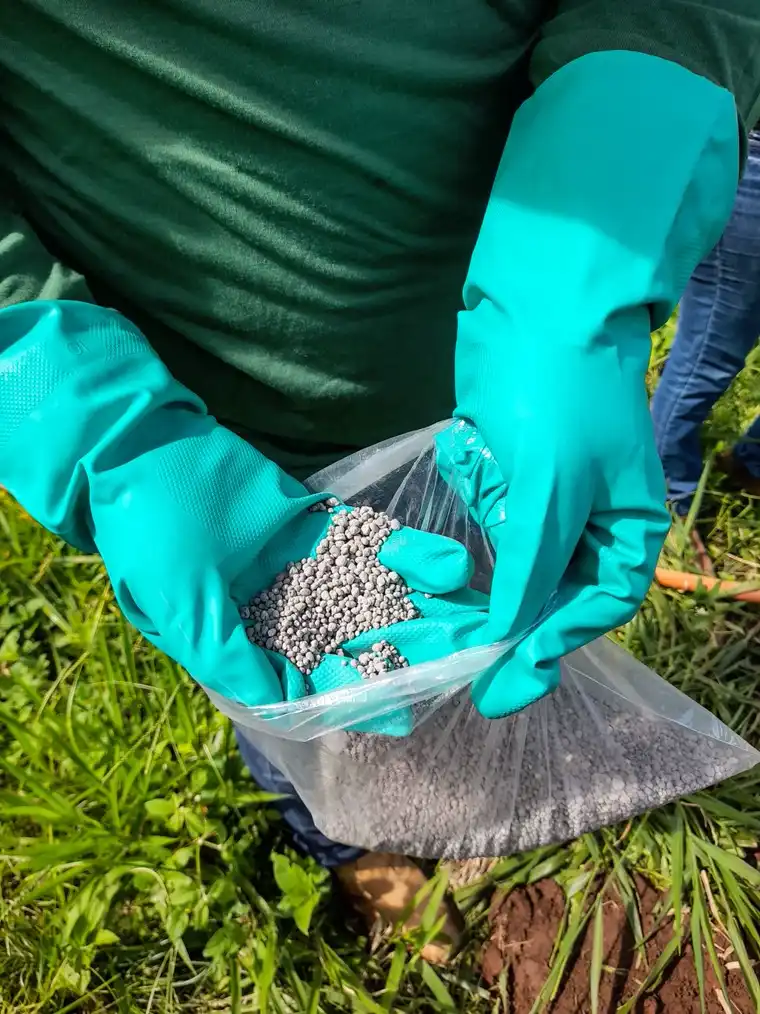
Each format has a different speed of action, application method, and best use case. Using a liquid feed in spring when you need 8 weeks of growth, or a slow-release in summer when a quick colour response is needed, misses the purpose of each format.
Granular (water-in): The standard format for spring and summer feeds. Apply by spreader or by hand, then water in or wait for rain within 48 hours. Fast-acting — shows colour improvement in 5–7 days. Must not be applied unevenly or at too high a rate — granule hot-spots cause scorch (brown patches). Always apply at exactly the stated rate and water in promptly.
Liquid lawn feed: Applied as a diluted concentrate through a watering can or hose-end diluter. Shows results in 3–5 days. Best use: quick colour boost between granular applications, or for spot-treating a patch that is lagging behind the rest of the lawn. Cost per square metre is higher than granular for large lawns. However, liquid feeds are less likely to cause scorch and show faster visible response than granular — the tradeoff is cost versus immediacy.
Slow-release granular: Polymer-coated or sulphur-coated granules that release nutrients over 3–6 months based on soil temperature and moisture. One spring application covers the entire season. The even release prevents the feast-famine cycle of single-season granular feeds. Best for busy gardeners who do not want to feed multiple times. Higher upfront cost but lower cost per application. A fertiliser spreader ensures even application with granular formats and prevents uneven feeding that causes striped lawns.
The 7 best lawn fertilisers of 2026
1. Evergreen Complete 4-in-1 (Best spring/summer UK)
The UK’s best-selling lawn treatment product — it feeds, kills weeds, and controls moss in a single granular application. The fertiliser component delivers nitrogen (23%) for green-up, with lawn weed control active ingredients targeting dandelion, clover, plantain, and other broad-leaved weeds. The moss control desiccates existing moss. One 80 sq m box is the standard size for a typical UK lawn.
The 4-in-1 format is convenient but has trade-offs. The weedkiller and moss killer prevent use near flower borders, vegetables, or trees. The moss killer turns dead moss black and unsightly within 2–3 weeks. Rake it out 4 weeks later using a lawn scarifier or spring-tine rake. For lawns without significant weeds or moss, a feed-only product provides better value and avoids these restrictions. Apply in April–May when the soil is moist and rain is expected within 48 hours.
2. Johnsons Lawn Seed and Feed (Best for new lawns)
A combined fertiliser and grass seed product designed for bare patch repair, overseeding thin areas, and new lawn establishment. The fertiliser component provides a balanced NPK (14-3-8) that supports seed germination without excessive nitrogen (which can outcompete new seedlings before they establish). The grass seed component is a mix of perennial ryegrass and fescue — the standard UK lawn grass blend.
Apply to prepared bare soil, rake in, and keep moist for 14–21 days until germination. The fertiliser component feeds the established lawn surrounding bare patches simultaneously. Re-apply every 6 weeks until the bare patch is fully established and matches the density of the surrounding lawn. Do not apply weedkiller to overseeded areas for 6 months. The seedlings are too young to survive contact weedkiller.
3. Westland SafeLawn Children and Pet Safe Lawn Feed (Best organic UK)
An organic lawn feed derived from seaweed and plant matter. It is pet and child safe immediately after application — no need to keep animals or children off the lawn during or after feeding. The NPK is 6-0-2 — lower nitrogen than conventional feeds, so results take longer to appear (2–3 weeks versus 1 week for conventional). However, the organic nitrogen feeds slowly and evenly without the risk of scorch.
SafeLawn is the best choice for households with dogs, young children, or where the lawn is used frequently. Dogs are particularly sensitive to conventional lawn fertilisers. The concentrated granules can cause digestive upset if ingested. Paws pick up granules and transfer them to mouths during grooming. The cost per square metre is higher than conventional feeds. However, the safety and convenience of immediate access justifies this for family gardens. Apply 3 times per season (April, June, August) to compensate for the lower individual application strength.
4. Scotts Turf Builder Lawn Food (Best US)
The most widely sold lawn fertiliser in the US market. A 32-0-10 formula (high nitrogen, no phosphorus, moderate potassium) suited to US lawns where phosphorus is typically sufficient in the soil. Available in bags covering 5,000 sq ft (465 sq m) — suitable for large US lawns that are typically significantly bigger than UK gardens.
The high nitrogen (32%) produces the fast, deep green response that US lawn owners expect — visible results within 3–5 days. The absence of phosphorus is correct for most US soils. Excess phosphorus is an environmental concern — phosphorus runoff causes algal blooms in nearby watercourses.
Apply with a broadcast spreader in spring and again in late summer. Never apply in summer drought — high-N fertiliser on dormant drought-stressed grass causes scorch and brown patches.
5. Miracle-Gro EverGreen Autumn Lawn Care (Best autumn UK)
An autumn-specific lawn feed with zero nitrogen and high potassium (0-4-9 or similar, depending on year’s formulation). This is the correct product for September–October application — it strengthens cell walls, improves root density, and increases the lawn’s resistance to the winter diseases (red thread, fusarium) that kill UK lawns in wet, cold conditions. It is the product most lawn owners do not know they need.
Apply in September before the first frosts and before the lawn enters dormancy. Water in if rain has not fallen within 48 hours. The potassium hardens existing grass growth rather than stimulating new, soft growth.
The phosphorus (where present) encourages root deepening before winter sets in. One application per autumn is sufficient — autumn is a one-application season. Do not use any nitrogen-containing product after this application until the following March.
6. Liquid Lawn Feed Concentrate (Best quick response)
A concentrated liquid fertiliser diluted with water and applied through a hose-end diluter or watering can. Brands including Maxicrop Lawn Treatment and Lawn Builder Liquid provide balanced N-P-K in liquid form. Results appear in 3–5 days — measurably faster than granular feeds.
The best use case is a quick colour response before a garden event or after a period of neglect. Apply to moist soil in the evening (or before expected rain) to prevent scorch in hot weather. Liquid feeds flush through the soil faster than granular — they do not provide the same sustained feeding window.
Re-apply every 3–4 weeks for continuous effect. For large lawns, the cost per square metre makes liquid feeds less economical than granular for routine feeding. However, for small lawns under 50 sq m, a liquid feed is more practical than a full spreader application.
7. Slow-Release Lawn Fertiliser (Best for convenience)
Polymer-coated slow-release granular products like Scotts Osmocote Lawn or Vitax Lawn Fertiliser Slow Release provide 3–6 months of nutrient delivery from a single spring application. The polymer coating releases nutrients as soil temperature rises — faster in warm summer soil, slower in spring and autumn. One application in March covers most of the growing season without the need for repeat feeding.
The main advantage is convenience — one application is all that is needed until the autumn feed. The main limitation is cost: slow-release products cost 2–3 times more per square metre than standard granular feeds. For gardeners who travel frequently, the extra cost is justified.
Apply at exactly the stated rate. The concentrated slow-release granules are more likely to scorch at high rates than standard granular feeds. Use a lawn aerator in autumn to allow nutrients to penetrate deep into the root zone.
Lawn fertiliser for Indian growers
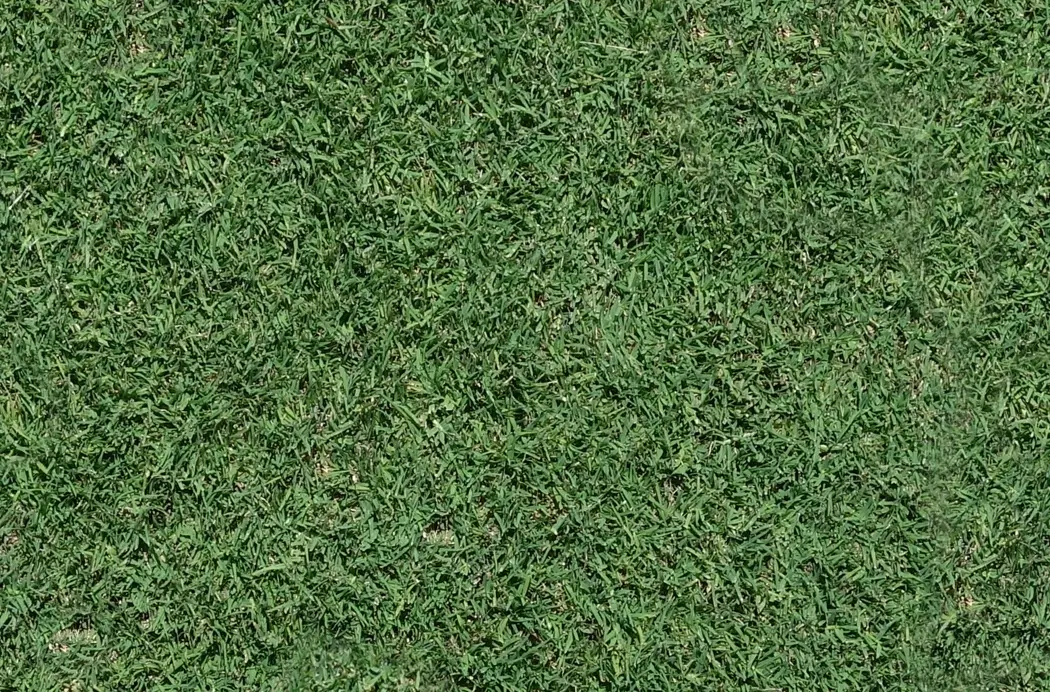
Indian lawn grass species require a fundamentally different feeding approach from UK and US cool-season grasses. The dominant grass types are warm-season species. These include Bermuda grass (Cynodon dactylon, called doob), Zoysia japonica, and Manila grass (Zoysia matrella).
These grasses go dormant in the cool winter months (November–February in north India). They are actively growing from March to October. So the peak feeding window is spring to early monsoon — the opposite of UK lawns.
Apply high-nitrogen feed in March–April when warm-season grasses emerge from winter dormancy. Feed again in June, before the monsoon, to build a dense sward that resists foot traffic damage. The monsoon itself (June–September) provides substantial nitrogen from rainfall.
In many Indian cities, monsoon rainfall is sufficient without supplementary feeding. Feed with a potassium-rich feed in October to harden the grass before the cool-season dormancy.
The most affordable lawn feeds for Indian growers are urea (46% N, available at agricultural suppliers at ₹5–8 per kg) for nitrogen applications, and muriate of potash (MOP, 60% K₂O) for autumn hardening. Both are available nationwide at low cost. Apply urea at 10–15 g per square metre, dissolved in water, in the early morning or evening to prevent scorch. Our green lawn guide covers Indian lawn establishment and maintenance in detail for the main Indian grass species.
Frequently asked questions
Can I use garden fertiliser on my lawn?
General garden fertilisers (Growmore 7-7-7, blood fish bone) can be used on lawns in spring as an emergency measure. However, they are not formulated for grass. The phosphorus levels are too high relative to nitrogen.
They also lack the specific balance of potassium and trace elements that lawn grasses need for disease resistance. Results are noticeably inferior to a dedicated lawn feed.
Rose fertilisers, vegetable feeds, and tomato feeds should never be used on lawns — these have high potassium ratios designed to promote flowering and fruiting. Applied to a lawn, they cause a temporary nitrogen deficiency (grass goes pale) before the slower potassium uptake takes effect. Use dedicated lawn feeds only for consistent, predictable results. Our soil test kit guide explains how to test what your lawn soil actually needs before deciding on a fertiliser regime.
How do I apply lawn fertiliser without stripes?
Striping (alternating dark green and pale bands) is caused by uneven fertiliser application — the dark bands have received the correct dose, the pale bands have received too little. It indicates the spreader was not calibrated correctly or the application pattern overlapped incorrectly.
The fix is a calibrated broadcast spreader rather than hand application or a drop spreader. Broadcast spreaders distribute granules in a wide pattern (1–2 m radius) and naturally blend the overlap zone. Make two passes at 90° to each other — once north-south, then east-west.
Apply at half the stated rate per pass. The total rate equals the recommended dose, but the overlapping pattern eliminates stripes. For small lawns, a liquid lawn feed through a watering can with a fine rose is more even than granular hand application.
Spreader technique matters more than the brand of feed you buy. It determines whether a lawn turns uniformly green or develops stripes.
What is the best lawn fertiliser for clay soil?
Clay soils hold nutrients well but drain poorly — the waterlogging typical of clay soil restricts root growth and limits grass uptake of nitrogen and potassium. On clay lawns, apply a slow-release granular fertiliser rather than a fast-release product. The slow-release minimises the risk of nutrients washing out during the waterlogged periods that clay soils experience in UK winters.
Also aerate clay lawns annually before the autumn feed. A solid-tine or hollow-tine aerator improves nutrient penetration into the compact root zone. Our lawn aerator guide covers the best tools for UK clay soil types. It explains when hollow-tine aeration (soil core removal) outperforms solid-tine for improving clay drainage long-term.
How long after applying lawn feed can I let children and pets on the lawn?
For conventional granular lawn feeds, keep children and pets off the lawn until the fertiliser has been watered in. Wait until the lawn surface is completely dry before allowing access again. This typically means 24–48 hours after application if rain has not fallen.
Once the granules have dissolved into the soil, there is no surface residue. The lawn is then safe for normal use.
For organic lawn feeds (Westland SafeLawn, liquid seaweed-based feeds), there is no waiting period. These products are classified as safe for immediate contact. If waiting 48 hours is not practical, switch to an organic lawn feed throughout the season. The results are comparable to conventional feeds at equivalent application frequency. The key difference is no access restriction after application.
When is the best time of day to apply lawn fertiliser?
Apply lawn fertiliser in the cool of early morning or early evening, never in the heat of midday. Warm sun on wet granules or leaf surfaces can scorch grass blades, especially with fast-release nitrogen feeds. Evening application also gives dew or a light watering time to wash granules off the leaf and down to the roots before the next hot spell, reducing the risk of leaf burn.
How often should I fertilise my lawn?
Most home lawns need three to four feeds a year: a balanced spring feed, a summer feed, and an autumn feed higher in potassium and phosphorus. US extension services recommend fertilising every four to six weeks while grass is actively growing rather than on a fixed calendar. Skip feeding during summer drought or winter dormancy, when the grass cannot use the nutrients.
Can you over-fertilise a lawn?
Yes — too much nitrogen scorches grass, turning it brown or straw-coloured within days, and pushes soft, disease-prone growth that needs mowing more often. Applying at double the stated rate, or feeding twice within a few weeks, is the most common mistake. If you see burn, water heavily straight away to dilute the fertiliser salts and avoid feeding again for at least six weeks.
What's the difference between granular and liquid lawn feed?
Granular feed is spread dry and releases nutrients slowly as it dissolves with rain or watering, making it the easier choice for large lawns and less prone to leaf scorch. Liquid feed, diluted in a watering can or hose-end sprayer, is absorbed faster through the leaf and roots, giving a visible green-up within days — useful for small lawns or a quick correction before an event.
Should I water the lawn before or after fertilising?
Water lightly before applying granular fertiliser if the soil is very dry, so the grass isn’t under moisture stress when the salts hit it, then water again after application to wash granules off the leaf blades into the soil. For liquid feed, apply to a lawn that is already slightly damp so the solution doesn’t run off before it’s absorbed.
Can I fertilise a new lawn or newly seeded lawn?
Wait until a newly seeded lawn has been mown two or three times before applying a standard lawn feed — young grass roots are easily scorched by full-strength fertiliser. Use a dedicated starter feed, formulated at a lower nitrogen strength with extra phosphorus for root development, in the first six weeks instead of the regular seasonal feed.
Why does my lawn fertiliser leave visible white or blue granules?
Coated slow-release granules are designed to sit visibly on the surface and release nutrients gradually over several weeks as their coating breaks down in moisture, rather than dissolving instantly like an uncoated feed. This is normal — do not sweep them up. They should disappear within one to two weeks of rain or watering as the coating degrades.
Sources and further reading
Still stuck? Ask the Plant Doctor
Describe the problem — yellow leaves, holes, no flowers — and get a clear answer in seconds. FreeAI can make mistakes. Answers are guidance, not a guarantee — check anything important against the guide it links to, and always read the label on any product before you use it.