Korean Feather Reed Grass Seeds
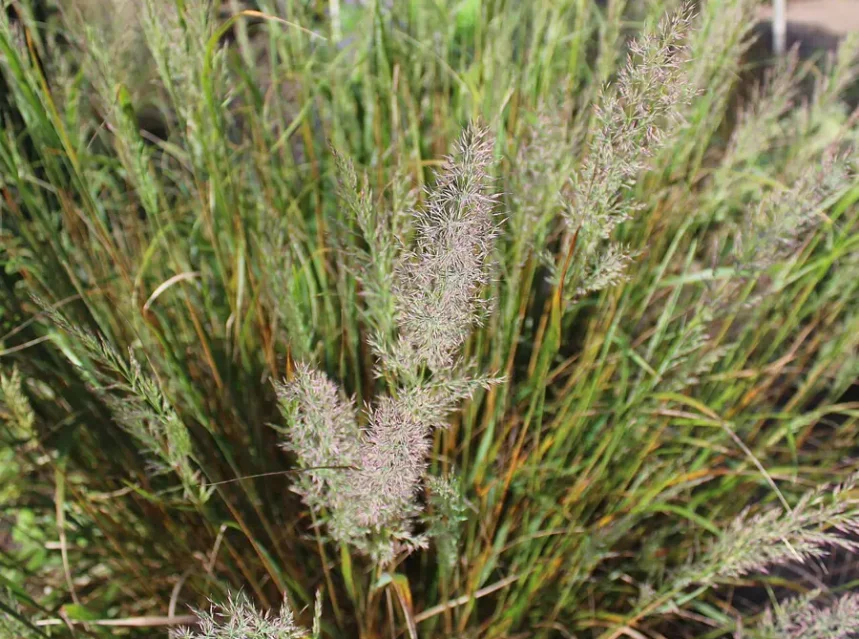
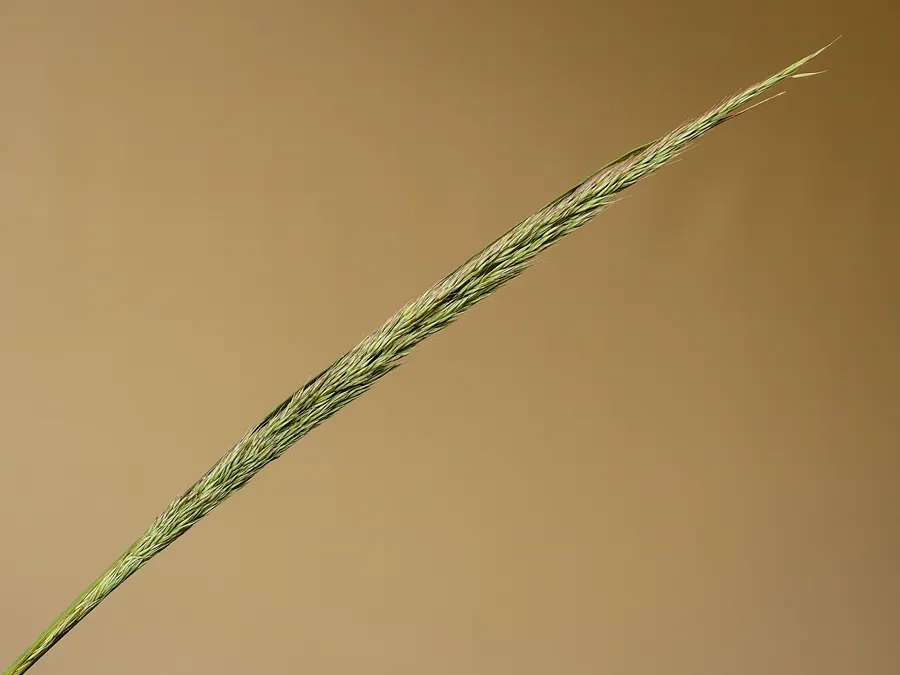
Korean feather reed grass seeds grow into Calamagrostis brachytricha, an upright grass famous for its sparkling autumn plumes. In late summer it lifts fat, feathery, pink-tinged spikes that glitter like diamonds when dewy or backlit. Unlike the sterile ‘Karl Foerster’, this true species sets real seed. This guide covers buying the best korean feather reed grass seeds, growing them from seed, and using them in Good for (worldwide).
🧰 In a hurry? Jump straight to our tested picks for this guide ↓
Quick start: korean feather reed grass at a glance
- Botanical name: Calamagrostis brachytricha
- Also called: Diamond grass, fall-blooming reed grass
- Type: Cool-season clump-forming perennial
- Sow: Surface-sow, barely cover; mild 18–22°C
- Look: Upright feathery diamond-sparkle plumes
- Best for: Vertical accent, moist soil, part shade
For botanical and growing background this guide draws on Wikipedia, the Royal Horticultural Society (RHS), and the Missouri Botanical Garden.
| Feature | Detail |
|---|---|
| Family | Poaceae (grass family) |
| Native range | Moist woodlands of central & eastern Asia |
| Height | 90–150 cm in flower; tuft 60–90 cm |
| Showy part | Upright, feathery, diamond-sparkle plumes |
| Germination | 2–4 weeks at 18–22°C; needs light |
| Bloom time | Late summer into autumn; stands all winter |
| Habit | Cool-season, clumping, moisture & part-shade tolerant |
| Hardiness | USDA zones 4–9 |
Buy korean feather reed grass seeds
Korean feather reed grass seeds are sold by specialist perennial and ornamental-grass seed houses. They are often labelled Calamagrostis brachytricha or diamond grass. Below are trusted places to buy korean feather reed grass seeds.
Buy fresh seed for the best germination. This species sets viable seed, so it is easy to grow at home.
Why grow korean feather reed grass?
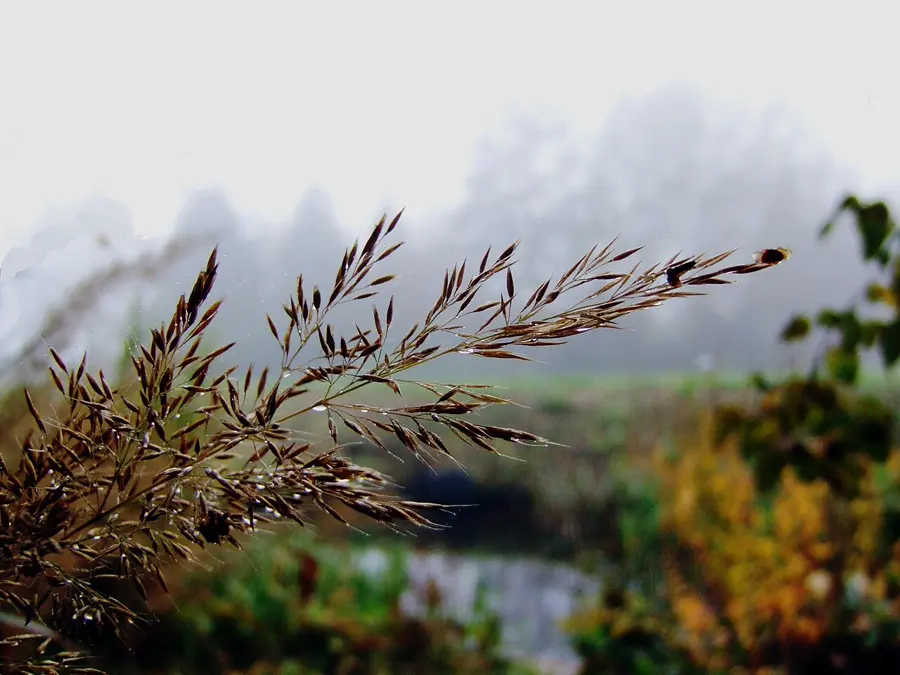
Korean feather reed grass brings a fresh autumn show. It blooms when many grasses are already fading.
Its plumes are pure theatre. They catch dew and low light like a spray of tiny diamonds.
It also fixes a tricky spot. It thrives in moist, partly shaded ground that defeats most grasses.
Best of all, you can grow it from seed. Unlike the sterile ‘Karl Foerster’, this species sets real, viable seed.
The diamond plumes: upright autumn sparkle
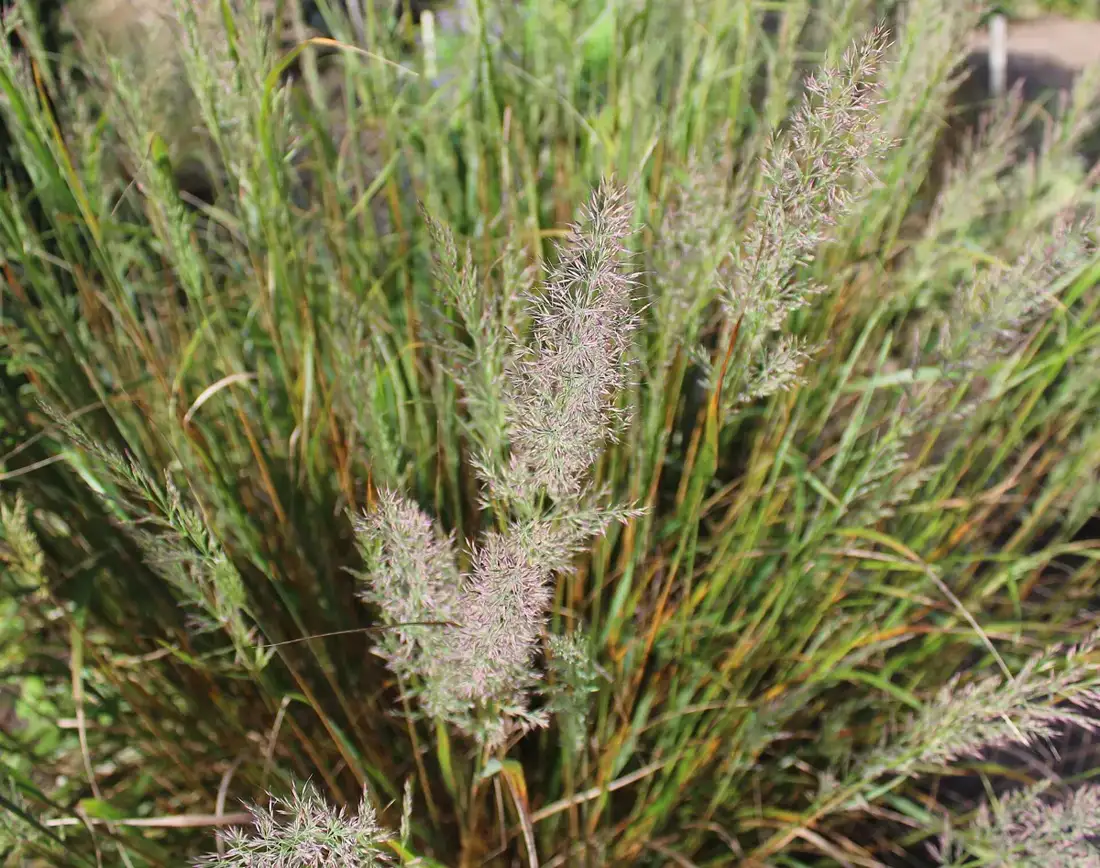
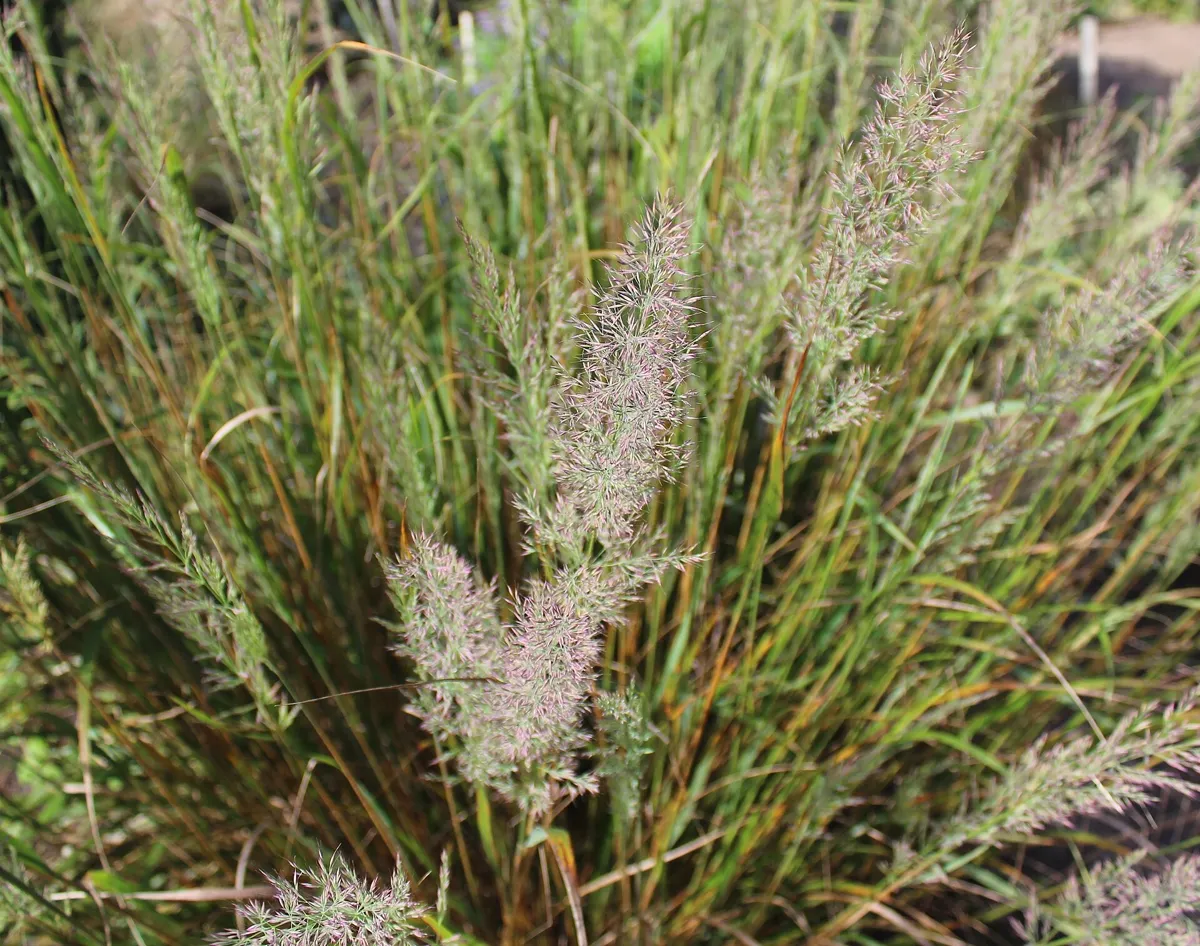
The plumes are the whole reason to grow it. They stand tall and upright, like soft feather dusters.
Each one emerges flushed pink-purple. Then it ages slowly to a soft silvery-buff and tan.
Backlit or dewy, the plumes sparkle. That diamond shimmer gives the grass its popular name.
The whole display arrives late in the year. It freshens the border from late summer right through autumn.
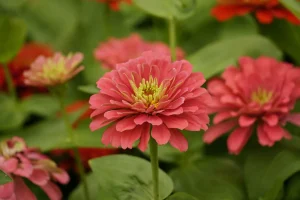
It makes a striking vertical accent. Pair it behind bright zinnias or airy cosmos for a layered late-season scene.
Calamagrostis vs other ornamental grasses
Every ornamental grass has a signature. Korean feather reed grass owns the upright, late, sparkly look.
Calamagrostis brachytricha: Upright autumn plumes that sparkle, and you can grow it from seed.
‘Karl Foerster’: The famous narrow upright feather reed grass is sterile, so it can only be divided, not sown.
Deschampsia: A tall airy golden veil for shade. See our tufted hair grass seeds guide.
Soft pennisetum foxtails, low purple love grass, and see-through panicum sprays differ again. Calamagrostis is the upright, fall-sparkle one.
History, origin & native range
Korean feather reed grass is a true Asian native. It grows wild across central and eastern Asia.
Its home includes Korea, China, Japan, and the Russian Far East. There it favours moist, lightly wooded ground.
This damp-woodland origin shapes its tastes. It naturally enjoys moisture and a little shade.
Gardeners prized it for its late, glittering plumes. It became a star of the autumn perennial border.
It also stands apart from its hybrid cousin. Unlike sterile ‘Karl Foerster’, this species reproduces freely by seed.
Best season & when to sow
Korean feather reed grass germinates in mild conditions. Aim for cool-to-warm, bright weather.
In cool climates, sow in spring. A cold-moist spell over winter can also boost germination.
Avoid sowing into cold, soggy ground. Wait for the soil to warm gently in spring.
In India, it suits cool hill and highland gardens only. Sow in the cool season in places like the Himalayan foothills, not the hot plains.
Growing korean feather reed grass from seed: how to plant
Growing korean feather reed grass from seed is straightforward. The key tip on how to plant it is to sow shallow.
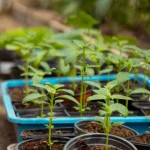
- Surface-sow. Scatter seed on the soil and barely cover it, since light helps it germinate.
- Keep it mild and moist. Aim for 18–22°C; germination takes about 2 to 4 weeks.
- Try a cold spell first. A cold-moist period before warmth can improve germination rates.
- Space the clumps. Set young plants 60 to 90 cm apart, as they form bold, upright tufts.
- Pick a moist spot. Choose damp, fertile soil in full sun to part shade for the best plumes.
It enjoys moister ground than most grasses. See our guides to shade-loving tufted hair grass and bold pennisetum for more ideas.
Sun, soil, watering & feeding
Korean feather reed grass is easy once placed well. Moisture matters more than for most grasses.
Sun: It takes full sun to partial shade. Remarkably, it still flowers in light shade.
Soil: It loves moist, fertile soil and tolerates heavy clay. Dry, poor ground is its weak spot.
Water: Keep it reliably moist for lush plumes. It even enjoys spots near ponds and streams.
Feeding: Fertile soil suits it well. A spring mulch of compost keeps it strong and tall.
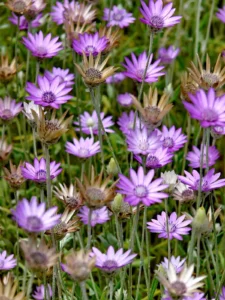
It mixes well with everlasting flowers for cutting. Pair it with craspedia and rhodanthe in sunnier, drier beds.
Using korean feather reed grass in the garden
This grass works as a strong vertical accent. Its upright form draws the eye in any border.
It is perfect for pond and stream edges. The moist ground there suits it perfectly.
It also shines in mass plantings. A drift of sparkling plumes lights up the autumn garden.
The dried plumes last well in arrangements. Cut them once the colour has fully developed.
For more delicate dried grasses, see our briza and bunny tails grass guides.
Common pests, problems & self-seeding
Korean feather reed grass is wonderfully trouble-free. Most problems come from dry soil, not pests.
Drying out: Hot, dry ground stresses it. Keep the soil moist, especially in full sun.
Floppy plumes: Wind-battered spots cause this. Give it a sheltered position for upright stems.
Self-seeding: Because it sets viable seed, it can self-sow in good conditions. Deadhead the plumes if you do not want volunteers.
Tidy clumper: It is a clump-former, not a runner. It stays put and does not spread aggressively.
Pests: Serious pests and diseases are rare. Cut clumps back in late winter for fresh spring growth.
Frequently asked questions
How do you grow korean feather reed grass from seed?
Surface-sow the seed and barely cover it, since light helps germination. Keep it mild and moist at 18–22°C, and it sprouts in about 2 to 4 weeks. A cold-moist spell before warmth can improve rates. Sow in spring in moist soil, then space plants 60 to 90 cm apart.
Can you grow Calamagrostis brachytricha from seed?
Yes, and this is a key advantage. Unlike the famous hybrid ‘Karl Foerster’, which is sterile and sets no viable seed, Calamagrostis brachytricha is a true species that produces real seed. It even self-sows in good conditions, so it is easy to grow at home.
Does korean feather reed grass grow in shade?
Yes, it is unusually shade-tolerant for a reed grass. It grows in full sun to partial shade and, remarkably, still flowers in light shade. It does prefer moist soil, so a spot with afternoon shade suits it well in hot climates.
Can I grow korean feather reed grass seeds in India?
It suits cool hill and highland gardens, not the hot plains. Grow it in places like the Himalayan foothills or higher elevations, in moist soil and full sun to part shade. Sow in the cool season, since it is a temperate, cool-loving grass.
Do the seeds need a cold treatment first?
Yes, results are much better after roughly 10-12 weeks of moist chilling below about 4 °C (40 °F). After that, sow once temperatures are 20 °C (68 °F) or warmer and keep the surface bright.
How tall and wide does the grass get?
The leafy clump reaches about 60 cm (2 feet), and the flower plumes push the whole plant to roughly 90-120 cm (3-4 feet) in late summer. Allow a similar spread for a mature clump.
How cold hardy is Korean feather reed grass?
It is reliable through USDA zones 4 to 9, so it handles hard winters without protection and comes back from the crown each spring.
Does it self-seed or spread aggressively?
It forms a tidy clump rather than running underground. It does self-sow lightly in moist, shaded ground, but the seedlings are few and easy to pull.
When should I cut it back?
Late winter or early spring, before new shoots push through. Cut the old growth to a few inches above the ground. Leaving the plumes standing over winter gives the garden some structure.
How do I divide an established clump?
Lift it in spring as growth starts, cut the crown into sections with a spade, and replant straight away with plenty of water. Dividing every few years keeps the centre from going bare.
What soil and watering does it want?
Fertile soil that holds moisture is ideal, and it copes with most soil types. Consistent moisture matters most in full sun, where a dry spell scorches the leaf tips.
Still stuck? Ask the Plant Doctor
Describe the problem — yellow leaves, holes, no flowers — and get a clear answer in seconds. FreeAI can make mistakes. Answers are guidance, not a guarantee — check anything important against the guide it links to, and always read the label on any product before you use it.