Calceolaria Seeds
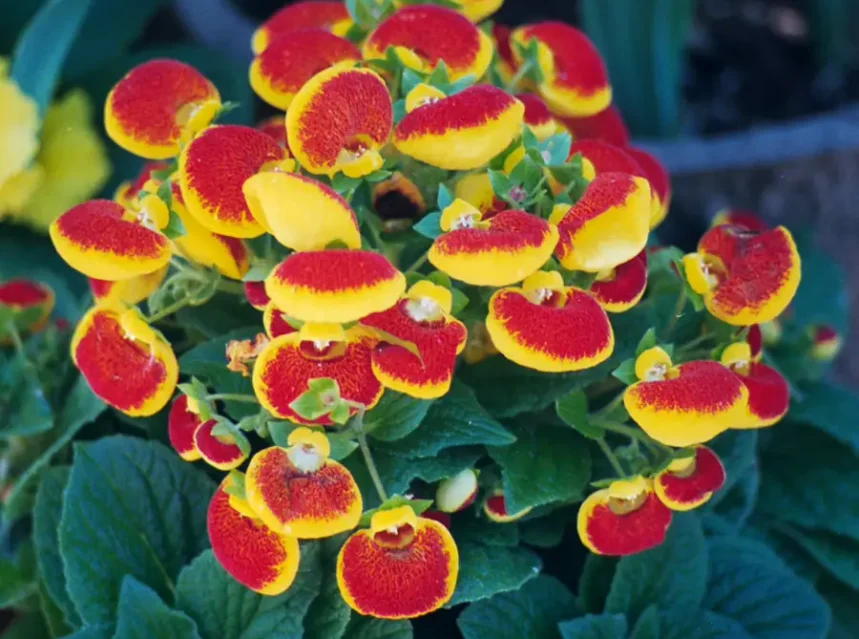
Calceolaria seeds grow into the slipper flower, one of the most unusual blooms you can raise. Each flower forms a fat, rounded pouch, like a tiny purse or slipper. Calceolaria seeds give you these pouches in bright yellow, orange and red, usually freckled with maroon spots. Gardeners also call it slipperwort, pocketbook plant, pouch flower, or lady’s purse. It is a cool-season pot and bedding plant — and no relation to the slipper orchid.
This is an ornamental gardening guide only. It makes no medicinal or edible claims. Calceolaria is grown for its quirky pouched flowers, nothing more.
Quick start: calceolaria at a glance
- What it is: slipper flower (Calceolaria), a pouch-flowered cool-season plant.
- Seed type: very fine, dust-like. Surface-sow only.
- Light to sprout: do not cover. Seed needs light to germinate.
- Germination: about 10–20 days at 18–21°C (65–70°F).
- Grows cool: bright light, no hot sun. Dislikes heat.
- Two types: indoor pot (herbeohybrida) vs outdoor bedding (integrifolia).
- Height: 20–90 cm (8–36 in), by variety.
- Bloom: spring to early summer.
- Best for: spring gift pots, cool windowsills, shady cool borders.
- Patience: slow from seed — 4–5 months to flower.
Authority sources: Wikipedia — Calceolaria, Harvest to Table, and Gardenia plant guide.
🧰 In a hurry? Jump straight to our tested picks for this guide ↓
Calceolaria seeds at a glance
| Feature | Detail |
|---|---|
| Botanical name | Calceolaria (herbeohybrida & integrifolia groups) |
| Common names | Slipper flower, slipperwort, pocketbook plant, pouch flower, lady’s purse |
| Family | Calceolariaceae (~269 species) |
| Native range | The Andes; Patagonia to central Mexico |
| Type | Tender perennial grown as an annual or pot plant |
| Height | 20–90 cm (8–36 in) |
| Flower colour | Yellow, orange, red, bronze — usually spotted maroon |
| Bloom time | Spring to early summer |
| Light | Bright, but no hot direct sun |
| Loves | Cool, bright, frost-free conditions |
What is calceolaria (slipper flower)?
Calceolaria is a genus of nearly 270 species. It comes from the Andes, ranging from Patagonia up to central Mexico.
The plants grow as herbs, small shrubs and even climbers. Most garden types are compact and bushy.
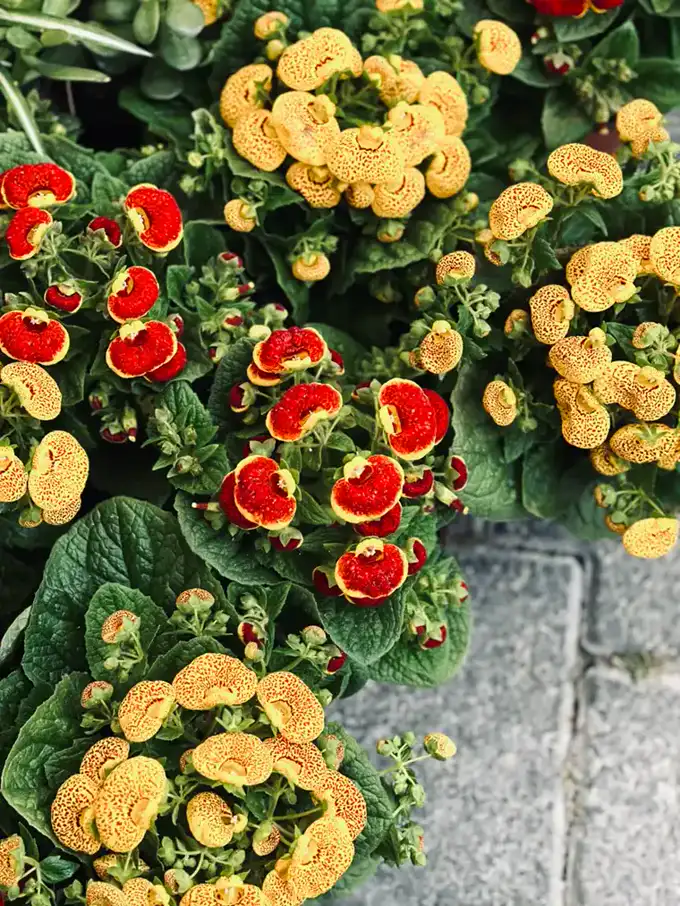
The flower is what makes it famous. Each bloom puffs out into a hollow pouch. It looks like a little purse, slipper or pocketbook. The colour is bold, often with a peppering of dark spots.
Why grow calceolaria?
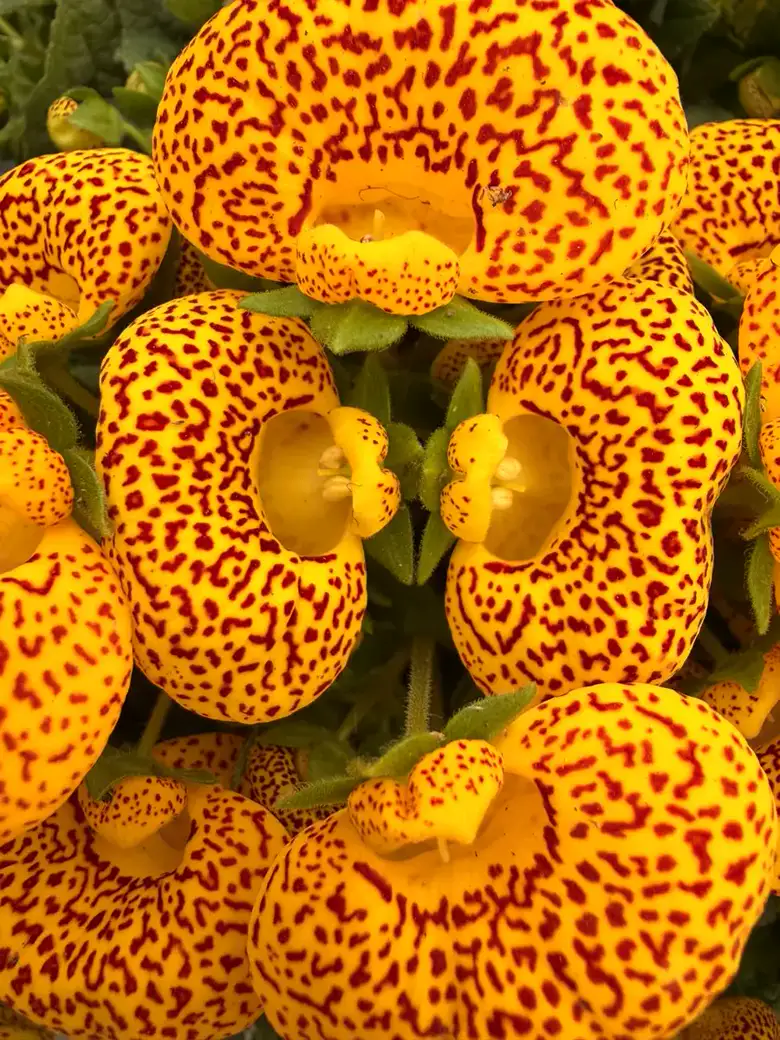
Few plants get as many double-takes as the slipper flower. The pouched blooms are pure novelty.
It makes a cheerful spring gift pot for a cool windowsill. The colours are vivid, and the spotting adds charm. It also fills a tricky niche: a bright, cool-loving plant for spring before summer flowers arrive. For a long-blooming display, a single packet of seed goes a long way.
The names: slipper flower, slipperwort & pocketbook plant
This plant has more nicknames than most. They all describe the same pouch.
“Slipper flower” and “slipperwort” point to the shoe-like shape. “Pocketbook plant”, “pouch flower” and “lady’s purse” all picture a little bag. The botanical name Calceolaria comes from the Latin for a small shoe.
One warning: do not confuse it with the slipper orchid. That is a completely different plant. This guide covers only the calceolaria pouch flower.
The pouch flower: why it looks so unusual
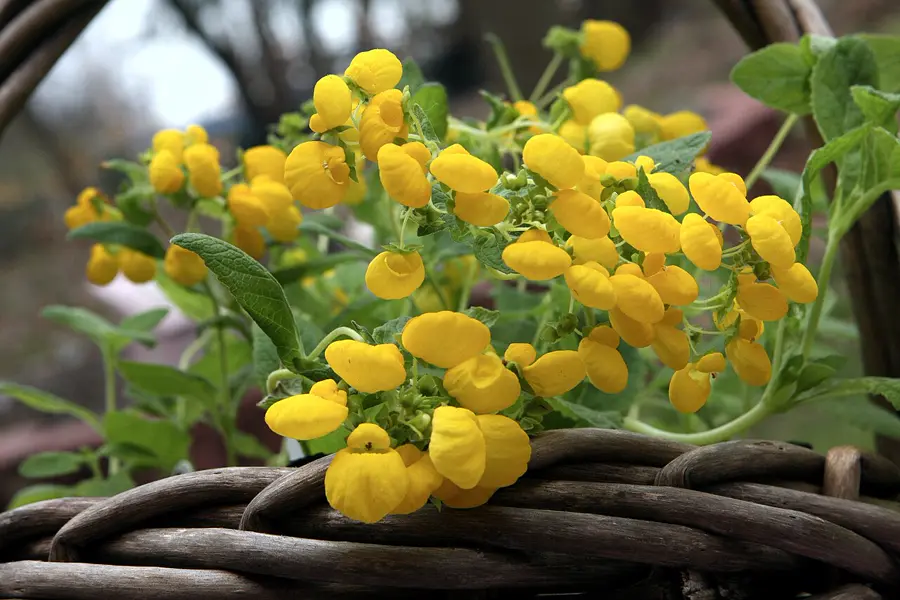
The bloom has two lips, like a snapdragon. But the lower lip swells into a big balloon-like pouch.
That pouch traps the eye. In bright yellow or orange, freckled with maroon, it almost looks painted. Mass a few pots together and the effect is striking.
For other exotic, spotted or unusual cool-season blooms from seed, see our guides to schizanthus (poor man’s orchid) and salpiglossis.
Two types: indoor pot vs outdoor bedding calceolaria
This is the key choice before you buy seed. There are two main garden groups, and they want different things.
| Group | Best use |
|---|---|
| Calceolaria × herbeohybrida | Big-pouch florists’ type. A cool indoor spring gift pot. Hates heat. |
| Calceolaria integrifolia (‘Sunshine’, ‘Sunset’) | Smaller-flowered, shrubby. Outdoor summer bedding in cool climates. |
| Calceolaria biflora (‘Goldcrest’) | Alpine type for rock gardens and troughs. |
So pick your group first. The herbeohybrida is the showy gift plant. The integrifolia is the tougher outdoor performer.
Best season & when to sow
Timing depends on the type and your climate. The plant is slow, so plan ahead.
Herbeohybrida (indoor pots): sow in late summer for flowering pots the next spring. It needs cool months to set buds.
Integrifolia (outdoor bedding): sow in late winter or early spring for summer flowers.
Either way, expect 4–5 months from seed to bloom. This is not a quick crop, so patience pays.
How to plant calceolaria from seed
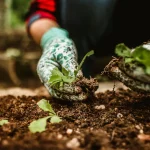
The seed is tiny, almost like dust. Light is the make-or-break factor. Follow these steps.
- Fill a tray with fine, free-draining seed compost.
- Firm and moisten the surface before sowing.
- Scatter the fine seed thinly on top. Do not cover it.
- Tip: sow over a white sheet so you can see the dust-like seed.
- Mist or bottom-water gently to settle it.
- Keep bright but out of hot, direct sun.
- Hold the temperature near 18–21°C (65–70°F) to sprout.
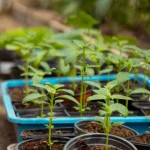
- Once up, grow on cooler, around 10–16°C (50–60°F).
- Prick out seedlings carefully; never plant them deep.
Planting seedlings too deep causes stem rot. Set them at the same level they grew.
Germination: the seed-starting secret
The secret is simple: light, surface sowing, and steady cool warmth.
Because the seed is so fine, burying it is fatal. Press it onto the surface and leave it open to the light.
Germination takes roughly 10–20 days. Many seed lots sprout near the two-week mark. Keep the surface moist but never soggy.
Seedlings are prone to damping-off. Good airflow and careful watering keep them safe.
Sun, soil, watering & feeding
Sun: give bright light but shield it from hot midday sun. Cool and bright is the goal.
Soil: use a rich, free-draining mix. Good drainage prevents root rot in cool, damp spells.
Water: keep the soil evenly moist, never bone-dry or waterlogged. Water at the base. Wet leaves and flowers invite rot.
Feeding: feed lightly with a weak liquid feed while growing. Ease off once flower buds form.
Above all, keep it cool. Heat is the main enemy of a happy slipper flower.
Pests & problems
Most trouble comes from heat, damp, or sap-suckers. Watch for a few common issues.
Aphids, whitefly and greenfly love the soft growth. Check the leaf undersides often.
In cool, damp air, grey mould (botrytis) can spot the flowers and leaves. Remove faded blooms and improve airflow. Soggy soil brings root rot, so drainage matters.
Growing calceolaria in India
Let us be honest: calceolaria is a cool-season plant. It struggles in India’s heat.
The hills are its happy place. In Shimla, Ooty or Darjeeling-type climates, it grows well outdoors. In the plains, treat it as a winter-only project.
In a cool plains winter, grow it as a short-term indoor or balcony gift pot. Give bright, cool, frost-free conditions and free-draining mix. Once spring heat arrives, the plant fades — that is normal.
In India, bees and small insects visit the flowers. (Hummingbirds are found only in the Americas, so do not expect them here.) Seed and plants are sold by online nurseries. For other cool-season pot flowers, see nemesia and pansy.
Companion planting & display ideas
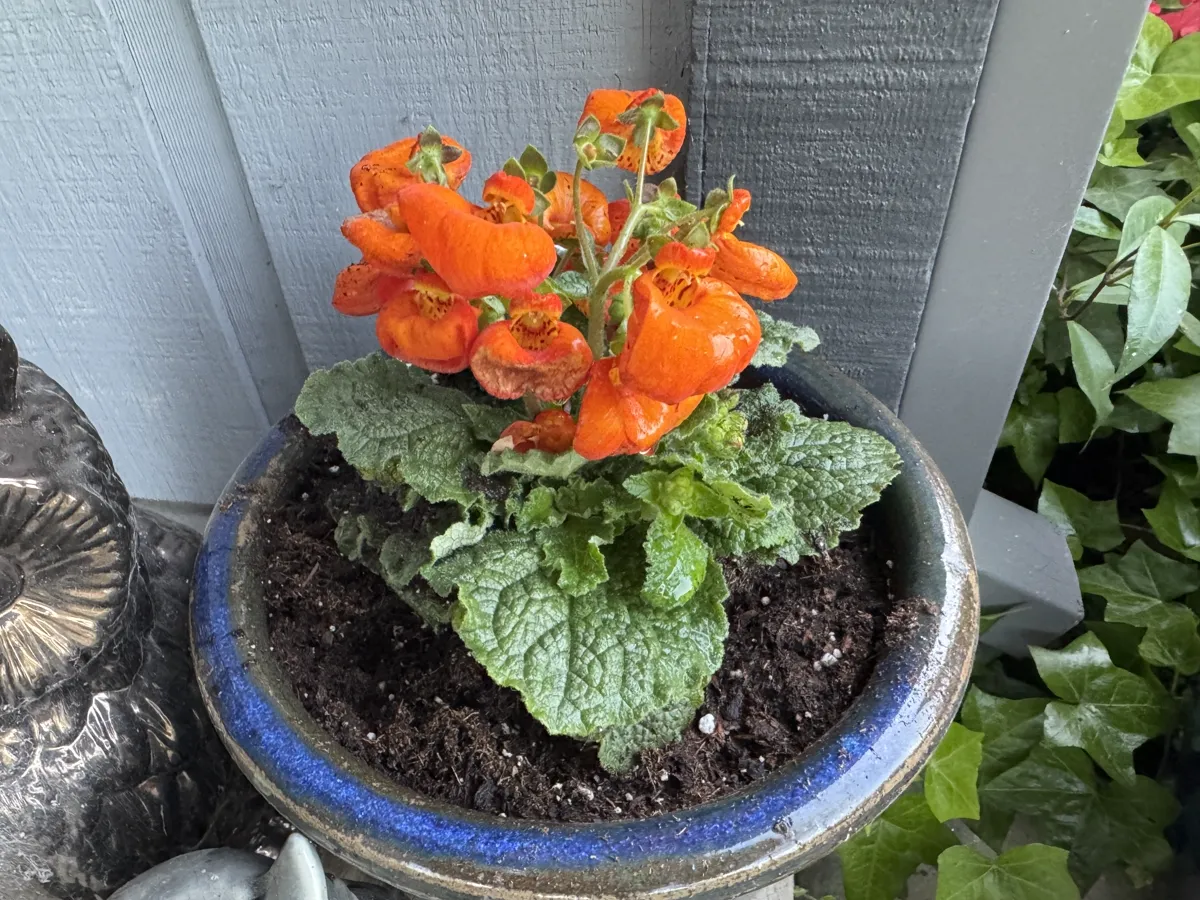
Calceolaria shines in spring pot displays. Group it for maximum impact.
Pair the bright pouches with cool blues and purples. It looks lovely beside lobelia and other compact spring flowers. For shady cool corners, mix it with torenia or browallia.
Outdoors, the integrifolia type teams well with other bedding. Try it near mimulus and nicotiana in a cool, bright spot.
Frequently asked questions
Is calceolaria a perennial or an annual?
It is technically a tender perennial. But it lives outdoors year-round only in very mild zones. Almost everywhere else, gardeners grow it as an annual or a short-lived spring gift pot.
Why do calceolaria seeds need light to germinate?
The seed is dust-fine and carries little energy. Light triggers it to sprout. So surface-sow it and never cover it, or it may not germinate at all.
How long do calceolaria seeds take to bloom?
Be patient. Germination takes about 10–20 days. From sowing to first flower is usually 4–5 months, since the plant grows slowly and needs cool months.
Can I grow calceolaria in India?
Yes, in the right season. It thrives in hill stations. In the plains, grow it as a winter indoor or balcony pot in cool, bright, frost-free spots. It will not survive the hot season.
How do I sow such tiny seeds evenly?
Mix the seed with a pinch of fine dry sand or talc first, then scatter that over moist compost. Press it down gently so it makes contact, and leave it uncovered.
What temperature do calceolaria seeds need to germinate?
Around 21 °C (70 °F) works well, with seedlings usually showing in about two weeks. Cover the tray with glass or clear plastic to hold humidity, keeping the light reaching the surface.
How should I treat the seedlings after they come up?
Move them somewhere cooler and bright, roughly 13-16 °C (55-60 °F). Kept warm they grow soft and leggy, and the plants end up weak.
When is the best time to sow?
Late summer into autumn, broadly July to November, so the plants build up over winter and flower in spring. A frost-free but cool greenhouse or porch suits that schedule.
Why is my calceolaria not setting flower buds?
It usually needs a cool spell to initiate buds, with night temperatures below about 10 °C (50 °F). A warm living room keeps the plant leafy and bud-free.
What pests attack slipper flowers?
Aphids and whitefly are the main nuisances, and they multiply fast when the plant sits somewhere warm and dry. Slugs will also chew young plants outdoors. Keep the air cool and moving, and rinse or treat aphid colonies early.
How much water does a calceolaria need?
Keep the compost evenly moist but never waterlogged, and water at the base rather than over the leaves. The soft foliage and pouched flowers spot easily if they stay wet.
Sources and further reading
Still stuck? Ask the Plant Doctor
Describe the problem — yellow leaves, holes, no flowers — and get a clear answer in seconds. FreeAI can make mistakes. Answers are guidance, not a guarantee — check anything important against the guide it links to, and always read the label on any product before you use it.