Erigeron Mexican Fleabane Seeds
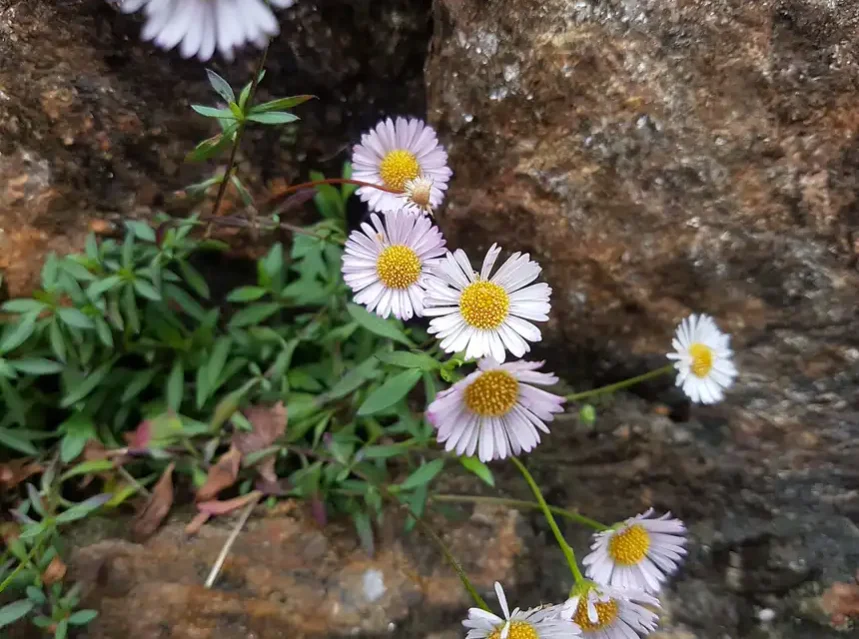
Erigeron mexican fleabane seeds grow into one of the longest-flowering little daisies you can plant. Sow erigeron mexican fleabane seeds once and you get a low, spreading carpet smothered for months in tiny daisies. The flowers open white and slowly age to pink and deep magenta. So one plant often shows white, pink and rose blooms all at the same time. This plant (Erigeron karvinskianus) loves walls, paving cracks, gravel and pot edges.
This is a guide to growing an ornamental garden flower. It makes no medicinal, herbal, or edible claims of any kind. Mexican fleabane is grown purely for its looks and its value to bees and butterflies.
🧰 In a hurry? Jump straight to our tested picks for this guide ↓
Quick start
- Botanical name: Erigeron karvinskianus (syn. Erigeron mucronatus).
- Common names: Mexican fleabane, Mexican daisy, Santa Barbara daisy, Spanish daisy, wall daisy.
- Type: low, spreading, semi-evergreen short-lived perennial.
- Height & spread: about 15–30 cm tall, spreading 30–100 cm wide.
- Flowers: small daisies that open white and age to pink then magenta.
- Bloom time: late spring to autumn — near year-round in mild zones.
- Sow: surface-sow (needs light) in spring at about 15–20°C.
- Germination: roughly 2–4 weeks.
- Light & soil: full sun; sharp, free-draining soil; great in walls and gravel.
- Best for: walls, paving cracks, gravel, edging, rockeries and pots.
Authority sources: Wikipedia: Erigeron karvinskianus · RHS: Erigeron karvinskianus.
Mexican fleabane at a glance
| Feature | Detail |
|---|---|
| Botanical name | Erigeron karvinskianus |
| Family | Asteraceae (daisy family) |
| Native range | Mexico, Central America, Colombia, Venezuela |
| Plant type | Semi-evergreen, short-lived spreading perennial |
| Height & spread | ~15–30 cm tall × 30–100 cm wide |
| Flower colour | Opens white, ages pink to magenta |
| Bloom season | Late spring to autumn (May–October) |
| Light | Full sun (tolerates light shade) |
| Soil | Any sharp, free-draining soil; thrives in walls and gravel |
| Hardiness | Hardy in mild zones (RHS H5) |
| Wildlife | RHS Plants for Pollinators; loved by bees and butterflies |
Why grow mexican fleabane?
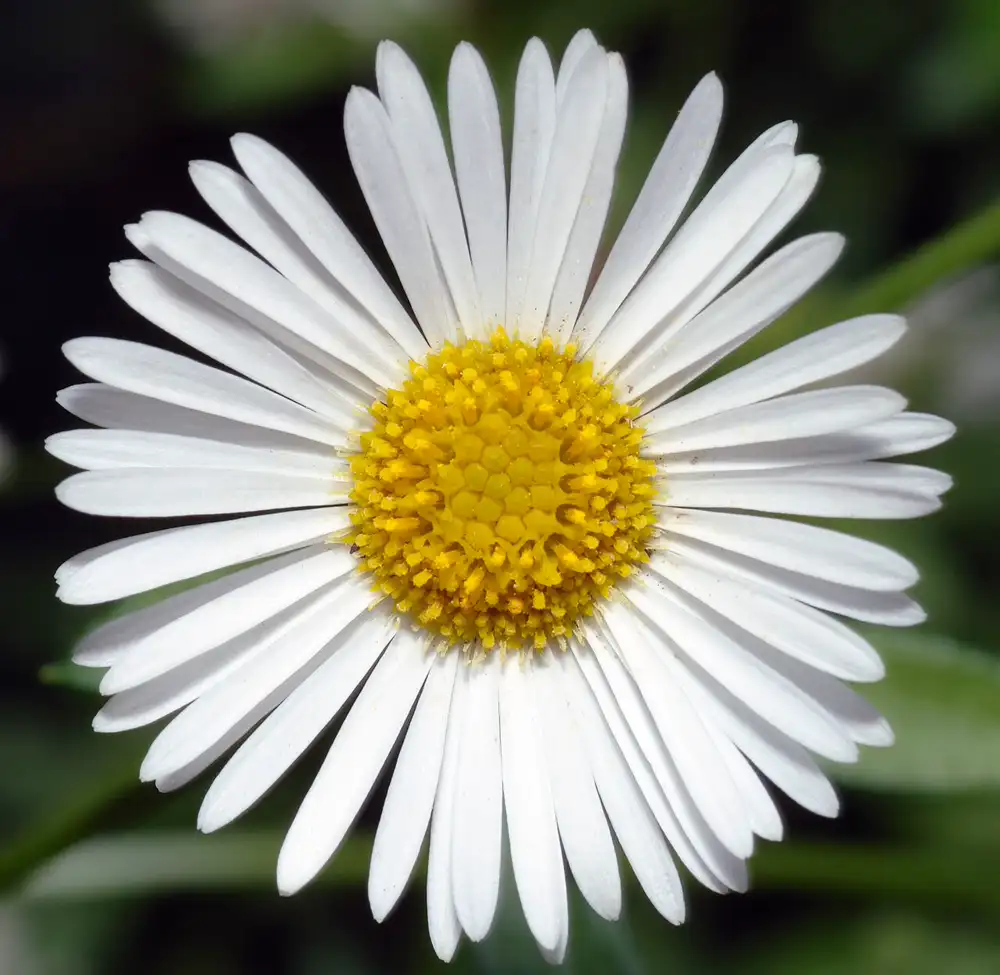
Few small plants give so much for so little care. Mexican fleabane flowers non-stop from late spring to autumn. In mild climates it barely stops at all.
It is tough and drought-tolerant once settled. It needs no deadheading. It even seeds itself into the gaps you cannot easily plant. That makes it perfect for busy or low-care gardens.
It also earns its keep with wildlife. The flowers feed bees, butterflies and hoverflies through the whole season. It has earned the RHS Award of Garden Merit for good reason.
The name and where mexican fleabane comes from
Erigeron karvinskianus is native to Mexico, Central America and parts of South America. It belongs to the huge daisy family, Asteraceae.
The species name honours Wilhelm Friedrich Karwinski von Karwin. He was a naturalist who collected the plant in Mexico. That is where the names “Mexican fleabane” and “Karwinsky’s fleabane” come from.
“Fleabane” is an old folk name shared by many Erigeron species. The plant now grows wild far beyond Mexico, from Europe and Africa to Australia and New Zealand. We note this only as botanical history, not as any use claim.
The longest-flowering daisy carpet
This is the plant’s headline trick. It blooms for months on end, longer than almost any hardy daisy.
Each flower opens crisp white. Over a few days it fades to soft pink, then deeper magenta. New buds keep opening behind the old ones. So a single plant shows white, pink and rose blooms together, like confetti.
That long, shifting show is why designers love it. It fills the quiet gaps between other flowers and never looks bare. From a packet of erigeron karvinskianus seeds you can carpet a whole bank for the price of one shrub.
The classic wall, crack and paving self-seeder
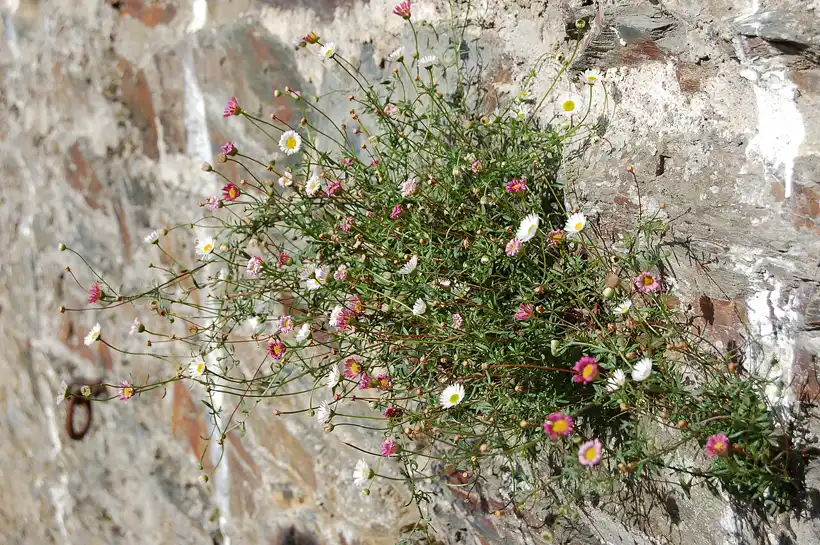
Mexican fleabane is the definitive “daisy in a wall”. It tucks into stone walls, steps, gravel and paving cracks where little else will grow.
It self-seeds gently into these nooks. The fluffy seeds drift on the wind and settle in crevices. Over a few years a bare wall softens into a froth of daisies.
This habit is a gift in informal and cottage gardens. In a few mild regions it can self-seed a little too freely. That is easy to manage — just shear it back, deadhead, or pull spare seedlings. Site it where a spreading carpet is welcome.
Easy, drought-tolerant and pollinator-friendly
Once established, this is a genuinely tough plant. It shrugs off drought, poor soil and heat in a sunny spot.
It asks for almost nothing — no staking, no feeding, no deadheading. A single shear after the main flush keeps it neat and fresh.
It is also a quiet wildlife hero. The open daisies are easy for short-tongued bees and hoverflies to feed on. Butterflies visit too. In mild winters the semi-evergreen mats give cover for insects.
Best season and when to sow
Spring is the main sowing season. Sow indoors in late winter to spring, or direct-sow once the soil warms.
Aim to sow about 8–10 weeks before your last frost if starting indoors. This gives strong plants to set out after the cold passes. Many plants flower in their first summer from an early sowing.
You can also sow in early autumn in mild climates. The young plants then settle over winter and bloom early the next year.
How to plant erigeron mexican fleabane seeds step by step
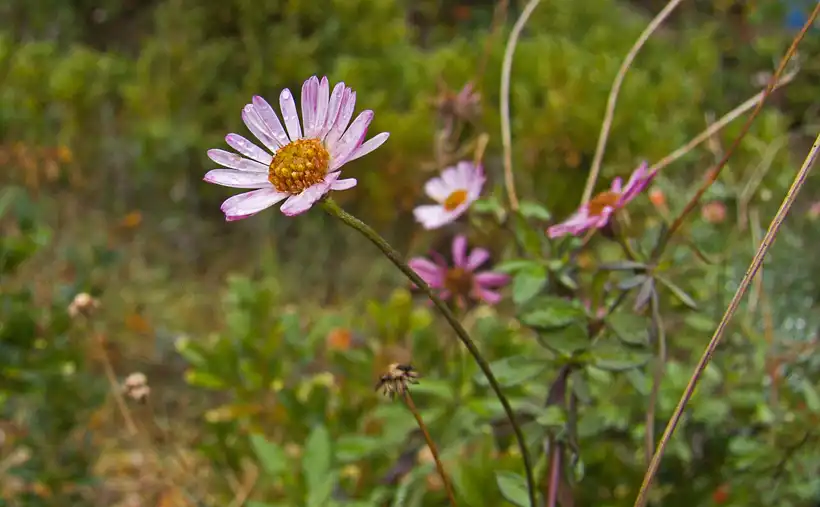
These seeds are tiny and need light to sprout. So do not bury them. Here is the simple method.
- Fill trays or small pots with free-draining seed compost. Firm and water lightly.
- Scatter the seed thinly across the surface. Press it down gently so it touches the compost.
- Do not cover the seed — it needs light to germinate.
- Keep the surface just moist, never soggy. A clear lid or bag helps hold humidity.
- Place somewhere bright at about 15–20°C.
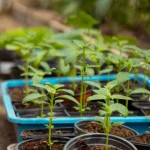
- Once seedlings have a few true leaves, prick them out into individual pots.
- Harden off, then plant out after the last frost, about 20–30 cm apart.
To plant directly into a wall, mix seed with a little damp soil or clay. Press the paste into the cracks and keep it moist until it takes.
Germination
Germination usually takes about two to four weeks. It can be a touch erratic, so be patient.
Keep the temperature around 15–20°C and the light good. Steady moisture matters most in this stage. Once seedlings appear, give them plenty of air to avoid damping off.
Sun, soil, watering and feeding
Give Mexican fleabane full sun for the best flowering. It copes with light shade but blooms less there.
Soil must drain sharply. Poor, gritty, gravelly or sandy ground suits it well. Wet, heavy soil in winter is its main enemy.
Water young plants until they settle in. After that it is drought-tolerant, though a little summer water keeps the mound fuller. Skip the feeding — rich soil makes leafy plants with fewer flowers. Lean and sunny is the winning recipe.
Common pests and diseases
This is one of the most trouble-free plants you can grow. The RHS lists it as generally pest-free and disease-free.
- Root rot: the main real risk, caused by wet, badly drained soil. Sharp drainage is the fix.
- Powdery mildew: can show if plants are dry-stressed or crowded. More air and water help.
- Slugs and snails: may nibble very young seedlings. Protect new plants until established.
Healthy, sunny, well-drained plants rarely suffer anything at all.
Common problems
Most “problems” are easy to fix. Here are the usual ones.
- Few flowers or leggy growth: usually too much shade or rich soil. Move to more sun, lean out the soil, and shear back.
- Plant fades after a couple of years: it is short-lived by nature. Let it self-seed to renew itself, or sow a fresh batch.
- Spreading too far: simply shear after flowering, deadhead, and pull unwanted seedlings.
- Winter losses: nearly always wet soil, not cold. Improve drainage or grow it in a raised, gritty spot.
Mexican fleabane vs other daisies
Several plants share the “daisy” or “fleabane” name. Here is how to tell them apart.
| Plant | What sets it apart |
|---|---|
| Mexican fleabane (Erigeron karvinskianus) | Low wiry carpet; tiny white-to-pink-to-magenta daisies; loves walls and cracks; self-seeds |
| Border fleabane (Erigeron speciosus & hybrids) | Taller clump ~45–60 cm; larger lavender-blue daisies; for borders, not walls |
| Seaside daisy (Erigeron glaucus) | Coastal mat; fleshy leaves; lilac daisies; tough by the sea |
| Annual fleabane (Erigeron annuus) | Tall white annual; more of a meadow or weedy plant |
| English daisy (Bellis perennis) | Small lawn daisy; tight button flowers; different genus |
| Shasta daisy (Leucanthemum) | Big white border daisy on tall stems; different genus |
| Swan River / blue daisies (Brachyscome, Felicia) | Mounding daisies in blue, mauve or white; different genera |
Design ideas for mexican fleabane
This little daisy is endlessly useful. Try it in these spots.
- Walls and dry-stone: tuck seed into crevices for a cascading veil of bloom.
- Paving and step cracks: soften hard edges with self-sown daisies.
- Gravel gardens: a perfect drought-tolerant filler between bolder plants.
- Path and border edging: a soft, long-flowering ribbon along the front.
- Rockeries and raised beds: happy in the sharp drainage they offer.
- Pots, troughs and baskets: spills beautifully over the rim.
- Cottage and coastal gardens: the relaxed, self-seeding look it does best.
Growing mexican fleabane in India
Let us be honest about the Indian climate. Mexican fleabane likes cool, dry, free-draining conditions. So it is happiest in India’s cooler hill gardens.
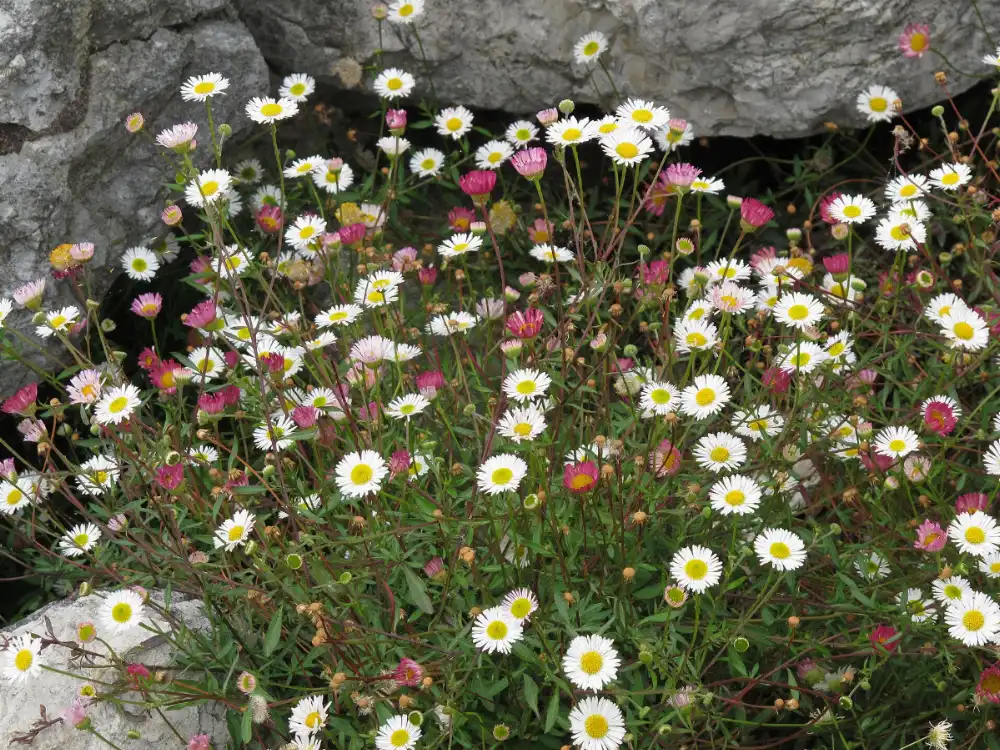
In hill stations like Shimla, Mussoorie, Nainital, the Nilgiris, Kodaikanal and Darjeeling it can grow as a wall, rockery and edging perennial. There it behaves much as it does in Europe.
In the hot plains, treat it as a cool-season pot or edging plant. Grow it over the cooler months in gritty, very well-drained mixes. It dislikes hot, humid, waterlogged monsoon conditions, so keep it sheltered from heavy rain and raise the pots for drainage.
For pollinators in India, think bees, butterflies and hoverflies. There are no hummingbirds here — they live only in the Americas. The daisies still pull in plenty of local insects.
Companion plants and related seeds
Mexican fleabane mixes beautifully with other sun-loving, free-draining plants. For more growing detail on the genus, see our guide on how to grow erigeron. Here are great companions to grow from seed.
- Leucanthemum (Shasta daisy) seeds — bigger white daisies for the border behind.
- Brachyscome (Swan River daisy) seeds — fine, mounding daisies in blue and mauve.
- Felicia (blue daisy) seeds — true-blue daisies for sunny pots.
- Osteospermum (Cape daisy) seeds — bold daisies that love the same sun.
- Arctotis (African daisy) seeds — silvery foliage and drought tolerance.
- Gazania seeds — sun-loving daisies for gravel and edges.
- Dianthus seeds — fragrant pinks for walls and rockeries.
- Sweet alyssum seeds — low, scented carpet for paving cracks.
- Nepeta (catmint) seeds — soft blue haze and great for bees.
- Gaillardia (blanket flower) seeds — hot-coloured, drought-proof daisies.
- Aster seeds — late daisies to extend the season.
- Stokesia (Stokes’ aster) seeds — frilly blue daisies for sunny beds.
Frequently asked questions
Which daisy is Mexican fleabane, and is it the same as Santa Barbara daisy?
Yes — Mexican fleabane, Mexican daisy, Santa Barbara daisy and wall daisy are all common names for Erigeron karvinskianus. It is a low, spreading daisy with white flowers that age to pink and magenta. It is different from Shasta daisy, English daisy and the blue Brachyscome and Felicia daisies.
Will it really grow in walls and paving cracks?
It will, and that is exactly what it loves. Press seed mixed with a little damp soil into wall crevices or sow it along paving gaps. The plant settles into the sharp drainage and self-seeds gently to spread the look over time.
How to grow Mexican fleabane from seed — and does it flower the first year?
It is easy. Surface-sow the tiny seeds (they need light), keep them moist at about 15–20°C, and they sprout in two to four weeks. Sown early in spring, many plants flower in their first summer and then bloom for months.
Can I grow it in India?
Best results come in India’s cooler hill gardens, where it grows as a wall and edging perennial. In the hot plains, treat it as a cool-season pot plant in very free-draining mix, sheltered from heavy monsoon rain. Expect visits from bees and butterflies, not hummingbirds, which live only in the Americas.
When should I sow the seed?
Indoors, start about 8 to 10 weeks before your last frost. Outdoors, scatter seed in spring into gravel, paving joints or gaps between stones where you want the plants to stay.
Do I cover the seed when sowing?
No. Light helps germination, so press the seed lightly onto the surface of moist compost and leave it uncovered. Keep the surface damp but never soggy until seedlings appear.
How long does germination take?
Often two to three weeks at around 20 to 22 °C (68 to 72 °F), but it can stretch to a couple of months. Do not clear the tray early, since late stragglers are normal with this plant.
What soil and position suit it best?
Full sun gives the heaviest flowering, though it tolerates part shade. The soil needs to drain freely, and it is happy in sandy, stony or poor ground where richer plants would struggle.
How far apart should the plants go?
Allow about 30 to 45 cm (12 to 18 inches). Each plant makes a loose mat, so a few well-spaced plants will fill a wall top or path edge within a season or two.
Should I cut it back?
Yes. A trim during the season keeps it bushy and encourages more flowers, and a harder cut back of straggly stems at the end of the season tidies the plant before winter.
How can I propagate plants I already have?
Take 10 to 15 cm (4 to 6 inch) cuttings from healthy non-flowering stems, strip the lower leaves and root them in a gritty, sandy mix. Established clumps can also be lifted and divided.
Still stuck? Ask the Plant Doctor
Describe the problem — yellow leaves, holes, no flowers — and get a clear answer in seconds. FreeAI can make mistakes. Answers are guidance, not a guarantee — check anything important against the guide it links to, and always read the label on any product before you use it.