Lion’s Ear Seeds
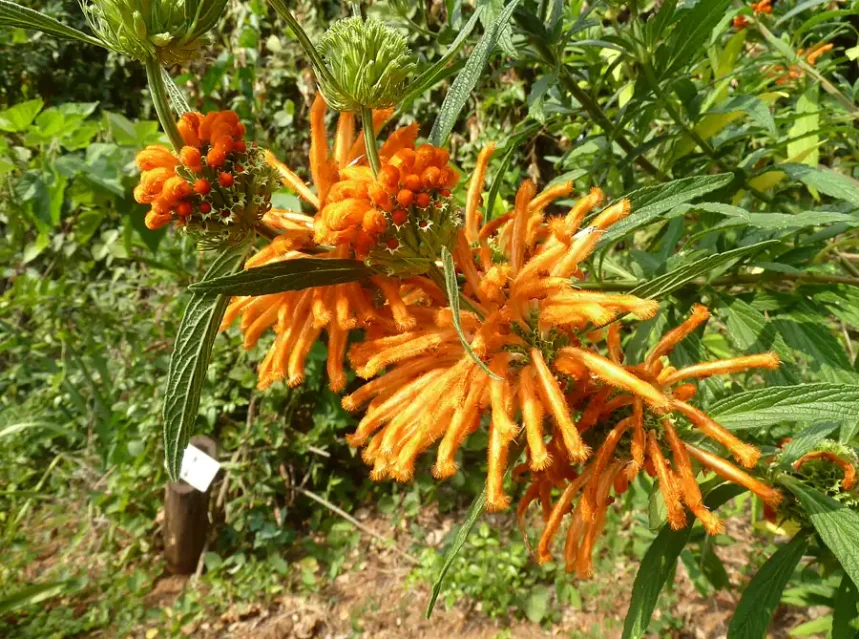
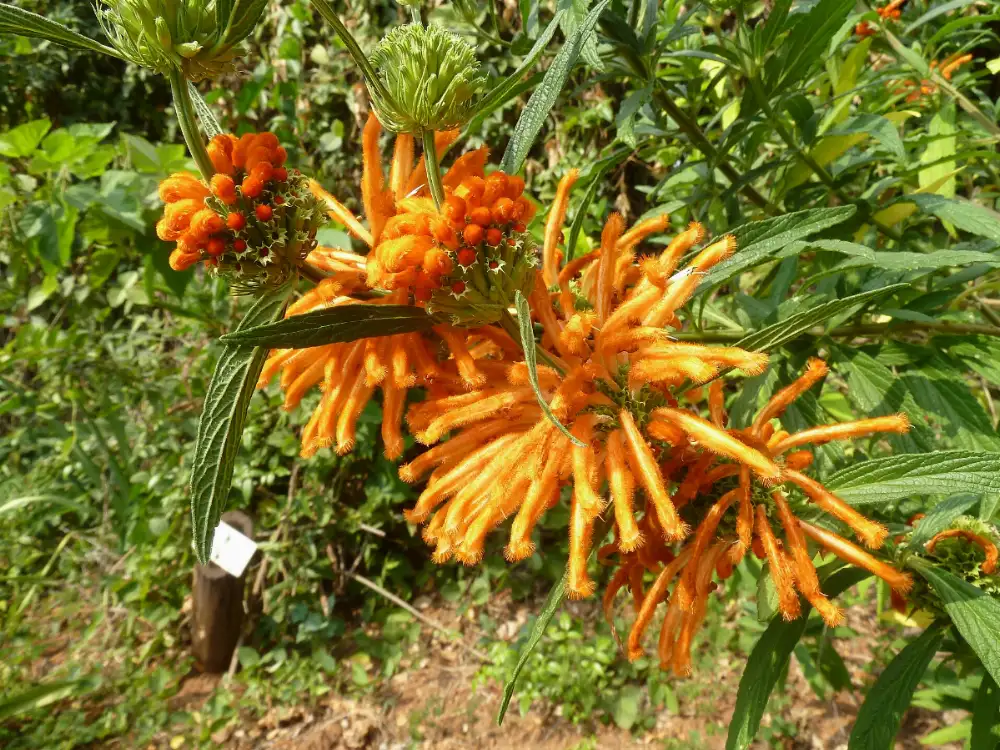
Lion’s ear seeds grow into a bold, heat-loving plant called Leonotis. Tall square stems carry tiers of furry orange flowers. Each tier is a whorl that hugs the stem like a fluffy ring. The effect looks just like a row of little lion’s tails.
Quick start: lion’s ear at a glance
- What it is: a tender shrub (Leonotis leonurus), also called lion’s tail or wild dagga.
- Best for: bold back-of-border accent, bee & butterfly forage, hot dry gardens.
- Sow: surface-sow on warm soil; the seed needs light to germinate.
- Light & soil: full sun; well-drained soil; drought tolerant once settled.
- Size: 1-2 m (3-6 ft) tall on upright, square stems.
- India note: a South-African heat lover; perennial in frost-free zones, annual where cold.
Authority references: the Wikipedia entry on Leonotis leonurus and the Harvest to Table growing guide.
| Family | Lamiaceae (mint family) |
|---|---|
| Native range | South Africa (introduced & naturalised in India) |
| Height | 1-2 m (3-6 ft); taller in warm climates |
| Showy part | Tiered whorls of furry tubular orange flowers |
| Flower colours | Flame orange (also white and yellow forms) |
| Germination | ~10-14 days warm (surface-sow; needs light) |
| Bloom time | Late spring/summer to autumn |
| Habit | Tender shrub; grown as annual in cold zones |
🧰 In a hurry? Jump straight to our tested picks for this guide ↓
Buy lion’s ear seeds
Want a dramatic, drought-proof splash of orange? Lion’s ear seeds are easy to find and cheap to try. Compare a few trusted sellers below for the best value.
Why grow lion’s ear?
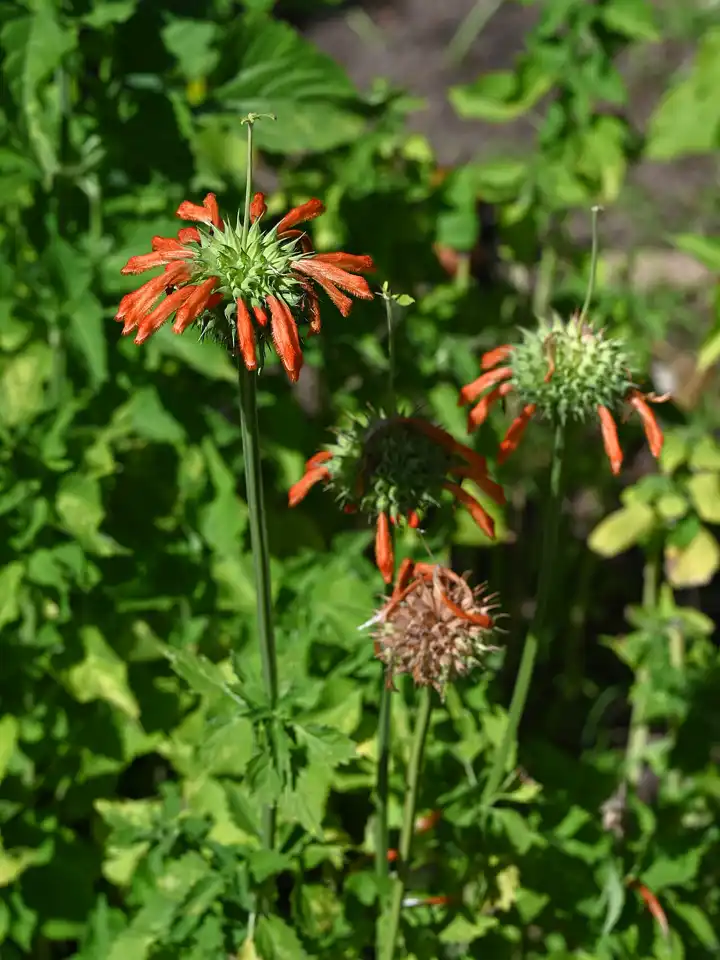
Lion’s ear gives bold drama for very little effort. It shoots up fast and flowers in its first season. Few plants offer this much height so quickly.
The orange whorls are pure spectacle. They stack up the stem in neat fuzzy tiers. Nothing else in the border looks quite like it.
It is also a wildlife magnet. Bees, butterflies and sunbirds all work the tubular flowers. In its home range, sunbirds are its main visitors.
Best of all, it loves heat and dry soil. It keeps going when other plants flag. For more bold orange forage, see our tithonia growing guide and gaillardia guide.
The stacked orange flower-whorls
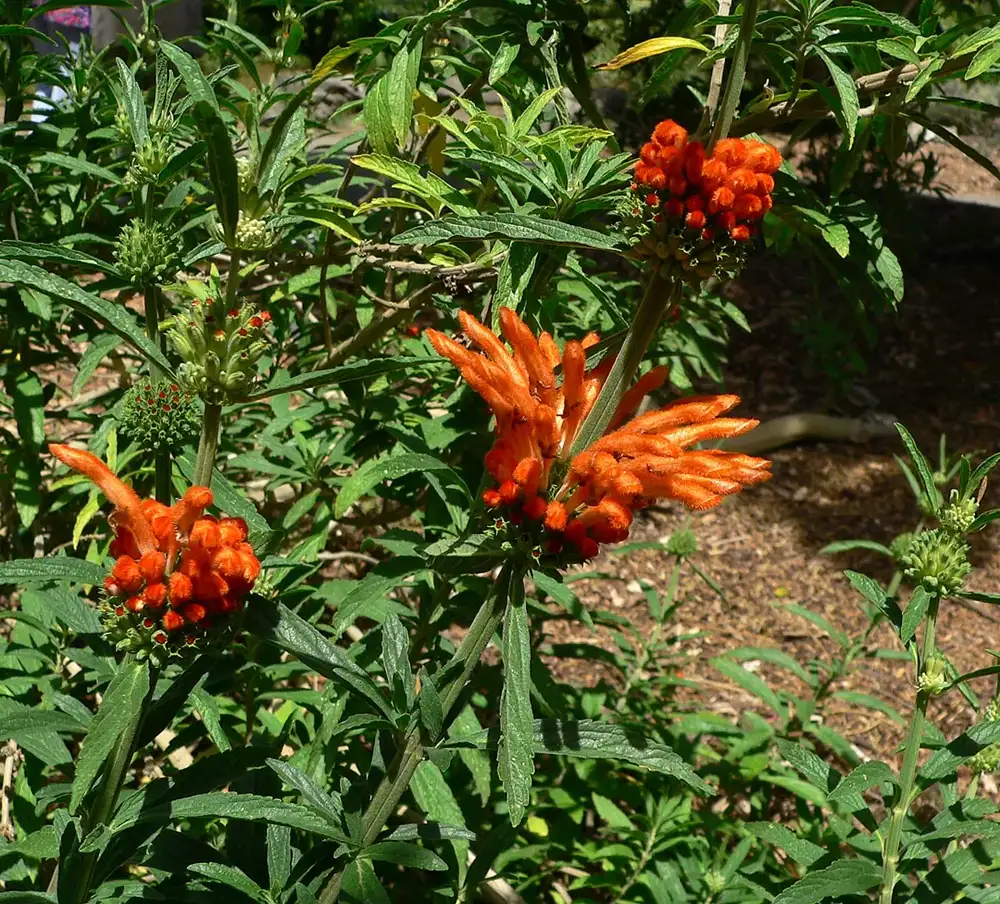
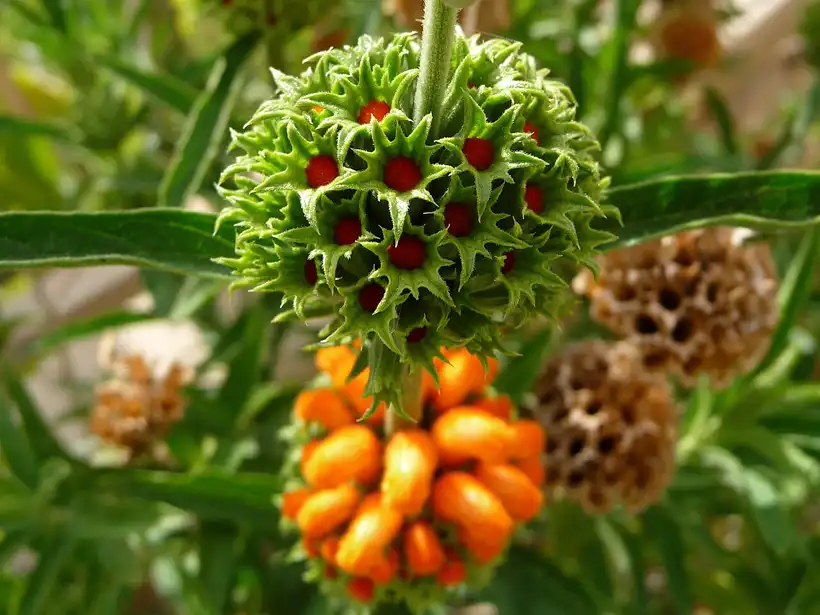
This is the feature that sets lion’s ear apart. The flowers do not sit in one flat head. Instead they circle the stem in dense rings.
Each ring is a whorl of furry, two-lipped tubes. The whorls climb the square stem in tiers. It is classic mint-family architecture, scaled up tall.
The texture is soft and velvety to the eye. Bright flame orange glows against green foliage. White and yellow forms exist but orange is the classic.
That vertical, sculptural shape is its garden superpower. It draws the eye upward at the back of a border. It also gives a strong accent in a gravel or dry garden.
Lion’s ear vs other bold border plants
Several heat-loving plants bring strong colour to a sunny bed. Each fills the space in its own way. Here is how lion’s ear compares.
| Plant | Main draw | Height | Good for |
|---|---|---|---|
| Lion’s ear (Leonotis) | Tiered orange flower-whorls | 1-2 m | Warm US (z9-11); warm India |
| Tithonia (Mexican sunflower) | Big orange butterfly daisies | 1-2 m | Warm US; warm India |
| Echium | Tall blue flower spires, bees | 0.5-2 m | Mild US; cool India |
| Gaillardia (blanket flower) | Red-gold daisy, drought-tough | 30-60 cm | Most US; warm India |
| Emilia (tassel flower) | Tiny flame brush blooms | 30-60 cm | Warm US; warm India |
So choose lion’s ear for height plus a unique tiered shape. It loves the same heat as tithonia. For a low front-of-border partner, browse our zinnia guide.
History, origin & the names
Lion’s ear comes from the grasslands of South Africa. There it grows as a woody, semi-evergreen shrub. Gardeners worldwide now prize it for its colour.
It belongs to the mint family, Lamiaceae. The square stems and whorled flowers give that away. Many mint relatives share this layout.
The plant carries many vivid common names. Lion’s ear, lion’s tail and minaret flower all fit. The old name wild dagga points to its long folk history.
It has spread far beyond Africa over time. It is naturalised in California, Hawaii and Australia. In India it is an introduced garden and roadside plant.
Best season & when to sow
Lion’s ear is a true warmth lover. It wants frost-free, sunny conditions to thrive. So timing centres on warm soil.
In the US, start seed indoors 8 to 10 weeks before the last frost. Sow at around 13-18°C for steady germination. Plant out once the soil has warmed.
India suits this plant especially well. Its South-African roots mean it loves heat. In frost-free regions it grows on as a perennial shrub.
Across warmer India, sow in the warm season in full sun. Give sharp drainage and avoid waterlogged ground. Where winters turn cold, simply grow it as an annual.
Growing lion’s ear from seed: how to plant
This is a rewarding plant to raise from seed. Here is how to plant it step by step.
- Start warm. Sow indoors in late winter or after frost outdoors. Use a free-draining seed mix.
- Surface-sow. Press the seed onto the surface and barely cover it. Light helps it germinate.
- Keep warm and moist. Hold the mix just damp at around 13-18°C. Seedlings appear in about 10 to 14 days.
- Harden off. Acclimatise young plants before planting out. Wait until all frost has passed.
- Space well. Set plants 45-60 cm apart, as they grow large. Choose your sunniest, best-drained spot.
You can also take greenwood cuttings in summer. This is handy for keeping a favourite plant going. For another heat-loving annual, see our nasturtium growing guide.
Sun, soil, watering & feeding
Give lion’s ear full sun for the best flowering. At least six hours of direct light is ideal. In very hot zones, a little afternoon shade helps.
It is not fussy about soil type. Good drainage matters far more than richness. Sharp, well-drained ground is the real key to success.
Water young plants regularly to settle them in. Once established it tolerates real drought. Still, some summer water keeps growth lush and full.
Feeding needs are modest for such a big plant. A spring mulch or light feed is plenty. In cold zones, lift or cut back before hard frost. Pair it with our drought-tough calendula guide.
Cut flowers & saving seed
Lion’s ear makes a striking, architectural cut flower. The tall whorled stems add bold form to large arrangements. Strip the lower leaves and stand them in deep water.
The whorls also dry well for autumn displays. Cut stems once most flowers in a whorl are open. Hang them upside down in a dry, airy place.
Saving seed is simple and rewarding. Let some spent whorls dry on the plant. The small seeds form inside the spiky old calyces.
Rub the dried whorls over a bowl to release the seed. Store it cool, dry and dark for next season. For more cut-flower ideas, see our cosmos guide.
Common pests & problems
Lion’s ear is a tough, easy plant outdoors. Most trouble comes from cold or wet, not pests. Sharp drainage solves the majority of issues.
Spider mites and whiteflies can appear under cover. They are most common on indoor or overwintered plants. Good airflow and a rinse usually keep them down.
Grey mould may strike in damp, crowded conditions. Space plants well and water at the base. Remove any spoiled growth promptly.
Frost is the main limit in cold regions. A hard freeze cuts the plant back. Grow it as an annual or shelter it over winter.
Frequently asked questions
Are lion's ear seeds easy to grow?
Yes, they are straightforward in warm conditions. Surface-sow on a warm, well-drained mix and barely cover them. Seedlings usually appear in about 10 to 14 days.
Why is it called lion's ear or lion's tail?
The furry orange flowers cluster in whorls up the stem. Each tier looks like a soft, tufted lion’s tail. The names lion’s ear and minaret flower describe the same shape.
Can I grow lion's ear in India?
Yes, and it suits warm Indian gardens well. As a South-African plant it loves heat and sun. Grow it as a perennial in frost-free areas and as an annual where winters are cold.
Is lion's ear good for pollinators?
It is excellent for bees and butterflies. The tubular flowers also attract sunbirds in their native range. This makes it a valuable plant for a wildlife border.
Do lion's ear seeds need cold stratification?
No, Leonotis seeds are warm germinators and skip cold treatment entirely. Surface-sow them and hold the mix at 18-24°C, where seedlings usually appear in 10 to 14 days. Light helps triggering germination, so press the seed onto the surface rather than burying it.
What is "wild dagga" and is it the same plant?
Wild dagga is a traditional South African name for Leonotis leonurus, long used in indigenous folk practice. It is the same species sold commercially as lion’s ear or lion’s tail seed. This guide treats it strictly as an ornamental garden shrub, not as a herbal or medicinal product.
Is lion's ear deer resistant?
Yes, deer and rabbits mostly leave it alone. Its aromatic, minty foliage is a Lamiaceae family trait that browsing animals find unappealing. That makes lion’s ear a dependable choice for gardens with heavy deer pressure.
What is the difference between Leonotis leonurus and Leonotis nepetifolia?
Leonotis leonurus, the true lion’s ear or lion’s tail, is a woody, long-lived shrub with narrow grey-green leaves. Leonotis nepetifolia, sometimes called klip dagga, is a taller annual with broader, more nettle-like leaves and spinier flower whorls. Seed listings occasionally mix the two up, so check the botanical name before buying.
Can lion's ear be grown in a pot?
Yes, a large container suits it well, especially where winters force you to move it under cover. Choose a pot at least 30-40 cm wide with sharp drainage, since the roots dislike sitting wet. Feed lightly through the growing season and repot every year or two.
How do I overwinter lion's ear where it isn't hardy?
In frost-prone gardens, cut the plant back hard after the first light frost and mulch the crown, or lift it into a container and keep it indoors over winter. It resprouts vigorously from the base once warmth returns in spring. Gardeners below USDA zone 9 usually just treat it as an annual instead.
Can I grow lion's ear from cuttings instead of seed?
Yes, greenwood cuttings taken in summer root easily in a free-draining mix. Cuttings are the fastest way to clone a favourite flower-colour form, since seed-grown plants can vary slightly. Many growers keep a cutting-grown backup plant indoors as winter insurance.
Sources and further reading
Still stuck? Ask the Plant Doctor
Describe the problem — yellow leaves, holes, no flowers — and get a clear answer in seconds. FreeAI can make mistakes. Answers are guidance, not a guarantee — check anything important against the guide it links to, and always read the label on any product before you use it.