Erinus Alpinus Seeds
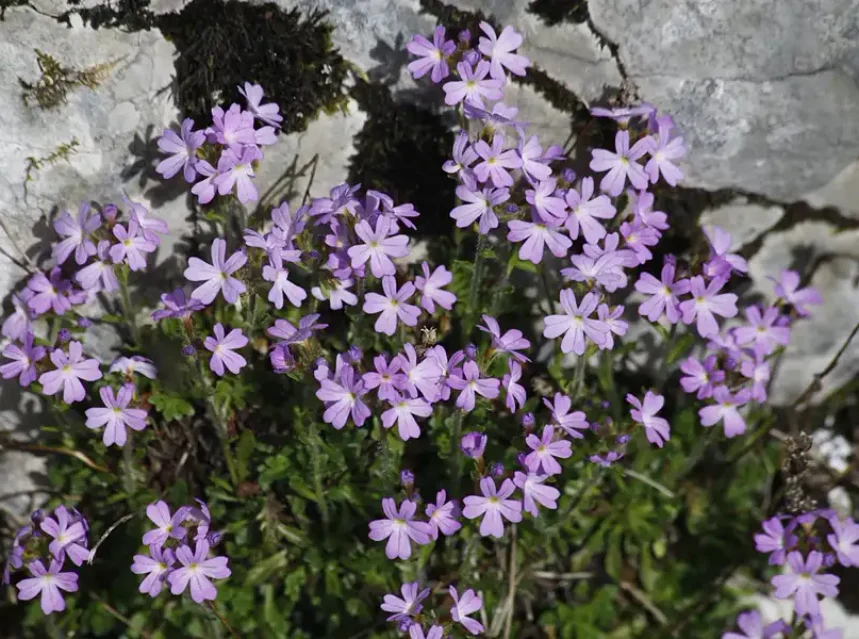
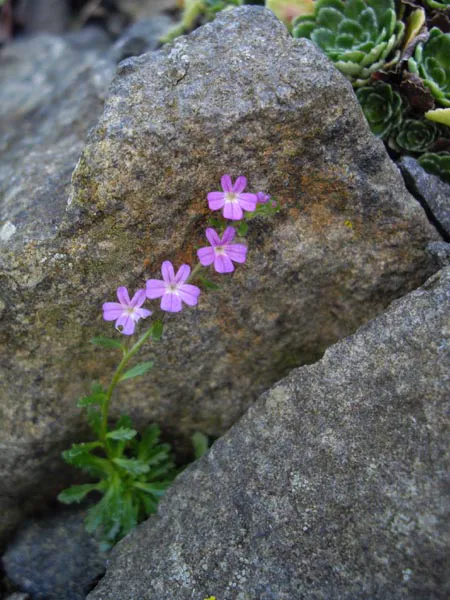
Erinus alpinus seeds grow into one of the easiest flowers for a wall or rock garden. Erinus alpinus seeds produce neat rosettes topped by sprays of starry pink flowers from late spring. Known as fairy foxglove, this tiny alpine seeds itself into cracks and keeps coming back for years.
This guide is for ornamental gardening only. Erinus alpinus is grown purely for its flowers and foliage. It makes no medicinal, herbal, or edible claims of any kind.
🧰 In a hurry? Jump straight to our tested picks for this guide ↓
Quick start
- Botanical name: Erinus alpinus
- Common names: Fairy foxglove, alpine balsam, summer starwort
- Family: Plantaginaceae (formerly Scrophulariaceae)
- Type: Hardy semi-evergreen short-lived perennial
- Flower: Small, star-shaped, pink to purple (or white)
- Light: Full sun to part shade
- Soil: Gritty, well drained; loves lime and mortar
- Sow: Surface-sow; needs light to germinate
- Bloom time: Late spring to summer
- Hardiness: Very hardy (about USDA 4–8)
Authority sources: Royal Horticultural Society, Wikipedia.
Erinus alpinus at a glance
| Feature | Detail |
|---|---|
| Botanical name | Erinus alpinus |
| Common names | Fairy foxglove, alpine balsam, summer starwort |
| Family | Plantaginaceae (formerly Scrophulariaceae) |
| Origin | Mountains of central and southern Europe |
| Plant form | Low rosette, 5–15 cm tall |
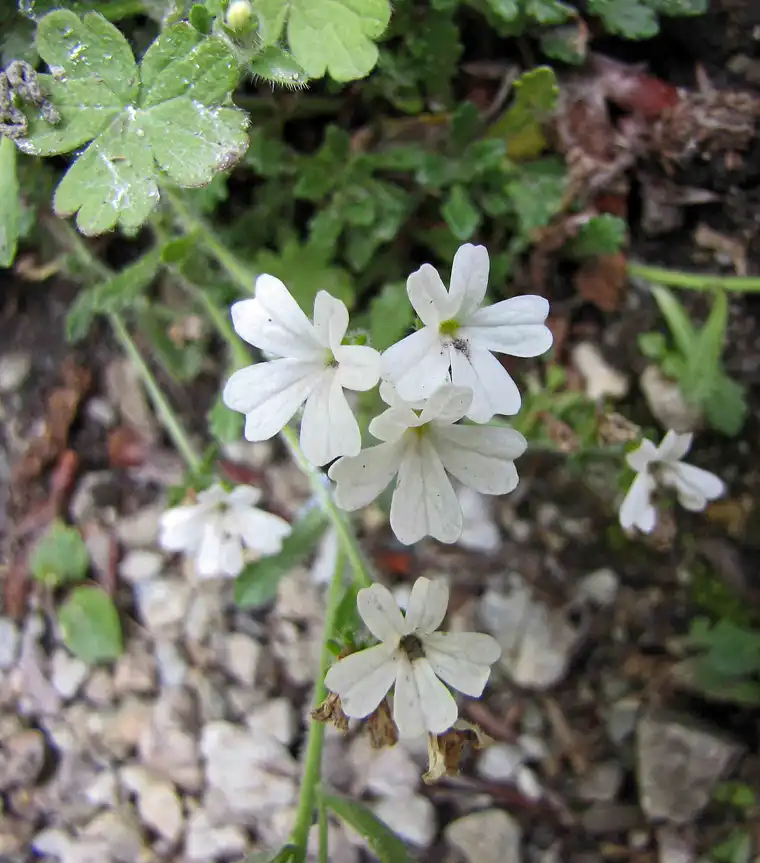
| Flower colour | Pink, magenta, purple, or white |
| Bloom season | Late spring to summer |
| Light | Full sun to part shade |
| Watering | Light; drought-tolerant once set |
| Key habit | Short-lived but self-seeds freely |
| Best use | Walls, crevices, scree, troughs, paving |
Why grow Erinus alpinus?
Few alpines are this forgiving. Fairy foxglove asks for almost nothing. Give it a sunny crack and it just gets on with flowering.
It also flowers for a long spell. The pink stars open from late spring into summer. Bees and small butterflies visit them all season.
Best of all, it plants itself. The parent may be short-lived, but it self-seeds freely. So you get a lasting colony from a single sowing.
How to plant Erinus alpinus seeds step by step
This is one of the simplest alpines to raise from seed. Follow these steps for a strong start.
- Fill the pot or tray. Use a gritty, free-draining alpine or seed mix. Firm it gently and level the top.
- Moisten first. Water the pot from below before sowing. This stops fine seed washing away.
- Surface-sow. Scatter the tiny seed thinly on top. Do not cover it, as light aids germination.
- Keep it bright. Stand the pot in good light at about 18–24°C. A cool windowsill or frame works well.
- Stay lightly moist. Mist or bottom-water to keep the surface damp. Never let it dry out fully while germinating.
- Wait for sprouts. Seedlings usually appear in three to four weeks. Some seed is slower, so be patient.
- Prick out and grow on. Move seedlings once they have a few true leaves. Pot into gritty mix, then plant out after frost.
You can also sow directly outdoors in spring. Just scatter seed onto gritty soil or into wall cracks.
Germination: what to expect
Erinus is refreshingly quick for an alpine. Fresh seed often sprouts in three to four weeks. Light and gentle warmth are the main triggers.
The key rule is simple: do not bury the seed. It needs light on the surface to wake up. A thin grit dusting at most is fine.
Germination can still be a little uneven. Keep the pot lightly moist and bright. Latecomers often appear over several more weeks.
Best season and when to sow
Spring is the classic time to sow. Warmth and lengthening light suit the seed well. Sow indoors seven to eight weeks before your last frost.
You can also sow fresh seed in summer when ripe. Fresh alpine seed often germinates best of all. Autumn sowing works too, with seedlings waiting for spring.
Once you have plants, nature takes over. They self-seed at their own pace. So you rarely need to sow the same spot twice.
Sun, soil, watering and feeding
Light first: give Erinus full sun or light shade. It flowers best in an open, bright spot. A little afternoon shade is fine in hot climates.
Drainage matters most. Use a gritty, sharply drained soil on a wall, scree, or raised bed. It loves lime, so old mortar and tufa suit it perfectly.
Watering is easy once it is set. Young plants need steady moisture to establish. After that, it shrugs off dry spells with ease.
Feed almost never. Lean soil gives the neatest, longest-lived plants. Rich feeding only makes soft, floppy growth.
The wall colonist: an alpine that lives in stone
Here is what makes fairy foxglove special. It is one of the few alpines that truly thrives inside a vertical wall. The roots grip mortar and dry-stone joints with ease.
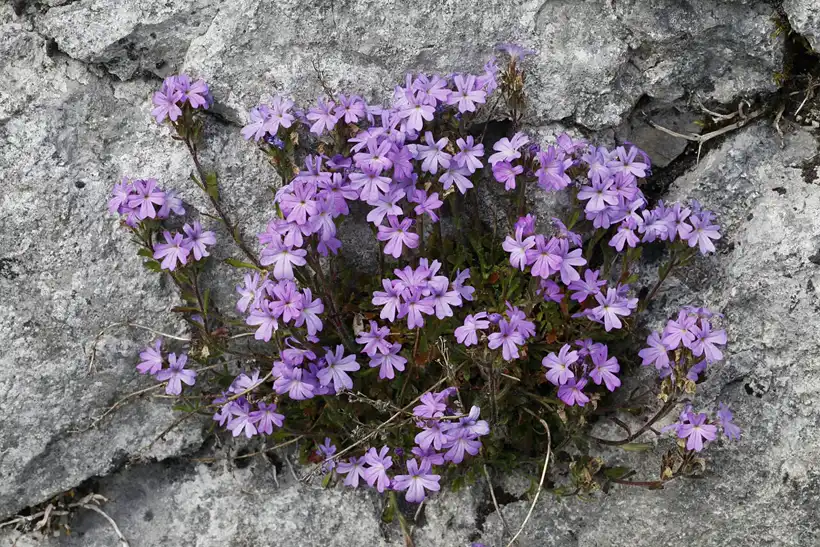
Gardeners have long used it to soften old stonework. Push seed into a damp crack and it settles in. Over time it studs the whole wall with pink stars.
This habit makes it priceless for awkward spots. Steps, retaining walls, and paving cracks all suit it. Few other flowers will colonise such dry, lean places.
Short-lived but immortal by seed
Do not worry that Erinus is short-lived. Any single plant may last only a few years. Yet a colony can persist for decades.
The secret is its free self-seeding. Each plant scatters seed around itself. New seedlings replace the old ones without any help.
So you sow once and enjoy it for good. Let a few seed heads ripen and drop. The colony renews itself season after season.
Not a true foxglove: the name jumble
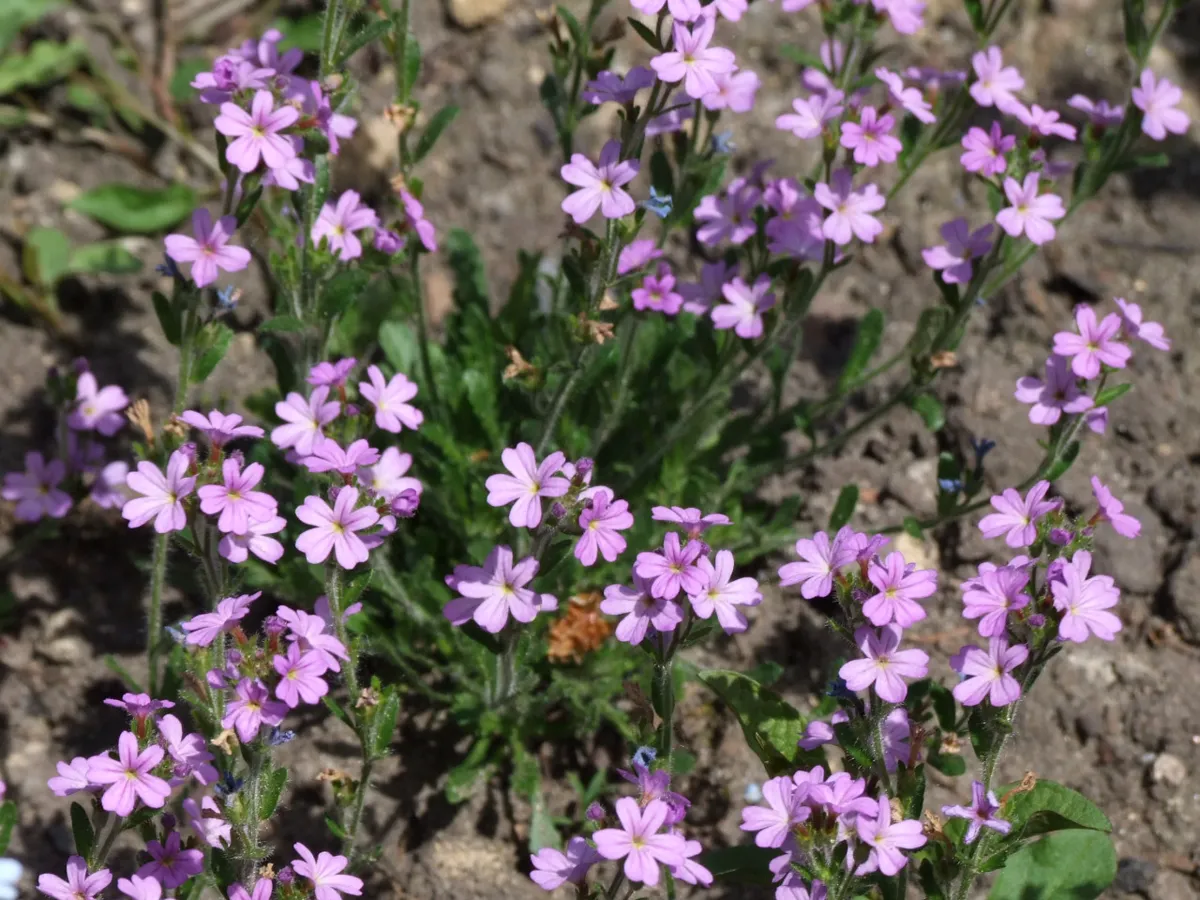
The name “fairy foxglove” can mislead beginners. Erinus is not a true foxglove at all. True foxgloves belong to the genus Digitalis.
It also carries several other folk names. You may see alpine balsam, summer starwort, jewel flower, or liver balsam. They all point to the same little plant.
This matters for one safety reason. Unlike Digitalis, Erinus is not a notably toxic plant. Even so, grow it as an ornamental and never eat it.
What the name means
The genus name Erinus is an old Greek plant name reused by botanists. The species name alpinus simply means “of the Alps,” for its mountain home.
The folk names describe its look and habit. “Fairy foxglove” notes the small foxglove-like flowers. None of these names imply any food or medicine use.
Erinus alpinus vs look-alikes
People often confuse fairy foxglove with other small flowers. This table clears up the most common mix-ups.
| Plant | How to tell it apart |
|---|---|
| Erinus alpinus (fairy foxglove) | Low rosette, sprays of small five-petal pink stars, lives in walls |
| Digitalis (true foxglove) | Tall spires of large tubular bells; toxic; not a wall plant |
| Aubrieta (rock cress) | Spreading mat with four-petal purple flowers in spring |
| Erigeron karvinskianus (fleabane) | Daisy flowers that fade pink to white; also a wall self-seeder |
| Saxifraga (rockfoil) | Encrusted cushions with starry white or pink flowers |
Design ideas for Erinus alpinus
This plant earns its place in tricky spots. Tuck it into wall joints and step risers. The pink stars will spill out of the stone.
It is lovely in troughs and raised beds too. Let it knit between larger cushion alpines. A few plants soon become a soft, drifting colony.
Try the named forms for variety. ‘Dr Hähnle’ is deep carmine, ‘Mrs Charles Boyle’ soft pink, and ‘Albus’ pure white. Mix them for a gentle wall tapestry.
Common pests and diseases
Fairy foxglove is famously trouble-free. Pests and diseases rarely bother it.
- Crown rot: Heavy, wet soil can rot the rosette. Sharp drainage and a lean site fix it.
- Slugs and snails: They may graze young seedlings. A grit collar helps protect new growth.
- Aphids: Occasional on soft shoots. A water spray or soft soap clears them.
- Vine weevil: Mainly a risk in pots. Check the rootball and use barriers if needed.
Common problems
Most problems trace back to soil and light. Use this quick list to diagnose them.
- Plant rots away: Soil too rich or wet. Move it to lean, sharply drained ground.
- Few flowers: Too much shade or feeding. Give more sun and leaner soil.
- Plant vanishes after a year: Normal short life. Let it self-seed to keep the colony going.
- No self-seeding: Seed heads removed too soon. Leave some to ripen and drop.
Growing Erinus alpinus in India
Let us be honest about climate. Erinus is a cool European mountain plant. It will not thrive in the hot, humid plains.
It is realistic mainly in cool hill stations. Think Himalayan towns or shaded alpine-house culture. Use a gritty, sharply drained mix in bright, cool conditions.
Monsoon wet is the real test here. Standing water rots the rosette quickly. Raise it high, add grit, and shelter it from heavy rain.
Bees and small insects pollinate the flowers in its native range. Indian gardeners should expect local bees and butterflies, not hummingbirds, which do not live in Asia.
Good companion plants
Erinus pairs well with other sun-loving wall and scree alpines. These guides will help you build the full picture.
- Aubrieta (rock cress) — purple spring carpet for walls.
- Erigeron (Mexican fleabane) — another tireless wall self-seeder.
- Saxifraga (rockfoil) — classic encrusted cushions for grit.
- Sempervivum (hens and chicks) — tough rosettes that love sun.
- Dianthus — fragrant pinks for the rock garden.
- Armeria (sea thrift) — pink globes on neat tufts.
- Helianthemum (rock rose) — bright sun-loving flowers.
- Vitaliana primuliflora — rare golden cushion for scree.
- Campanula carpatica — blue bells for edges and walls.
- Lewisia (bitterroot) — jewel-bright crevice flowers.
- Sedum (stonecrop) — drought-proof mats for scree.
- Pulsatilla (pasque flower) — silky spring alpine bloom.
Frequently asked questions
Is Erinus alpinus a true foxglove?
No. Despite the name “fairy foxglove,” it is not a Digitalis. It belongs to the family Plantaginaceae and is a small, non-toxic alpine.
Does Erinus alpinus come back every year?
Each plant is short-lived, often a few years. But it self-seeds freely, so a colony returns and spreads on its own.
Can I grow Erinus alpinus in a wall?
Yes, and it is ideal for it. Push seed or young plants into damp mortar cracks. It happily colonises walls, steps, and paving.
How long do Erinus alpinus seeds take to grow?
Usually three to four weeks at about 18–24°C. Surface-sow the seed and keep it bright, as light aids germination.
When is the best time to sow Erinus alpinus seed?
Winter or early spring is ideal, because the seed benefits from a cold spell in damp compost to break dormancy. Sowing in early spring on the surface of a pot left outdoors is the simplest method.
Do I cover the seed?
Barely. Sow on the surface and add only a light dusting of sharp sand or fine grit, roughly as deep as the seed itself. Burying it deeper is a common reason nothing appears.
What temperature does it germinate at?
Around 17 to 21 °C (63 to 70 °F) works well. If nothing has come up after six to twelve weeks, put the damp seed tray in the fridge for about four weeks and then bring it back into warmth.
What soil and light does it prefer?
Full sun or light shade, in gritty or sandy ground that drains fast. It copes with dry to moderate moisture but not heavy, wet soil sitting around the rosettes over winter.
Can I grow it in a pot or alpine trough?
Yes, it is one of the easier alpines for troughs, sinks and pots. Use a gritty mix, top-dress with grit, and it will happily creep into gaps at the edge of the container.
How big does it get and how far apart should I plant it?
Plants stay small, forming rosettes with flowering stems to about 10 cm (4 inches) tall. Spacing of 15 to 20 cm (6 to 8 inches) lets clumps knit together without smothering each other.
Do I need to deadhead it, or will it seed itself around?
You can leave it alone. Where it is happy it self-seeds into crevices, wall joints and paving gaps, which is useful because individual plants are fairly short-lived and the seedlings keep the display going.
How big does Erinus alpinus get?
It stays tiny, forming rosettes about 8 to 10 cm (3 to 4 inches) tall and spreading only 10 to 15 cm (4 to 6 inches) wide. That small size is why it suits troughs, cracks and rock gardens.
When does fairy foxglove flower?
Pink to purple flowers open from mid spring into early summer, and plants in cool spots often keep going into July. Alba forms flower over the same period in white.
How much sun does Erinus alpinus need?
Full sun gives the best flowering in cool climates. Where summers are hot, a spot with morning sun and afternoon shade keeps the rosettes from scorching.
What soil suits fairy foxglove?
Gritty, free-draining soil that leans neutral to slightly alkaline works best. It is a limestone plant in the wild, so old mortar and stony crevices suit it perfectly.
How do I water Erinus alpinus?
Let the surface dry between waterings and never leave it sitting wet. Plants growing in walls almost look after themselves once established, needing water only in long dry spells.
Does Erinus alpinus self-seed?
Yes, freely but gently. It scatters seedlings into nearby cracks and gravel, which is how a single plant slowly colonises a wall without ever becoming a nuisance.
Is Erinus alpinus hardy in cold winters?
It is hardy to roughly USDA zone 4, tolerating around -30 °C (-25 °F). Winter wet, not cold, is the usual killer, so sharp drainage matters more than shelter.
Still stuck? Ask the Plant Doctor
Describe the problem — yellow leaves, holes, no flowers — and get a clear answer in seconds. FreeAI can make mistakes. Answers are guidance, not a guarantee — check anything important against the guide it links to, and always read the label on any product before you use it.