Spanish Flag Seeds
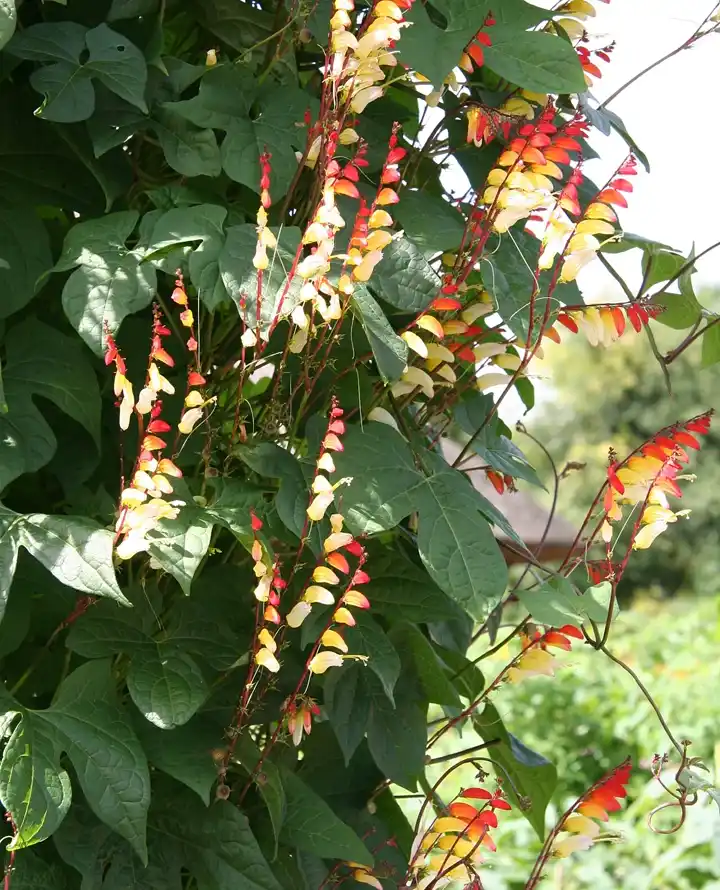
Spanish flag seeds grow Ipomoea lobata (also sold as Mina lobata) — a fast, twining annual vine that carries one-sided sprays of tubular flowers opening scarlet and fading through orange and yellow to cream. Each spike shows all those shades at once, like a tiny flickering flame. The vine clothes a trellis in a single warm season. This guide covers the best Spanish flag seeds worldwide, exactly how to grow Mina lobata, when to sow, and where to buy quality seed.
Authority sources: Wikipedia — Ipomoea lobata, NC State Extension Plant Toolbox.
🧰 In a hurry? Jump straight to our tested picks for this guide ↓
What are Spanish flag seeds?
Spanish flag seeds are the small, hard, dark seeds of Ipomoea lobata. This vine belongs to the morning glory family, Convolvulaceae. Botanists once placed it in its own genus, Mina, so you will still see “Mina lobata” on many seed packets.
The plant is native to Mexico and Brazil. It is a tender perennial, but gardeners grow it as an annual in cooler regions.
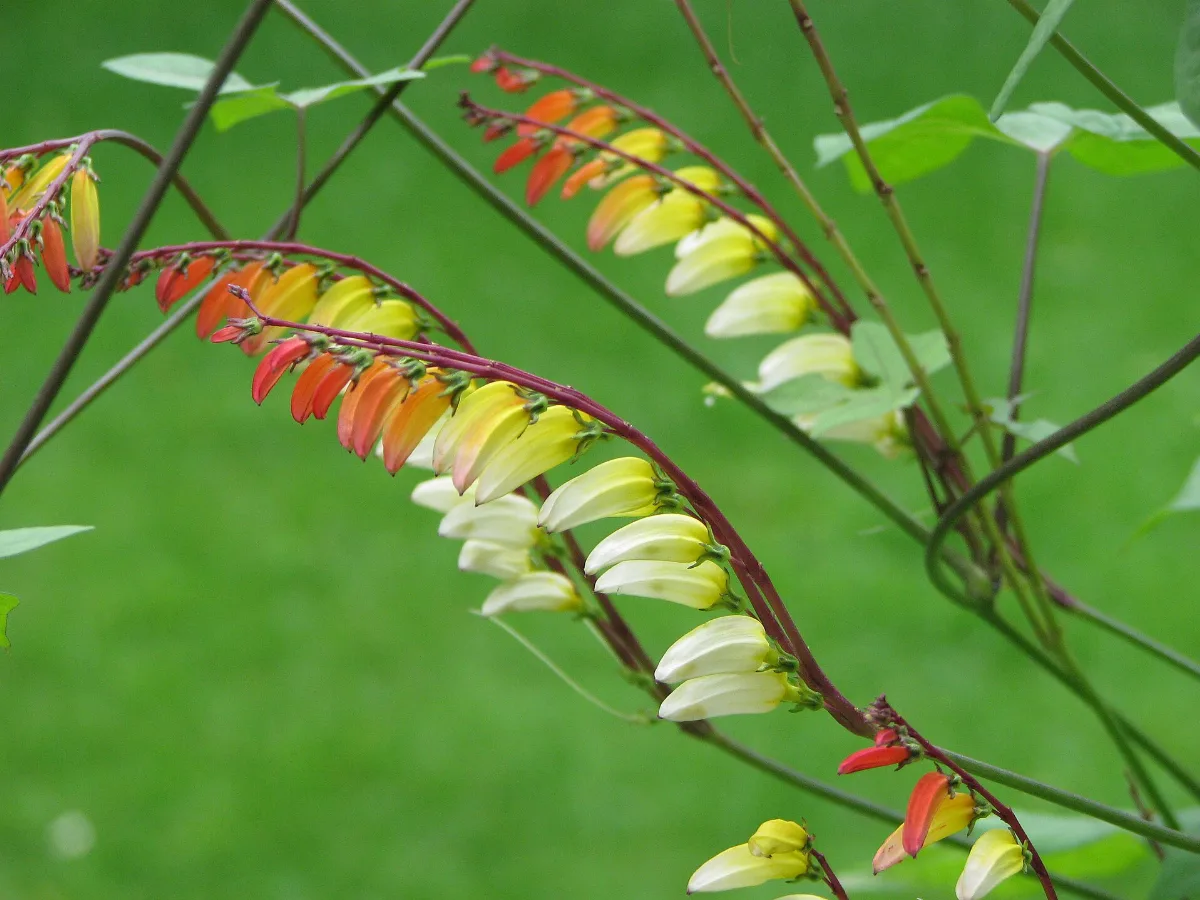
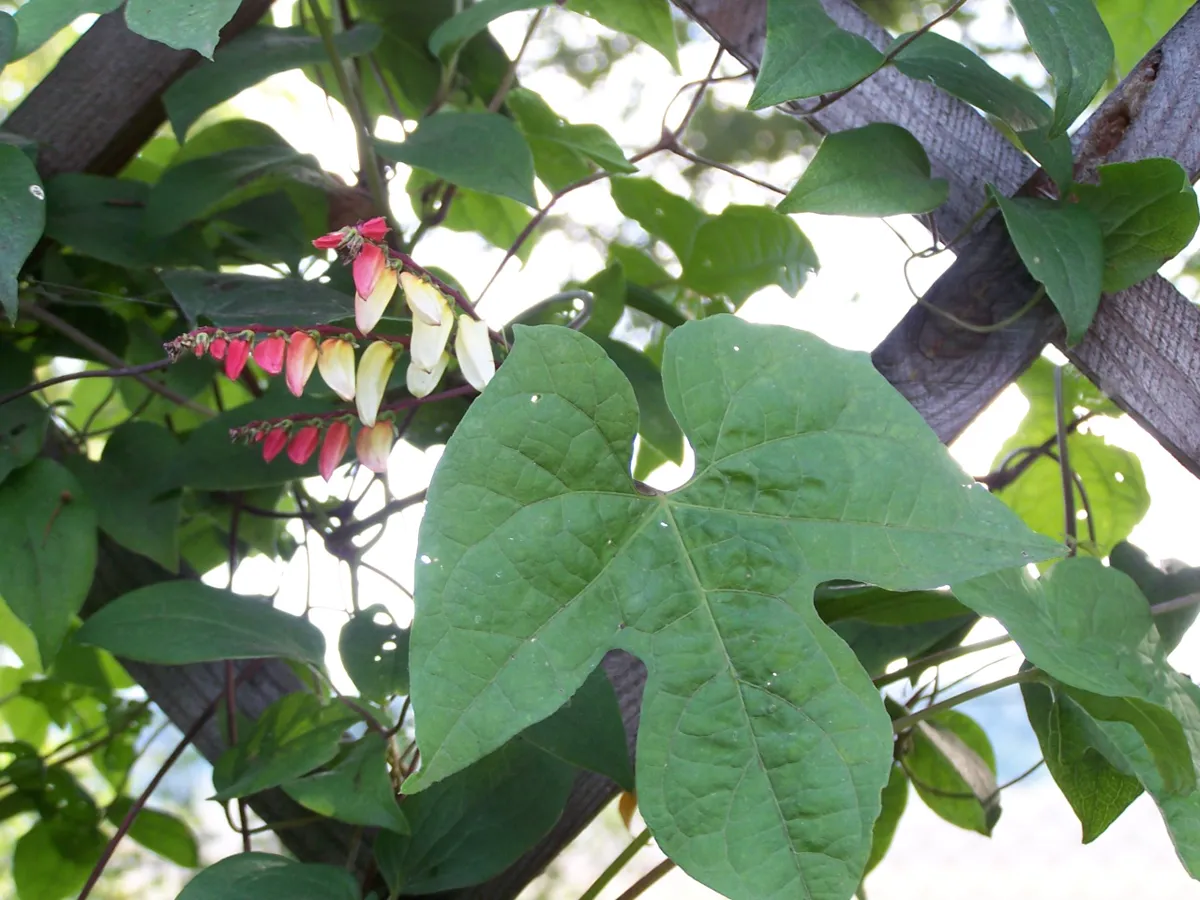
Its fame comes from the flowers. Slim one-sided spikes hold rows of small tubular blooms. They open fiery red, then age to orange, yellow and finally cream — all visible together.
What makes Spanish flag different
Several “morning glory” plants get confused, so let us be clear. Spanish flag is a true climbing vine, not a bush.
It differs from the dwarf morning glory (Convolvulus tricolor), which is a low, mounding plant that does not climb.
It also differs from the classic climbing morning glory (Ipomoea purpurea). That cousin bears round, open trumpet flowers — not slim one-sided flag spikes.
The colour-grading raceme is the giveaway. No other common annual climber shows this red-to-cream “flag” effect on a single stem. That one-sided multicolour spike is the plant’s signature, and the reason it earned the Royal Horticultural Society Award of Garden Merit.
Mina lobata at a glance
| Botanical name | Ipomoea lobata (syn. Mina lobata) |
|---|---|
| Native range | Mexico and Brazil |
| Height | 3–5 m (10–16 ft), twining |
| Flower | One-sided spikes; red → orange → yellow → cream |
| Light & soil | Full sun; rich, moist, well-drained |
| Germination | 7–21 days at 21°C+ after soaking |
| Bloom time | Midsummer to first frost |
| Habit | Vigorous annual climber — needs support |
Why grow Spanish flag?
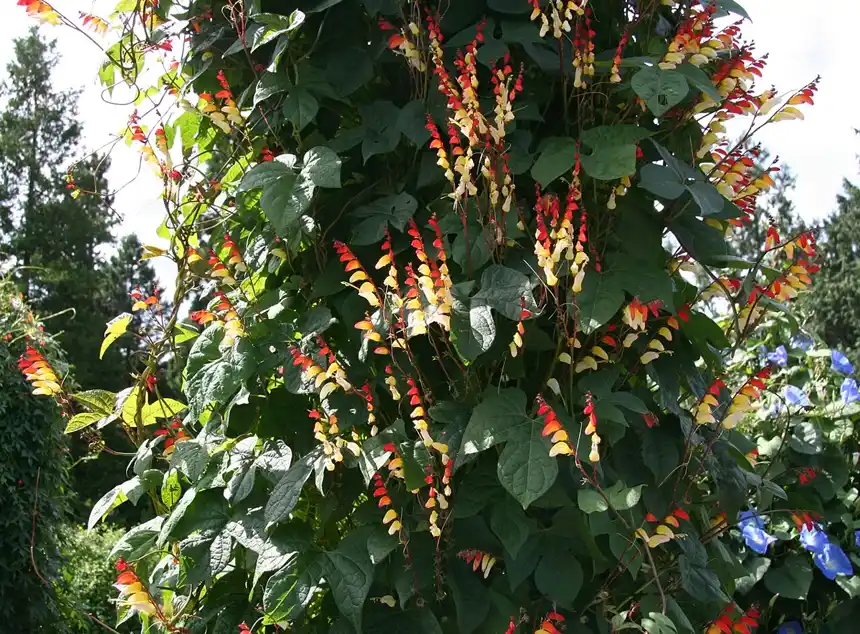
This vine delivers a lot of drama for one packet of seed. It grows fast and covers a structure in weeks.
The flame-coloured spikes bloom for months, right up to frost. They make a stunning screen on a fence, arch or obelisk.
Pollinators love it too. Bees and butterflies visit the open flowers all season. In its native range, hummingbirds feed on it as well.
It is also an easy, low-maintenance climber. Once it has support and sun, it largely looks after itself.
Best varieties of Ipomoea lobata
Most seed is sold simply as Spanish flag or Mina lobata. A few named selections add a little variation.
| Variety | Notes | Good for (worldwide) |
|---|---|---|
| Species (Mina lobata) | Classic red-to-cream flag spikes | All regions; reliable first choice everywhere |
| ‘Jungle Queen’ | Vigorous, large multicolour spikes | Big screens, arches; warm-plains summer in India |
| ‘Exotic Love’ | Long bloom, up to four months | Long-season colour; US zones 9–11, frost-free India |
| ‘Citronella’ | Softer lemon-yellow tones | Pastel schemes; cooler hill-station summers |
For a first try, plain species seed is widely sold and dependable. The named forms simply tweak vigour or colour.
Best season & when to sow
Spanish flag is frost-tender, so timing follows your last spring frost. It needs real warmth to grow.
In the US and UK, start seed indoors about six weeks before the last frost. Plant out only once nights are mild and frost has passed.
The vine flowers from midsummer until the first autumn frost. A warm, sheltered, sunny spot gives the longest show.
In India, sow with the warm season. Aim for late winter to early summer in most plains, avoiding the coldest weeks. Hill stations sow in spring for a summer display.
Growing Spanish flag seeds: how to plant
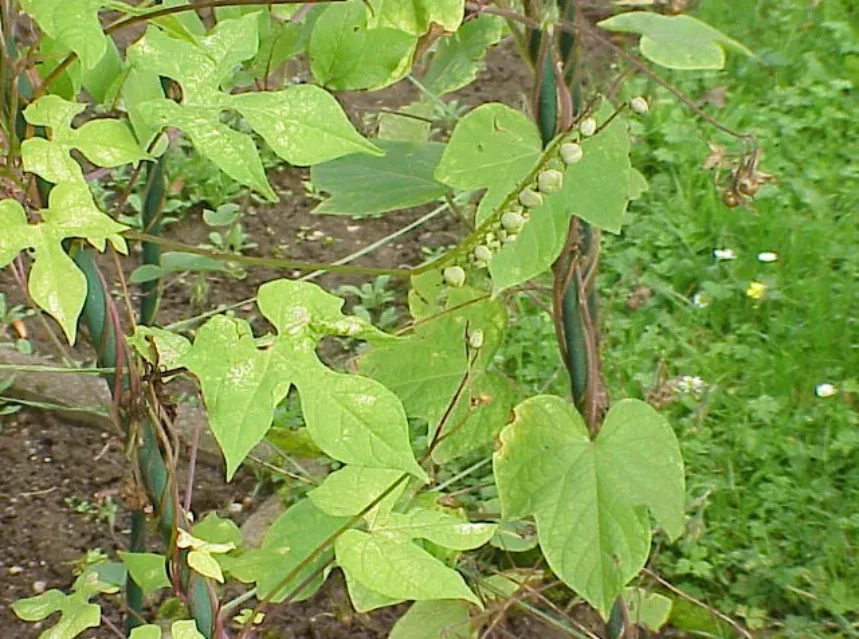
The seeds have a tough coat, so a little prep matters. Nick the coat with a knife, or rub it with sandpaper or a file.
Then soak the seeds in warm water for 24 hours before sowing. This softens the coat and speeds germination.
Sow about 6 mm (¼ inch) deep in pots of moist seed compost. Keep them warm, at least 21°C, as the seed is slow to start. Germination takes one to three weeks.
Grow seedlings on in good light. Harden them off before planting out in full sun. Space plants about 30 cm apart at the base of a strong support.
Direct sowing works in warm regions, two weeks after the last frost. Either way, give the vine something to twine up from day one.
Sun, soil, support & feeding
Full sun is essential. Give six or more hours of direct light for the best flowering and colour.
Soil should be rich, moist and well-drained. Unlike drought-loving annuals, this lush vine appreciates steady moisture and organic matter.
Support is non-negotiable. The twining stems need a trellis, netting, wires, an obelisk or a wigwam to climb. It will not stay tidy without one.
Feed lightly with a low-nitrogen, high-potash flower feed as buds form. Too much nitrogen gives leaves instead of flowers. Pinch young tips to encourage branching.
Common pests & problems
Spanish flag is generally healthy and trouble-free. Most gardeners report few issues.
Thrips, aphids and spider mites can appear in hot, dry spells. A jet of water or insecticidal soap usually clears them. Our nasturtium guide covers similar aphid fixes.
Poor flowering almost always means too little sun or too much nitrogen. Cold weather stalls growth, so never plant out too early.
One safety note: the seeds contain natural alkaloids and are not for eating. Keep seed packets away from children and pets, as the plant is toxic to cats, dogs and horses.
Saving Spanish flag seed
Saving your own seed is simple and free. Let some late flower spikes fade and set pods.
Wait until the pods turn papery and brown on the vine. Then collect them on a dry day and shake out the hard seeds. Store them cool, dry and labelled for next spring.
Home-saved seed germinates well after the usual nick-and-soak treatment. This is the cheapest way to grow the vine again year after year.
Growing Mina lobata in India
Spanish flag suits warm Indian gardens well. It thrives in heat and full sun, given enough water.
Grow it as a warm-season annual climber across the plains. Sow into warmth from late winter to early summer. In frost-free areas it can persist for more than one season.
It is perfect for terrace trellises, balcony railings and garden arches. Provide a strong support and water regularly through the hottest weeks. Bees, butterflies and sunbirds visit the flowers.
For more annual climbers and sun-lovers, see our guides to sweet peas, black-eyed Susan vine and cosmos. For a complete grow-and-care walkthrough, read our how to grow Spanish flag guide.
Where to buy Spanish flag seeds
Good seed is sold under both names — Spanish flag and Mina lobata (Ipomoea lobata). Look for fresh, current-season packets for the best germination.
Choose plain species seed for a classic display, or a named form like ‘Jungle Queen’ for extra vigour. A single packet covers a whole trellis.
Frequently asked questions
Do Spanish flag seeds need soaking before sowing?
Yes. The seeds have a hard coat, so nick or file them, then soak in warm water for 24 hours. This greatly improves and speeds germination.
Is Spanish flag the same as morning glory?
It is a close relative in the same family, but a different look. Spanish flag has one-sided red-to-cream flag spikes, while common morning glory has round trumpet flowers.
How tall does Mina lobata grow?
It is a vigorous climber, reaching 3–5 m (10–16 ft) in one season. It twines, so it always needs a trellis, netting or other support.
Is Spanish flag (Mina lobata) toxic to cats or dogs?
Yes, though only mildly. Ipomoea lobata belongs to the morning glory family, and extension plant databases rate it a low-severity poisoning risk for cats, dogs and horses, usually causing drooling, vomiting or an upset stomach if chewed. Serious poisoning is rare from a nibble, but keep seed packets away from pets and children, and call ASPCA Poison Control at 888-426-4435 if you are concerned. This is general information, not veterinary advice.
Does Spanish flag attract hummingbirds?
Yes, in regions where hummingbirds are present. Growers in the US report hummingbirds regularly visiting the tubular red-to-orange flowers, and the long trumpet shape is well suited to their beaks and tongues. In India and other regions without hummingbirds, sunbirds, bees and butterflies take over that role on the same flowers.
Can Mina lobata be grown in a large pot or container?
Yes, as long as the pot is generous and a tall support is anchored in it from the start. Give it at least a 40-45 cm (16-18 inch) container with drainage holes, rich potting mix, and a sturdy obelisk or trellis, since a container-grown vine still reaches several metres and needs the same full sun and steady watering as one grown in the ground.
Does Mina lobata self-seed and come back on its own?
In frost-free, warm climates it can self-seed and persist as a short-lived perennial, popping up again from dropped seed the following year. In colder regions where it is killed by frost each winter, it will not return unless you save seed or let a few late pods ripen and shatter naturally before the vine dies back.
Why is my Spanish flag vine not flowering?
The two most common causes are too little direct sun and too rich a feed. Give it at least six hours of full sun, and switch from a high-nitrogen fertilizer to a low-nitrogen, high-potash flower feed once buds should be forming, since excess nitrogen pushes the vine into leafy growth at the expense of blooms. Cold, unsettled weather early in the season can also delay the first flowers by several weeks.
How fast does Spanish flag cover a trellis?
Very fast for an annual. Once established in warm soil, it can put on several centimetres of new growth a day and typically covers a 2-3 metre trellis or obelisk within eight to ten weeks of planting out. Growth slows in cool or cloudy weather, so a sheltered, sunny spot gives the quickest coverage.
What soil pH does Mina lobata prefer?
It grows best in neutral to slightly acidic soil, roughly pH 6.0 to 7.0, that is rich in organic matter and drains well. Very alkaline or heavy clay soil can slow growth and weaken flowering, so working compost into the planting hole and mulching around the base helps it perform at its best.
Is Spanish flag an annual or perennial?
It is a tender perennial grown as an annual in most climates. It survives year to year only in frost-free, warm regions (USDA zones 9–11).
Still stuck? Ask the Plant Doctor
Describe the problem — yellow leaves, holes, no flowers — and get a clear answer in seconds. FreeAI can make mistakes. Answers are guidance, not a guarantee — check anything important against the guide it links to, and always read the label on any product before you use it.