Sempervivum
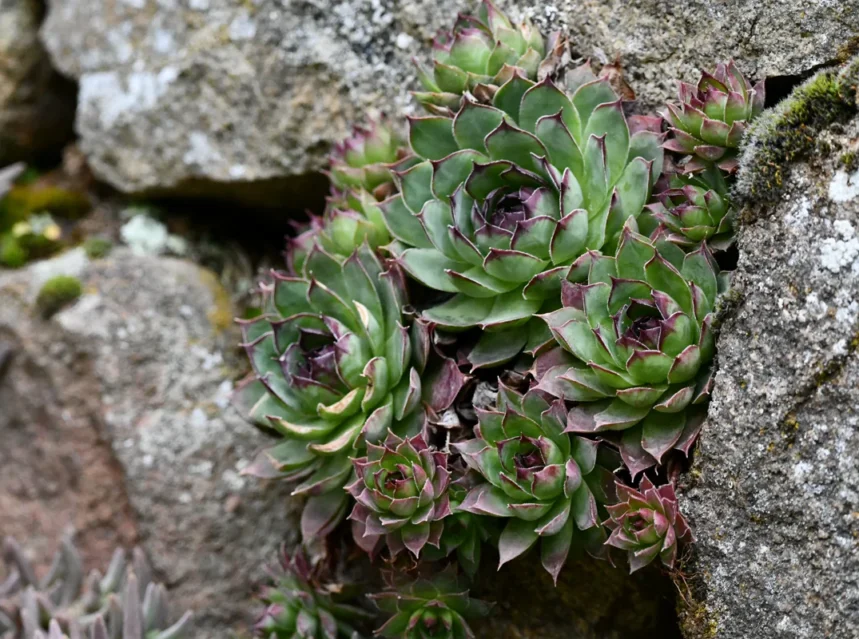 Sempervivum tectorum rosettes rooted in the gaps of a dry stone wall
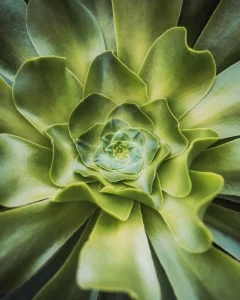
Sempervivum, commonly known as hens and chicks, houseleek, or roof leek, is one of the hardiest, most adaptable, and most collectible of all succulent plants. A member of the Crassulaceae family, it forms tight rosettes of fleshy leaves that multiply by producing numerous offsets (the “chicks”) around the parent rosette (the “hen”). Fully frost-hardy, thriving in poor soil, and almost entirely self-sufficient once established, sempervivum is the ideal plant for rocky crevices, troughs, living roofs, and container gardens. Here is the complete guide on how to grow sempervivum.
Quick start: Plant sempervivum in full sun in gritty, very well-drained soil or cactus compost. It tolerates poor, even gravelly soil and grows in tiny amounts of substrate — perfect for cracks in walls and stone troughs. Water sparingly and never allow the roots to sit in water. Feed once in spring with a dilute balanced fertiliser. Divide offsets in spring to propagate and spread the collection.
Experienced succulent growers find sempervivum one of the most satisfying collectibles in the plant world. The extraordinary diversity of rosette shapes, sizes, and colours — from silver cobwebbed types to deep burgundy and peacock blue — means collectors can fill a trough with dozens of distinct varieties, each displaying subtle differences in light or season. A key discovery for most new growers: sempervivum actually performs best in the leanest soil and harshest conditions; too much water or rich soil causes the rosettes to become lush, open, and prone to rot. The plant is genuinely almost unkillable in the right conditions, surviving frozen winters and baking summers with equal aplomb.
🧰 In a hurry? Jump straight to our tested picks for this guide ↓
Sempervivum at a glance
| Feature | Detail |
|---|---|
| Botanical name | Sempervivum species and hybrids (family Crassulaceae) |
| Common names | Sempervivum, hens and chicks, houseleek, roof leek |
| Plant type | Hardy perennial succulent rosette |
| Sun | Full sun (tolerates partial shade) |
| Soil | Gritty, very well-drained; tolerates very poor soil |
| Hardiness | Fully hardy to -30 degrees C (USDA zone 3) |
| Watering | Minimal — drought-tolerant once established |
| Propagation | Offsets (chicks) separate easily |
Why grow sempervivum?
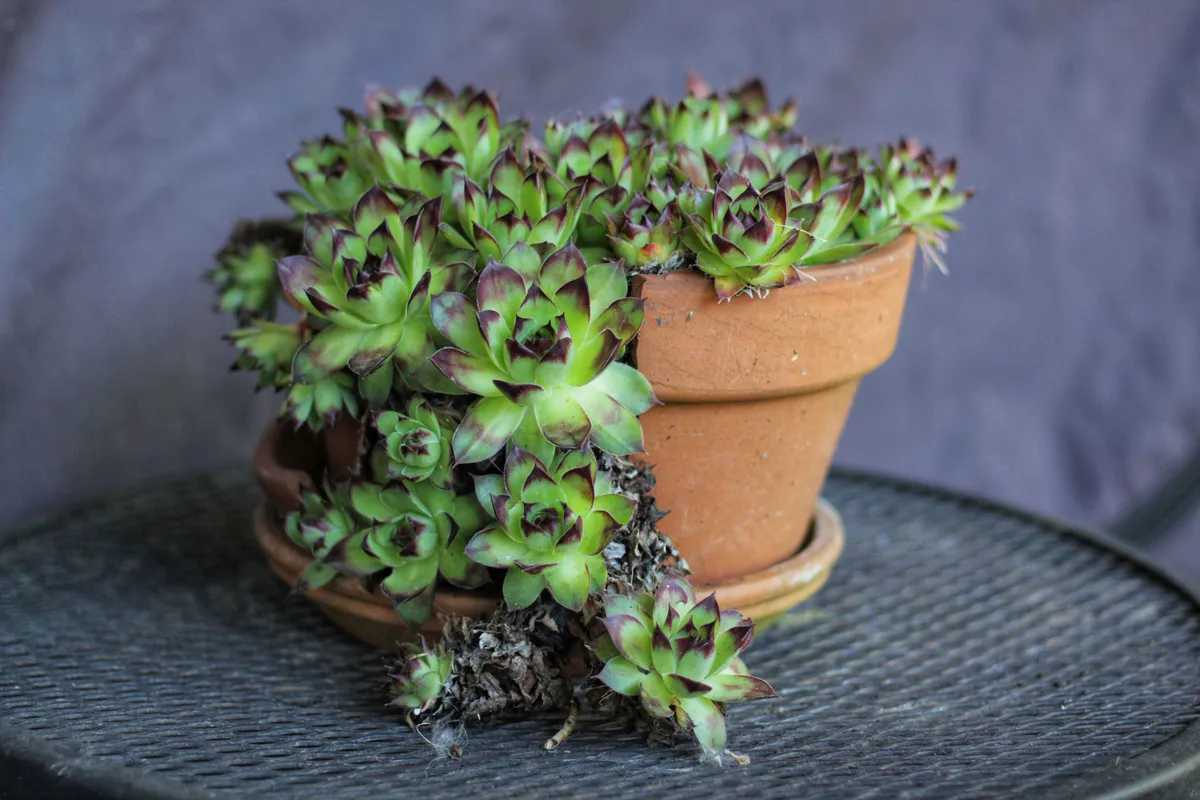
Sempervivum is one of the most versatile and collectible plants for any garden. Here is why:
- Almost indestructible. Fully frost-hardy and drought-tolerant. It survives conditions that kill most plants.
- Thrives in nothing. Grows in rocky crevices, roof tiles, tiny troughs, and walls with minimal soil.
- Self-propagating. Each mother rosette produces a continuous supply of daughter rosettes (chicks) for free plants.
- Extraordinary variety. Hundreds of cultivars range from tiny silver cobwebbed types to large burgundy and purple rosettes.
- Low maintenance. Once planted in the right spot, it requires almost no attention.
History, origin and how sempervivum spread
Sempervivum is native to the mountains of Europe and western Asia — the Alps, the Pyrenees, the Apennines, the Carpathians, and the mountains of the Balkans and Turkey (see Encyclopaedia Britannica). The name Sempervivum means “always alive” in Latin, a reference to its extraordinary resilience. It has been cultivated in European gardens since ancient times.
In medieval Europe, sempervivum was planted on roofs (hence “houseleek” and “roof leek”) for several reasons: it was believed to protect the house from lightning and fire, and the fleshy leaves provided a degree of insulation and moisture retention. The Holy Roman Emperor Charlemagne reportedly decreed in 812 AD that every house should have sempervivum growing on its roof — one of the earliest recorded edicts about a garden plant.
Today sempervivum is grown worldwide in temperate and alpine gardens. It is particularly popular in the UK, US, Germany, and Scandinavia, where the cool climate and interest in rockery and alpine gardening suit it perfectly. The UK National Plant Collection contains hundreds of registered cultivars. The plant has naturalised in many mountain areas beyond its native range and is among the most widely grown rockery plants in existence (see RHS plant database).
Best season and when to plant
Plant sempervivum in spring or early summer for best establishment, though it can be planted at virtually any time except in frozen ground. Spring planting allows the plant to establish a root system before the summer heat, and offsets planted in spring will produce new rosettes by autumn.
In India, sempervivum is suitable for the cool hill stations of Himachal Pradesh, Uttarakhand, Sikkim, and the Nilgiris, where temperatures are cool enough. It struggles in the heat of the Indian plains in summer.
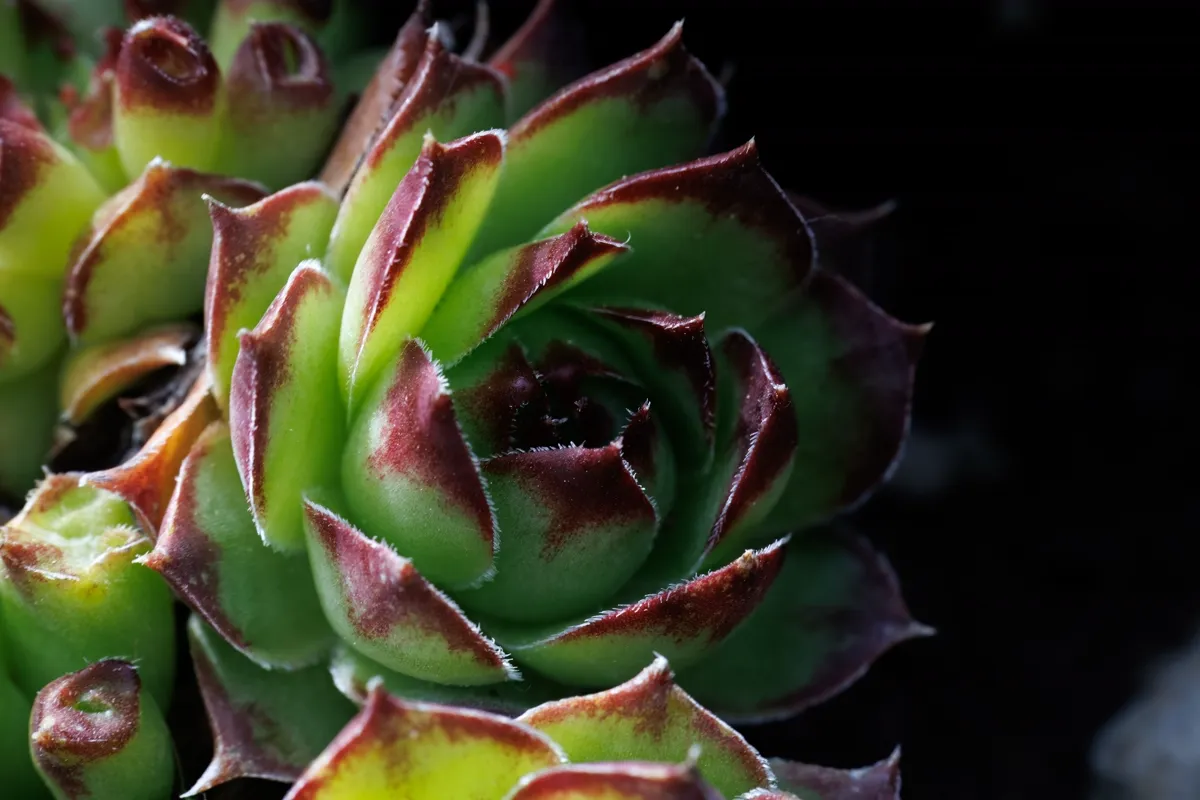
In the UK and northern Europe, plant in spring for a full season of growth and colour. Sempervivum changes colour with the seasons — many cultivars deepen to red, orange, or purple in autumn and winter when stressed by cold and shorter days, providing year-round interest.
How to plant and grow sempervivum
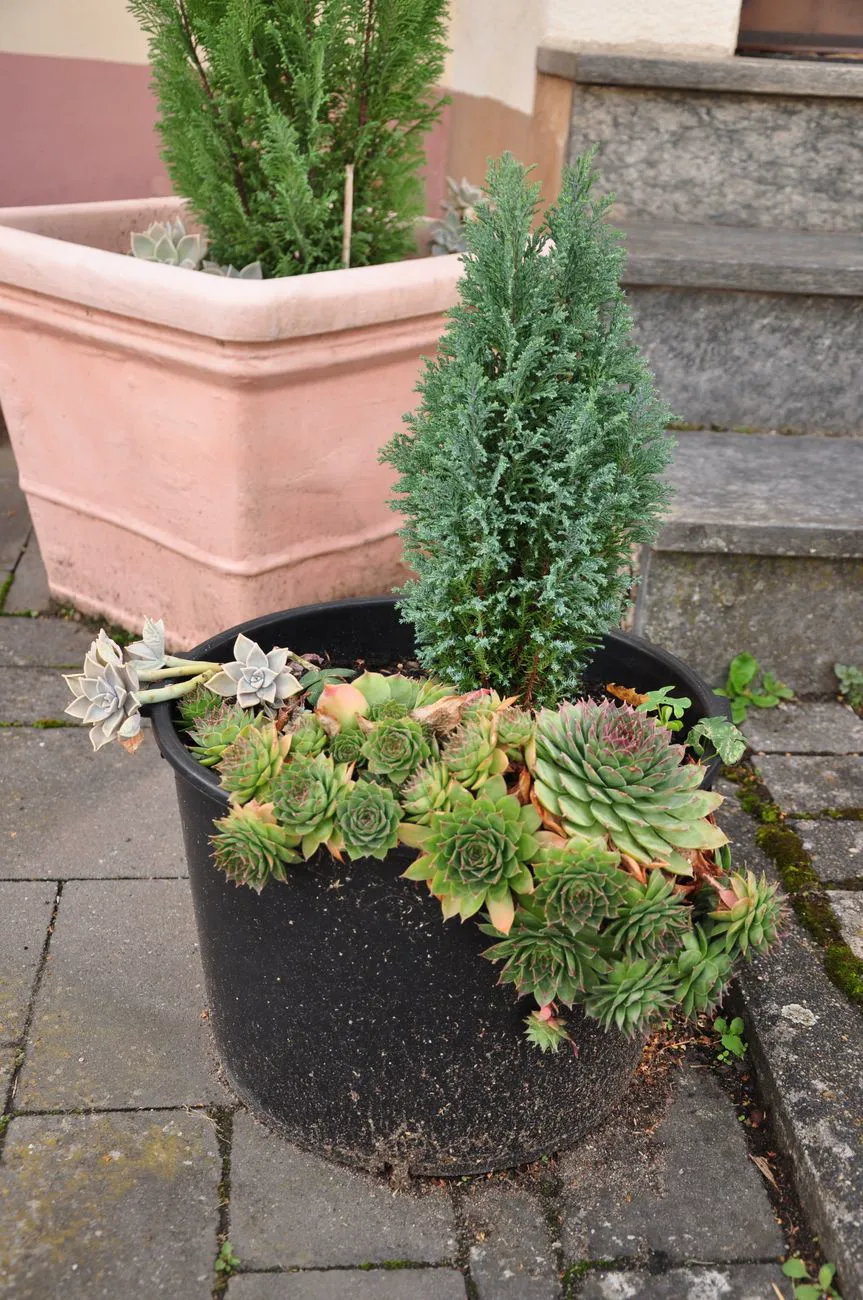
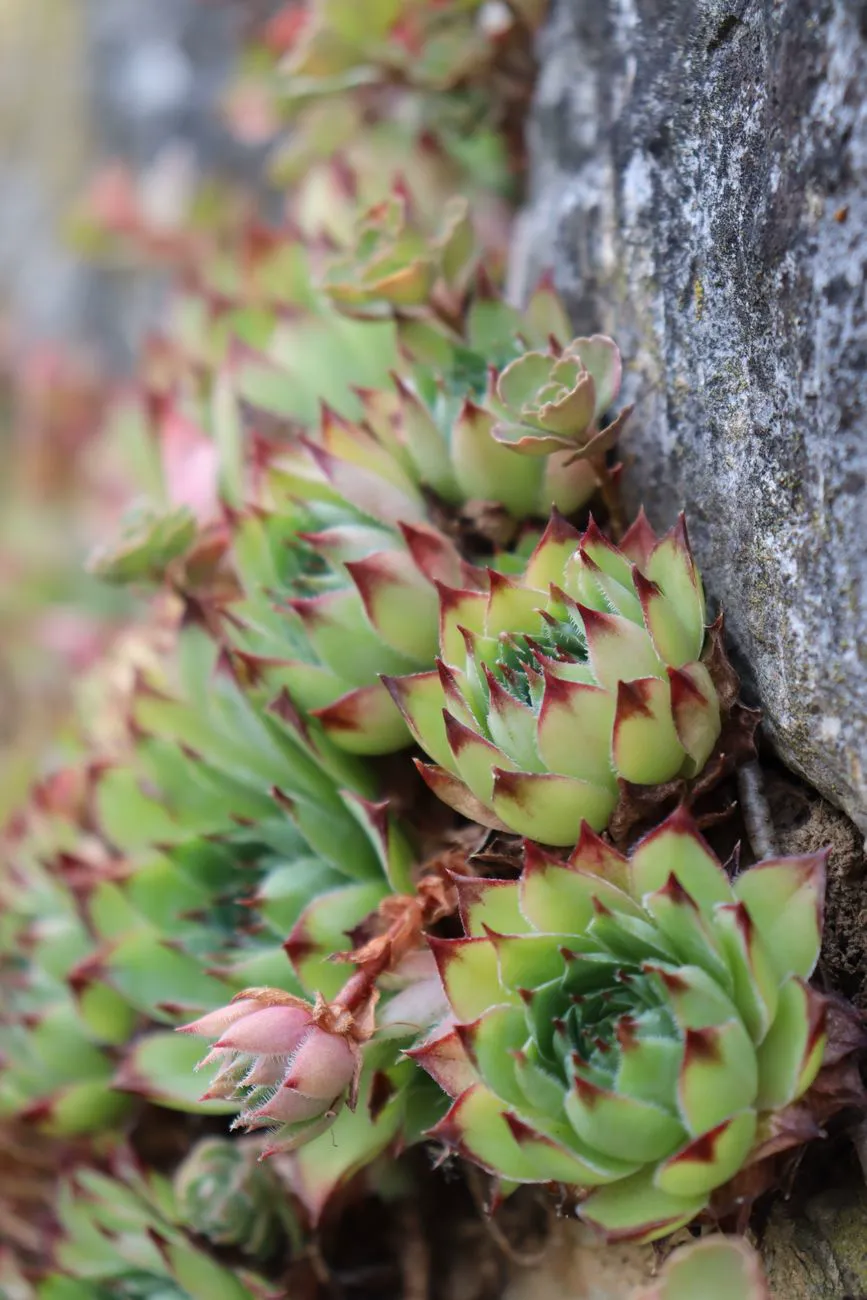
- Plant in full sun in gritty, very well-drained soil or cactus compost. The mix should be at least 50 percent grit, perlite, or coarse sand. Standard potting compost alone is too moisture-retentive and leads to rot.
- Plant the rosette so the base sits at or just above the soil surface — burying it deeper causes rot at the stem base. Press gently into the substrate.
- Excellent for troughs, rock crevices, living roofs, vertical walls, and shallow pots. It grows in incredibly shallow soil — even 5-10 cm is enough.
- In containers, use terracotta pots (which breathe and dry faster than plastic) with excellent drainage holes. Drainage is more important than pot size.
Sun, soil, watering and feeding
Sun: Full sun gives the best colour and the most compact, attractive rosettes. In shade, plants become open and stretched and lose much of their colour intensity. Sempervivum tolerates partial shade but performs best in full sun.
Soil: The most important requirement. Use gritty, very well-drained, nutrient-poor substrate. Mix standard compost with 50 percent horticultural grit, perlite, or coarse sand. Alpine compost from a garden centre is ideal. Rich, moisture-retentive soil or compost is the enemy of sempervivum — it causes the rosettes to become lush and susceptible to rot (see improving drainage).
Watering: Minimal. Established sempervivum is extremely drought-tolerant and relies mostly on rainfall. Water sparingly in summer during extended dry spells, and allow the substrate to dry completely between waterings. In containers, water only when the compost is completely dry. In winter, reduce watering to almost nothing — the plant is dormant and extra moisture causes rot (see watering plants).
Feeding: Sempervivum needs little nutrition. Apply a single very dilute balanced feed in spring to support growth. More feeding produces the lush, open growth that reduces ornamental value and increases disease susceptibility.
Common pests and diseases
Sempervivum is generally trouble-free. The main issues are all related to excess moisture:
- Rosette rot: The centre of the rosette turns black and collapses, caused by waterlogged soil or poor drainage. Prevention is the only cure — improve drainage immediately and remove rotted rosettes.
- Vine weevil (in containers): the grubs eat roots. Apply nematode biological control in autumn (see organic pest control).
- Aphids: occasionally on new soft growth in spring (see aphid control).
- Rust: orange spore pustules on leaves in damp conditions. Remove affected rosettes and improve airflow.
Propagation
Sempervivum propagates itself freely and the process is simple:
The parent rosette (the “hen”) produces offsets (the “chicks”) on short stolons throughout the growing season. Once the chicks are large enough to handle (usually when they have 8-10 leaves of their own), pull them gently from the stolon with a small twist or cut with clean scissors. Allow the base to callus for a day, then press into gritty compost just enough to hold them upright — no burying. They root within 2-4 weeks.
The parent rosette flowers once in its lifetime (usually after 3-5 years), producing a tall flower spike with star-shaped blooms. After flowering the mother rosette dies, but by then it will have produced many offsets to carry on the colony.
Uses and ornamental value
Sempervivum has a folk-remedy history — the juice of the fresh leaves was traditionally applied to minor skin irritations in medieval Europe. However, it is not used this way today. Its primary value is ornamental:
- Rock gardens and alpine troughs: A classic and incomparable rockery plant.
- Living roofs and walls: Used in green-roof installations for its extreme drought tolerance and minimal root depth requirement.
- Container collections: Many gardeners collect dozens of varieties in shallow troughs for display.
- Year-round colour: The rosettes change colour with the seasons, providing interest even in winter.
This article is for general information only and is not medical advice. Talk to a qualified professional before using any plant medicinally.
Common sempervivum problems
Rosette turning black and rotting
Caused by waterlogged soil. Improve drainage with grit. Remove rotted rosettes to prevent spread. In containers, ensure drainage holes are open and working.
Rosettes stretching open and losing tight shape
Not enough sun, or too much water and nutrients. Move to full sun and reduce watering and feeding.
No new offsets (chicks) appearing
Plant is too young, or growing conditions are too poor (no sun, too dry even for sempervivum). Allow 1-2 years after planting. The plant produces more offsets once it is settled and in full sun.
Mother rosette dying
This is natural — the parent rosette flowers once then dies. It will be surrounded by healthy offsets to replace it. Remove the dead flower stem and the dead rosette.
Related plant guides
- How to grow Sedum
- How to grow Aloe Vera
- How to grow Echeveria
- How to grow Succulents
- How to grow Lavender
- Stonecrop (Sedum) care
More related guides
- How to grow Kniphofia
- How to grow Prickly Pear
- How to grow Smoke Bush
- How to grow Rose of Sharon
- How to grow Plumbago
- How to grow Weigela
Frequently asked questions
Are sempervivum and hens and chicks the same plant?
Yes — hens and chicks is the common name for sempervivum. The “hen” is the mother rosette and the “chicks” are the numerous offsets (daughter rosettes) she produces on short stolons around her base.
Are sempervivum fully hardy?
Yes — sempervivum is one of the hardiest succulents available, tolerating temperatures down to -30 degrees C or even lower. It is fully hardy across the UK, most of Europe, and USDA zones 3-8. Unlike most succulents, it thrives in cold winters.
Why is my sempervivum rotting?
Almost always caused by poor drainage or overwatering. Sempervivum needs gritty, very well-drained compost. Remove rotted rosettes, improve drainage with added grit, and reduce watering.
When does sempervivum flower?
Each rosette flowers once in its lifetime, usually after 3-5 years. It produces a tall flower spike with star-shaped blooms (usually pink, red, or white). After flowering the mother rosette dies, but it will have produced many offsets to carry on the colony.
Can I grow sempervivum indoors?
Sempervivum needs full sun and cold winters to thrive. Indoors, in centrally heated rooms, it becomes stretched and poorly coloured. It is best grown outdoors year-round in the garden or on a balcony.
Does sempervivum die after flowering?
Yes, and this is normal rather than a sign of poor care. Sempervivum is monocarpic, so each rosette flowers once, sets seed and then dies. The name means “always living” because the plant survives through its offsets. Before the mother rosette fades, it produces a ring of chicks around its base. Simply pull out the dried flower stalk and spent rosette, then let the surrounding chicks fill the gap. The colony carries on without any real loss.
How do you propagate sempervivum from chicks?
Wait until an offset is about the size of a coin and has a few small roots of its own. Twist or cut it away from the connecting stem, then press the base into gritty, free-draining compost. Water lightly after a few days, once any cut surface has dried. Roots take hold within two to three weeks in warm weather. One large rosette can produce three to six chicks a season, and smaller varieties often produce many more.
How often should you water sempervivum?
Far less than most gardeners expect. In the growing season, water only when the soil has dried out completely, which may be every two to three weeks in a pot. In winter, plants in the ground usually need no watering at all. Overwatered rosettes turn swollen, soft and mushy, while genuinely thirsty ones look thin and slightly shrivelled. In Indian conditions, the biggest risk is monsoon rain, so keep pots under cover during heavy downpours.
What soil is best for sempervivum?
Sharp drainage matters more than richness. A good mix is roughly two parts coarse sand, grit or perlite to one part standard potting compost, giving a gritty, open texture that water runs straight through. Heavy garden soil or peat-based compost holds moisture around the base and causes rot. Adding a top dressing of gravel keeps the lower leaves dry and looks attractive. These plants naturally grow in rocky alpine crevices with almost no soil at all.
Why has my sempervivum lost its colour and turned plain green?
Insufficient light is nearly always the cause. The rich reds, purples and bronze tints are stress pigments that develop under strong sun, cool nights and lean conditions. In shade, or in a rich compost with too much feed, rosettes revert to plain green and stretch upward. Move the plant to the sunniest spot available, cut out fertiliser and let it dry between waterings. Colour usually returns within a few weeks of better light.
Do sempervivum need fertiliser?
Very little, and many growers use none at all. These succulents evolved on poor mountain soils, so heavy feeding produces soft, oversized, pale rosettes that lose their compact shape and colour. If plants have sat in the same pot for several years, a single half-strength dose of a low-nitrogen or cactus feed in spring is plenty. Refreshing the top layer of gritty compost every couple of years does more good than regular fertiliser ever will.
Can sempervivum grow in the Indian climate?
It grows best in cooler hill regions such as Himachal, Uttarakhand and the Nilgiris, where nights are cold and air is dry. In the hot, humid plains it struggles, because prolonged heat above the mid-thirties combined with monsoon humidity encourages rot. Gardeners in warmer cities can still succeed by growing it in shallow terracotta pots with a very gritty mix, giving morning sun with afternoon shade, and moving pots under a roof during the rains.
Still stuck? Ask the Plant Doctor
Describe the problem — yellow leaves, holes, no flowers — and get a clear answer in seconds. FreeAI can make mistakes. Answers are guidance, not a guarantee — check anything important against the guide it links to, and always read the label on any product before you use it.