Anchusa Seeds
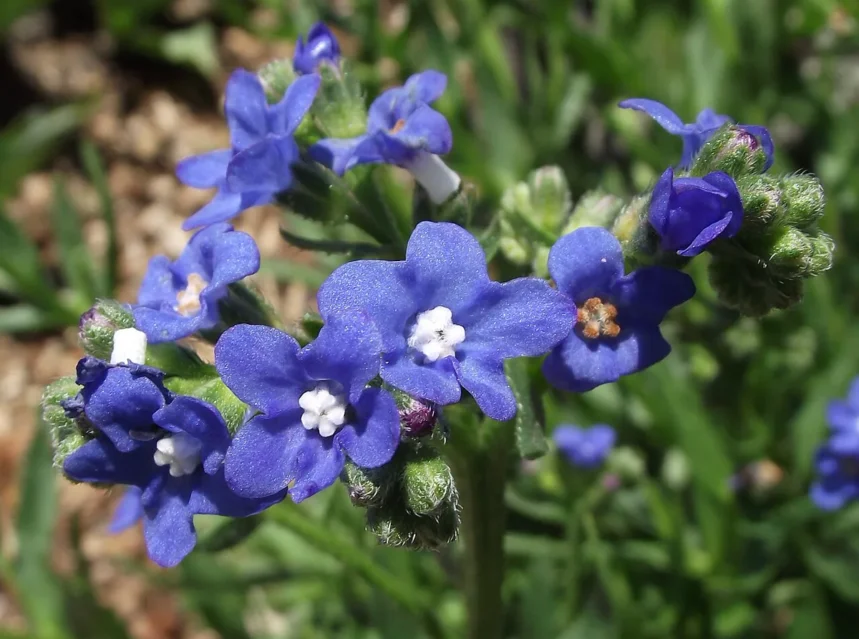
Anchusa seeds grow into Anchusa capensis — the Cape forget-me-not or summer forget-me-not, a sun-loving annual famous for some of the truest, most intense blue flowers you can raise from seed. The popular dwarf ‘Blue Angel’ stands just 20–25 cm tall and blooms right through summer. Unlike the spring forget-me-not, this South African gem flowers in the heat. This guide covers the best anchusa seeds worldwide, exactly how to sow them, when to sow, top varieties, and where to buy good seed.
🧰 In a hurry? Jump straight to our tested picks for this guide ↓
Quick start: anchusa seeds at a glance
- Type: Short-lived (annual/biennial), grown as an annual — Anchusa capensis, 20–45 cm.
- Sow: Surface-sow indoors 8–10 weeks before last frost, or direct after frost; seeds need light.
- Germination: 10–30 days at 18–21 °C; do not cover the seed.
- Light & soil: Full sun; light, well-drained soil; tolerates heat and poor dry ground.
- Bloom: Summer to autumn; intense blue flowers; loved by bees and butterflies.
- India note: Sow Oct–Nov in the plains for winter–spring bloom; more heat-tolerant than Myosotis.
Authoritative references: Wikipedia — Anchusa capensis, SANBI PlantZAfrica — Anchusa capensis, and the GardenersHQ Anchusa growing guide.
What is anchusa (Cape forget-me-not)?
Anchusa is a genus in the borage family, Boraginaceae. The seed-grown bedding star is Anchusa capensis, the Cape forget-me-not or bugloss.
It is native to South Africa, where it grows in dry, sandy, open places. In gardens it is short-lived, so most growers treat it as an annual.
The flowers are tiny but vivid, with five bright blue petals and a small white or pale eye. They open in airy sprays on bristly, red-flushed stems.
The genus also gave us “alkanet,” a historic red root-dye (chiefly from Anchusa tinctoria). That is heritage only — this is a purely ornamental garden plant.
Anchusa seeds at a glance
| Botanical name | Anchusa capensis (Cape / summer forget-me-not, bugloss) |
|---|---|
| Native range | South Africa, extending to Namibia and Lesotho |
| Height | 20–45 cm (dwarf ‘Blue Angel’ ~20–25 cm) |
| Flower | Intense blue, five-petalled, white-eyed; airy sprays |
| Light & soil | Full sun; light, well-drained soil; tolerates poor dry ground |
| Germination | 10–30 days at 18–21 °C; surface-sow, needs light |
| Bloom time | Summer to autumn (winter–spring in warm climates) |
| Habit | Annual/biennial; bee & butterfly magnet; good cut flower |
Why grow anchusa from seed?
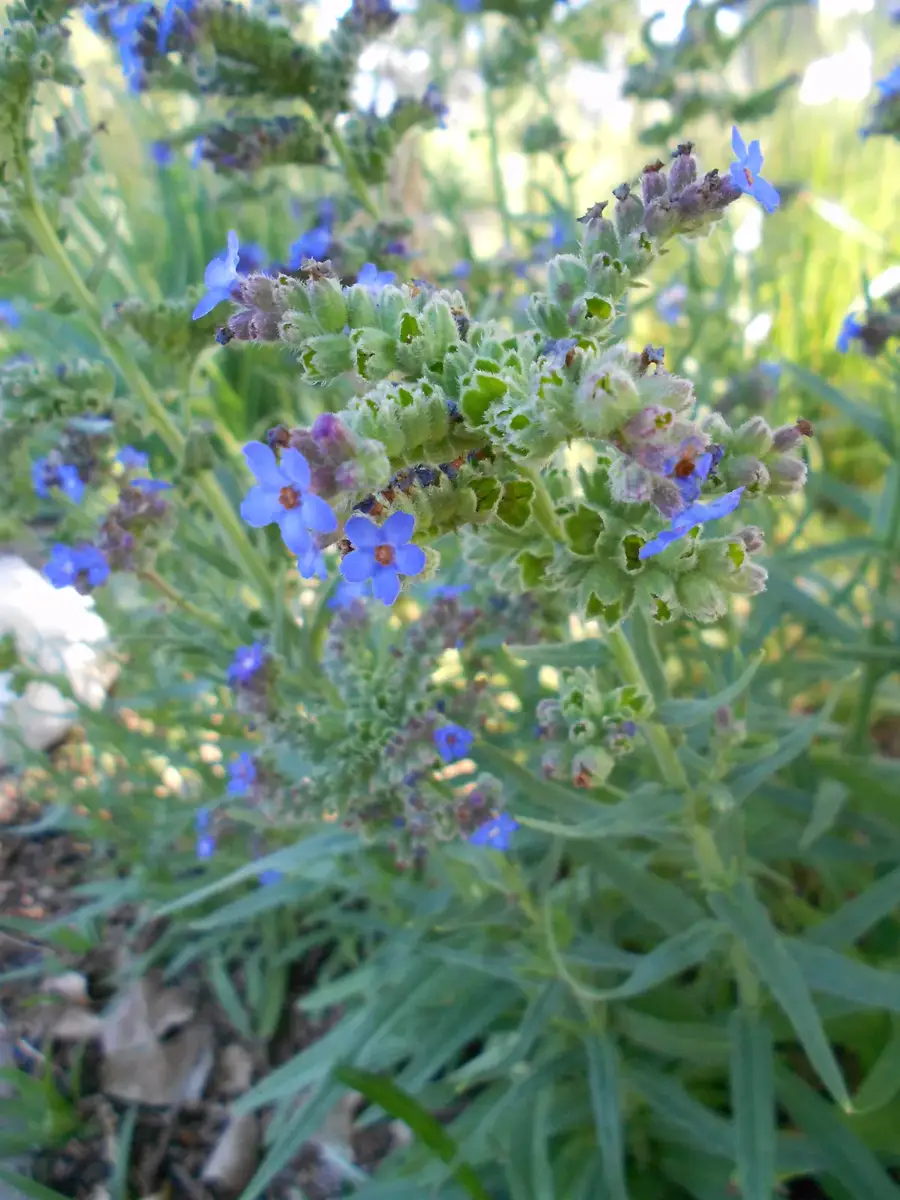
Anchusa is cheap and rewarding to raise from seed. One packet of ‘Blue Angel’ fills a whole edge or a sunny pot.
The colour is the main draw. Few annuals give such a clean, saturated blue in a single season.
It also works hard for wildlife. Bees and butterflies visit the flowers steadily on warm, sunny days.
Best of all, it copes with heat. Where spring forget-me-nots fade, anchusa keeps the blue going into late summer.
The truest summer blue from seed
This is what sets anchusa apart from its cousins. It delivers the forget-me-not look at the hottest time of year.
The common forget-me-not (Myosotis) is a spring carpet that quits in the heat. Anchusa picks up exactly where it leaves off.
The white-flowered omphalodes (Venus’s navelwort) is the pale, refined cousin. Anchusa is the bold, electric-blue one.
Plant all three and you can have the forget-me-not effect for months. Spring blue, then white, then intense summer blue.
‘Blue Angel’ is especially useful as edging and in containers. Its tidy 20 cm domes glow against silver foliage and white flowers.
Weave it through other sun-lovers for a meadow feel. It sits beautifully with gilia tricolor, clarkia, and calendula.
Best season & when to sow
Timing depends on your climate. The goal is to flower in warm, settled weather.
In cool US zones, start seed indoors 8–10 weeks before the last frost. Move plants out once frost has passed.
You can also direct-sow after the last frost in spring. Plants then flower from mid to late summer.
In mild winter regions, an autumn sowing works well. Young plants overwinter and flower early the next year.
In India, grow it in the cool season. Sow in October–November in the plains for winter and spring bloom.
It handles heat better than Myosotis, so the season is longer. Even so, flower it before the peak monsoon wet.
Growing anchusa from seed: how to plant
The key rule is light. Anchusa seeds need light to germinate, so never bury them deep.
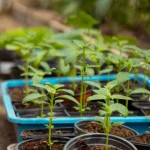
For trays, fill with moist, free-draining seed compost. Scatter seed on the surface and press it in gently.
Do not cover the seed, or only dust it very lightly. Keep the surface moist at around 18–21 °C.
Seedlings appear in about 10–30 days. Give them bright light so they stay short and sturdy.
To direct-sow, rake a fine, weed-free bed in full sun. Sow thinly on the surface and water with a fine spray.
Thin or space young plants 20–30 cm apart. Good airflow keeps the foliage healthy and free of mildew.
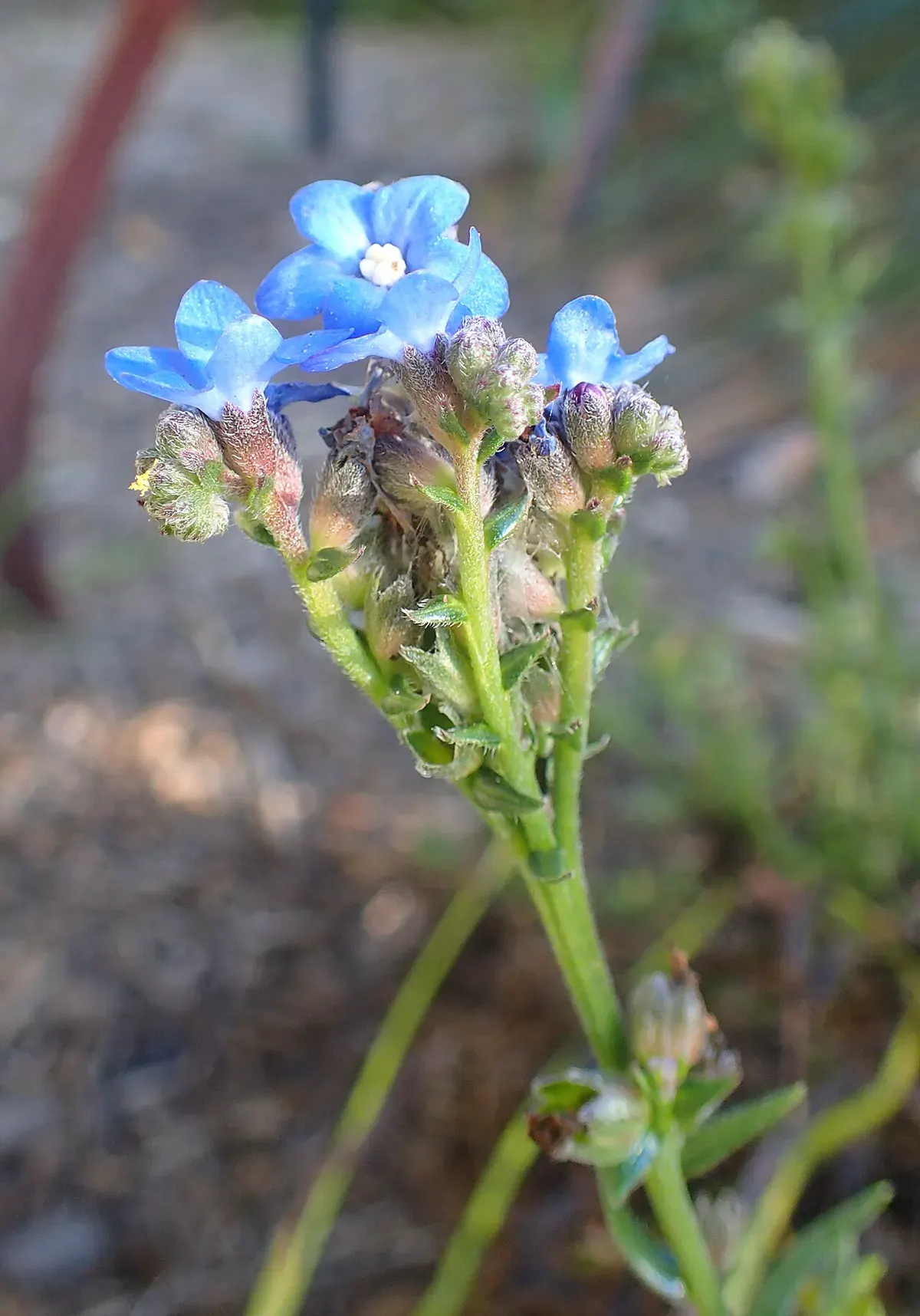
Sun, soil, watering & feeding
Anchusa is easy once it is established. Sun and drainage matter far more than rich soil.
Give it full sun for the strongest colour and most compact growth. It tolerates a little light shade.
Light, well-drained soil is ideal, even poor or sandy ground. Heavy, wet soil is the main cause of rot.
Water young plants in dry spells to settle them in. Established plants are quite drought-tolerant.
Feed only lightly, if at all. Rich feeding makes leafy plants with fewer flowers.
In pots, use a gritty, free-draining mix and a sunny spot. Check moisture often, as containers dry quickly.
Anchusa varieties & related forget-me-nots
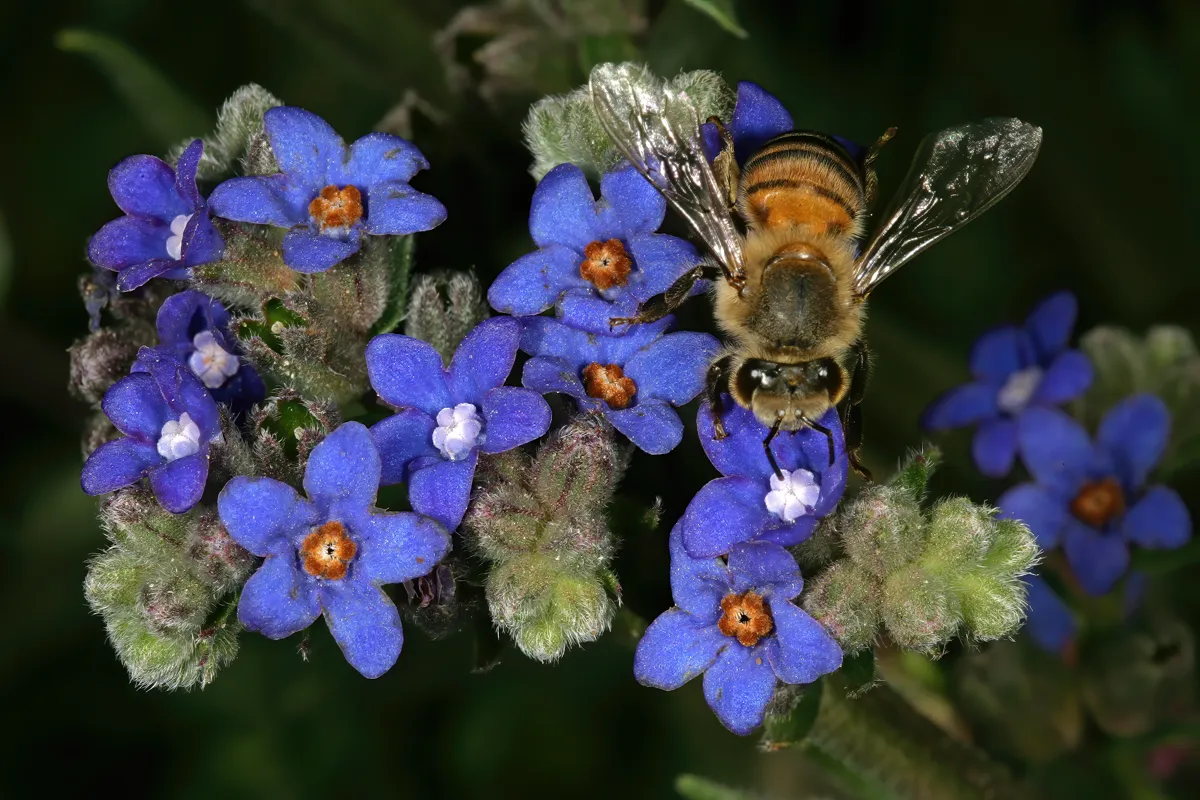
For seed, the Cape forget-me-not and its dwarf ‘Blue Angel’ are the main picks. The big perennial anchusas are usually grown as plants.
| Plant | Type & flower | Best use | Good for (worldwide) |
|---|---|---|---|
| Anchusa capensis ‘Blue Angel’ | Annual; intense blue, dwarf ~20 cm | Edging, containers, front of border | US: all zones as annual · India: Oct–Nov plains, hills |
| A. capensis (species/’Blue Bird’) | Annual/biennial; blue, 30–45 cm | Cutting, cottage borders, drifts | US: cool-season annual · India: cool season |
| A. azurea (Italian bugloss) | Perennial; tall deep-blue spires | Big borders, back-of-bed structure | US: temperate perennial · India: hills only |
| Forget-me-not (Myosotis) | Biennial; spring blue carpet | Under tulips, woodland edge | US: cool-season · India: cool plains/hills |
| Omphalodes linifolia | Annual; airy white | White schemes, gravel, cottage edges | US: cool-season annual · India: Oct–Nov |
For tidy blue in pots and edges, choose ‘Blue Angel’. For taller cutting stems, grow the species or ‘Blue Bird’.
If you want a true perennial, look to A. azurea instead. It returns each year but is grown more from plants than seed.
Common pests & problems
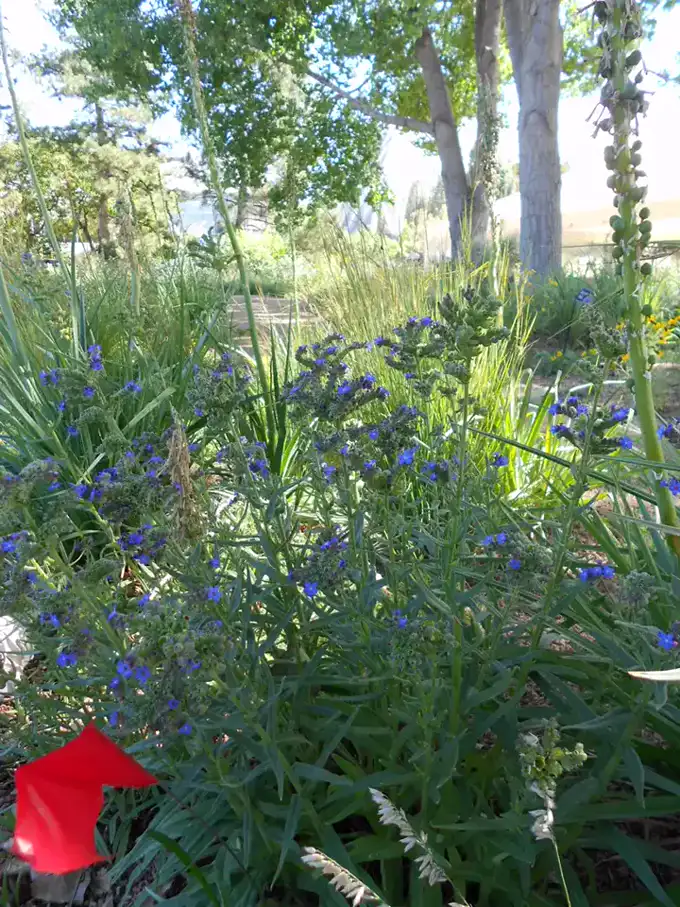
Anchusa is tough and rarely badly troubled. Most issues come from wet soil or crowding.
Slugs and snails may graze soft young seedlings. Protect early growth with grit or nightly checks.
Powdery mildew can appear in damp, still conditions. Space plants well and avoid wetting the leaves late in the day.
Waterlogged soil causes root rot and collapse. Improve drainage with grit, or grow in raised beds and pots.
In shade, plants grow leggy and flower poorly. Move sowings to a brighter, sunnier spot next time.
Deadheading & saving seed
Regular deadheading keeps the blue coming. Snip spent stems to trigger a fresh flush.
When bloom slows, cut the plant back hard. This often brings a strong second wave of flowers.
To save seed, leave a few late stems to ripen. Let the tiny nutlets dry on the plant.
Cut the dry stems into a paper bag on a dry day. Rub out the seed and store it cool, dark, and dry.
Leave one or two heads in place to self-sow. Volunteers often appear, easy to thin or move while small.
Where to buy anchusa seeds
Anchusa seeds are widely sold by annual and cut-flower suppliers. Below are simple buy options worldwide.
Links are placeholders for now. Always compare freshness, packet size, and shipping before you order.
For more sun-loving, pollinator-friendly annuals to sow with it, see our guides to cosmos, nemophila, the dainty leptosiphon, and godetia. A mix keeps colour and bees coming all season.
Buy fresh anchusa seed where you can. Light, recent seed germinates fastest and most evenly.
Frequently asked questions
Is anchusa an annual or a perennial?
Anchusa capensis is short-lived and usually grown as an annual or biennial. The taller Anchusa azurea is a true perennial, but it is grown more from plants than seed.
Do anchusa seeds need light to germinate?
Yes. Surface-sow the seed and do not cover it, or dust only very lightly. Keep it moist at about 18–21 °C and sprouts appear in 10–30 days.
Why is it called Cape forget-me-not?
It is native to South Africa’s Cape region and its small blue flowers look like forget-me-nots. It also blooms in summer, hence “summer forget-me-not.”
Can I grow anchusa in India?
Yes, as a cool-season annual. Sow in October–November in the plains, give it full sun and free-draining soil, and enjoy blue blooms before the hot, wet weather.
When should I sow Cape forget-me-not seeds?
Start them indoors 6 to 8 weeks before the last frost, or sow direct once the soil has warmed after frost. In mild winter areas a late summer sowing gives a spring display.
How long do the seeds take to germinate?
Expect seedlings in about 10 to 21 days at roughly 18 to 21 °C (65 to 70 °F). Keep the surface evenly moist but not soaking during that time.
How far apart should the plants go?
Space them about 25 to 30 cm (10 to 12 inches) apart. Planting in small clumps rather than a straight line gives a better block of blue.
What soil and sun suit anchusa best?
Full sun and lean, free-draining soil produce the most flowers. Rich soil and heavy feeding push leafy growth at the expense of blooms.
How do I get a second flush of flowers?
Deadhead regularly, then shear the whole plant back by about 8 cm (3 inches) once a flowering cycle finishes. Fresh growth follows and usually flowers again.
Why does handling the plant irritate my skin?
The leaves and stems are covered in stiff bristly hairs that can leave skin itchy. Wear gloves and long sleeves when shearing or pulling plants.
Will it self-seed around the garden?
Yes, it seeds itself freely if you leave spent flowers on the plant. Deadheading before seed sets keeps volunteers to a level you actually want.
Sources and further reading
Still stuck? Ask the Plant Doctor
Describe the problem — yellow leaves, holes, no flowers — and get a clear answer in seconds. FreeAI can make mistakes. Answers are guidance, not a guarantee — check anything important against the guide it links to, and always read the label on any product before you use it.