Milkweed Seeds
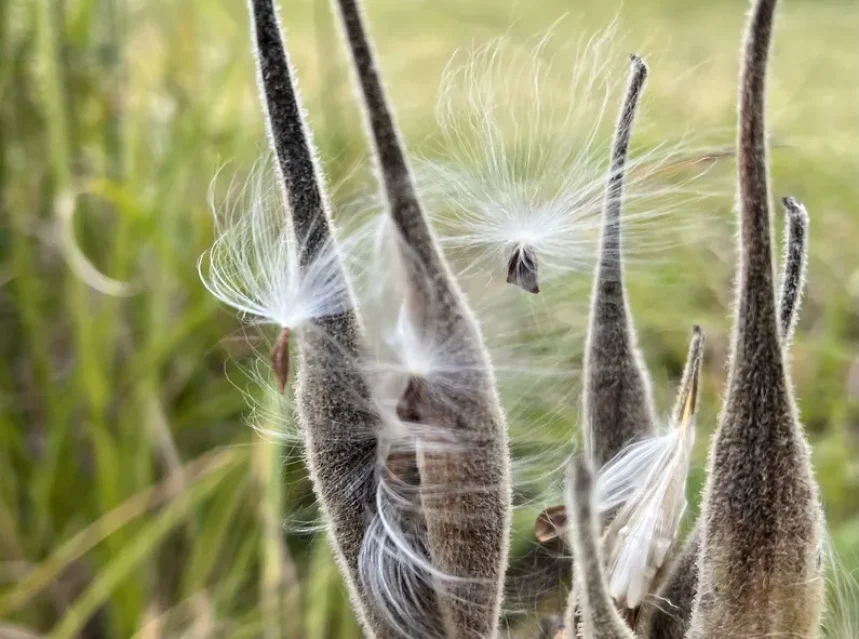
Milkweed seeds grow into Asclepias — the prairie wildflower that is the only host plant for monarch butterflies. Bright clusters of orange, pink, or mauve flowers feed bees, butterflies, and — in the Americas — hummingbirds. Plants stand 30–150 cm tall. They are tough, drought-tolerant perennials once established.
Ornamental & wildlife gardening guide only. This article covers growing milkweed (Asclepias) seeds for garden display and pollinators. It makes no medicinal or edible claims. Milkweed sap can irritate skin and eyes, so wear gloves when handling and keep plants away from young children and pets.
🌱 Quick start: milkweed seeds at a glance
- Botanical name: Asclepias spp. (family Apocynaceae)
- Common names: milkweed, butterfly weed, swamp milkweed, common milkweed
- Type: hardy perennial (USDA zones 3–9), grown from seed
- Sow: barely cover after ~30 days cold-moist stratification (or fall-sow)
- Germination: about 10–21 days after stratification
- Bloom from seed: usually the 2nd or 3rd year
- Light & soil: full sun; well-drained soil (type varies by species)
- Best for: monarch habitat, pollinator borders, prairies, cut flowers
Authority sources: Wikipedia — Asclepias tuberosa, Wisconsin Horticulture Extension.
🧰 In a hurry? Jump straight to our tested picks for this guide ↓
Why grow milkweed seeds?
Milkweed is the single most important plant for monarch butterflies. Monarch caterpillars eat nothing else. Without milkweed, there are no monarchs.
Growing from seed is the affordable way to build real habitat. One packet raises many plants. It is a rewarding project with a clear purpose.
Here is why gardeners sow milkweed seeds:
- Monarch host plant: the only food for monarch caterpillars.
- Nectar source: feeds bees and butterflies all summer (plus hummingbirds in the Americas).
- Tough & drought-tolerant: thrives in lean soil once established.
- Long-lived perennial: deep taproots return year after year.
- Cut flowers & seed pods: showy blooms and ornamental autumn pods.
Milkweed seeds at a glance (data table)
| Feature | Detail |
|---|---|
| Botanical name | Asclepias (e.g. A. tuberosa, A. incarnata, A. syriaca) |
| Family | Apocynaceae (milkweed/dogbane family) |
| Native range | North America (prairies, meadows, roadsides) |
| Plant height | 30–150 cm (1–5 ft), depending on species |
| Flower colour | Orange, pink, mauve, or white clusters |
| Bloom time | Late spring through summer |
| Sowing | Barely cover after cold-moist stratification, or fall-sow |
| Germination | ~10–21 days after stratification |
| First bloom from seed | Usually 2nd–3rd year |
| Hardiness | USDA zones 3–9 |
| Best uses | Monarch habitat, pollinator border, prairie, cut flower |
History, origin & how milkweed reached gardens
Milkweed belongs to the genus Asclepias in the family Apocynaceae. Most garden species are native to North America. They grow wild in prairies, meadows, and along roadsides.
For decades milkweed was treated as a weed. The monarch decline changed that view completely. Gardeners now plant it on purpose for habitat.
From its prairie home, milkweed has spread into pollinator gardens worldwide. Native species are favoured in North America. In warmer regions, tropical milkweed is grown too, as covered in the India section below.
Best season & when to sow milkweed seeds
Milkweed seed needs a cold spell to wake up. So timing follows that need. You have two reliable windows.
Sow outdoors in late autumn so winter chills the seed. Or chill the seed indoors and sow in spring. The fall method is the most natural.
- Fall-sow (easiest): scatter seed outdoors in late autumn and let winter stratify it.
- Spring-sow: cold-stratify in the fridge for about a month, then sow.
- India: grow as a cool-season or warm-climate sowing; see the India section.
Growing milkweed seeds: how to plant step by step
The seed needs cold first, then warmth and light. Mind the deep taproot too. Here is the reliable method.
- Stratify: chill seed in a damp paper towel or sand, sealed in a bag, for ~30 days.
- Use deep cells: fill 8–10 cm deep pots so the taproot has room.
- Surface-sow: press seed onto the mix and barely cover it (~3–6 mm).
- Moisten: keep evenly damp but never waterlogged.
- Warmth & light: hold at about 20–24 °C in bright light.
- Wait: seedlings appear in roughly 10–21 days after stratification.
- Plant out early: move young plants out before the taproot deepens.
- Space: set plants 30–45 cm apart in full sun.
Direct-sowing in place is often best. The deep taproot resents being moved. Be patient, as most plants bloom in their second or third year.
Cold stratification & the germination secret
This is the step beginners skip and then fail. Most milkweed seed needs cold-moist stratification. The damp chill mimics winter and breaks dormancy.
Around 30 days of cold-moist chilling gives strong results. Trials report 85% germination or better for many species. So a fridge stint truly pays off.
- Fridge method: ~30 days in damp paper towel or sand, sealed in a bag at about 5 °C.
- Nature’s method: fall-sow outdoors and let real winter do the work.
Also remember to sow shallowly. Press the seed in and barely cover it. Combine cold strat, shallow sowing, and deep cells for the best results.
Milkweed for monarchs, bees & butterflies
No plant matters more to monarchs than milkweed. The leaves are the only food their caterpillars can eat. Female monarchs lay eggs only on Asclepias.
The flowers also pour out nectar all summer. Bees and butterflies crowd the blooms, with hummingbirds joining in the Americas. Many native bees and other insects visit too.
For the best effect, plant milkweed in groups. A cluster is easier for monarchs to find. Pair it with other natives for a season-long buffet.
Butterfly weed, swamp milkweed & common milkweed
“Milkweed” covers several garden-worthy species. Each suits a different spot. Pick the one that fits your soil.
| Species | Common name | Flower | Best site |
|---|---|---|---|
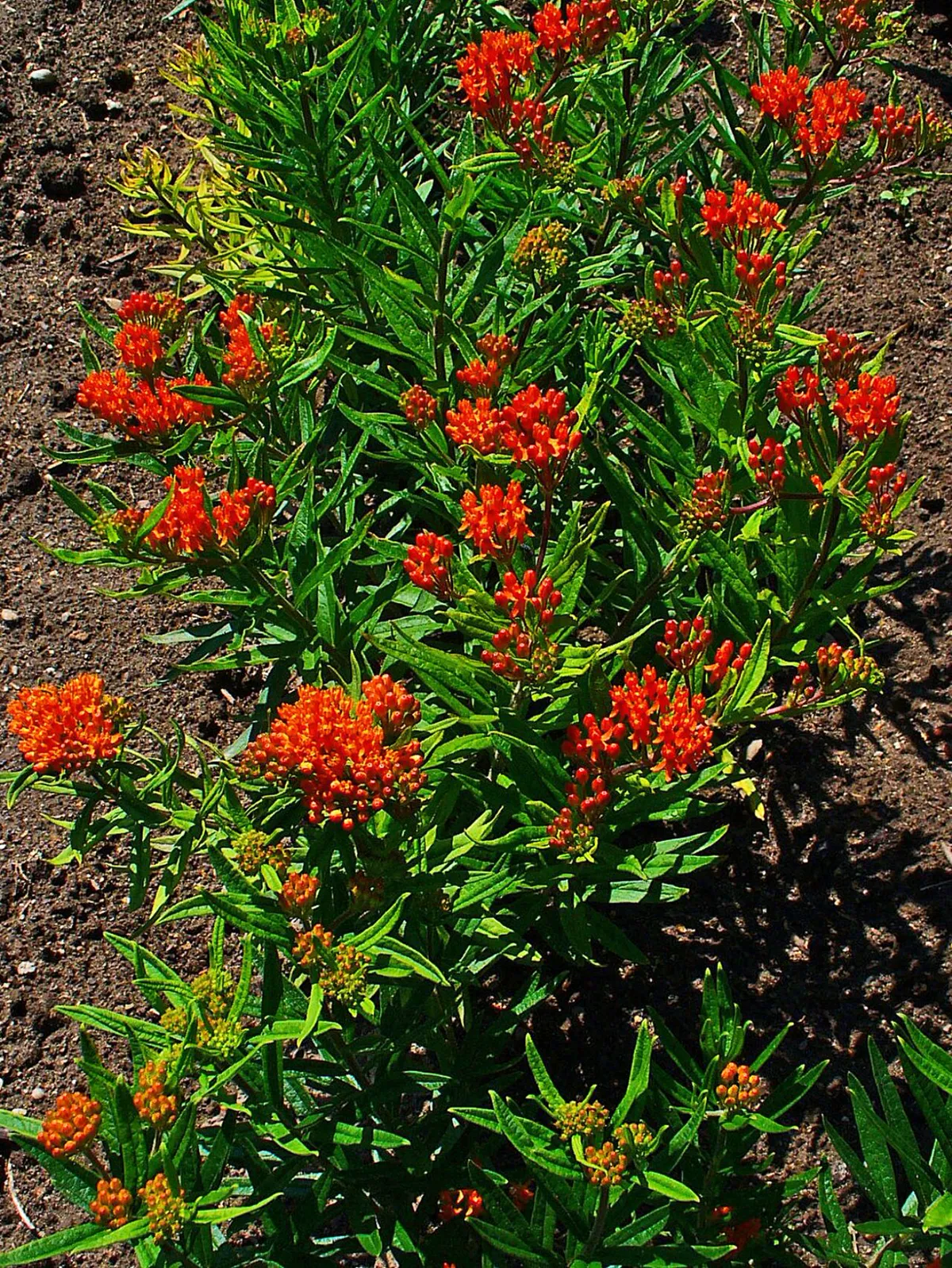
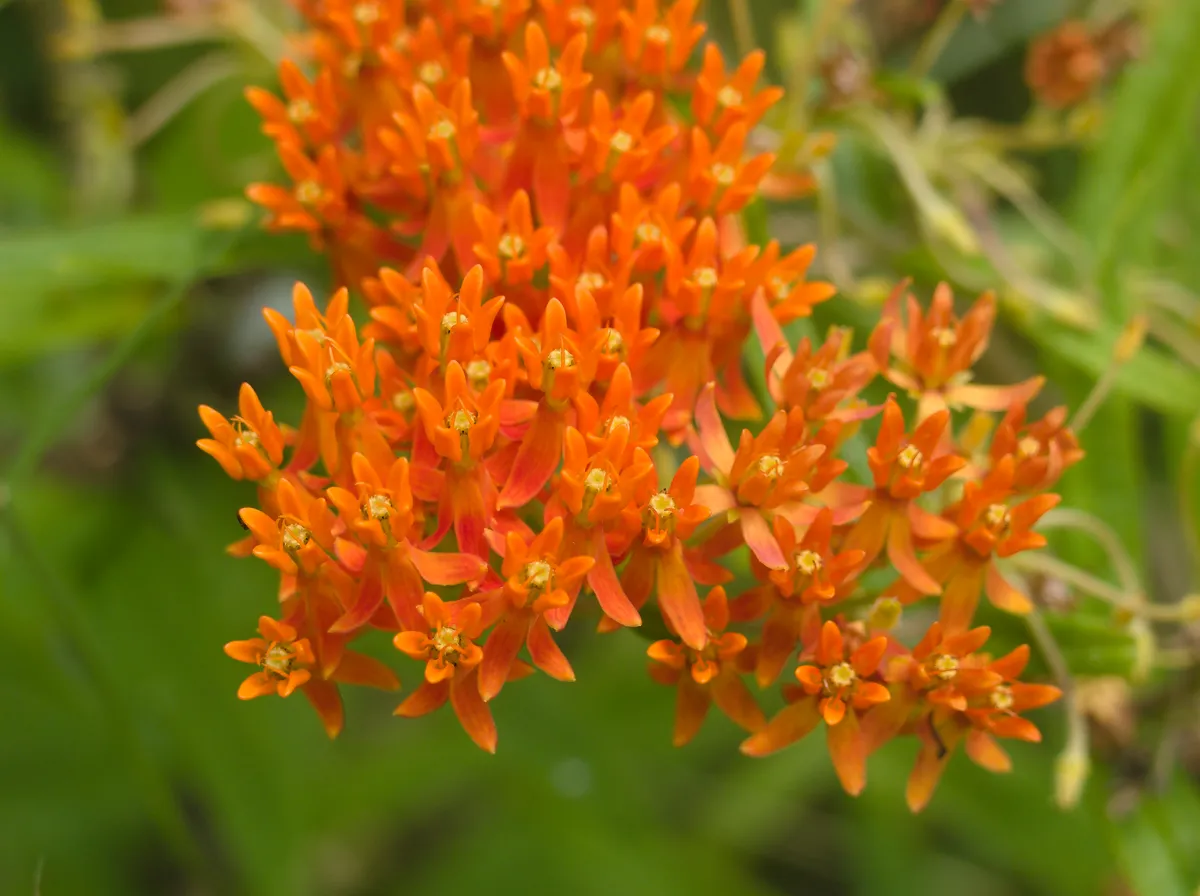
| A. tuberosa | Butterfly weed | Bright orange | Dry, sandy, well-drained soil |
| A. incarnata | Swamp milkweed | Pink to rose | Moist soil, pond edges, rain gardens |
| A. syriaca | Common milkweed | Mauve-pink | Large naturalised areas (spreads) |
Butterfly weed is the tidy, clump-forming choice. Swamp milkweed loves damp ground. Common milkweed spreads, so give it room.
Sun, soil, watering & feeding
Milkweed is a sun-lover first and foremost. Give it full sun for the most flowers. Shade leads to weak, sparse plants.
Soil needs vary by species. Butterfly weed wants dry, lean, free-draining ground. Swamp milkweed prefers steady moisture.
Water young plants while they establish. Mature clumps are drought-tolerant and rarely need it. Skip rich feeding, which weakens the stems.
Seed pods & saving milkweed seeds
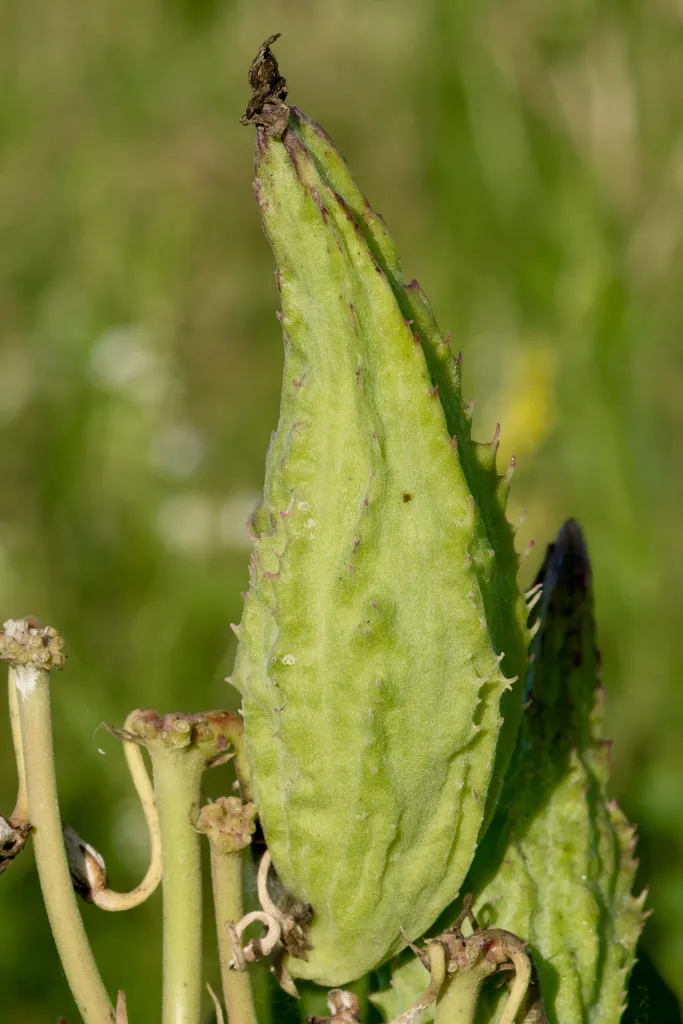
Milkweed makes its own seed generously. The pods split open in autumn. Each seed has a silky parachute for the wind.
Collect pods just as they begin to crack. Separate the seed from the fluffy floss over a bowl. Store it cool, dry, and clearly labelled.
Cold-stratify your saved seed before sowing. That winter chill is still the key. Milkweed also self-sows where conditions suit it.
Common pests & problems

Milkweed is generally tough and low-trouble. A few issues are worth knowing. Most are easy to manage.
- Oleander aphids: bright yellow aphids cluster on stems. A water spray or insecticidal soap helps.
- Slow start from seed: plants bloom in year two or three; be patient.
- Transplant shock: the deep taproot dislikes moving. Direct-sow or use deep cells.
- Crown rot: butterfly weed hates wet winter soil. Ensure sharp drainage.
- Spreading: common milkweed travels by root. Site it where it can roam.
India: growing milkweed
Let us be honest about India. The North American milkweeds are not native here. They perform best as cool-season or hill plants.
Indian gardeners often grow tropical milkweed, Asclepias curassavica, instead. It is widely sold as “blood flower” with red-orange blooms. It is a strong butterfly and nectar plant in warm gardens.
Seed of both types is available online. Source it via Amazon.in, Ugaoo, and AllThatGrows. Give plants full sun and free-draining soil.
Milkweed as a cut flower & in garden design
Milkweed earns a place beyond habitat alone. The flower clusters are showy and long-lasting. The autumn seed pods add ornamental interest.
Use butterfly weed at the front of a sunny border. Plant swamp milkweed near a pond or rain garden. Both shine in prairie and pollinator schemes.
Combine milkweed with other prairie natives for impact. Coneflowers, blazing star, and black-eyed Susans are ideal partners. Together they feed pollinators from spring into autumn.
Best milkweed varieties to grow from seed
Pick a milkweed to match your soil and space. The table notes Good for (worldwide). All grow from cold-stratified seed.
| Variety | Height | Colour | Best regions |
|---|---|---|---|
| A. tuberosa (butterfly weed) | 45–90 cm | Bright orange | US dry borders; India hills/cool season |
| ‘Hello Yellow’ (tuberosa) | 45–60 cm | Golden yellow | US sunny beds |
| A. incarnata (swamp milkweed) | 90–150 cm | Pink to rose | US rain gardens; India moist beds |
| ‘Ice Ballet’ (incarnata) | 90–110 cm | White | US pond edges |
| A. syriaca (common milkweed) | 90–180 cm | Mauve-pink | US wild/naturalised areas |
| A. curassavica (tropical) | 60–90 cm | Red-orange | India & warm gardens |
More pollinator & prairie seeds to grow
Milkweed works best in a community of natives. Build a full monarch waystation with these guides. Each links to a detailed growing post.
- Echinacea (purple coneflower) seeds — a prairie pollinator staple.
- Liatris (blazing star) seeds — purple spikes monarchs adore.
- Rudbeckia (black-eyed Susan) seeds — golden late-summer daisies.
- Coreopsis (tickseed) seeds — long-blooming nectar companions.
- Gaillardia (blanket flower) seeds — heat-proof red-gold blooms.
- Cosmos seeds — easy nectar-rich annual fillers.
- Calendula seeds — cheerful pollinator-friendly annuals.
- Nigella (love-in-a-mist) seeds — cottage-garden self-seeders.
Frequently asked questions about milkweed seeds
Do milkweed seeds need cold stratification?
Most milkweed seed germinates far better after cold-moist stratification. Give it about 30 days of damp chilling in the fridge. Alternatively, fall-sow outdoors so natural winter does the job.
How long do milkweed seeds take to bloom?
Most plants flower in their second or third year from seed. The first year builds leaves and a deep taproot. Patience is rewarded with a long-lived perennial.
Which milkweed is best for monarchs?
Plant species native to your region for the best results. Butterfly weed suits dry soil and swamp milkweed suits damp ground. Group several plants so monarchs find them easily.
Can I grow milkweed from seed in India?
Yes. Tropical milkweed (Asclepias curassavica, “blood flower”) grows well in warm Indian gardens. North American species do best in cooler hill or cool-season conditions.
How deep should I sow milkweed seeds?
About 6 mm (1/4 inch) deep in a standard seed-starting mix. If you are starting indoors, sow roughly 7-9 weeks before your last frost date.
Can milkweed seedlings be transplanted?
Only while they are small. Milkweed forms a taproot early and resents disturbance, so move seedlings into the ground before they pass about 7.5 cm (3 inches) tall, or direct sow and skip transplanting altogether.
How far apart should milkweed plants be spaced?
Allow roughly 30-60 cm (12-24 inches), depending on the species. Compact types like butterfly weed sit at the lower end, while common and swamp milkweed need the wider spacing.
Should I avoid tropical milkweed?
Many conservation groups advise against it outside its native range, because it stays green through winter and can encourage a protozoan parasite and disrupt normal monarch migration. If you already grow it, cut it back hard in autumn, or plant species native to your region instead.
Is milkweed sap dangerous?
The milky sap can irritate skin and is particularly unpleasant in the eyes, and the plant is toxic if eaten. Wear gloves when cutting stems, wash your hands afterwards, and keep it away from small children and grazing animals.
What should I do about the orange aphids on my milkweed?
Those are oleander aphids and they are common on milkweed. Knock them off with a strong jet of water or wipe them away by hand, and avoid insecticides, which would kill monarch caterpillars too.
Can I grow milkweed in a container?
Yes, if the pot is deep enough for the taproot, ideally 30-40 cm (12-16 inches) or more. Shorter species such as butterfly weed suit pots best, and container plants need more regular watering than those in the ground.
Still stuck? Ask the Plant Doctor
Describe the problem — yellow leaves, holes, no flowers — and get a clear answer in seconds. FreeAI can make mistakes. Answers are guidance, not a guarantee — check anything important against the guide it links to, and always read the label on any product before you use it.