Best Garden Spade
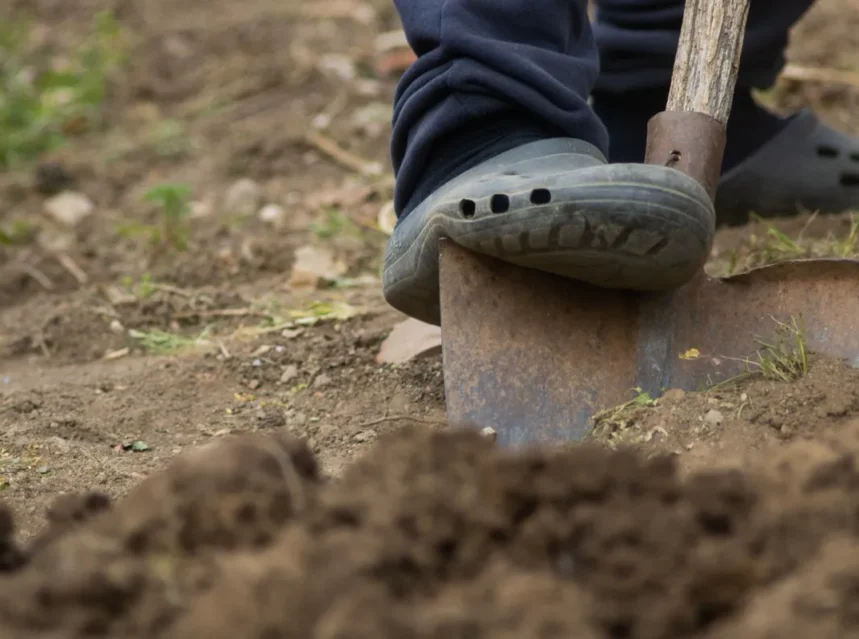
The best garden spade is a forged-blade digging spade with a flat head, a long handle, and a tread at the top of the blade. The tread protects your foot when you push it into the ground. The best garden spade slices turf, digs planting holes, trenches rows for leeks and potatoes, and edges borders cleanly. Get the blade right and this is the tool you reach for fifty times a season.
Spade tests focus on two things: blade strength under prying loads, and handle-blade join durability. A spade only proves itself in real ground over a full season. A clay-digging trial exposes weak joins fastest. Forged blades outlast pressed-steel versions consistently.
🧰 In a hurry? Jump straight to our tested picks for this guide ↓
Best garden spade at a glance
| Pick | Best for | Type | Trade-off |
|---|---|---|---|
| Spear & Jackson Neverbend | Best overall, buy-for-life | Digging spade | Wood handle needs oil |
| Fiskars solid construction | Cold climates, durability | Digging spade | Less traditional feel |
| True Temper long-handle | US standard, big gardens | Digging spade | Long handle for small frames |
| Spear & Jackson border spade | Tight beds, lighter gardeners | Border spade | Smaller bites per turn |
| Radius ergonomic | Comfort, wrist or back issues | Ergonomic spade | Higher price |
| Falcon digging spade | Best in India | Digging spade | Basic steel finish |
Spade vs fork: which digs better for your soil?
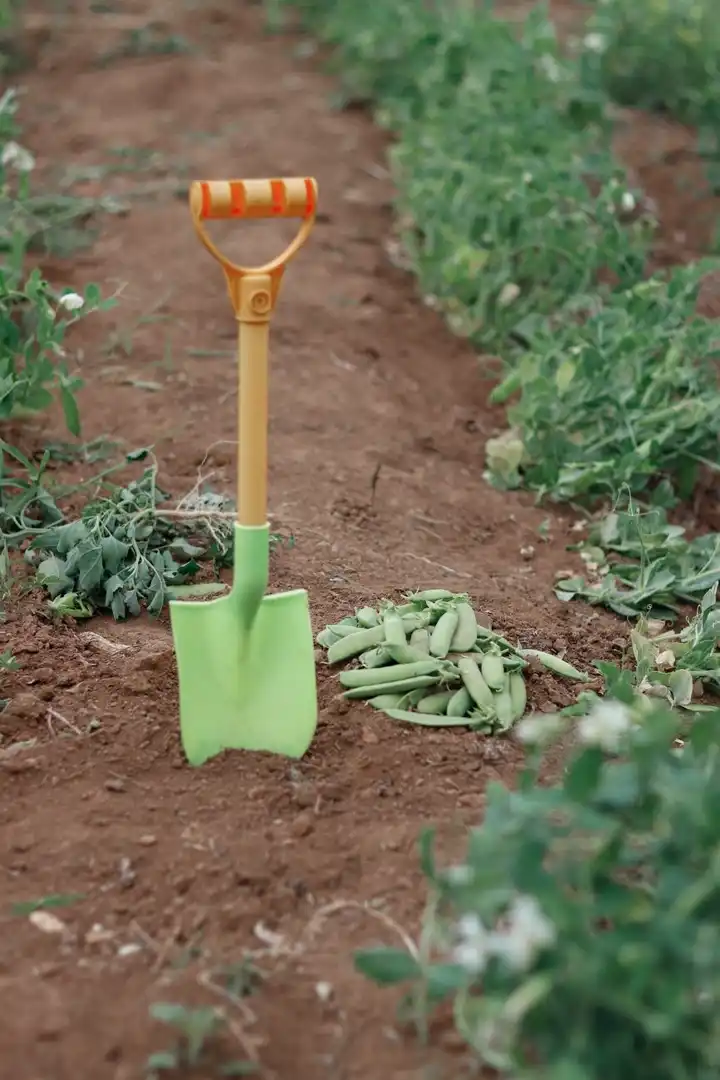
A spade cuts. It slices through turf and soil, creates clean trenches, moves soil, and edges borders.
A fork loosens. It opens compacted ground without inverting it, lifts root vegetables whole, and aerates beds. On clay, a fork smears less than a blade.
On heavy clay, the fork often wins. Tines penetrate where a blade sticks. On lighter sandy or loamy soil, the spade cuts cleanly and moves material faster.
Most gardens need both tools. If buying one first and your soil is workable, start with the spade — it does more distinct jobs the fork cannot match: edging, trenching, turf cutting. Our fork guide covers when tines beat a blade.
Types of garden spade
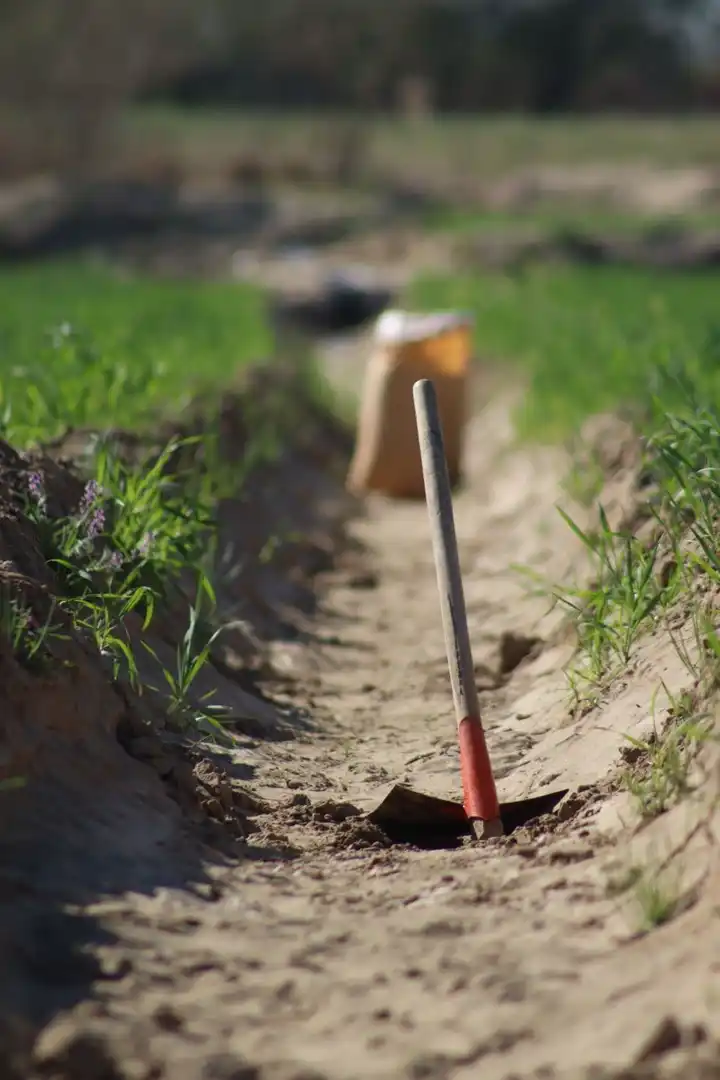
Digging spade: The standard full-size version. The blade is flat and rectangular, around 28 x 19 cm. A tread at the top protects your boot instep when you push in with your foot. This is the tool for digging, planting, trenching, and moving soil.
Border spade: A smaller version of the digging spade. The blade is narrower and the handle is shorter. It is lighter overall. Use it in tight spaces between established plants, inside raised beds, or on long sessions where the full size causes fatigue. Strength is not reduced — only the dimensions change.
Pointed spade: The blade tip is pointed instead of flat. It penetrates harder ground more easily. Choose this if your soil has compacted subsoil, heavy clay, or frequent stones. The flat blade gives cleaner edges; the pointed version enters harder surfaces with less effort.
Edging spade (half-moon): A semicircular blade on a long handle. It cuts clean edges on lawns and borders. This is a single-purpose tool. However, what it does, no other implement does as neatly. It is worth owning if border edging is a regular seasonal job in your garden.
Trenching spade: Narrow and deep. It is designed for long, thin trenches for beans, onions, potatoes, and leeks. The narrow width allows deep penetration without moving too much soil. A dedicated narrow blade makes row-work easier than adapting a standard digging head.
What to look for when buying
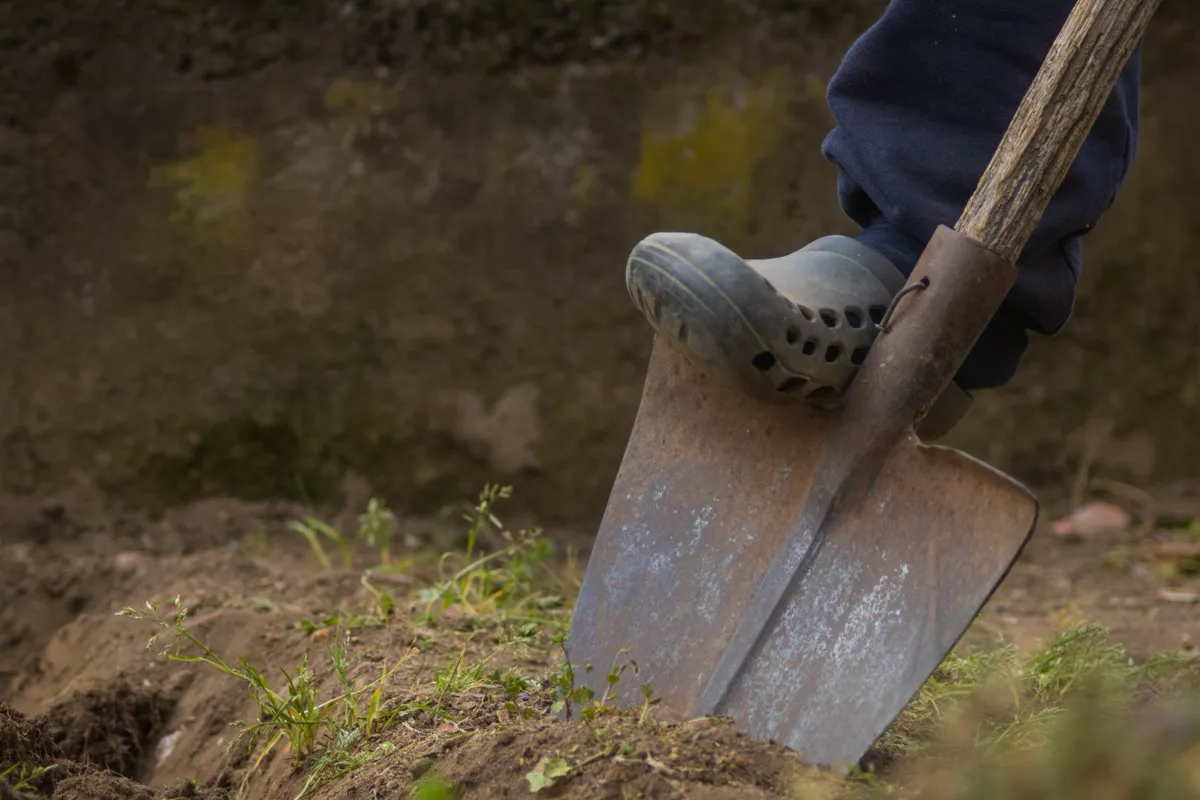
- Forged vs pressed blade: forged blades start as solid steel billets. Pressed blades are cut from sheet and bent. Forged blades are stiffer, hold their edge longer, and resist bending when you lever up roots. If the label does not say forged, assume pressed.
- Solid socket vs open socket: the socket joins blade to handle. A solid closed-socket grips the handle around its full circumference. An open-socket (two riveted straps) can loosen over time. Solid socket lasts longer under daily use.
- Handle material: ash wood is traditional and strong. It flexes slightly and absorbs shock. Fibreglass is lighter and impervious to weather, but stiffer. Polymer handles (Fiskars) bond to the blade without a separate socket — removing the join as a failure point. Each works; the choice is personal.
- Handle length: measure from your hip to the floor. A handle reaching your hip allows an upright working position. Most digging spades run 1.0–1.2 m overall. Too short means constant bending; too long reduces control.
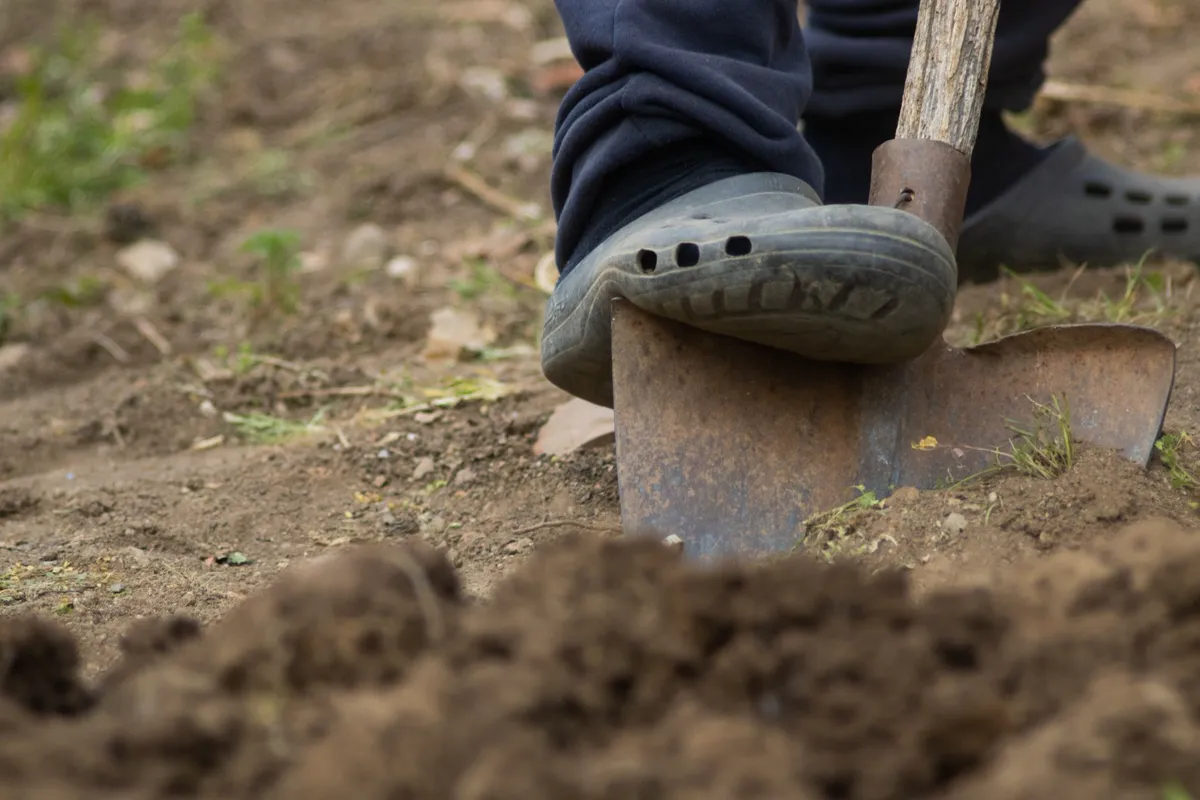
- The tread: the flat metal step at the top of the blade. When you push the best garden spade in with your foot, a tread protects your boot. For regular digging, a tread is essential.
The 6 best garden spades in 2026
1. Spear & Jackson Neverbend — best overall
The Neverbend uses a hollow-back forged carbon-steel blade — the Sheffield standard. The hollow back reduces blade weight without reducing strength.
The solid-socket ash handle and broad foot tread are details that matter when you are digging for hours. UK testers consistently place it first for rigidity after a full season. Oil the ash once a year. This is a lifetime purchase.
2. Fiskars solid construction — best for durability
Fiskars bonds the polymer handle to the stainless blade without a separate socket. This removes the single most common failure point of any digging spade.
The stainless surface resists rust in wet climates. The polymer grip is comfortable year-round. It lacks the traditional feel of ash, but it requires almost no maintenance and outlasts conventional joins in real tests.
3. True Temper long-handle — best for US gardens
The True Temper long-handle is the standard American hardware-store choice. The tempered steel blade handles everything from Georgia clay to Rocky Mountain hardpan.
The fibreglass handle is light without the weather-sensitivity of wood. It is not the most refined tool on this list. However, it is dependable and widely available across North America at a fair price.
4. Spear & Jackson border spade — best for tight spaces
The border spade fits between perennials and inside raised beds where a full-size tool cannot manoeuvre. It is lighter, meaning less fatigue on long planting sessions.
Strength is not compromised — only the blade dimensions change. Many experienced gardeners use the border version for most of their work. They reach for the full size only on rough new ground.
5. Radius ergonomic — best for comfort
The Radius offset handle keeps your wrist in a neutral position through the digging stroke. Gardeners with back pain or wrist injuries report that this lets them continue digging that straight-handle spades make impossible.
The stainless blade sheds clay cleanly. The price is higher than conventional tools. In years of pain-free use, it earns its cost.
6. Falcon digging spade — best in India
Falcon’s version is widely available in Indian garden centres and on Amazon.in. The blade is welded carbon steel — adequate for the lighter sandy soils common in Indian plains gardens.
For heavy red laterite soils of South India or Indo-Gangetic clay, a forged blade is worth the extra cost. For most urban vegetable gardens, the Falcon performs well. Clean and oil it before storing through monsoon months.
Garden spades in India: phawda and kudal
In India, digging tools go by regional names. Phawda (or phauda) is the most common term across North India. Kudal is used in Maharashtra and parts of South India.
The standard Indian design is a straight-edged flat steel blade on a wooden handle. It is simpler and shorter than the western digging spade. It suits lighter soils and a squatting work posture.
In Himachal Pradesh, Uttarakhand, and Kashmir, western-style spades with treads and longer handles are increasingly popular. Apple and stone-fruit orchards there sit on heavier soils that reward a full-depth blade.
For raised bed gardens in urban India — Mumbai terraces, Bangalore plots — the compact border spade is practical. It is increasingly available through Ugaoo and Amazon.in.
The best garden spade in India faces the monsoon challenge all carbon-steel tools share. Surface rust forms fast on wet metal.
Clean and dry the blade after each use. Apply a thin coat of oil before storing through the wet months. A stored, oiled blade lasts years longer than one left in the shed with mud on it.
For companion tools, pair a digging spade with a digging fork for clay or stony ground, a hand trowel for planting, and a garden hoe for weeding between rows. A good garden rake levels the bed once you have dug it.
Spade care and sharpening
- Sharpen the blade edge: a sharp blade cuts cleanly through turf and roots. A dull one smashes through instead. File the front edge at the original bevel angle — two or three strokes per inch. A sharpened digging spade is noticeably easier to use within one session.
- Clean after every use: knock loose soil off the blade. Then wipe down with a dry cloth. Wet soil accelerates rust on carbon steel. A thin coat of oil before storage — vegetable oil, WD-40, or linseed — prevents surface corrosion.
- Check the socket: over time, repeated pressure can loosen the handle-blade join. Inspect at the start of each season. Tighten any rivet or screw connections before the first heavy dig.
- Sand and oil wood handles: sand the shaft with 120-grit paper if it feels rough. Then rub in boiled linseed oil and let it dry fully. A smooth, oiled handle prevents blisters. Do this annually.
Common spade mistakes
Prying with the handle. Using the handle as a lever puts bending stress on the weakest point of the tool. If you must lever, use the blade head — not the shaft. Most handle breaks happen this way.
Digging too deep in one pass. On hard or clay soil, trying to push a digging spade its full depth in one go overloads the blade. It also wears you out fast. A half-blade-depth first pass, then a full-depth second, is both faster and easier on your body.
Using a digging spade to edge borders. A flat-blade version makes a rough edge. A half-moon edging spade makes a clean one. If border edging matters in your garden — and it makes a real visual difference — the right tool is worth having. It also protects your digging blade from sideways cuts that edge-work creates.
Leaving it dirty over winter. Dried mud retains moisture against the steel. A season of dried soil creates rust pitting that shortens the blade’s life. A ten-second wipe at the end of each use is the whole maintenance programme in practice.
Frequently asked questions
What is the difference between a garden spade and a shovel?
A spade has a flat, square blade at right angles to the handle — built for digging and cutting. A shovel has a curved blade angled forward, built for scooping loose material like sand or compost.
For digging planting holes and cutting turf, use the spade. For loading a wheelbarrow from a compost heap, the shovel is faster.
How do I choose between a D-grip and a T-grip handle?
A D-grip is a closed loop at the top — comfortable with gloves, good for precise work. A T-grip is a straight extension of the shaft, common on American long-handle spades.
Choose D-grip for planting and general work. Choose long-handle for trenching and heavy soil where reach and leverage matter more than precision.
Can I use a garden spade to turn compost?
Yes, though a digging fork does the job more efficiently. The flat blade cuts into a heap rather than sliding through it like tines do.
For turning a heap once or twice, a best garden spade works fine. For regular heavy compost work, a dedicated fork is easier. Our compost guide covers the best tools for each stage.
How often should I sharpen a garden spade?
Sharpen at the start of each season and whenever the blade crushes rather than cuts. For a garden in regular use, two or three sharpenings per year is enough.
Run a flat file along the front bevel at the original angle until the edge reflects light uniformly. It takes five minutes and makes the next session noticeably easier.
Why does a spade have a flat blade instead of a curved one?
A flat, square-edged blade is built for cutting cleanly through soil, roots, and turf, which a curved shovel blade cannot do without tearing. This makes a spade the right tool for edging a lawn, dividing perennials, and digging a straight-sided planting hole, while a shovel’s curved, scooped blade is better suited to lifting and moving loose material.
What is the correct way to use a garden spade to break up weeds?
Push the flat blade straight down through the root mat rather than trying to lever weeds out sideways, since the sharp square edge is designed to slice through roots and turf. Working in a grid pattern of clean, overlapping cuts clears a weedy patch faster and with less strain than the stabbing action a curved shovel encourages.
What size garden spade should I buy?
Match the shaft length to your height: stand the spade upright next to you, and the handle top should reach roughly hip to chest height for comfortable digging without excessive bending. Border spades, with a smaller blade and shorter shaft, suit tight beds and gardeners with less upper-body strength; full-size digging spades handle open ground and heavier soil.
Is stainless steel or carbon steel better for a garden spade blade?
Carbon steel holds a sharper edge for longer and is generally tougher for heavy digging in stony or clay soil, but it rusts if left wet. Stainless steel resists rust and corrosion with far less maintenance, making it the better choice for gardeners who cannot always clean and dry tools straight after use, at a modest cost in edge retention.
Can I use a garden spade for edging a lawn?
Yes — a spade’s flat, sharp-edged blade is the traditional tool for cutting a clean, straight lawn edge, and many gardeners prefer it to a dedicated edging iron for irregular curves. Use the full blade width for straight runs and just the corner of the blade for tight curves around beds and paths.
What causes a garden spade handle to break?
Most handles fail at the neck, where the wood or fibreglass meets the metal socket, from using the shaft as a lever to pry out roots or rocks rather than for digging. Wet storage that swells and cracks a wooden shaft is the other common cause. Store spades hanging in a dry shed and use a separate digging bar for prying to avoid both problems.
How is a garden spade different from a border spade?
A border spade has a smaller blade, roughly three-quarters the size of a standard digging spade, paired with a shorter shaft, making it easier to manoeuvre in tight beds and borders packed with existing plants. A standard spade covers more ground per stroke in open soil but is harder to use precisely close to established plants.
Sources and further reading
Still stuck? Ask the Plant Doctor
Describe the problem — yellow leaves, holes, no flowers — and get a clear answer in seconds. FreeAI can make mistakes. Answers are guidance, not a guarantee — check anything important against the guide it links to, and always read the label on any product before you use it.