Best Garden Tool Sets
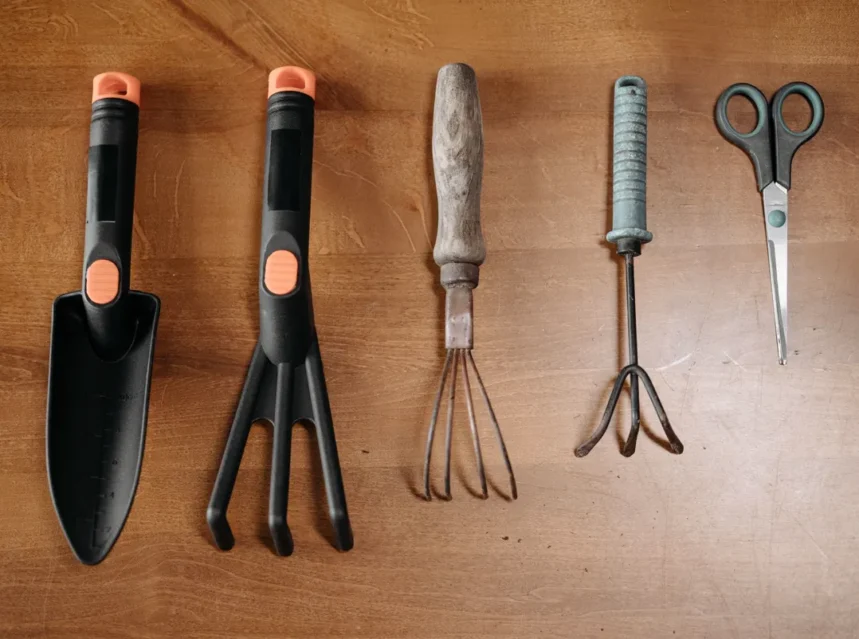
The best garden tool set covers every essential gardening task — digging, raking, planting, weeding, and pruning — with tools built to last, without duplicating tools you will rarely use. Most budget sets include many cheap tools of the same type. Six hand tools that all do roughly the same job is not a set — it is a pile. This guide focuses on which combinations actually cover a full range of tasks. A set with spade, fork, rake, and trowel covers 90% of garden jobs. Additional specialist tools can be added later.
Garden tool set reviews test whether each tool in the set performs as well as the equivalent standalone version, how the storage solutions hold up, and whether the bundle represents genuine value over individual purchase. We judge every set on those three points, and we compare each set directly against the equivalent individual tools — the only real check on whether the bundle premium is justified.
🧰 In a hurry? Jump straight to our tested picks for this guide ↓
Best garden tool set at a glance
| Pick | Best for | Pieces | Trade-off |
|---|---|---|---|
| RHS by Burgon & Ball 4-piece | Best starter set, UK | 4 | No pruning tools |
| Spear & Jackson Neverbend 5-piece | Best complete set, UK | 5 | Full-size tools only |
| Fiskars Softouch 3-piece hand set | Best hand-tool set, global | 3 | No long-handled tools |
| True Temper 4-piece | Best complete set, US | 4 | Less refined than S&J |
| WOLF-Garten 7-piece system | Modular, interchangeable heads | 7 | Higher price |
| Falcon/Sharpex individual bundle | Best in India, mix-and-match | Variable | No single-box packaging |
Set vs individual tools: which is better value?
A garden tool set is good value when the tools included are all ones you would buy anyway. Brands often discount sets 20–30% versus buying each tool separately. So a well-chosen set saves real money.
However, sets are poor value when they include tools you will rarely use. A third hand tool when two suffice adds no value. So does a set where the quality is lower than standalone versions of the same brand. For example, some brand-name sets use lower-grade steel in trowels than their individual equivalents. Check the product spec — specifically steel grade and handle material — before assuming a set is the better buy.
The honest answer: for a first garden where you do not yet know which tools you will use most, a starter set is the low-risk approach. For an experienced gardener replacing or upgrading specific tools, buying individually is almost always better value.
The essential tools every garden set should include
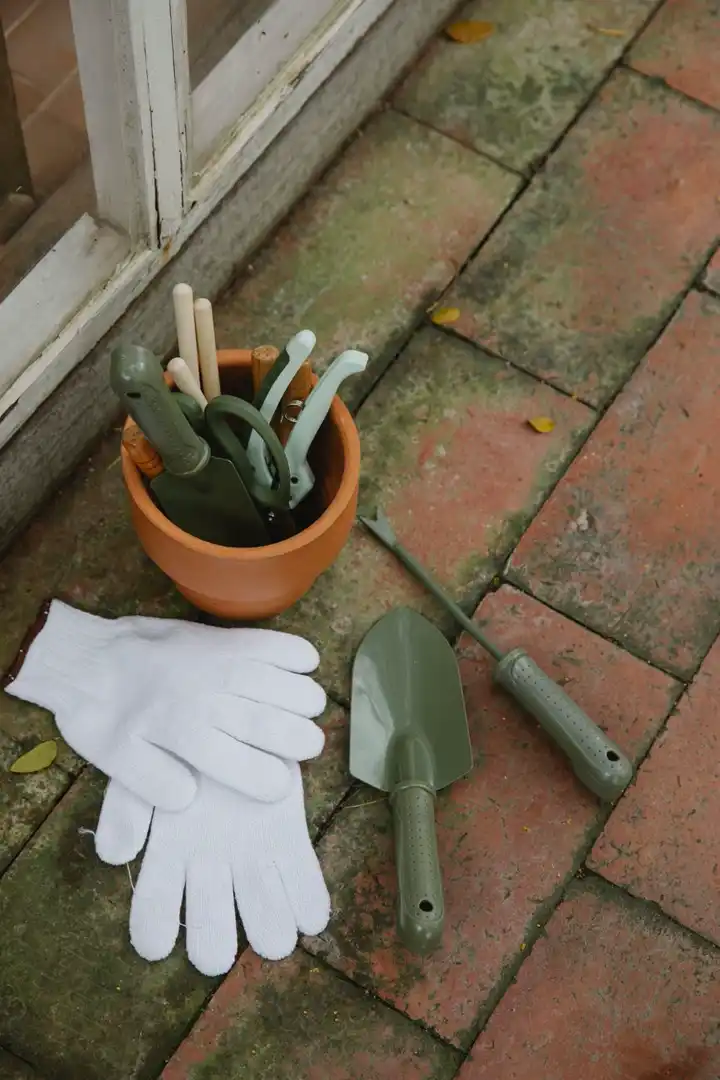
A complete garden tool set should cover five core tasks. Each task requires a specific tool. So a five-tool set that covers all five is far more useful than a ten-tool set with five duplicate hand tools:
- Digging: a full-size garden spade or digging fork — not just a hand trowel. Planting large perennials, moving soil, and creating beds requires a long-handled digging tool.
- Raking: a soil rake for levelling beds and breaking clods. Because a leaf rake and a soil rake are different tools, check which is included.
- Planting: a hand trowel. The most-used tool in any garden. A good trowel with depth markings and a stainless blade handles virtually every small planting task.
- Weeding: a hand fork or a hoe for weeding between plants. Without a weeding tool, removing roots is difficult without disturbing nearby plants.
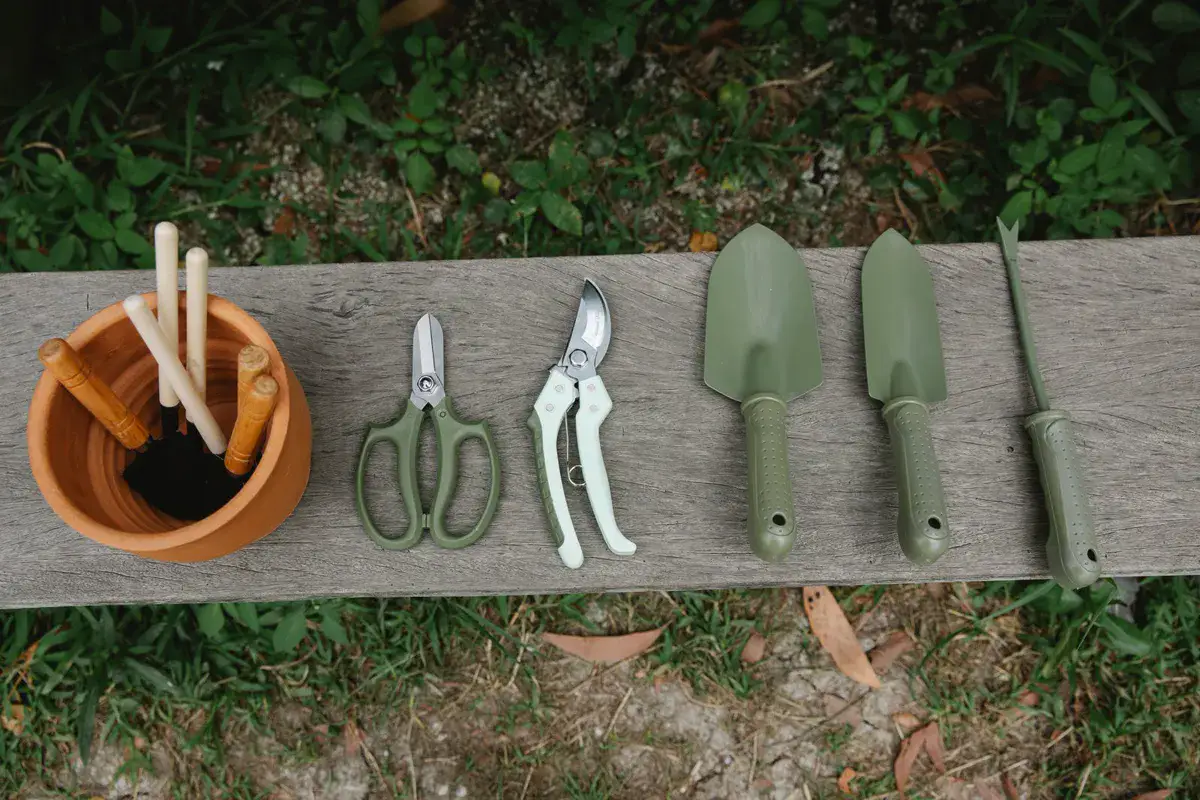
- Pruning: a pair of bypass pruning shears (secateurs). A set without pruning capacity leaves out the tool most regularly used for maintaining plants through the season. Our pruning shears guide covers the best standalone options if the set’s secateurs are inadequate.
What to look for when buying
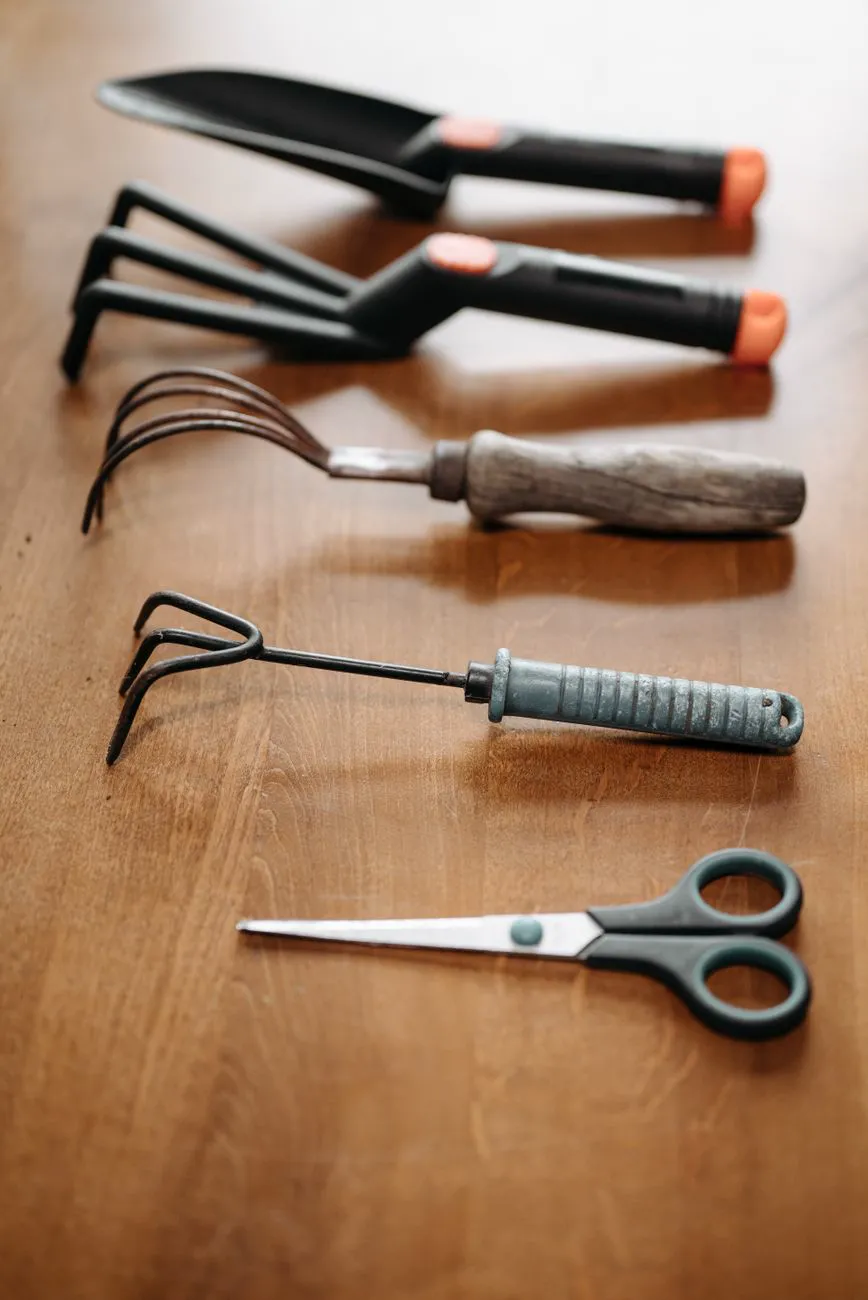
- Full-size vs hand tools: a set of only hand tools (trowel, hand fork, cultivator) handles pots and small beds. It does not handle digging or raking. Most beginner gardens need at least one full-size long-handled tool. So therefore, check that the set includes at least one long-handled tool if you have a plot to dig.
- Handle material consistency: the best garden tool set uses the same handle material throughout — ash, fibreglass, or resin. Mixed-material sets feel cheap and suggest different quality levels between tools.
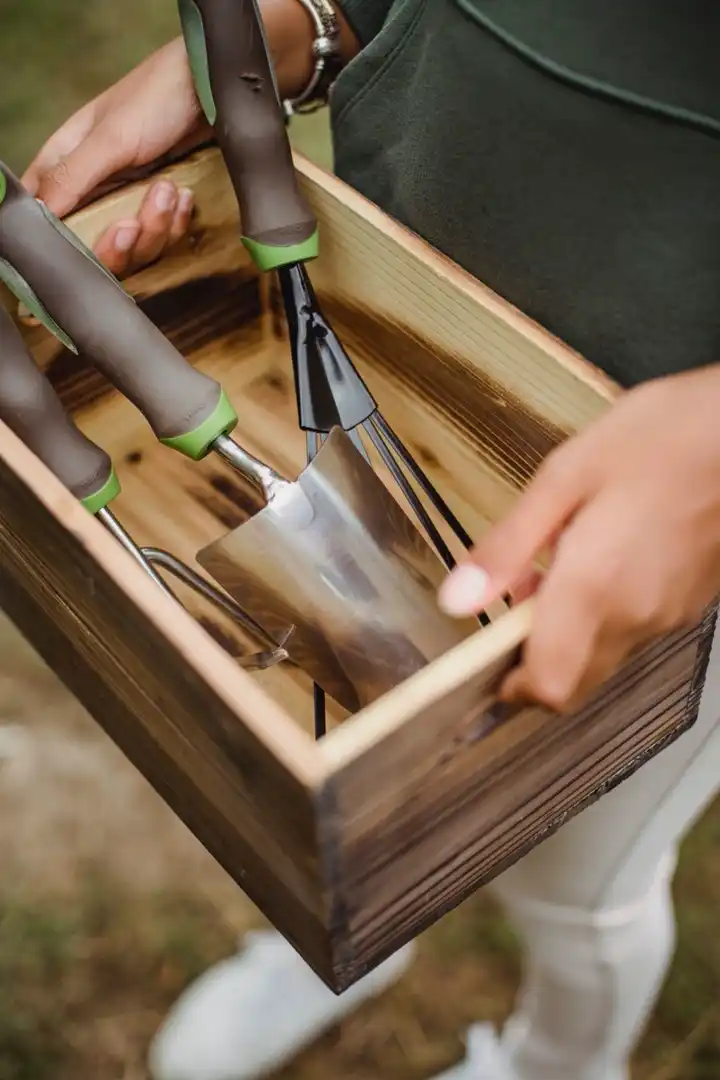
- Storage solution: a hanging rack, canvas roll, or tool bag is useful for keeping a set together. However, a cheap bag that falls apart in one season adds no value. Ignore storage quality claims — focus on tool quality and buy storage separately if needed.
- Brand quality signal: check that the brand sells individual tools of the same quality. Because brands known for their standalone tools (Spear & Jackson, Fiskars, Bahco) use the same quality in their sets, their sets are trustworthy. Unfamiliar brands with unusually large sets at very low prices typically use thinner steel and lower-grade handles.
The 6 best garden tool sets in 2026
1. RHS by Burgon & Ball 4-piece — best starter set
The RHS 4-piece includes a spade, fork, hand trowel, and hand fork — the core four tools for most garden tasks. Because the RHS endorsement requires real-world testing, the tool quality is reliably above the average bundled set.
The stainless blade and ash handles are consistent with the standalone Burgon & Ball range. That makes it the best beginner set on the market. The one gap is pruning. For a first garden, adding secateurs separately is straightforward.
2. Spear & Jackson Neverbend 5-piece — best complete UK set
The Neverbend set extends the 4-piece with the addition of a rake, providing all the tools needed for a vegetable plot or full garden from one purchase.
The Neverbend range uses the same hollow-back forged blades as the standalone versions. Handles are ash throughout. What you get in the set is genuinely what the brand produces for individual sale. It is not a cost-reduced bundle version. In addition, the set is well-priced relative to buying each tool individually.
3. Fiskars Softouch 3-piece hand set — best hand-tool kit
The Fiskars Softouch trio of trowel, transplanter, and cultivator (hand rake) covers all small-scale planting and potting tasks. The ergonomic grip reduces hand fatigue on long potting sessions.
All three tools share the same grip system. They feel consistent to use as a set. The stainless blades wipe clean and resist rust. However, this is a hand-tool-only set. It does not address digging or raking. Use it as a companion to a full-size set, or as the complete kit for container and balcony gardening.
4. True Temper 4-piece — best complete US set
The True Temper set includes a digging spade, garden fork, rake, and hoe — the classic US vegetable-garden four. Because True Temper’s standalone tools are the American hardware-store standard, the set versions carry the same quality.
The fibreglass handles are weather-resistant and lighter than wood. The tempered steel blades handle a wide range of American soil types. For a US suburban garden or allotment starting from nothing, this is the practical starting point.
5. WOLF-Garten modular system — best for flexibility
WOLF-Garten’s interchangeable head system uses a single handle diameter across their full range. Because every tool head attaches to any WOLF handle, you buy one handle and add heads as needed — replacing a worn head without replacing the handle.
This is the most financially efficient approach for a gardener who plans to expand their tool collection over years. However, the upfront cost is higher than a basic set, and the modular system is only economical if you commit to the WOLF range long-term.
6. Falcon/Sharpex individual bundle — best in India
In India, buying a best garden tool set usually means assembling your own from individual Falcon, Sharpex, or Captain Polyplast tools. These brands sell at every agricultural supply store and through Amazon.in.
Because Indian gardens often have specific soil and climate needs, a custom bundle works better than an imported western set — for example, a khurpi (hand scraper) replaces some tasks that a western hand fork or hoe does, and Indian-made digging tools are designed for local soil types. So the best Indian garden tool set is: Falcon digging spade or phawda, a soil rake, a khurpi, and a hand trowel — four tools that cover virtually every task in an Indian kitchen or terrace garden.
Building your garden tool set in India
India’s garden tool market is growing fast. Ten years ago, most quality garden tools were imports. Today, Falcon, Sharpex, Captain Polyplast, and Kumar Exports produce solid tools available at every agricultural supply shop and on Amazon.in. Because these brands are designed for Indian soil conditions and sold at accessible prices, they often represent better value than imported sets of similar quality.
The essential four for an Indian garden: a phawda or digging spade (flat blade, wooden handle — handles most Indian soil types), a khurpi (the curved hand scraper that combines trowel and weeder in Indian gardening), a soil rake for levelling and mixing, and a hand fork or cultivator for loose soil and container work.
For the monsoon season, add a sickle for grass cutting and a hand pruner (secateurs) for cutting back the fast growth that the monsoon triggers. Because monsoon humidity rusts carbon steel within days, wipe tools clean and apply oil after every use during July–September. In addition, store tools inside or in a covered shed rather than leaving them in the garden through rain periods.
For full coverage, our complete guide to gardening tools for beginners covers each tool’s purpose and how to prioritise your purchases as a new gardener.
Caring for your garden tool set
- Clean after every session: remove soil from all blade and tine surfaces before storage. Dried soil holds moisture against the steel and accelerates surface rust. A quick brush or wipe is the whole maintenance routine in practice.
- Sharpen blades seasonally: spade blades, hoe blades, and fork tines all benefit from seasonal sharpening. A flat file run along the bevelled cutting edge at the original angle restores sharpness in minutes. Sharp tools do less damage to plant roots and require less physical effort.
- Oil handles annually: rub a small amount of boiled linseed oil into ash handles once a year. This prevents the wood from drying, cracking, and splintering. Sand any rough patches with 120-grit paper before oiling. A smooth handle prevents blisters.
- Store hanging: tools stored on the ground or leaning against walls develop rust on the parts that contact damp concrete. Hang tools on wall hooks or a dedicated rack. In addition, store with the blade or tine end up — this keeps moisture away from the head-to-handle join, where water can cause the handle to swell and loosen.
Frequently asked questions
What is the best garden tool set for a beginner?
A 4-piece set covering digging, raking, planting, and weeding is the practical starting point. For example, the RHS 4-piece (spade, fork, trowel, hand fork) or the True Temper 4-piece (spade, fork, rake, hoe) covers the jobs a new garden most commonly requires. However, add bypass secateurs as a standalone purchase — because pruning is the most regular maintenance task and no bundled set includes a secateur of sufficient quality.
Are expensive garden tool sets worth it?
Yes, if you garden regularly and intend to keep the tools for many years. Cheap sets use thinner steel that bends under load and wooden handles that crack within a season. Because quality tools last 20+ years with proper care, the cost per year of use is lower for an expensive set than for a replacement cycle of cheap tools. However, an expensive set is poor value if the garden is small or use is occasional — in that case, a mid-range set at a sensible price is enough.
Can I buy parts of a garden tool set separately?
Yes — this is often the best approach for experienced gardeners. Instead of buying a set, choose each tool from the best standalone option: the best spade might be from Spear & Jackson, the best rake from Bulldog, the best trowel from Fiskars. Because set pricing assumes a trade-off between tool quality and bundle discount, individual tool quality often beats a matching set. Use our individual tool guides — spade, rake, trowel — to choose each tool on its own merits.
How do I store a garden tool set long-term?
Hang tools on a wall rack in a dry shed or garage. Clean and dry all tools before winter storage. Oil stainless steel blades lightly with WD-40 or linseed oil. Sand and oil wooden handles. Store secateurs with the blades closed and a light oil on the blade pivot. Because damp storage is the main cause of rust and handle deterioration, a dry, ventilated storage location extends tool life more than any other single factor.
What tools should be in a basic garden tool set?
A basic set covers digging (spade or trowel), cultivating (hand fork or hoe), cutting (secateurs), and raking (hand rake) — the four jobs almost every planting task needs. Beginners doing mostly container and small-bed work can start with just a hand trowel, hand fork, and secateurs rather than a full multi-piece set.
Is a garden tool set a good gift for a gardener?
It depends on the recipient’s existing kit — experienced gardeners usually already have opinions on brands and prefer a single high-quality tool over a generic bundled set. For a beginner or someone starting a new garden, a well-reviewed multi-piece set with a carry bag is a genuinely useful gift; check they don’t already own the basics first.
What is the difference between forged and stamped garden tools?
Forged tools are shaped from a single heated steel billet, making the blade and neck one continuous piece that resists bending under load. Stamped tools are cut from a flat steel sheet, which is lighter and cheaper but flexes and can crack at the neck when it hits a root or stone. Forged tools cost more but last far longer for regular digging work.
How much should I spend on a first garden tool set?
A mid-range set costing enough to include forged (not stamped) core tools is a reasonable first purchase — extremely cheap sets often bend or snap within a season. For an occasional gardener working small beds and containers, a modest mid-range set is genuinely enough; save the premium spend for the one or two tools used every week.
Do left-handed gardeners need a different tool set?
Most core tools — spades, forks, trowels, rakes — are symmetrical and work equally well for left- and right-handed users. Secateurs and some loppers are the exception: standard bypass secateurs are built for a right-hand grip, so left-handed gardeners get noticeably better control and less hand fatigue from a dedicated left-handed pair.
Can beginners use professional-grade garden tools?
Yes — there is no skill barrier to using forged, professional-grade tools, and beginners often get better results because the tools flex and bend less when learning proper digging technique. The only downside is cost and, for larger tools, weight; a beginner with limited upper-body strength may prefer a lighter fibreglass-handled version of the same head.
How do I know when to replace a garden tool set?
Replace individual tools rather than the whole set — a spade with a cracked handle or rusted-through blade is unsafe to use, but a rake or trowel from the same set may still have years of life left. Check handles annually for splits and blades for pitting rust that thins the metal; either sign means that specific tool needs replacing.
Sources and further reading
Still stuck? Ask the Plant Doctor
Describe the problem — yellow leaves, holes, no flowers — and get a clear answer in seconds. FreeAI can make mistakes. Answers are guidance, not a guarantee — check anything important against the guide it links to, and always read the label on any product before you use it.