Green Manure
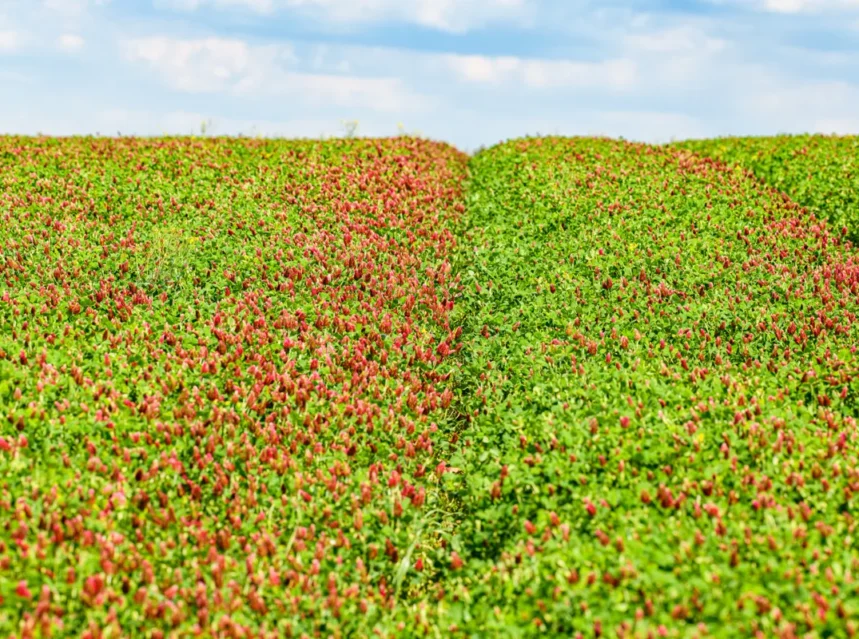
Green manure is a crop grown not to harvest but to dig back into the soil, where it rots down to add nutrients, organic matter, and structure — and it is one of the cheapest, most natural ways to improve a vegetable garden. Also called a cover crop, it protects and feeds bare soil between main crops. Here is the complete guide to using green manure in your garden.
Quick start: Sow a fast-growing green manure such as clover, mustard, or field beans on any bare bed. Let it grow for a few weeks to a few months, then cut it down and dig or hoe it into the topsoil before it sets seed. Leave it to break down for two to three weeks before planting your next crop.
Experienced growers and university extension guides treat green manures as free fertiliser plus living mulch. Allotment and no-dig gardeners share the same lessons. Always cut a green manure down before it flowers and sets seed, or it becomes a weed. Legumes like clover and beans pull nitrogen from the air and leave the soil richer. Over winter, even a rough cover stops rain washing nutrients away. It also keeps weeds from taking over. In short, never leave soil bare. A green manure works while the bed rests.
🧰 In a hurry? Jump straight to our tested picks for this guide ↓
Green manure at a glance
| Feature | Detail |
|---|---|
| What it is | A crop grown to dig back into the soil |
| Also called | Cover crop, living mulch |
| Main benefits | Adds nutrients, organic matter, structure; suppresses weeds |
| Nitrogen-fixers | Clover, field beans, vetch, lupins (legumes) |
| Fast cover | Mustard, buckwheat, phacelia |
| When to sow | Any time a bed is empty; often after harvest |
| Key rule | Dig in before it flowers and sets seed |
Why use green manure?

Bare soil is wasted soil. Left uncovered, it loses nutrients to rain, bakes hard in the sun, and quickly fills with weeds. A green manure puts that resting ground to work, covering and feeding it for almost no cost.
The benefits stack up fast. Green manures add organic matter and nutrients when dug in, fix nitrogen if you choose a legume, smother weeds, protect soil from erosion, and feed earthworms and soil life. For anyone wanting healthier soil without buying bags of fertiliser, it is a gardening superpower.
How green manure works
The idea is simple. You sow a quick-growing crop on empty soil and let it put on plenty of leafy growth. While it grows, its roots open up the soil and, in the case of legumes, gather nitrogen from the air into root nodules.
Before the crop flowers, you cut it down and work it into the topsoil, or simply leave it on the surface as a mulch in a no-dig garden. As the soft green material rots, it releases its stored nutrients and feeds the soil for the crop that follows. The whole cycle turns sunlight and air into free fertility.
Types of green manure
Choosing the right one depends on your goal and season. The main groups each do a different job.
Legumes such as clover, field beans, vetch, and lupins are the nitrogen-fixers, leaving the soil richer for hungry crops like brassicas. Grasses and grains like rye and oats grow fast, add bulk organic matter, and hold soil over winter. Brassicas such as mustard grow quickly and can help cleanse soil, while others like buckwheat and phacelia are superb fast summer covers that also attract bees.
Best green manures to grow
A few reliable choices cover most needs:
- Crimson and white clover — fix nitrogen; clover suits longer gaps and even paths.
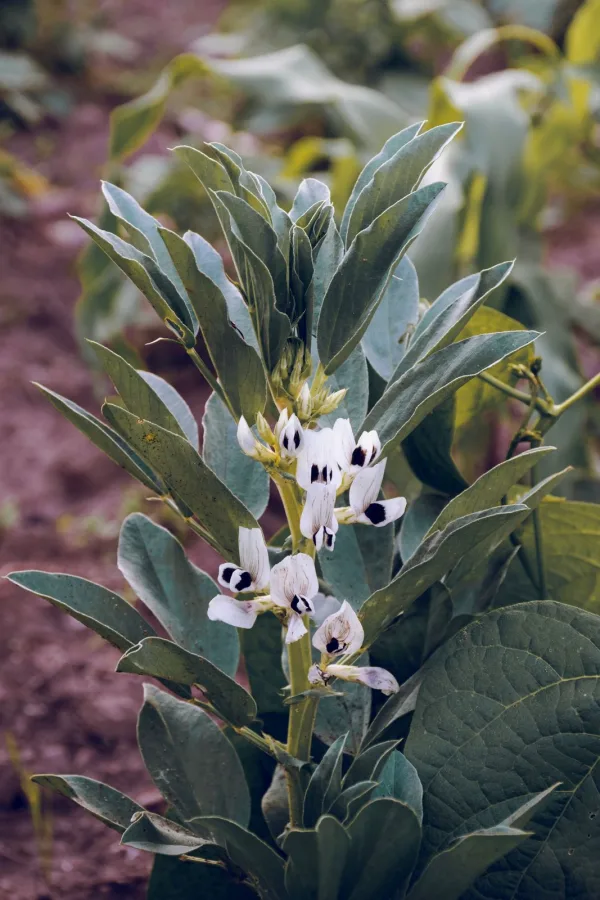
- Field beans and vetch — hardy nitrogen-fixers, ideal sown in autumn for winter cover.
- Mustard — very fast summer cover, but rotate away from cabbage-family crops.
- Buckwheat and phacelia — quick summer growth, flowers loved by pollinators.
- Grazing rye — tough winter cover that holds soil and nutrients until spring.
How much nitrogen do they really give you?
Published figures for legumes look generous, but read the label on the number. Most sources report nitrogen held in the plant. What matters to your next crop is what becomes available after the residue rots, and that is roughly half.
| Crop | Nitrogen in the crop | What the source actually calls it |
|---|---|---|
| Red clover | 70–150 lb/acre | Fixed. Measured fertiliser replacement value in a two-year Michigan trial: 36 lb/acre |
| Hairy vetch | 130–180 lb/acre | Accumulated in the biomass, not delivered |
| Crimson clover | 70–150 lb/acre | “Contribution” — the sources do not define it |
| Field bean (winter, ¹&sup5;N study) | 96–118 kg/ha fixed | Fixed, out of 188–206 kg/ha total. Roughly 43 per cent of the plant’s nitrogen came from the soil, not the air |
| Rye, mustard, phacelia | none added | These catch and recycle nitrogen. Mustard has held 328 lb/acre that would otherwise have leached |
Two practical conclusions. Legumes before a hungry crop, yes — but plan on about half the headline figure. And a non-legume is not a lesser choice; on a wet winter plot, holding nutrients in place is often worth more than fixing new ones.
How long to leave green manure growing
The time one needs varies by type and season. Fast summer covers like mustard, buckwheat, and phacelia are ready in just six to eight weeks. Hardy winter crops such as field beans and rye stay in the ground for several months, covering the soil right through to spring.
There is no need to rush. A short gap between crops suits a quick, fast-growing one. A long winter rest suits a slow, hardy one. The rule stays the same in every case. Cut it down before it flowers, then dig it in or cut it for mulch.
Green manure vs compost and fertiliser
Green manure is not a replacement for compost. It is a partner. Compost adds bulk organic matter you spread on top. A green manure builds fertility in place, with living roots feeding the soil as it grows.
It also beats bagged fertiliser on cost. You grow it from a cheap packet of seed. Legumes even make their own nitrogen for free. For the best soil, use all three together through the year — and if you garden the no-dig way, simply cut them down and leave them on the surface as a mulch.
When & how to sow green manure
The best time to sow is whenever a bed falls empty, most often after harvesting a crop. For winter protection, sow hardy types like field beans, vetch, or rye in autumn. For a quick summer boost between crops, sow fast types like mustard, buckwheat, or phacelia.
Sowing is easy. Rake the soil to a rough tilth, scatter the seed fairly thickly, rake again lightly to cover, and water if dry (see improving garden soil). Most need no feeding and little care, simply growing away on their own until it is time to cut them down.

Digging in & the golden rule
The single most important rule is to cut a green manure down before it flowers and sets seed. Otherwise it can self-seed and turn into a weed problem. Young, leafy growth also rots down faster and releases more goodness.
To dig it in, chop the top growth down with shears or a hoe, then turn it into the top few centimetres of soil. In a no-dig garden, simply cut it off at the base and leave the foliage on the surface as a mulch, or compost it. Either way, wait two to three weeks before sowing or planting your next crop, as freshly buried green material can briefly stall young seedlings.
How long to wait before planting, and why
Advice ranges from one week to six, which looks like disagreement but is not. The wait depends on how woody the material is, how warm the soil is, and what you are planting next.
| Crop | C:N ratio | What to expect |
|---|---|---|
| Mustard | 10–20:1 | Rots fast, releases nitrogen quickly |
| Crimson & red clover | 15–20:1 | Fast, nitrogen-positive |
| Oats | 15–25:1 | Straightforward |
| Buckwheat | 25–50:1 | Slower; depends how mature you let it get |
| Cereal rye | 35–80:1 | Young 14:1 rising to 80 as straw. Cut it young or it will lock up nitrogen |
Above roughly 20:1 to 30:1 — sources quote thresholds from 20 to 40, most often 24 or 25 — soil microbes borrow nitrogen from the soil to break the residue down, so seedlings go hungry for a few weeks. That is the reason usually given for waiting.
There are two more reasons that rarely get mentioned. Rye releases compounds that suppress the germination of small seeds, and decaying green material attracts the egg-laying flies behind seedcorn maggot, which is why extension services suggest two and a half to three weeks before sowing. Transplants cope far better than direct-sown carrots, onions or lettuce, so if you are impatient, plant modules rather than seed.
Green manure in India & warm climates
Green manuring has deep roots in Indian farming. Dhaincha (Sesbania), sunn hemp (Crotalaria juncea) and cowpea are grown and ploughed into rice and vegetable ground, and state agricultural universities still publish seed rates and incorporation dates for them. Dhaincha goes in at roughly 50 kg of seed per hectare and is turned under at 45 to 60 days; sunn hemp at 25 to 35 kg, on much the same schedule.
India also has a practice that Western guides never mention: green-leaf manuring, where the leaves are grown somewhere else and carried to the bed. Loppings of gliricidia, neem and karanj are used this way, and it is the version that works when you cannot spare a bed for two months.
For home gardeners in warm and monsoon climates, fast legumes such as cowpea and sunn hemp are excellent. They grow quickly in the heat, and sowing one before or after the monsoon protects the ground from heavy rain and fierce sun, exactly when bare soil suffers most. In cooler hill areas the temperate covers used in the US and UK work well too.
Water decides the calendar, not the month. Indian advisories are explicit about this: where irrigation is available the crop can be sown ahead of the rains, and where it is not, sowing waits for the monsoon to break. The same applies after you cut it. Rotting needs moisture, and in flooded rice the recommendation is to hold shallow water over the residue for about a week for soft material such as sunn hemp, and a fortnight for tougher, more fibrous growth.
There is a trade-off here that rarely gets said aloud. A crop grown in place spends your soil water to build its own biomass. Leaves cut elsewhere and carried in do not. On a rainfed plot, or in a dry spell, that difference decides which method is actually available to you.
Rye suppresses small seeds — and the experts disagree on how long
Cereal rye is the toughest winter cover and the most likely to catch you out. It releases allelopathic compounds, and susceptibility tracks seed size: the smaller the seed, the worse the effect. Carrots and onions suffer, sweetcorn barely notices.
How long it lasts is genuinely contested. One major US handbook says the effect tapers off after about 30 days; Penn State Extension reports newer work showing it subsides within roughly a week, and argues the weed suppression people credit to chemistry is mostly the physical mulch. Both are extension sources and they do not agree, so treat three to four weeks as a cautious margin before small seed, and transplant if you can.
Mustard is the classic beginner’s choice, and the one that breaks a brassica rotation
Mustard grows fast, holds a lot of nitrogen and is widely recommended to beginners. It is also a brassica, which matters for your crop rotation. Both the RHS and the US SARE handbook say plainly that it should not be followed by cabbages, broccoli, kale or swedes, because it can build up clubroot. Michigan State takes a softer line, arguing that a six-week crop poses little disease risk.
The reason to side with caution is how long the problem lasts. University of California IPM puts clubroot resting spores at ten years or longer in the soil, and says rotation into non-host crops generally does not give effective control. If cabbages matter to you, use phacelia or a cereal on those beds and keep mustard for the potato and bean ground.
Common mistakes
Letting it set seed
The biggest error. A cover crop that flowers and seeds becomes a weed. Always cut it down while still leafy and young.
Planting straight after digging in
Fresh green material can rob seedlings of nitrogen as it rots. Wait two to three weeks before sowing the next crop.
Ignoring crop rotation
Mustard is a brassica and clover a legume, so fit them into your rotation rather than following or preceding their own plant families.
Related growing guides
- How to improve garden soil
- How to make compost at home
- Mulching guide
- How to grow Broad beans
- How to grow Cowpea
- Organic fertilizers guide
Frequently asked questions
What is green manure in simple terms?
It is a crop grown not to eat but to dig back into the soil, where it rots down and enriches the ground with nutrients and organic matter. It is also called a cover crop.
Which green manure adds the most nitrogen, and how much of it actually reaches the next crop?
Legumes are the only group that adds new nitrogen. Clover, field beans, vetch and lupins carry root nodules that fix it from the air. Non-legumes such as rye, mustard and phacelia add none. Their job is to catch nutrients that would otherwise wash away over winter and hand them back as they rot, which is valuable but different.
Now the part almost no guide mentions. The large nitrogen figures you see are nitrogen held in the plant, not nitrogen your next crop receives. Those are two different measurements, and they are routinely printed under the same heading.
In a two-year Michigan trial reported in the US SARE cover-crop handbook, red clover fixed 70 to 150 lb of nitrogen per acre, yet its measured fertiliser replacement value was 36 lb per acre. As a rule of thumb, about half of what a legume fixes becomes available to the next season’s crop. White clover holds up to 45 per cent of its nitrogen in roots that a spade never lifts. Treat a green manure as a soil-building habit, not a sack of fertiliser.
When should you dig in a green manure?
Cut it down before it flowers and sets seed, while the growth is still young and leafy. Two things go wrong if you wait. The tissue turns woody, so it breaks down slowly and locks up nitrogen for longer. Several species will also self-seed and become the weed you spend next season pulling, and buckwheat is the usual culprit, wanting killing within a week or so of the first flowers.
How long to leave it afterwards depends on what you are planting. The RHS suggests a month before the next crop. Two to three weeks is the more common figure for transplants, and there are three separate reasons for the wait, not one: decaying residue temporarily ties up nitrogen, rye releases compounds that suppress small seeds, and fresh green material attracts the egg-laying flies behind seedcorn maggot.
Can I grow green manure in India, and which ones?
Yes, and the practice is far older here than in most Western gardens. Dhaincha (Sesbania) and sunn hemp (Crotalaria juncea) are the classics, with cowpea and cluster bean used between vegetable crops in warmer states.
The timing is tied to water, not to a calendar month. ICAR’s 2025 kharif advisories put dhaincha sowing in the pre-monsoon irrigation where irrigation exists, and at the onset of the monsoon where it does not.
In Haryana and Delhi the crop goes in during the first week of May and is ploughed down in the third week of June, at 45 to 50 days, with rice transplanted a week later. Odisha broadcasts it 45 to 50 days before transplanting. Rajasthan turns it in earlier still, at 35 to 40 days, before flowering.
One caution worth knowing: sowings in October to November or March to April in Indian sources are usually for multiplying seed, not for making manure. It is an easy line to misread.
How long does green manure take to break down?
Soft, leafy crops such as mustard or phacelia rot down in two to four weeks in warm soil; tougher, stemmy ones such as grazing rye can take six weeks or more. Warmth, moisture and chopping the material small all speed it up, and cold soil slows everything down.
Do you have to dig green manure in?
No. On a no-dig plot you can cut it at the base, leave the tops on the surface as a mulch and let the worms take it down, or cover it with cardboard and compost. Digging in is faster but disturbs soil structure, which is the very thing it is meant to build.
How is green manure different from compost?
Green manure is grown where it will be used, so it feeds the soil biology in place and its living roots hold structure and nutrients while it grows. Compost is made elsewhere and imported as finished organic matter. They do different jobs, and most good soils get both.
Can I sow vegetables straight after digging in a green manure?
Wait two to four weeks. Freshly incorporated material temporarily ties up nitrogen as it decays, and rye in particular releases compounds that suppress small seeds. Transplanted seedlings cope better than direct-sown carrots or lettuce.
Which green manure is best for winter?
Choose something hardy that keeps growing in the cold: grazing rye, field beans and winter tares are the standard trio, sown from late summer to early autumn and turned in during spring. Frost-tender crops such as buckwheat and phacelia are for summer gaps instead.
Is a green manure actually worth it in a small garden?
Not always, and the honest answer is that experienced no-dig growers disagree with each other. One argument says a seed packet is cheaper than compost and the bed is idle anyway. The other says that on a small plot the bed is your scarcest asset, and eight weeks under a cover crop is eight weeks not growing food you would otherwise buy.
Four things decide it for you: how long the bed is genuinely empty, what compost costs where you live, how bad your slug pressure is, and whether you can terminate the crop without machinery. If the gap is under six weeks, buying compost usually wins.
Will a green manure make my slug problem worse?
It can, and this is the cost gardeners report most often. A dense, damp, leafy cover through autumn and winter is close to ideal slug habitat, and the damage shows up on the crop that follows rather than on the cover crop itself. Two things help, alongside the usual slug and snail measures. Choose an open, upright cover such as field beans or grazing rye rather than a low dense mat, and clear the residue rather than leaving a thick wet mulch where you are about to plant seedlings. A cover left standing long enough also builds up the beetles and other predators that eat slugs, so the balance shifts over several seasons.
Can I grow a green manure in pots or on a terrace?
Realistically, no, and it is worth saying plainly because plenty of articles imply otherwise. Green manuring works by building soil in place over weeks, and a container has neither the volume nor the time. Indian institutional guidance points the same way: kitchen-garden and rooftop-gardening advice from state agricultural universities does not include green manuring at all, and every published rate is given per hectare with a tractor or rotavator assumed.
The practice that does scale down is the Indian one of green-leaf manuring: grow the biomass somewhere else and carry it to the bed. A single gliricidia on a boundary yields roughly 5 to 10 kg of green leaf a year across two or three prunings, and a tonne of gliricidia leaf supplies about 21 kg of nitrogen. Neem and karanj loppings are used the same way. For a few raised beds, that is the version that works.
What happens if I sow it too late?
You lose most of the benefit, and you cannot buy it back with extra seed. In trials summarised by SARE, oats sown on 25 August left 39 per cent fewer weed plants by spring; sown just two weeks later, the same crop managed only 10 per cent. Penn State Extension makes the harder point about rye: a late-sown crop will not produce as much biomass as an early one regardless of seeding rate. If you have missed the window, a light mulch over bare soil does more good than a thin, hungry cover crop.
Still stuck? Ask the Plant Doctor
Describe the problem — yellow leaves, holes, no flowers — and get a clear answer in seconds. FreeAI can make mistakes. Answers are guidance, not a guarantee — check anything important against the guide it links to, and always read the label on any product before you use it.