Grey Mould (Botrytis)
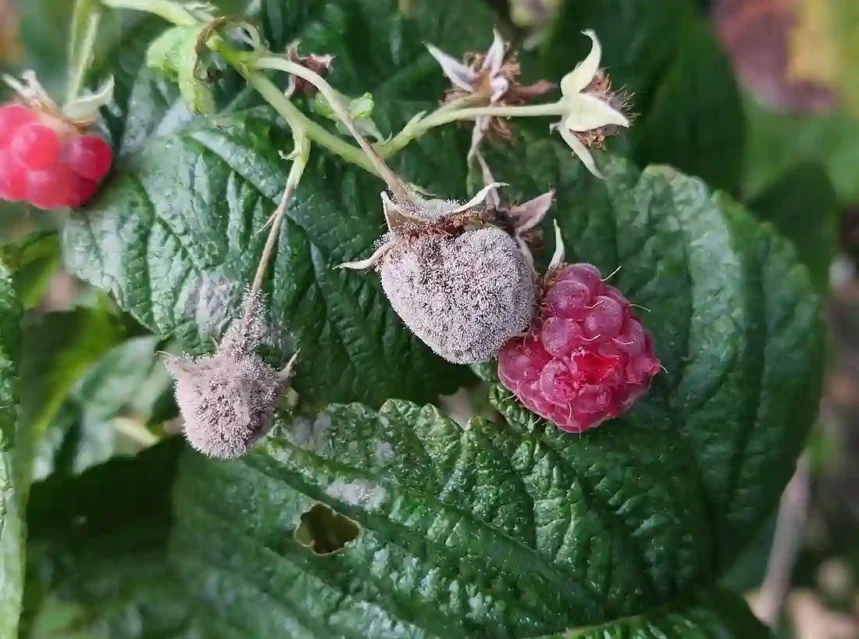
Grey mould is a very common fungal disease, caused by Botrytis cinerea, that coats dying, damaged, or soft plant tissue in a fuzzy grey-brown growth and rots fruit, flowers, leaves, and stems. It thrives in cool, damp, still air and spreads fast through a crowded greenhouse or border. Here is how to identify grey mould, how to get rid of grey mould, and how to stop it taking hold.
Quick start: Look for fuzzy grey or brown mould on rotting fruit, faded flowers, and soft stems, often with a puff of dust-like spores when disturbed. Botrytis is worst in cool, wet, crowded conditions. The best control is airflow and hygiene: remove infected parts at once, space plants out, ventilate under cover, and keep water off the foliage. You rarely need to spray if you keep plants dry and uncrowded. With grey mould on plants, prevention is far easier than cure.
Gardeners usually meet grey mould in a damp greenhouse or a wet summer, where it can seem to appear overnight on strawberries, tomatoes, and faded flowers. University-extension trials and experienced growers report the same pattern: it almost always starts on tissue that is already weak, dead, or injured, then jumps to healthy fruit and stems. So the advice they repeat is simple. Keep things tidy and airy, pick off dead leaves and spent blooms, and never let fruit sit in damp foliage. Many also warn that crowded seed trays and overwatered cuttings are where it does the quietest damage.
🧰 In a hurry? Jump straight to our tested picks for this guide ↓
What is grey mould?
Grey mould (also spelled gray mold) is a fungal disease caused by Botrytis cinerea. It is one of the most widespread plant diseases on Earth, attacking more than 200 plant species, and by some counts well over a thousand.
The fungus is a necrotroph, which means it feeds on tissue it has killed. First it colonises dead and dying parts. Then it spreads into healthy fruit, flowers, and stems. It also makes masses of microscopic spores that drift on the air, so once grey mould appears it spreads easily. You can read more in this overview of Botrytis cinerea. The disease is most active in cool, humid, and poorly ventilated conditions.
| Feature | Detail |
|---|---|
| Cause | Botrytis cinerea (a fungus) |
| Also called | Gray mold, botrytis, botrytis blight |
| Main sign | Fuzzy grey-brown mould, puff of spores when touched |
| Loves | Cool, damp, still, crowded air |
| Starts on | Dead, faded, bruised, or frost-damaged tissue |
| Worst on | Strawberries, tomatoes, lettuce, seedlings, soft flowers |
| Best control | Airflow, dryness, and removing infected parts |
What does grey mould look like?
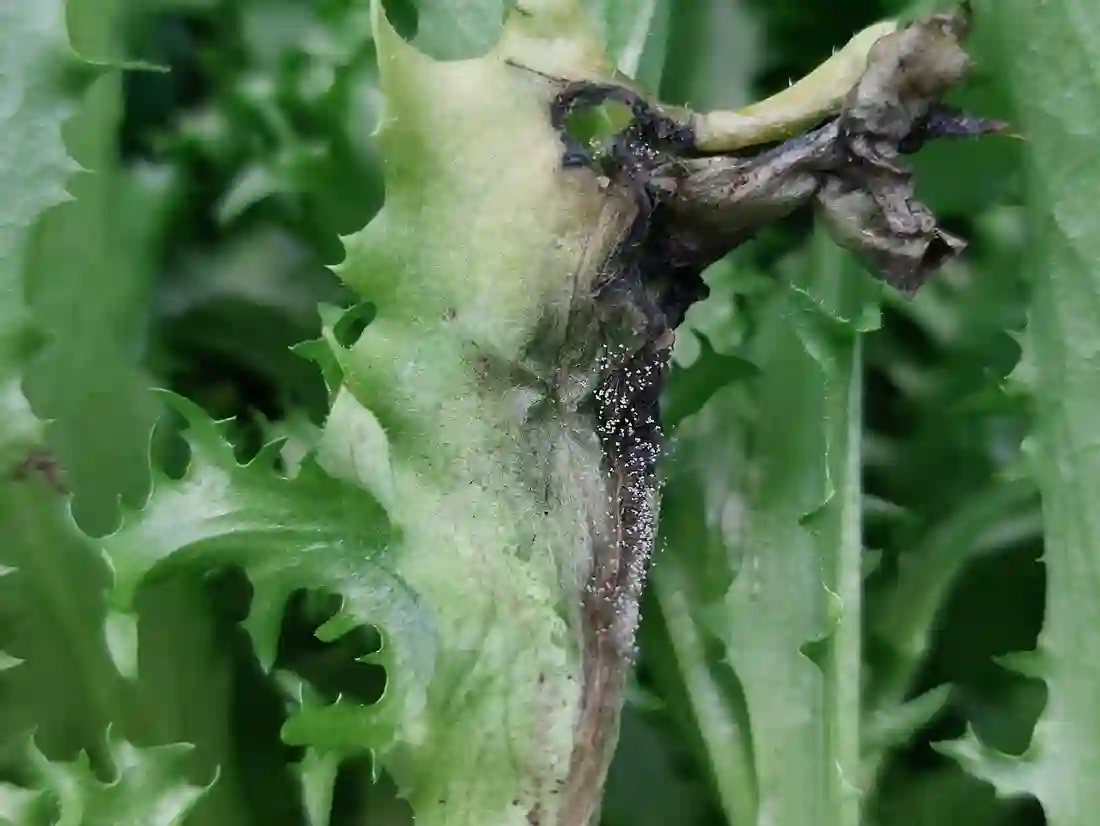
The fuzzy growth is the clearest sign of grey mould, but there are other clues too:
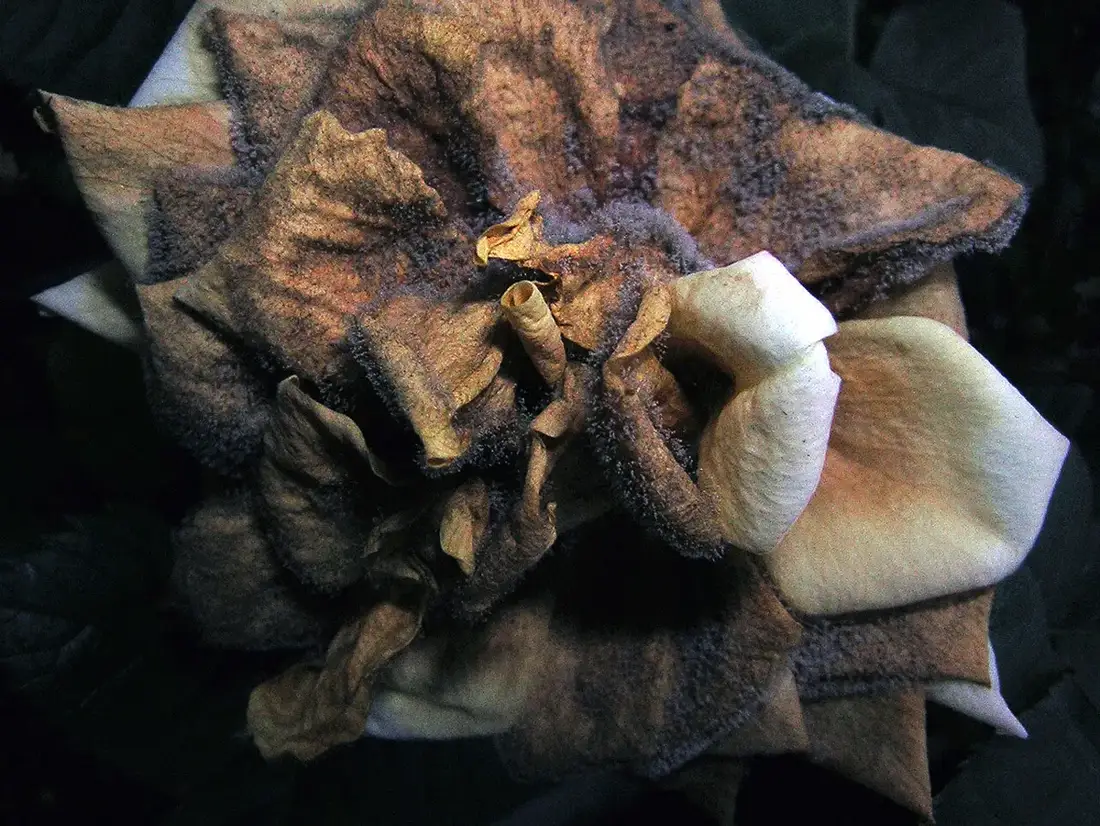
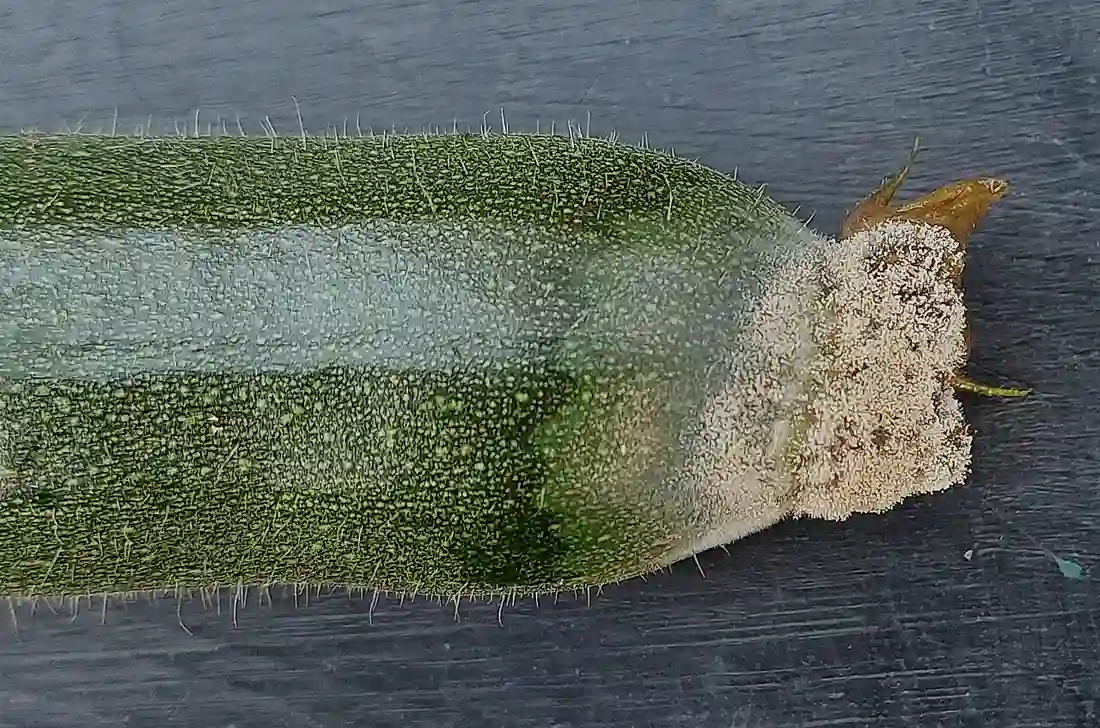
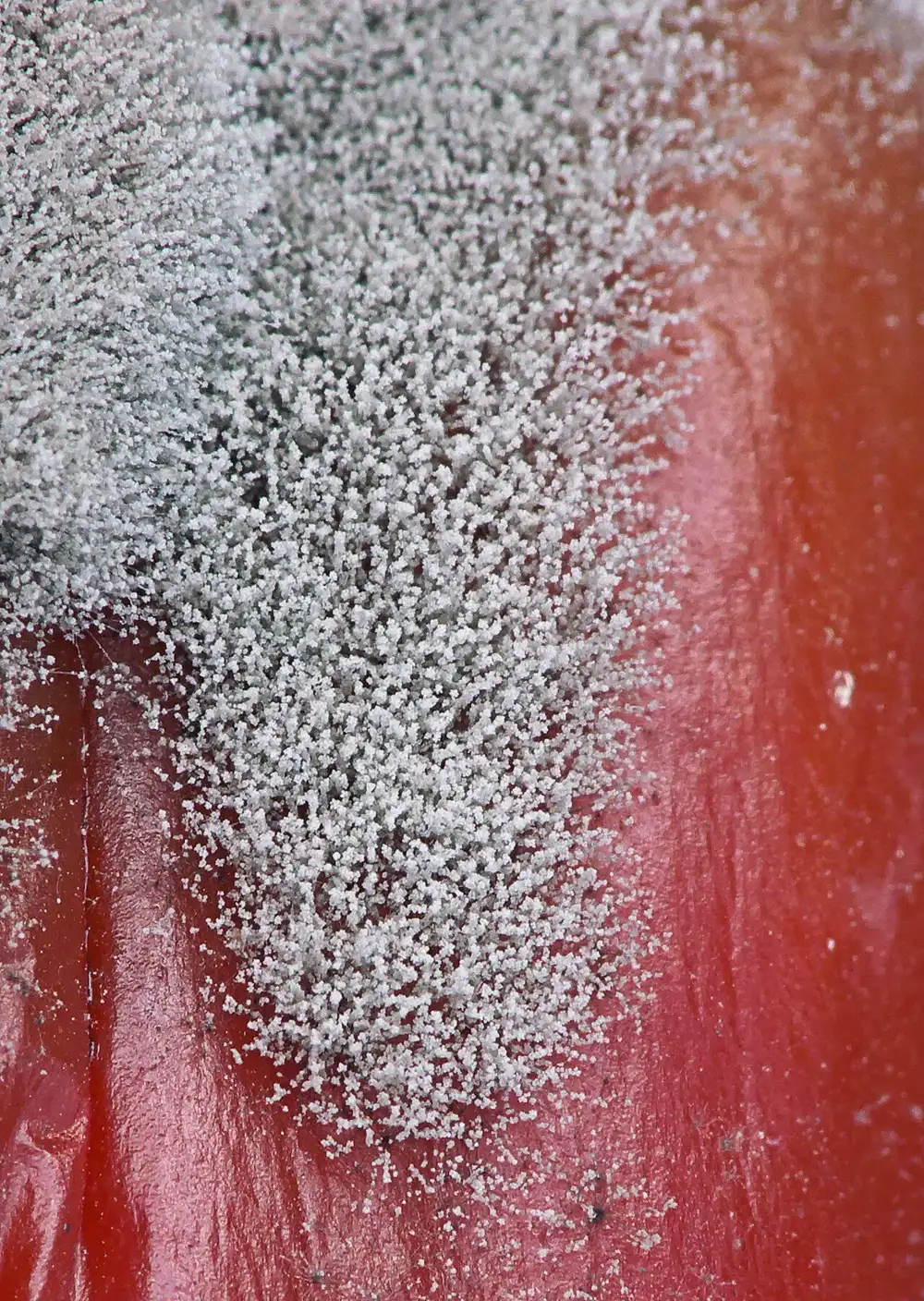
- Fuzzy grey coating: a soft grey or grey-brown mould on rotting fruit, flowers, leaves, or stems.
- Puff of spores: a cloud of dust-like spores rises when you touch or move an infected part.
- Soft brown rot: the tissue beneath turns soft, brown, and mushy.
- Faded flowers and fruit: blooms and soft fruit rot rather than simply drying out.
- Stem lesions: brown, sometimes girdling patches on stems, often where a leaf was removed.
- Leaf spots with rings: on some plants the dead patches show a faint target or bull’s-eye pattern.
- Tiny black specks: hard black resting bodies (sclerotia) can form on badly rotted tissue.
Tomatoes sometimes show a curious symptom called “ghost spot”. Pale rings appear on the fruit skin where spores landed but the infection stalled. The fruit stays edible, yet it warns you that botrytis is active nearby.
What conditions cause grey mould?
The weather and how you grow your plants drive grey mould far more than bad luck. The fungus needs cool, damp, and still air to take hold.
Spores sit in the air and soil almost all the time. They germinate on wet surfaces, especially on tissue that is already dead, faded, bruised, or frost-damaged. A wet summer outdoors gives ideal conditions, and so does a closed, humid greenhouse. Soft, sappy growth from heavy nitrogen feeding is also more vulnerable. The numbers below explain why airflow and dryness matter so much.
| Factor | Botrytis wants |
|---|---|
| Temperature | Cool to mild, about 15–25 °C (59–77 °F); best near 18 °C |
| Humidity | High, above 90–93% relative humidity |
| Leaf wetness | Free water or dew; strawberry flowers infect after roughly 13–16 hours wet |
| Spore germination | Within about 4–8 hours on a wet surface |
| Visible mould | Often within 48–72 hours of infection |
| Slows or stops | Warm, dry air above about 30 °C (86 °F) |
Notice the pattern. Botrytis dislikes heat. A warm, airy, dry day is your friend, while a cool, wet, still night is the danger zone.
How grey mould survives and spreads
Understanding the life cycle helps you break it. The fungus has three tricks: it survives, it disperses, and it waits.
First, it survives. Botrytis overwinters as tough black sclerotia and as threads in dead leaves, mummified fruit, and old mulch. These resting bodies hold very little water and can last for years, ready to grow again when conditions turn cool and damp.
Next, it disperses. In spring the fungus produces huge numbers of asexual spores called conidia. Wind, rain splash, and even your hands and tools carry them onto fresh growth. This is why handling infected plants roughly spreads the problem.
Finally, it waits. Spores often land on open flowers and infect them quietly at bloom. The infection then stays latent, doing nothing visible until the fruit ripens or the petals fade. That is the real reason grey mould seems to strike ripe strawberries “overnight”. The fungus was there all along, hidden since flowering.
Which plants get grey mould?
Grey mould attacks an enormous range of plants. Soft fruit such as strawberries, raspberries, and grapes are classic victims, along with tomatoes, lettuce, courgettes, beans, and many seedlings and cuttings.
It is just as common on ornamentals. It rots the petals of roses, peonies, cyclamen, and bedding plants, plus the soft growth of many houseplants and greenhouse crops. The damage varies a lot. Sometimes it spoils a few fruit; other times whole trays of seedlings collapse through “damping off” style rot. Under glass, where humidity is high, it can run through a crop fast. Soft fruit left touching damp soil or foliage is especially at risk, which is why a straw mulch or a raised strawberry planter pays off. Leafy crops like lettuce rot from the base, and faded flowers left on the plant are another frequent starting point.
Grey mould vs powdery and downy mildew
Fuzzy growth on a leaf is easy to mistake for another disease. Grey mould looks and behaves quite differently from the two mildews, so a quick comparison saves you treating the wrong thing.
| Sign | Grey mould (botrytis) | Powdery mildew | Downy mildew |
|---|---|---|---|
| Look | Fuzzy grey-brown, on rotting tissue | White, dry, dusty coating | Yellow patches above, greyish felt below |
| Where | Soft fruit, flowers, stems, dead tissue | Upper leaf surfaces | Leaf undersides |
| Rot? | Yes, soft brown decay | No, tissue stays firm | Angular dead patches |
| Loves | Cool and very wet | Humid air but dry leaves | Cool nights, long dew |
In short, if the tissue is rotting and soft under the fuzz, it is grey mould. If the leaf is firm with a dry white dusting, see our guide to powdery mildew instead. For angular yellow blotches, check downy mildew.
How to get rid of grey mould
Once grey mould appears, act quickly to remove it and change the conditions that let it spread:
- Remove infected parts: cut out and bin or burn affected fruit, flowers, leaves, and stems. Do not compost them.
- Cut back to healthy tissue: on stems, trim about 10–15 cm (4–6 inches) below the lesion into clean, firm growth.
- Handle gently to limit spores: bag infected material where it stands so you do not shake spores over healthy plants.
- Sterilise your tools: wipe blades with 70% alcohol, or a 1-in-10 bleach solution, between plants.
- Improve airflow at once: open vents, space plants, and thin crowded growth to dry the air.
- Stop wetting the foliage: water the soil, not the leaves, and water early so plants dry by night.
There is rarely any need for fungicides in a home garden. Removing the source and drying the conditions usually stops grey mould far more reliably than any spray.
Sprays and biological controls
Sometimes, under glass or in a wet year, cultural steps alone are not enough. It helps to know your options, and their limits.
In the UK, no fungicides are approved for gardeners to use against grey mould, so the RHS advice on grey mould is entirely cultural. In many other countries, home products based on copper, sulfur, or potassium bicarbonate are sold as protectants. They coat healthy tissue and slow new infection, but they cannot cure rot that has set in.
Biological controls are gentler and increasingly popular. Products based on Bacillus subtilis, Bacillus amyloliquefaciens, or Trichoderma fungi colonise the plant surface and crowd out botrytis. In one strawberry trial, weekly sprays of a Trichoderma product cut grey mould by about 70% over three weeks. Neem oil is often suggested, but it is a weak fungicide and works best as an early preventive, not a rescue.
One warning from every crop scientist: botrytis develops resistance quickly. If you do spray, rotate between different chemical groups (the FRAC codes on the label) and never lean on one product. Spraying is a backstop, not a substitute for airflow and hygiene.
Airflow and hygiene
The two strongest tools against grey mould are good airflow and strict hygiene. Together they remove the damp, still air and the dead tissue the fungus depends on.
Space plants properly so air moves freely between them, and thin overcrowded seedlings and shoots. Under cover, open vents and doors on still, humid days, and never let the greenhouse stay closed and wet. A little background heat keeps the air above its dew point and stops the condensation botrytis loves. For hygiene, pick off dead leaves, spent flowers, and rotting fruit often, and clear fallen debris as well. In short, clean, airy, tidy conditions are the real cure.
How to prevent grey mould
Most of prevention is simply not giving the fungus the conditions it needs:
- Space plants out: give each plant room so air can dry the leaves and fruit.
- Water the soil, early: keep water off the foliage and water in the morning so plants dry before night. Our notes on how often to water plants help you avoid overwatering.
- Mulch soft fruit: tuck straw under strawberries to lift them off wet soil and stop splash.
- Remove dead material: clear faded flowers, dead leaves, and fallen debris before the fungus colonises them.
- Ventilate under cover: open greenhouse vents to cut humidity, especially in cool, damp spells.
- Avoid lush, soft growth: do not over-feed with nitrogen, which produces the sappy growth the fungus loves.
- Start seedlings clean: use fresh compost and airy trays, as our guide to starting seeds indoors explains.
No single step guarantees a grey-mould-free garden in a wet year. Combined, though, airflow, dryness, and tidiness keep outbreaks rare and small rather than sudden and severe.
Grey mould in storage
Grey mould is also a leading cause of fruit that rots in the fridge. Because infections start on the plant, a berry can look perfect at picking and go fuzzy days later. This is the latent infection catching up.
Two habits cut storage losses sharply. First, pick fruit only when it is fully dry, never wet with dew or rain. Second, chill it promptly. Cornell and other trials show that cooling soft fruit to about 0–3 °C (32–37 °F) soon after harvest slows botrytis to a crawl. Do not wash berries before storing, since surface moisture invites the fungus, and inspect for any single mouldy fruit that could infect the rest.
Grey mould in India
Indian gardeners often assume botrytis is a cool-climate problem, yet it turns up wherever the air is cool and damp. The monsoon is a classic trigger, when weeks of high humidity and still, overcast weather suit the fungus perfectly.
Winter is the other risk window. In the north, strawberries and greenhouse tomatoes grow through the cool, foggy months, exactly the 15–25 °C range botrytis prefers. Terrace and balcony gardeners see it on crowded pots where air cannot circulate. The fixes are the same everywhere: thin the planting, water at the roots in the morning, and clear spent leaves after every wet spell. During heavy monsoon rain, moving prized pots under a ventilated shelter, rather than a sealed cover, keeps them dry without trapping humidity.
The good side: noble rot
Grey mould is not always the villain. On wine grapes, under the right weather, the very same fungus becomes prized. Growers call it noble rot.
When ripe grapes are infected in humid mornings and then dried by warm afternoons, the fungus shrivels the berries and concentrates their sugar. The result is famous sweet wines such as French Sauternes and Hungarian Tokaji. It is a neat reminder that context is everything. The same botrytis that ruins a strawberry can, on a dry autumn hillside, make a dessert wine.
One health note for gardeners: clearing heavy mould can release clouds of spores, and long, heavy exposure is linked to a rare lung allergy sometimes called “winegrower’s lung”. This article is for general information only and is not medical advice. If you handle badly mouldy material, work in fresh air and wear a dust mask, and see a professional about any breathing symptoms.
Common mistakes
Leaving dead flowers and fruit on the plant
Faded blooms and rotting fruit are where grey mould starts before spreading to healthy growth. Pick them off regularly so the fungus has nothing to colonise.
Crowding plants and seedlings
Packed trays and borders trap damp, still air around the leaves. Space plants and thin seedlings so air moves freely and surfaces dry quickly.
Watering over the leaves at night
Wet foliage overnight is perfect for spores to germinate. Water the soil in the morning so plants are dry by evening, and keep water off the leaves.
Composting infected material
Diseased parts thrown on the heap can spread spores around the garden. Bin or burn affected fruit, flowers, and stems instead of composting them.
Related plant guides
Frequently asked questions
What is the grey fuzzy mould on my plants?
It is almost certainly grey mould, the fungal disease Botrytis cinerea. It forms a soft grey or grey-brown fuzz on rotting fruit, faded flowers, and soft stems, and puffs out dust-like spores when touched. It usually starts on dead or damaged tissue, then spreads to healthy growth.
How do I get rid of grey mould?
Remove and bin or burn all infected fruit, flowers, leaves, and stems, cutting stems back to clean tissue. Then improve airflow and dryness: space plants out, ventilate under cover, and water the soil in the morning rather than wetting the foliage. Good hygiene and airflow usually control it without sprays.
Does grey mould spread to other plants?
Yes. The fungus releases clouds of airborne spores, so it spreads readily to nearby plants, especially in damp, crowded, still conditions. Handle infected material gently to avoid scattering spores, remove it promptly, and improve airflow to slow the spread.
Can I eat fruit with grey mould on it?
No, discard any fruit showing grey mould, as the rot runs deeper than the visible fuzz and the flavour is spoiled. Remove affected fruit promptly so it does not infect the rest. Sound, unaffected fruit on the same plant is fine once you have cleared the mouldy ones.
Does grey mould survive in the soil over winter?
Botrytis overwinters mainly as tough resting bodies called sclerotia and as dormant fungal threads in dead leaves, stems, and other plant debris, rather than as an active infection in bare soil. Clearing fallen leaves, spent flowers, and old crop residue each autumn removes most of this reservoir, leaving spores with far less material to erupt from come spring.
Is grey mould dangerous to breathe or touch?
For most healthy gardeners, no. Despite the spores being common in everyday air, documented human infections from Botrytis are extremely rare and mostly limited to people with weakened immune systems. Anyone can still get a mild allergic reaction, such as sneezing or itchy eyes, when disturbing a heavily mouldy plant, so wear a mask when clearing large amounts.
What is the difference between grey mould and powdery mildew?
Powdery mildew forms a dry, white-grey dusty coating on leaf and stem surfaces and thrives in humid air with dry foliage, while grey mould is a fuzzy grey-brown growth that rots soft tissue and needs actual surface wetness to establish. If the affected part feels dry and powdery, suspect mildew; if it is soft, wet, and collapsing, it is grey mould.
Which plants are most likely to get grey mould?
Soft-fruit crops such as strawberries, raspberries, and grapes, plus greenhouse vegetables like tomatoes and cucumbers, are especially prone because their fruit and enclosed humid air suit the fungus. Among ornamentals, roses, dahlias, begonias, cyclamen, and African violets are frequent targets, particularly where flowers are packed tightly or airflow is poor.
Does watering in the evening cause grey mould?
It raises the risk, because foliage and flowers that stay wet overnight give Botrytis spores the prolonged damp window they need to germinate and infect. Watering the soil in the morning instead lets any splashed leaves dry out during the warmest part of the day, one of the simplest ways to cut infection without spraying anything.
Does baking soda spray work on grey mould?
A weak solution of baking soda or potassium bicarbonate has shown real fungistatic effect against Botrytis in lab trials, especially when mixed with a little horticultural oil or soap so it sticks to the leaf. It works best as a preventive spray on healthy growth in high-risk weather, not as a cure once soft rot has already set in.
What conditions make grey mould spread fastest?
Cool, still, humid air is the trigger. Botrytis spreads fastest around 15-25°C combined with relative humidity above roughly 70% and standing moisture on leaves or fruit. Crowded plantings and unventilated greenhouses recreate exactly these conditions, which is why spacing and airflow matter as much as any spray.
Why does grey mould usually start on a dead petal or damaged stem?
The fungus finds it far easier to colonise soft, dying, or wounded tissue than vigorous healthy growth, so spent blooms, bruised fruit, and pruning wounds are its usual entry points before it moves into nearby healthy tissue. Picking off fading flowers and dead leaves promptly removes these easy footholds before they turn into a full infection.
See also: How to grow tomatoes in pots.
See also: Organic pest control for the garden.
See also: How to grow grapes.
See also: How often to water plants.
Still stuck? Ask the Plant Doctor
Describe the problem — yellow leaves, holes, no flowers — and get a clear answer in seconds. FreeAI can make mistakes. Answers are guidance, not a guarantee — check anything important against the guide it links to, and always read the label on any product before you use it.