How to Grow Agave
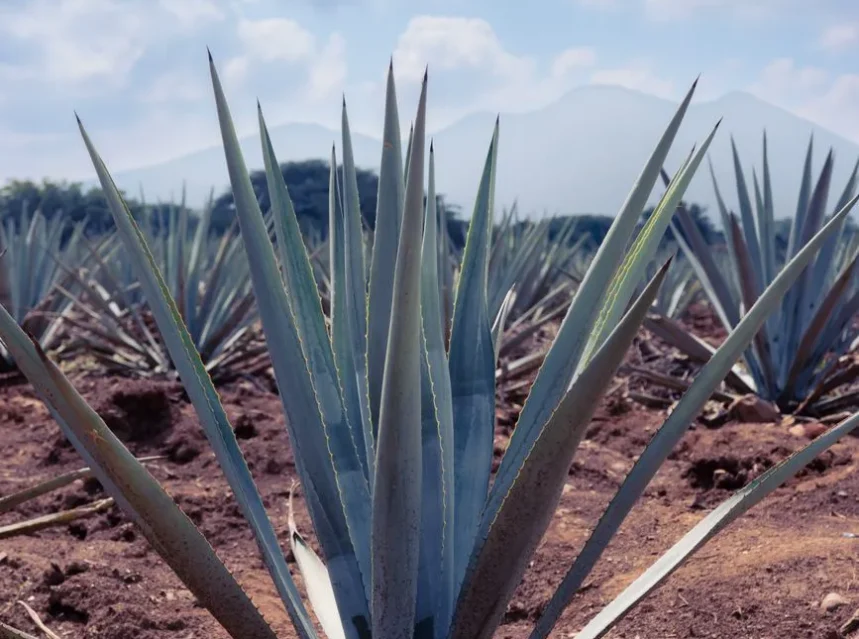
Agave is a group of bold, drought-tough succulents grown for their dramatic rosettes of thick, sword-shaped leaves. And they are among the easiest architectural plants for a hot, sunny, low-water spot or a sharp-draining pot. Native to the Americas, the plant stores water in its fleshy leaves, so it shrugs off heat and neglect. Here is the complete guide on how to grow agave.
Quick start: Give it full sun and gritty, free-draining soil or cactus mix. Water deeply but rarely, letting it dry out fully between drinks. Plant in spring, keep it on the dry side in winter, and protect tender types from frost. Most this succulent needs almost no feeding and only spreads by offsets, called pups, around the base.
Experienced growers and the Royal Horticultural Society rate the rosette as a near-indestructible plant for dry gardens, with two lessons that come up again and again. The first is that overwatering, not cold alone, kills most agave: gardeners report soft, mushy crowns whenever the soil stays wet. Sharp drainage matters more than anything. The second is respect for the spines. The leaf tips are genuinely sharp, and many people snip the tips or site large plants away from paths. Growers also note the famous “century plant” does not take a century to bloom. It flowers once after many years, then dies, leaving pups behind.
🧰 In a hurry? Jump straight to our tested picks for this guide ↓
Agave at a glance
| Feature | Detail |
|---|---|
| Botanical name | Agave (family Asparagaceae) |
| Plant type | Evergreen succulent |
| Size | From 15 cm dwarfs to 2 m giants |
| Sun | Full sun |
| Soil | Gritty, sharply free-draining |
| Water | Low; drought-tolerant once established |
| Best for | Dry gardens, gravel beds, pots, hot patios |
| Watch out | Sharp leaf tips; rots in wet soil |
Why grow agave?
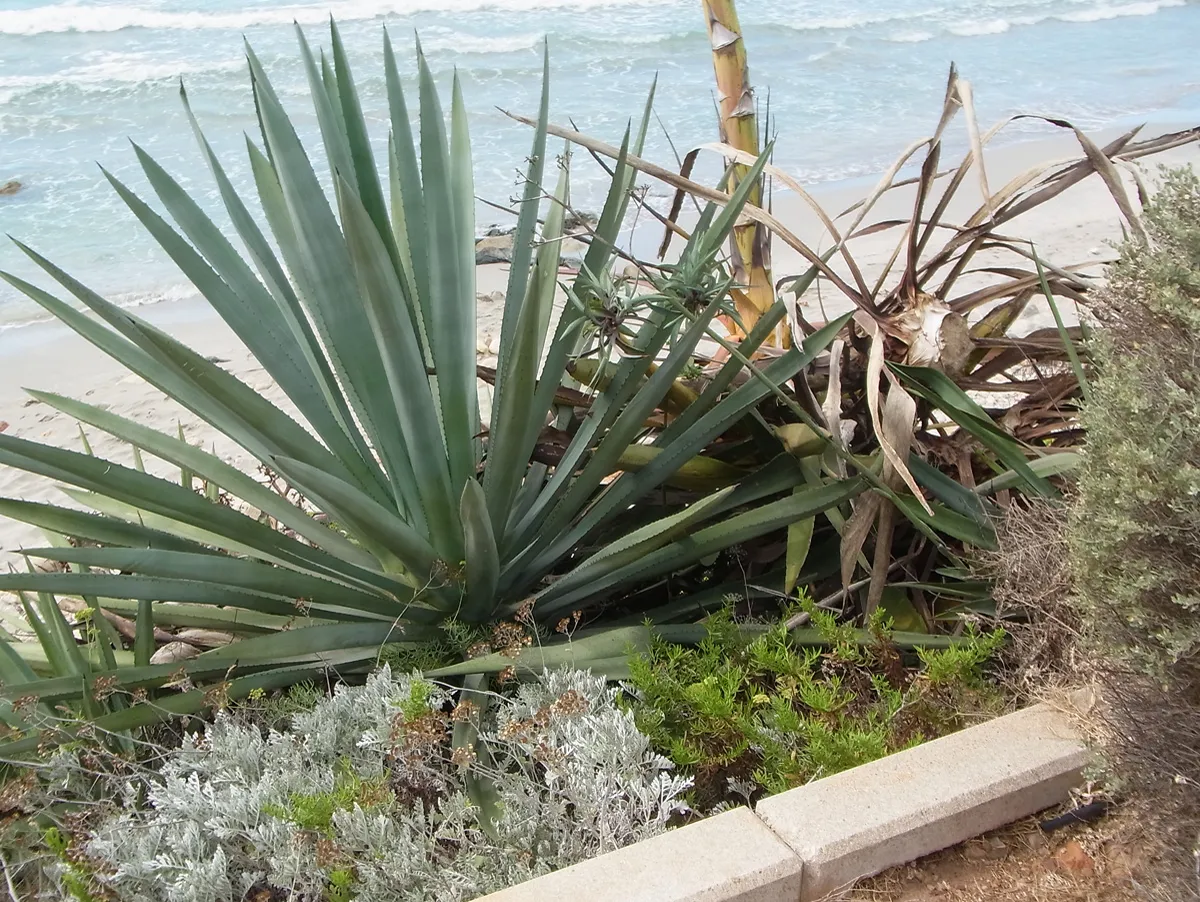
Agave gives you striking, sculptural shape for almost no effort. A single rosette makes a strong focal point in a border, a gravel garden, or a container. It looks good in every season because the foliage is evergreen.
On top of that, the plant is one of the most drought-tolerant plants you can grow. Once settled in, it survives long dry spells, poor soil, and fierce heat. So for water-wise gardeners, hot balconies, and forgetful waterers, it is a hard-working, low-care choice.
History, origin & where it grows
Agave comes from the Americas, mainly the deserts and dry hills of Mexico and the southwestern United States, with some species reaching down into South America. This arid homeland explains its thick, water-storing leaves and love of sun.
People have used the plant for thousands of years. The Aztecs prized it for fibre, food, and a fermented drink. Today species such as Agave tequilana are the source of tequila and it syrup (see the background on the genus). Mexico remains the heart of this succulent cultivation, especially for spirits and the fibre crop sisal.
Agave grows best in warm, dry climates like the US Southwest, Mediterranean, and Australia. In India, Agave americana and Agave sisalana have naturalised widely and are common as boundary hedges and on dry slopes, valued for fibre and erosion control. Indian gardeners can grow agave easily in the dry plains and hills. Should keep pots under cover during heavy monsoon rain.
Best season & when to plant
Plant agave in spring or early summer, when the soil is warm and growth is active. This gives roots time to settle before any cold or wet weather arrives.
In cold-winter regions, plant tender types in pots so you can move them to shelter. In India’s dry zones, the start of the warm season is ideal. The plant establishes well before the monsoon tests its drainage.
How to plant agave
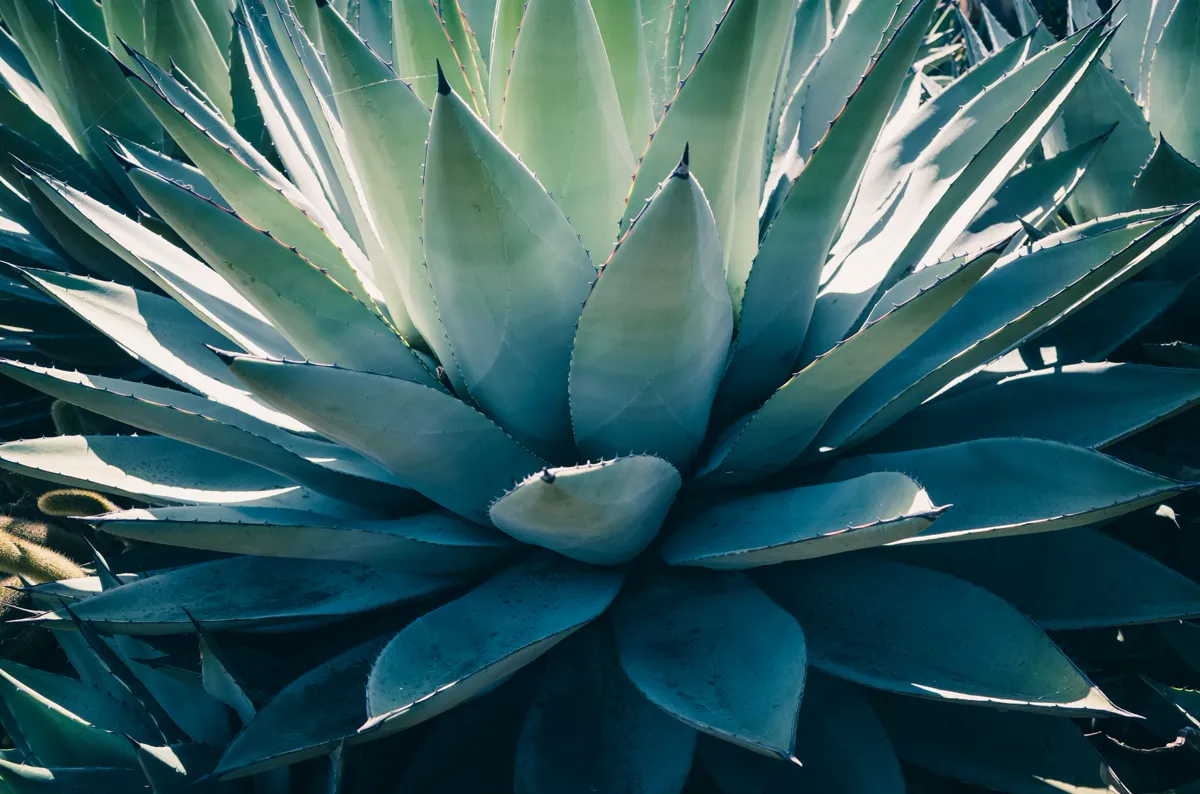
Agave is usually bought as a young rosette in a pot and transplants easily. For the best start:
- Pick a full-sun spot with the sharpest drainage you can manage.
- Mix plenty of grit or coarse sand into the soil, or use a cactus and succulent compost (see improving garden soil).
- Plant so the crown sits slightly proud of the soil, never in a dip that traps water.
Wear thick gloves and handle large plants with care, as the spines are sharp. Water once after planting, then leave it to root in. A gravel mulch around the base keeps the crown dry and sets off the rosette nicely.
Sun, soil, watering & feeding
Agave needs full sun to stay compact and well coloured, because shade makes it stretch and weakens the leaves. Soil must be free-draining above all else, whether that is gritty garden ground or a cactus mix in a pot.
Water deeply but only when the soil has dried right out, then far less in winter (see how often to water plants). Established plants often need no extra water at all outdoors. Feeding is rarely needed; a weak feed once in spring is plenty, since rich conditions give soft, floppy growth.
Types of agave to know
There is an agave for almost every space, so it pays to match the size to your spot.
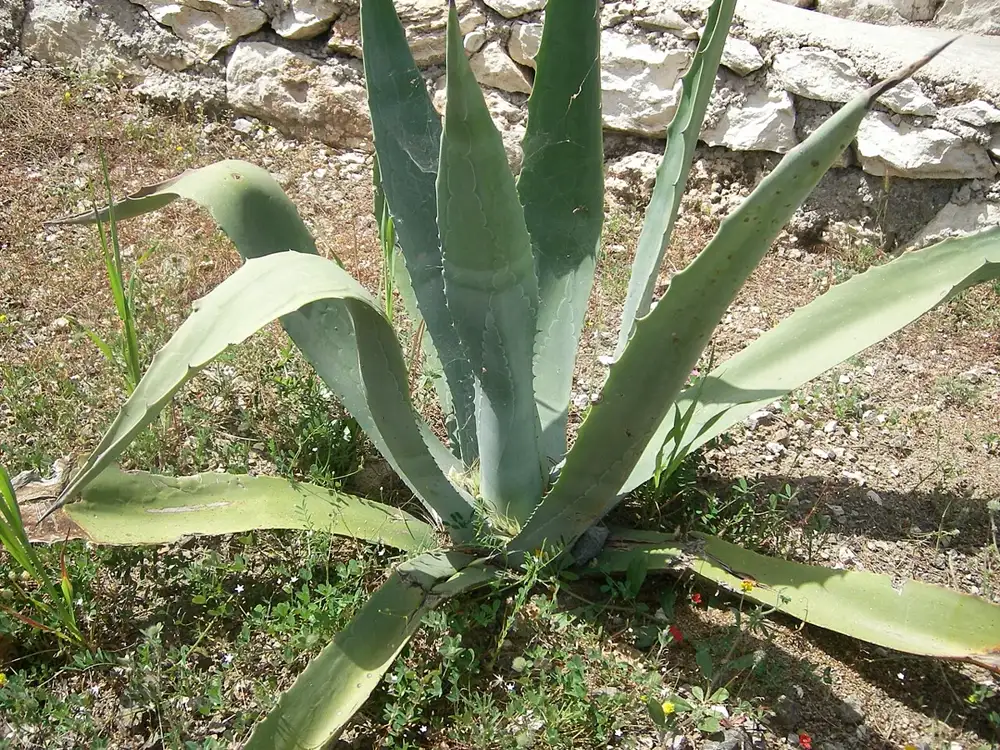
The giant Agave americana, or century plant, makes a huge blue-grey rosette for big, dry gardens. Agave attenuata, the soft-tipped foxtail agave, is nearly spineless and great near paths. Compact choices like Agave victoriae-reginae and small parry agaves suit pots and tight corners. Variegated forms add cream or gold stripes for extra colour.
Growing agave in pots
Agave makes an excellent container plant, especially where winters are cold or soil is heavy. A pot lets you control the drainage and move tender plants under cover.
Use a deep pot with big drainage holes and a gritty cactus compost. Stand it in full sun, water only when bone dry. Never leave the pot sitting in a saucer of water. In wet or frosty climates, shift containers to a dry, bright porch or greenhouse for winter.
How agave flowers and spreads
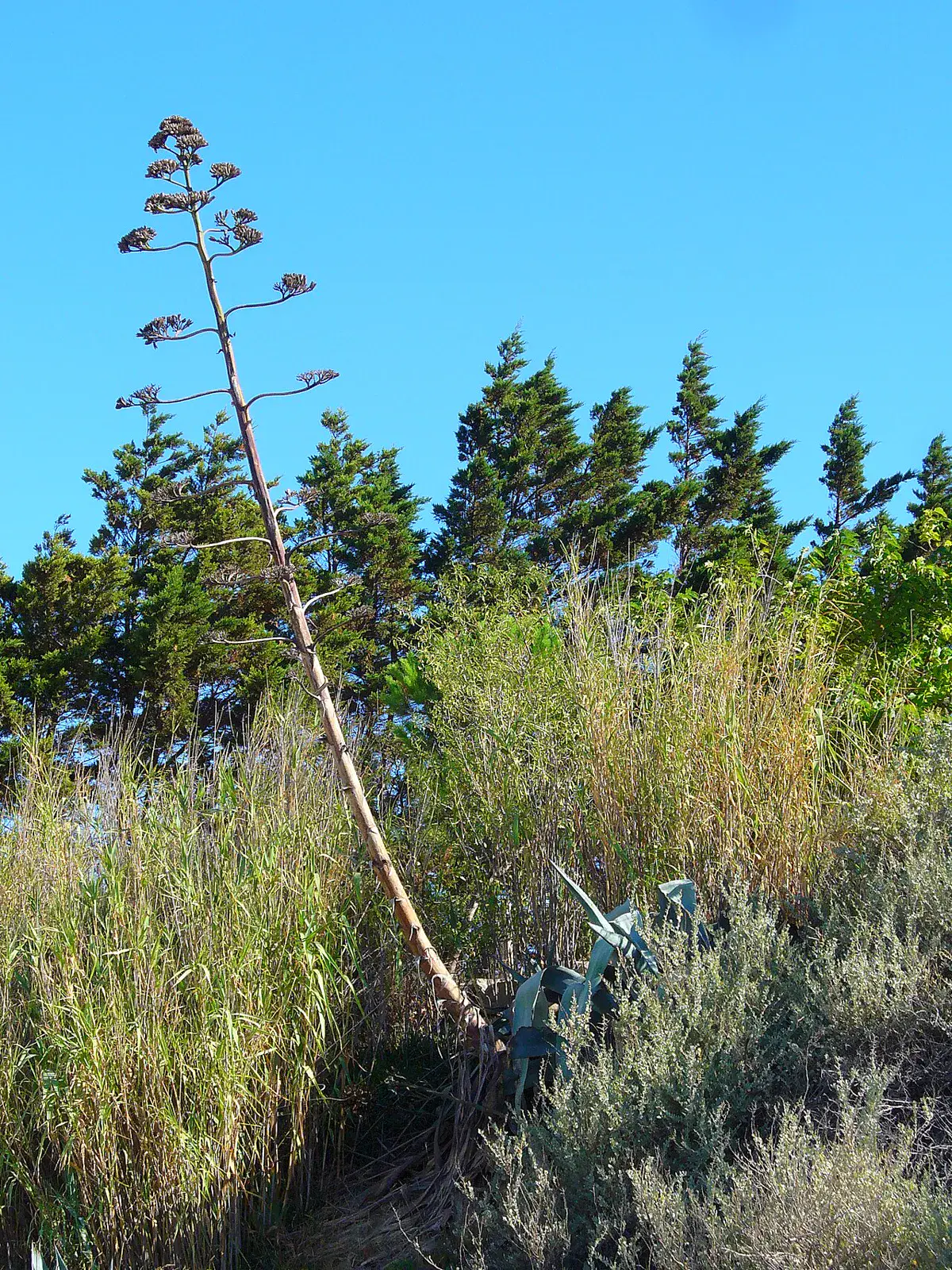
Most agave is monocarpic, which means a rosette flowers only once in its life. After many years, it sends up a towering flower spike, sets seed, and then that rosette slowly dies.
This is not a loss, because by then the plant has usually produced offsets, or pups, around its base. Simply lift these rooted pups, let the cut surface dry for a day or two. Pot them up to start fresh, free plants.
Common pests & diseases
Agave is mostly trouble-free, and its biggest enemy is rot from wet soil or a wet crown rather than pests. Sharp drainage and careful watering prevent most problems.
The main pest is the agave snout weevil, whose grubs tunnel into the core and cause sudden collapse, especially in large American species. Scale and mealybugs can also gather in the leaf folds. Remove affected plants promptly, keep things airy, and check new plants before adding them to the garden.
Uses & benefits
Agave is grown mainly as an ornamental and water-wise plant, prized for its bold shape and ability to thrive on neglect. It anchors gravel gardens, dry borders, and modern container displays, and works well alongside other drought-tolerant plants.
Beyond the garden, agave is an important crop: the fibre species give us sisal rope and matting. Others yield agave syrup and tequila. Note that raw agave sap can irritate skin, so this is a plant to admire rather than nibble. For information only, not medical advice — consult a professional before using any plant for food or remedies.
Common agave problems
Soft, mushy, or browning centre
Almost always overwatering or a wet crown. Cut back water sharply, improve drainage, and keep rain off the rosette of potted plants.
Stretched, pale leaves
A sign of too little light. Move the plant into full sun so it stays tight and well coloured.
Sudden collapse of a large plant
Often the plant snout weevil eating the core. Remove and destroy the plant, and check nearby agaves for the same damage.
Related plant guides
- How to grow Mangave
- Hebe
- Yucca care
- How to grow Lambs Ears
- How to grow Agapanthus
- How to grow Lewisia
How to propagate agave
Agave propagates itself: an established plant sends up offsets, called pups, around its base. Removing and replanting those pups is the whole method – and it is also how you keep a collection going, since many agaves die after their once-in-a-lifetime flowering.
From offsets (pups)
Wait until a pup is a reasonable size, ideally with a few leaves and some roots of its own. Work around it with a clean, sharp spade to expose the point where it joins the parent, sever the connecting root cleanly, and lift the pup with as many roots as you can save.
Do not pot it straight away. Let the cut surface dry and callus for several days in a shaded spot first, then pot into gritty cactus compost. Water sparingly until new growth shows that it has rooted, and only then water normally. Potting a fresh wet cut into damp compost is the usual way a good pup is lost to rot.
Wear thick gloves and watch the terminal spines while you work – a mature agave is a genuinely dangerous plant to wrestle with.
Frequently asked questions
Is agave easy to grow?
Yes. In full sun and gritty, free-draining soil, agave is one of the easiest plants there is, needing only occasional deep watering and almost no feeding.
How often should I water agave?
Water deeply only when the soil has dried out completely. May be every few weeks in summer and rarely in winter. Overwatering is the most common cause of death.
Does agave really flower only once?
Most agave is monocarpic: a rosette flowers once after many years, then dies. By then it usually leaves pups around the base that you can replant.
Can agave grow in pots?
Yes. A deep pot of cactus compost in full sun suits agave well. It lets you move tender types under cover during cold or very wet weather.
How fast does agave grow?
Slowly, and that is part of its appeal as a low-maintenance architectural plant. Small species may reach mature size in five to eight years, while the big landscape types can take a decade or more, and the largest species longer still. Growth speeds up a little with warmth, full sun, and occasional deep watering during the active season, but no amount of feeding will make an agave race. Buying a larger specimen is the practical shortcut if you want instant impact.
How do I remove and replant agave pups?
Wait until an offset is a reasonable size, ideally with a few leaves and some roots of its own, then work around it with a clean sharp spade to expose where it joins the parent. Sever the connecting root cleanly and lift the pup with as many roots as you can save. Let the cut surface dry and callus for several days in a shaded spot before potting it into gritty cactus compost. Water sparingly at first, then normally once new growth shows that it has rooted.
Is agave cold hardy?
It varies enormously by species, so check the name before you plant one outdoors. Tough types such as Agave parryi and Agave havardiana handle frost and even snow if their soil drains freely, whereas many popular ornamental species are damaged below freezing. Wet cold is far more dangerous than dry cold, so a gritty raised bed or a gravel mulch does more for winter survival than a fleece wrap. In cold regions, growing agave in pots that can be moved under cover is the simplest answer.
Can agave be grown indoors?
Smaller species do reasonably well indoors as long as they get the brightest window in the house, ideally with several hours of direct sun. Use a shallow, wide pot with a gritty free-draining mix, water only when the compost has dried right through, and never leave a saucer of water underneath. Normal room temperatures suit them, and cooler, drier conditions in winter are fine. Watch out for the spines on a plant kept at arm level, and consider trimming the sharp terminal spike if it sits near a walkway.
Is agave sap dangerous to touch?
The sap of many agaves is an irritant and can cause redness, itching, or a rash on contact, and it affects some people much more than others. Wear gloves, long sleeves, and eye protection when pruning, dividing, or removing old leaves, and wash your skin promptly if sap gets on it. The leaf tips are genuinely sharp, so site large species away from paths and seating. Rinse any tools you have used before putting them away.
Is agave toxic to cats and dogs?
Agave is generally considered harmful to pets if chewed or swallowed, with the sap and leaves causing mouth irritation, drooling, and digestive upset. The spines pose a physical injury risk as well, especially to inquisitive dogs. Place plants out of reach or choose spineless species if pets share the garden. Contact a vet promptly if an animal has bitten a leaf or been jabbed by a spine.
How do I get rid of agave snout weevil?
This weevil is the most serious agave pest in warm regions, and the first sign is usually a large plant whose leaves suddenly wilt and collapse inward at the base. The adult lays eggs in the crown and the grubs tunnel into the core, which then rots, so by the time symptoms appear the plant is often beyond saving. Remove and destroy badly affected plants along with the grubs in the surrounding soil, rather than composting them. Prevention works better than cure, so keep plants unstressed, avoid overwatering, and inspect the base of large specimens each spring.
Still stuck? Ask the Plant Doctor
Describe the problem — yellow leaves, holes, no flowers — and get a clear answer in seconds. FreeAI can make mistakes. Answers are guidance, not a guarantee — check anything important against the guide it links to, and always read the label on any product before you use it.