How to Grow Crepe Myrtle
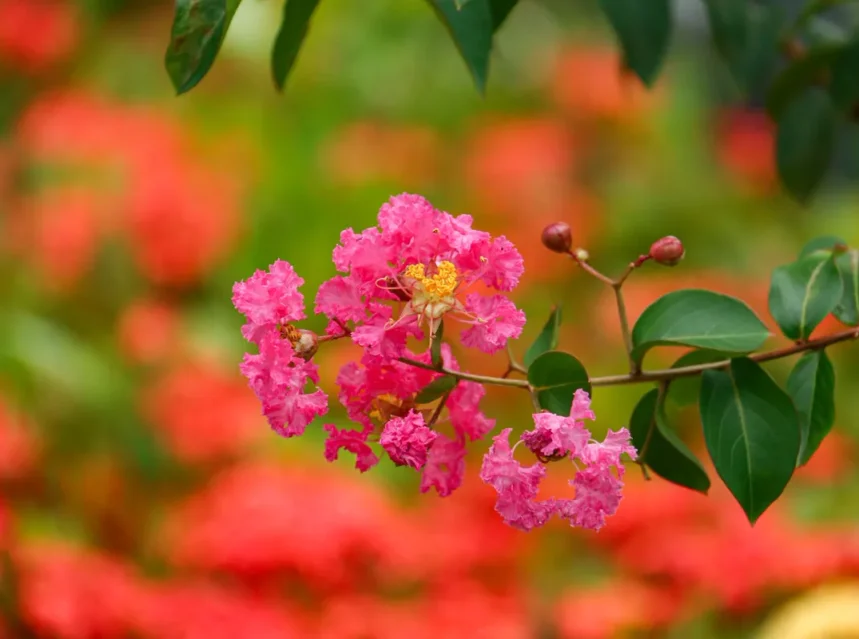
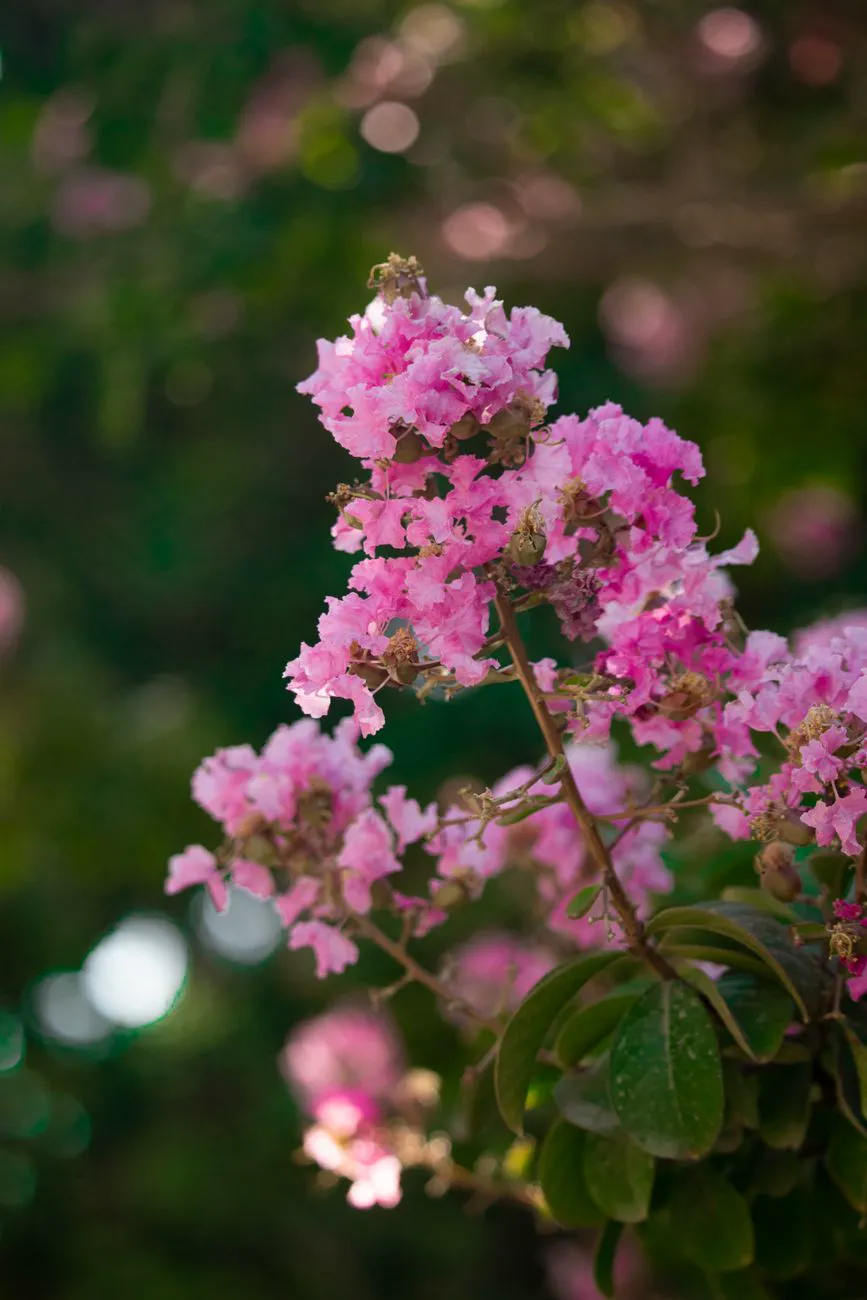
Crepe myrtle (Lagerstroemia, also spelled crape myrtle) is a heat-loving deciduous tree or large shrub famous for months of crinkled, crepe-paper-like summer flowers in pink, red, purple, or white, plus striking peeling bark and fiery autumn colour. Tough, drought-tolerant once established, and flowering when many plants have finished, it is one of the best summer-flowering trees for warm climates. Here is the complete guide on how to grow crepe myrtle.
Quick start: Grow crepe myrtle in full sun in free-draining soil, in a warm spot with good air circulation. It thrives on heat and tolerates drought once established. Plant in spring or autumn, water young trees, and prune lightly in late winter to shape — never “top” it hard. Choose a variety sized to your space, from dwarf shrubs to small trees, for the longest, healthiest flowering.
Gardeners in warm regions rate crepe myrtle as one of the most generous and trouble-free summer-flowering trees, blooming for months in the heat. Growers on gardening forums — and Clemson Cooperative Extension — stress that full sun is essential for good flowering and to prevent powdery mildew, and they strongly warn against “crape murder” — the harsh annual topping of the trunks, which ruins the natural form and creates weak, ugly regrowth. They also recommend choosing a variety that naturally fits the space so little pruning is ever needed, and mildew-resistant types where humidity is high. Given sun and room, it largely looks after itself.
🧰 In a hurry? Jump straight to our tested picks for this guide ↓
Crepe myrtle at a glance
| Feature | Detail |
|---|---|
| Botanical name | Lagerstroemia species & hybrids; family Lythraceae |
| Other names | Crape myrtle, crepe flower, pride of India |
| Plant type | Deciduous flowering tree or large shrub |
| Height | 1–8 m+ (dwarf to small-tree forms) |
| Sun | Full sun (6+ hours) |
| Soil | Free-draining; tolerant of most soils |
| Hardiness | Warm temperate to tropical (zones 7–10) |
| Flowering | Summer to autumn, for many weeks |
| Bonus features | Peeling bark, autumn colour, drought tolerance |
Why grow crepe myrtle?
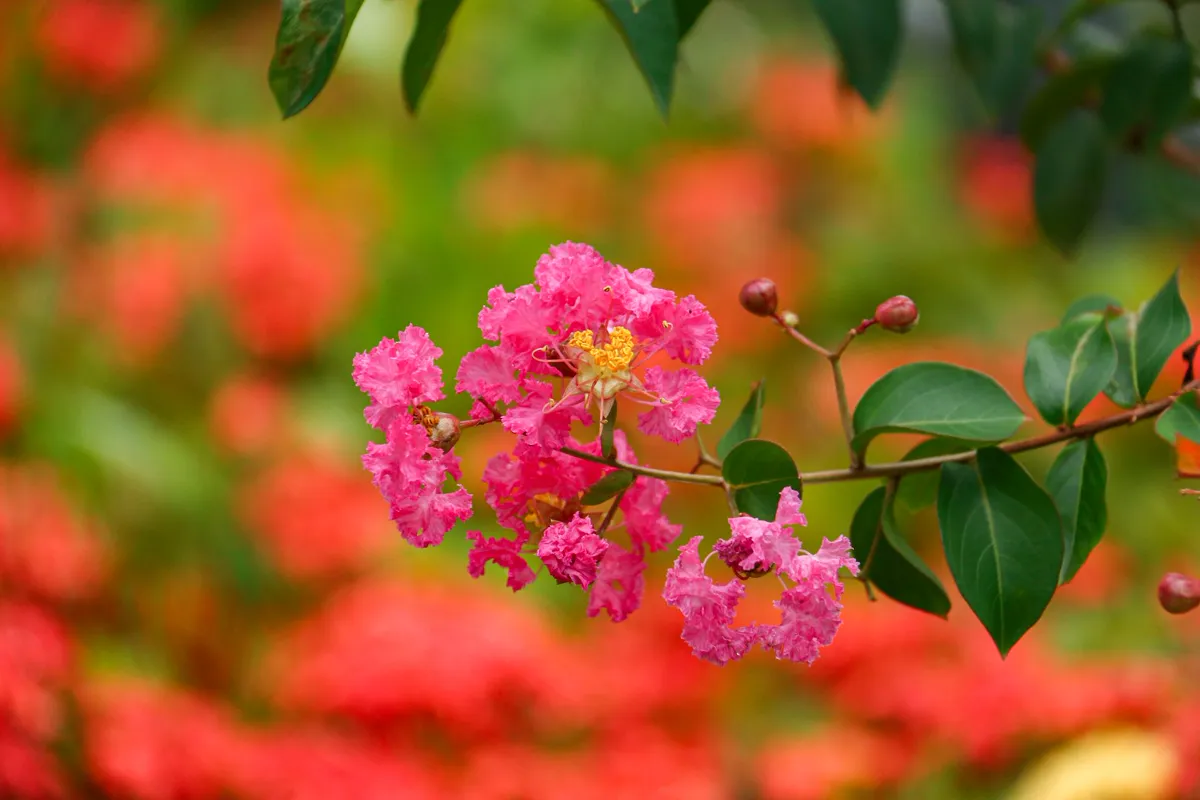
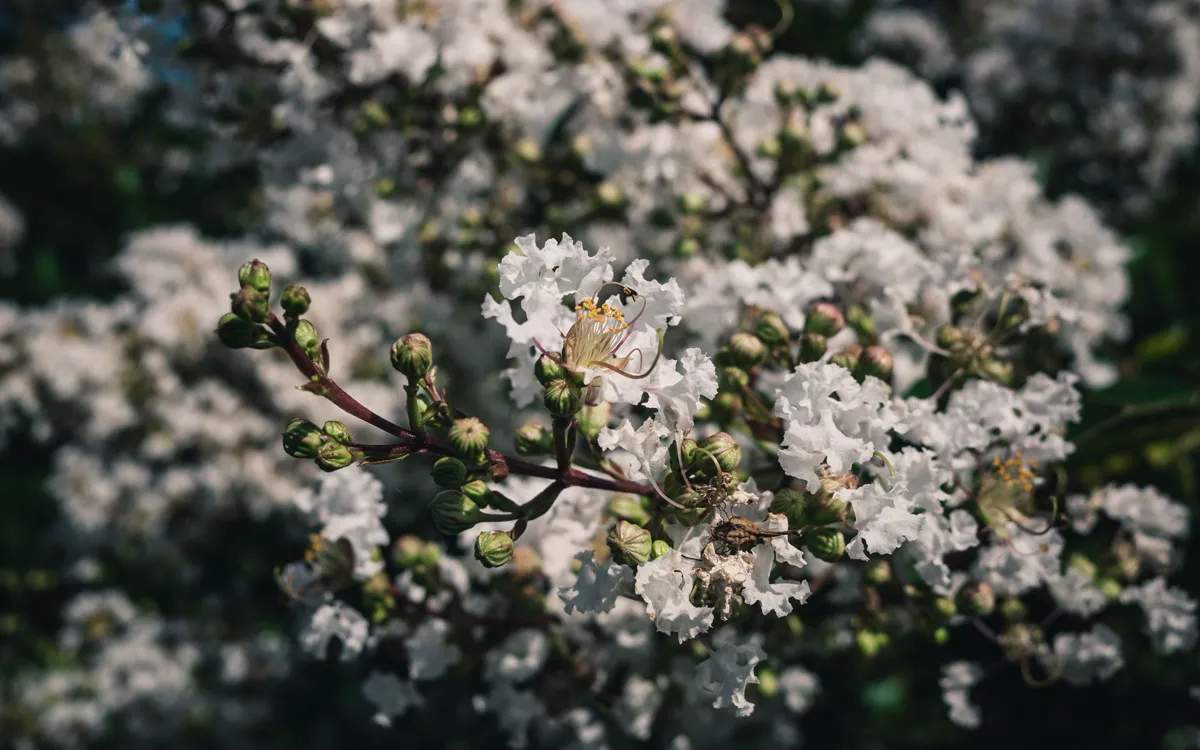
Crepe myrtle earns its place by flowering for months in high summer, when many trees and shrubs have long finished. The big, frothy panicles of crinkled blooms — like crepe paper — cover the plant in pink, red, purple, lavender, or white, often for ten weeks or more, and are a magnet for bees and butterflies.
It is a genuine four-season plant, too: fiery orange-red autumn foliage, then handsome smooth, mottled, peeling bark for winter interest. Tough, heat- and drought-tolerant, and available in sizes from dwarf shrubs to small trees, it suits beds, screens, street planting, and pots. It pairs well with other sun-loving summer flowers like hibiscus and bougainvillea.
History, origin & how it spread
Crepe myrtle is native to China, Korea, Japan, and the Indian subcontinent and Southeast Asia, where it has been cultivated and admired for centuries. The common species Lagerstroemia indica takes its name from India, and the larger “queen’s crepe myrtle” (L. speciosa) is a celebrated tropical flowering tree (the background on Lagerstroemia records this origin).
The genus was named after the Swedish merchant Magnus von Lagerström. From Asia, crepe myrtle was carried to Europe and, famously, to the southern United States in the 18th century, where the hot summers suited it perfectly and it became an iconic tree of Southern gardens and streets.
Today crepe myrtle is grown across warm-temperate and tropical regions worldwide — the US South, the Mediterranean, Australia, and across India, where it is a familiar garden and avenue tree (often called pride of India). Modern breeding, especially mildew-resistant US hybrids, has produced a huge range of colours, sizes, and tougher plants.
Best season & when to plant
Plant crepe myrtle in spring or autumn, giving it time to establish before the extremes of summer heat or winter cold. Spring planting suits cooler areas so roots settle before any frost.
Crepe myrtle loves heat and suits warm-temperate to tropical climates — the southern US, the Mediterranean, Australia, and most of India. It needs a long, hot summer to flower well and full sun all day. In cooler or shadier conditions it flowers poorly and is prone to mildew, so choose the sunniest, warmest spot you have, and a hardy variety in marginal-cold areas.
How to plant crepe myrtle step by step
Crepe myrtle is easy to plant and adaptable to most soils:
- Choose a full-sun spot with free-draining soil and good air circulation, with room for the variety’s mature size.
- It tolerates many soils, including clay and poor ground, as long as drainage is reasonable.
- Plant at the same depth the tree grew before, in a hole wider than the rootball.
- Firm in, water well, and mulch to conserve moisture, keeping mulch off the trunk.
- Space multiple plants according to their mature spread for good airflow.
The single best decision is choosing a variety whose natural mature size fits your space, so you almost never need to prune hard. Multi-stemmed forms show off the beautiful bark; single-stemmed forms make neat small trees.
Sun, soil, watering & feeding
Give crepe myrtle full sun — at least six hours, ideally all day — for heavy flowering and to keep mildew at bay. It is adaptable about soil, growing in clay, loam, or sandy ground as long as it drains, and it becomes notably drought-tolerant once established.
Water young trees regularly through their first couple of summers to establish them (see how often to water plants); mature plants need little extra water. Feed in spring with a balanced fertiliser to support flowering, but avoid heavy nitrogen, which pushes leafy growth at the expense of blooms. A spring mulch conserves moisture and feeds the soil. Deadheading spent flower heads can encourage a second flush.
Pruning & avoiding crape murder
Pruning is where most crepe myrtles go wrong. The plant naturally forms an elegant vase-shaped tree with lovely bark, and it flowers on new growth, so light pruning in late winter — removing dead, crossing, and crowded stems, and any low suckers — is all that is needed.
Avoid the widespread mistake nicknamed “crape murder”: chopping the trunks back hard to ugly stumps every year. This destroys the natural form and bark, produces weak, whippy, top-heavy regrowth, and creates knuckled, unsightly stubs — it does not improve flowering. Instead, choose a correctly sized variety and prune minimally, removing only what is necessary to shape and open the plant. Treated this way, crepe myrtle becomes a beautiful, well-structured tree.
Common pests & diseases
The most common problem is powdery mildew, a white coating on leaves and buds in shade or humid, still air — grow in full sun with good airflow and choose mildew-resistant varieties to avoid it. Aphids and the crepe myrtle bark scale can leave sticky honeydew and sooty mould; a hard spray of water, natural predators, or horticultural oil help.
Diseases are otherwise few, with occasional leaf spot (Cercospora) in wet seasons causing early leaf drop. Good siting in sun, spacing for airflow, and clearing fallen leaves prevent most trouble. Overall, a well-placed crepe myrtle is a robust, low-care plant.
Uses in the garden
Crepe myrtle is wonderfully versatile in the landscape. Larger forms make superb specimen and street trees or informal screens, smaller forms suit borders, foundation plantings, and large pots, and the long summer bloom makes it a focal point when little else flowers. The peeling bark and autumn colour extend the interest well beyond summer.
It is also valuable for pollinators, with bees and butterflies working the flowers through summer. The blooms suit warm-climate, low-water, and pollinator gardens, and multi-stemmed specimens are often grown specifically to display the smooth, cinnamon-and-grey mottled bark in winter.
Common crepe myrtle problems
Few or no flowers
Almost always too little sun, or hard “crape murder” pruning at the wrong time. Give full all-day sun, prune only lightly in late winter, and avoid high-nitrogen feeding, which favours leaves over blooms.
White powdery coating on leaves
Powdery mildew, worst in shade and humid, still air. Move or plant in full sun with good airflow, space plants, and choose mildew-resistant varieties.
Sticky leaves and black sooty mould
Aphids or bark scale producing honeydew, on which sooty mould grows. Wash off with water, encourage predators, or use horticultural oil; the mould clears once the pests are controlled.
Ugly knobbly stumps and weak growth
The result of “crape murder” topping. Stop hard topping, let the plant rebuild a natural framework over a few years, or replace with a correctly sized variety pruned only lightly.
Related plant guides
- How to grow hibiscus
- How to grow bougainvillea
- How to grow magnolia
- How to attract pollinators
- How often to water plants
- How to improve garden soil
Frequently asked questions
Why is my crepe myrtle not flowering?
The usual causes are too little sun, hard topping (“crape murder”) removing the flowering wood, or too much nitrogen feeding. Give full all-day sun, prune only lightly in late winter, and use a balanced rather than high-nitrogen feed.
What is "crape murder" and why avoid it?
“Crape murder” is the harsh annual chopping of the trunks back to stumps. It ruins the tree’s natural vase shape and beautiful bark, produces weak, top-heavy regrowth and ugly knuckled stubs, and does not improve flowering. Prune only lightly instead.
When should you prune crepe myrtle?
In late winter, while dormant, since it flowers on new growth. Remove dead, crossing, and crowded stems and low suckers, and keep pruning minimal — choose a correctly sized variety so heavy pruning is never needed.
Does crepe myrtle need full sun?
Yes — at least six hours, ideally all day. Full sun gives heavy, long flowering and keeps powdery mildew away. In shade it flowers poorly and is far more prone to mildew.
Are crepe myrtle roots invasive?
Crepe myrtle has a fairly shallow, fibrous, spreading root system rather than aggressive deep roots, and it is not considered a foundation wrecker like a poplar or willow. The roots do go looking for water, so give it a few metres of clearance from drains, septic lines, paving and house walls. Roots close to the surface can lift thin paths and compete with lawn and bedding plants under the canopy. Planting a correctly sized variety for the space is the simplest way to avoid trouble later.
How fast does crepe myrtle grow?
In warm climates with full sun and reasonable water it is a fast grower, commonly adding 30 to 60 cm or more a year while young. Dwarf and semi dwarf types top out at one to three metres, while full sized varieties can reach eight metres or more over time. Growth slows once the tree reaches its natural size, which is exactly why choosing the right variety beats trying to control size with the pruning saw. In cooler regions and short seasons growth is noticeably slower.
Why are my crepe myrtle leaves black and sticky?
That is sooty mould growing on honeydew, the sugary waste dropped by aphids or crepe myrtle bark scale feeding above. The mould itself does not attack the plant, it just coats the leaves and blocks light, and it also drips onto cars and patios below. Deal with the insects and the black film weathers away over the following weeks. A strong hose blast, horticultural soap or oil, and encouraging ladybirds usually break the cycle without heavy chemicals.
Do crepe myrtles lose their leaves in winter?
Yes, crepe myrtle is deciduous. Leaves often colour to yellow, orange or red in autumn, then drop, leaving the smooth mottled bark and seed capsules as the winter feature. Bare branches in winter are completely normal and not a sign of a dead tree. It is also usually one of the last trees to leaf out in spring, so do not panic when neighbouring plants green up first.
Why is my crepe myrtle dropping leaves in summer?
Early summer leaf drop is most often Cercospora leaf spot, which shows as dark brown or maroon spots before the leaf yellows and falls, and it flares up in humid, rainy spells. Drought stress causes a similar drop, as does a plant sitting in waterlogged soil with damaged roots. Improve air movement, water deeply at the base rather than over the leaves, clear fallen leaves, and choose mildew and spot resistant varieties when replanting. A healthy established tree usually recovers and reflushes.
Do crepe myrtles need a lot of water?
They are notably drought tolerant once established, which is a big part of their popularity in hot regions. New plantings are different and need deep, regular soaking through their first one to two growing seasons while the roots spread. After that, a long soak during extended dry spells is plenty, and frequent shallow watering does more harm than good. Constantly wet or poorly drained soil is one of the few things that reliably kills them.
How do you propagate crepe myrtle from cuttings?
Softwood cuttings taken in early summer root readily, which is why the plant is so easy to share. Take 10 to 15 cm tips, strip the lower leaves, dip in rooting hormone and insert into a gritty, free draining mix kept humid and warm but out of direct sun. Roots usually form in four to eight weeks, after which you can pot the plants on and grow them for a season before planting out. Hardwood cuttings taken in winter also work, though they are slower.
What fertiliser does crepe myrtle need?
Very little. A single application of a balanced general fertiliser in early spring, as growth begins, is enough for most garden trees, along with a mulch of compost kept clear of the trunk. High nitrogen lawn feed is the classic mistake, producing lush leafy growth, fewer flowers and more aphid problems. It prefers slightly acidic soil, so on very limy ground a mulch of composted bark or leaf mould helps more than extra feed.
Still stuck? Ask the Plant Doctor
Describe the problem — yellow leaves, holes, no flowers — and get a clear answer in seconds. FreeAI can make mistakes. Answers are guidance, not a guarantee — check anything important against the guide it links to, and always read the label on any product before you use it.