Is Spider Plant Toxic to Dogs? The Safe-Plant Truth Explained
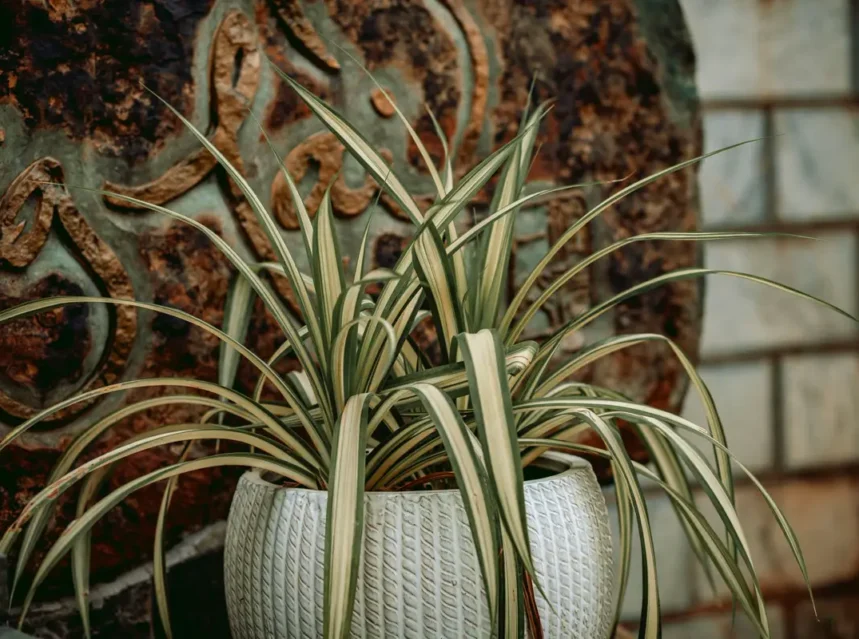
Is spider plant toxic to dogs? No. The spider plant (Chlorophytum comosum) sits on the ASPCA’s non-toxic list, which makes it one of the safest popular houseplants for a dog home. Finally, some good news after all the scary plants. There is one small catch about overeating, and a myth worth clearing up. Here is the full, reassuring picture.
Quick answer: Spider plants are safe around dogs. They will not poison your dog. If your dog chews the leaves, the worst you are likely to see is mild drooling or a little vomiting from overeating, not real poisoning. Give your dog a proper chew toy to redirect the habit, and enjoy the plant. This is general information, not veterinary advice.
🧰 In a hurry? Jump straight to our tested picks for this guide ↓
Is spider plant toxic to dogs? The good news at a glance
| What you might see | What it means |
|---|---|
| Your dog chewing or pawing the leaves | Normal, the plant is not poisonous |
| Playful, excited behaviour near the dangling babies | The plant moves like a toy, harmless |
| A little drooling or one vomit after a big binge | Simple overeating, monitor at home |
| Loose stool after eating a lot of leaves | Mild gut upset, offer water |
| Repeated vomiting or ongoing distress | Uncommon, call your vet to be safe |
| A chewed, tatty-looking plant | The plant’s problem, not the dog’s |
Why spider plants are safe when so many houseplants are not
This is worth appreciating, because a genuinely dog-safe popular plant is rarer than you would think. Many favourites are toxic. Pothos, monstera, and peace lily sting with oxalate crystals, while jade and kalanchoe carry more serious toxins.
The spider plant is different. It holds no compounds known to be dangerous to dogs, which is why the ASPCA places it firmly on its non-toxic list for dogs and cats.
That safety is exactly why we recommend the spider plant more than any other as a swap for toxic houseplants. Want greenery you do not have to police? This is the classic starting point. Our pet-safe houseplants guide ranks the rest of the safe roster.
Do spider plants make dogs “high”? The myth, busted
You may have heard that spider plants are mildly hallucinogenic, or a kind of canine catnip. Let me be blunt: that is folklore, not proven science.
The claim comes from cats, who often act giddy around the plant. Some sources say it holds compounds loosely related to opium, but no solid research confirms a true “high” in cats, let alone dogs. Dogs simply do not have the same reaction cats do.
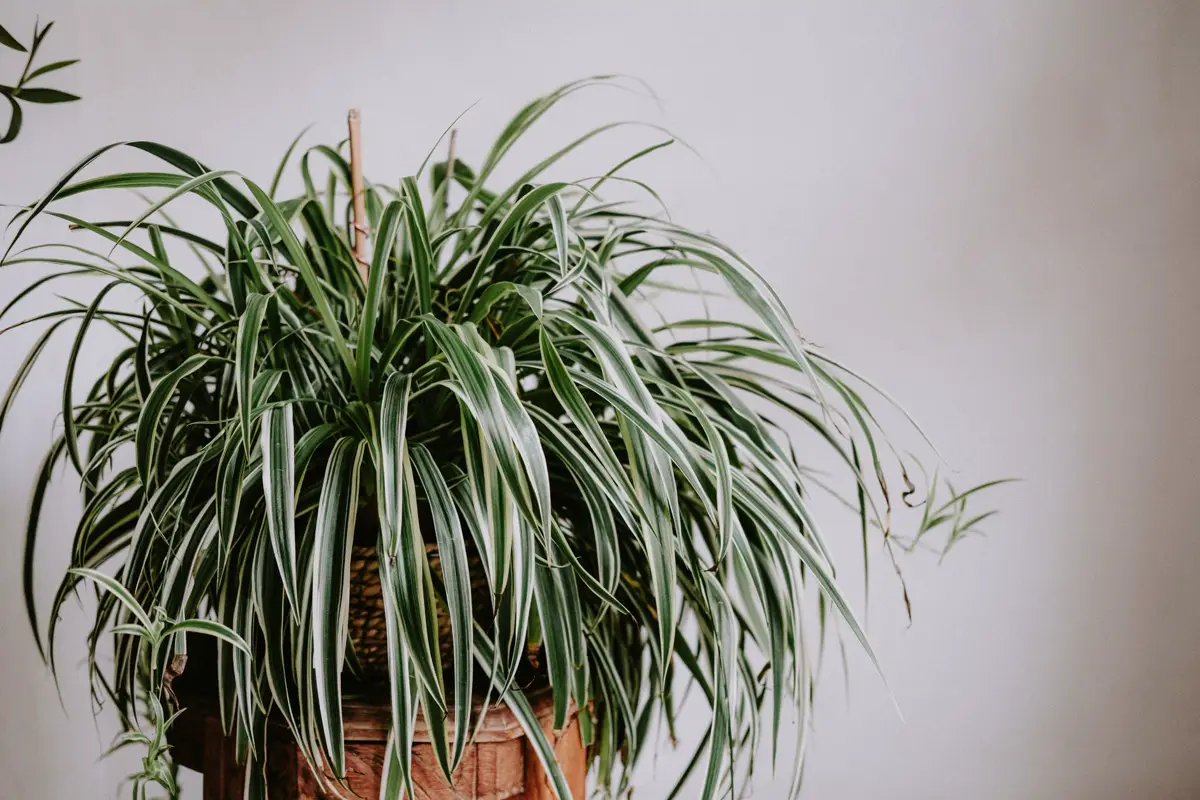
What is real is the attraction to movement. The arching leaves and dangling baby plantlets sway and bounce like a toy, which is catnip enough for a playful dog. Wikipedia’s entry on the spider plant confirms it is non-toxic to dogs. The excitement, whatever its cause, is harmless.
The one small catch: overeating
Non-toxic does not mean a dog can eat unlimited amounts. This is the only real caveat with spider plants.
If a dog gorges on the leaves, the sheer bulk of plant material can upset its stomach. That means drooling, vomiting, or a loose stool, the same thing that happens when a dog eats too much grass, not chemical poisoning.
There is one dog-specific note. A dog that bolts a big wad of the long, fibrous leaves could gag on it, so watch a greedy gulper. Otherwise, moderation beats fear here. An occasional nibble is nothing to worry about.
How to keep both dog and spider plant happy
Because the plant is safe, the goal here flips. You are protecting the plant’s looks and avoiding overeating, not preventing poisoning.
First, give your dog a legal target. A tough chew toy satisfies the same urge and pulls attention off your foliage. Regular walks and play burn the energy that fuels the plant-chewing in the first place.
If your dog is a determined muncher, hang the spider plant a little higher or trim the dangling plantlets that tempt it most. A dog cannot climb, so height works well. None of this is urgent safety, just good housekeeping for a fuller plant.
Which popular plants are toxic, so you can swap them
The spider plant makes a great anchor for a dog-safe collection, and it helps to know which of its shelf-mates are not safe.
Several of the most common houseplants are toxic to dogs and worth replacing or raising out of reach. Our guides cover the big ones: pothos, snake plant, dracaena, and aloe vera are all toxic, each in a different way.
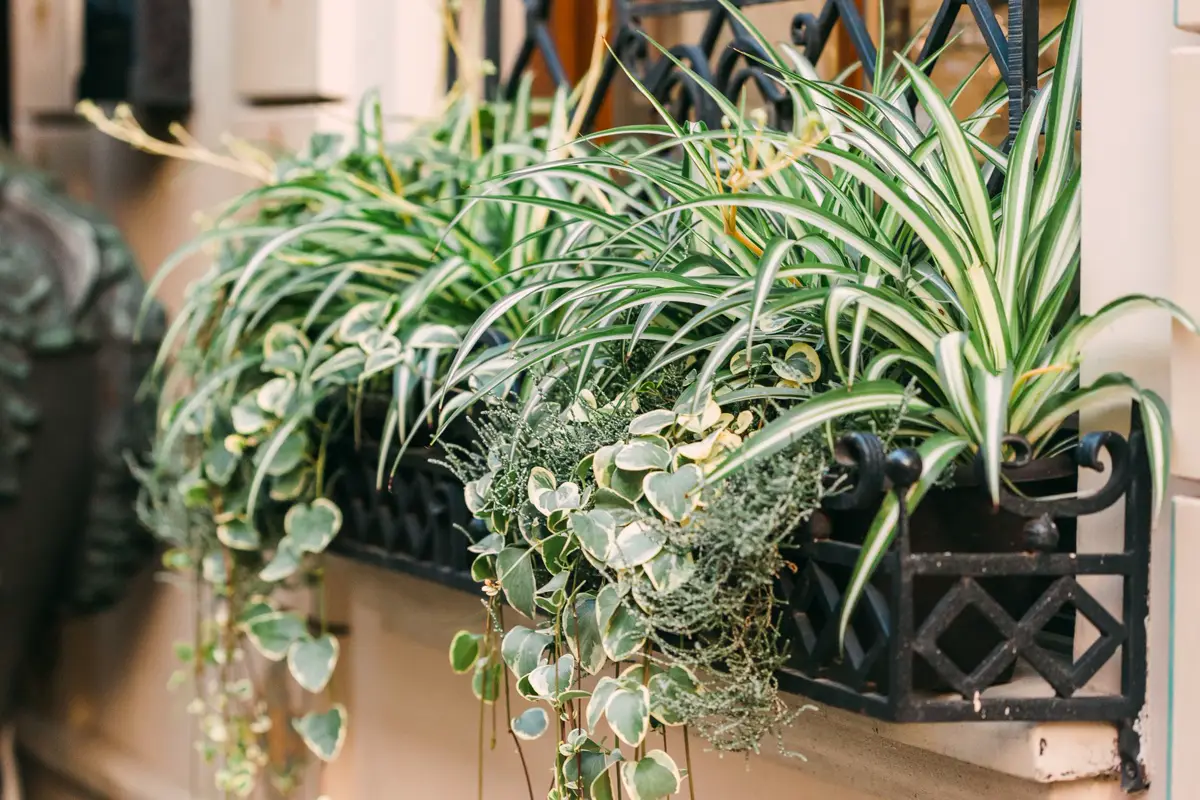
Screen your collection against a reliable toxic-plant list, keep the safe ones like spider plants in the open, and put the risky ones up high. Our plant doctor tool helps you identify a mystery plant first.
Other dog-safe plants to pair with your spider plant
Has your spider plant convinced you to build a dog-safe display? These non-toxic plants make easy companions:
| Safe plant | What it offers |
|---|---|
| Boston fern | Lush, cascading hanging-basket volume |
| Parlour palm | Tall, easy floor greenery |
| Calathea | Bold patterned decorative leaves |
| Peperomia | Compact glossy foliage |
| Haworthia | Pet-safe spiky succulent look |
All appear on the ASPCA’s non-toxic list. The spider plant is also a famous air-purifier, one of the species in the well-known NASA Clean Air Study, so it earns its shelf space twice over. Our spider plant care guide covers growing the star of the show.
Spider plants and dogs step by step
- Relax: the spider plant is non-toxic and dog-safe.
- Expect interest, since the dangling babies move like a toy.
- Ignore the “high” myth, which barely applies to dogs anyway.
- Watch only for overeating, which can cause a mild tummy upset.
- Offer a chew toy to redirect the habit.
- Use spider plants to replace the toxic plants on your shelf.
A dog household and a spider plant get along beautifully. It is one of the few plants you can enjoy without watching your dog’s every move.
Spider plants and dogs in homes worldwide
The spider plant is one of the most grown houseplants on the planet. It thrives in dog-owning homes from New York and London to Sydney and Toronto, loved for being nearly impossible to kill.
In India, the spider plant (often called hariyali or ribbon plant) is a popular, low-fuss choice for balconies, offices, and hanging baskets. Its dog-safe status suits the many Indian homes with both plants and pets. The approach is the same everywhere: enjoy it freely, offer a chew toy to spare the leaves, and save your caution for the genuinely toxic plants.
Wherever you live, it is still smart to save an animal poison helpline number in your phone, and to check any new plant against a toxicity list. With the spider plant, though, the answer is happily reassuring. Our spider plant care guide covers keeping it lush, and our pet-safe plant guide covers the whole safe collection.
Frequently asked questions
Are spider plants safe for dogs to eat?
Spider plants are non-toxic, so a dog that nibbles a leaf will not be poisoned. That said, “safe” does not mean “eat unlimited amounts”. A dog that gorges on the leaves can get a mild stomach upset, with drooling, vomiting, or loose stool, simply from the bulk of plant material. Occasional nibbling is harmless. If your dog likes to chew, offer a proper chew toy as a dedicated, tummy-friendly alternative.
Do spider plants really make dogs hallucinate?
No, and the myth barely applies to dogs at all. The “high” folklore comes from cats, who sometimes act giddy near the plant, and even for cats there is no solid scientific proof. Dogs do not show that reaction. What is real is that dogs are drawn to the movement of the arching leaves and dangling plantlets, which sway like a toy. The playful behaviour you see is harmless, whatever its cause.
Why is my dog obsessed with my spider plant?
Mostly because it moves. The thin arching leaves sway, and the baby plantlets dangle and bounce, which is irresistible to a playful or bored dog. Puppies especially love to tug the babies. The good news is that the obsession is not dangerous, since the plant is non-toxic. Redirect the attention with a chew toy and some exercise, and hang the plant higher if your dog is shredding it.
Can spider plants make dogs sick at all?
Only mildly, and only from overeating. Because they are non-toxic, spider plants cannot poison a dog. But if a dog eats a large amount of leaves, the volume can trigger vomiting or diarrhoea, just as too much grass would. A dog that gulps a big fibrous wad could also gag on it. This is temporary and usually settles with access to water. Call your vet if vomiting repeats, which is uncommon with such a mild, non-toxic plant.
Are all types of spider plant safe for dogs?
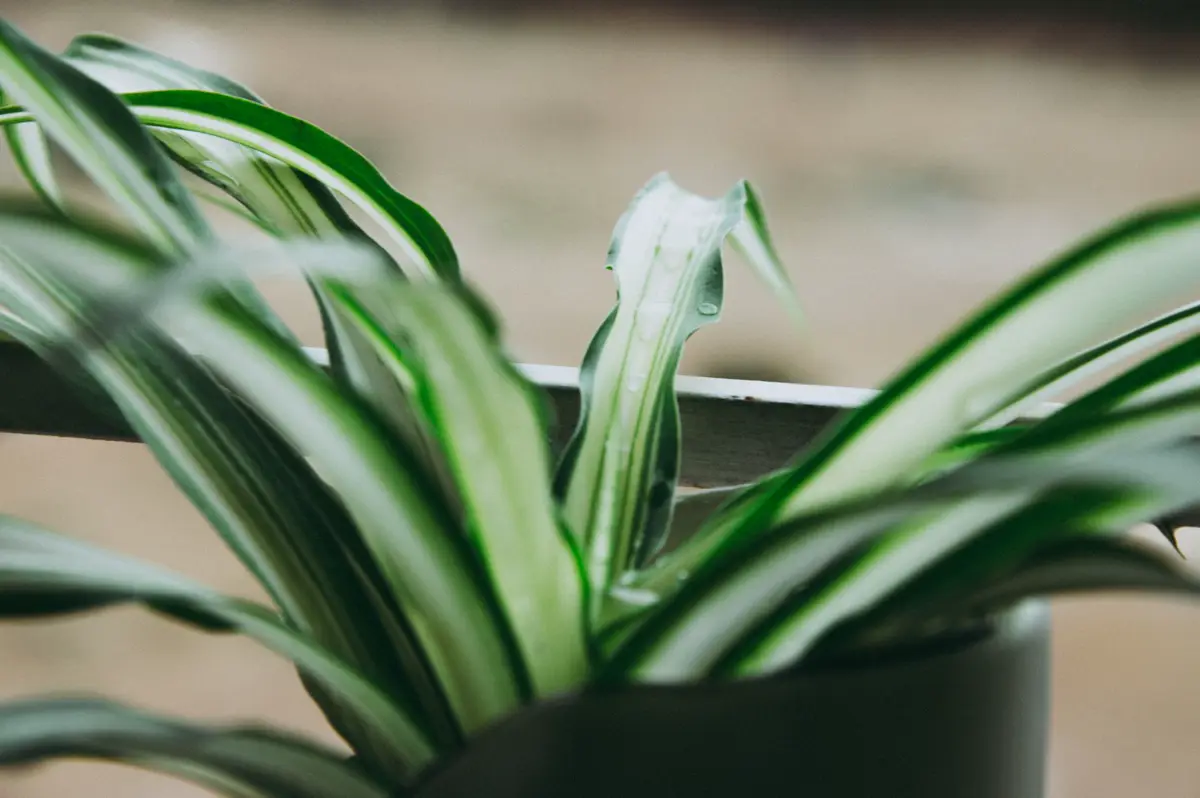
Yes. The plain green form and the popular white-striped variegated kinds are all the same species, Chlorophytum comosum, which the ASPCA lists as non-toxic to dogs. Leaf colour and cultivar name do not change that. A curly or variegated variety is no more dangerous than the standard one. Whichever spider plant you own, a dog that nibbles it will not be poisoned.
Are the baby plantlets and flowers safe for dogs too?
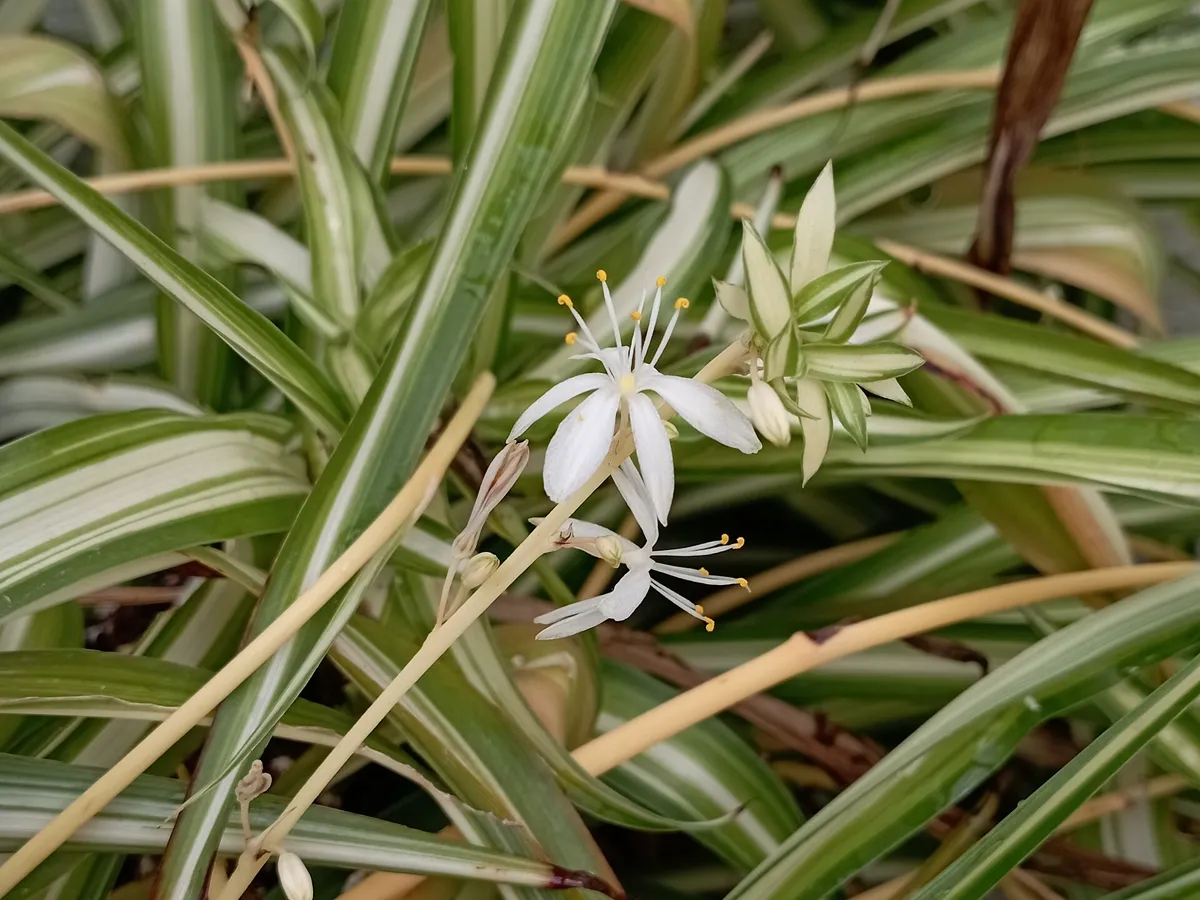
They are. The dangling plantlets, often called spiderettes, and the small white flowers are part of the same non-toxic plant, so a dog that pulls one off and eats it will not be harmed. In fact the swaying babies are usually what tempts a dog in the first place, since they bounce like a toy. Eating a plantlet is harmless beyond the mild tummy upset any large mouthful of plant can cause. Hanging the pot higher simply saves the babies from being shredded.
Is the spider plant safe for both dogs and cats?
Yes, it is one of the safest houseplants for a mixed-pet home, being non-toxic to dogs and cats alike on the ASPCA list. That makes it a reliable pick when you have both animals and want easy greenery you do not have to police. The only quirk is that some cats act mildly giddy around it, which is a behaviour rather than a poisoning. For dogs, there is not even that oddity to worry about.
Can puppies eat spider plants safely?
A puppy that chews a spider plant is not in danger of poisoning, since the plant is non-toxic. The usual caution still applies: a young pup that gorges on leaves can get a passing bout of vomiting or loose stool simply from the volume, just as it would from eating too much grass. There is also a small choking risk if a puppy gulps a big fibrous wad. Offer a proper chew toy and raise the plant if your pup keeps shredding it.
Are spider plants good for a home with dogs?
They are a great fit. Beyond being pet-safe, spider plants are famously easy to grow, tolerate low light, and are hard to kill, which suits a busy dog household. They are often praised as air-fresheners, and while everyday houseplants make only a modest difference to indoor air, the plant certainly does no harm. For a dog owner who wants greenery without a safety worry, it is close to ideal.
Should I stop my dog eating my spider plant even though it is safe?
It is worth discouraging, not because the plant is toxic but because habitual plant-eating can cause repeated mild stomach upsets and wrecks the plant. Redirect a chewing dog to its own toys, add exercise and enrichment to cut boredom, and move the pot up high if the nibbling continues. Check the potting mix too, since fertilisers, pesticides, or a decorative topper can be more of a problem than the leaves. The plant is safe, but constant munching is still a habit worth breaking.
Can a spider plant cause an allergy or reaction in dogs?
True allergies to spider plants are very uncommon in dogs, and the plant is not an irritant like some sap-filled succulents. If a dog vomits or drools after eating one, that is almost always the mechanical effect of too much plant material rather than an allergic response. Persistent or severe symptoms after nibbling a non-toxic plant are unusual and worth a vet call to rule out another cause. As always, this is general information and not a replacement for veterinary advice.
Related guides
- Best pet-safe houseplants
- Spider plant care guide
- Is pothos toxic to dogs
- Is snake plant toxic to dogs
- Is dracaena toxic to dogs
- Is aloe vera toxic to dogs
Still stuck? Ask the Plant Doctor
Describe the problem — yellow leaves, holes, no flowers — and get a clear answer in seconds. FreeAI can make mistakes. Answers are guidance, not a guarantee — check anything important against the guide it links to, and always read the label on any product before you use it.