Turtlehead Seeds
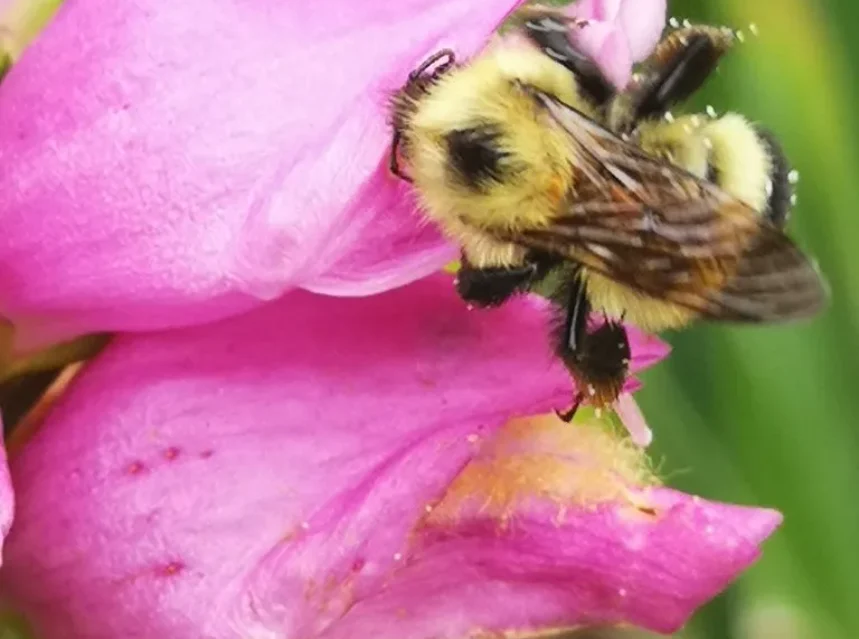
Turtlehead seeds grow one of the best perennials for wet ground. Turtlehead seeds (genus Chelone) give you a tough native plant for bogs, rain gardens, and pond edges. The hooded flowers look just like a turtle opening its mouth. They bloom late, when most of the garden is fading.
This guide is about growing turtlehead as an ornamental garden plant only. It makes no medicinal, herbal, or edible claims of any kind.
Quick start: turtlehead seeds
- Botanical name: Chelone glabra (white), C. lyonii and C. obliqua (pink-rose)
- Family: Plantaginaceae
- Type: hardy clump-forming perennial, 1–3 ft (30–120 cm)
- Native to: wetlands of eastern North America
- Loves: constantly moist to wet soil — never dry
- Light: full sun to part shade
- Bloom: late summer into autumn (July–October)
- Germination: needs ~60 days cold-moist stratification; surface-sow
- Best for: rain gardens, bogs, pond margins, heavy clay
- Wildlife: bumblebees; host plant for the Baltimore checkerspot butterfly
Authority sources: Wikipedia — Chelone glabra, NC State Extension.
🧰 In a hurry? Jump straight to our tested picks for this guide ↓
Turtlehead at a glance
| Feature | Detail |
|---|---|
| Common names | Turtlehead, white turtlehead, snakehead, balmony |
| Main species | Chelone glabra, C. lyonii, C. obliqua |
| Flower colour | White, pink, rose-purple |
| Height | 1–3 ft (30–120 cm) |
| Bloom season | Late summer to mid-autumn |
| Soil | Rich, humusy, moist to wet |
| Light | Full sun to part shade |
| Hardiness | USDA zones 3–8 |
| Germination | Cold-moist stratification, ~60 days |
| Key trait | Thrives where most plants rot |
Why grow turtlehead?
Most flowers hate wet feet. Turtlehead is the opposite. It actually wants the soggy spot by your downspout or pond.
So it solves a real problem. That damp corner where roses sulk and lavender dies? Turtlehead fills it with colour. It blooms in late summer and autumn, a quiet season for many gardens.
It is also a native workhorse. The plant is hardy, long-lived, and deer tend to leave it alone. Bumblebees love it. Few plants give you this much for so little fuss.
History, origin and the name
Turtlehead is native to eastern North America. Its range runs from Georgia north to Newfoundland, and west to Manitoba and Mississippi. You find it wild along streams, in swamps, and in wet woods.
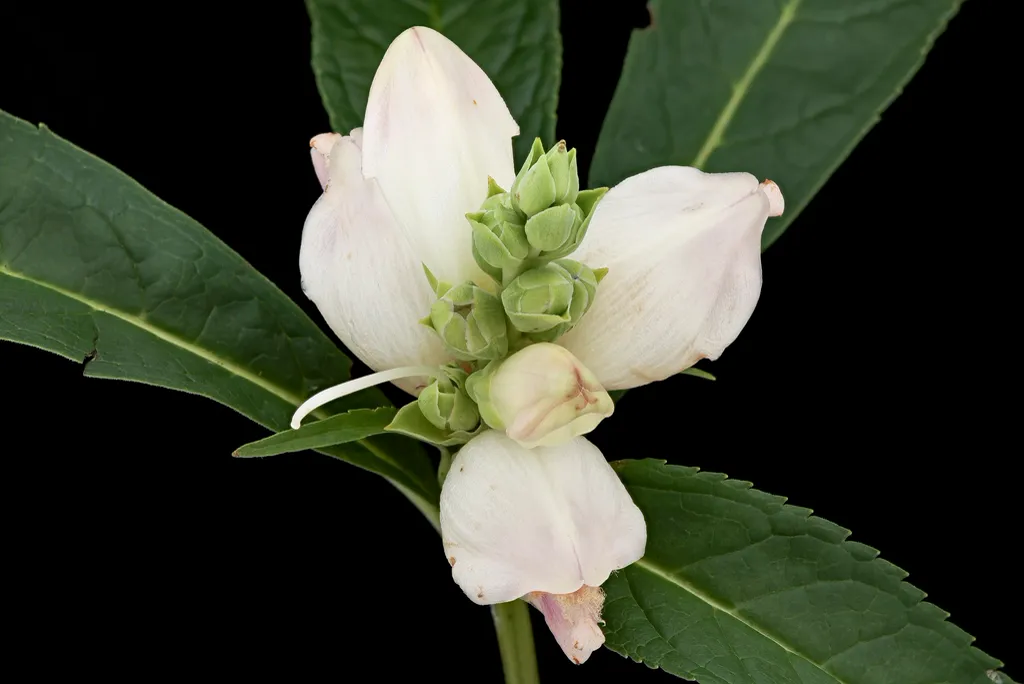
The genus name Chelone comes from the Greek word for tortoise. Look closely at a flower and you see why. The two-lipped bloom looks like a turtle’s head with its mouth open. Native peoples knew the plant well, and it has a minor place in old folk history. We mention that only as history here; this is a purely ornamental guide.
Best season and when to sow turtlehead seeds
Timing follows the plant’s wild habit. In the wild, seeds drop in autumn and chill all winter. You can copy that.
The easiest route is to sow outdoors in late autumn or winter. Cold and damp do the work for you. By spring, the seeds are ready to wake.
Prefer to start indoors? Then cold-stratify first (see below). Sow the stratified seed in early spring. Set out young plants once frost has passed and the soil stays warm.
How to plant turtlehead from seed
Turtlehead seed is small and needs light to sprout. So do not bury it. Follow these steps for the best results.
- Fill trays or pots with a moist, peat-free seed mix.
- Scatter seed on the surface. Press it down gently for good contact.
- Do not cover, or barely dust it — the seed needs light.
- Give the seed its cold-moist chill (autumn sowing outdoors, or the fridge method).
- Keep the mix constantly moist. Never let it dry out.
- Move seedlings on once they have a few true leaves.
- Plant out in a damp spot, spacing clumps 18–24 in (45–60 cm) apart.
Be patient. Seedlings grow slowly in their first year. They bulk up fast once settled.
Germination: the seed-starting secret
This is the step most people miss. Turtlehead seed will not sprout without a cold, damp rest first. Gardeners call this cold-moist stratification.
The seed needs roughly 60 days of cold and damp. Mix the seed with moist sand or vermiculite in a bag. Then chill it in the fridge for about two months.
After that, sow on the surface and keep it bright and moist. Germination is slow and uneven, often over two to four weeks. Sowing outdoors in autumn lets winter do this naturally, which is far simpler.
Sun, soil, watering and feeding
Get the moisture right and turtlehead is easy. Get it dry and you will struggle.
Sun: full sun gives the sturdiest, most upright plants. Part shade is fine if the soil stays wet. Too much shade makes stems flop.
Soil: rich, humusy, and moisture-holding. Heavy clay is welcome here. Dig in compost and mulch well to lock in water.
Water: this is the golden rule. Keep the soil moist to wet at all times. Never let it dry out, especially in summer heat.
Feeding: little is needed in good soil. A spring mulch of compost is usually plenty. Avoid heavy feeding, which makes soft, floppy growth.
One more tip: pinch or cut the stems back by half in early summer. This gives you a bushier, sturdier plant with more flowers.
Common pests and diseases
Turtlehead is mostly trouble-free. A few issues show up if conditions slip.
- Powdery mildew: the main one. It appears when soil dries out or air is stagnant. The fix is simple: keep the soil moist and allow airflow.
- Slugs and snails: these nibble young growth in spring. Hand-pick them or use a wildlife-safe barrier.
- Deer: usually leave it alone, though young shoots can be browsed.
Common problems and quick fixes
- Leaves browning or scorched: the soil dried out. Water deeply and mulch to hold moisture.
- White powder on leaves: mildew from dry roots or still air. Keep moist and improve airflow.
- Floppy, leggy stems: too much shade or rich soil. Move to more sun and pinch in early summer.
- No flowers or slow start: seedlings take time. Be patient, and feed lightly only.
- Seed won’t sprout: it skipped the cold chill. Stratify for 60 days, then surface-sow.
A wet-soil hero: turtlehead’s superpower
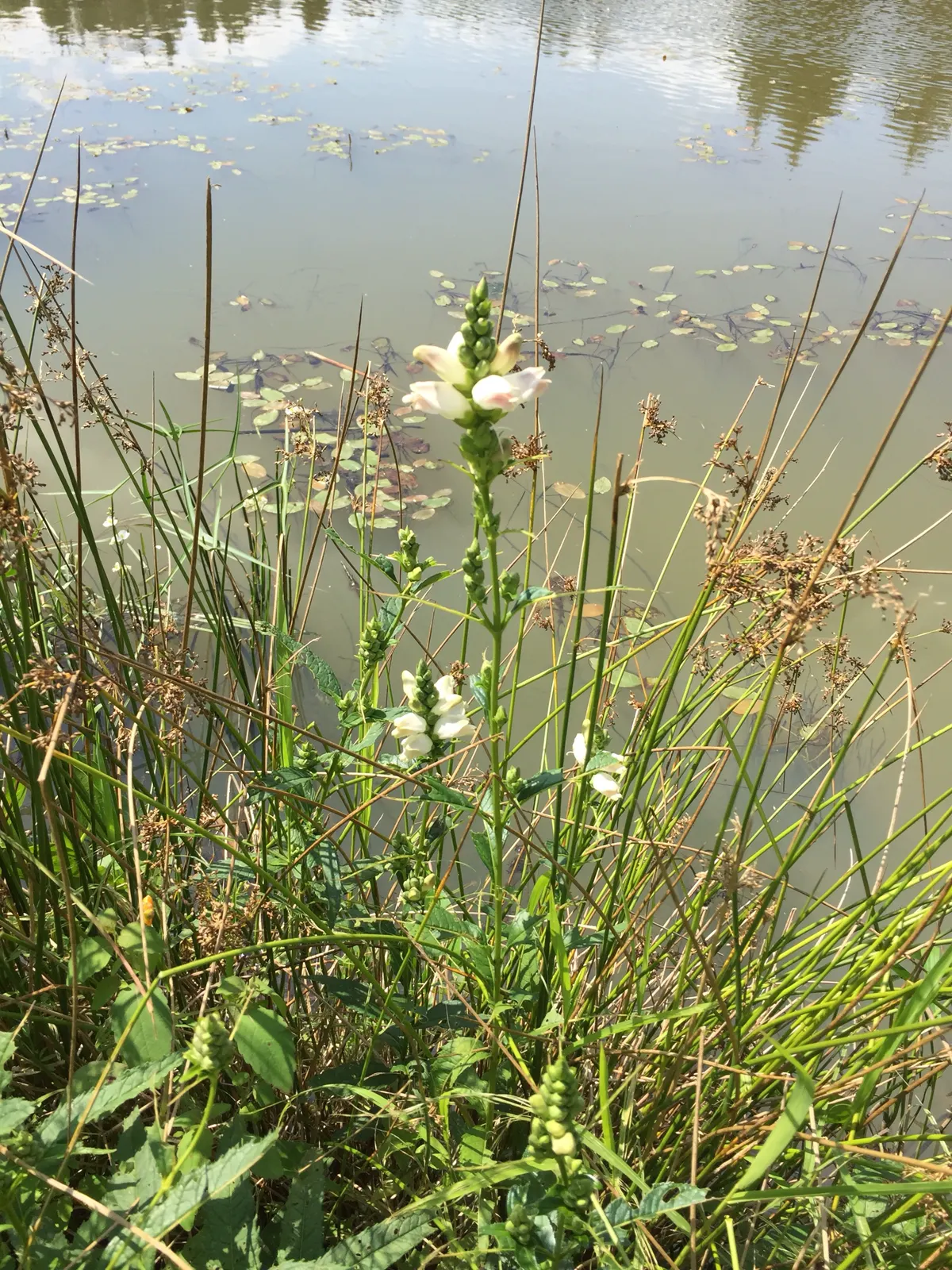
Here is the real reason to grow it. Turtlehead thrives in the wet ground that kills most perennials.
Think of the spots that always stay soggy. The base of a downspout. A low, boggy corner. The margin of a pond or stream. Heavy clay that never drains. Turtlehead loves them all.
This makes it a star of the rain garden. Plant it where runoff collects and it will soak up water happily. It is the opposite of a drought plant — wet is its comfort zone.
A late-season pollinator and butterfly host
Turtlehead earns its place with wildlife too. It flowers when many nectar sources are gone, feeding pollinators into autumn.
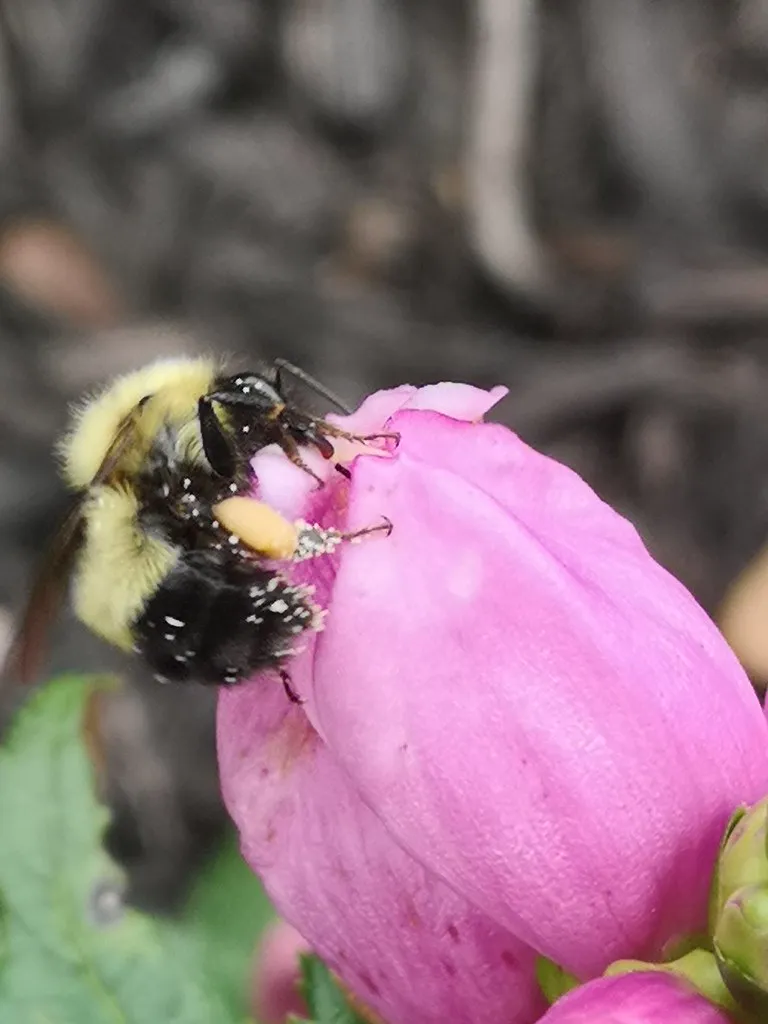
Bumblebees are the main visitors. They are strong enough to force open the snug hooded flower and crawl right inside. Watching one disappear into a bloom is a small garden joy.
It gets better. Chelone glabra is the primary larval host plant for the Baltimore checkerspot butterfly. That means caterpillars feed on its leaves. Few garden plants offer such a direct boost to a native butterfly. In its American range it also draws hummingbirds, though those live only in the Americas.
Turtlehead vs lookalikes: clearing the confusion
A few plants share the snapdragon-like look. Knowing the difference helps you buy the right seed.
| Plant | Flower | Soil | Note |
|---|---|---|---|
| Turtlehead (Chelone) | Hooded, “turtle head” shape, stays nearly shut | Moist to wet | Late-summer native |
| Beardtongue (Penstemon) | Open tubular bells | Dry, well-drained | Loves lean soil |
| Obedient plant (Physostegia) | Hinged flowers that stay where pushed | Average to drier | Mint family, spreads |
| Snapdragon (Antirrhinum) | Snapping two-lipped bloom | Dry to average | Usually grown as annual |
Within turtlehead itself, the species differ a little. Chelone glabra is white. C. lyonii and C. obliqua bring deeper pink and rose tones, and the pink kinds take slightly drier soil.
Design ideas: where turtlehead shines
Use turtlehead anywhere the ground stays damp. It turns problem spots into highlights.
- Rain gardens: plant it where runoff pools after rain.
- Bog and water gardens: a natural fit for the wet margin.
- Pond and stream banks: it loves the damp edge.
- Heavy clay borders: thrives where drainage is poor.
- Native and pollinator gardens: pairs with other wetland natives.
- Late-season colour: combine with asters and Joe Pye weed.
Growing turtlehead in India
Let us be honest here. Turtlehead is a North American wetland native, not a tropical plant. It will not suit the hot, dry plains of India.
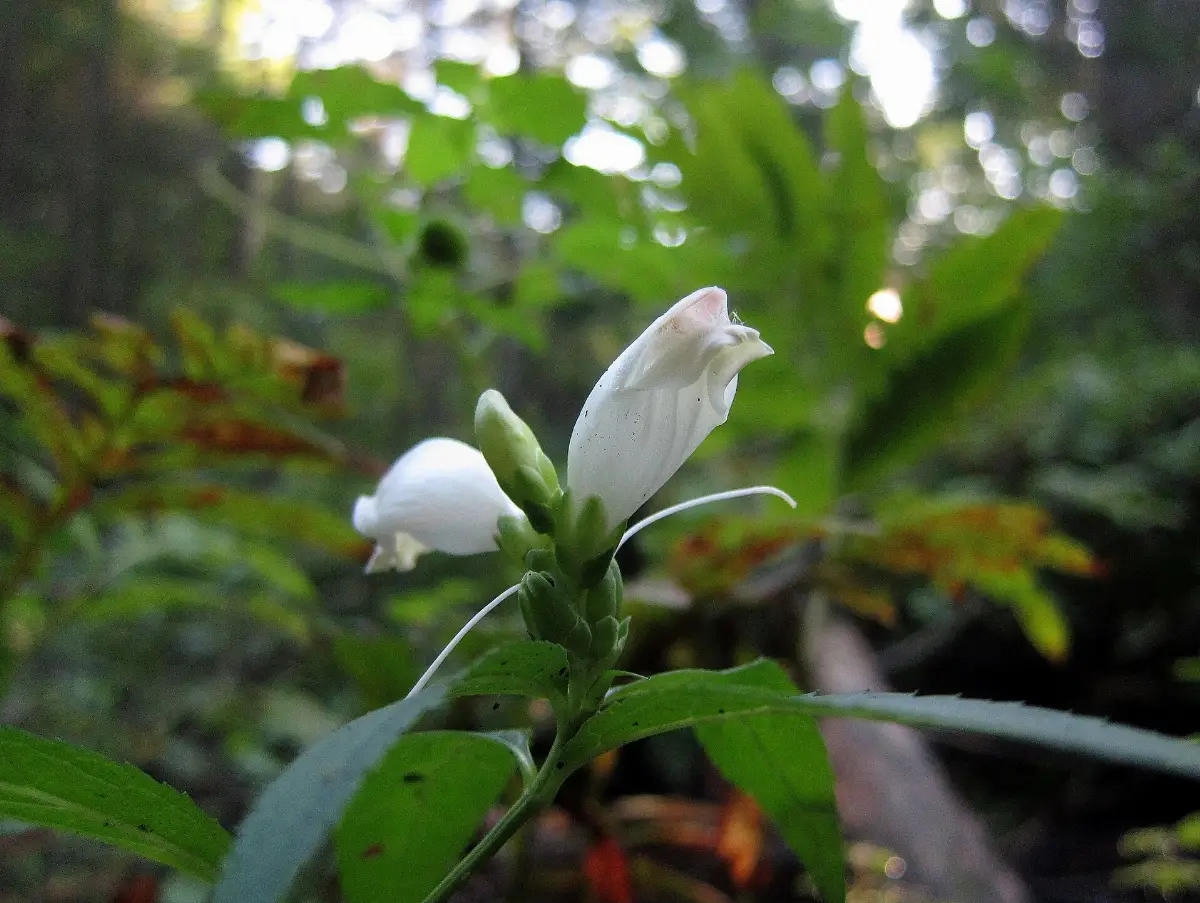
Where it might work is the cooler, moister hills. Think hill stations with reliable damp and milder summers. Even there, seed can be hard to find and is usually imported.
If you try it, give it a constantly moist spot — a pond edge or bog corner. Never let it dry out. It draws bees and butterflies for pollination. There are no hummingbirds here; they live only in the Americas. Grow it strictly as an ornamental.
Companion plants and related guides
Turtlehead loves company that shares its taste for damp, native, late-season planting. Try these guides next.
- Lobelia (cardinal flower) seeds
- Monarda (bee balm) seeds
- Asclepias (milkweed) seeds
- Physostegia (obedient plant) seeds
- Mimulus (monkey flower) seeds
- Helenium (sneezeweed) seeds
- Liatris (gayfeather) seeds
- Aster seeds
- Echinacea (coneflower) seeds
- Rudbeckia seeds
- Penstemon (beardtongue) seeds
- How to grow Joe Pye weed
Frequently asked questions
Do turtlehead seeds need cold stratification?
Yes. Turtlehead seed needs about 60 days of cold, damp chilling before it will sprout. Sow outdoors in autumn for a natural chill, or stratify in the fridge, then surface-sow.
Can turtlehead grow in wet or boggy soil?
Absolutely — that is its strength. Turtlehead thrives in moist to wet soil, rain gardens, bogs, and pond margins where most perennials rot. Just never let it dry out.
Is turtlehead good for pollinators?
Very. Bumblebees push into the hooded flowers for nectar in late summer. Chelone glabra is also the main larval host plant for the Baltimore checkerspot butterfly.
Will turtlehead grow in India?
Only in niche conditions. It suits cool, reliably moist hill areas, not the hot dry plains. Seed is hard to find and usually imported. Grow it strictly as an ornamental, in a constantly damp spot.
Is turtlehead deer resistant?
Yes, generally. Native-plant nurseries and extension services commonly list turtlehead as deer and rabbit resistant, likely because of its tough, slightly bitter foliage. It is a reliable choice for damp spots in gardens with regular deer pressure, where softer perennials often get grazed.
How often should I divide turtlehead?
Every three to four years is typical. Clumps slowly spread and can become congested, so lifting and dividing in spring keeps plants vigorous and flowering well. Division is also the fastest way to increase your stock, since seed-grown plants take a couple of seasons to reach flowering size.
Does turtlehead need full sun or shade?
It tolerates both, but performs differently. Full sun with constantly moist soil gives the sturdiest, most upright stems and the most flowers. In part shade it still grows well but can flop more, so pinching stems back in early summer helps it stay compact.
How tall does turtlehead grow?
Most garden turtleheads reach 1 to 3 ft (30 to 120 cm), depending on species and growing conditions. Chelone glabra tends to be more upright, while the pink-flowered species can vary more in height. Rich, evenly moist soil generally produces the tallest plants.
When does turtlehead flower?
Turtlehead is a late-season bloomer, opening its hooded flowers from late summer into mid-autumn, often alongside asters and goldenrod. This late timing is part of its wildlife value, since it offers nectar when many other perennials have already finished for the year.
What is the difference between Chelone glabra and Chelone lyonii?
Chelone glabra is the white-flowered species, native across a wide swath of eastern North America and typically found in wetter, wilder sites. Chelone lyonii and C. obliqua bring pink to rose-purple flowers and are more commonly sold as garden perennials, tolerating slightly drier soil than C. glabra.
Can turtlehead be propagated from cuttings instead of seed?
Yes. Softwood stem cuttings taken in early summer root readily in a moist mix, and this is often faster than raising plants from seed, which needs about 60 days of cold-moist stratification first. Division of established clumps is the third common method, and all three give true-to-type plants.
Still stuck? Ask the Plant Doctor
Describe the problem — yellow leaves, holes, no flowers — and get a clear answer in seconds. FreeAI can make mistakes. Answers are guidance, not a guarantee — check anything important against the guide it links to, and always read the label on any product before you use it.