Haberlea Rhodopensis Seeds
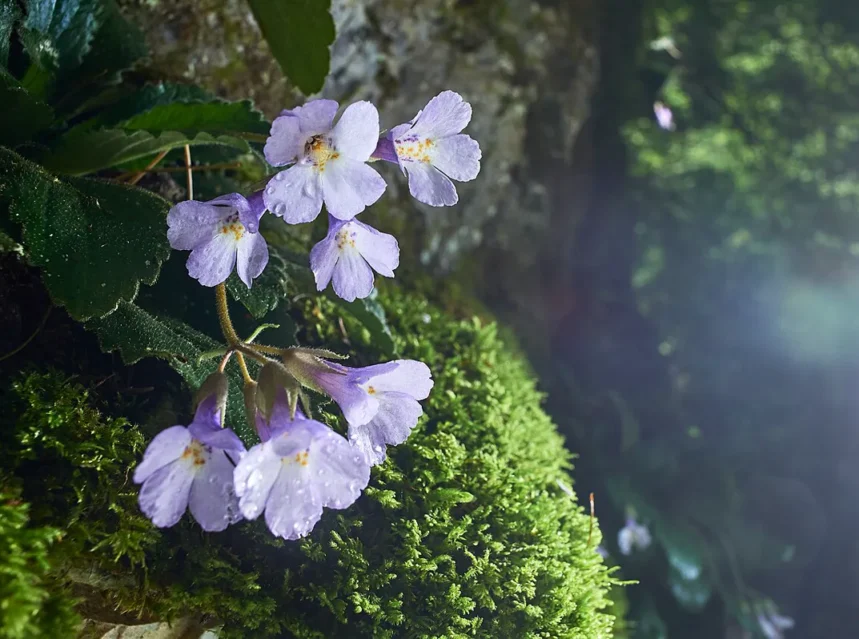
Haberlea rhodopensis seeds grow into one of the most legendary shade plants on Earth. Haberlea rhodopensis seeds produce a flat rosette of toothed, hairy leaves topped by nodding, tubular lilac flowers. Known as the “Orpheus flower,” it is a true resurrection plant that can dry out for years and still revive.
This guide is for ornamental gardening only. Haberlea rhodopensis is grown purely for its flowers and foliage. It makes no medicinal, herbal, or edible claims of any kind.
🧰 In a hurry? Jump straight to our tested picks for this guide ↓
Quick start
- Botanical name: Haberlea rhodopensis
- Common names: Orpheus flower, resurrection plant, Haberlea
- Family: Gesneriaceae (the African-violet family)
- Type: Hardy evergreen alpine perennial
- Flower: Nodding, tubular, pale lilac to violet, spotted throat
- Light: Cool partial to full shade — never hot sun
- Soil: Humus-rich, gritty, moist but free-draining
- Sow: Surface-sow the dust-fine seed; barely cover
- Bloom time: Late spring to early summer
- Hardiness: Very hardy (about USDA 5–7); needs cool conditions
Authority sources: Royal Horticultural Society, Wikipedia, and North American Rock Garden Society.
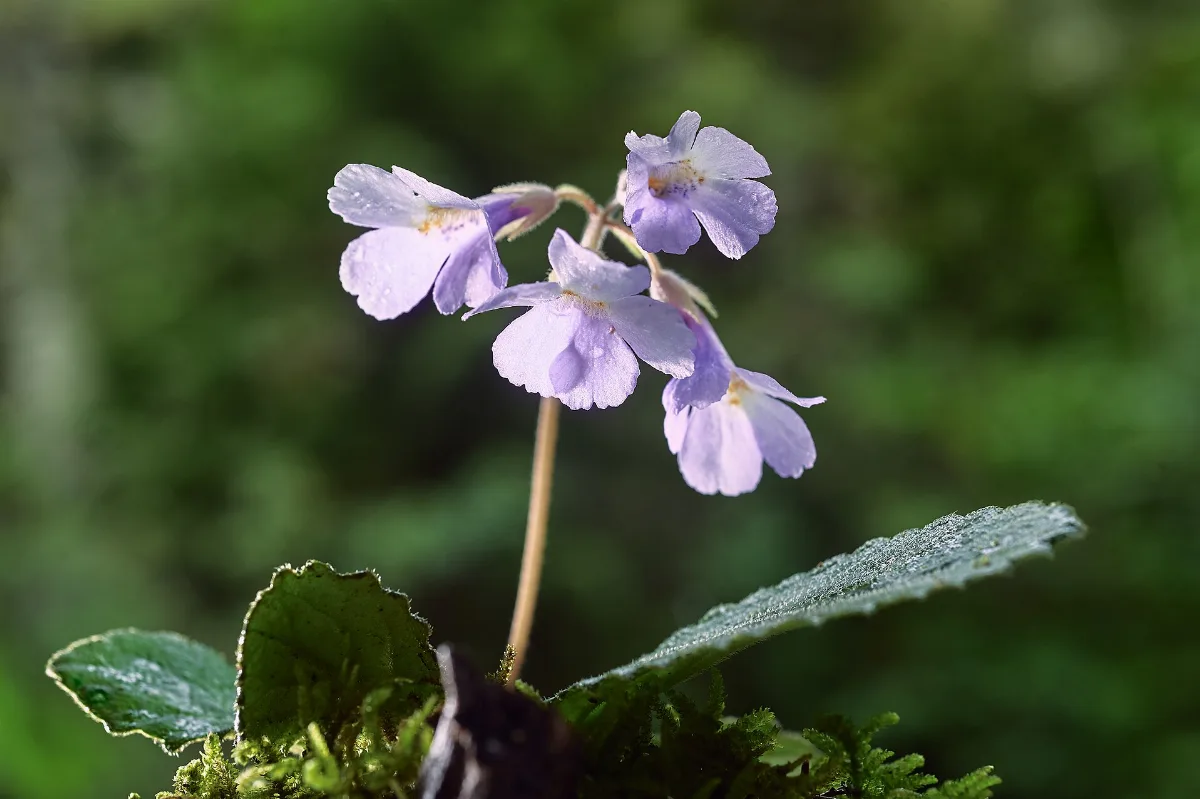
Haberlea rhodopensis at a glance
| Feature | Detail |
|---|---|
| Botanical name | Haberlea rhodopensis |
| Family | Gesneriaceae (African-violet relative) |
| Origin | Rhodope Mountains, Bulgaria and N Greece |
| Plant form | Flat ground-hugging rosette, 10–15 cm wide |
| Flower colour | Pale lilac to violet, spotted yellow throat |
| Flower shape | Nodding, tubular to funnel-shaped |
| Bloom season | Late spring to early summer |
| Light | Cool partial to full shade |
| Watering | Steady cool moisture; tolerates drying |
| Special trait | “Resurrection plant” — survives 95% water loss |
| Best use | North wall, crevice, tufa, shaded trough |
Why grow Haberlea rhodopensis?
Most rock plants need full sun. Haberlea is the opposite. It flowers happily in cool, deep shade where little else will bloom. So it solves a corner that defeats other alpines.
The flowers are quietly beautiful. Slender stalks carry nodding lilac trumpets with a softly spotted throat. They look like a wild, hardy cousin of the African violet.
Then there is the legend. This is the famous “Orpheus flower” and one of the toughest resurrection plants known. It can dry to a crisp for months and spring back to life after rain.
How to plant Haberlea rhodopensis seeds step by step
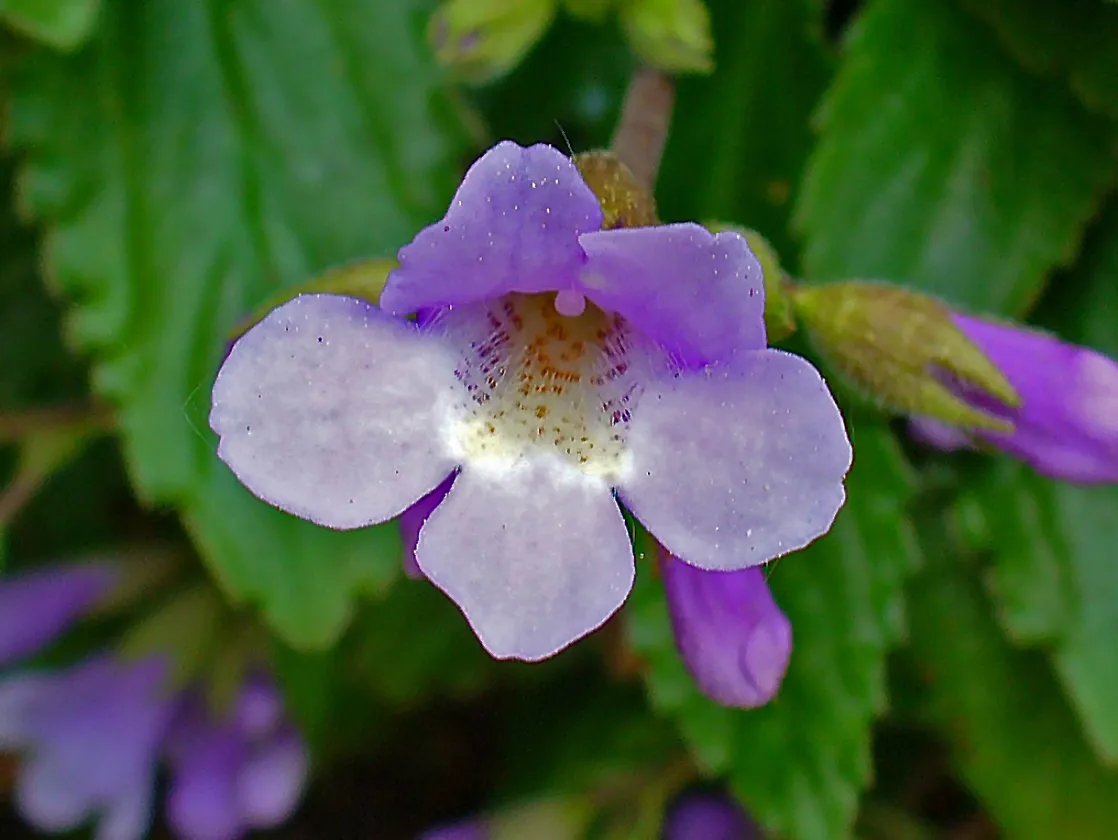
The seed is dust-fine, so handle it with care. Follow these steps for the best results.
- Fill the pot. Use a gritty, humus-rich, free-draining mix. Add a thin grit layer on top.
- Moisten first. Water the pot from below before sowing. This stops the tiny seed washing away.
- Surface-sow. Scatter the seed thinly and barely cover it. This seed needs light to sprout.
- Keep cool and bright. Place in bright shade at about 18–20°C (64–68°F). Keep the surface damp.
- Wait patiently. Seedlings often appear in two to four weeks, but some batches take longer.
- Hold humidity. A clear lid keeps the surface moist during the slow wait. Vent it once seedlings show.
- Prick out with care. Move tiny seedlings only when they have a few true leaves. Grow on in shade.
Patience pays off. Plants usually reach flowering size in their second or third year.
Germination: what to expect
Haberlea seed is fine and can be uneven. Some sprouts come quickly, others lag for weeks. Do not give up on the pot too soon.
Light helps germination, so never bury the seed deep. Cool, moist, shaded conditions suit it best. Warm, dry air will stall the whole batch.
Keep the surface evenly damp, never soggy. Soggy compost rots both seed and seedling. Steady moisture is the goal.
Best season and when to sow
Early spring is the prime sowing window. This gives seedlings a long, cool season to settle in.
You can also sow in autumn in mild areas. Cool, damp weather suits the seed, and a frame protects it over winter. Either way, avoid summer heat.
Hot, dry sowing conditions are the main cause of failure. Keep the pot cool and shaded from the start.
Sun, soil, watering and feeding
Light comes first. Give Haberlea cool shade, ideally a north or east aspect with no hot afternoon sun. Direct sun scorches the hairy leaves.
Soil should be humus-rich, gritty, and free-draining, yet able to hold cool moisture. It grows on both limestone and volcanic rock in the wild. So a neutral to slightly acid mix with leaf mould and grit works well.
The planting angle matters more than people expect. Plant it on its side in a vertical crevice. This lets water run off the rosette instead of pooling in the crown.
Water to keep the soil cool and moist in growth. The plant tolerates drying, but it grows best with steady moisture. Feed lightly with a weak balanced feed in spring.
The Orpheus flower: a legend of the Rhodope Mountains
This plant carries a famous name. It is the “Orpheus flower,” named for the mythic Thracian musician of the Rhodope Mountains where it grows.
That cultural link makes it a treasure for collectors. It is endemic to Bulgaria and a sliver of northern Greece. Few garden plants come with such a story attached.
The legend also fits its character. Like the music of Orpheus, the plant seems to defy death and return. That brings us to its real superpower.
One of the world’s toughest resurrection plants
Here is what makes Haberlea extraordinary. It is a poikilohydric resurrection plant. In plain words, it can lose almost all its water and survive.
Research summarised by scientists shows it can endure the loss of around 95% of its tissue water for extended spells, in some studies up to 36 months. After rewetting, the rosette greens up and recovers.
This toughness has made it a real scientific model. Researchers study it to understand drought tolerance in crops. It has even been sent to space for desiccation research.
The shade twin of Ramonda
Haberlea is not alone in its odd lifestyle. It is the Balkan twin of the Pyrenean Ramonda myconi. Both are hardy gesneriads that live in shade and revive from drought.
Telling them apart is easy once you look. Ramonda has flat, outward-facing flowers with an orange anther cone. Haberlea has nodding, tubular flowers with a spotted throat.
This makes them ideal companions. Plant them together in a shaded crevice for a living museum of resurrection plants. Each shows a different shape on the same theme.
What the name means
The genus honours Carl Constantin Haberle, a Hungarian botanist. The species name rhodopensis simply means “of the Rhodope Mountains.”
The common name “Orpheus flower” comes from Greek myth, not from any use. “Resurrection plant” describes its revival trick. None of these names imply any food or medicine use.
Haberlea rhodopensis vs look-alikes
People often confuse Haberlea with related plants. This table clears up the most common mix-ups.
| Plant | How to tell it apart |
|---|---|
| Haberlea rhodopensis (Orpheus flower) | Nodding tubular lilac flowers, spotted throat, hairy toothed rosette, revives from drought; Balkan |
| Ramonda myconi (Pyrenean violet) | Flat outward-facing flowers, orange anther cone; Pyrenean cousin, also resurrection type |
| Saintpaulia (African violet) | Tender houseplant, needs warmth indoors, dies outdoors in frost |
| Streptocarpus (Cape primrose) | Tender gesneriad, indoor or greenhouse, not frost hardy |
| Soldanella (alpine snowbell) | Fringed nodding bells, Primulaceae, a different family entirely |
Design ideas for Haberlea rhodopensis
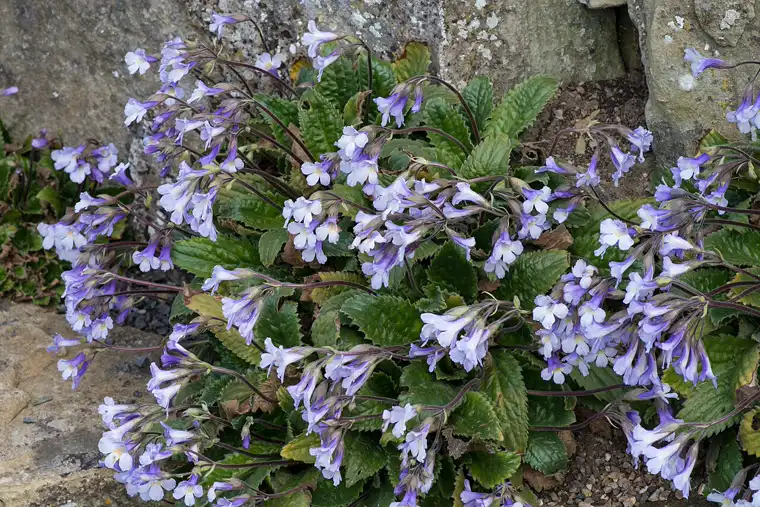
This plant shines in the right spot. Tuck it into a shaded retaining wall where it can sit on its side. The nodding flowers will dangle at eye level.
It loves tufa rock and shaded troughs. Pair it with other cool-shade alpines for a woodland-edge feel. A north-facing rockery is its natural stage.
In containers, use a deep alpine pan in bright shade. Top-dress with grit to keep the neck dry. Group two or three for a fuller, jewel-like display.
Common pests and diseases
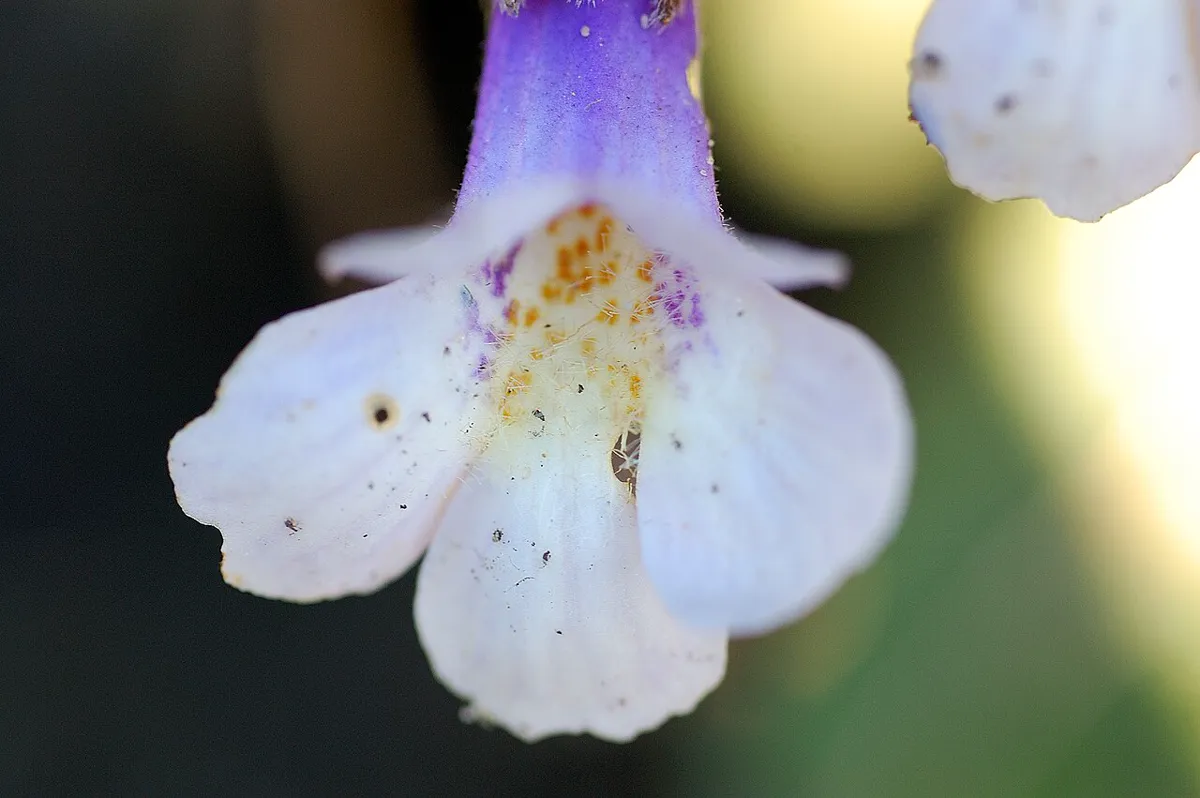
Haberlea is tough and mostly trouble-free. The biggest risk is rot, not bugs.
- Crown rot: Water sitting in the hairy rosette causes rot. Side-planting is the fix.
- Slugs and snails: They nibble young leaves and flower stalks. Use barriers or traps.
- Vine weevil: A pest in pots, where grubs eat roots. Check the rootball and use barriers.
- Aphids: Occasional on flower stalks. A water spray or soft soap usually fixes them.
Common problems
Most problems trace back to light and water. Use this quick list to diagnose them.
- Scorched leaves: Too much sun. Move to cooler shade.
- Rotting centre: Water trapped in the rosette. Plant on its side.
- No flowers: Plant too young or too dark. Be patient and give bright shade.
- Shrivelled rosette: Drought stress. Water well; it should revive.
Growing Haberlea rhodopensis in India
Let us be honest about climate. Haberlea is a cool shade-cliff Balkan alpine. It will not survive the hot, dry plains.
It is realistic only in cool hill stations or under careful alpine-house culture. Think shaded north-facing troughs in cooler months. Use a humus-rich, gritty mix and keep it cool and moist.
Its resurrection trait helps it ride out dry spells better than most alpines. But plains heat is still the hard limit. Grow it strictly as an ornamental shade plant where summers stay mild.
Bees and other shade pollinators visit the flowers in its native range. Indian gardeners should expect local bees and small insects, not hummingbirds, which do not live in Asia.
Good companion plants
Haberlea pairs well with other cool-shade and crevice plants. These guides will help you build the full picture.
- Ramonda myconi (Pyrenean violet) — its shade-loving resurrection twin.
- Soldanella alpine snowbell — another shade-loving alpine jewel.
- Physoplexis comosa (devil’s claw) — a crevice treasure for cool spots.
- Saxifraga (rockfoil) — classic crevice partner in shade.
- Edraianthus grassy bells — compact bells for alpine pans.
- Gentiana acaulis — deep blue trumpets for the rockery.
- Aquilegia (columbine) — light woodland-edge colour.
- Globularia globe daisy — neat blue alpine cushions.
- Lewisia (bitterroot) — crevice rosette with bright blooms.
- Campanula carpatica — easy bellflowers for edging.
- Jasione (sheep’s bit) — airy blue pollinator flowers.
- Pulsatilla (pasque flower) — silky spring alpine bloom.
Frequently asked questions
Is Haberlea rhodopensis really a resurrection plant?
Yes. It can lose almost all its tissue water for long periods and look dead. After rain or watering it rehydrates and greens up again.
Why must I plant Haberlea on its side?
The hairy rosette traps water in its centre. Sitting upright, that trapped water causes crown rot. Side-planting in a crevice lets water drain away.
How long do Haberlea rhodopensis seeds take to flower?
The seed germinates over a few weeks, but seedlings grow slowly. Most plants reach flowering size in their second or third year.
Can I grow Haberlea rhodopensis indoors like an African violet?
It is related to African violets but is a hardy outdoor alpine. It needs cool, shaded conditions and is best grown outdoors, not as a warm houseplant.
Can Haberlea rhodopensis be propagated from leaf cuttings instead of seed?
Yes. The Royal Horticultural Society notes it roots readily from leaf cuttings taken in spring or late summer, alongside seed and division. Cuttings often reach flowering size faster than seedlings, so many growers keep a few leaves rooting as backup while seed germinates.
Is Haberlea rhodopensis an endangered or protected species?
Yes, in the wild. It has been legally protected in Bulgaria since 2002 and appears on European lists of rare and endangered plants, even though its overall population is currently stable. Seed and plants sold by nurseries are propagated stock, not wild-collected material.
Why is Haberlea called an "Ice Age relict"?
Botanists use that term because the species survived Europe’s glaciations by retreating into sheltered Balkan gorges while ice covered much of the continent. That ancient isolation explains why it exists nowhere else on Earth and why its resurrection ability evolved as a survival strategy.
Does Haberlea rhodopensis seed need light to germinate?
Yes, this is one of the most common reasons a sowing fails. The dust-fine seed germinates on the surface where light can reach it, so pressing it into the mix or covering it with compost usually stops it sprouting at all.
Can I collect and save my own Haberlea rhodopensis seed?
Yes, once the nodding flowers fade, small seed capsules form and ripen over several weeks. Let them dry fully on the plant, then tap the fine seed onto paper and store it somewhere cool and dark; freshest seed germinates most reliably.
Is Haberlea rhodopensis toxic to pets?
No confirmed toxicity is reported for this species, and it is not on standard toxic-plant lists. It is grown purely as an ornamental, though as with any plant it is still sensible to discourage pets from chewing the leaves.
Does Haberlea rhodopensis need acidic or alkaline soil?
Neither strictly. In the wild it grows on both limestone and volcanic rock, so it tolerates a neutral to slightly acid mix. What matters far more than pH is drainage and grit, since soggy soil around the crown causes rot long before pH becomes a problem.
Where does Haberlea rhodopensis grow naturally?
It’s a Balkan endemic, found on shaded limestone rocks in Bulgaria’s Rhodope and Balkan mountain ranges and in parts of northern Greece. Botanists classify it as a tertiary relict, a survivor from an older era of European vegetation that vanished from most of the continent.
How long can Haberlea rhodopensis survive without water?
Remarkably long – research shows dried, herbarium-stored specimens have recovered after more than three years without water, and once rehydrated the plant typically greens up again within about two days. That extreme desiccation tolerance is what earns it the “resurrection plant” name.
What plant family does Haberlea rhodopensis belong to?
It belongs to Gesneriaceae, the same family as African violets and gloxinias, which explains the softly hairy, dark green rosette and trumpet-shaped flowers. Unlike its tropical houseplant relatives, though, Haberlea is a genuinely hardy, cold-tolerant outdoor alpine.
What color are Haberlea rhodopensis flowers?
The trumpet-shaped blooms come in shades of white, violet, or purple, held on short stems just above the flat rosette of leaves. A well-grown clump in a shaded crevice can produce a striking flush of colour each spring against the surrounding rock.
When does Haberlea rhodopensis flower?
Bloom time shifts with climate – plants in milder regions can flower as early as April, while those in cooler, more northern gardens often wait until June or early July. Either way, expect one main flowering period per year on an established clump.
Is Haberlea rhodopensis used in skincare products?
Yes – researchers have studied extracts of Haberlea rhodopensis for antioxidant and skin-protective properties, and some cosmetic products use it as an ingredient. This research is about topical cosmetic use, not a medical treatment, and none of it is a substitute for professional medical or dermatological advice.
What pollinates Haberlea rhodopensis in the wild?
Its zygomorphic, tube-shaped flowers are adapted for insect pollination, and field studies of this Balkan relict species have looked specifically at how effectively local pollinators reach its nectar and pollen inside the narrow flower tube. Good pollinator access in shaded rock crevices matters for wild seed set.
Does Haberlea rhodopensis tolerate cold winters?
Yes, it is a genuinely hardy alpine that copes well with cold, and research has also found it tolerates prolonged low temperatures and extended darkness in its natural rocky, shaded habitat. Reliable drainage matters more for its winter survival than the cold itself.
Still stuck? Ask the Plant Doctor
Describe the problem — yellow leaves, holes, no flowers — and get a clear answer in seconds. FreeAI can make mistakes. Answers are guidance, not a guarantee — check anything important against the guide it links to, and always read the label on any product before you use it.