Heliotrope Seeds
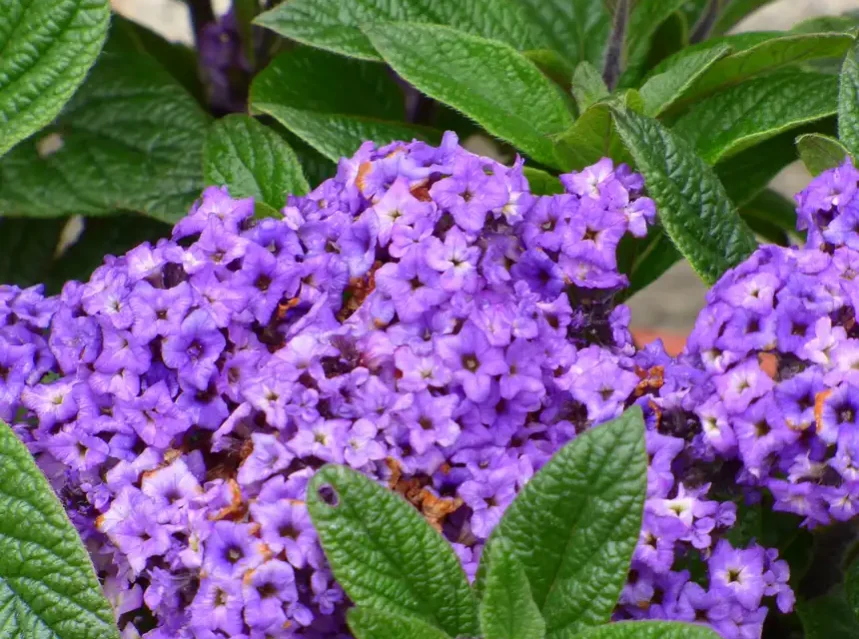
Heliotrope seeds grow into the cherry pie plant — a richly fragrant bedding flower with dense clusters of tiny deep-violet, purple, or white blooms and a sweet vanilla-cherry scent. This tender perennial is usually grown as an annual, and it can be raised from seed for fragrant pots and borders. Heliotrope, also called cherry pie or Heliotropium, is loved for its powerful perfume and old-fashioned charm. Growing from seed is cheaper than buying plants and gives you classic scented strains. This guide covers the best heliotrope seeds to grow, exactly how to grow heliotrope from seed, when to sow, and where to buy fresh seed.
Heliotrope (Heliotropium arborescens) is a tender perennial grown for its fragrant clusters of purple or white flowers on bushy plants. You grow it from seed sown in warmth in early spring. Pinch young plants for bushy growth and many scented blooms.
Fragrant, old-fashioned, and pollinator-friendly. The heliotrope botany page and the RHS guide to growing heliotrope cover sowing, timing, and care.
🧰 In a hurry? Jump straight to our tested picks for this guide ↓
Heliotrope seeds at a glance
| Feature | Detail |
|---|---|
| Botanical name | Heliotropium arborescens (family Boraginaceae) |
| Sowing depth | Barely cover; needs warmth, light helps |
| Germination temperature | 21–24°C (70–75°F) |
| Days to germinate | 14–28 days (slow, erratic) |
| Season | Tender perennial; grown as annual |
| Days to bloom | About 14–16 weeks from sowing |
| Best for | Scented pots, borders, edging, pollinators |
Why grow heliotrope from seed?
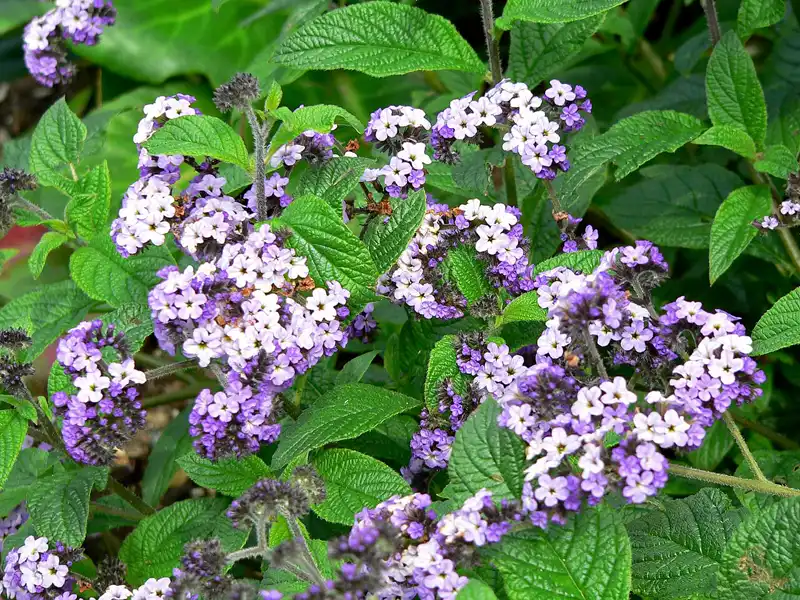
Heliotrope is a wonderful choice for fragrance. First, its scent is famous, a sweet blend often compared to vanilla and cherry pie. Second, the deep-violet flower clusters are rich and old-fashioned, lovely in pots by a path or door. Third, seed is cheaper than buying plants and gives you the classic scented strains.
The flowers are a magnet for bees and butterflies, adding life to a scent garden. Heliotrope enjoys the same warm, sunny spots as zinnias and cosmos. For more fragrance, pair it with sweet alyssum, and mix it with marigolds or salvia for colour and pollinators.
Heliotrope colours & scent
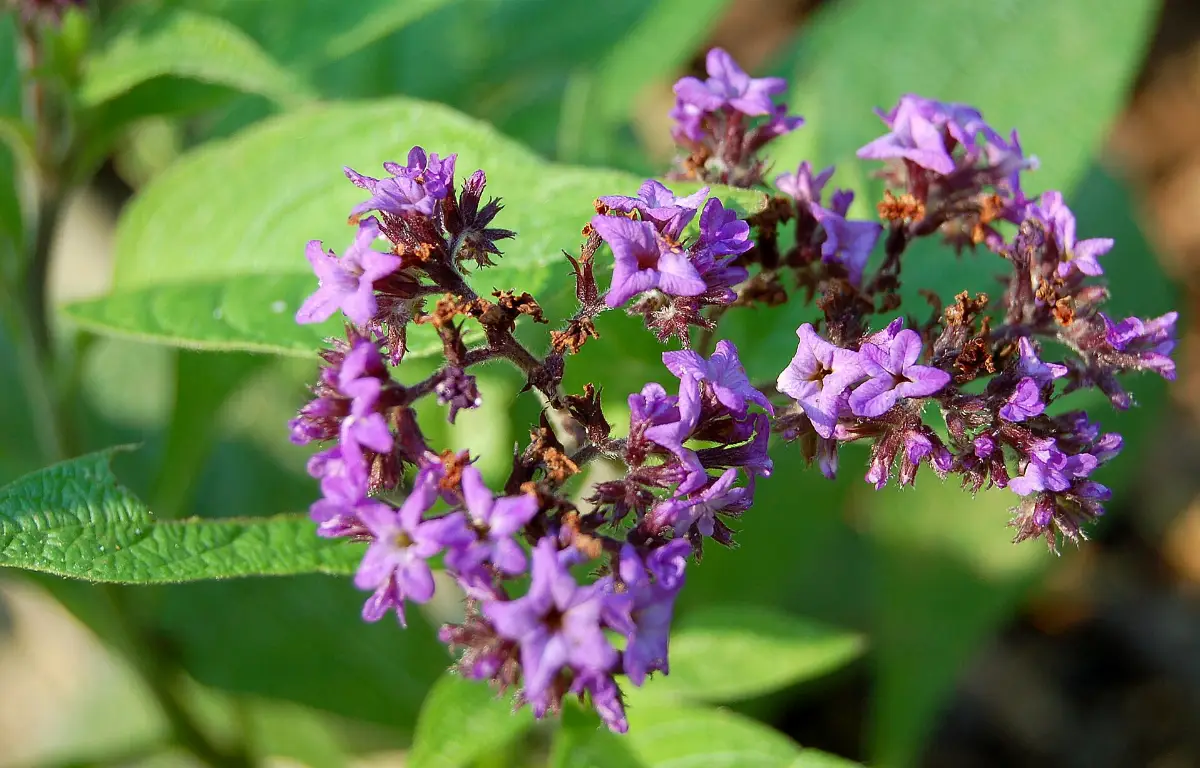
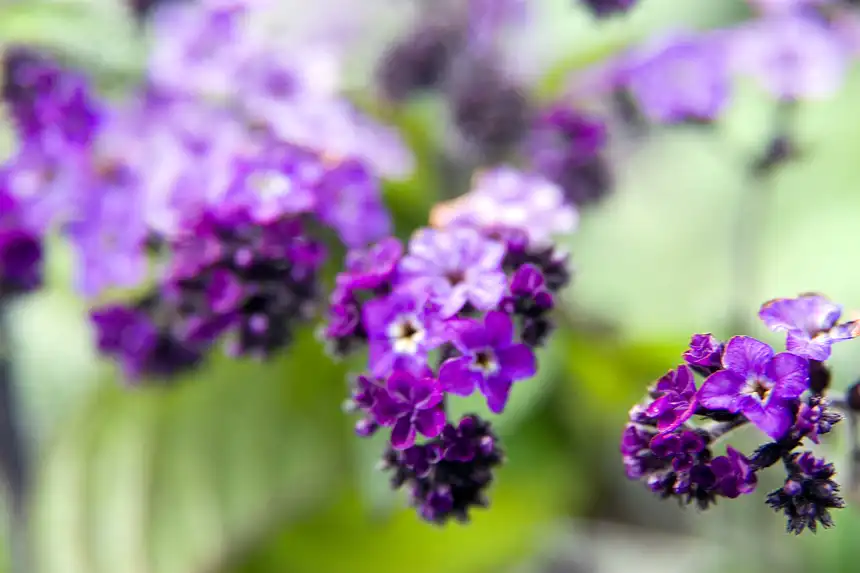
Heliotrope is grown as much for scent as for colour. The flowers come in deep violet and purple, the classic shade, along with softer lavender and pure white forms. Each bloom is tiny, but they gather into broad, domed clusters that cover the bushy plant. The famous fragrance is strongest in the purple types and on warm, still days. Plants stay compact and rounded, making heliotrope ideal for pots, edging, and spots where you brush past and release the perfume.
History & origin of heliotrope
Heliotrope is native to Peru in South America, where the wild plant grows as a soft, fragrant shrub. It was carried to Europe in the 1700s and became a treasured Victorian flower, prized for its perfume and used in scent gardens and even perfumery. The name heliotrope refers to old beliefs that the flowers turn toward the sun.
From Peru it spread worldwide as a beloved fragrant bedding plant. You can read more on the flower’s botany and history at Wikipedia. In India, heliotrope grows well as a cool-season annual and in containers, bringing its rich scent to terraces and gardens in the milder months.
Best heliotrope seed varieties to grow
Heliotrope seed varieties range from compact bedding types to taller, strongly scented forms. Choose by height, colour, and how much fragrance you want.
| Variety | Type | Best for | Region |
|---|---|---|---|
| Marine | Compact | Deep violet, scented bedding | global |
| Dwarf Marine | Dwarf | Pots and edging, tidy mounds | global |
| Mini Marine | Dwarf | Early, very compact containers | global |
| Fragrant Delight | Mid-height | Strong perfume, rich purple | global |
| White Lady | Compact | White flowers, soft scent | global |
| Lord Roberts | Taller | Old heirloom, violet-blue | global |
For pots and edging, the compact Marine and Dwarf Marine types are reliable and very fragrant. For the strongest perfume, look for Fragrant Delight. White Lady gives a cooler, paler look, while heirlooms like Lord Roberts grow a little taller. All are tender, sun-loving, and pollinator-friendly, and the purple types tend to smell the strongest.
How to grow heliotrope from seed
Heliotrope is easy from seed if you start early and give it warmth.
- Start indoors early. Sow 10–12 weeks before the last frost, as heliotrope grows slowly at first.
- Barely cover the seed. Press seed onto warm, moist mix and cover it very lightly, as a little light helps.
- Keep warm and patient. Hold the mix at 21–24°C; germination is slow and uneven, taking 14–28 days.
- Pinch for bushiness. Pinch the growing tips of young plants to make them branch and carry more flowers.
- Plant out after frost. Move plants outside only once nights are warm, in full sun and rich soil.
Grow young plants on in bright, warm conditions and pot up as they fill out. Heliotrope flowers in about 14–16 weeks from sowing and blooms through summer until frost. In India, grow it as a cool-season pot or border plant and pinch early for full, scented mounds.
Best season: when should you sow heliotrope seeds?
Heliotrope is a warm-loving tender plant. Sow it early indoors for a long flowering run. In cool and temperate areas, sow in late winter to early spring, around 10–12 weeks before the last frost. This gives slow seedlings time to grow before planting out. Move them outside only when nights are reliably warm. In hot climates and across much of India, sow so the plants flower in the milder, cooler season. Avoid the harshest summer heat. Heliotrope is frost-tender, so never plant it out while cold nights remain.
Soil, watering & feeding
Heliotrope wants full sun, with light afternoon shade only in very hot climates, and rich, moist, well-drained soil. Water regularly so the soil stays evenly moist, as heliotrope dislikes drying out, but avoid waterlogging. Containers are ideal, since they let you place the scent where you will enjoy it.
Feed every few weeks through the season with a balanced or bloom feed to fuel steady flowering. Deadhead spent clusters to keep new blooms coming and the plant tidy. Like other heavy-blooming bedding plants such as dianthus, heliotrope rewards good soil and regular feeding with more flowers and stronger scent.
Common pests & diseases
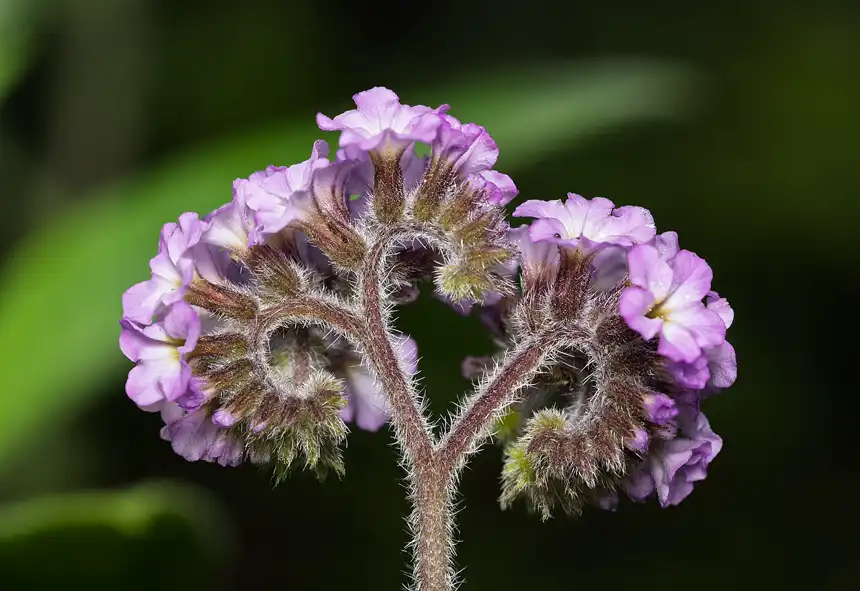
Heliotrope’s main pests are aphids and whitefly, which gather on soft new growth, plus spider mites in hot, dry air. The main diseases are grey mould (botrytis) and root rot in cool, wet, or poorly drained conditions. Good airflow, even watering, and sharp drainage prevent most trouble. Note that heliotrope leaves and flowers are not for eating and can be harmful if swallowed, so keep plants away from children and pets that might chew them.
Blooming, fragrance & pollinators
Heliotrope blooms about 14–16 weeks from sowing and flowers from summer until the first frost. The broad clusters of tiny flowers release their famous sweet, vanilla-cherry scent, strongest on warm, still days and in the purple types. Place plants where you brush past them, by a door, path, or seat, to enjoy the perfume. The flowers also draw bees and butterflies, making heliotrope a charming, fragrant pollinator plant for pots and borders.
Saving your own heliotrope seeds
You can save heliotrope seed, though it can be slow to ripen. Let some flower clusters fade and form small, dry seed capsules, then collect them once brown. Rub out the tiny seeds and dry them well before storing in a labelled envelope somewhere cool and dark. Seed from open-pollinated strains like Marine comes fairly true, while some named types may vary. Wash your hands after handling the plant, as it is not edible. Our full guide to saving seeds covers drying and storage.
Common problems from seed
The most common issue is slow or patchy germination, which is normal for heliotrope, so sow early, keep warm, and be patient. Leggy, weak seedlings need more light and a pinch to branch out. Wilting or rot usually means soil that is too cold or wet, so plant out only in warm weather with sharp drainage. Few flowers point to too little sun or feeding. Fresh seed, warmth, bright light, and rich moist soil give the best fragrant results.
Where can you buy heliotrope seeds?
Choose a compact, scented type like Marine or Dwarf Marine for pots, or Fragrant Delight for the strongest perfume. Always buy fresh seed for better germination. Many seed houses sell heliotrope in purple and white forms. In India, heliotrope seed is available for cool-season pots and gardens. Use the links below to compare trusted sources and pick your favourite scent and colour.
Frequently asked questions
How long do heliotrope seeds take to germinate?
Heliotrope seeds germinate slowly, in about 14–28 days at 21–24°C. Barely cover the seed, keep it warm and bright, and be patient, as germination is often uneven.
Is heliotrope an annual or perennial?
Heliotrope is a tender perennial, but it is usually grown as an annual. In frost-free and warm regions it can last longer, while in cold climates it is grown fresh each year or kept frost-free in pots.
Why does my heliotrope smell so strong?
That sweet, vanilla-cherry scent is heliotrope’s signature. It is strongest in the deep purple types, on warm, still days, so place plants where you can enjoy the perfume up close.
Is heliotrope toxic to dogs or cats?
The ASPCA lists heliotrope as toxic to horses because of pyrrolizidine alkaloids that can cause liver disease with repeated grazing, and does not give it a specific toxicity rating for dogs or cats. As with most ornamental plants, treat a large ingestion as a reason to call ASPCA Poison Control at 888-426-4435 — this is not veterinary advice.
How do you deadhead heliotrope?
Snip off spent flower clusters just above a set of leaves as they fade, which redirects energy into new blooms rather than seed production. Regular deadheading through summer keeps plants tidy and extends the fragrant flowering season noticeably.
Can heliotrope be overwintered indoors?
Yes. Before frost, dig up plants or take cuttings and pot them in bright indoor light at 15-18°C. Established plants can also be cut back hard and kept as houseplants over winter, then moved back outside once nights stay frost-free.
Why is my heliotrope wilting even though the soil is moist?
Heliotrope is sensitive to root disturbance and sudden temperature swings, so wilting despite moist soil often follows transplant shock, waterlogged roots, or a cold snap. Give plants a few days to settle and avoid letting pots sit in standing water.
What colour are heliotrope flowers?
Most garden heliotrope varieties bloom in shades of deep purple to violet-blue, though some cultivars produce white or pale lavender flowers. The deep purple types are generally considered the most strongly and sweetly scented.
How far apart should heliotrope plants be spaced?
Space plants about 30-45cm apart to let them fill out into rounded mounds without crowding, since good airflow between plants also helps prevent fungal problems in humid weather.
Do hummingbirds visit heliotrope flowers?
Heliotrope’s small, densely clustered flowers mainly attract bees, butterflies, and other pollinating insects rather than hummingbirds, which favour larger tubular, nectar-rich blooms; it remains a strong choice for a pollinator-friendly bed regardless.
Can you grow heliotrope in India?
Yes. Heliotrope grows well in India as a cool-season annual and in containers. Give it full sun and rich, moist, well-drained soil, sow for cool-season bloom, and pinch young plants for bushy, fragrant mounds.
Still stuck? Ask the Plant Doctor
Describe the problem — yellow leaves, holes, no flowers — and get a clear answer in seconds. FreeAI can make mistakes. Answers are guidance, not a guarantee — check anything important against the guide it links to, and always read the label on any product before you use it.